
Tokyo is a city that has ancient temples with record-breaking towers, all within a single subway ride of each other. If you're planning your first trip or heading back for more, knowing which Tokyo landmarks to go to makes all the difference.
Here are the 9 must-visit landmarks in Tokyo for 2026:
Landmark | Neighbourhood | Entry Fee |
Sensō-ji Temple | Asakusa | Free |
Shibuya Crossing | Shibuya | Free |
Imperial Palace | Chiyoda | Free (East Gardens) |
Tokyo Skytree | Oshiage | From ¥2,100 |
Meiji Jingu Shrine | Harajuku | Free |
Tokyo Tower | Minato | From ¥1,200 |
Rainbow Bridge | Minato | Free (promenade) |
Hachiko Statue | Shibuya | Free |
Shinjuku Gyoen National Garden | Shinjuku | ¥500 |
📍Sensō-ji Temple
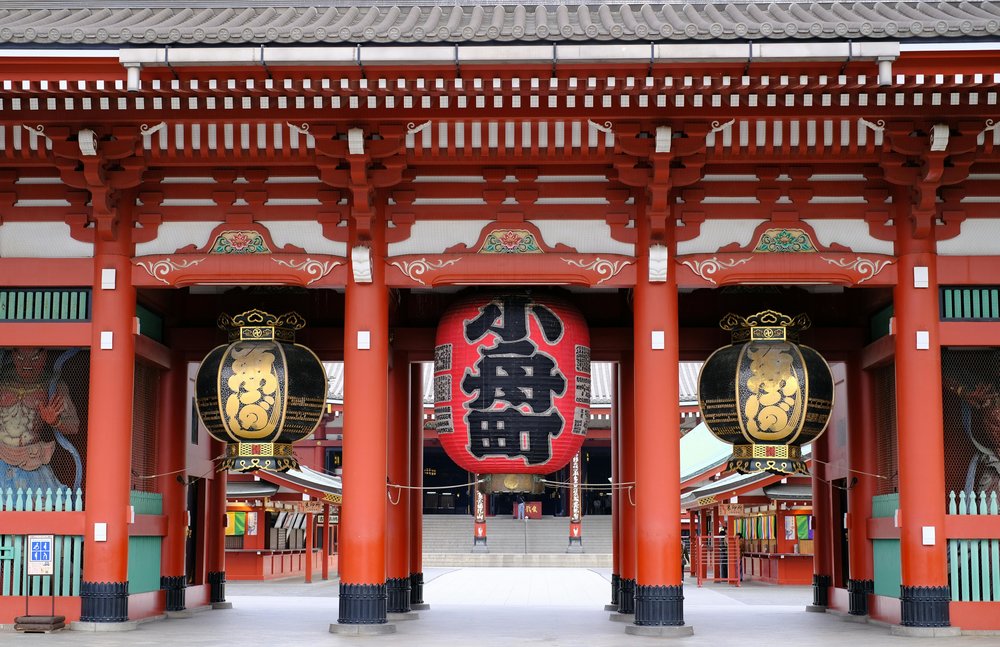
Famous red lantern at Sensō-ji Temple | Photo Credits: Vinny Anugraha on Pexels
Sensō-ji Temple is Tokyo's oldest Buddhist temple, founded in 628 AD and located in the Asakusa district of Taito City. The temple is dedicated to Kannon, the Buddhist goddess of mercy, and draws around 30 million visitors annually.
Its most iconic feature is the Kaminarimon (Thunder Gate), a large red lantern-framed gate that marks the entrance to the 250-metre Nakamise Dori shopping street. Besides that, the temple complex includes the main hall (hondo), a five-storey pagoda, and the Asakusa Shrine.
You can draw a fortune slip (omikuji) at the main hall. If your fortune is bad, tie it to the wire rack near the hall and leave it behind.
If you can, book the Sensō-ji Temple walking tour to explore the area with a local guide and get the full story behind this Tokyo sightseeing spot!
🕔 Best time to go to Sensō-ji Temple: Early morning (before 8 AM) to avoid large crowds.
🗺️ How to get to Sensō-ji Temple: Take the Tokyo Metro Ginza Line or Asakusa Line to Asakusa Station. It's just a short 5-minute walk from there.
📍Shinjuku Gyoen National Garden
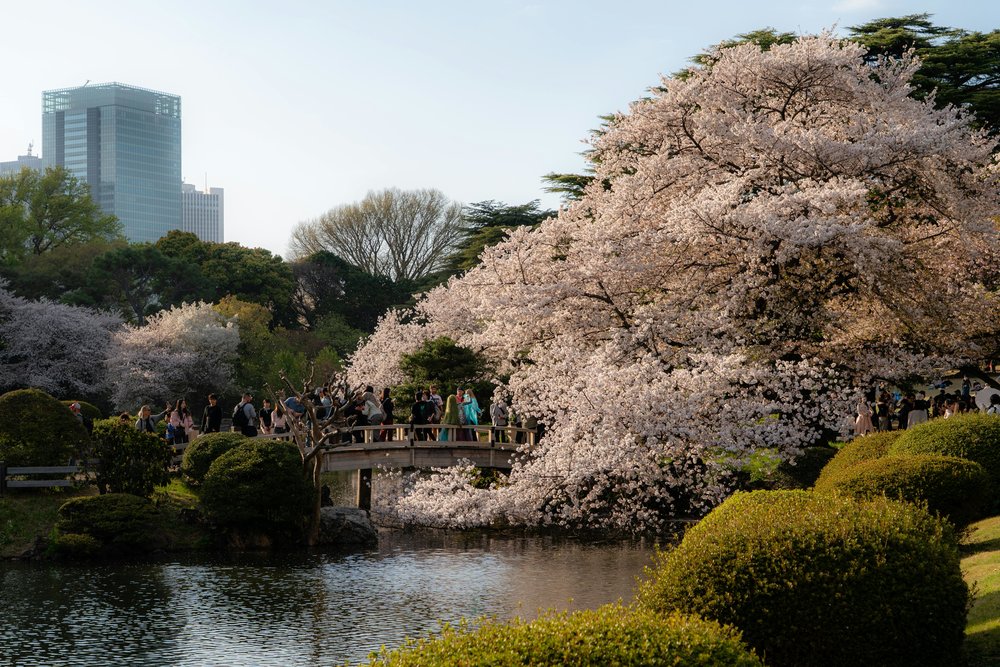
Cherry blossoms at Shinjuku Gyoen National Garden | Photo Credits: Nicola Toscan on Pexels
Shinjuku Gyoen National Garden is a 58.3-hectare national garden in Shinjuku. The garden is divided into three sections: a French formal garden, an English landscape garden, and a traditional Japanese garden, making it one of the most varied green spaces in Tokyo.
The garden contains around 1,500 trees across 65 species, and its cherry blossom display (late March to early April) is one of the best in the city. Lots of visitors who come here outside of cherry blossom season like in early November say they preferred it to the sakura crowds, since the garden feels more spacious and the colours are just as impressive.
The park is open Tuesday through Sunday, from 9:00 AM to 4:00 PM (closing time varies by season), with an entry fee of ¥500 for adults. Book your Shinjuku Gyoen entry ticket in advance to enter without queuing at the gate!
🕔 Best time to go to Shinjuku Gyoen: Late March to early April for cherry blossoms; early October for autumn foliage. The park is open Tuesday through Sunday.
🗺️ How to get to Shinjuku Gyoen: Take the Tokyo Metro Marunouchi Line to Shinjuku Gyoemmae Station. The main entrance is just a 5-minute walk away.
📍Tokyo Skytree
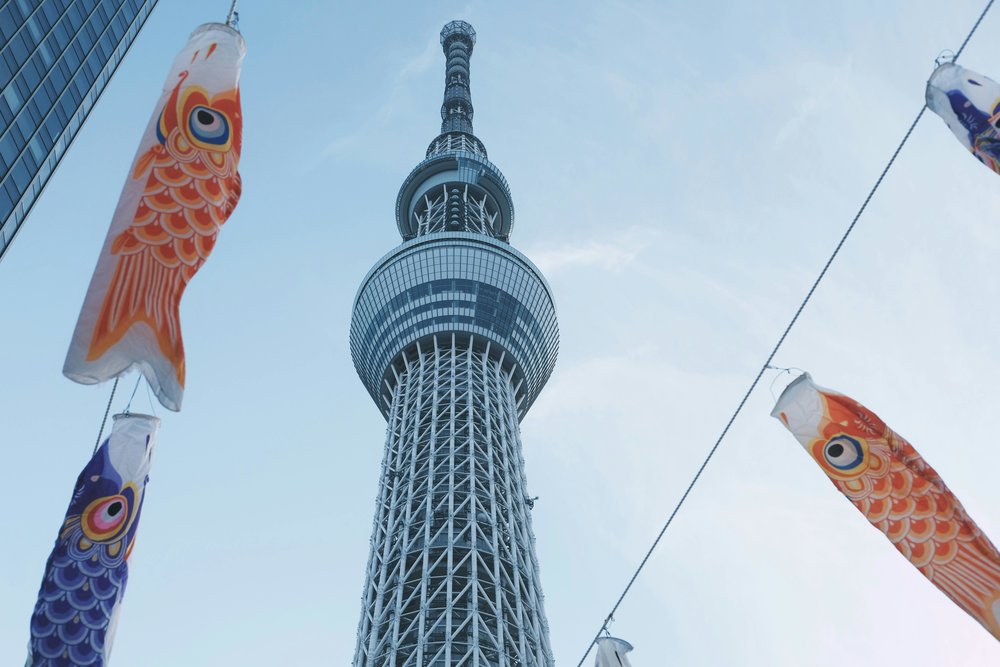
Tokyo Skytree | Photo Credits: Evgeny Tchebotarev on Pexels
Tokyo Skytree is a broadcasting and observation tower in Oshiage, Sumida City, standing at 634 meters. It's the tallest tower in Japan and the second tallest structure in the world.
The tower has two public observation floors: the Tembo Deck at 350 metres and the Tembo Galleria at 450 metres. On clear days, particularly in winter, Mount Fuji is visible from the upper deck. First-time visitors often say the scale of the city from the Tembo Galleria is hard to process,Tokyo stretches to every horizon with no visible end!
At the base, you can also explore Tokyo Solamachi, a commercial complex with over 300 shops, restaurants, and the Sumida Aquarium. You can book your Tokyo Skytree tickets in advance to skip the entry queues, which can be long during peak tourist season!
🕔 Best time to go to Tokyo Skytree: Visit at sunset for golden-hour views, or after dark for a dazzling city light display.
🗺️ How to get to Tokyo Skytree: Take the Tobu Skytree Line to Tokyo Skytree Station, or the Tokyo Metro Hanzomon Line to Oshiage Station. The tower is connected directly to both stations.
📍Shibuya Crossing
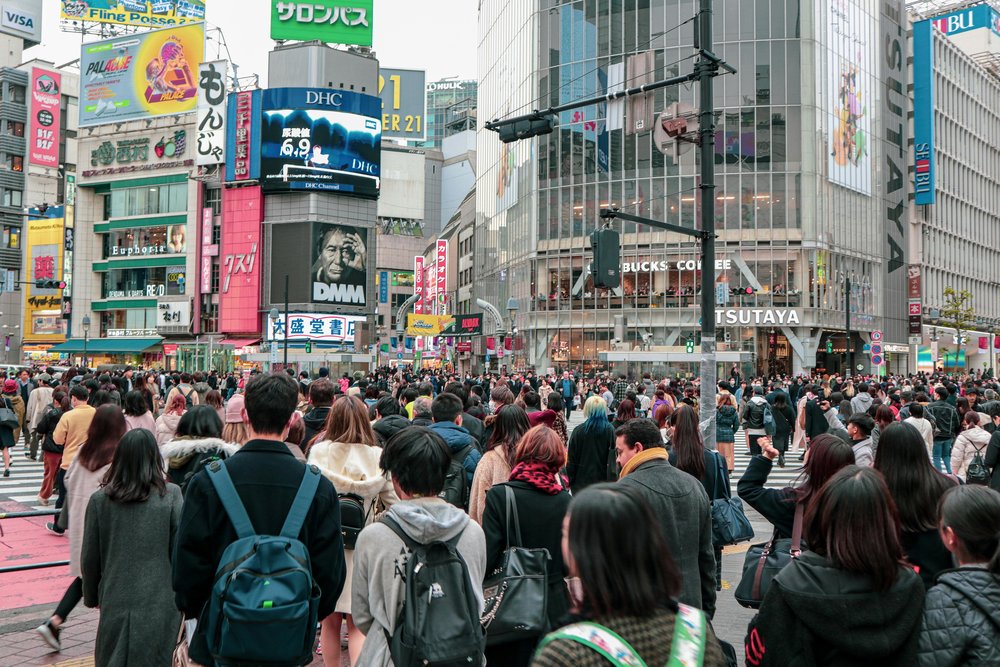
Shibuya Crossing | Photo Credits: Madel Kim on Pexels
Shibuya Crossing, also known as the Shibuya Scramble, is widely known as the world's busiest pedestrian crossing. Located directly outside Shibuya Station's Hachiko Exit, it operates as a scramble crossing, so all traffic stops simultaneously, and pedestrians cross from all directions at once. At peak hours, up to 3,000 people cross in a single cycle!
The best way to see it? Head to Shibuya Sky, the rooftop observation deck of Shibuya Scramble Square, for a bird's-eye view of the madness below. The views are incredible, especially at night when the neon lights come alive.
🕔 Best time to go to Shibuya Crossing: Early evening (around 7–9 PM) when the lights are glowing and pedestrian traffic is at its peak. Weekends are especially lively.
🗺️ How to get to Shibuya Crossing: Take the JR Yamanote Line, Tokyo Metro, or Tokyu lines to Shibuya Station. The crossing is right outside the Hachiko Exit.
📍Meiji Jingu Shrine
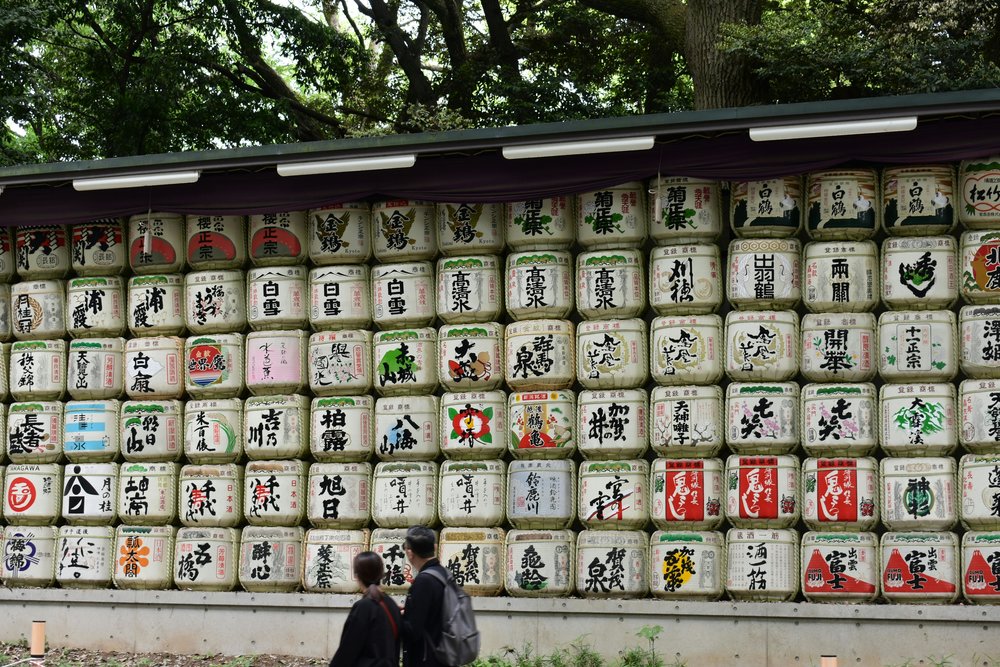
Sake barrels on display at Meiji Shrine | Photo Credits: Abynaya on Pexels
Meiji Jingu Shrine is a Shinto shrine in Shibuya, dedicated to the deified spirits of Emperor Meiji (1852–1912) and Empress Shoken. The shrine sits within a 70-hectare forested area planted with over 100,000 trees donated from across Japan.
The approach to the main hall follows a shaded gravel path through camphor trees and passes through two large torii gates. You can write wishes on ema (wooden votive plaques) and leave them at the shrine, or observe traditional Shinto rituals. People who visit early in the morning describe the path as one of the most calming experiences in Tokyo!
During hatsumode (the first shrine visit of the New Year), Meiji Jingu receives over 3 million visitors in the first three days of January, the highest of any shrine in Japan. Join the Meiji Shrine cultural guided walking tour to learn the deep history and traditions of this sacred place from an expert guide.
🕔 Best time to go to Meiji Jingu Shrine: Early morning for a crowd-free experience. Avoid New Year's week unless you want to join the crowds for the traditional hatsumode (first shrine visit of the year).
🗺️ How to get to Meiji Jingu Shrine: Take the JR Yamanote Line to Harajuku Station or the Tokyo Metro Chiyoda Line to Meiji-Jingumae Station. The shrine entrance is just a short walk from either.
📍Tokyo Tower
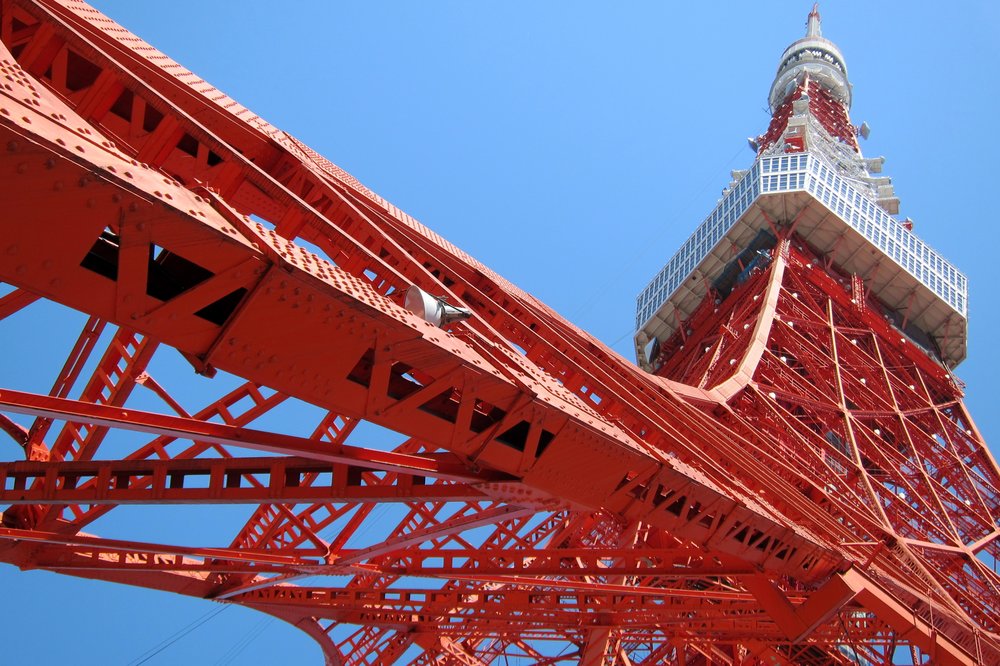
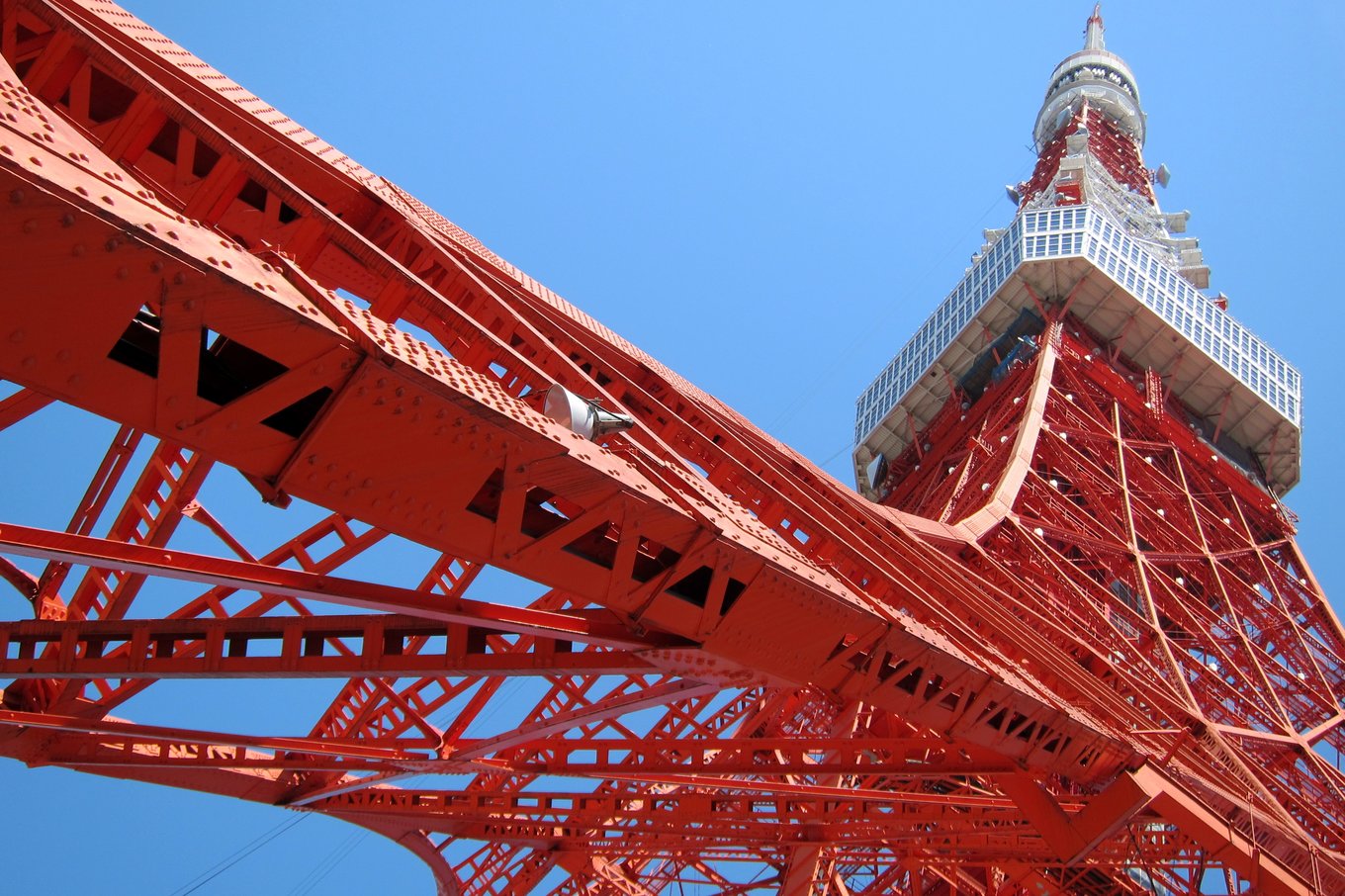
View of Tokyo Tower from below | Photo Credits: Wally Gobetz on Flickr
Tokyo Tower is a communications and observation tower in Shiba Park, Minato, completed in 1958. Standing at 332.9 metres, it was the tallest structure in Japan at the time of construction, surpassing even the Eiffel Tower in Paris!
The tower has two observation decks open to the public: the Main Deck at 150 metres and the Top Deck at 250 metres, which requires a separate ticket. The structure continues to function as a broadcast tower and also contains a museum, aquarium, and retail floors.
At night, the tower is illuminated in white light from October to June and orange light during summer. You can book your Tokyo Tower Main Observatory ticket to skip the entry queue!
🕔 Best time to go to Tokyo Tower: Evenings are magical when the tower lights up. Clear winter days offer the best visibility, with Mount Fuji sometimes visible in the distance.
🗺️ How to get to Tokyo Tower: Take the Toei Oedo Line to Akabanebashi Station (Akabane-bashi Exit) and walk about 5 minutes. Or take the Tokyo Metro Hibiya Line to Kamiyacho Station (about 7 minutes on foot).
📍Imperial Palace
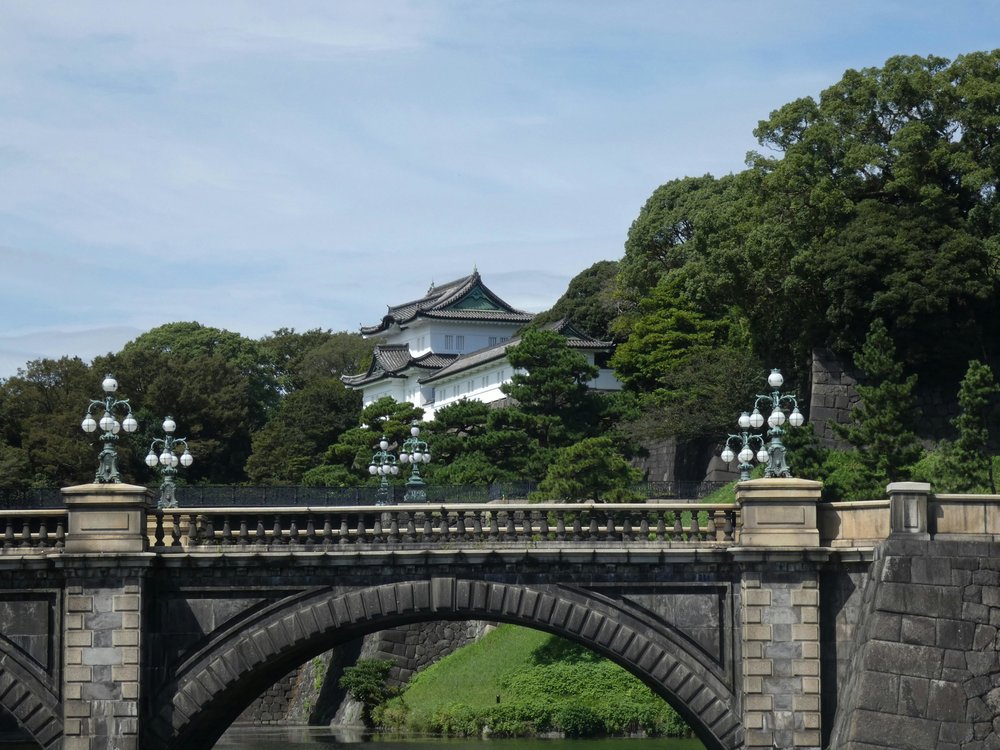
Imperial Palace in Tokyo | Photo Credits: Sha-dé van der Haar on Pexels
Right in the center of Tokyo sits one of the most significant landmarks in Tokyo, the Imperial Palace. This is the main residence of Japan's Emperor and Imperial Family. The palace grounds cover 1.15 square kilometers and sit on land that was once the site of Edo Castle, the seat of power for the Tokugawa shoguns for over 250 years.
The inner palace remains closed to the public for most of the year, with access granted on 2 January (New Year's public greeting) and 23 February (the Emperor's birthday). The East Gardens (Higashi Gyoen), however, are open to the public Tuesday through Sunday at no charge and contain original Edo Castle stonework and seasonal gardens.
Many visitors find that the moat walk through Kokyo Gaien, especially during cherry blossom season, is one of the most underrated free experiences in central Tokyo. For a guided historical overview, join the Tokyo Imperial Palace and Edo Castle historical walking tour.
🕔 Best time to go to the Imperial Palace: The East Gardens are open Tuesday to Sunday. Spring (cherry blossoms) and autumn (fall foliage) make the walk especially scenic.
🗺️ How to get to the Imperial Palace: Take the Tokyo Metro Chiyoda Line to Nijubashimae Station, or the JR lines to Tokyo Station. It's about a 10-minute walk from Tokyo Station.
📍Hachiko Statue
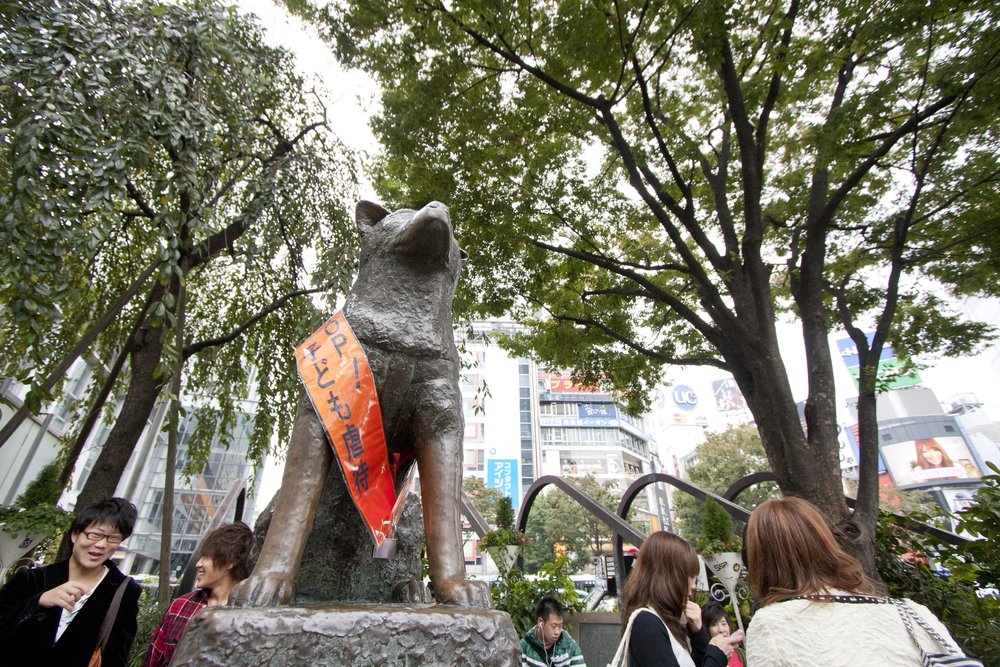
Hachiko Statue | Photo Credits: Tina Chen on Flickr
The Hachiko Memorial Statue is a bronze statue located at the Hachiko Exit of Shibuya Station, one of the most recognized tokyo landmarks in the city.
It commemorates Hachiko, an Akita dog born who accompanied his owner, Professor Hidesaburo Ueno, to Shibuya Station every morning and returned to meet him in the evening. After the professor died , Hachiko continued returning to the station every day for the next nine years.
Even visitors who already know the story often find the statue more moving in person than they expected. It's free to visit and only takes a few minutes, making it a perfect addition to a Shibuya day out. After your visit, explore other Shibuya landmarks nearby!
🕔 Best time to go to the Hachiko Statue: Any time of day, but evenings have a special atmosphere with all the Shibuya lights around you. But, expect it to be busy on weekends.
🗺️ How to get to the Hachiko Statue: The statue is right outside the Hachiko Exit of Shibuya Station, accessible by JR, Tokyo Metro, and Tokyu lines.
📍Rainbow Bridge
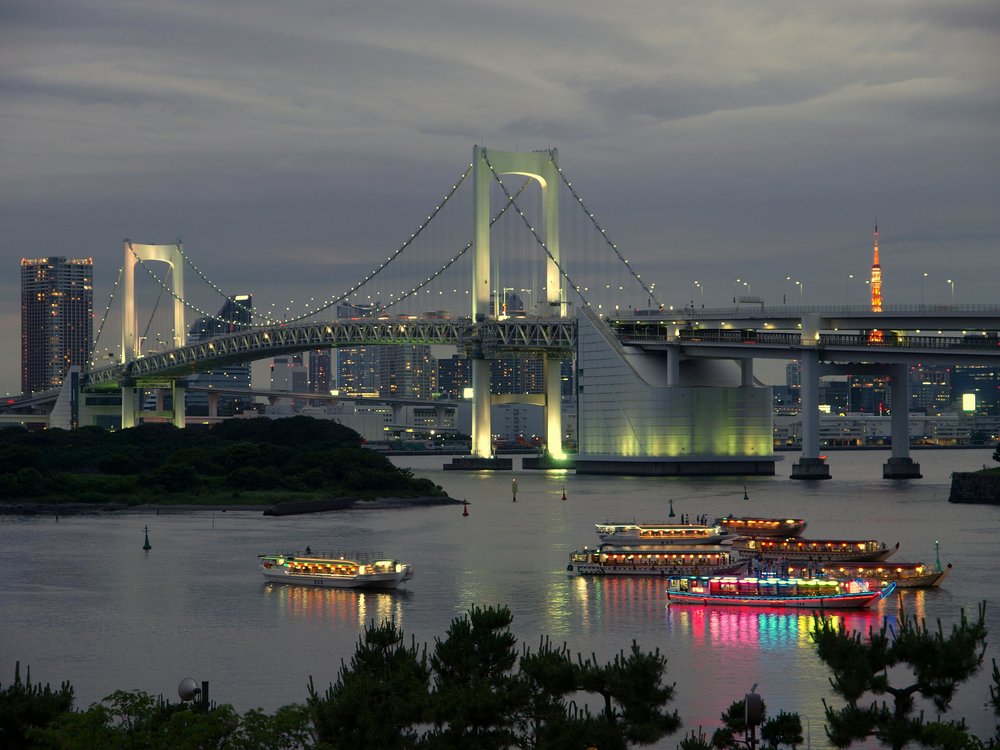
Rainbow Bridge at night | Photo Credits: Thomas Schaible on Pexels
Rainbow Bridge is a suspension bridge spanning Tokyo Bay between the Shibaura district in Minato and the Odaiba waterfront in Koto City.
You can walk across the bridge's pedestrian promenade for free and take in sweeping views of Tokyo Bay, Rainbow Bridge, and the city skyline. The promenade is open from 9:00 AM to 9:00 PM (April–October) and 10:00 AM to 6:00 PM (November–March), with Monday closures.
But, for an epic night out, join the JDM Tokyo car meetup night tour. You’ll cruise through the city that takes you past the bridge for some unforgettable night views. It's a one-of-a-kind way to end your exploration of the best landmarks in Tokyo.
🕔 Best time to go to Rainbow Bridge: After sunset when the bridge lights up beautifully. Clear evenings offer the best views of Tokyo Bay.
🗺️ How to get to Rainbow Bridge: Take the Yurikamome Line from Shimbashi Station to Shibaura-futo Station. You can also take the Tokyo Water Bus from Hinode Pier for a scenic approach.
How to see multiple landmarks in one day
Tokyo's famous landmarks in tokyo are spread across several districts, but the city's efficient train and subway network makes multi-landmark days very manageable. Here are three neighbourhood routes you can follow.
Route 1: Asakusa → Skytree (Eastern Tokyo)
Start at Sensō-ji Temple by 8 AM before the crowds build, then walk Nakamise Dori for breakfast snacks. Take the Tobu Skytree Line one stop to Tokyo Skytree for morning views. Wrap up with lunch at Tokyo Solamachi at the tower's base — the complex has over 300 dining and shopping options.
Route 2: Harajuku → Shibuya (Western Tokyo)
Begin at Meiji Jingu Shrine in the morning for the forested approach and quiet atmosphere. Walk south through Harajuku and along Omotesando, then arrive at Shibuya Crossing by late afternoon. Stay into the evening to see the crossing at full neon capacity, and book Shibuya Sky for the overhead view before you leave.
Route 3: Tokyo Station → Imperial Palace → Tokyo Tower (Central Tokyo)
Start at Tokyo Station and walk 10 minutes to the Imperial Palace East Gardens, which open at 9 AM. Follow the moat path through Kokyo Gaien, then take the subway to Tokyo Tower for an afternoon and evening visit. The tower illuminates at sunset, so timing your arrival around 5–6 PM works well in most seasons.
For a full guided version of this, the Tokyo city highlights full day private tour covers the most important tokyo monuments with a local guide handling all transportation and timing.
FAQs about landmarks in Tokyo
What are three famous landmarks in Tokyo?
Three of the most famous landmarks in Tokyo are Sensō-ji Temple, Tokyo Tower, and Shibuya Crossing. Sensō-ji is the oldest temple in Tokyo and attracts tens of millions of visitors every year. Tokyo Tower is the city's most iconic steel structure, while Shibuya Crossing is known worldwide as the busiest pedestrian intersection on Earth.
What are the key attractions in Tokyo?
Tokyo is full of world-class attractions that cater to all types of travelers. History lovers will enjoy the Imperial Palace and Meiji Jingu Shrine, while thrill-seekers will love the sky-high views from the Tokyo Skytree and Tokyo Tower. Nature fans shouldn't miss Shinjuku Gyoen, and pop culture enthusiasts will have a blast in Shibuya and Harajuku.
Are there free landmarks to visit in Tokyo?
Yes! Several of the most popular landmarks in Tokyo are completely free to visit. The Hachiko Statue, Meiji Jingu Shrine, and the outer grounds of the Imperial Palace cost nothing to enjoy. Tokyo is a great city if you’re a budget-conscious traveler who still wants to experience its rich culture and history.
What are the best modern landmarks in Tokyo?
The Tokyo Skytree tops the list as the world's second-tallest tower and a marvel of modern engineering. Shibuya Scramble Square (home to the Shibuya Sky observation deck) is another stunning example of Tokyo's modern urban design. These spots highlight just how exciting Tokyo's modern skyline truly is.
What is the best way to explore the landmarks in Tokyo?
One of the best ways to explore the landmarks in Tokyo is through guided walking tours. They make it easier to learn about the city’s history, culture, and hidden stories while visiting famous spots like temples, shrines, and busy neighborhoods. Having a local guide also helps you discover places and details you might miss on your own.
More Tokyo guides for you

What is Klook?
Klook is a leading pan-regional experiences platform in Asia Pacific, purpose built to digitalize experiences and make them accessible to every traveler.
Our mission is to build the digital infrastructure for the global experience economy — empowering merchants to share their passions and travelers to discover the heartbeat of each destination. We operate a mobile-first, curated platform featuring diverse experiences across global destinations.