
You’ve just landed in Fukuoka after a long flight, and all you want to know is how to reach your hotel without a headache. This is one of the simplest cities in Japan to navigate, and you won’t need a rental car. Getting around Fukuoka comes down to a short subway line, a bus network that fills the gaps, and comfortable shoes.
The airport shows it best. The subway at the domestic terminal gets you to Hakata Station in about 5 minutes, and most of the places you’ll want to see sit a few stops apart. This Fukuoka transportation guide covers the subway, buses, taxis and bikes, plus the IC card question that trips up first-timers. There’s also a quick cost check so you know which pass is worth buying.
Fukuoka airport to city: 5 minutes by subway
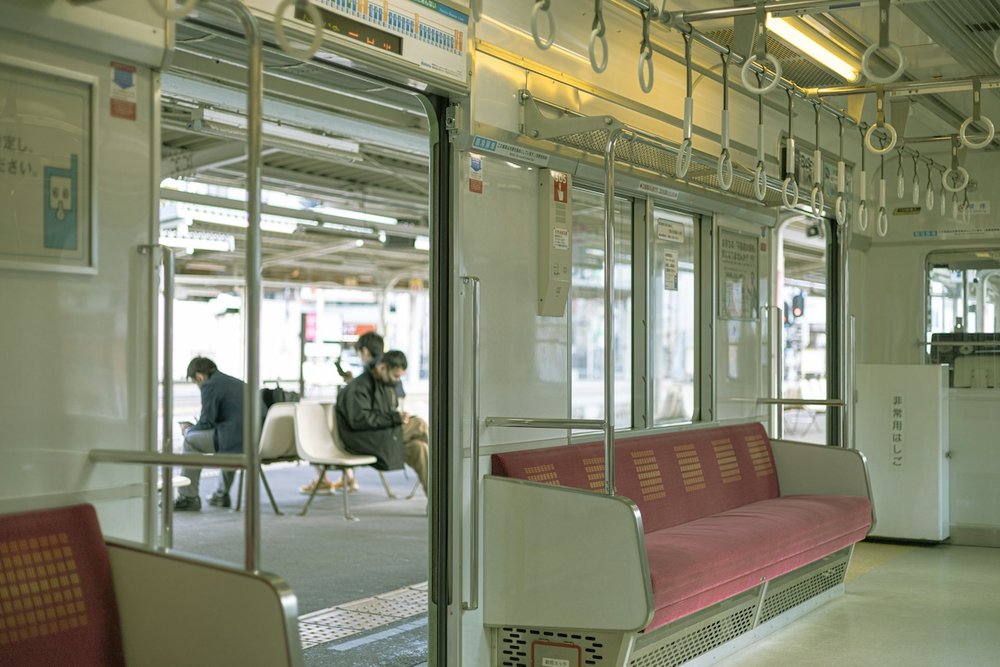
Fukuoka subway | Image credit: Seongjin Park via Unsplash
Most airports make you pay for your landing with a long, sleepy transfer. Fukuoka doesn’t. Inside the domestic terminal at Fukuoka Airport, the subway station is right there, and Airport Line trains reach Hakata Station in about 5 minutes and Tenjin in about 11. The Fukuoka airport to city ride costs ¥260 (about $1.70) to either stop, and trains come every 4 to 8 minutes until around midnight.
International arrivals have one extra step. That terminal isn’t on the subway, so you ride the free shuttle bus (about 10 minutes) to the domestic terminal first. If you’d rather skip the transfer, the airport bus to Hakata Station takes about 15 minutes and costs roughly ¥310 (about $2). That shuttle step is the only real downside of an otherwise very easy airport.
Klook Tip: Stay on the shuttle until the last stop, Domestic Terminal 2. The subway entrance is right there.
Fukuoka subway: the easy backbone
If you only learn one thing about getting around Fukuoka, make it the subway. Three lines (Airport, Hakozaki and Nanakuma) cover 36 stations, and the Airport Line is the one you’ll ride most. It links Hakata, Tenjin and Ohori Park, and Hakata to Tenjin takes about 5 minutes. Fares run ¥210 to ¥380 (about $1.35 to $2.45) depending on distance.
The Fukuoka subway has one gap: it skips the waterfront, so Fukuoka Tower and Momochi Seaside are easier by bus. If you plan to ride a lot in one day, the Fukuoka Subway Unlimited Pass covers all three lines. You collect it as a physical pass at the airport.
Best for: hopping between Hakata, Tenjin and Ohori Park on a tight schedule.
Klook Tip: Pick up your pass before you board the shuttle, since the HIS counter is in the international terminal.
Fukuoka bus routes: for the places the subway skips
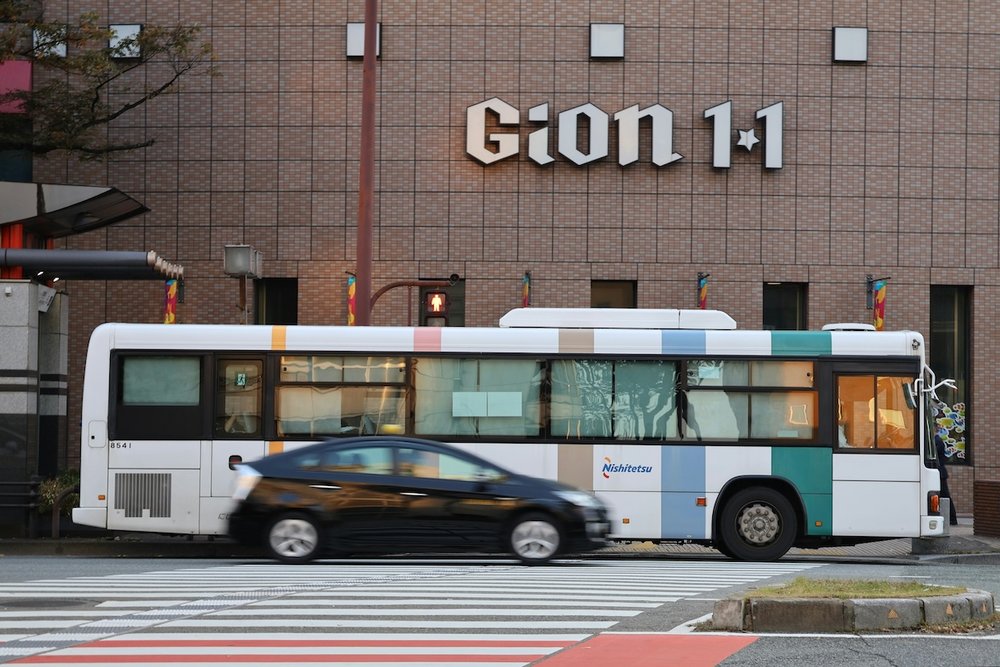
Fukuoka bus | Image credit: The Transport Enthusiast DC via Unsplash
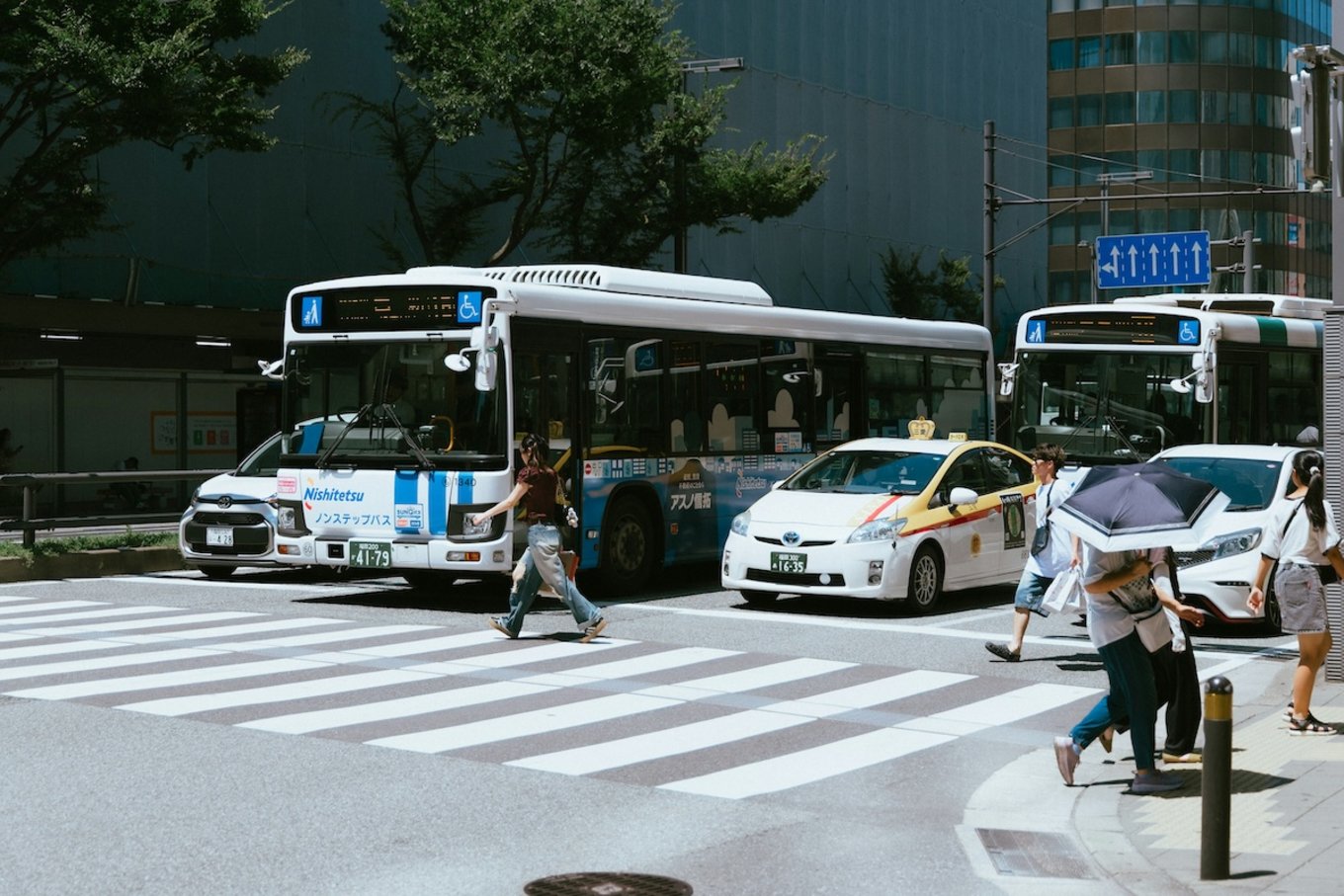
Buses look confusing until you learn two things: where to board and where to pay. Nishitetsu runs the city’s dense network, and most Fukuoka bus routes start at the Hakata Bus Terminal next to the station or at the Tenjin Bus Center. You board at the rear door, take a numbered ticket or tap your card, then pay at the front door when you get off. Short hops in the Hakata and Tenjin core are often a flat fare around ¥150 (about $1).
Buses earn their keep along the bay. They reach Fukuoka Tower, Momochi Seaside and Marinoa City, and the Canal City Line bus links Hakata, Canal City and Tenjin. The catch is that bus maps are harder to read than a subway map, so lean on Google Maps for bus numbers and stops. If you’ll mix buses and trains in a single day, the Fukuoka City One-Day Pass bundles both.
Best for: the waterfront and anywhere the subway doesn’t go.
Taxis: what Fukuoka taxi costs look like
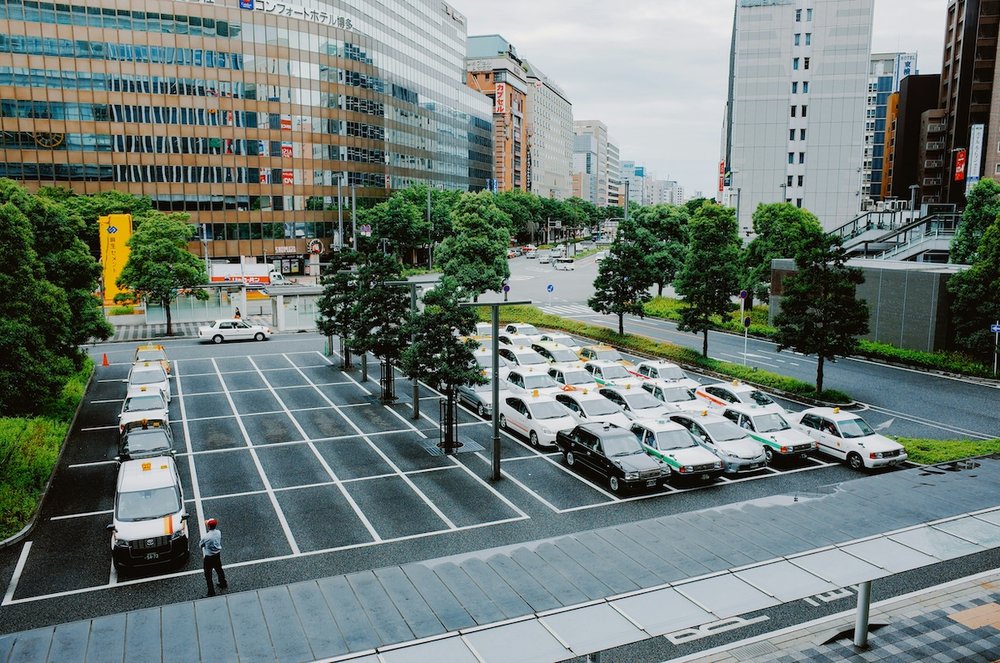
Fukuoka taxi | Image credit: PJH via Unsplash
Sometimes the subway just isn’t worth it, like when you’re hauling two suitcases or it’s pouring rain. Fukuoka taxi costs start at about ¥600 (roughly $3.90) for the first 1.1 kilometers, then add ¥100 for every 287 meters or so. Rates vary a little by operator, and a late-night surcharge usually kicks in after 10 PM. A ride between the airport and Hakata Station takes 10 to 15 minutes and typically runs ¥1,500 to ¥2,000 (about $10 to $13).
That’s at least five times the subway fare, so taxis make the most sense when three or four of you are splitting the bill.
Best for: late nights after the last train, heavy bags and small groups.
Klook Tip: Don’t open the back door yourself. The driver opens it automatically, and tipping isn’t expected.
Walking and biking: flat, compact and easy
Fukuoka is flat, so walking becomes the default for a good part of your day. Around Tenjin Station, the shops, cafes and Daimyo neighborhood sit close enough to wander between, and the underground mall keeps you dry in the rain.
For longer stretches, the Mechari bike-share has docks across the central districts, and you unlock a bike with a phone app for a small per-trip or daily fee. Summers are hot and humid, so save your longest rides and walks for morning or evening.
Best for: short hops around Tenjin and slow afternoons by Ohori Park.
Hakata Station: the hub that ties it all together
If Fukuoka has a front door, it’s Hakata Station. The Shinkansen (bullet train), JR lines, two subway lines and the main bus terminal all meet here. Tenjin is 5 minutes away by subway, the airport is 5 minutes the other way, and the Kyushu Shinkansen runs south to Kumamoto and Kagoshima.
The station is big and busy, so give yourself extra time before a train. For day trips across Kyushu, the JR Kyushu JR Pass is built for the job.
Best for: train connections, day trips and your first night’s bag drop.
Getting around Fukuoka on a budget: pass or single tickets?
Is a pass worth it? The subway day pass costs ¥640 (about $4.15), while single rides run ¥210 to ¥380. Three typical rides add up to roughly the pass price, so it pays off from about the third trip. The one-day city pass costs a few times more, but it also covers buses, so it only wins on days you ride both.
Fukuoka IC card: what works and what to buy
An IC card is a rechargeable tap card for trains and buses. The Fukuoka subway has its own, called Hayakaken, and the region also uses SUGOCA (from JR Kyushu) and nimoca (from Nishitetsu).
Good news: you don’t have to pick a local one. Suica, Pasmo and ICOCA cards all work on the Fukuoka subway and Nishitetsu buses too. Buy a card at a subway ticket machine, or add one to your phone, and top it up in small amounts since getting an unused balance back can be a hassle.
Klook Tip: Got an iPhone 8 or later? Add a Suica, Pasmo or ICOCA card to Apple Wallet before you fly.
FAQs about getting around Fukuoka
Is Fukuoka easy to get around without a car?
Yes, very. The subway, buses and your own feet cover almost everything most visitors want to see. A car only makes sense for countryside day trips outside the city.
Do I need an IC card in Fukuoka?
No, but you’ll want one. Cash and paper tickets work fine, though tapping a Suica, Pasmo, ICOCA, SUGOCA, nimoca or Hayakaken card is faster on both the subway and buses.
How do I get from Fukuoka Airport to downtown?
Take the subway from the domestic terminal. It reaches Hakata Station in about 5 minutes and Tenjin in about 11, for ¥260 each. If you land at the international terminal, ride the free shuttle bus to the domestic terminal first.
Is there a subway in Fukuoka?
Yes, Fukuoka has three subway lines with 36 stations. The Airport Line is the one most visitors use, and it connects the airport, Hakata, Tenjin and Ohori Park.
How much does a taxi cost in Fukuoka?
Expect a starting fare of about ¥600 (roughly $3.90), then ¥100 for every 287 meters or so. The airport to Hakata Station typically runs ¥1,500 to ¥2,000 (about $10 to $13).
Ready for your first day in Fukuoka?
Your first day can be simple: land, ride the subway for 5 minutes, drop your bags near Hakata or Tenjin, and be slurping tonkotsu ramen before the afternoon is out. Book your pass, add an IC card to your phone and you’re set. Next, start planning your days with our Fukuoka Japan travel guide.
Related Blogs

What is Klook?
Klook is a leading pan-regional experiences platform in Asia Pacific, purpose built to digitalize experiences and make them accessible to every traveler.
Our mission is to build the digital infrastructure for the global experience economy — empowering merchants to share their passions and travelers to discover the heartbeat of each destination. We operate a mobile-first, curated platform featuring diverse experiences across global destinations.