
Going to Japan always sounds like a good idea. The temples, the food, the bullet trains, and the fact that everything just works, it's hard to argue against. The first question that comes up once you start seriously planning, though: how much is this actually going to cost me?
So if you’re wondering how much does it cost to travel to Japan, we’ve got the answers right here! Keep scrolling to see our list of things you’ll typically spend your money on during a trip to Japan. trip. We’ll break down real expenses, daily budgets, and Klook tips so you can plan your Japan trip with confidence.
Japan has a cheat code; it's called Klook! 🧡
Japan can feel like a lot to figure out. But every game has a cheat code, and Japan's is Klook.
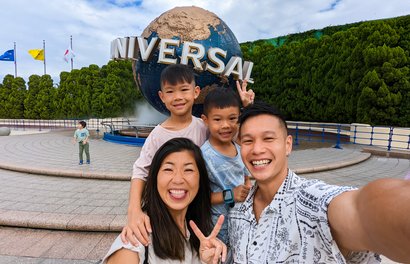
This June, we're teaming up with Family Fizz for a real family trip to Japan, and there are three ways to play:
- Pre-booked and locked in: Some parts of their itinerary are already sorted, so you can see exactly how easy it is to plan Japan with Klook
- Chosen on the day: The Family Fizz kids pick between activities in real time and book straight through Klook, just like you would on your own trip
- Voted by you: Follow along on Family Fizz's Instagram page, vote on where they head next (see Mount Fuji or go on a tea ceremony in Kyoto?), and watch your pick come to life!
Every experience on their trip is bookable straight through Klook, so you can follow along and plan your own Japan adventure at the same time. Their trip, your rules.
Going live on 25 June 2026. Press start! 🕹️
1. Flights ✈️
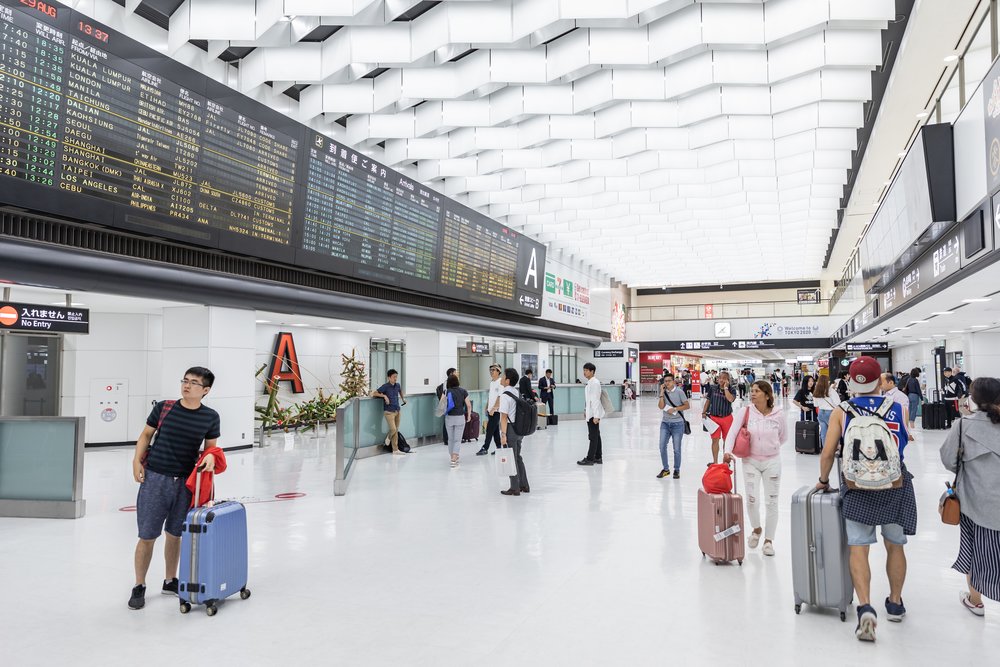
Travelers arriving at a busy Japan airport terminal with luggage
Flights will be the biggest line item in your Japan trip budget, so it's worth spending a bit of time getting this right. From the UK, you're looking at a 12-14 hour flight to Tokyo, and there are no two ways about it, as it's a long one. But the fares are often more reasonable than people assume, particularly if you book a few months ahead.
Return flights from London to Tokyo typically start around £600-£1,000 in off-peak months. During cherry blossom season or over the Christmas and New Year period, those prices climb sharply.
Average return flight costs from the UK to Japan
- Shoulder season (May, June, October): £600-£1,000 per person
- Peak season (March-April, late December): £1,200-£1,800+ per person
These prices are a rough estimate and can change depending on demand, travel dates, and how early you book.
What pushes prices up?
- Cherry blossom season (late March-April): The most popular time to visit Japan by a mile, and flights reflect that
- Golden Week (late April-early May): A major Japanese public holiday period, expect both flights and hotels to cost more
- Departing at the weekend: Midweek flights are nearly always cheaper
- Booking last minute: Japan isn't a destination where you want to wing it on flights
How to keep flight costs down
- Book 3-6 months in advance, that's the best time for lower Japan fares from the UK
- Consider May or October travel: the weather is lovely, the crowds are lighter, and prices are noticeably lower
- Check regional UK airports as well as London. Occasionally, you'll find better connecting fares through Amsterdam, Helsinki, or Doha
- Set up fare alerts and check back regularly; prices do drop
Klook Tip: Tokyo is the most popular entry point, but flying into Osaka (Kansai International Airport) or even Nagoya (Chubu Centrair International Airport) can sometimes be cheaper. You can then explore nearby cities like Kyoto or Kobe right away, saving you both time and money!
2. Accommodation 🏨
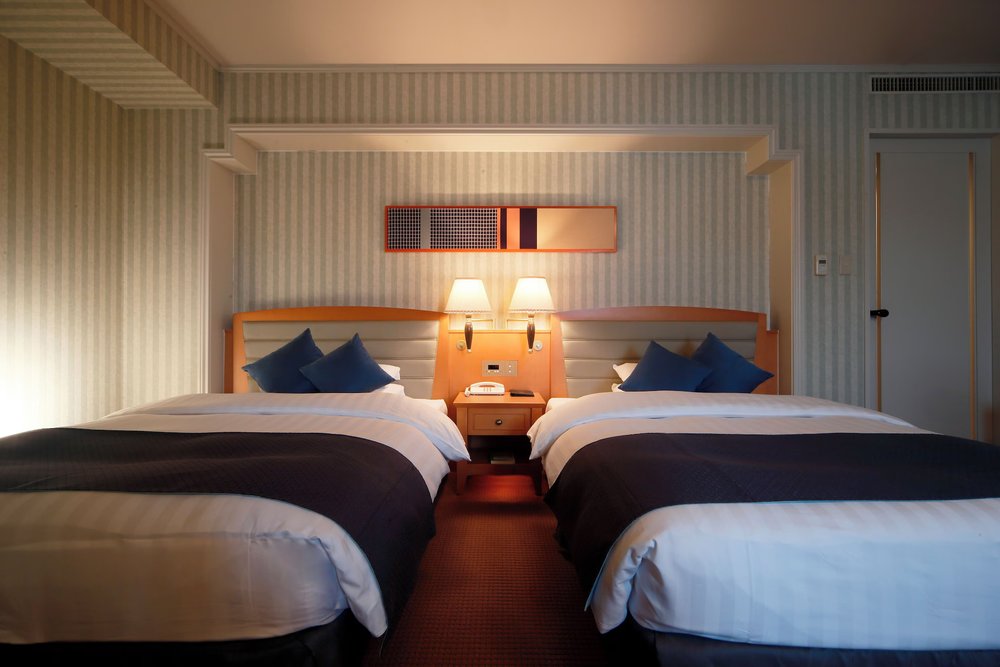
Spacious twin room at Hotel Nikko Nara near Nara’s top attractions
Accommodation in Japan is one area where the country punches above its weight. Even at the budget end, you'll find rooms that are clean, well-maintained, and far better run than what you'd get at a similar price point back home.
Average accommodation costs in Japan
- Budget (hostels and capsule hotels) (£25-£45/night): A great option especially if you’re a solo traveller. Japanese hostels are well-kept, often have decent common areas, and the capsule hotel experience is one worth having at least once.
- Mid-range (business hotels) (£65–£130/night): This is the most ideal type of hotel. These hotels are everywhere, reliably good, and located right near the station.
- Comfortable and family hotels (£130–£220+/night): If you need more space, for a family, or simply because you'd like a proper room to decompress in, this range gets you something comfortable.
A few good options we recommend are:
Hotel Gracery Shinjuku is right in the thick of Tokyo's Shinjuku district, where it’s convenient and walking distance from a number of restaurants and metro lines. It's a proper mid-range Tokyo base.
If you're after something more budget-friendly in Tokyo, Sotetsu Fresa Inn Tokyo Kinshicho does the job well with its tidy rooms, easy transport links, and a price that leaves more money for the things that actually matter, like food.
In Osaka, Toyoko Inn Osaka Namba Nippombashi drops you right into Namba, the center of Osaka's food scene. Less time commuting, more time eating takoyaki at midnight.
3. Transportation 🚆
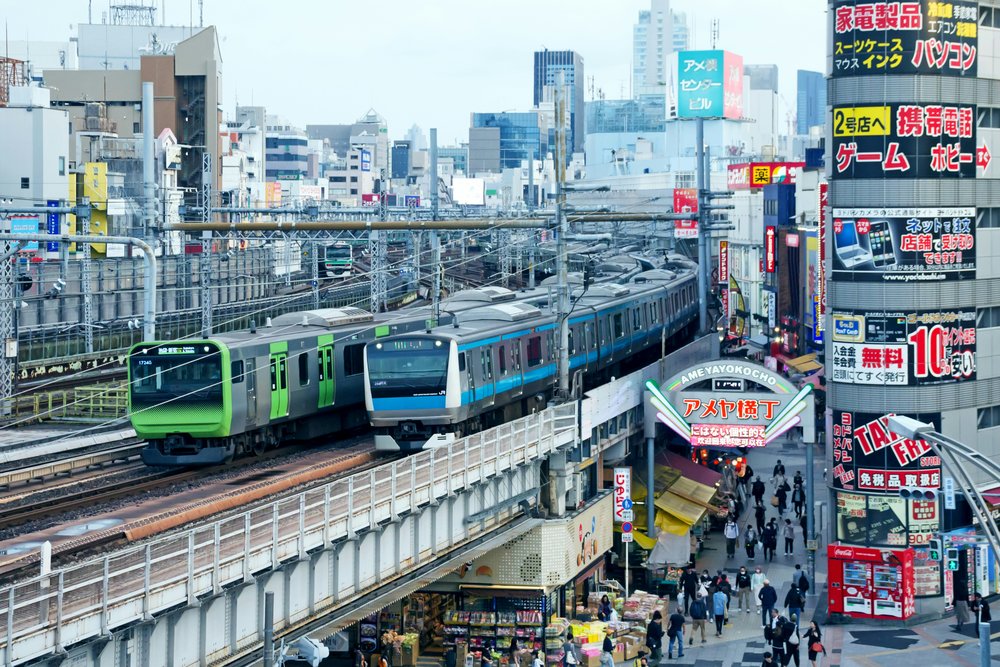
Tokyo trains that connect the city | Photo by Muhammad Irfan from Unsplash
Getting around Japan is actually part of what makes the trip exciting because the trains run on time, the networks are extensive, and the whole system is a fair bit more intuitive than it looks at first glance. It's also a meaningful chunk of your Japan travelling cost, so it's worth understanding before you go.
Average transport costs in Japan
- Local trains and metro (within one city): £5-£10/day
- Long-distance travel (e.g., Tokyo to Kyoto): £50-£150 per journey
Stick to one city, and daily transport is easy to keep cheap. Start hopping between cities, and costs climb – but that's where smart planning and budgeting make a real difference.
The shinkansen (worth every penny, btw)
The shinkansen (bullet train) is how most people travel between Japan's major cities, and it really is as good as the hype. London to Edinburgh takes about 4.5 hours on a good day. Tokyo to Kyoto on the shinkansen? Two hours and fifteen minutes. Japan is a big country, but the rail network makes it feel very manageable.
A single Tokyo-Kyoto ticket runs roughly £50-£70. If you're planning to cover several cities – Tokyo, Kyoto, Osaka, Hiroshima, maybe Fukuoka – a Japan Rail Pass will almost certainly save you money overall. You can compare pass options and book ahead of your trip.
IC Cards: Your best travel buddy
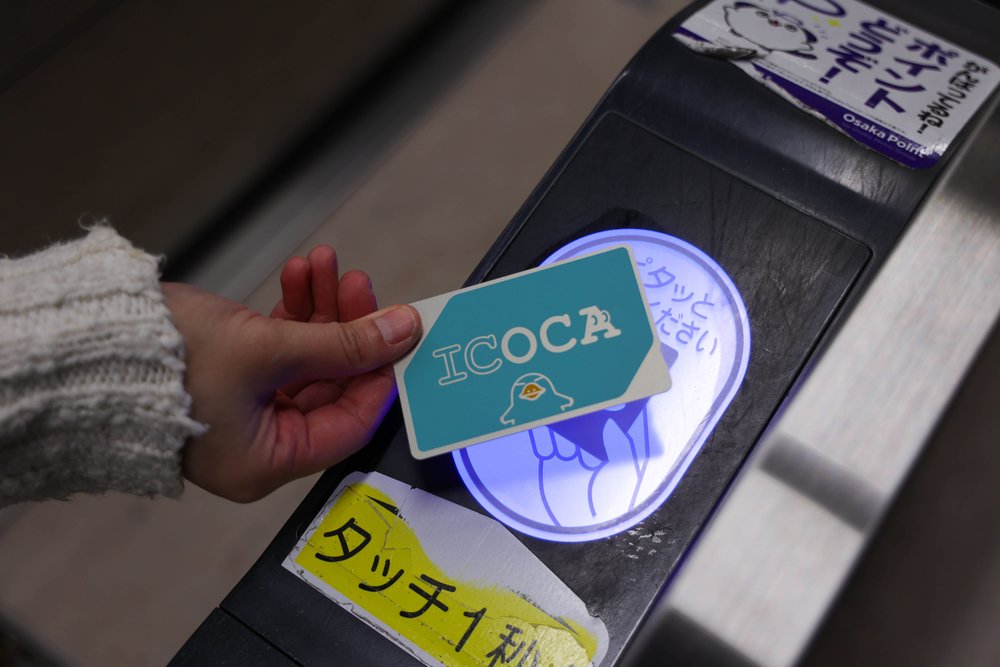
Using an IC card for easy train travel in Japan
Instead of buying individual tickets every time, you can use IC cards like Pasmo or Suica (in Tokyo) or ICOCA (in Osaka and Kansai). These reloadable cards make your Japan travel easier; you just tap in and out at train stations, on buses, and even at convenience stores. Think of it as your all-in-one travel wallet for Japan!
When to use transport passes
While IC cards are great for everyday use, transport passes can offer extra value if they match your itinerary.
- Tokyo Subway Ticket: Gives you unlimited rides on Tokyo Metro and Toei Subway lines for a set number of hours (24-72 hours)
- Kyoto-Osaka Sightseeing Pass: Offers unlimited rides on Keihan Railway lines, which connect popular attractions across Kyoto and Osaka
4. Food 🍜
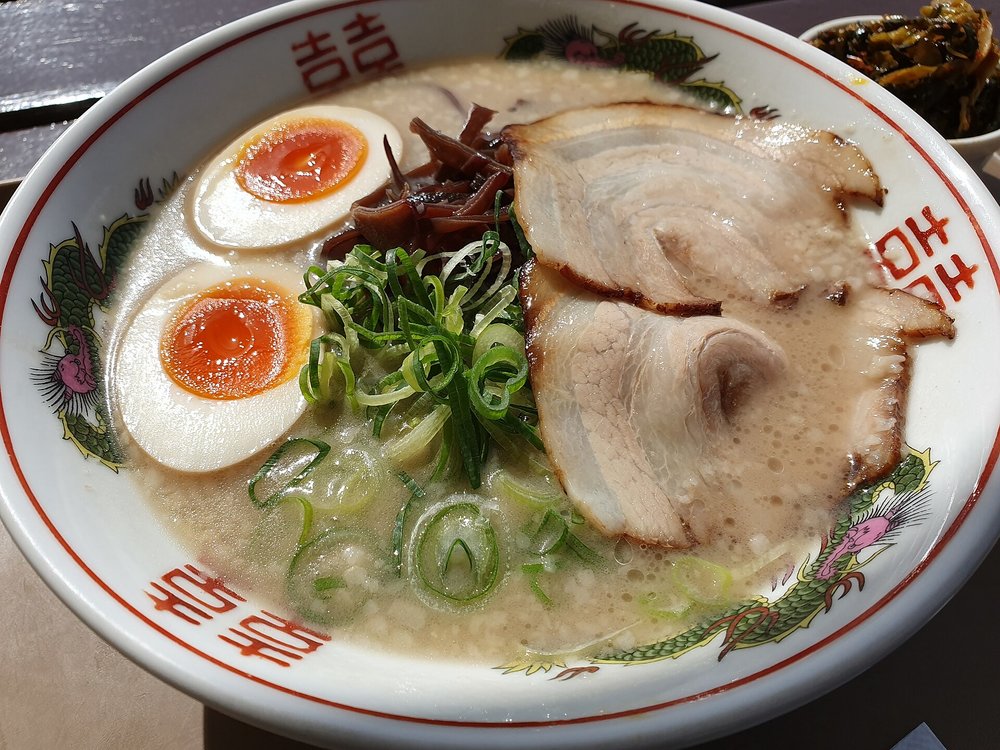
Kyoto style ramen with pork slices, soft egg, and rich broth | Photo from Syced on Wikimedia Commons
Here's the thing about food costs in Japan that nobody really warns you about: you're going to eat incredibly well and spend much less than you'd expect. The food is world-class at every price point, from a £4 convenience store onigiri to a proper sit-down ramen lunch for under a tenner.
For most, food ends up being one of the highlights of the trip and one of the cheaper parts of the budget. That's a rare combination.
Average food costs in Japan
- Convenience store meals (konbini) (£3–£5): Japan's convenience stores: FamilyMart, 7-Eleven, and Lawson, are actually good. Fresh onigiri, hot karaage chicken, and decent sandwiches. It's not service station food. Not even close.
- Casual restaurants (ramen, soba, tonkatsu) (£7-£14): A filling bowl of ramen or a tonkatsu set lunch at a local spot rarely tips past £10, even in Tokyo. These are proper sit-down meals, not takeaway.
- Mid-range dining (izakaya, sushi, yakiniku) (£18-£38 per person): This is where Japan's food scene really opens up. A good izakaya dinner with drinks is sociable, delicious, and still cheaper than a decent meal out in London.
Most travellers managing their budget eat mostly konbini and casual spots, with a few nicer dinners thrown in. That approach keeps daily food spending around £20-£30, comfortably.
Klook Tip: Breakfast is the easiest meal to keep cheap in Japan. Many business hotels include it, and a konbini breakfast of rice balls and green tea costs under £4. Save the budget for lunch and dinner.
5. Activities & experiences ⛩️
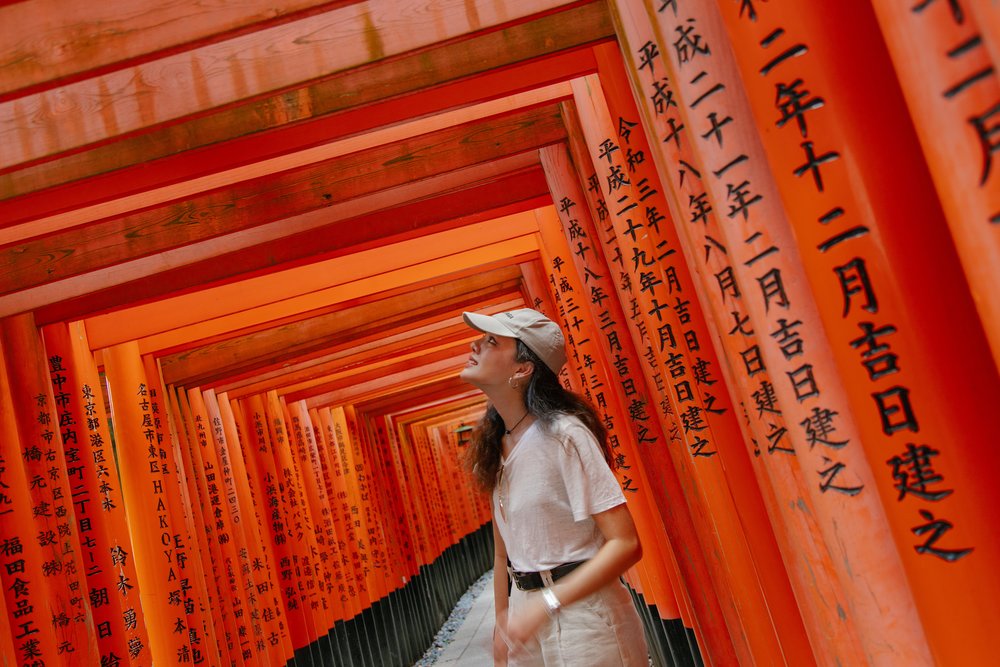
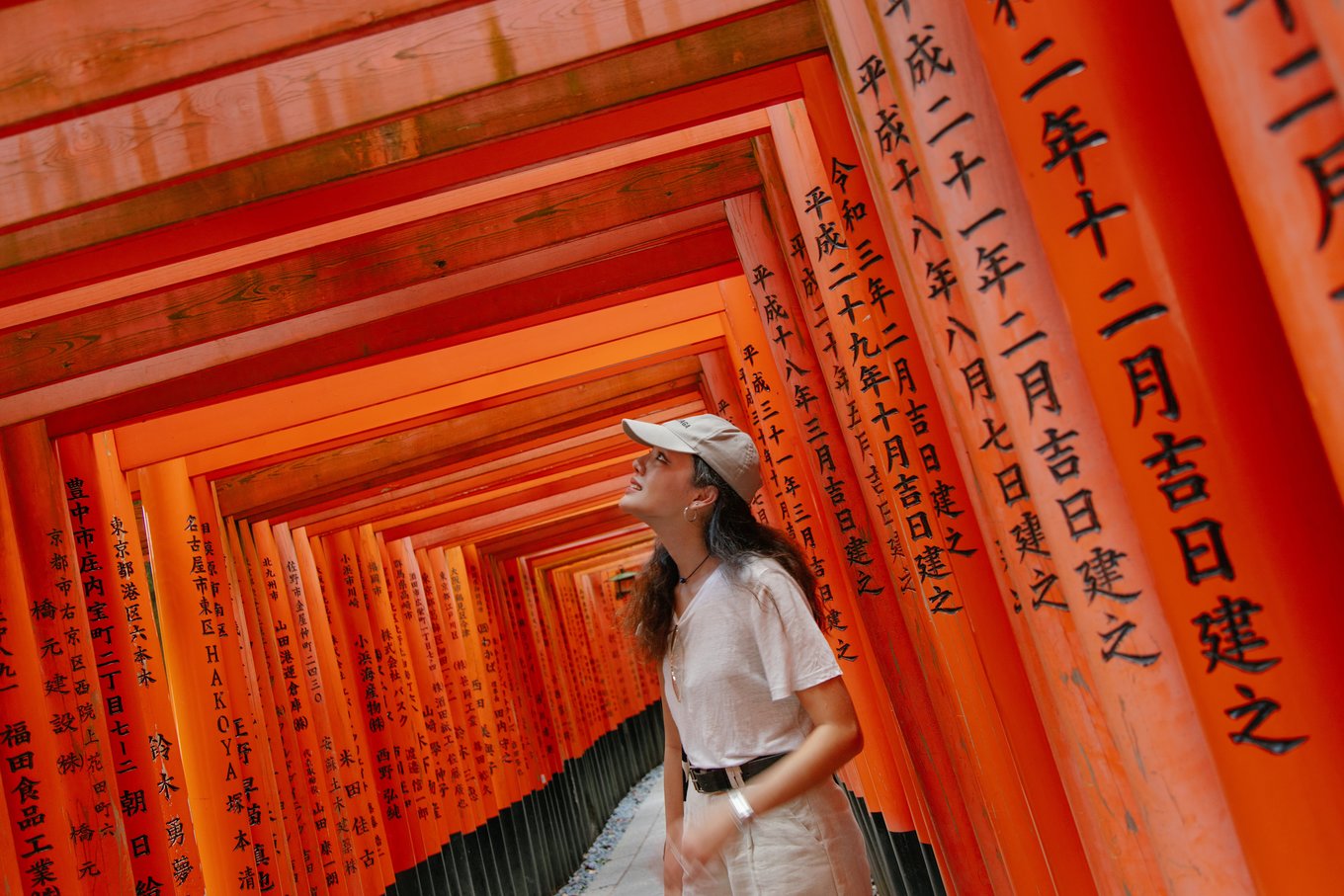
Walking through the iconic torii gates in Kyoto
Activities are the most flexible line item in any Japan trip budget, and Japan is surprisingly generous when it comes to free things. Kyoto's Fushimi Inari Shrine, the Arashiyama Bamboo Grove, Nara Park, and the observation floor of the Tokyo Metropolitan Government Building all cost nothing to visit. For a country with such famous sights, that's not nothing.
Paid experiences are where things get more interesting, and honestly, a few of them are worth the spend.
Average activities and experiences cost in Japan
Activity | Estimated cost (per person) |
Temples & shrines | Free to ¥1,000 (GBP £4.6) |
Museums & digital art (e.g., teamLab) | ¥3,000 - ¥4,500 (GBP £14 - £21) |
Major observation decks (e.g. Tokyo Skytree) | ¥2,000 - ¥4,000 (GBP £9 - £20) |
Theme parks (e.g. Tokyo Disneyland or Universal Studios Japan) | ¥8,500 - ¥11,000 (GBP £40 - £52) |
Onsen (public bath) | ¥500 - ¥2,000 (GBP £2 - £9) |
Two experiences worth budgeting for
A guided day trip to Mount Fuji from Tokyo is one of the most memorable things you can do in Japan. Getting there independently involves a few train changes and a fair bit of planning, but thankfully, a guided tour handles all of that, and you get more time actually at Fuji!
In Kyoto, a Japanese tea ceremony and matcha tasting experience is the sort of thing that stays with you. You'll learn the ritual, try freshly prepared matcha, and come away with a real sense of Japanese culture rather than just another photo in front of a temple.
6. Travel services
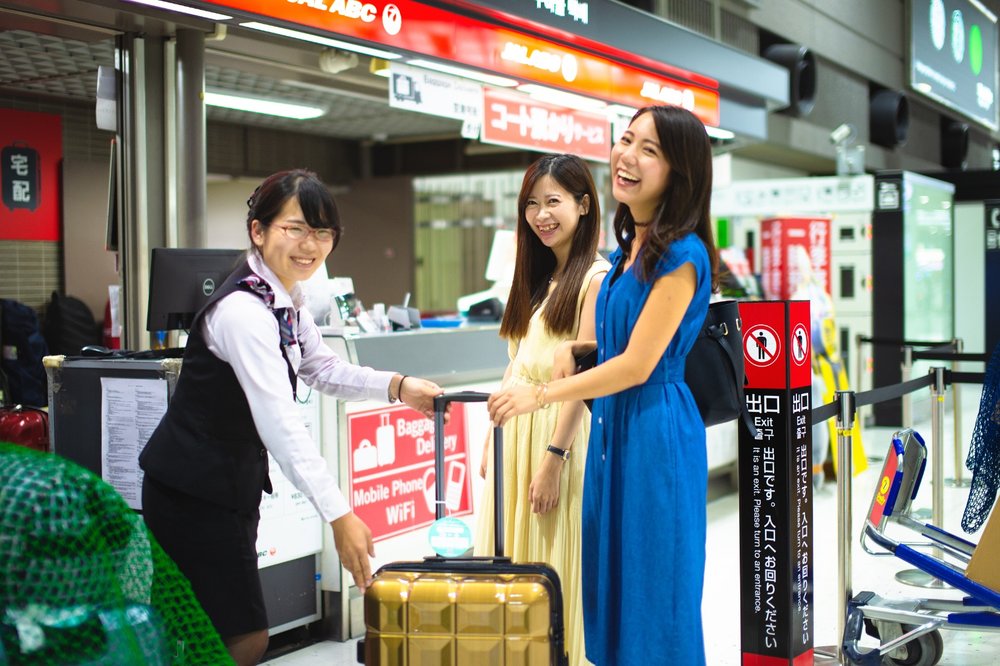
There are luggage transfer services across Japan
The bits that don't make it onto most budget breakdowns but absolutely should. Sorting these out before you fly saves both money and stress on the ground, and they add up more than people expect.
eSIM and staying connected
Roaming charges from UK mobile networks in Japan can be eye-watering. A Japan eSIM is the simplest fix — scan the QR code before you leave home, and it activates the moment you land. No queuing at a SIM kiosk after a 12-hour flight, no shock on your next phone bill.
Airport transfers
Whether you're flying into Narita or landing at Kansai, pre-booking your Tokyo airport transfer is worth doing. Both airports are a fair distance from the city centre, and arriving with a confirmed transfer already booked is a much better start to a holiday than standing in a taxi queue after 12+ hours in the air.
Travel insurance
Not the most exciting line item, but skip it at your peril. Medical costs in Japan are high by international standards, and a single hospital visit without cover could easily wipe out your entire trip budget.
A standard single-trip policy from the UK for Japan typically runs £30–£60 per person, a small price compared to the alternative. Check that your policy covers medical evacuation as well as treatment, and read the small print on adventure activities if you're planning anything active.
Luggage transfer (takuhaibin)
Japan has a brilliant luggage forwarding service called takuhaibin, where you can send your bags directly between hotels or from your hotel to the airport, usually overnight and for around £5-£10 per bag. Most hotels can arrange it at the front desk, or you can drop bags off at convenience stores.
Here are some of our luggage transfer services across Japan!
- Luggage delivery service from Osaka/Kyoto to Kansai International Airport
Sample 2-week budget in Japan
Planning a trip to Japan on a budget for two weeks might sound challenging, but it’s actually very doable with the right planning. If you’ve already planned where you'll stay, what you'll eat, and how you'll get around, you can enjoy Japan without spending a fortune.
Here’s a simple breakdown of what a 14-day budget trip might look like:
Category | Cost (GBP) | Cost (JPY) |
Accommodation | £350–£500 | ¥75,000–¥105,000 |
Food | £280–£350 | ¥60,000–¥75,000 |
Transport | £150–£250 | ¥32,000-¥53,000 |
Activities | £100–£200 | ¥22,000–¥43,000 |
Travel services | £60-£100 | ¥13,000–¥22,000 |
Total | £940–£1,400 | ¥200,000–¥300,000 |
Add return flights from the UK, roughly £600-£1,000 in shoulder season, and you're looking at around £1,500-£2,300 for a budget fortnight or £2,500-£4,000 for a comfortable mid-range holiday.
For a family trip to Japan, budget roughly 1.5x the adult per-person figure per child. Younger children often get free or discounted entry at attractions, which does help offset some of the extra costs.
FAQs about your Japan travel cost
How much will a 7-day trip to Japan cost?
From the UK, a week in Japan all-in (return flights, accommodation, food, transport, and a few experiences) typically comes to around £1,500-£2,500 per person. Budget travellers staying in hostels and eating konbini can get below that; a comfortable mid-range trip with decent hotels and sit-down meals sits closer to £2,000-£2,500.
How much does a decent trip to Japan cost?
A comfortable, well-rounded Japan holiday costs around £130-£180 per person per day on the ground, not including flights. That covers a good business hotel, a mix of casual and sit-down meals, paid attractions, and a day trip.
How much money do I need for 2 weeks in Japan?
If flights and accommodation are already sorted, budget around £50-£80 per day for food, transport, and activities. Over a fortnight, that's roughly £700-£1,120. Add extra if you're planning to shop, go to theme parks, or join some tours.
Do I need a visa to visit Japan?
UK passport holders don't need a visa for tourist trips to Japan of up to 90 days, as it's visa-free. You'll need a valid passport, a return or onwards ticket, and evidence you can fund your stay. Entry requirements can change, so check the latest guidance on the UK Foreign Office website before you travel, just to be safe.
We also recommend getting an International Driving Permit, especially if you’re planning to rent a car or planning to experience driving a go-kart in Tokyo
What is the average cost of a trip to Japan?
The average trip to Japan usually ranges between £900 to £1,900 per person for a 1-2 week trip, excluding flights. Budget travellers can spend less, while luxury travellers may spend more. Your total depends on your accommodation, food choices, and activities. Planning ahead can help you stay within your budget.
Is Japan cheap to visit?
Japan is not the cheapest destination, but it’s more affordable than what you may expect. With budget stays, convenience store meals, and smart transport choices, you can keep costs low. Many attractions are also free or affordable. Overall, Japan offers great value for the experience.
How much does accommodation cost in Japan?
Accommodation in Japan ranges widely depending on your style. Budget travellers can find hostels for £20-£30 per night, while mid-range hotels cost around £45-£90. Families or larger groups may spend £90-£185 per night. Booking early helps you secure the best deals.
More Japan guides for you
What is Klook?
Klook is a leading pan-regional experiences platform in Asia Pacific, purpose built to digitalize experiences and make them accessible to every traveler.
Our mission is to build the digital infrastructure for the global experience economy — empowering merchants to share their passions and travelers to discover the heartbeat of each destination. We operate a mobile-first, curated platform featuring diverse experiences across global destinations.