
What plug do you need for Japan? (+ bonus travel tips for first-timers)
Planning a trip to Japan? Besides packing your travel essentials, it's important to know what kind of electrical outlets and plugs are used across the country. It’s a small detail that can save you a big headache!
Japan uses a unique voltage of 100 volts, lower than in many other countries. The last thing you want is to arrive and realise you can’t charge your phone or camera.
This quick guide covers everything you need to know about Japan’s plug types, power outlets, voltage, and whether you’ll need an adapter for your devices.
Japan has a cheat code; it's called Klook! 🧡
Japan can feel like a lot to figure out. But every game has a cheat code, and Japan's is Klook.
This June, we're teaming up with Family Fizz for a real family trip to Japan, and there are three ways to play:
- Pre-booked and locked in: Some parts of their itinerary are already sorted, so you can see exactly how easy it is to plan Japan with Klook
- Chosen on the day: The Family Fizz kids pick between activities in real time and book straight through Klook, just like you would on your own trip
- Voted by you: Follow along on Family Fizz's Instagram page, vote on where they head next (see Mount Fuji or go on a tea ceremony in Kyoto?), and watch your pick come to life!
Every experience on their trip is bookable straight through Klook, so you can follow along and plan your own Japan adventure at the same time. Their trip, your rules.
Going live on 25 June 2026. Press start! 🕹️
What type of plug sockets are used in Japan?
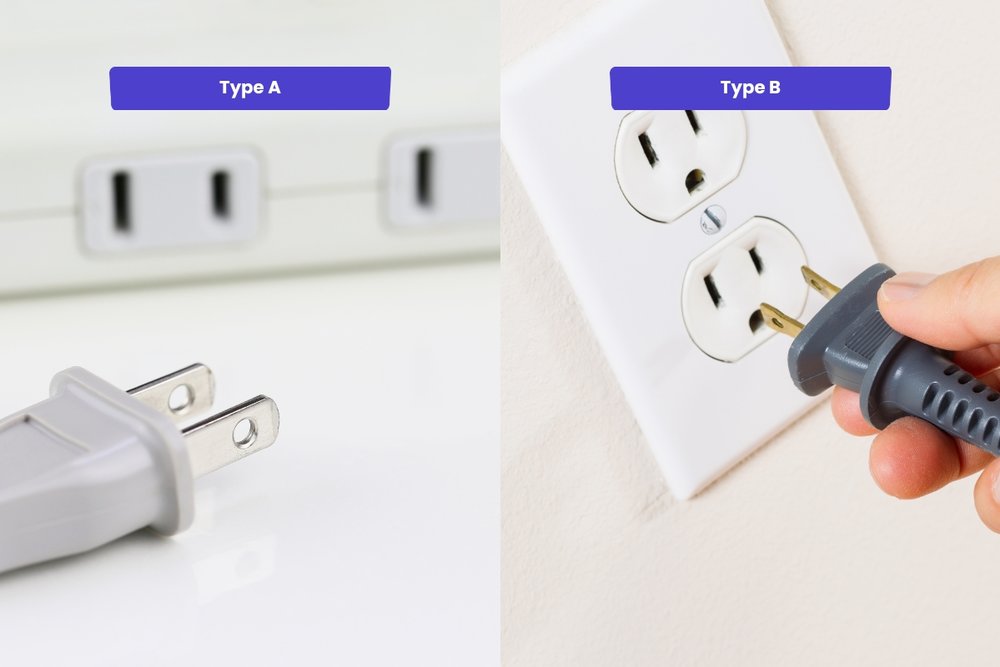
Credit: kellymarken via Getty Images, tab1962
Japan uses two main types of plugs — Type A and, occasionally, Type B power outlets.
- Type A plug: This is a two-pronged, flat plug often found in North America. It’s the most common type of plug in Japan.
- Type B plug: This is also a flat, two-pronged plug but includes a grounding pin. While Type B outlets exist, they are not as widely used as Type A.
For most travellers, the Type A plug will work perfectly fine in Japan!
Do you need a plug adapter in Japan?
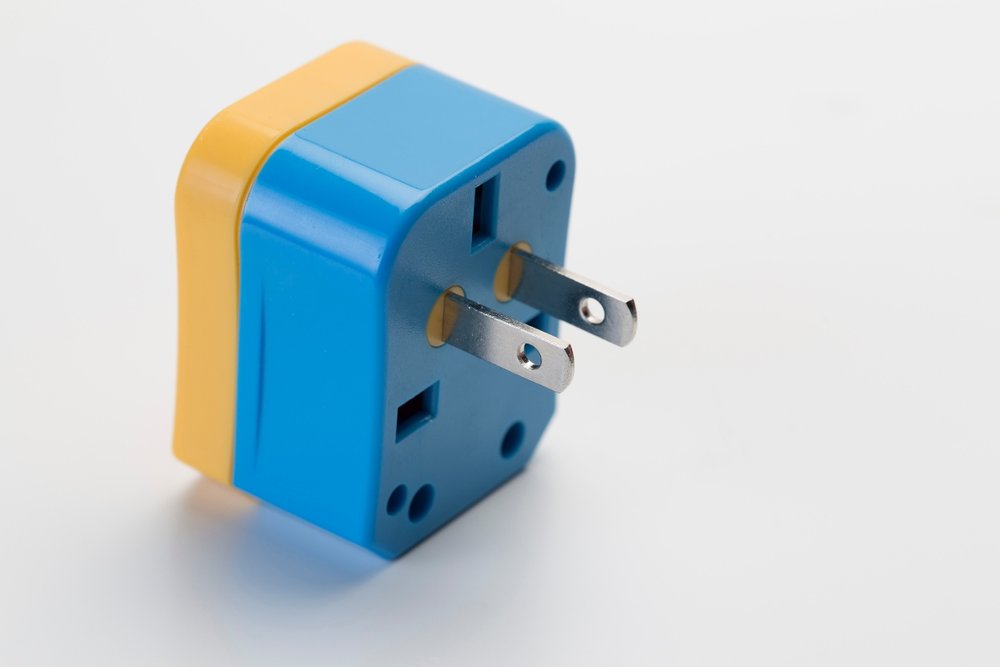
Credit: ploy from Getty Images
If you're travelling to Japan from the UK, you'll need a travel adapter. Japan uses Type A and Type B plugs, while the UK uses Type G plugs, so your devices won't fit Japanese power outlets without an adapter.
The good news is that most modern devices, including smartphones, laptops, tablets, and camera chargers, can handle Japan's voltage (100V) without any issues. Just check your charger's label to confirm it supports 100-240V input. If it does, you'll only need a plug adapter, not a voltage converter.
Forgot to pack one? You can easily buy a travel adapter in Japan at electronics retailers such as Bic Camera and Yodobashi Camera, as well as at many airport shops and major train stations.
What voltage does Japan use?

Japan operates on 100 volts, which is lower than the standard voltage in many countries. The frequency of electricity varies by region:
- 50 Hz in eastern Japan, including Tokyo, Yokohama, and Hokkaido.
- 60 Hz in western Japan, including Kyoto, Osaka, and Hiroshima.
You should avoid using an electrical appliance that is rated at a voltage different from the supply – take note if you're planning to bring your electronics like a hair dryer!
Do you need a Voltage Converter for Dual Voltage Devices?

Japan’s 100-volt system may be lower than what your devices are designed for. Here’s how to determine if you need a converter:
- Check the Voltage Range on Your Devices: Many modern electronics like smartphones, laptops, and cameras are dual voltage (e.g., 100-240V). If your device falls within this range, you won’t need a voltage converter.
- High-Wattage Devices: Appliances like hair dryers, curling irons, or electric kettles may not support Japan’s lower voltage. In this case, you’ll need a voltage converter to safely use them. For continuous use with appliances, consider using a voltage transformer instead.
- Japan-Specific Electronics: If you plan to buy electronics in Japan, ensure they’re compatible with your home country’s voltage if you intend to bring them back.
First time visiting Japan? Here are a few extra tips!

Shinkansen bullet train at a station in Japan
Navigating Japan is easy once you get the hang of it, but a few smart tips can make your trip even smoother:
1) Get an eSIM for instant connectivity: Skip the hassle of physical SIM cards and stay connected as soon as you land with a Japan eSIM. It’s quick to activate and super convenient — no need to swap out your original SIM.
2) Book tickets and experiences ahead of time: Japan is full of must-see attractions, from teamLab Planets Tokyo to Universal Studios Japan. Popular spots sell out fast, so skip the queues and guarantee your spot with advance bookings on Klook!
3) Take advantage of airport transfers: After a long flight, figuring out transport into the city can be overwhelming. With Klook, you can pre-book a private airport transfer for door-to-door convenience or opt for train options like the Narita Express, Haruka Kansai Airport Express or Skyliner Narita Airport Express — all offering comfortable and efficient rides straight to the city centre.
FAQs about Japan’s electric outlets

What type of plug is used in Japan?
Japan uses Type A plugs, which are two flat parallel prongs, and occasionally Type B plugs, which include a grounding pin. Type A is the most common.
Are Japan and the UK plugs the same?
No, Japan and the UK use different plug types. Japan uses Type A and Type B plugs, while the UK uses Type G plugs, so UK travellers will need a travel adapter to use their devices in Japan.
There is also a difference in voltage. Japan operates on 100V, compared to the UK's 230V. Most modern electronics, including smartphones, laptops, cameras, and tablets, are designed to work with a wide voltage range (typically 100–240V), meaning you'll usually only need a plug adapter. However, it's a good idea to check your device's power label before travelling, particularly if you're bringing appliances such as hair dryers, straighteners, or electric shavers.
Can I charge my phone in Japan?
Yes! Most smartphones are dual voltage (100-240V). If your plug is Type A, you can directly charge it without an adapter.
Do Japanese outlets have a grounding pin?
Some outlets support Type B plugs with a grounding pin, but they are less common. If you use three-pronged plugs, bring a Type B to Type A adapter.
Are USB-C chargers compatible in Japan?
USB-C chargers are compatible as long as you have a USB port or a plug adapter for your charger.
More Japan travel inspiration

What is Klook?
Klook is a leading pan-regional experiences platform in Asia Pacific, purpose built to digitalize experiences and make them accessible to every traveler.
Our mission is to build the digital infrastructure for the global experience economy — empowering merchants to share their passions and travelers to discover the heartbeat of each destination. We operate a mobile-first, curated platform featuring diverse experiences across global destinations.