So, you've just landed in Japan… what’s next? 🤔
The moment your plane touches down in
Japan, the excitement is real. The signs are in Japanese, the trains look
incredibly clean, and everyone seems to know exactly where they're going. Don't worry, you'll get there too, and faster than you think!
The first few hours after your arrival in Japan can be a little overwhelming if you haven't done your homework. That’s why we’re here to sort it out for you! Whether you've landed at Narita or Haneda, we'll walk you through everything: from setting up your eSIM and tapping your way onto a train, to finding the easiest Japan airport transfers into the city.
Right, let's get into it!
Step 1: Sort your entry requirements first 🛂
Before you even think about trains or taxis, you'll need to clear immigration and customs. For UK passport holders, Japan is visa-free for stays up to 90 days. But there are still a few steps to take care of at the airport.
Register on the Visit Japan Web
The Japanese government's
Visit Japan Web portal lets you pre-register your immigration and customs details before you fly. You'll fill in your arrival information online, and on the day, you’ll just present your QR code at the immigration counter. Plus, the line for those with a QR code prepared are much faster compared to the ones who filled out paper forms at the airport.
We suggest setting it up a day or two before you fly. You'll need to fill in your passport details, flight info, and accommodation address.
Japan arrival requirements for UK Travellers
As a UK citizen, here's a checklist you'll need to have ready at immigration:
✅ A valid British passport (must be valid for your full stay)
✅ Proof of onward or return travel (flight ticket)
✅ Accommodation details for your first night (can be your online booking confirmation)
✅ Sufficient funds for your trip (border officers might ask)
✅ Your Visit Japan Web QR code (if you've registered; highly recommended!)
Japan doesn't require a visa for UK tourists for stays under 90 days. That said, always double-check the latest Japan arrival requirements before you travel, as entry rules can change.
Step 2: Get connected via your Japan eSIM 📲
Once you're through arrivals, your first priority should be getting online. Japan's airports have great connectivity options, and sorting this out before you hop on the train will make your entire trip smoother.
Should you get a pocket WiFi, SIM cards, or an eSIM?
Japan Pocket WiFi devices are great for groups: one device can connect multiple people. But you need to remember to charge it, carry it everywhere, and return it when you leave. If you prefer things a bit traditional, you can always opt for a
Japan SIM card (especially if you’re using a dual-sim type phone).
But the most convenient choice is getting an
eSIM Japan. You download it before you leave the UK, activate it when you land, and you're connected the moment you step off the plane. No queues, and no physical SIM to swap needed. You can even customize your data package and its validity duration, from 1 day to 30 days!
If your phone supports eSIM (most modern iPhones and Android flagships do), go with the eSIM; it's one less thing to think about!
To summarize everything that a Japan eSim, SIM card, and pocket WiFi has to offer, we’ve created a table below so you can easily see the differences of each one:
| eSim | SIM Card | Pocket WiFi |
|---|
Pros | - Easy to top up when you run out of data - No need to insert any physical SIM card into your phone - Can easily top up data if you run out - Much cheaper than roaming - Comes with a local phone number - No additional device to carry - Can activate before or upon arrival at the airport - No need to allot time for pick up and drop off | - Great option if your phone isn’t eSim compatible - No additional device to carry - Can add-on data if you run out - Comes with a local phone number | - Can connect to multiple devices - It won’t drain your phone battery as it is a device of its own - Generally has good signal strength |
Cons | - Can drain your phone battery the more you use your data | - Might have to swap SIM cards if your phone can only hold one card - Needs time to claim upon arrival at the airport - Can drain your phone battery the more you use your data | - Extra carry-on with you since it’s a separate device - May have rental fee or initial deposit - Needs time to claim upon arrival and return before leaving |
Step 3: Grab a Welcome Suica Card at the airport 💳
The
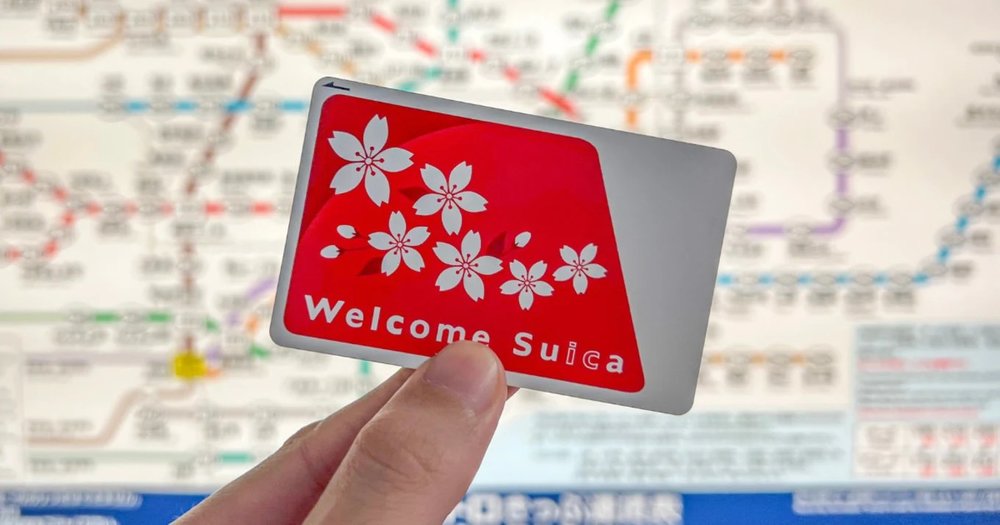
Welcome Suica Card is a prepaid travel card that works on trains, buses, and even at convenience stores across Japan. It's the fastest way to navigate cities without fumbling for coins or figuring out exact fares at a ticket machine.
You can pick one up at the airport, look for the Welcome Suica machines at Narita Terminal 1 and 2, or at Haneda's international arrivals floor. Top it up with cash, and you're ready to tap in and tap out everywhere.
The Welcome Suica is valid for 28 days and designed specifically for visitors; it's a little different from the regular Suica in that it can't be refunded, but for most trips it's absolutely fine.
Klook Tip: You can also check your Welcome Suica Card's validity.
Step 4: Choose your airport transfer into the city
Japan has two main international airports serving
Tokyo: Narita and Haneda. Both are well-connected, but the transfer options (and journey times) are quite different.
Getting into Tokyo from Narita Airport
Narita International Airport is about 60-70km east of central Tokyo, so you've got a few options depending on your budget and how much luggage you're hauling.
The
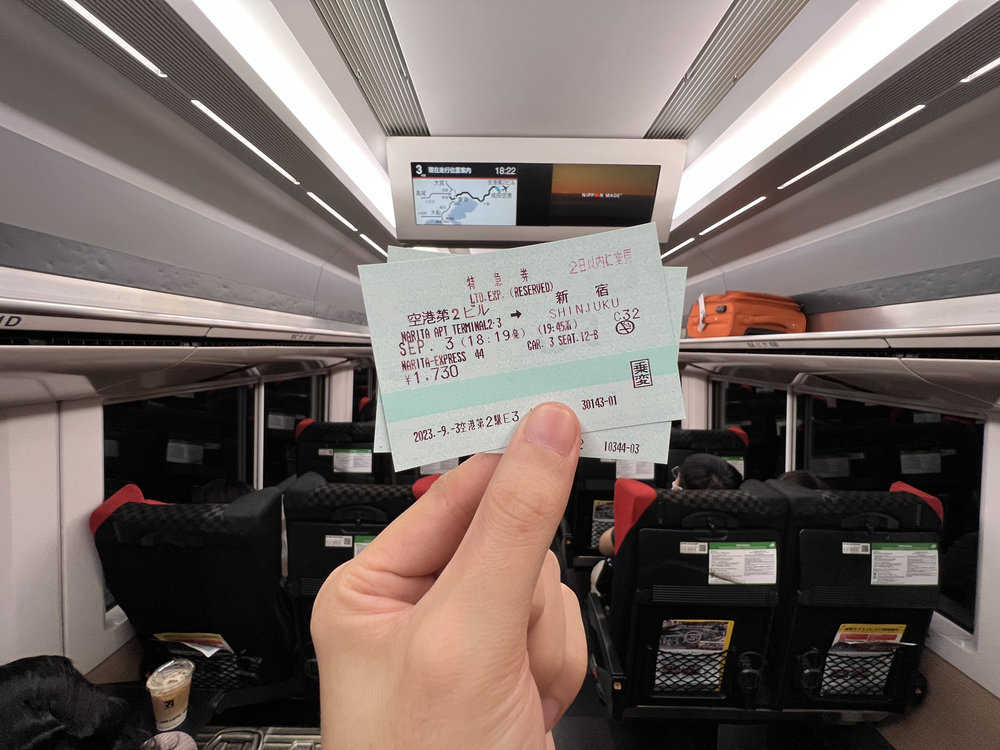
Narita Express (N'EX) is the most popular train option: fast, reliable, and it goes directly to Shinjuku, Shibuya, and Ikebukuro. You can use your Suica card or buy a ticket at the station.
But if you prefer a stress-free ride with your luggage, the
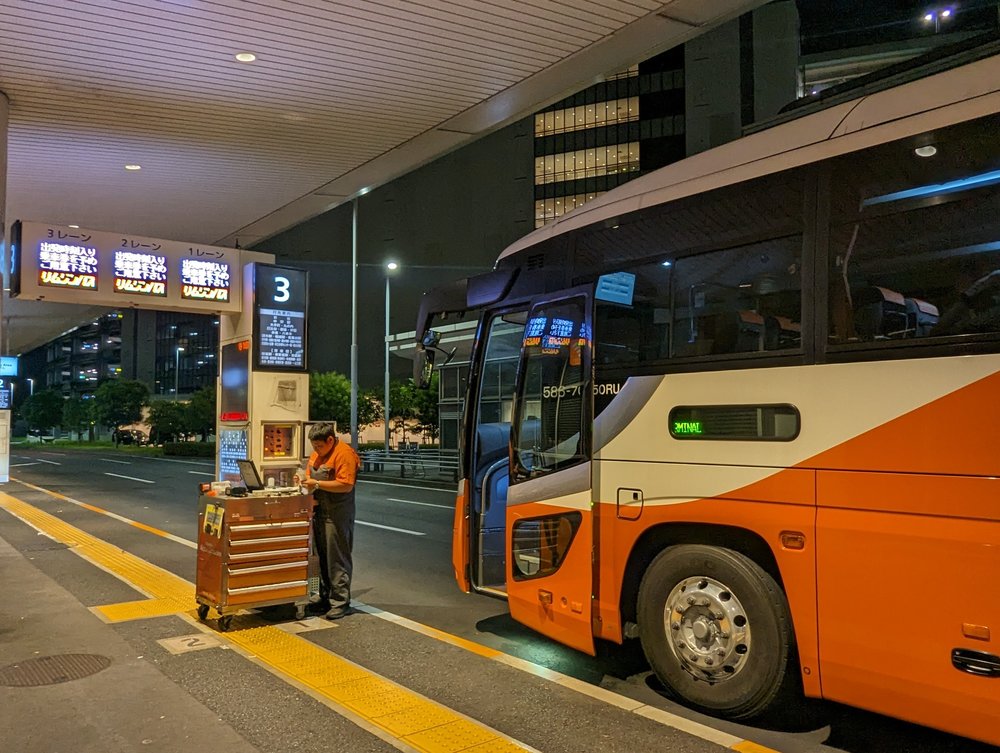
Narita Airport limousine bus to Tokyo is a great option. It drops you off at major hotels and stations across the city, so if you're staying in Shinjuku or Ginza, you might be able to get dropped almost at your door.
If speed is your thing and you're heading to
Asakusa, Ueno, or anywhere on the Yamanote Line, the
Keisei Skyliner from Narita gets you to Nippori in just 36 minutes, the fastest train link from Narita.
Getting into Tokyo from Haneda Airport
Haneda International Airport is much closer to central Tokyo, about 20-30 minutes by train. The Tokyo Monorail and Keikyu Line both connect Haneda to the city centre quickly and cheaply. Use your Suica card here and you're sorted.
If you've got heavy bags or you're arriving late, the
Haneda Airport limousine bus is worth every penny. It connects Haneda directly to dozens of hotels across Tokyo, runs around the clock, and takes the stress out of navigating train connections with a mountain of luggage.
Getting into Osaka from Kansai Airport (KIX)
Osaka-bound?
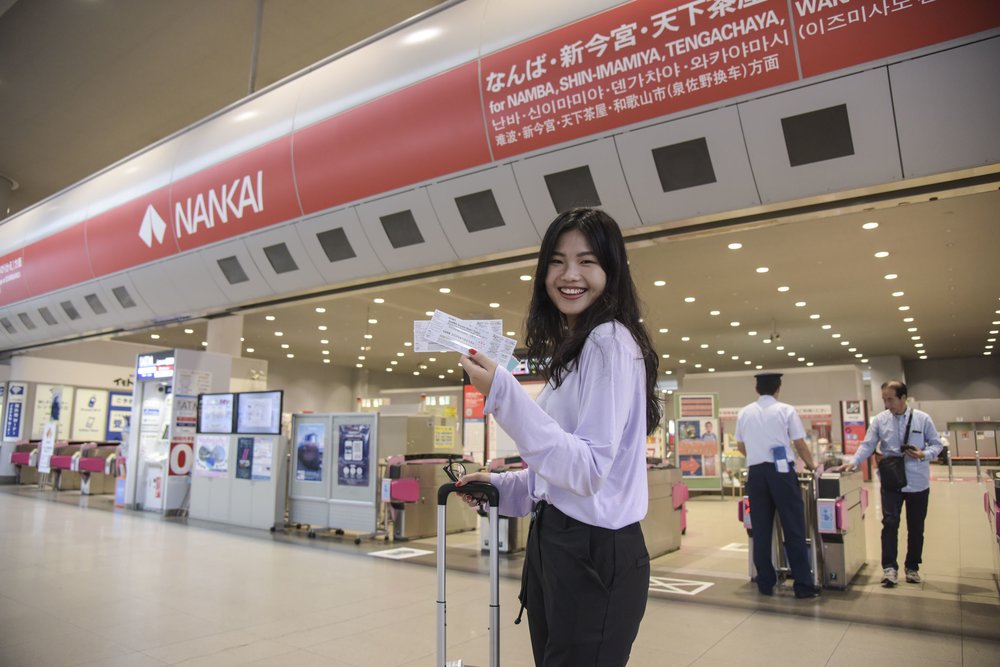
Kansai International Airport is well-connected to the city, with trains and buses running regularly into the centre. The
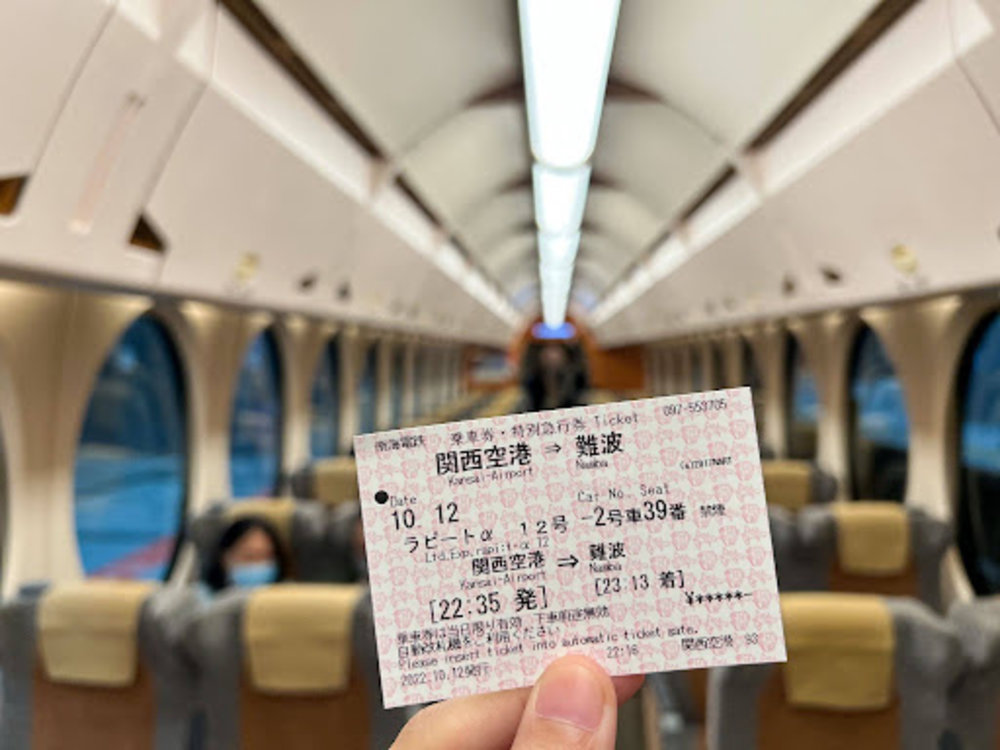
Nankai Express is the cheapest and most direct option, getting you to Namba Station, right in the center of
Osaka, in about 44 minutes.
If you've got a
JR Pass or you're heading to Shin-Osaka or Kyoto afterwards, hop on the JR Haruka Express instead. It reaches Osaka Station in 47 minutes and now runs on a QR e-ticket system, so you can book in advance and skip the queue entirely.
Travelling with heavy bags or arriving late at night? The
Kansai Airport Limousine Bus runs directly to Osaka Station, Namba, and several hotels across the city — comfortable seats, ample luggage space, and no train transfers to worry about.
Things you must do before you leave the airport
Before you head out of the terminal, take five minutes to tick these off:
Activate your eSIM or collect your pocket Wi-Fi. You'll need internet for maps, translation, and everything else.
Top up your Suica card. ¥2,000-¥3,000 is a solid starting amount for your journey into the city.
Spot the limousine bus counter. These are usually in the arrivals hall, clearly signposted in English.
Download Google Maps or Japan's Navitime app. Both work well for train navigation.
Grab some yen from an ATM. 7-Eleven ATMs in Japan accept international cards and are available in most airports.
Japan is extremely cash-friendly, so even with a travel card, it's worth having some yen on you from the start.
FAQs about Japan arrival for UK Travellers
What do UK citizens need to enter Japan?
UK citizens can enter Japan visa-free for up to 90 days for tourism or business purposes, no visa application needed. You'll need a valid British passport, a return or onward ticket, and proof of accommodation. It's also a good idea to register on Visit Japan Web before you fly, as this lets you pre-submit your arrival card details and speeds up immigration with a QR code.
Do I need to fill in a Japan arrival card?
Japan has moved towards a digital system through Visit Japan Web, where you can submit your arrival information online before you travel. If you've registered and have your QR code ready, you may not need to fill out a paper card at all. However, paper arrival cards are still available at the airport for those who haven't pre-registered, so don't panic if you forgot!
Can I buy a Suica or Pasmo card at the airport?
Yes, you can! The Welcome Suica card is available at dedicated machines in major airports like Narita and Haneda, and is designed specifically for international visitors. It works just like a regular Suica; you can use it on trains, buses, and in shops, but it's valid for 28 days from purchase.
Is it better to get a pocket Wi-Fi or a Japan eSIM?
For solo travellers or couples, an eSIM is almost always the better choice,No device to carry, no charging to worry about, and no return desk to find at the end of your trip. Pocket Wi-Fi makes more sense for groups of three or more who want to share one connection and save on costs.
Do I need a QR code to enter Japan from the UK?
A QR code isn't technically required, but it makes your arrival in Japan a whole lot smoother. The QR code is generated through Visit Japan Web after you pre-register your immigration and customs details. At the airport, you can use it to move through the immigration process faster, especially during peak travel times.
Related reads for your trip to Japan
What is Klook?
Klook is a leading pan-regional experiences platform in Asia Pacific, purpose built to digitalize experiences and make them accessible to every traveler.
Our mission is to build the digital infrastructure for the global experience economy — empowering merchants to share their passions and travelers to discover the heartbeat of each destination. We operate a mobile-first, curated platform featuring diverse experiences across global destinations.