
Best for: Travelers who've already covered Shibuya Crossing and Sensoji Temple and want something different
Start here: Golden Gai (Shinjuku), Yanaka Ginza (old Tokyo), Nakano Broadway (retro otaku mall)
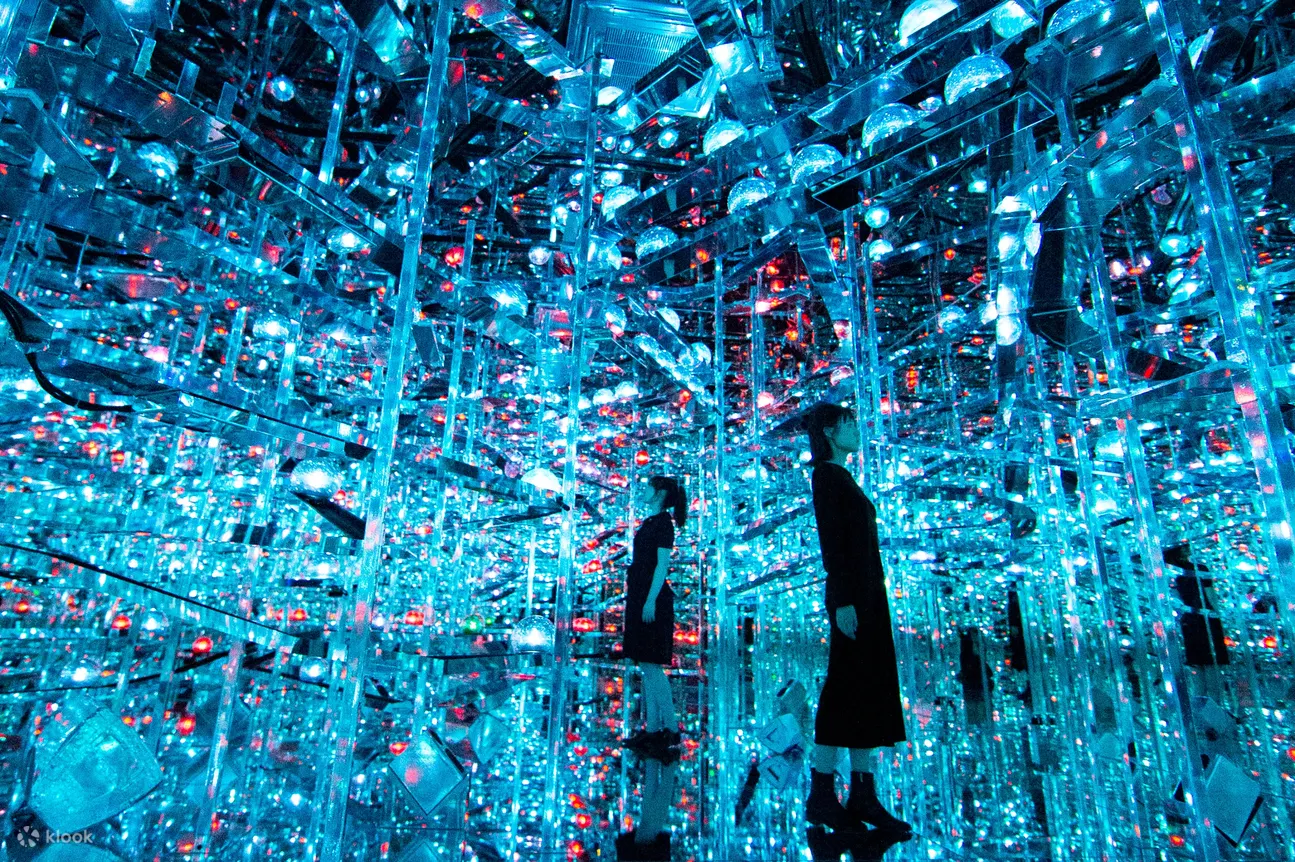
Standout tech pick: teamLab Borderless, Azabudai Hills
Time needed: 1 extra day covers two or three picks; 3-5 days lets you spread them across the trip without doubling back
Tokyo rewards travelers who go one layer past the postcard sights. Some of the best stories from a Tokyo trip come out of a historic shopping street or a seven-seat bar tucked behind Kabukicho, not the queue for a shrine photo, and the hidden gems below are grouped by the kind of experience you're after, so you can pick a lane instead of scrolling through eighty ideas at once.
The most unusual things to do in Tokyo include drinking in one of Golden Gai's 200-plus miniature bars, stepping into teamLab's borderless digital art museum, sitting down for a themed cat café in Kichijoji, and wandering the untouched postwar lanes of Yanaka Ginza. All four sit well outside the Shibuya Crossing-to-Sensoji Temple loop most first-time itineraries follow, and each can be booked as a stand-alone activity or a small guided tour rather than something you have to figure out on the ground.
Quirky Cafés and Bars for a Different Side of Tokyo Nightlife
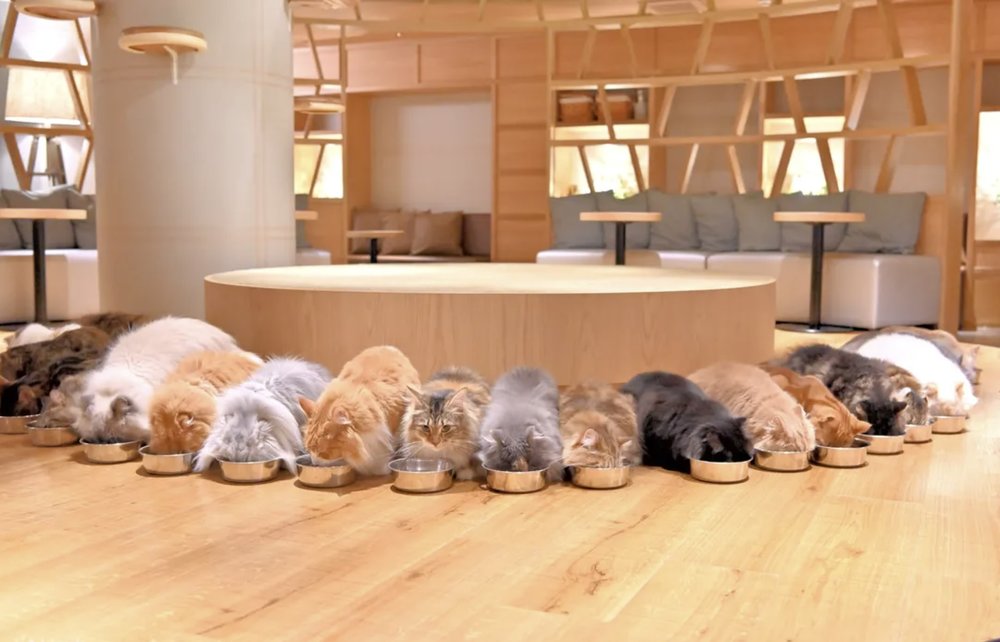
Cat Cafe MOCHA in Shinjuku
Tokyo's most unusual cafés and bars build the whole experience around one novelty: live animals, a themed set, or a maze of tiny independent bars, rather than the food or drinks themselves.
Cat Cafes
Cat cafés are the easiest entry point into this scene. Cat Cafe MOCHA runs locations in both Harajuku and Shinjuku, where you pay by the half hour to sit with the resident cats over a drink. There is no reservation-heavy ritual, just a counter, a timer, and a room full of cats that are used to visitors.
In Kichijoji, the Tokyo Cat Cafe leans further into theme with a full castle-style interior; a Klook reviewer who brought their daughter called it "great," and another said simply, "we had such a fun time, the cats and staff were so kind and helpful."
Themed Bars
For nightlife, nothing beats Shinjuku’s Golden Gai. This is a warren of more than 200 tiny themed bars packed into a handful of postwar alleys just behind Kabukicho, and each one has its own personality, from horror-movie dens to jazz bars that seat six people. Most bars are cash-only, many charge a small seating fee on top of drinks, and it’s worth asking before you take photos, since a number of owners don’t allow it. If you’d rather not bar-hop cold, a guided evening tour smooths that over: one Klook traveler who took a Shinjuku bar crawl said simply, "Great tour. Very informative. Will go back to the Golden Gai area," while another called their guide "no frills, just like a local," adding it was "100% recommended to get the night started and to finish your night in Golden Gai."
Art, Tech and Only-in-Tokyo Experiences
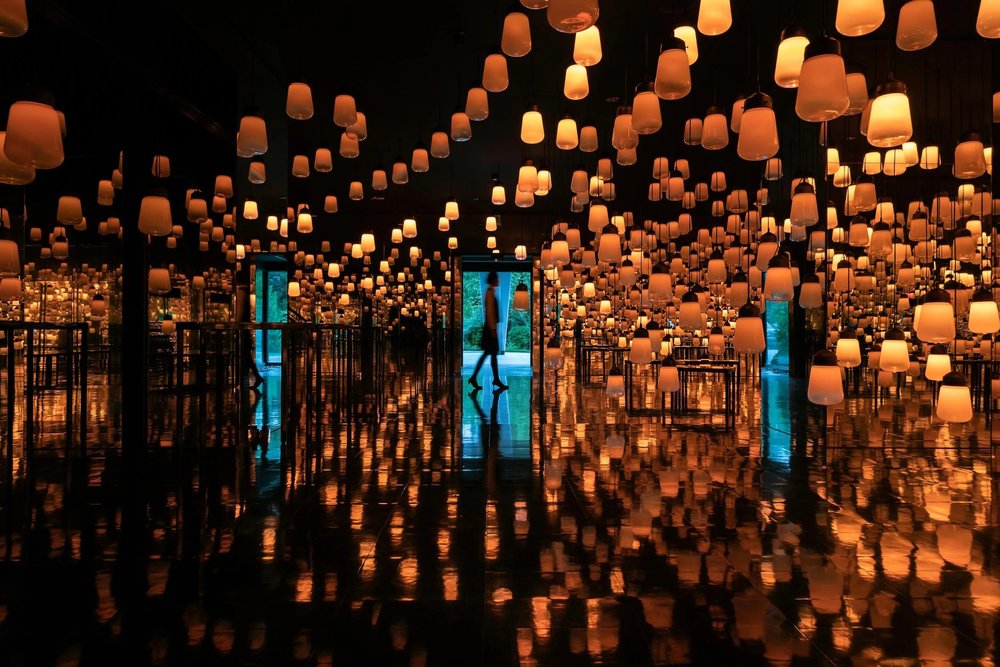
teamLab Borderless Tokyo
For only-in-Tokyo art and adrenaline, teamLab's immersive digital museum and a real, street-legal go-kart tour through Shibuya are the two experiences that show up again and again in traveler photos.
teamLab Borderless
teamLab Borderless reopened in 2024 inside Azabudai Hills, on the basement floor of Garden Plaza B, about a 5–7 minute walk from Roppongi-itchome or Kamiyacho stations. It’s a genuinely borderless space with light, sound, and motion installations flowing into each other with no fixed path through the museum, and highlights include the Infinite Crystal World and a floating Bubble Universe room. There’s no time limit once you’re inside, but tickets do sell out on weekends and holidays, so it’s worth booking your time slot a few days ahead rather than turning up.
Go-Kart Tours
Shibuya’s street go-kart tours are the other bragging-rights pick: small guided groups drive real, costumed go-karts past Shibuya Crossing and through the surrounding streets, with an English-speaking guide leading the route. Since you’re driving on public roads, you'll need a valid Japanese driving licence or an International Driving Permit/other licence documentation recognised in Japan, depending on your country of licence.. This is worth sorting out before you leave home since it’s not something you can arrange in Tokyo.
Klook travelers consistently flag it as a trip highlight: one wrote that "the go-karting through Shibuya was honestly one of the highlights of my trip," while another said there’s "nothing like seeing Tokyo at night via go-karts... we were able to see the city like never before."
Samurai Restaurant
If you’ve read about Shinjuku’s neon-drenched Robot Restaurant, it’s worth knowing that it closed permanently in 2020 and hasn’t reopened despite years of rumors. Samurai Restaurant now runs a similar high-energy show, with robots, samurai, and ninja performers, in the same Kabukicho building — and it’s what most current "Tokyo robot restaurant" bookings are actually for. One Klook traveler who saw the samurai show called it "up close and personal," adding that it was "interactive, exciting, you can’t help but smile as you watch the performers."
Retro and Offbeat Neighborhoods Worth the Detour
Yanaka Ginza, Shimokitazawa, and Nakano Broadway each give you a completely different, unhurried side of Tokyo, and all three are a short train ride from the main tourist track.
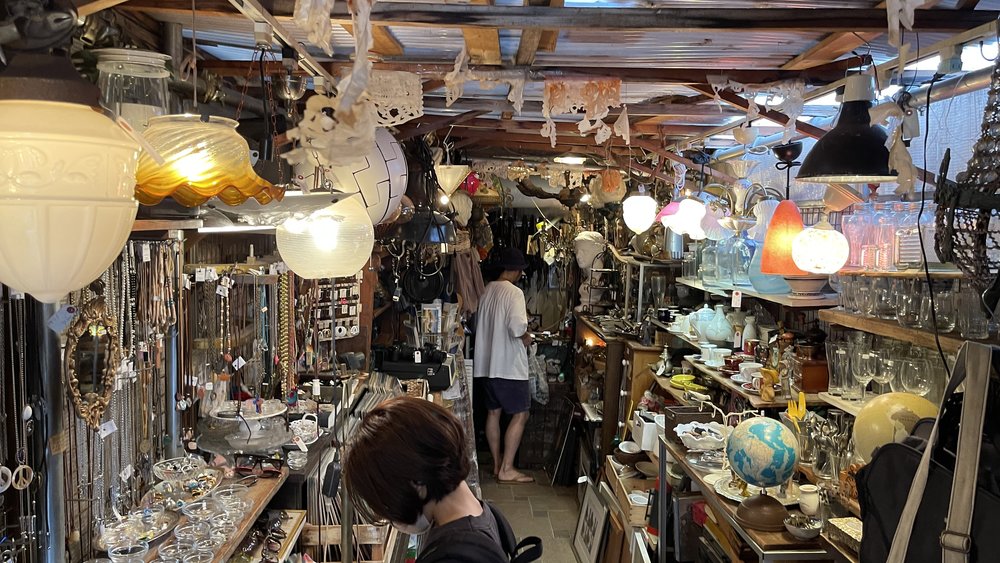
A vintage ceramic shop in Shimokitazawa
Yanaka Ginza
Yanaka Ginza is an old shitamachi (downtown) shopping street a few minutes from Nippori Station that survived the WWII bombing raids that flattened much of the surrounding city, so the narrow lane still feels closer to prewar Tokyo than almost anywhere else in the capital. Small, family-run shops sell handmade pottery, fried tempura skewers meant to be eaten while you walk, and old-fashioned sweets, and the street is known locally for its resident cats, which show up on souvenirs sold along the strip.
It sits inside the wider Yanesen area (Yanaka, Nezu, and Sendagi), so if you want a guide to fill in the history, a private half-day cultural tour covers all three; one Klook traveler who took it wrote simply, "Great tour! We had a knowledgeable and friendly guide. We would definitely recommend this tour to others."
Shimokitazawa
Shimokitazawa, southwest of Shibuya, is Tokyo’s closest thing to a college-town bohemian district: vintage and secondhand clothing shops, small live-music venues, indie theaters, and low-key cafés fill its narrow backstreets, and it’s genuinely popular with young Tokyoites rather than tour groups. A local-led vintage, music, and food tour is a good way in if you want context on what you’re looking at rather than just browsing racks. A Klook reviewer who brought their family said their guide "was prompt, knowledgeable, and very open to our input and adapting the tour to fit our interests."
Nakano Broadway
Nakano Broadway, northwest of Shinjuku, is a retro shopping complex that’s become a low-key mecca for manga, anime, and toy collectors: four floors packed with vintage figures, out-of-print manga, and other collectibles, in a mellower, less crowded version of what Akihabara offers for the same subculture.
Oddball Museums and Only-in-Japan Curiosities
Two experiences round out Tokyo’s genuinely odd side: a free museum dedicated entirely to parasites, and a night spent inside a capsule hotel.
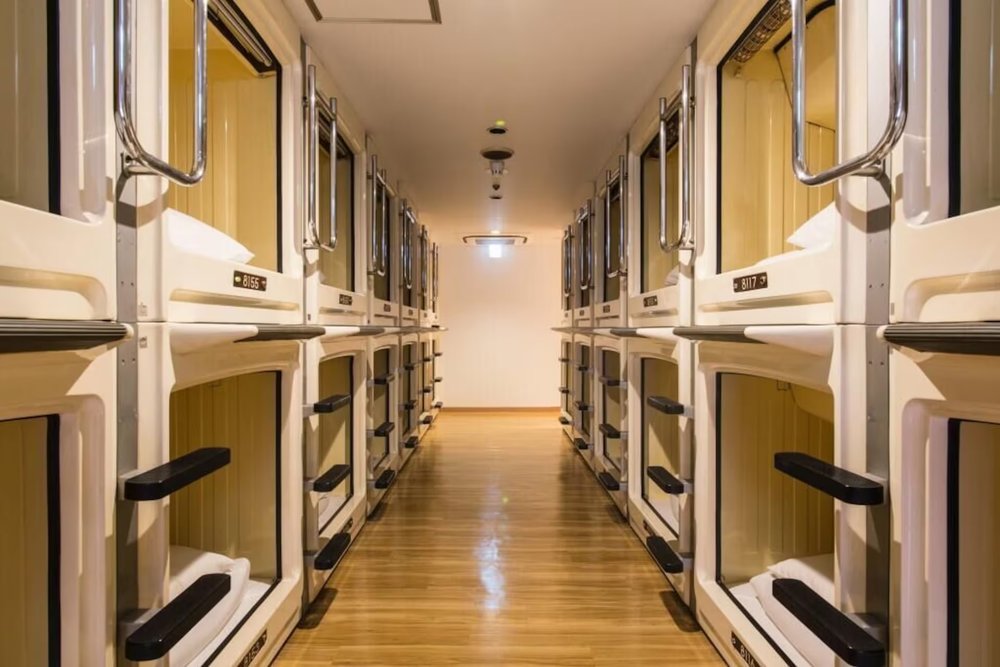
Shinjuku Kuyakusho-mae Capsule Hotel
Meguro Parasitological Museum
The Meguro Parasitological Museum, founded in 1953, is the only museum in the world dedicated solely to parasitology, and admission is free (donations are welcome). Around 300 specimens are on public display, including a well-known 8.8-metre tapeworm, spanning everything from nematodes to the organisms that carry them.
It’s open Wednesday through Sunday from 10:00 to 17:00 and closed Mondays, Tuesdays, and national holidays. It’s a small museum in Meguro Ward, so it’s easy to pair with a quiet, non-touristy afternoon, and worth double-checking hours before you go since small museums in Tokyo do shift their schedules.
Capsule Hotels
Sleeping in a capsule hotel is the other only-in-Japan experience worth trying at least once, even if it’s not where you stay for your whole trip. Each capsule is essentially a bed-sized pod, arranged in stacked rows and closed off with a door or curtain, with rates typically running from about ¥4,000 up past ¥10,000 a night depending on the property and season.
Most modern capsule hotels aimed at tourists offer full English-language support, ample luggage storage, shared lounges, and decent Wi-Fi, so it’s a far more comfortable Tokyo capsule hotel experience than the claustrophobic reputation suggests; it’s genuinely quirky, but not an endurance test.
How to Fit These Into a 3–5 Day Tokyo Trip
With one extra day built into a longer Japan itinerary, pick two picks that sit close together; with three to five days, you can spread all four categories across the trip without crossing the city twice in one day.
Extra time you have | What to prioritize | A pairing that works |
|---|---|---|
1 day | One nightlife pick + one only-in-Tokyo experience | Golden Gai in the evening + teamLab Borderless earlier the same day (both reachable within about 30 minutes of each other by train) |
2–3 days | Add one retro neighborhood | Yanaka Ginza in the morning, then Shimokitazawa or Nakano Broadway in the afternoon |
4–5 days | Spread all four categories, plus a capsule hotel night | One offbeat pick per day, without repeating a neighborhood |
Most of these unusual things to do in Tokyo sit well inside a standard US-to-Tokyo trip length, since the flight itself already runs 10 hours or more nonstop from most US gateway cities. Once you’re in the city, none of these experiences require a full day on their own, so they slot into a broader sightseeing itinerary rather than replacing it.
Frequently Asked Questions
What are the most unique things to do in Tokyo?
Some of the most unique things to do in Tokyo include exploring Golden Gai's 200-plus micro-bars in Shinjuku, visiting teamLab Borderless's immersive digital art museum in Azabudai Hills, and taking a guided go-kart tour through the streets around Shibuya Crossing. Cat cafés, a capsule hotel stay, and the free Meguro Parasitological Museum round out the list for travelers who've already covered the main sights.
Where can you find hidden gems in Tokyo?
Tokyo's hidden gems tend to cluster in neighborhoods just outside the main tourist loop, like Yanaka Ginza's old shitamachi shopping street, the vintage shops and music venues of Shimokitazawa, and the retro collector's mall at Nakano Broadway. All three are a short train ride from Shinjuku or Shibuya, so they're easy to add to a trip without major detours.
What is the weirdest place in Tokyo?
The weirdest place in Tokyo is the Meguro Parasitological Museum, it's the only museum in the world dedicated entirely to parasites, with around 300 specimens on free public display, including an 8.8-metre tapeworm. For something weird but bookable, a themed cat café or Shinjuku's Golden Gai, with its horror-themed and jazz-only micro-bars, are close runners-up.
Which Tokyo neighbourhoods are off the beaten path?
Yanaka (along with neighboring Nezu and Sendagi), Shimokitazawa, and the area around Nakano Broadway are the most reliably off-the-beaten-path picks. Each has kept a distinct local character, old-Tokyo shitamachi charm in Yanaka, a bohemian vintage-and-music scene in Shimokitazawa, and a mellow, collector-focused version of Akihabara at Nakano Broadway.
What unusual cafés and bars is Tokyo known for?
Tokyo is known for cat cafés like Cat Cafe MOCHA and the Capyneko capybara-and-cat café in Harajuku, plus themed dining concepts that change the whole atmosphere around a single novelty. On the bar side, Shinjuku’s Golden Gai packs more than 200 tiny, single-theme bars into a few narrow alleys, from horror-movie dens to six-seat jazz bars.
How many days do you need to explore Tokyo's lesser-known spots?
One extra day is enough to fit in two or three of these experiences, like Golden Gai plus teamLab Borderless. If you have three to five extra days, you can spread all four categories, nightlife, art and tech, offbeat neighborhoods, and oddball museums, across your trip without doubling back across the city.
Related Articles
What is Klook?
Klook is a leading pan-regional experiences platform in Asia Pacific, purpose built to digitalize experiences and make them accessible to every traveler.
Our mission is to build the digital infrastructure for the global experience economy — empowering merchants to share their passions and travelers to discover the heartbeat of each destination. We operate a mobile-first, curated platform featuring diverse experiences across global destinations.