
You’ve got Tokyo and Osaka on the map, maybe Kyoto squeezed in between, and now comes the part nobody explains well: how you actually get around. A bullet train Japan trip is easier than it looks, and most of the stress comes from not knowing which ticket to buy.
This Shinkansen guide covers booking, seats, routes, and whether the train is the right call for your Japan trip. We’ll keep the numbers plain and the tips practical.
Shinkansen guide quick answer: how to book and what it costs
Most people land here with the same five questions, so here are the answers up front. The numbers are for Tokyo to Osaka, the busiest route, using Klook’s starting prices for early November 2026. You can check live fares for your date on the Tokyo to Osaka Shinkansen tickets page.
- How to book: Reserve online before you travel, or buy at a station machine or ticket window on the day. With Klook, you scan a QR code at a JR machine to collect your paper tickets.
- Seat types: Non-reserved is cheapest and first come, first served. Reserved gets you your own seat. Green Car is first class and always reserved.
- Cost, one way: About $88 non-reserved, $91 reserved and $122 Green Car.
- Journey time: About 2 hours 20 minutes on the Nozomi, about 3 hours on the Hikari.
- Frequency: Trains leave every few minutes in the daytime, starting around 6 a.m.
How to book Shinkansen tickets before you go
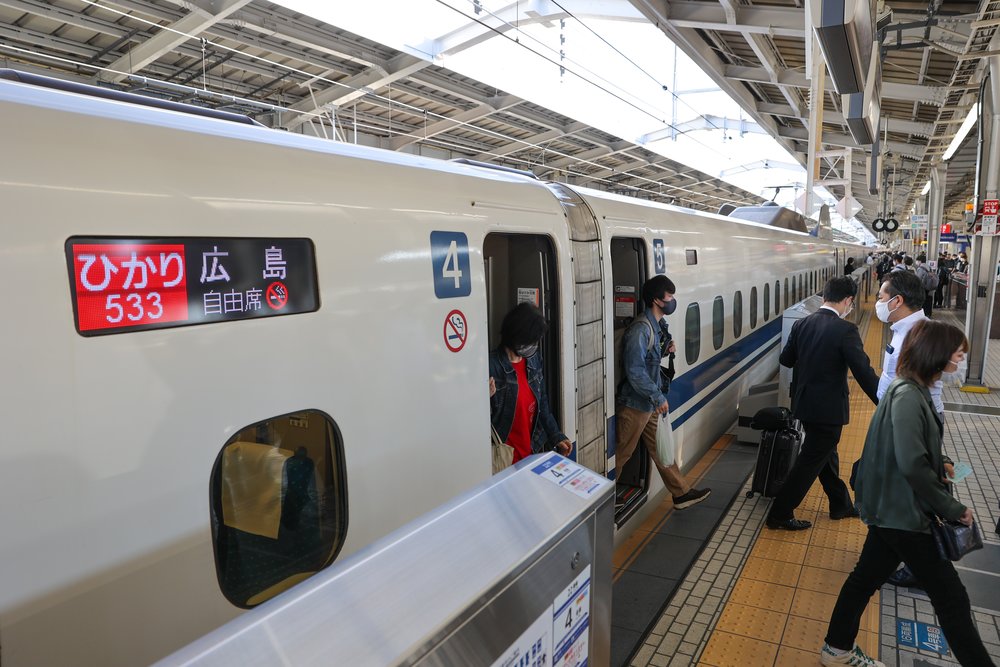
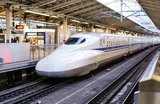
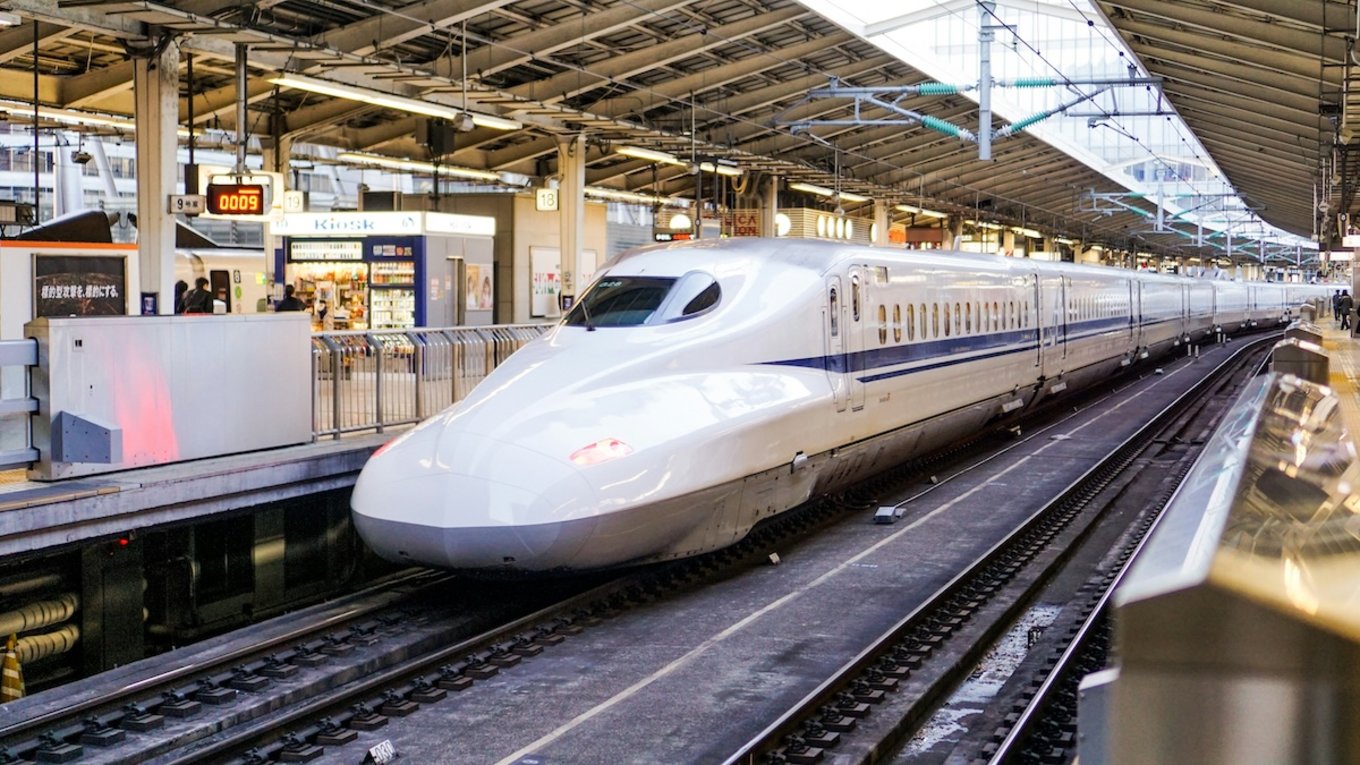
The shinkansen platform in Tokyo Station
Booking ahead takes about five minutes, and it’s the only way to lock in the exact train and seat you want.
Book on Klook
Klook is the simplest route if you’d rather pay in dollars and skip Japanese-language screens. Pick your stations, date, departure time and seat type, then pay. You’ll get a QR code by email, which you scan at a green JR ticket machine at the station to collect your paper tickets. Check the ticket label before you pay, since not every fare is changeable.
Planning more than one ride? Browse Japan rail tickets for other routes and book them in one sitting.
Klook Tip: Landing at Narita? Book your Narita to Shinjuku train in the same sitting as your Shinkansen, so day one is already sorted.
Use the official apps
The official apps work too, with one catch. SmartEX covers the Tokaido, Sanyo and Kyushu lines, and JR East’s reservation app covers the lines north of Tokyo. Both take international cards and open about a month before departure. Foreign cards get rejected sometimes, so if yours bounces, don’t burn an hour on it; book through Klook or buy at the station instead.
Exchange a JR Pass
The 7-day Ordinary Whole Japan Rail Pass costs ¥53,000 (about $330) after JR’s October 1 price rise. It suits multi-city trips, since seat reservations are free and the JR Pass covers most Shinkansen lines. Buy it before you fly, exchange the voucher at a JR ticket office with your passport, then reserve seats at a green machine or ticket window. The downside is the Nozomi: it isn’t covered, so you’ll ride the slower Hikari or Kodama.
Can you still get Shinkansen tickets today?
Plans change, flights land late, and sometimes you just need a train in the next hour. The good news is you usually can get one. Stations sell tickets right up to departure, and at Tokyo Station you’ll spot the green reclining-seat logo that marks reserved-seat machines and ticket offices. The machines have an English mode and usually accept foreign credit cards.
Things get tight on Friday evenings, weekend mornings and holidays, when reserved Nozomi seats can sell out hours ahead. If the next Nozomi is full, grab a Hikari, which is about 40 minutes slower but often has seats. Non-reserved cars are your last fallback, and they need no reservation at all.
- Walk up: No planning and total flexibility, but popular trains fill on peak days, machines can have lines, and you may not get the seat you want.
- Book ahead: A guaranteed seat on the train you want, a seat with oversized luggage space, and no waiting at the window.
Klook Tip: During Golden Week, Obon and New Year, Nozomi trains run all-reserved, so non-reserved cars aren’t a fallback. Book those weeks well ahead.
Reserved, non-reserved or Green Car Shinkansen seats: which one?
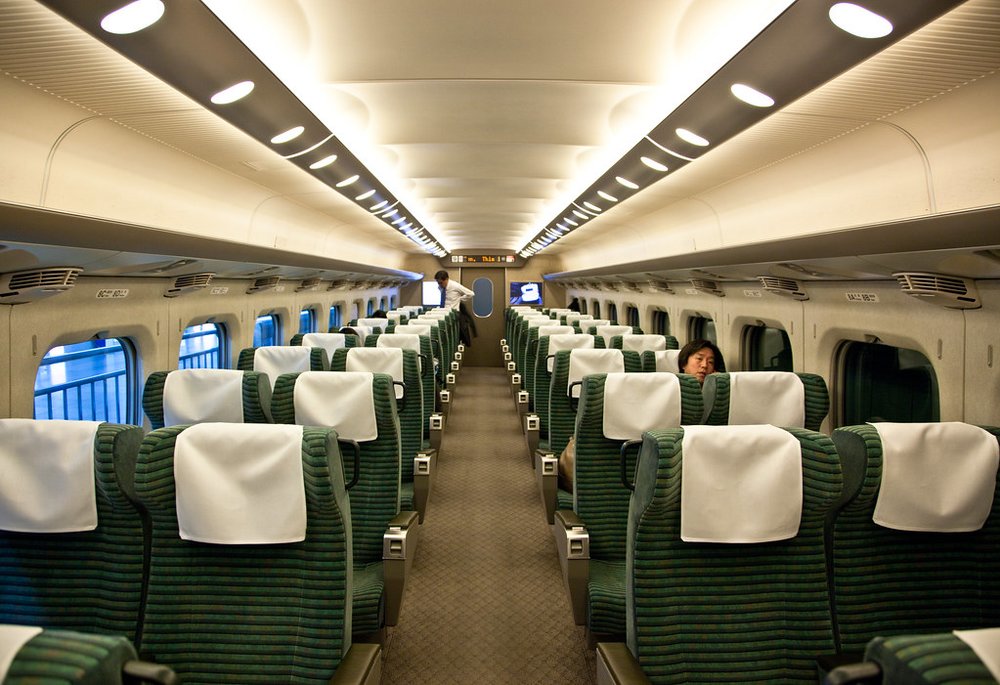
Green car seat in Hikari Shinkansen | Photo Credit: Flickr
Most booking stalls come down to one question: is the upgrade worth it?
Non-reserved seats are the budget pick at about $88 on Tokyo to Osaka. They’re first come, first served in the first few cars, and fine on a quiet Tuesday. On a holiday weekend you might stand for two hours, so skip them then.
For about $3 more, Shinkansen reserved seats are the easiest upgrade you’ll make. You get a named seat on a named train, and our seat reservation guide explains how to read your ticket. Ordinary cars seat three on one side and two on the other.
The Green Car Shinkansen option costs about $122, roughly $30 more than reserved Ordinary. You get 2+2 seating, more legroom and a quieter car that’s rarely full. It’s worth it if you’re tall or facing a long ride, and probably not for a quick two-hour hop.
Kids and luggage rules
Kids ride for less: ages 6 to 11 pay half the adult fare, and children under 6 ride free unless they need their own seat.
Check your bags before you leave the hotel. If the three sides add up to 160 to 250 centimeters (63 to 98 inches), reserve a seat with oversized baggage space in advance on the Tokaido, Sanyo and Kyushu lines. Skip it and you’ll pay a ¥1,000 handling fee onboard.
Klook Tip: On the Tokyo to Osaka run, book seat E in Ordinary or seat D in Green Car for a shot at Mt. Fuji. Coming back, choose seat A. Clear skies help.
Shinkansen routes: where the bullet train takes you
Japan’s bullet train network looks like a tangle on the map, but it’s really a few trunk lines fanning out of Tokyo and Osaka.
Tokaido: Tokyo, Kyoto and Osaka
This is the line most first-timers ride. It runs about 320 miles (515 km) between Tokyo and Shin-Osaka, with stops at Shinagawa, Shin-Yokohama, Nagoya and Kyoto. Nozomi trains hit only the big stations, Hikari adds a few more, and Kodama stops everywhere, which is why it takes nearly 4 hours.
Kyoto sits about 2 hours 15 minutes from Tokyo on the Nozomi, and a Tokyo to Kyoto Shinkansen ticket starts around $85 on Klook. Plenty of travelers base themselves in Osaka and visit Kyoto later, since the ride between Kyoto and Shin-Osaka takes only about 15 minutes.
Sanyo and Kyushu: Hiroshima, Fukuoka and beyond
Keep going west and the line changes names but not the experience. The Sanyo line starts where Tokaido ends, at Shin-Osaka Station, and reaches Hakata in Fukuoka in about 2 hours 30 minutes. Stops include Shin-Kobe, Himeji, Okayama, Hiroshima and Kokura, with Hiroshima about 1 hour 30 minutes out on the fastest trains. At Hakata, the Kyushu line continues to Kagoshima-Chuo in about 1 hour 20 minutes.
The JR Sanyo Shinkansen ticket is an open-date ticket valid for 90 days after booking, and the price depends on the stretch you pick. It suits day trips to Okayama or Hiroshima from an Osaka base, and seat reservations are free at the ticket office. The catch: it’s tied to the stations you choose, so decide your stops before you buy.
Tohoku, Hokuriku and Joetsu: heading north
North of Tokyo, three lines fan out. The Tohoku line reaches Sendai in about 1 hour 30 minutes and Shin-Aomori in about 3 hours, and the Hokkaido line continues to Shin-Hakodate-Hokuto. These trains hit 320 km/h (200 mph), the fastest in Japan.
The Hokuriku line reaches Kanazawa in about 2 hours 30 minutes and now continues to Tsuruga. The Joetsu line serves Niigata and the ski towns, while the Akita and Yamagata branches run through-trains off the Tohoku line.
Shinkansen schedule: first and last trains
The Shinkansen schedule on the Tokaido line is simple: trains leave every few minutes during the day, with up to 12 Nozomi an hour at peak. Most services start around 6 a.m., and the last Tokyo departures to Shin-Osaka leave around 9:30 p.m. on a typical day. Late trains arrive close to midnight, but timetables shift by date, so check yours before you plan a late dinner. Our Tokaido and Sanyo guide has the line-by-line detail.
Shinkansen vs JR Pass vs flying vs bus: what’s best?
Every Shinkansen guide ends up at this question, and for Tokyo to Osaka the train wins for most people. The answer shifts if your budget or itinerary does.
Option | Time | Typical cost | Best for |
|---|---|---|---|
Shinkansen (Nozomi) | About 2 hr 20 min, station to station | About $88 to $122 | Most travelers |
JR Pass (Hikari) | About 3 hr | About $330 for 7 days | Multi-city loops |
Flight (Haneda to Itami) | About 1 hr 15 min in the air, 3.5 to 4 hr door to door | About $50 to $125 | Same-day connections |
Overnight bus | 8 to 9 hr | About $25 to $65 | Tight budgets |
Here’s the honest take on the JR Pass: for a straight Tokyo to Osaka round trip, it doesn’t pay. Two reserved Nozomi tickets come to about $183, well under the roughly $330 pass, and the pass doesn’t cover the Nozomi anyway. It starts to make sense once you add Hiroshima, Kyoto and a few Tokyo-area day trips in the same week.
Basing yourself in Osaka and eyeing Kanazawa? The 7-day JR Kansai-Hokuriku Area Pass costs well under half the nationwide pass and covers Kansai, Kanazawa, Toyama and the Sanyo line to Okayama. It’s a good fit for a Kansai-based trip. The downside: it skips the Tokaido line, so it won’t get you to Tokyo.
Flying wins only when you’re already at Haneda with a connection. Airport transfers and security stretch the trip, while the train drops you city center to city center. The overnight bus saves a hotel night and costs a fraction of the train, but it’s 8 to 9 hours in a reclining seat.
FAQs about Shinkansen guide
Do I need to reserve a seat on the Shinkansen?
No, but it’s a smart move. Every Nozomi, Hikari and Kodama has non-reserved cars, yet reserving costs only a few dollars more on Tokyo to Osaka. During Golden Week, Obon and New Year, Nozomi trains are all-reserved, so you’ll need one.
Is the JR Pass worth it for a Tokyo to Osaka trip?
Usually not, if that’s your only long ride. Two reserved Nozomi tickets cost about $183, versus roughly $330 for the 7-day pass, which also skips the Nozomi. It pays off when you add Hiroshima and several other long rides.
How much does a Tokyo to Osaka Shinkansen ticket cost?
Expect about $88 for non-reserved, $91 for reserved and $122 for Green Car, based on Klook’s starting prices. The official Nozomi fares are ¥13,870, ¥14,720 and ¥19,590. Final prices vary slightly by train and date.
Can I buy Shinkansen tickets the same day I want to travel?
Yes. Stations sell tickets right up to departure, and most machines accept foreign credit cards. If reserved seats are gone, the non-reserved cars are your safest fallback.
What’s the difference between Ordinary and Green Car seats?
Green Car is first class, with 2+2 seats, more legroom and a quieter cabin. It costs roughly $30 more than a reserved Ordinary seat on Tokyo to Osaka, and every Green Car seat is reserved. Ordinary seats are 3+2 and recline, which is plenty for two hours.
Is it faster to fly or take the Shinkansen between major cities?
On Tokyo to Osaka, the train is usually faster door to door. The flight takes about 1 hour 15 minutes, but airport transfers and security push the total to 3.5 to 4 hours, versus about 2 hours 20 minutes by rail. Longer routes change the math: Tokyo to Fukuoka takes nearly 5 hours by train, so flying can win there.
Your bullet train is waiting
Picture the ride: a right-side window seat, an ekiben (station bento box) from the platform, and Mt. Fuji sliding past on the way to Osaka if the sky cooperates. If you only remember one thing from this Shinkansen guide, make it this: pick your departure time and book your seat on Klook today, and the hardest part of the trip is done. Kyoto’s temples and Osaka’s street food are about two hours from Tokyo by Shinkansen.
Related guides


What is Klook?
Klook is a leading pan-regional experiences platform in Asia Pacific, purpose built to digitalize experiences and make them accessible to every traveler.
Our mission is to build the digital infrastructure for the global experience economy — empowering merchants to share their passions and travelers to discover the heartbeat of each destination. We operate a mobile-first, curated platform featuring diverse experiences across global destinations.