
You’ve got your Nagoya list sorted: the castle, a Toyota museum, a few rounds of miso katsu (pork cutlet with red miso sauce). What’s still blank is how you’ll move between all of it. Nagoya is spread out, so the answer isn’t one long walk.
The good news is that getting around Nagoya is simpler than it looks. Almost everything runs through Nagoya Station, and the subway, a tourist loop bus, and a few private rail lines cover nearly every sight without a rental car. This Nagoya transportation guide covers what to ride, what to pay, and which passes are worth it.
If it’s your first time in Japan, a little jet lag comes with the territory, so keep this one open on your phone. Prices below are in yen with approximate US dollar amounts, based on about ¥150 to the dollar.
Start at Nagoya Station, your transit anchor
Pick almost any Nagoya plan and it starts at Nagoya Station, so it helps to know what’s under that one roof. The Tokaido Shinkansen (bullet train) stops here, along with JR lines, the Higashiyama and Sakura-dori subway lines, and the Meitetsu and Kintetsu private railways next door. The bullet train takes about 35 minutes from Kyoto and about 1 hour 40 minutes from Tokyo.
The station is huge, and the Meitetsu platforms sit in a separate underground building. Give yourself 10 extra minutes the first time you switch.
Klook Tip: Screenshot your hotel’s nearest subway station and exit number before you land. Nagoya Station has a lot of exits, and the right one saves you a lot of walking.
Chubu Centrair Airport transfer: train, bus, or private car
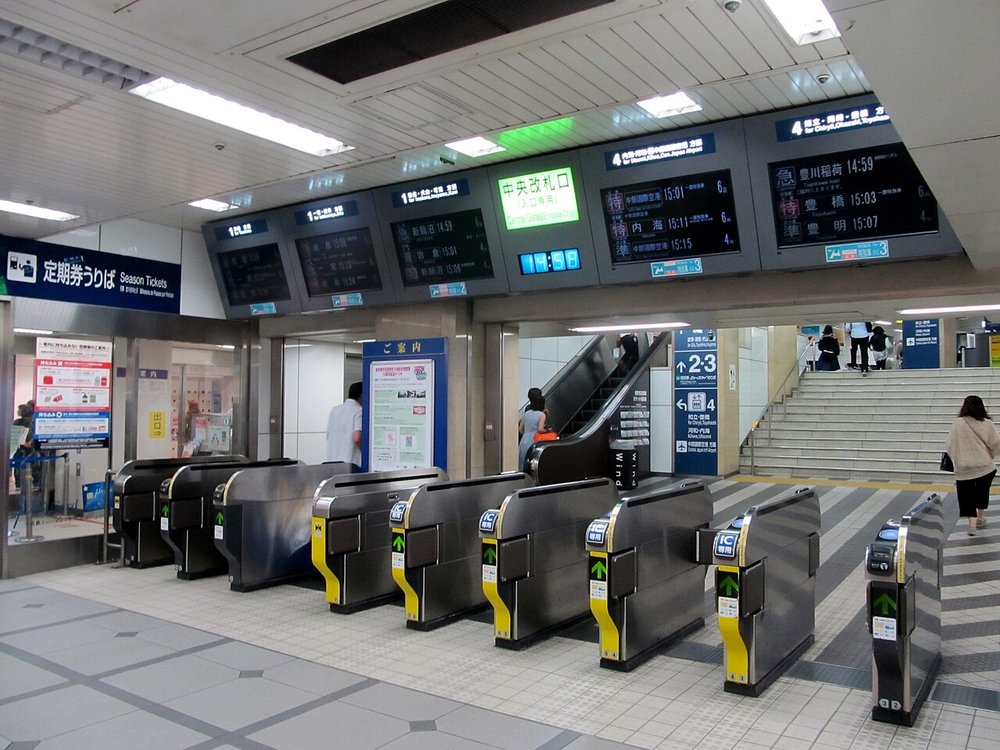
Meitetsu Nagoya Station | Image credit: ButuCC, CC BY-SA 4.0, via Wikimedia Commons
Most US visitors want one thing answered first: how do you reach the city from Centrair? The airport sits on an island about 25 miles south of downtown, but the Chubu Centrair Airport transfer by Meitetsu train is easy. Trains run to Meitetsu Nagoya Station, which connects to JR Nagoya by an underground walkway of roughly 5 to 10 minutes.
- μSKY train: about 28 to 30 minutes, ¥1,340 ($9) with a reserved seat. Every seat is reserved, and there’s luggage space on board.
- Limited express: about 45 minutes, ¥890 ($6), with no seat fee. It’s the budget pick.
- Airport bus: about 70 to 80 minutes, around ¥1,300 ($9). It costs about the same as the μSKY and takes longer, so it only makes sense if the stop is closer to your hotel.
- Taxi: roughly ¥13,000 to ¥16,000 ($90 to $105) and 70 to 90 minutes.
The Japan Rail Pass doesn’t cover the Meitetsu line, so you’ll pay separately. Families or anyone with several bags may prefer a private Chubu Centrair airport transfer instead.
Or skip the suitcases altogether. Same-day luggage delivery sends your bags to your hotel while you ride in light.
Nagoya subway: the easiest way around the center
Most first-timers end up living on the Nagoya subway, and it’s easy to see why. There are six lines, signs are in English, and the yellow Higashiyama Line links Nagoya Station and Sakae in about 5 minutes. Fares run ¥210 to ¥340 ($1.40 to $2.30), depending on distance.
It suits you best for Sakae, Osu, and Nagoya Castle. For Atsuta Jingu, one of Japan’s most important Shinto shrines, take the Meitetsu train to Jingu-mae, a short walk from Atsuta Jingu.
The downside: the subway skips a few big sights, and your Japan Rail Pass won’t work on it.
Meguru bus: the loop for spread-out sights
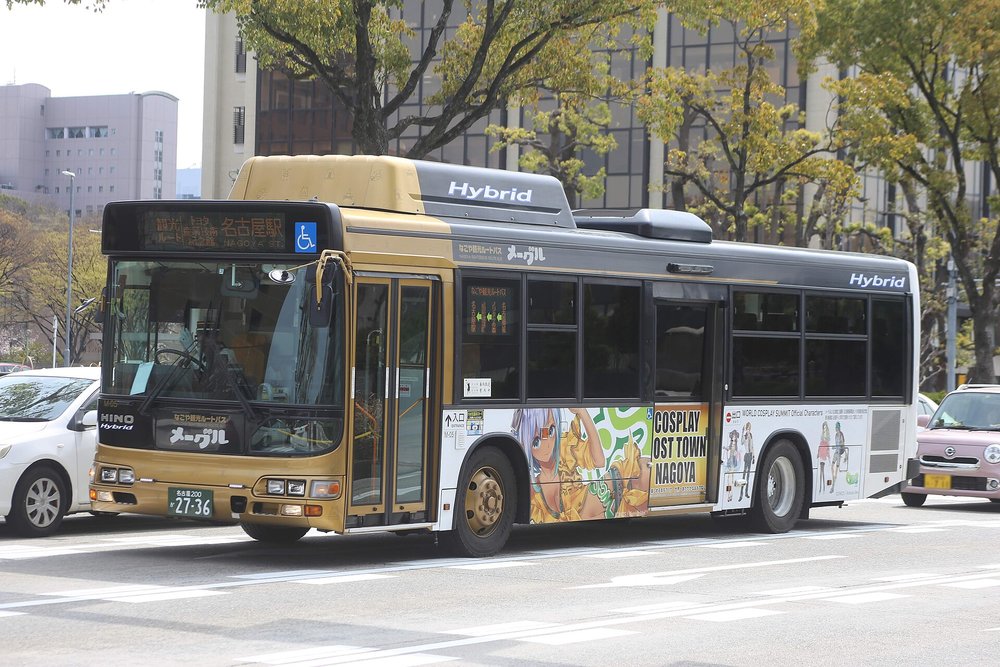
Meguru bus | Image credit: 円周率3パーセント, CC BY-SA 4.0, via Wikimedia Commons
Nagoya’s big sights sit far enough apart that you can lose half a day to connections. That’s exactly where the Meguru bus earns its spot. It’s the simplest way of getting around Nagoya’s major attractions.
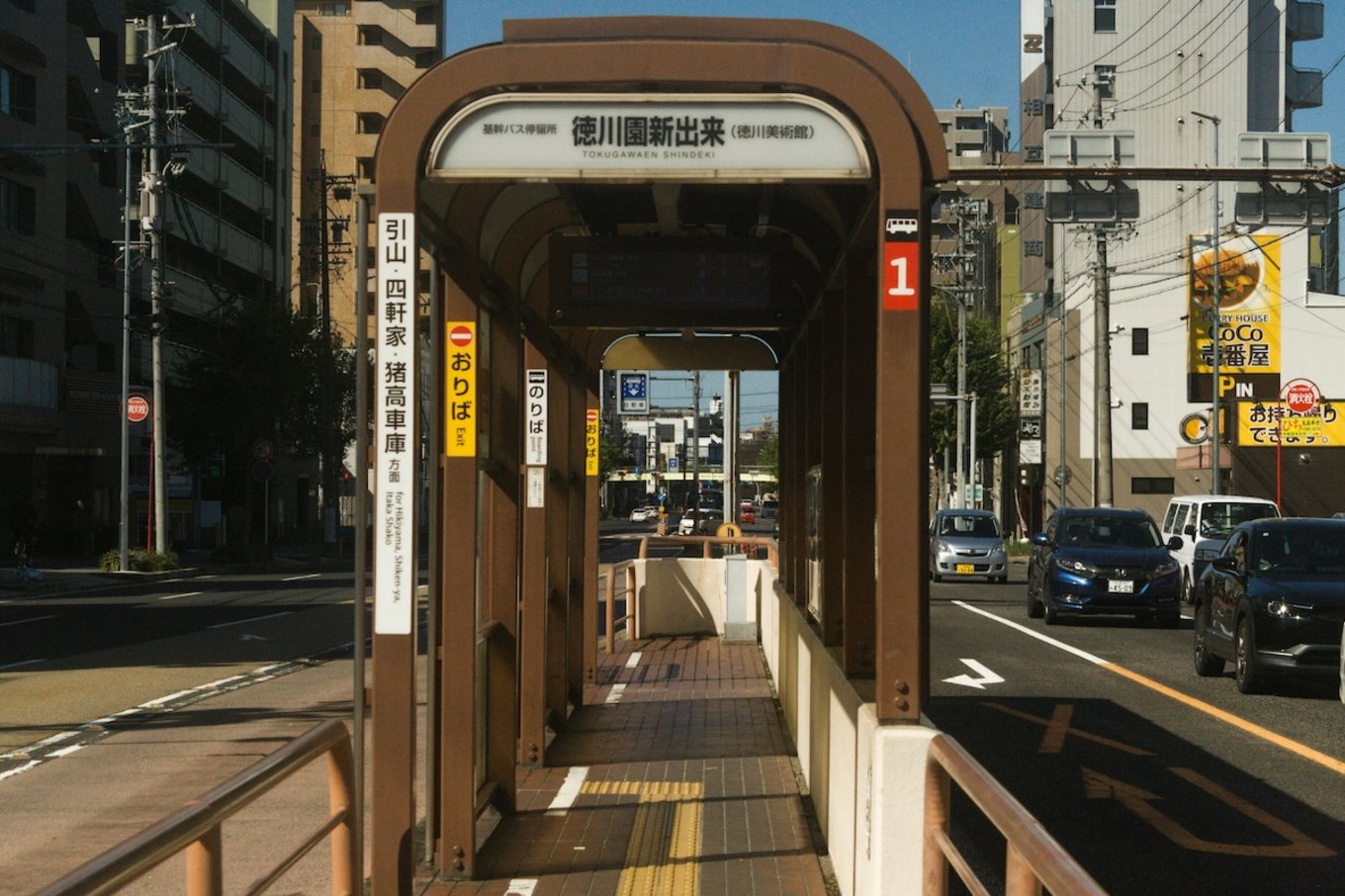
Meguru is a gold-colored sightseeing loop that leaves from the Nagoya Station bus terminal. It stops at the Toyota Commemorative Museum of Industry and Technology, Noritake Garden, Nagoya Castle, the Tokugawa Art Museum, and Sakae before looping back. A single ride is ¥210 ($1.40), and a one-day pass is¥ 500 ($3.30) sold on board.
It runs Tuesday through Sunday, about every 30 to 60 minutes, and it doesn’t run between December 29 and January 3. The 5 PM departure takes a shorter route, so start before midday. Regular city buses cover more ground, but Nagoya bus routes are harder to read as a visitor, so Meguru is the friendlier place to start.
Klook Tip: Ask for the one-day pass when you board. Show it at the castle and the museums, since some offer small discounts.
Taxis and walking: when they make sense
Taxis are worth it late at night, with young kids, or when the bags come along. A ride between Nagoya Station and Nagoya Castle runs roughly ¥2,000 ($13).
Walking works best in pockets. Sakae and Osu are about 15 minutes apart on foot, so skip the train between them. Nagoya Station to Sakae is closer to 30 minutes, which is a long, sticky walk in July, so take the subway.
Nagoya IC card and day passes: what to buy
You don’t strictly need a Nagoya IC card, but it smooths everything out. A Suica, Pasmo, or ICOCA from elsewhere in Japan works on the subway, city buses, Meguru, and the Meitetsu train. If you don’t have one, buy a local manaca card at any subway ticket machine. IC cards don’t come with a discount, so passes are where you save:
- Subway 24-hour pass: ¥760 ($5.10). The clock starts at first use, which suits afternoon arrivals.
- Bus and subway one-day pass: ¥870 ($5.80). Valid for one calendar day, Meguru included.
- Meguru one-day pass: ¥500 ($3.30). Loop bus only.
- Weekend eco ticket: ¥620 ($4.10). Bus and subway on weekends, national holidays, and the 8th of each month.
Buy a pass if you’ll ride four or more times a day. Skip it if you’re staying around Sakae and Osu on foot. A day of Station, Castle, Tokugawa Art Museum, Sakae, and back is four Meguru rides, or ¥840 in single fares, so the ¥500 Meguru pass wins.
FAQs about getting around Nagoya
Is Nagoya easy to get around without a car?
Yes. The subway, the Meguru bus, and the rail lines at Nagoya Station cover nearly every major sight. Far-flung spots are easier by taxi.
What is the Meguru bus in Nagoya?
It’s a gold sightseeing loop bus that connects Nagoya Station with Nagoya Castle, Noritake Garden, the Tokugawa Art Museum, and Sakae. Rides are ¥210, and the ¥500 day pass is sold on board.
How do I get from Chubu Centrair Airport to Nagoya Station?
Take the Meitetsu μSKY train to Meitetsu Nagoya Station, which takes about 28 to 30 minutes and costs ¥1,340 ($9). From there it’s a 5 to 10 minute walk to JR Nagoya Station.
Do I need an IC card in Nagoya?
No, but it’s handy. A Suica, Pasmo, or manaca card lets you tap through gates and ride the subway, buses, and Meitetsu trains without working out fares.
Is a one-day subway pass worth it in Nagoya?
Yes, if you’ll ride about four times in a day. The ¥760 ($5.10) pass beats four single fares, so skip it on days you’ll mostly walk.
Ready to hit the rails?
Picture your first morning: you land at Centrair, ride the μSKY into the city by lunch, and tap a manaca card at the gates. Lock in your airport ride before you fly, since that’s the one thing you can’t easily improvise. Once that’s sorted, the rest of getting around Nagoya falls into place.
Related guides
What is Klook?
Klook is a leading pan-regional experiences platform in Asia Pacific, purpose built to digitalize experiences and make them accessible to every traveler.
Our mission is to build the digital infrastructure for the global experience economy — empowering merchants to share their passions and travelers to discover the heartbeat of each destination. We operate a mobile-first, curated platform featuring diverse experiences across global destinations.