
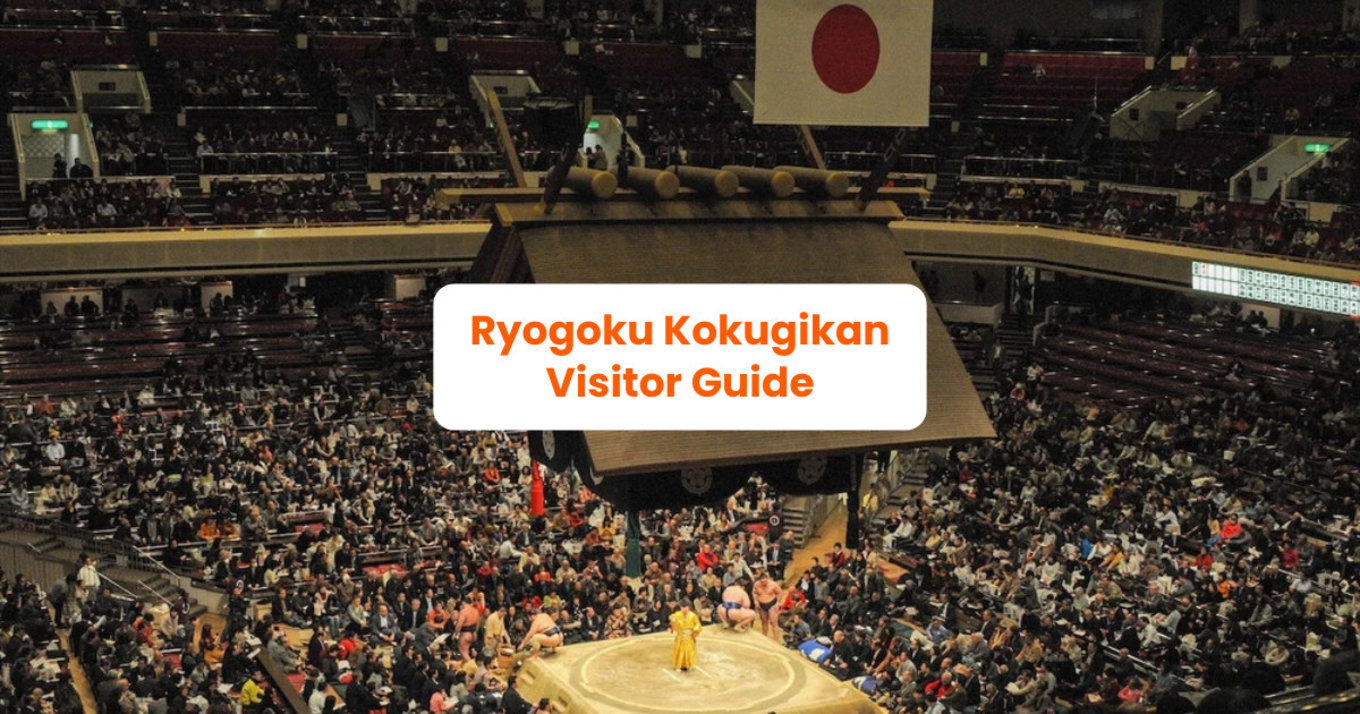
Ryogoku Kokugikan is Japan's home of professional sumo. Located in Tokyo's Sumida ward, it hosts three of the six annual Grand Sumo Tournaments: the January Hatsu Basho, the May Natsu Basho, and the September Aki Basho. If you're planning a trip to Tokyo and want to catch a live tournament, this is where it happens, and the neighbourhood around it is worth exploring even on non-tournament days.
Ryogoku Kokugikan Travel Essentials
🥋 See a Live Sumo Tournament
✈️ Airport to Tokyo, Sorted
🚇 Reach Ryogoku & Beyond
📱 Data from the Moment You Land
🗼 Sumida & Toyosu Highlights
What Ryogoku Kokugikan is known for
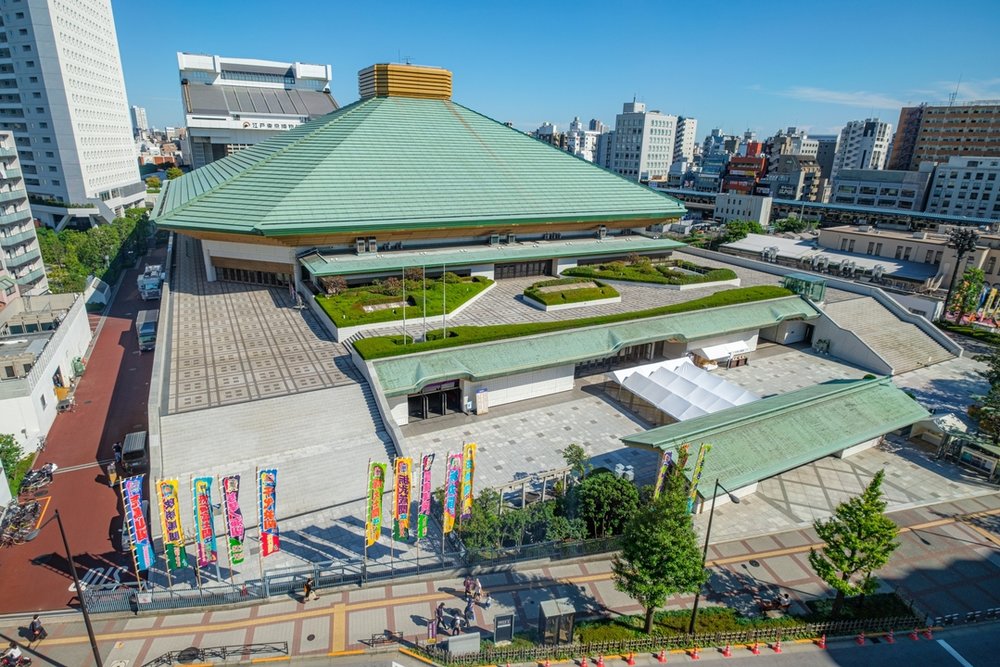
The current arena opened in January 1985 and seats 11,098 people. It replaced the older Kuramae Kokugikan and sits next to the Edo-Tokyo Museum in the Yokoami neighbourhood of Sumida. Its distinctive copper-green roof is easy to spot from Ryogoku Station.
Beyond sumo, the building has hosted boxing and wrestling events, concerts, and even boxing bouts during the 2020 Tokyo Olympics. But the three annual Grand Sumo Tournaments are what draw most visitors. Each runs for exactly 15 consecutive days, starting on the second Sunday of the respective month.
Outside the arena, the wider Ryogoku district is steeped in sumo culture. Sumo stables operate nearby, wrestlers in traditional dress are a common sight around the neighbourhood, and chanko-nabe hot pot restaurants line the streets around the station.
How to get Ryogoku Kokugikan tickets
Tickets go on sale roughly one month before each tournament, and popular dates sell out fast — sometimes within minutes of release. The 2026 on-sale dates are:
- Hatsu Basho (January 11–25): tickets released 6 December 2025
- Natsu Basho (May 10–24): tickets released 4 April 2026
- Aki Basho (September 13–27): tickets released 8 August 2026
The official English-language ticketing site is sumo.pia.jp/en/. Tickets can also be picked up at Seven-Eleven convenience stores after purchase. Credit card is required, cash-only purchases are not available through the official site.
If the official site is sold out, guided tour packages through Klook are a reliable alternative. The Klook Grand Sumo Tournament tour includes an English-speaking guide, official tournament seats, a ranking chart, and access to the Sumo Museum — a practical option if you want context alongside the match experience.
Seat types and approximate prices:
- Same-day unreserved (jiyu-seki): from around ¥2,200. A small number of same-day tickets are sometimes available at the venue on tournament mornings. Lines form early.
- Chair seats (isu-seki): ¥3,500–¥11,000 depending on tier (SS through C) and weekday vs. weekend. Western-style seats on the upper levels with back support.
- Masu-seki box seats: sold as a 4-person unit, from around ¥34,000 on weekdays to ¥60,000 at weekends for the best positions. These are traditional floor-level cushion boxes closest to the ring — the most immersive option for groups.
- Tamari (ringside cushions): ¥20,000 per person. Ground-level seats immediately beside the dohyo. Rarely available through standard channels; athletes and VIPs typically fill this section.
If you're attending solo or as a pair, chair seats are the practical choice. Masu-seki boxes must be bought as a set of four, which works well for groups but is less efficient for two people.
Sumo tournament timing and what to expect
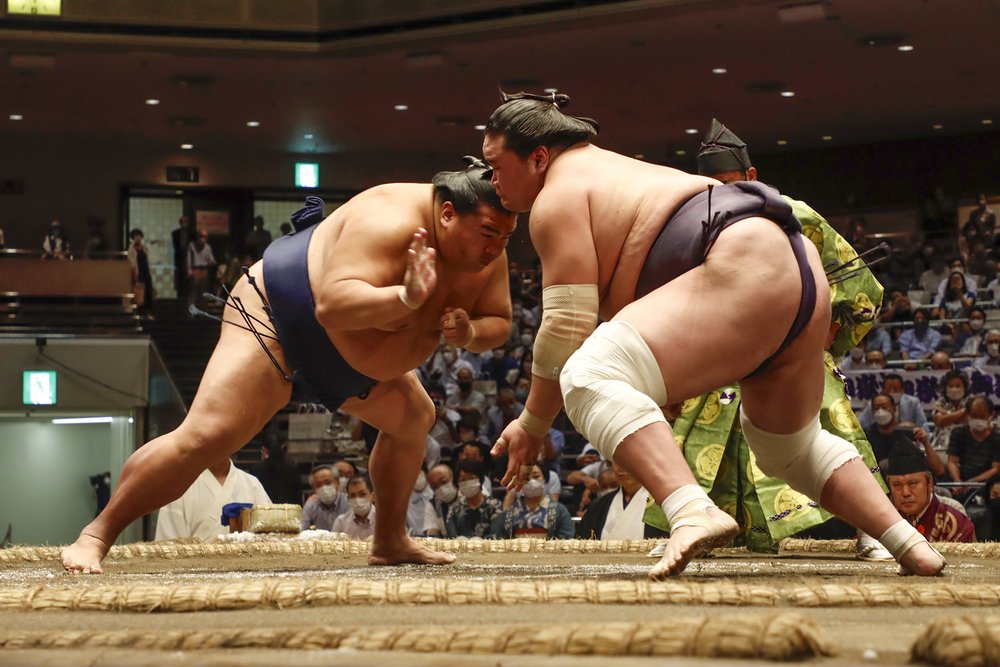
Doors open around 8:00–8:30 AM. Lower-division bouts start early and the arena is mostly quiet during the morning sessions. The atmosphere builds steadily through the afternoon as higher-ranked wrestlers enter.
The Makuuchi (top division) wrestlers enter the ring from around 3:40 PM for the formal ring-entry ceremony — one of the most visually striking parts of the day. The final Yokozuna bout concludes before 6:00 PM.
A few practical things to know before you go:
- Re-entry is permitted once, but you must return before 5:00 PM.
- Photography from your seat is allowed; flash photography is not.
- Bring a jacket — the arena can be cool even in summer.
- If you have masu-seki box seats, you'll be sitting cross-legged on a cushion for hours. Comfortable, loose clothing makes a difference.
- Food and non-alcoholic drinks can be brought in. There are food stalls inside, but they get busy during breaks. The chanko-nabe restaurant in the basement is a popular option.
- The gift shop and Sumo Museum are worth browsing before the top-division bouts begin, since they close around 5:00 PM.
How to get to Ryogoku Kokugikan
The most direct route is the JR Chuo-Sobu Line (local trains) to Ryogoku Station. The arena is a 1–2 minute walk from the west exit. From Tokyo Station this takes about 10 minutes; from Shinjuku around 25 minutes.
The Toei Oedo Line also stops at Ryogoku Station. The walk to the arena from this exit is about 5–7 minutes.
On tournament days the station and surrounding streets fill up quickly after matches end. Arriving earlier in the day is easier than leaving at the 6:00 PM rush.
Address: 1-3-28 Yokoami, Sumida-ku, Tokyo 130-0015
Visitor tips for first-timers
A full day runs from around 8:00 AM to 6:00 PM, but most first-timers do well arriving between 2:00 PM and 3:00 PM. That gives you the afternoon atmosphere, the top-division ring-entry ceremony, and all the elite bouts without sitting through the entire lower-division programme.
If you want binoculars, bring a pair. Upper-level chair seats have solid sightlines but wrestlers' facial expressions are easier to follow with magnification. The arena has no obstructing pillars, so there's no truly bad seat for watching the action.
Two small Inari shrines, Toyokuni Inari Shrine and Shusse Inari Shrine, are located on the arena grounds, built to pray for wrestlers' success. Worth a few minutes before you head inside.
For those planning around a specific tournament: weekend tickets and final-week tickets sell out fastest. Weekday tickets in the first half of the tournament are generally easier to find and are cheaper for chair seats.
Is Ryogoku Kokugikan worth visiting outside tournament days?
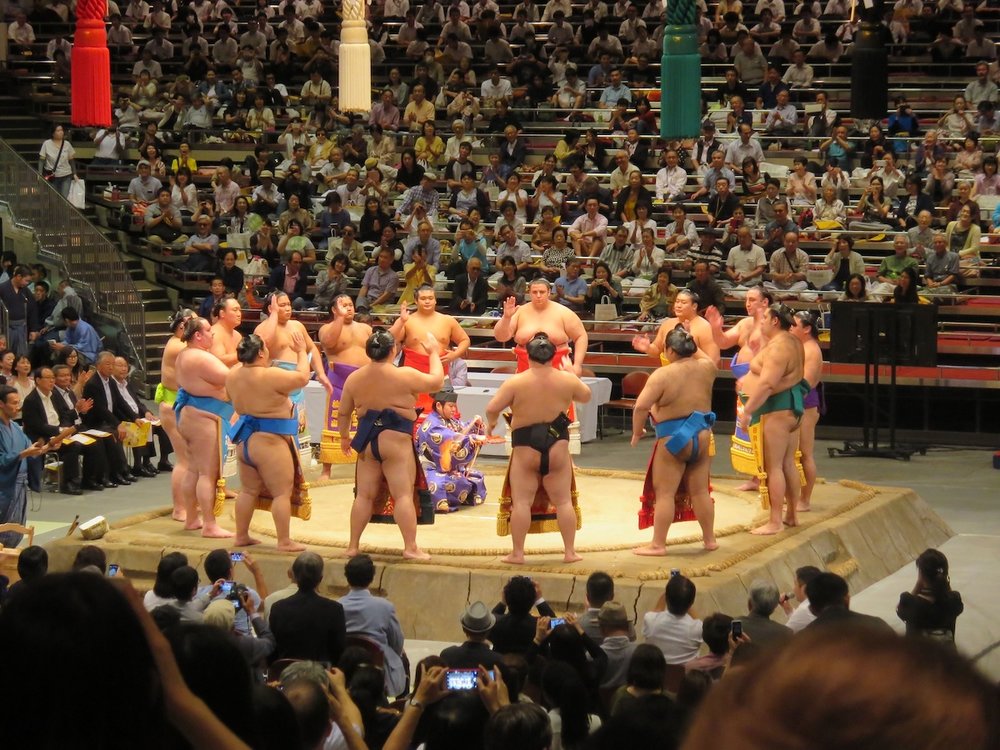
Image Credit: Gun Kuntara Adhiarta via Pexels
The arena itself is not open to the general public between events. However, the Sumo Museum on the ground floor is free and open on weekdays:
- Outside tournament periods: 10:30 AM–4:00 PM (last entry 3:45 PM)
- During tournament periods: 12:30 PM–4:00 PM
- Closed Saturdays, Sundays, public holidays, and year-end/New Year period
- Admission: free
The museum displays rotating exhibitions of coloured woodblock prints (nishiki-e), historic ranking charts, and wrestlers' ornamental aprons (kesho-mawashi). Exhibitions change three times a year, so the content shifts with each visit.
A merchandise shop on site (open 10:00 AM–3:00 PM on weekdays) sells sumo goods and official tournament merchandise.
The bigger draw on non-tournament days is Arashio Stable (2-47-2 Ryogoku, Sumida), the most accessible stable for visitors. Morning practice sessions (asageiko) can be watched for free from a street-facing window, with no reservation required. Sessions typically begin from around 6:30–7:00 AM on weekdays outside tournament season, though schedules change daily — check the stable's calendar before visiting. These are genuine training sessions, not tourist performances. Photography is restricted and silence is expected.
Other stables in the area sometimes accept observer visits, but most require advance contact and often a Japanese-speaking companion.
FAQ
When are the 2026 sumo tournaments at Ryogoku Kokugikan?
The three Tokyo tournaments in 2026 are: Hatsu Basho (January 11–25), Natsu Basho (May 10–24), and Aki Basho (September 13–27). Each runs for 15 consecutive days.
How much do tickets to Ryogoku Kokugikan cost?
Chair seats in the upper tiers start from around ¥3,500 on weekdays. Traditional masu-seki box seats are sold as a 4-person package from approximately ¥34,000–¥60,000 per box. Tamari ringside seats are ¥20,000 per person. Same-day unreserved standing tickets start from around ¥2,200.
How do I get to Ryogoku Kokugikan?
Take the JR Chuo-Sobu Line to Ryogoku Station — it's a 1–2 minute walk from the west exit. The Toei Oedo Line is an alternative, with the arena about 5–7 minutes on foot. From Tokyo Station takes around 10 minutes; from Shinjuku around 25 minutes.
Can you visit Ryogoku Kokugikan outside of tournament days?
Yes. The Sumo Museum on the ground floor is open on weekdays (10:30 AM–4:00 PM outside tournaments; 12:30 PM–4:00 PM during tournaments) with free admission. The arena itself is not accessible without an event ticket.
What time should I arrive for a sumo tournament?
Doors open around 8:00–8:30 AM. If you want to catch only the top-division matches, arriving by 2:00–3:00 PM is sufficient. The Makuuchi division enters the ring around 3:40 PM, with the final Yokozuna bout finishing shortly before 6:00 PM.
Where can I watch sumo morning practice in Ryogoku?
Arashio Stable (2-47-2 Ryogoku, Sumida) is the most visitor-friendly option: free window viewing with no reservation required, sessions typically starting from around 6:30–7:00 AM on weekdays outside tournament season. Check their schedule before visiting as it changes regularly.
What is Klook?
Klook is a leading pan-regional experiences platform in Asia Pacific, purpose built to digitalize experiences and make them accessible to every traveler.
Our mission is to build the digital infrastructure for the global experience economy — empowering merchants to share their passions and travelers to discover the heartbeat of each destination. We operate a mobile-first, curated platform featuring diverse experiences across global destinations.





![[Updated] Complete List Of Official Nationwide MCO SOP 2021](https://res.klook.com/image/upload/fl_lossy.progressive,q_85/c_fill,w_160,h_104/v1633858858/blog/iso56uzsphmdguixkvzh.jpg)


![[Updated] Complete List Of Official Nationwide MCO SOP 2021](https://res.klook.com/image/upload/fl_lossy.progressive,q_85/c_fill,w_410,h_264/v1633858858/blog/iso56uzsphmdguixkvzh.jpg)