
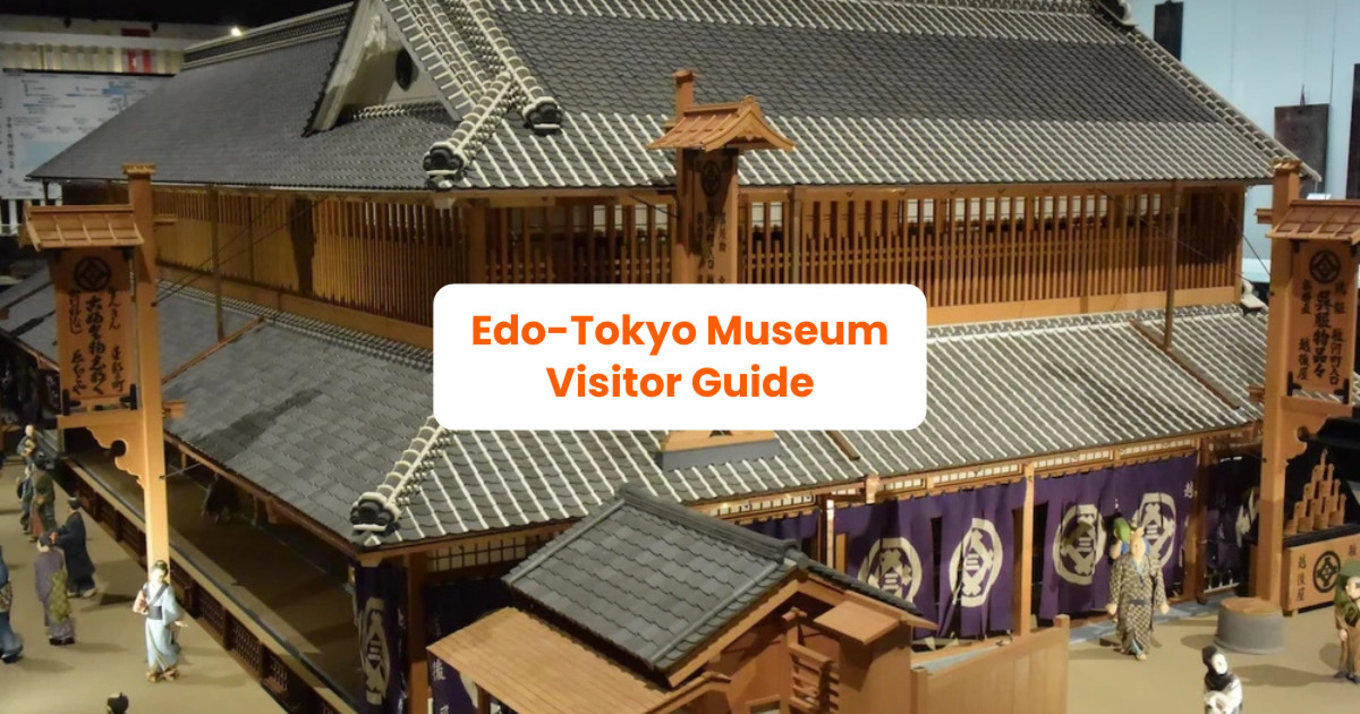
If you're planning a Tokyo holiday and want to go beyond the usual Instagram highlights, the Edo-Tokyo Museum in Ryogoku deserves a spot on your itinerary. After a four-year closure for its biggest renovation since opening in 1993, the museum is back — with new displays, better accessibility, and audio guides in 13 languages on your own smartphone.
At around ¥800 for adults (approximately AUD $8.50, it's also one of the best-value museum days in Tokyo.
Edo-Tokyo Museum & Ryogoku Travel Essentials
🚄 Getting into Tokyo from Narita Airport
🚇 Getting Around Tokyo
📱 Stay Connected in Japan
🏛️ Explore Historic Ryogoku
🗼 More Tokyo Must-Sees Nearby
Is the Edo-Tokyo Museum open right now?
Yes — the museum reopened on 31 March 2026 after closing in April 2022 for its first major structural and exhibition overhaul. The renovation updated the building's infrastructure, redesigned the entrance approach with a torii gate-inspired installation, and transformed the third-floor plaza into a social gathering space designed by architect Shohei Shigematsu of OMA.
Day | Hours |
|---|---|
Tuesday to Friday | 9:30–17:30 (last entry 17:00) |
Saturday | 9:30–19:30 (last entry 19:00) |
Sunday | 9:30–17:30 (last entry 17:00) |
Monday | Closed (or Tuesday if Monday is a public holiday) |
The museum also closes over the New Year period. If you're visiting on a specific date, check the official website calendar to confirm.
Klook Tip: Saturday evenings are a smart time to visit, the museum stays open until 19:30, and the daytime crowds thin out considerably by late afternoon. It's a solid option if you want to fill a full day in Tokyo and leave the museum for last
What's inside the Edo-Tokyo Museum?
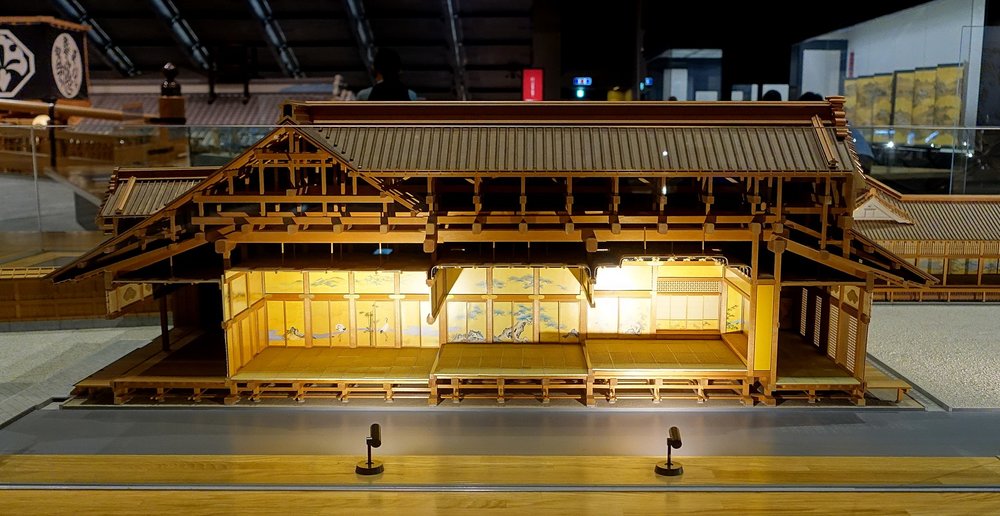
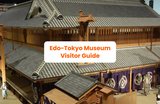
Image Credit: Daderot, CC0, via Wikimedia Commons
The museum opened in 1993 as the first institution built specifically to tell Tokyo's story. Its permanent exhibition spans roughly 9,000 square metres across floors 5 and 6, covering the city from the 1590s right through to the 2020 Tokyo Olympics.
The collection is split into two main zones: the Edo Zone and the Tokyo Zone. What sets it apart from most history museums is the scale of the reconstructions — you're not looking at objects in glass cases, you're walking through full-size replicas of streets, buildings, and bridges.
Highlights in the permanent exhibition:
- Nihonbashi Bridge replica — a full-size reconstruction at the entrance to the Edo Zone, historically the starting point of Japan's main roads during the Edo period
- Nakamura-za kabuki theatre — visitors can now walk inside via a newly added walkway, rather than viewing from outside as before
- Hattori Watch Shop recreation — a 26-metre centrepiece added during renovation, recreating the Meiji-era forerunner of Wako in Ginza
- Period merchant houses and street stalls — including a carpenter's dwelling and a morning glory flower stall
- Asakusa Hanayashiki amusement park gate — showing what Japan's oldest amusement park looked like in the late 1800s
- Extended Tokyo Zone — the timeline now runs through the 2010s and the 2020 Olympics
There are interactive elements throughout — sit in a rickshaw, try lifting carrying poles, or use touchscreen stations to dig into artefacts. New large-scale projection screens recreate the skies above historical Edo and modern Tokyo across the main gallery spaces.
The multilingual audio guide covers 13 languages including English, accessible via QR code on your own smartphone. Download it before you head inside; signal can be patchy in some sections.
Admission prices
The permanent exhibition doesn't require advance booking — tickets are available at the entrance.
Visitor type | Admission |
|---|---|
Adults | ¥800 (approx. AUD $8.50) |
Seniors (65+) | ¥400 |
University / vocational students | ¥480 |
High school students | ¥300 |
Junior high school and younger | Free |
Klook Tip: Travelling with kids? Junior high school students and younger get in free, and the hands-on exhibits, including the rickshaw and interactive stations make this genuinely engaging for children, not just adults.
How to get to the Edo-Tokyo Museum
The museum is easy to reach from anywhere in central Tokyo by train.
JR Sobu Line: Alight at Ryogoku Station, West Exit. The museum is a 3-minute walk.
Toei Oedo Line: Alight at Ryogoku Station (Edo-Tokyo Hakubutsukan-mae stop), Exits A3 or A4. The museum is a 1-minute walk.
From Shinjuku: JR Chuo-Sobu Line direct to Ryogoku — around 22 minutes.
From Tokyo Station: Around 16 minutes by train.
From Ueno: Around 10 minutes by train or subway.
Address: 1-4-1 Yokoami, Sumida-ku, Tokyo 130-0015
Tips for Australian travellers
Most direct flights from Australia to Tokyo arrive into Narita or Haneda. From both airports, trains connect into central Tokyo in under an hour, with easy onwards connections via Shinjuku, Tokyo Station, or Ueno to Ryogoku.
If you're visiting during Australian school holidays in April, September, or the December to January period, Tokyo can be busy. Weekday mornings are consistently quieter for museum visits regardless of season. Spring (March to May) and autumn (September to November) are the most popular times to visit Japan overall, with mild weather and seasonal scenery.
Allow at least 2 to 3 hours for the permanent exhibition, or 3 to 4 hours if you're planning to take in a special exhibition as well. Wear comfortable shoes — the layout covers a lot of ground and includes elevated walkways and replica staircases. The floor plan can feel slightly non-linear, but the numbered sections and floor guide at the entrance keep things manageable.
The museum has a restaurant (Koyomi, serving traditional soba and tempura) and a small café. Both are worth considering if you're spending a full morning or afternoon in Ryogoku.
Prefer a guided introduction to Ryogoku?
If you'd rather have a local guide show you around, the Edo-Tokyo Ryogoku Walking Tour covers the neighbourhood over three hours. It takes in landmarks including the Former Yasuda Garden, Ekoin Temple, and the Ryogoku Fireworks Museum, alongside sumo culture and local food.
FAQs about the Edo-Tokyo Museum
Is the Edo-Tokyo Museum open right now?
Yes. The museum reopened on 31 March 2026 after a four-year renovation. It's open Tuesday to Sunday, 9:30 to 17:30, with extended hours until 19:30 on Saturdays. It closes on Mondays, or Tuesdays when Monday falls on a public holiday. It also closes over the New Year period.
How much does the Edo-Tokyo Museum cost?
The permanent exhibition costs ¥800 (approximately AUD $8.50 for adults, ¥400 for visitors aged 65 and over, ¥480 for university and vocational students, ¥300 for high school students, and free for junior high school students and younger. Special exhibitions are ticketed separately at a higher price.
How do I get to the Edo-Tokyo Museum from central Tokyo?
The easiest route is the JR Sobu Line to Ryogoku Station (West Exit), a 3-minute walk from the museum. From Shinjuku it takes around 22 minutes; from Tokyo Station, around 16 minutes. The Toei Oedo Line also stops at Ryogoku Station — the museum is a 1-minute walk from Exits A3 or A4.
What's new after the renovation?
The renovation added large-scale projection screens recreating historical Tokyo skies, a redesigned entrance plaza, and a new full-scale recreation of the Hattori Watch Shop from Meiji-era Ginza. Visitors can now walk inside the Nakamura-za kabuki theatre reconstruction via a new elevated walkway. The audio guide covers 13 languages via QR code on your own smartphone.
How long should I spend at the Edo-Tokyo Museum?
Most visitors spend 2 to 3 hours on the permanent exhibition. If you're planning to take in a special exhibition as well, allow 3 to 4 hours. The floor guide at the entrance is worth picking up — the layout can feel slightly non-linear in places.
What's the best time to visit for Australians?
Spring (March to May) and autumn (September to November) offer the most pleasant conditions for visiting Tokyo, with mild weather and seasonal scenery. These do partially align with Australian school holidays, so expect busier periods. For the museum itself, weekday mornings are the quietest time regardless of season.
What else is worth doing in Ryogoku?
The Sumo Museum at Ryogoku Kokugikan is free on non-tournament days. The Sumida Hokusai Museum (¥400) is a 10-minute walk and covers ukiyo-e art. Kyu-Yasuda Garden is a free stroll with views of Tokyo Skytree. For food, try chanko nabe at the Ryogoku Edo Noren building inside the station — it's the traditional stew associated with sumo wrestlers and a Ryogoku staple.
What is Klook?
Klook is a leading pan-regional experiences platform in Asia Pacific, purpose built to digitalize experiences and make them accessible to every traveler.
Our mission is to build the digital infrastructure for the global experience economy — empowering merchants to share their passions and travelers to discover the heartbeat of each destination. We operate a mobile-first, curated platform featuring diverse experiences across global destinations.





![[Updated] Complete List Of Official Nationwide MCO SOP 2021](https://res.klook.com/image/upload/fl_lossy.progressive,q_85/c_fill,w_160,h_104/v1633858858/blog/iso56uzsphmdguixkvzh.jpg)


![[Updated] Complete List Of Official Nationwide MCO SOP 2021](https://res.klook.com/image/upload/fl_lossy.progressive,q_85/c_fill,w_410,h_264/v1633858858/blog/iso56uzsphmdguixkvzh.jpg)