

Siargao’s shores are like a magnet to surfers from all over the world. The island blends mellow beginner-friendly waves, laid-back beach culture, and tropical scenery; you’ll lose count of weathered travelers who say they stayed longer than planned!
Why Siargao Is the Main Philippines Destination for Beginner Surfers
Siargao earned its reputation as the Surfing Capital of the Philippines thanks to its world-famous reef breaks, where surfers ride waves that break over coral reefs rather than sandy seabeds.
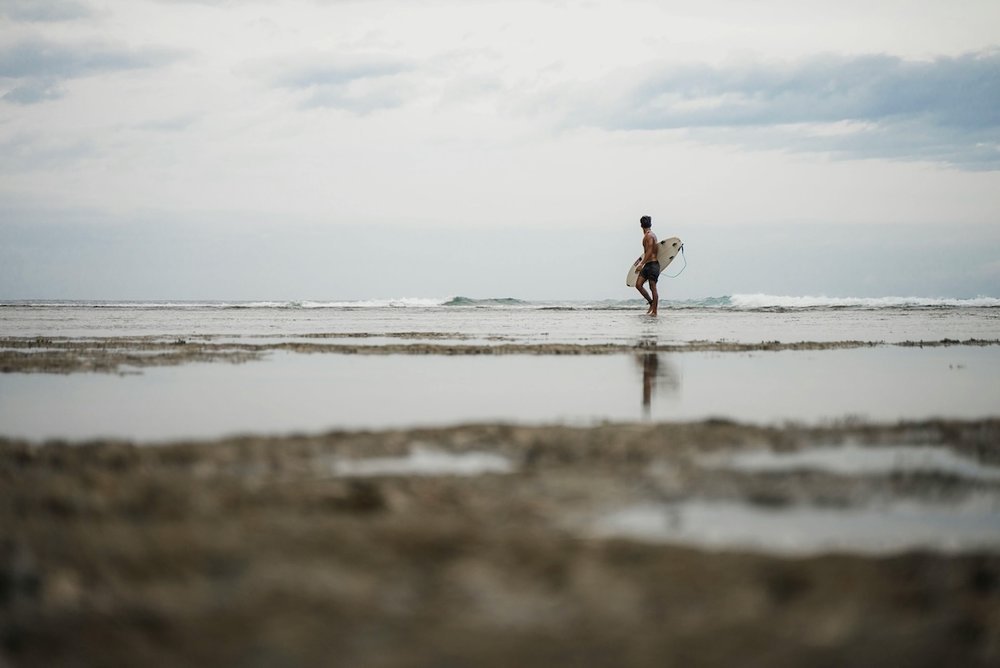
Surfing reef breaks is not advisable for beginners, but first-timers are often surprised that the island can cater to their needs. While advanced surfers flock to prime site Cloud 9, learners have plenty of gentler spots nearby where instructors guide them through the basics in warm, forgiving water.
Many travelers book a full Philippines surfing experience through one of the island’s surf camps. These camps typically combine accommodation, daily lessons, board rental, and island activities, making them especially convenient if you’re traveling solo or learning for the first time.
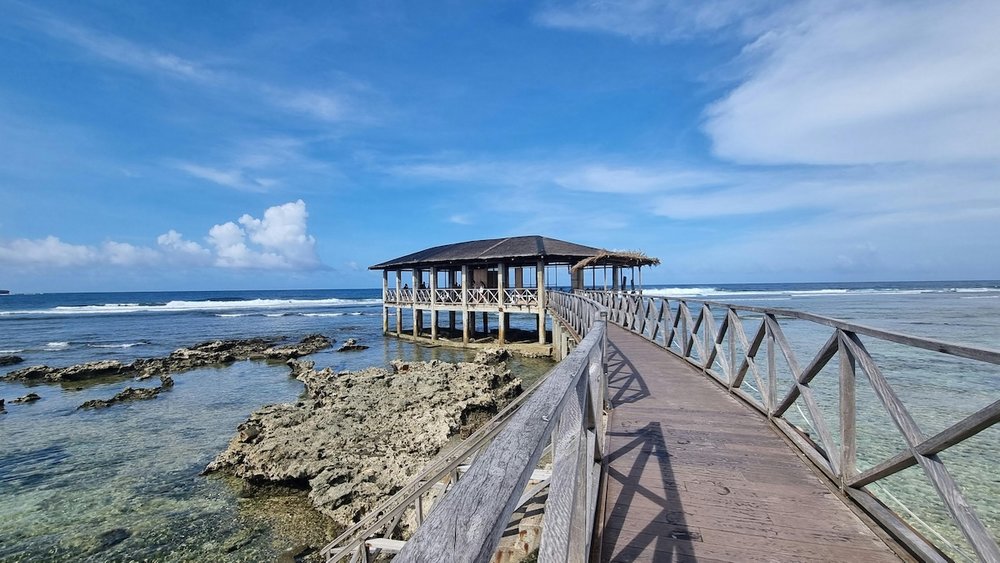
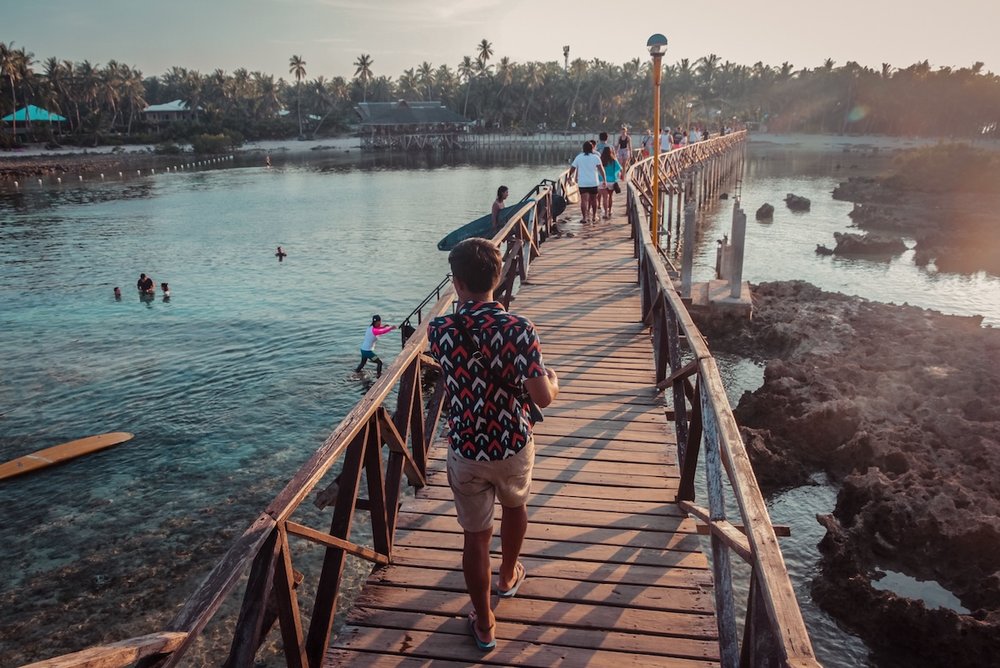
Cloud 9 itself is worth visiting even if you’re not ready to surf it. The famous boardwalk stretches out over the water and gives you a front-row seat to gaze at experienced surfers riding this iconic wave. Around sunrise and sunset, it becomes one of the liveliest gathering points on the island.
What also makes Siargao appealing is how easy it is to mix surfing with other activities. On rest days, many visitors head to the Magpupungko rock pools during low tide, where natural pools form between dramatic rock formations. Others join a Siargao land tour to see coconut roads, inland lagoons, and quieter beaches beyond the main surf towns.
How the Typical Siargao Surfing Trip Pans Out
Most visitors stay around General Luna, the island’s main tourism hub. This is where you’ll find surf schools, beachfront cafés, smoothie bars, and small hotels tucked along palm-lined roads. The atmosphere is casual and social without feeling overly developed.
Days in Siargao tend to revolve around the tides. Early mornings are usually the busiest time for surf lessons, when conditions are calmer and the sun is less intense. Afternoons slow down considerably, especially during the hottest hours, before people head back out for sunset sessions or beach dinners.
Electricity outages and patchy internet still happen occasionally, though conditions have improved in recent years. Most travelers end up appreciating the slower pace. The island feels more relaxed than many major Southeast Asian beach destinations, and it’s easy to settle into a routine of surfing, eating, and exploring.
You should also expect roads to be uneven in places, especially outside General Luna. Transportation is informal, and weather can occasionally affect ferry schedules and island activities.
How to Get to Siargao and Surf its Beaches
The easiest way to reach Siargao is by flying into Sayak Airport (also called Siargao Airport). Direct flights operate from Manila and Cebu, with travel times ranging from roughly one to two hours depending on the route.
From the airport, vans transport visitors to General Luna. The journey usually takes around 45 minutes.
Typical transportation costs
Expense | Typical cost |
Flight from Manila | ₱3,000–8,000 round trip |
Flight from Cebu | ₱2,500–6,000 round trip |
Airport van transfer | ₱300–500 |
Beginner surf lessons | ₱500–1,000 per hour |
Surfboard rental | ₱300–500 per day |
Hostel bed | ₱600–1,500 per night |
Mid-range hotel | ₱3,000–7,000 per night |
Getting around the island is easiest with a motorbike rental, which gives you flexibility to visit beaches and surf spots at your own pace. Rentals are available almost everywhere in General Luna, and daily rates are generally affordable compared to relying on tricycles for every trip.
If you’re uncomfortable driving a scooter, tricycles remain widely available for shorter rides around town.
What to Wear During Your Siargao Trip
The tropical climate means lightweight clothing works best, but surfing adds a few practical considerations.
- Rash guards or long-sleeve swim shirts help prevent sunburn during lessons
- Board shorts or secure swimwear are more practical than loose beachwear while surfing
- Reef-safe sunscreen is essential, especially during midday sessions
- Sandals or water shoes can help on rougher reef-entry areas
- A lightweight rain jacket is useful during wetter months
- Quick-dry clothing makes island hopping and surf days easier
Most beginner surf spots near General Luna have sandy bottoms, but some rocky areas become shallow at lower tide, so instructors may recommend extra protection depending on conditions.
When to Visit this Surfing Capital
Siargao is a year-round destination, but the best time to visit depends on your surfing level and the conditions you’re hoping to find.
Best months for beginners
Season | What to expect |
March–May | Sunny weather, smaller waves, excellent for beginners |
June–August | Good mix of manageable surf and lively island atmosphere |
September–November | Peak surf season with larger swells, better for experienced surfers |
December–February | Mixed conditions with occasional rain and moderate surf |
Absolute beginners often find March through May the easiest period for learning because the waves are generally softer and conditions are more predictable.
Best days of the week
Weekdays tend to feel noticeably calmer around General Luna and the beginner surf breaks. Weekends attract more domestic travelers, especially during Philippine holidays, so accommodations and surf schools can become booked up faster.
Early morning sessions are also less crowded than late afternoons, particularly at popular beginner beaches.
Philippines Surfing FAQs
What are the differences between Siargao, La Union, and Aurora for beginner surfers?
Siargao is generally the easiest and most tourist-friendly option for first-time surfers because it has a large number of surf schools, beginner breaks, and a well-developed travel scene. The warm water and social atmosphere also make it less intimidating for new surfers.
La Union, particularly around San Juan, is more accessible from Manila and popular for shorter surf trips. It has a lively café and nightlife scene, but beaches can become crowded during weekends and holidays.
Aurora, especially Baler, offers a more relaxed and local feel. Surf conditions can still suit beginners, but the infrastructure is less built around tourism compared to Siargao, and transportation takes longer.
Is Siargao expensive for beginner surfers?
Siargao can fit a wide range of budgets. Backpackers can surf and stay comfortably using hostels, shared transport, and local eateries, while higher-end resorts and private surf coaching are also available.
For most beginners, the largest costs are flights and accommodation. Surf lessons themselves are relatively affordable compared to many international surf destinations, especially considering the warm water and year-round conditions.
Where do expert surfers prefer to surf in the Philippines?
Experienced surfers often head to Cloud 9 in Siargao during peak swell season, particularly between September and November. The break is famous for its fast, hollow waves over sharp reef.
Other advanced surfers seek out less crowded reef breaks around Siargao’s outer islands or travel to spots in La Union, Baler, and Samar when conditions line up. Many experienced surfers prioritize locations with stronger swells and fewer beginners in the water.
What is it about reef breaks that makes for better quality surfing?
- Predictable wave shape: Coral reefs and rock formations stay fixed in place, so waves tend to break in the same spot and form more reliably. Sandy seabeds shift constantly, which can make beach-break waves less consistent.
- Cleaner, more powerful waves: Reef breaks often produce steeper, more defined waves with longer rides. That’s why spots like Cloud 9 become internationally famous.
- Better wave mechanics: The sudden change in depth over a reef helps waves stand up and “peel” in a smooth direction, which advanced surfers look for.
The downside is that reef breaks can also be more dangerous.
Related Articles



What is Klook?
Klook is a leading pan-regional experiences platform in Asia Pacific, purpose built to digitalize experiences and make them accessible to every traveler.
Our mission is to build the digital infrastructure for the global experience economy — empowering merchants to share their passions and travelers to discover the heartbeat of each destination. We operate a mobile-first, curated platform featuring diverse experiences across global destinations.