
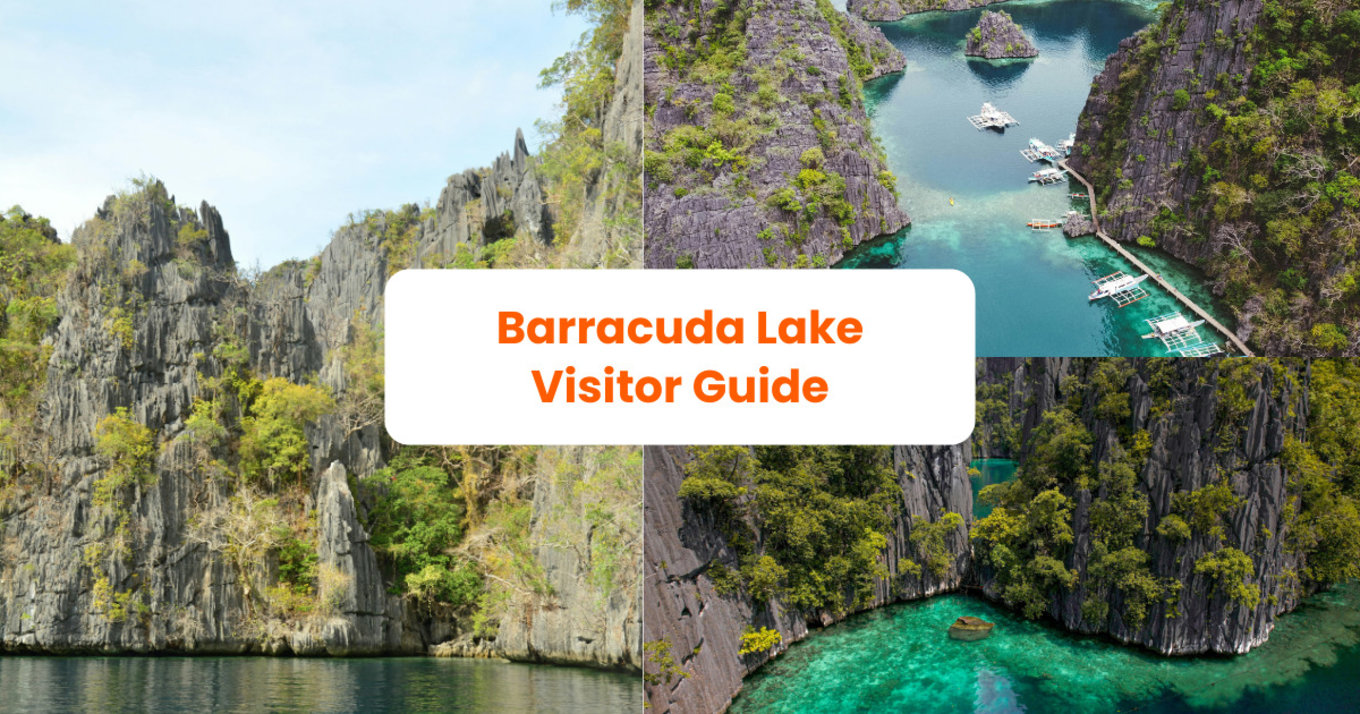
If you’ve already started planning a trip to Coron, there’s a good chance Barracuda Lake has come up in your research — and not just because it looks beautiful. This is one of those rare places where the experience goes beyond what you see on the surface.
Floating here feels almost surreal. As you dive down or just allow yourself to sink a little deeper, you pass through distinct layers: cool at the surface, then warm, and in some spots surprisingly hot. That’s the lake’s famous thermocline, and it’s what makes Barracuda Lake one of the most unique swimming and diving spots in the Philippines.
Why do people visit Barracuda Lake?
If the famous temperature shifts don’t sway you, there are plenty of other reasons to fit Barracuda Lake into your trip.
Visitors also find it unforgettable for:
- The otherworldly underwater landscape of jagged limestone formations
- Crystal-clear visibility, especially in the upper layers
- A more mysterious, enclosed atmosphere compared to other Coron spots
- A unique diving experience that feels more like exploring a cavern than a lake
Should we add barracudas? Worry not! Despite the lake’s name, sightings of barracudas are extremely rare.
Barracuda Lake: Quick facts
- Located on Coron Island in Palawan
- Part of the protected ancestral domain of the Tagbanua people
- Mix of freshwater and saltwater, adding to its unique density changes
- Popular for freediving and scuba diving, but also accessible to snorkelers
What to expect when you arrive at Barracuda Lake
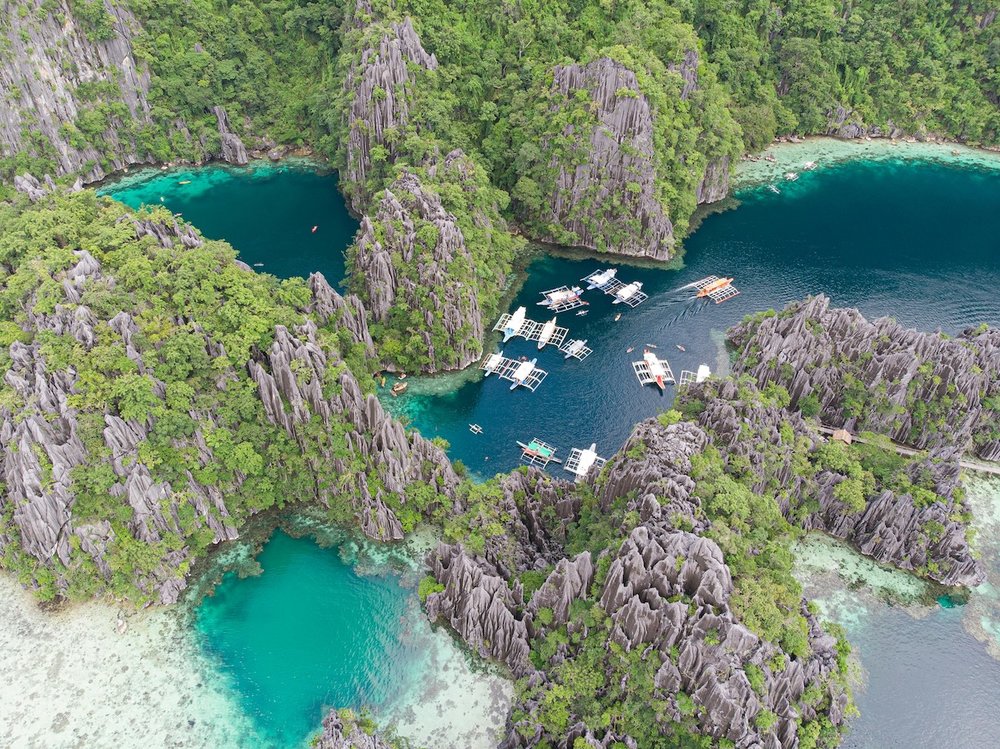
Your boat will dock at a small wooden platform along a rocky shoreline. From there, you’ll walk along a short wooden boardwalk that hugs the limestone cliffs before reaching the lake entrance.
Once you step into the water, the experience begins almost immediately. Visibility is excellent near the top, though it becomes slightly distorted in the warmer layers due to differences in water density.
Underwater, you’ll see:
- Sharp limestone ridges and formations
- Dark crevices that look like underwater caves
- Light beams filtering through clear sections of water
It’s less about lounging and more about experiencing something completely different.
How to get to Barracuda Lake
Barracuda Lake is only accessible by boat, departing from Coron Town on Busuanga Island.
Option 1: Group island-hopping tour
Most visitors reach Barracuda Lake through island-hopping tours to Coron Island, typically organized by operators like Klook. Look for offerings like:
These tours generally include:
- Multiple stops (Kayangan Lake, Twin Lagoons, beaches)
- Lunch
- Snorkeling gear
- Entrance fees
They’re affordable and convenient, making them the most popular option.
Option 2: Private boat charter
If you want a quieter experience, a private boat is worth considering—also offered by Klook.
Group tours tend to arrive at similar times, so hiring a private boat allows you to:
- Arrive earlier or later than the crowds
- Spend more time at the lake
- Enjoy a more relaxed pace
How much does a Barracuda Lake visit cost?
Option | Typical cost | What’s included | Notes |
Group tour | ₱1,500–2,500 per person | Boat, lunch, gear, entrance fees | Usually part of multi-stop tours |
Private boat | ₱3,500–5,500 per boat | Boat and crew | Entrance fees often extra |
Entrance fee | ₱200–300 per person | Access to Barracuda Lake | Often included in tours |
Snorkeling gear | ₱150–300 | Mask and snorkel | Usually included |
When is the best time to visit Barracuda Lake?
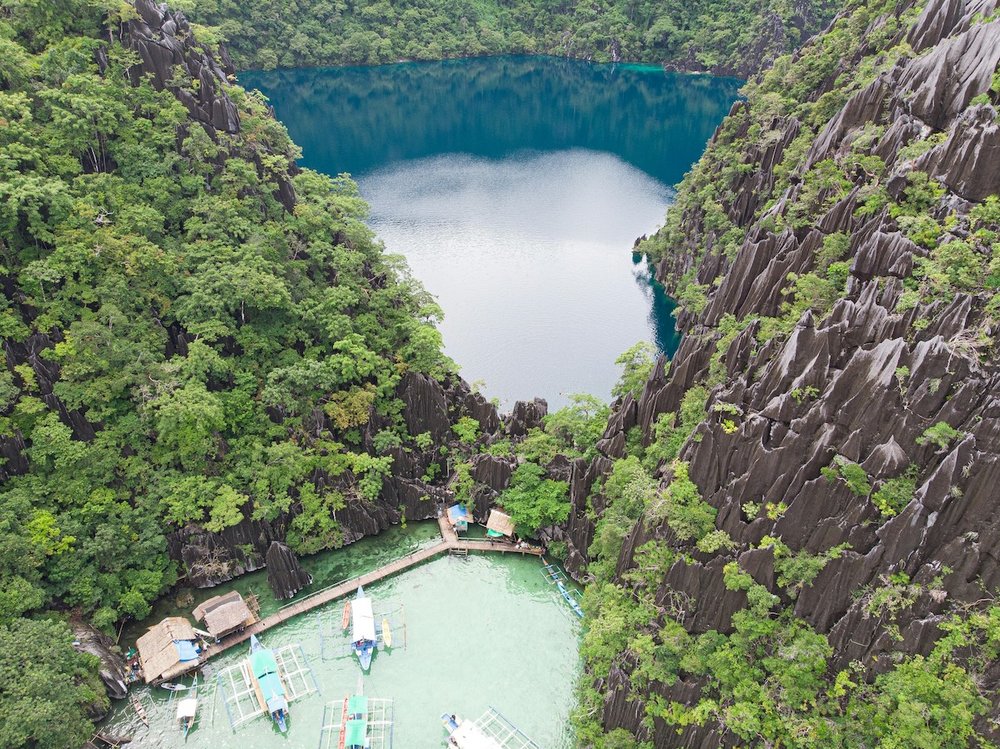
The best time to visit Barracuda Lake is during the dry season (November to May).
- December to March: Best weather, calm seas, peak tourist season
- April to May: Hotter, but great water conditions
- November & early June: Fewer crowds with decent weather
- July to October: Rainy season—tours may be canceled due to rough seas
If possible, visit early in the morning to enjoy calmer conditions and fewer people.
What should you wear and bring?
- Swimwear under light clothing for easy transition from travel mode to site experience
- Water shoes or sandals with grip (rocks can be slippery and the short access path may be uneven)
- Reef-safe sunscreen, applied before leaving town
- Dry bag for valuables
- Your own snorkel mask (likely a better fit than rentals)
- GoPro or waterproof camera—this place is made for it
- Reusable water bottle
UV-blocking swimwear is also a good idea during boat rides and swimming, for sun protection and as a rash guard.
Diving vs snorkeling: Which is best at Barracuda Lake?
Barracuda Lake is one of the few places where snorkeling and diving offer completely different experiences.
Snorkeling
Great for:
- Casual visitors
- Experiencing the upper thermocline layers
- Enjoying clear water and surface views
You’ll still feel temperature changes, especially if you dive down briefly.
Scuba diving
This is where Barracuda Lake really comes into its own.
Divers get to:
- Experience full thermocline transitions
- Explore deeper limestone formations
- Feel extreme temperature changes (sometimes over 30°C difference)
- Witness the visual distortion effect caused by water density layers
It’s considered one of the most unique dive sites in the Philippines. If you’re certified, this is an absolute must, and a completely different experience from nearby sites like Skeleton Wreck.
Barracuda Lake: Unlike anywhere else
There’s something quietly thrilling about floating in water that changes temperature as you move, surrounded by towering limestone walls and silence.
Barracuda Lake isn’t the loudest or most photographed place in Coron, but for many of those who take the Coron Super Ultimate tour, it becomes the most memorable.
Take your time here. Let yourself sink, float or drift. Barracuda Lake will move you either way!
Frequently Asked Questions about Barracuda Lake
1. Why is it called Barracuda Lake?
Barracuda Lake gets its name from a large barracuda that was reportedly spotted in its waters many years ago. Sightings today are extremely rare, and most visitors will never see one. The name stuck, though, adding a bit of intrigue to a place that already feels mysterious.
2. Is Barracuda Lake volcanic?
Barracuda Lake isn’t volcanic. Its unusual temperature layers come from a mix of freshwater and saltwater combined with heat trapped within the surrounding limestone rock formations.
Sunlight warms the upper layers, while deeper sections retain heat, creating the distinct thermocline effect as you move through the water.
3. How safe is it to swim in Barracuda Lake?
Barracuda Lake is generally safe to swim in, especially when visiting with a licensed tour operator.
That said, there are a few things to keep in mind:
- The lake gets deep quickly, so you won’t be able to stand in most areas
- The rocky entry points can be slippery
- Temperature changes can feel intense when diving deeper
- Life jackets are often recommended or required for casual swimmers
As long as you follow your guide’s instructions and stay within designated areas, it’s a safe and enjoyable place to swim or snorkel.
What is Klook?
Klook is a leading pan-regional experiences platform in Asia Pacific, purpose built to digitalize experiences and make them accessible to every traveler.
Our mission is to build the digital infrastructure for the global experience economy — empowering merchants to share their passions and travelers to discover the heartbeat of each destination. We operate a mobile-first, curated platform featuring diverse experiences across global destinations.