Places to visit in Tokyo are spread across and beyond the Yamanote Line loop. If you only have three or four days, grouping spots by area saves more time than hopping back and forth between them.
What are the best places to visit in Tokyo? For a first trip, start with Senso-ji, Tokyo Skytree, SHIBUYA SKY, Shinjuku Gyoen and Meiji Jingu, which cover a temple, observation decks, a garden and a shrine. If you’ve been once or twice, try teamLab Borderless at Azabudai Hills, Shimokitazawa and Kichijoji for something a little different.
This guide lists 15 Tokyo tourist spots with transport, opening hours and ticket prices. Prices are in yen, with approximate peso amounts in parentheses. If you’re planning around a Holy Week long weekend, use the area combination table below to put spots in the same neighborhood on the same day.
Direct flights from Manila land at Narita or Haneda, and Tokyo is only one hour ahead of Manila, so there’s barely any jet lag. Philippine passport holders need a visa to visit Japan, so apply early (see the FAQs at the end).
Places to visit in Tokyo at a glance
The table below lists all 15 spots, so you can compare areas and budgets before reading the full details.
# | Spot | Area | Type | Price |
|---|
1 | Senso-ji | Asakusa | Temple | Free |
2 | Tokyo Skytree | Oshiage | Observation deck | Tembo Deck weekday same-day ticket ¥2,400 (about ₱955) |
3 | Ueno Park | Ueno | Park and museums | Park free, Ueno Zoo ¥600 (about ₱240) |
4 | Akihabara | Akihabara | Anime and electronics town | Free entry |
5 | Tokyo Tower | Shibakoen | Observation deck | Main Deck ¥1,500 (about ₱595) |
6 | Tokyo City View at Roppongi Hills | Roppongi | Observation deck | Varies by date, see the Klook page |
7 | Azabudai Hills | Azabudai | Digital art museum | teamLab Borderless varies by date, see the Klook page |
8 | SHIBUYA SKY | Shibuya | Observation deck | From ¥2,700 (about ₱1,075) |
9 | Meiji Jingu and Harajuku | Harajuku | Shrine and shopping street | Free, Inner Garden ¥500 (about ₱200) |
10 | Shimokitazawa | Setagaya | Vintage shops and cafes | Free entry |
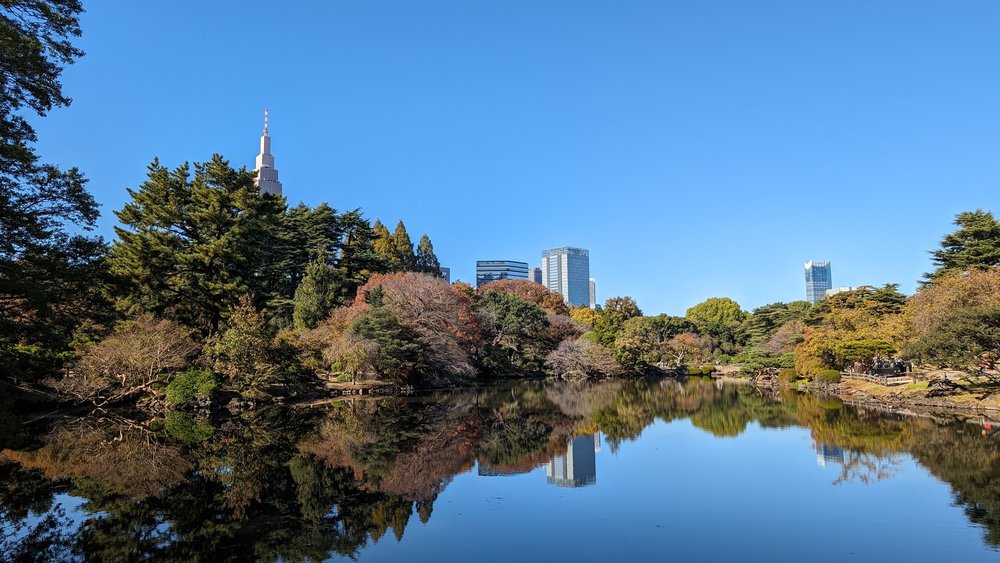
11 | Shinjuku Gyoen | Shinjuku | Garden and observation deck | Garden ¥500 (about ₱200), Metropolitan Government Building free |
12 | Ikebukuro | Ikebukuro | Aquarium and observation deck | Aquarium ¥2,600-3,200 (about ₱1,035-1,275) |
13 | teamLab Planets TOKYO | Toyosu | Digital art museum | Varies by date and time slot, see the Klook page |
14 | Odaiba | Odaiba | Waterfront and fountain | Free |
15 | Kichijoji | Kichijoji | Park and museum | Park free, Ghibli Museum needs a reservation |
Peso amounts are approximate (about ₱0.40 per ¥1) and change daily. Check the Klook page for the latest price.
Senso-ji: Kaminarimon, Nakamise-dori and the five-story pagoda
Among the places to visit in Asakusa,
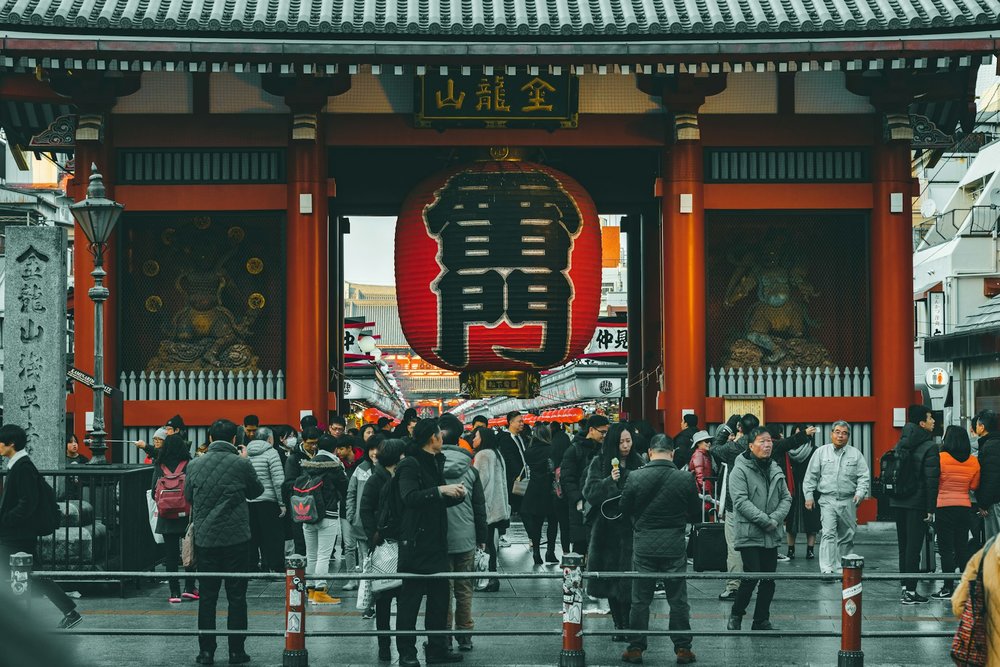
Senso-ji is the first stop for most visitors. Its Kaminarimon (Thunder Gate) hangs a giant paper lantern, and the green plaque above it shows the temple’s mountain name, “Kinryuzan”. Past the gate is Nakamise-dori, a 250-meter lane of shops selling Japanese sweets, snacks and souvenirs, which ends at the Hozomon gate and the main hall.
Legend says Senso-ji was founded in 628 after two fishermen pulled a statue of Kannon out of the Sumida River. The main hall and pagoda were destroyed in World War II, and the current five-story pagoda was rebuilt in 1973. Next to the main hall, Asakusa Shrine dates to 1649 and was built by Tokugawa Iemitsu.
An
omikuji (paper fortune) costs ¥100 (about ₱40) at the office in front of the main hall. To hear the stories behind the gate and the hall, join a
Senso-ji guided walking tour. If you’re heading to Tokyo Skytree the same day, it’s just one stop away on the Tobu Skytree Line.
Address: 2-3-1 Asakusa, Taito City, Tokyo
Getting there: Take the Tokyo Metro Ginza Line or Toei Asakusa Line to Asakusa Station, then walk about 5 minutes
Opening hours: Grounds open all day. Main hall about 6:00 AM-5:00 PM (April to September) and 6:30 AM-5:00 PM (October to March), subject to official notices
Admission: Free
Suggested time: 1.5-2 hours
Tokyo Skytree: Tembo Deck and Tembo Galleria
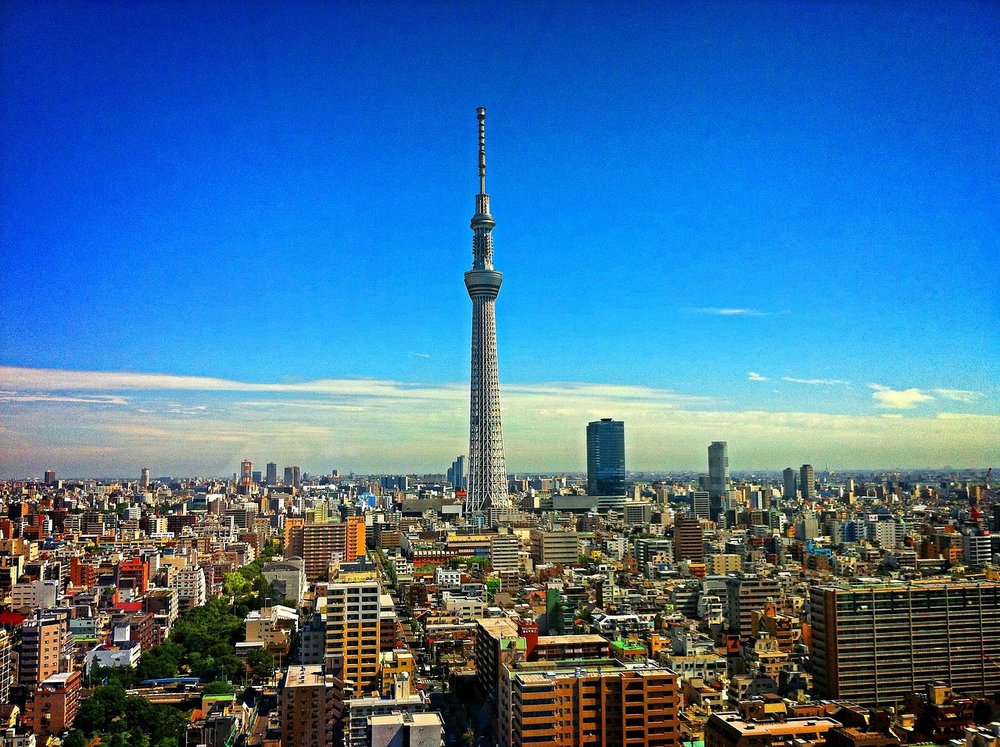
Tokyo Skytree stands 634 meters tall and has two observation levels: the Tembo Deck at 350 meters and the Tembo Galleria at 450 meters. The elevators are themed after the four seasons, and the ride up to the Tembo Deck takes about 50 seconds.
Skytree opened in 2012, and on a clear day the Tembo Deck can see about 70 kilometers away. Both levels are good for sunset, the Tembo Deck has SKYTREE CAFE, and the Tokyo Solamachi mall at the base is handy for a rest after your visit.
A weekday same-day adult ticket for the Tembo Deck is ¥2,400 (about ₱955), and the combo with the Tembo Galleria is ¥3,500 (about ₱1,390). Weekend and holiday prices are higher, while advance tickets cost less than same-day tickets. Buying
Skytree tickets ahead also saves you from queuing at the ticket counter.
Address: 1-1-2 Oshiage, Sumida City, Tokyo
Getting there: Take the Tobu Line to Tokyo Skytree Station, or the Tokyo Metro Hanzomon Line or Toei Asakusa Line to Oshiage Station, then walk about 2 minutes
Opening hours: Weekdays 10:00 AM-10:00 PM, weekends and public holidays 9:00 AM-10:00 PM, last entry 9:00 PM, subject to official notices
Admission: Tembo Deck weekday same-day ticket ¥2,400 (about ₱955), combo ticket ¥3,500 (about ₱1,390). For weekend and advance prices, see the Klook page
Suggested time: 1-2 hours
Ueno Park: Museums, Shinobazu Pond and Ueno Zoo
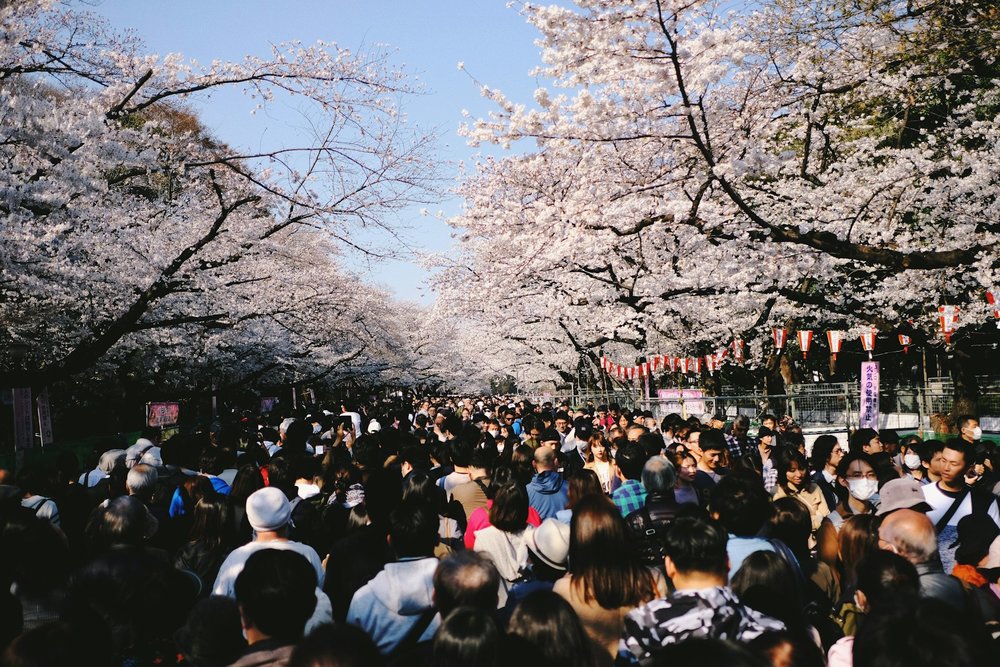
Ueno’s attractions are clustered in and around Ueno Park. Enter from the Park Exit of JR Ueno Station. To the north is a rectangular fountain leading to the Tokyo National Museum, and to the south is the main tree-lined avenue for cherry blossoms in spring, which ends at Shinobazu Pond.
The Tokyo National Museum was founded in 1872, and the park also holds the National Museum of Western Art and the Tokyo Metropolitan Art Museum. The Bentendo hall in the middle of Shinobazu Pond is octagonal, and the pond fills with lotus in summer. Ameyoko, the market street by Ueno Station, is another spot for browsing and street snacks.
Ueno Zoo opened in 1882. Its two giant pandas returned to China on January 27, 2026, but you can still see Asian elephants, Sumatran tigers, western gorillas and polar bears. It’s one of the best places in Tokyo for kids: adults pay ¥600 (about ₱240), junior high school students ¥200 (about ₱80), and elementary school students and younger get in free. For cherry blossom timing, see the FAQ on seasons below.
Address: Ueno Park, Taito City, Tokyo (Ueno Zoo: 9-83 Ueno Park)
Getting there: About 5 minutes on foot from the Park Exit of JR Ueno Station
Opening hours: Ueno Zoo 9:30 AM-5:00 PM (last entry 4:00 PM), closed on Mondays (or the next day if Monday is a public holiday). Museum hours vary
Admission: Park free, Ueno Zoo adults ¥600 (about ₱240)
Suggested time: Half a day
Akihabara: Electronics Town, Retro Games and Gachapon
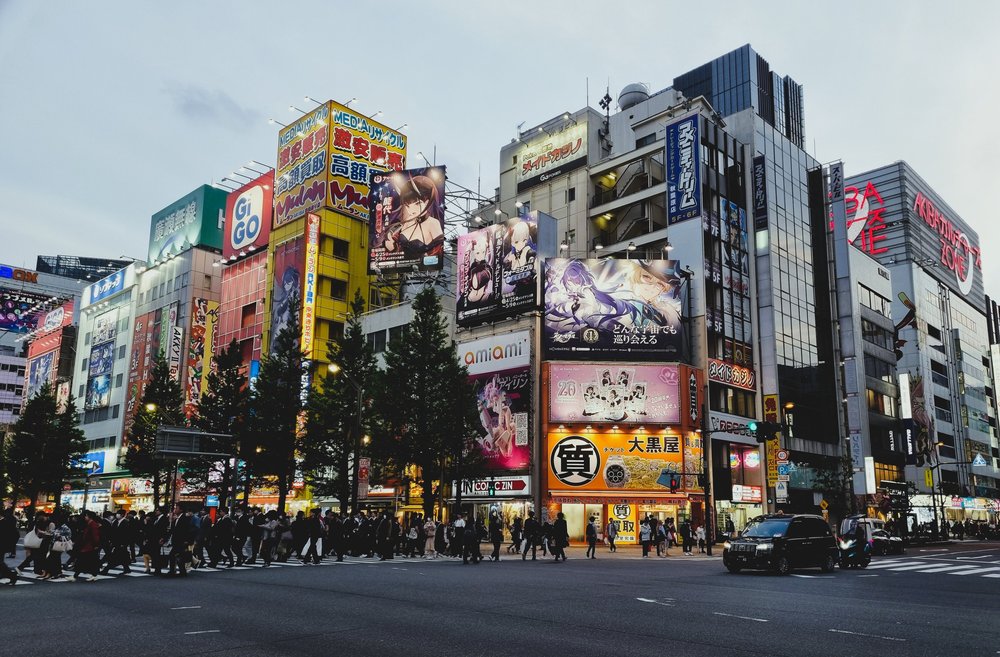
Right outside the Electric Town Exit of Akihabara Station is Chuo-dori, lined with electronics shops, anime stores and multi-floor arcades. Among the places to visit in Akihabara, Radio Kaikan has 10 floors of specialty shops selling models, figures and idol merchandise, and its yellow sign is a landmark of the area.
Super Potato is a retro game store stocking Famicom-era cartridges and consoles of all generations, with a small retro arcade on the top floor at ¥100 (about ₱40) per play. Yodobashi Akiba has eight floors of cameras, appliances and models, and the Gachapon Kaikan packs in hundreds of capsule toy machines, sorted by title and category.
On Sundays and public holidays, Chuo-dori closes to traffic in the afternoon and becomes a pedestrian zone, 1:00-5:00 PM (October to March) and 1:00-6:00 PM (April to September). If you’d like a local guide, join an
Akihabara walking tour.
Address: Around Sotokanda, Chiyoda City, Tokyo (Akihabara Electric Town)
Getting there: JR Akihabara Station, Electric Town Exit
Opening hours: Varies by shop. Radio Kaikan about 10:00 AM-8:00 PM, Yodobashi Akiba about 9:30 AM-10:00 PM
Admission: Free entry, shop purchases extra
Klook Tip: Many specialty shops close on Mondays, so skip Monday if you want to cover all of Akihabara.
Tokyo Tower: Main Deck, Top Deck and Orange Lights
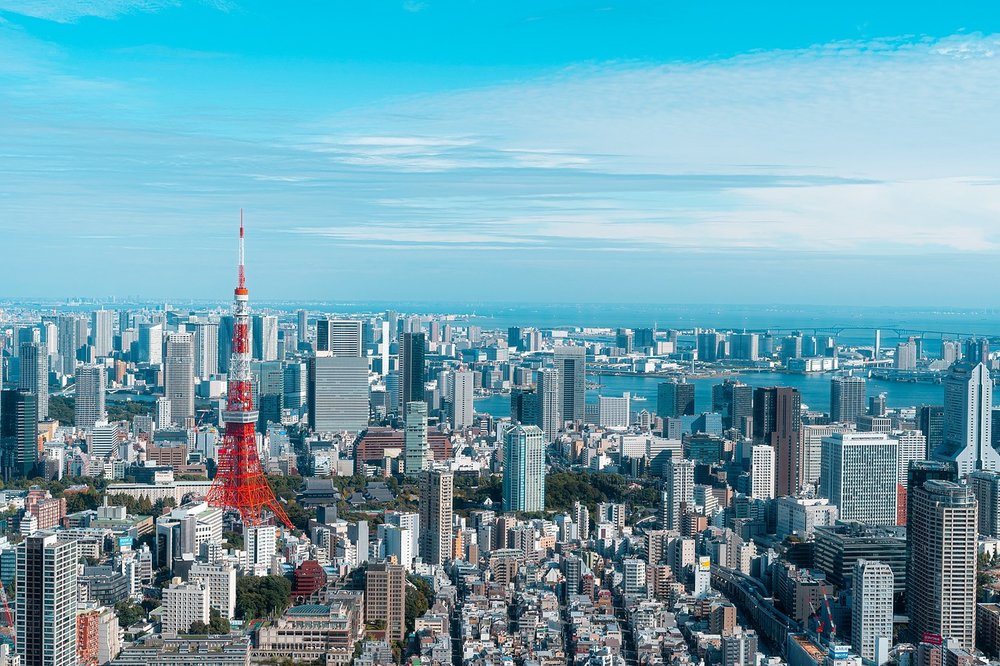
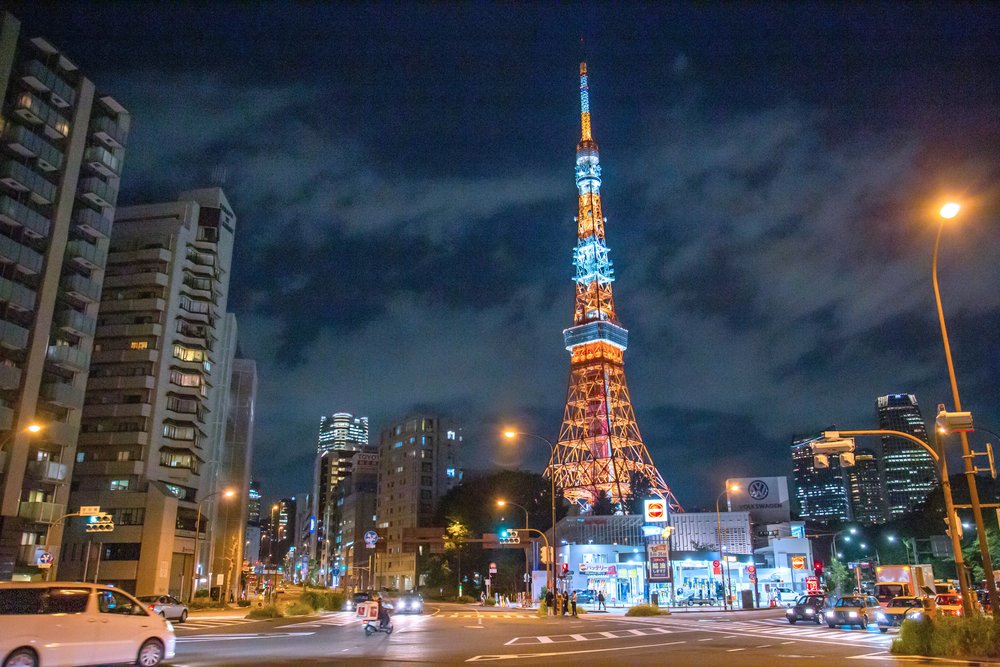
Tokyo Tower’s orange and white look comes from the “international orange” required by aviation rules. It stands 333 meters tall and opened on December 23, 1958. Foot Town at the base has shops, restaurants and games, so it’s worth a stroll before or after your visit.
The Main Deck sits at 150 meters and can be reached by elevator or by about 600 steps up the outdoor stairs. The floor has glass Skywalk Windows where you can look straight down about 145 meters. The Top Deck at 250 meters is decorated with geometric mirrors and LED lights, and you can only enter on a guided tour: online advance tickets are ¥3,300 for adults (about ₱1,315), or ¥3,500 (about ₱1,390) at the counter.
The tower is normally lit orange and switches to silver in summer. For a shot of the whole tower, head to nearby Zojoji Temple. When you book
Tokyo Tower tickets, you can choose the Main Deck only or add the Top Deck.
Address: 4-2-8 Shibakoen, Minato City, Tokyo
Getting there: About 5 minutes on foot from Akabanebashi Station (Toei Oedo Line), or about 7 minutes from Kamiyacho Station (Tokyo Metro Hibiya Line)
Opening hours: About 9:00 AM-11:00 PM, Main Deck last entry about 10:30 PM, subject to official notices
Admission: Main Deck ¥1,500 (about ₱595), Top Deck guided tour online advance ticket ¥3,300 (about ₱1,315)
Klook Tip: Top Deck tours run in fixed time slots and the sunset slots sell out fast, so book as soon as your dates are set.
Tokyo City View at Roppongi Hills: Views from the 52nd Floor
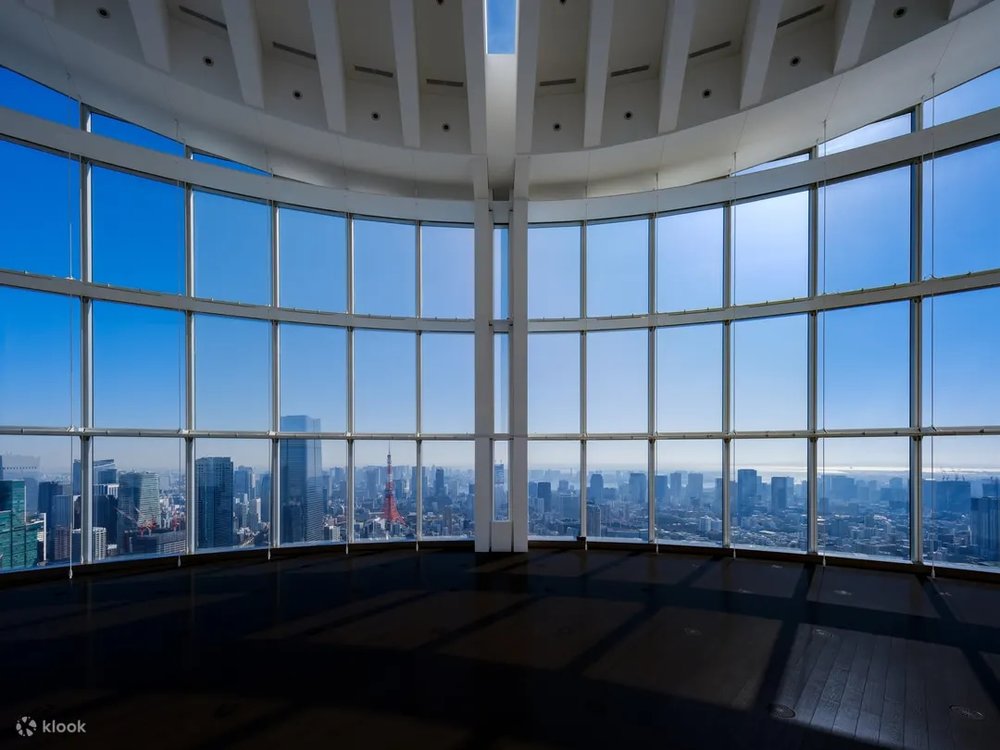
Tokyo City View is on the 52nd floor of Mori Tower in Roppongi Hills. It’s an indoor observation deck with views of Tokyo Tower, Tokyo Skytree, Shinjuku Gyoen and the National Diet Building. Seen from this height, Tokyo Tower is almost at eye level, and many visitors come at night for photos.
The Mori Art Museum is on the 53rd floor of the same building. The observation deck sometimes hosts exhibitions, and parts of it may close or be limited during those periods, so check the official notice before you go. The rooftop Sky Deck is currently closed, so this is mainly an indoor deck.
Address: Mori Tower 52F, Roppongi Hills, 6-10-1 Roppongi, Minato City, Tokyo (ticket counter on 3F)
Getting there: Exit 1C or 3 of Roppongi Station (Tokyo Metro Hibiya Line or Toei Oedo Line)
Opening hours: 10:00 AM-10:00 PM (last entry 9:30 PM), may change by date
Admission: Varies by date and exhibition, see the Klook page
Suggested time: 1-2 hours
Azabudai Hills: teamLab Borderless Digital Art Museum
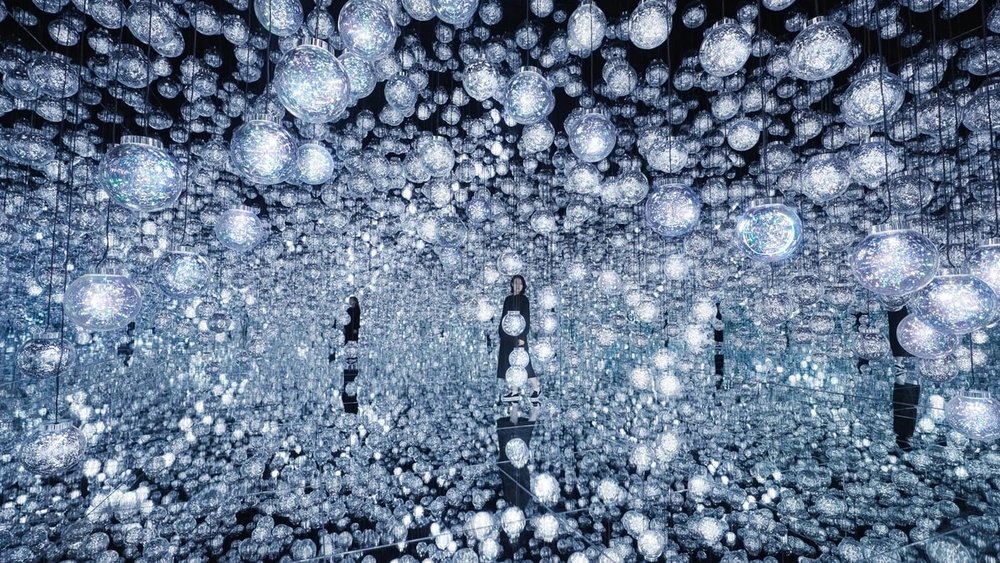
teamLab Borderless is in the basement of Garden Plaza B at Azabudai Hills. The artworks flow into one another with no boundaries, and you can walk around in your shoes with no fixed route. The museum calls itself a “museum without a map”, shows more than 75 works, and Bubble Universe is one of the most popular rooms.
Azabudai Hills was developed by Mori Building and opened on November 24, 2023, and teamLab Borderless moved here from Odaiba in February 2024. Among the newer places to visit in Tokyo, Azabudai Hills sits next to Kamiyacho Station and is about a 10-minute walk from Tokyo Tower, so you can do both on the same day.
teamLab Borderless is a space without a map, while teamLab Planets has you wading through water. The two styles are different, so you can pick one or visit both.
teamLab Borderless tickets sell out faster on weekends and holidays, so book once your dates are set.
Address: Garden Plaza B, B1F, Azabudai Hills, 1-2-4 Azabudai, Minato City, Tokyo
Getting there: Walk about 5-7 minutes from Kamiyacho Station (Tokyo Metro Hibiya Line) or Roppongi-itchome Station (Namboku Line)
Opening hours: About 10:00 AM-9:00 PM, varies by day, subject to official notices
Admission: Varies by date, see the Klook page
Suggested time: 2-3 hours
SHIBUYA SKY: Open-Air Rooftop, SKY EDGE and Sunset Slots
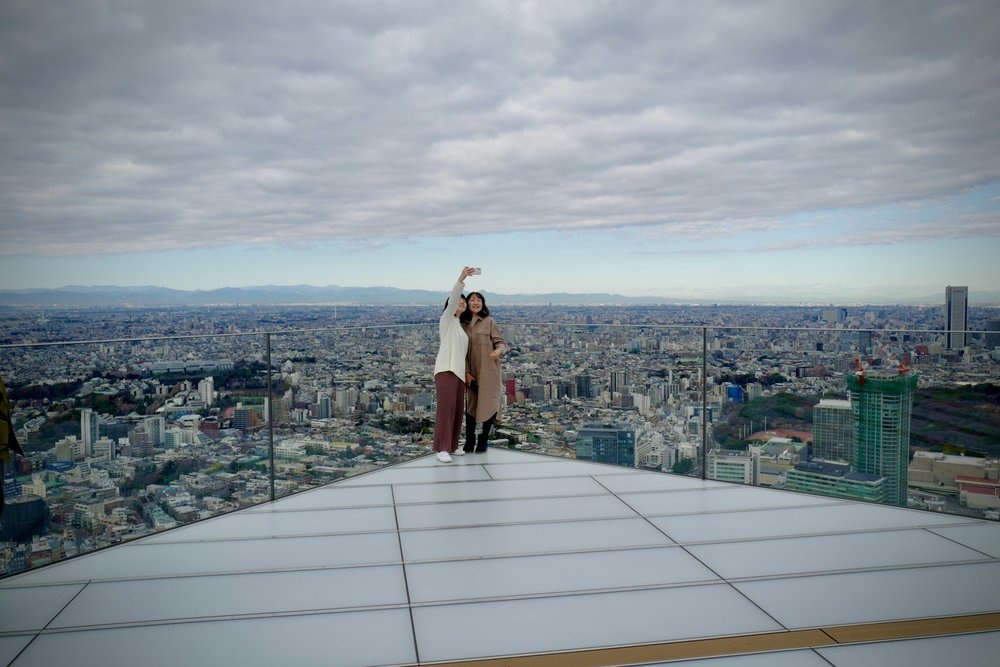
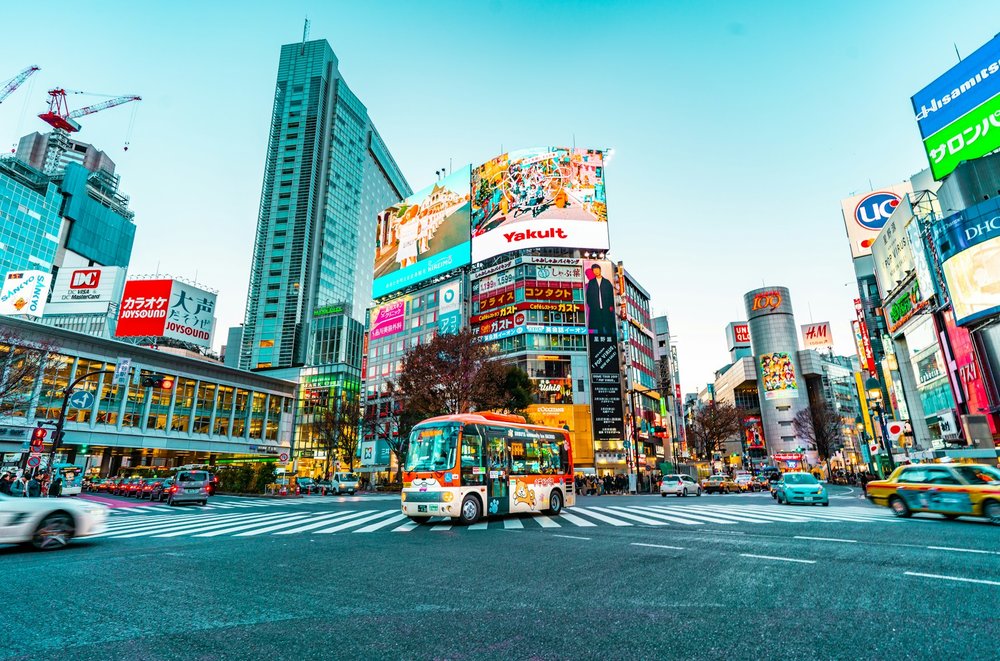
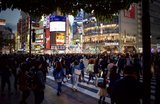
Among the places to visit in Shibuya, SHIBUYA SKY sits at the top of Shibuya Scramble Square, 229 meters up, with an open-air rooftop overlooking the Shibuya Crossing. The key to this SHIBUYA SKY guide is the entry time, because both ticket prices and views change by time slot.
SHIBUYA SKY opened in 2019. The entrance is on the 14th floor, the indoor SKY GALLERY is on the 46th, and the rooftop SKY STAGE has the popular SKY EDGE photo spot, plus a searchlight beam show called Crossing Light at night. On a clear day you can see Mt. Fuji.
The official advice is to enter about 30 minutes before sunset, which in Tokyo is as early as about 4:30 PM in early December and as late as about 7:00 PM in late June and early July.
Online advance adult tickets are priced around 3:00 PM: ¥2,700 (about ₱1,075) before 3:00 PM and ¥3,400 (about ₱1,350) from 3:00 PM. Entry slots run every 20 minutes, and if the rooftop closes because of weather, you can cancel the day’s ticket for free before entry. After booking
SHIBUYA SKY tickets, head to the 14th-floor entrance at your slot time.
Address: Shibuya Scramble Square, 2-24-12 Shibuya, Shibuya City, Tokyo (entrance on 14F)
Getting there: Directly connected to Shibuya Station (JR, Tokyo Metro and Tokyu lines)
Opening hours: 10:00 AM-10:30 PM (last entry 9:20 PM), closed January 1, rooftop may close in bad weather
Admission: Online advance adult ticket from ¥2,700 (about ₱1,075), ¥3,400 (about ₱1,350) from 3:00 PM
Suggested time: About 90 minutes
Klook Tip: Bags, hats, tripods and selfie sticks are not allowed on the rooftop, so store them in the lockers on the 46th floor.
Meiji Jingu and Harajuku: Forest Path, Inner Garden and Takeshita Street
Meiji Jingu sits in a forest of about 70 hectares. Walk through the torii gate next to Harajuku Station and follow the path to the main hall. The shrine was founded in 1920 and honors Emperor Meiji and Empress Shoken. Entry is free, and it’s open daily during daylight hours, which change by month.
The Inner Garden costs an extra ¥500 (about ₱200), and June is the iris season there. Visiting the shrine alone takes about 1 hour, or about 2 hours with the Inner Garden and the museum.
Right outside is Takeshita Street, a lane of about 350 meters lined with trendy fashion shops and snack stalls, a short walk from Harajuku Station. Marion Crepes opened in 1976 and is the original shop behind Takeshita Street’s crepe craze. The shrine’s first torii gate is about a 5-minute walk away, so you can cover both in half a day.
Address: 1-1 Yoyogikamizonocho, Shibuya City, Tokyo
Getting there: Harajuku Station (JR Yamanote Line), or Meiji-jingumae Station (Tokyo Metro Chiyoda and Fukutoshin lines)
Opening hours: Sunrise to sunset, about 6:40 AM-4:20 PM in January and 5:00 AM-6:30 PM in June. Inner Garden about 9:00 AM-4:00 PM (November to February), subject to official notices
Admission: Shrine free, Inner Garden ¥500 (about ₱200)
Suggested time: About 1 hour for the shrine only, about 2 hours with the Inner Garden
Shimokitazawa: Vintage Shops, Cafes and the Old Railway Land
The area north of Shimokitazawa Station is full of vintage clothing and record shops, while the south side has BONUS TRACK and reload, built on former Odakyu Line railway land. Shimokitazawa isn’t a traditional landmark, so it suits travelers who have already done the big sights. It’s about 3 minutes from Shibuya on the Keio Inokashira Line.
reload is made up of 24 low-rise standalone buildings, with tenants that include cafes and a tea specialty shop. Mikan Shimokita opened in 2022 under the elevated tracks of the Keio Inokashira Line. Shimokitazawa is also known for small theaters and live music venues, and there are plenty of independent cafes along the streets.
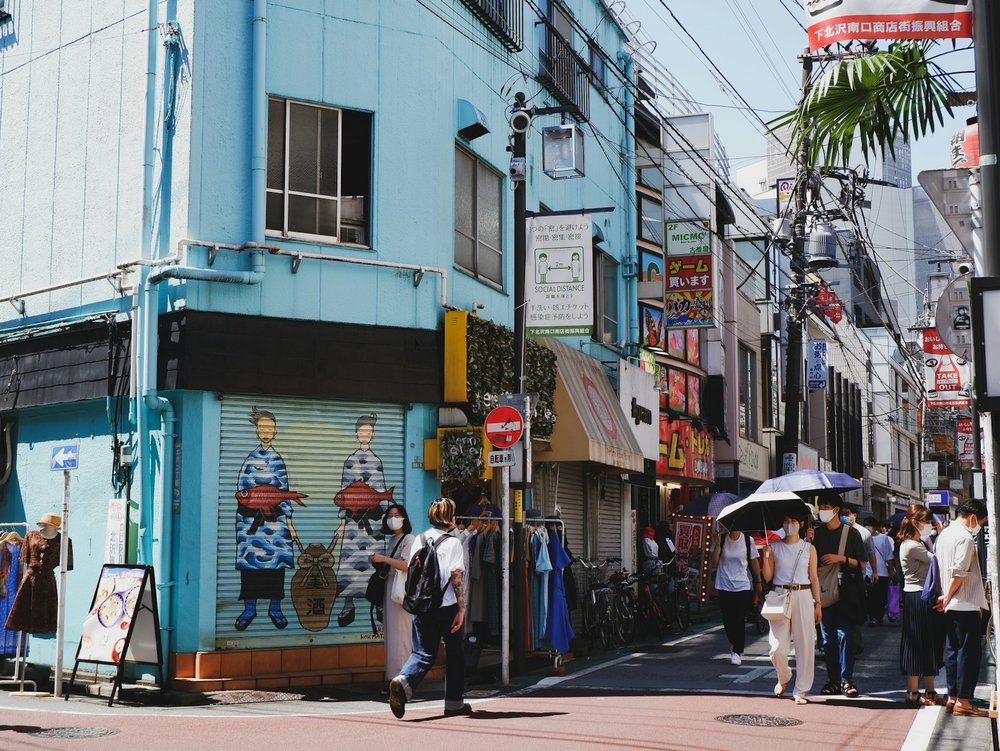
Shimokitazawa has no must-book attractions. Browsing and cafe-hopping are the main things to do, so your plans stay flexible. It’s easy to reach from Shibuya or Shinjuku and fits into a half-day trip.
Address: Kitazawa, Setagaya City, Tokyo (around Shimokitazawa Station)
Getting there: Shimokitazawa Station (Odakyu Line or Keio Inokashira Line)
Opening hours: Varies by shop, subject to each shop’s notices
Admission: Free entry, shop purchases extra
Shinjuku Gyoen: Japanese Garden, Formal Garden and the Metropolitan Government Building
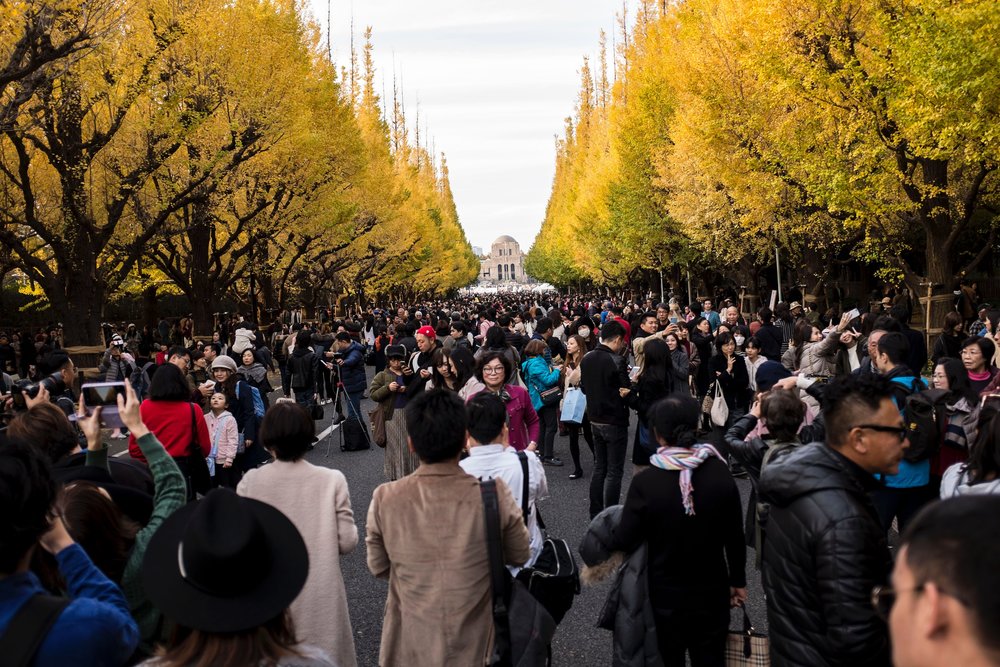
Among the places to visit in Shinjuku, Shinjuku Gyoen suits a slow daytime walk, while the Tokyo Metropolitan Government Building observation decks suit early evening. The land was once part of a daimyo residence in the Edo period and was turned into a Western-style garden in the Meiji era. It has a Japanese garden and a formal garden, about 1,000 cherry trees, and ginkgo trees near Shinjuku Gate that turn yellow in autumn. See the FAQ on seasons below for foliage timing.
The north and south towers of the Metropolitan Government Building each have an observation room on the 45th floor, 202 meters up, and entry is free. On a clear day you can see Mt. Fuji, and after dark the building hosts the free Tokyo Night & Light projection show. The north and south rooms close on different days, so check the official calendar before you go.
The trip between Shinjuku Gyoen and the Metropolitan Government Building by Tokyo Metro and Toei subway takes a little over 10 minutes, so you can fit both into one afternoon.
Address: Shinjuku Gyoen: 11 Naito-cho, Shinjuku City, Tokyo. Metropolitan Government Building: 2-8-1 Nishishinjuku, Shinjuku City, Tokyo
Getting there: Shinjuku Gyoen: about 5 minutes on foot from Exit 1 of Shinjuku-gyoenmae Station (Tokyo Metro Marunouchi Line). Metropolitan Government Building: Tochomae Station (Toei Oedo Line)
Opening hours: Shinjuku Gyoen 9:00 AM-4:30 PM between October 1 and March 14 (last entry 4:00 PM), closed on Mondays. Metropolitan Government Building South Observatory 9:30 AM-10:00 PM (last entry 9:30 PM), North Observatory 9:30 AM-5:30 PM (last entry 5:00 PM)
Admission: Shinjuku Gyoen adults ¥500 (about ₱200), Metropolitan Government Building observatories free
Klook Tip: The South Observatory is closed on the 1st and 3rd Tuesday of each month, and the North Observatory on the 2nd and 4th Monday.
Ikebukuro: Sunshine City Aquarium and Observatory
Ikebukuro’s attractions are clustered around Sunshine City, a building complex that opened in 1978 with an aquarium, an observatory, a Pokemon Center and a shopping mall. Sunshine Aquarium is on the rooftop of the World Import Mart building, where penguins and sea lions swim in tanks high above the city, with Ikebukuro’s buildings as a backdrop.
The aquarium has about 550 species, and the jellyfish area has a tank about 14 meters wide. Ticket prices vary by date, with adults paying about ¥2,600 to ¥3,200 (about ₱1,035 to ₱1,275). Check the
Sunshine Aquarium tickets page for the price on your date.
Sunshine 60 Observatory is on the 60th floor, 251 meters above sea level, with a rest area that has plants and artificial grass. On the 2nd floor of Alpa mall is Pokemon Center MEGA TOKYO. Ikebukuro is also one of the best places in Tokyo for kids.
Address: Sunshine City, 3-1 Higashi-Ikebukuro, Toshima City, Tokyo
Getting there: About 5 minutes on foot from Exit 6 or 7 of Higashi-Ikebukuro Station (Tokyo Metro Yurakucho Line), or about 10 minutes from Ikebukuro Station
Opening hours: Aquarium about 10:00 AM-6:00 PM, opens about 9:30 AM on weekends and holidays, last entry 30 minutes before closing, subject to official notices
Admission: Aquarium adults about ¥2,600-3,200 (about ₱1,035-1,275), varies by date
teamLab Planets TOKYO in Toyosu: Digital Art You Walk Through Water
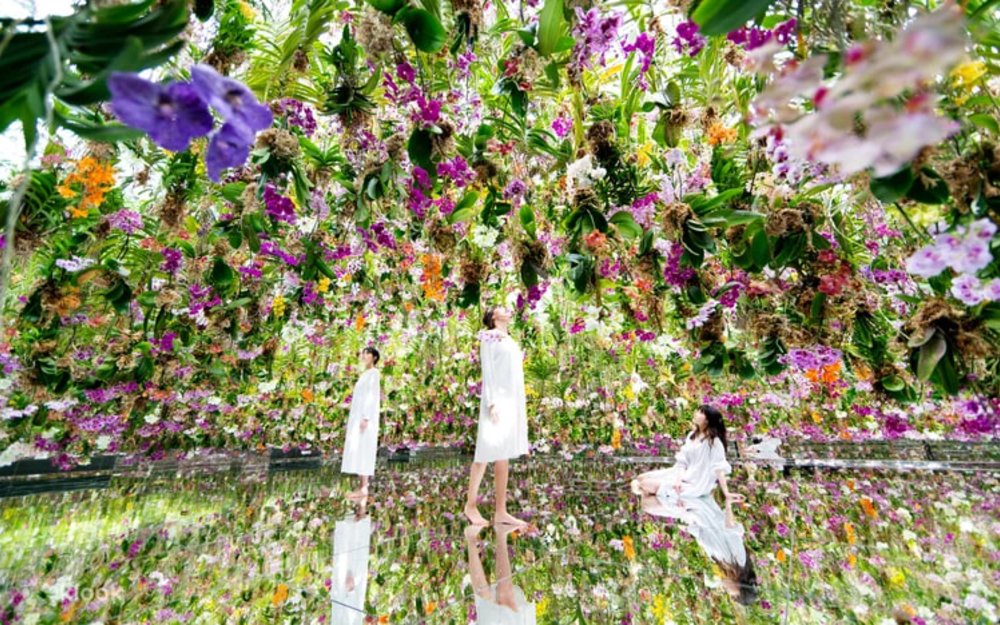
teamLab Planets TOKYO is a digital art museum where you wade through water, and most of the works are meant to be experienced with your whole body. It opened in 2018, and after its 2025 expansion the exhibition area grew by about 50%.
Works include Floating Flower Garden and Infinite Crystal Universe, which uses thousands of LED lights to create a space that feels like floating in outer space. There is a vegetarian ramen shop and a cafe inside, open only to ticket holders.
Official tickets are non-cancellable and non-refundable once purchased, and prices vary by date and time slot, so book your
teamLab Planets tickets only after your dates are fixed. Toyosu and Odaiba are both on the Yurikamome Line, so you can pair them in one day.
Address: 6-1-16 Toyosu, Koto City, Tokyo
Getting there: Next to Shin-Toyosu Station (Yurikamome Line)
Opening hours: About 9:00 AM-10:00 PM, varies by day, subject to official notices
Admission: Varies by date and time slot, see the Klook page
Suggested time: 2-3 hours
Odaiba: Rainbow Bridge, Odaiba Seaside Park and Tokyo Aqua Symphony
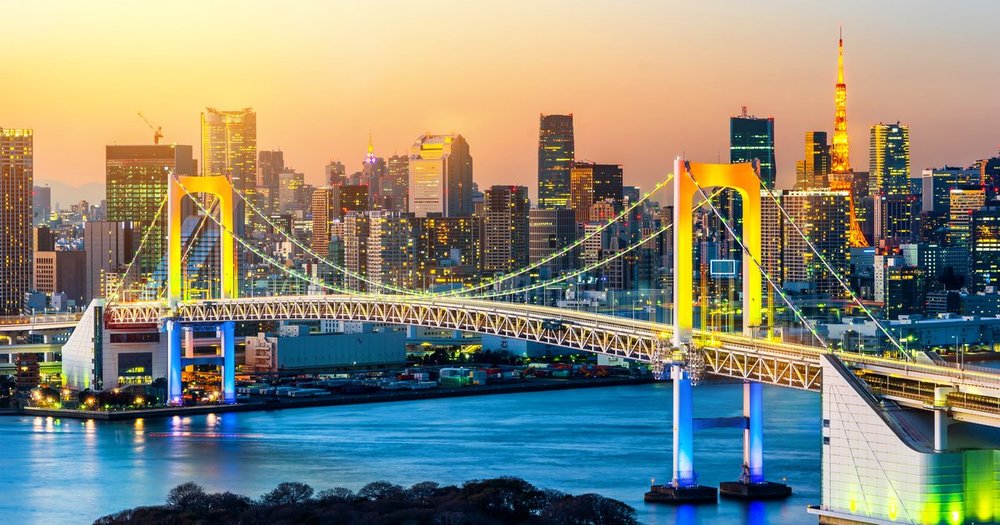
Among the places to visit in Odaiba, Tokyo Aqua Symphony opened at Odaiba Seaside Park on March 28, 2026. The fountain shoots up to about 150 meters high and spans about 250 meters, with Rainbow Bridge and Tokyo Tower in the background, and every show is free to watch.
Rainbow Bridge is a suspension bridge about 800 meters long that links Odaiba and Shibaura, and walking across is free. Next to Odaiba Seaside Park is a replica of the Statue of Liberty, put up in 1998 as a temporary display and made permanent in 2000.
The life-size Unicorn Gundam statue at DiverCity Tokyo Plaza ended its display on August 31, 2026, and teamLab Borderless has moved out of Odaiba to Azabudai Hills, so check if older Odaiba guides still apply before you go. You can pair Odaiba with Toyosu for a day trip, as both are directly connected by the Yurikamome Line.
Address: Odaiba Seaside Park, 1-4-4 Daiba, Minato City, Tokyo
Getting there: About 3 minutes on foot from Odaiba-kaihinkoen Station or Daiba Station (Yurikamome Line)
Opening hours: Tokyo Aqua Symphony about 3:00-9:30 PM, 10 shows of about 10 minutes each, may be canceled due to weather, subject to official notices
Admission: Free
Kichijoji: Inokashira Park and the Ghibli Museum
Among the places to visit in Kichijoji, Inokashira Park opened in 1917. You can rent a swan boat on Inokashira Pond in the middle of the park, and a small island has the Inokashira Benzaiten shrine. The park also has a small zoo, mostly with small animals native to Japan and Asia.
From Kichijoji Station (JR Chuo Line or Keio Inokashira Line), the walk to the park goes along the Sun Road shopping arcade. Inokashira-koen Station on the Keio Inokashira Line is closer to the park.
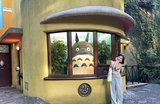
The Ghibli Museum in Mitaka is on the west side of the park, about 15 minutes on foot from Kichijoji Station through the park. All tickets must be reserved in advance and none are sold at the museum, so ticket prices and sale dates follow the official notice. If you don’t have tickets, you can still enjoy the park and the shopping streets of Kichijoji.
Address: Inokashira Park, 1-18-31 Gotenyama, Musashino City, Tokyo
Getting there: Kichijoji Station (JR Chuo Line or Keio Inokashira Line). Inokashira-koen Station on the Keio Inokashira Line is closer
Opening hours: Varies by facility, subject to official notices
Admission: Park free, Ghibli Museum needs an advance reservation
How to Plan Your Tokyo Itinerary by Area
The places to visit in Tokyo are spread out, so grouping spots near the same stations on the same day cuts down on train transfers. The table below sorts the 15 spots into 8 groups, so you can pick the ones that fit your number of days.
Group | Spots | Suggested plan |
|---|
Asakusa and Oshiage | Senso-ji, Tokyo Skytree | Senso-ji in the morning, Tokyo Skytree toward evening |
Ueno and Akihabara | Ueno Park, Akihabara | Ueno Park during the day, then Akihabara |
Shibuya and Harajuku | SHIBUYA SKY, Meiji Jingu and Harajuku, Shimokitazawa | Meiji Jingu in the morning, Shibuya in the afternoon, SHIBUYA SKY at dusk |
Shinjuku | Shinjuku Gyoen, Metropolitan Government Building observation rooms | Shinjuku Gyoen in the daytime, observatory toward evening |
Minato | Tokyo Tower, Tokyo City View at Roppongi Hills, Azabudai Hills | teamLab Borderless in the daytime, night views in the evening |
Ikebukuro | Sunshine City | Aquarium and observatory on the same day |
Waterfront | teamLab Planets TOKYO in Toyosu, Odaiba | Along the Yurikamome Line, Toyosu in the daytime, Odaiba in the evening |
West Tokyo | Kichijoji | Half-day trip for the park and shopping streets |
FAQs about places to visit in Tokyo
What are the must-visit places in Tokyo?
The must-visit places in Tokyo are easiest to choose by area: Senso-ji, Tokyo Skytree, SHIBUYA SKY, Shinjuku Gyoen and Meiji Jingu cover a temple, observation decks, a garden and a shrine. To narrow it down to a top 10, add Tokyo Tower, Tokyo City View at Roppongi Hills, teamLab Borderless at Azabudai Hills and Ueno Park.
How do I plan a Tokyo itinerary around these places?
Group your Tokyo itinerary by area: Senso-ji and Tokyo Skytree on one day, and SHIBUYA SKY, Meiji Jingu and Shimokitazawa on another (see the area table above). For getting around the city, you can book a
Tokyo subway ticket based on your plans. For dinner ideas, see
what to eat in Tokyo.
Do I need to book tickets for Tokyo attractions in advance?
SHIBUYA SKY uses timed tickets with a slot every 20 minutes, and the Tokyo Tower Top Deck tour also runs in fixed slots, with sunset slots selling out quickly, so book these ahead. teamLab Planets and teamLab Borderless prices vary by date, and official tickets are non-cancellable and non-refundable, so it’s safer to book once your travel dates are fixed.
What are some off-the-beaten-path places in Tokyo?
Shimokitazawa, Kichijoji and Inokashira Park are good picks. They aren’t first-timer landmarks, so they suit travelers who have already done Senso-ji and Shibuya. Tokyo Aqua Symphony at Odaiba Seaside Park is also a free new attraction for 2026.
What are the best places in Tokyo for kids?
Try Ueno Zoo, Sunshine Aquarium in Ikebukuro and teamLab Planets TOKYO in Toyosu. Ueno Zoo is free for elementary school students and younger, Sunshine Aquarium has penguins and sea lions, and teamLab Planets prices are set by age group, so see the Klook page for child tickets.
What are the best places to visit near Tokyo?
Day trips near Tokyo usually take half a day to a full day, and popular options include Kamakura, Yokohama and Kawaguchiko. The 15 places in this guide are in Tokyo and its surroundings, so plan a separate day for nearby trips instead of squeezing them in with city sights.
What are the indoor places to visit in Tokyo on a rainy day?
For rainy days, try teamLab Borderless, Tokyo City View at Roppongi Hills, Sunshine Aquarium in Ikebukuro and the Tokyo National Museum in Ueno Park. SHIBUYA SKY’s rooftop closes in bad weather, but the indoor SKY GALLERY on the 46th floor stays open.
When are the places to visit in Tokyo at their best?
Each season has its highlights. Cherry blossom season is usually late March to early April and autumn foliage is usually mid-November to early December, and Shinjuku Gyoen and Ueno Park are often mentioned for both. For month-by-month weather, see our
best time to visit Tokyo guide, and if you’re going in November, see
Tokyo in November.
Do Filipinos need a visa to visit Tokyo?
Yes. Philippine passport holders need a visa to visit Japan as tourists. Applications go through the VFS Visa Center, and processing may take several weeks, so apply well before your flight. Requirements and fees can change, so check the Japanese Embassy in Manila’s website for the latest.
Has the tax refund process in Tokyo changed?
Yes. From November 1, 2026, tax-free shopping in Japan switches to a pay-first, refund-later system. You pay the tax-inclusive price at the shop, then get the consumption tax refunded at the airport after customs confirms you are taking the goods out. Goods must leave Japan within 90 days of purchase, so leave extra time at the airport.
Book Your Tokyo Attraction Tickets
Popular spots like SHIBUYA SKY, Tokyo Skytree and teamLab can be booked ahead on Klook, with entry at your chosen time slot. Once your dates are set, lock in the timed-entry spots first, then fill the gaps in the same area with free places like Senso-ji and Odaiba. Mixing paid and free spots by area keeps your Tokyo budget sulit.
🔍️ More Tokyo travel guides
What is Klook?
Klook is a leading pan-regional experiences platform in Asia Pacific, purpose built to digitalize experiences and make them accessible to every traveler.
Our mission is to build the digital infrastructure for the global experience economy — empowering merchants to share their passions and travelers to discover the heartbeat of each destination. We operate a mobile-first, curated platform featuring diverse experiences across global destinations.