261

Pingtung: Pingyan 1936 Cultural Base Ticket

4.9 / 5
75 reviews
7K+ booked
Save to wishlist
Opening hours
Suggested duration2-3 hour(s)
No. 1 Yanchang Road

Packages

Extended Date Ticket: Permanent Exhibition Ticket + Special Exhibition Ticket

Admission to: When Flowers Bloom – Japanese Contemporary Art Exhibition Tickets & Pingtung County Art Museum Permanent Exhibition Tickets
Valid from: 28 Mar 2026 - 30 Aug 2026Valid from: 28 Mar 2026 - 30 Aug 2026
Free cancellation before redemptionFree cancellation before redemption
Instant confirmationInstant confirmation

[Extension Ticket] Museum Permanent Exhibition & Special Exhibition Ticket

Admission to attractions
Valid from: 28 Mar 2026 - 30 Aug 2026Valid from: 28 Mar 2026 - 30 Aug 2026
Free cancellation before redemptionFree cancellation before redemption
Instant confirmationInstant confirmation

[Extension Ticket] Permanent exhibition ticket + Warehouse 16 & Warehouse 8

Admission to: Pingtung County Art Museum Permanent Exhibition Ticket & Warehouse No. 16 (Pingtung Tobacco Museum, Pingtung Hakka Museum, and Pingtung Indigenous Peoples Museum) & Warehouse No. 8 Special Exhibition
Valid from: 28 Mar 2026 - 30 Aug 2026Valid from: 28 Mar 2026 - 30 Aug 2026
Free cancellation before redemptionFree cancellation before redemption
Instant confirmationInstant confirmation

Reviews

4.9 / 5
Fantastic
75 reviews
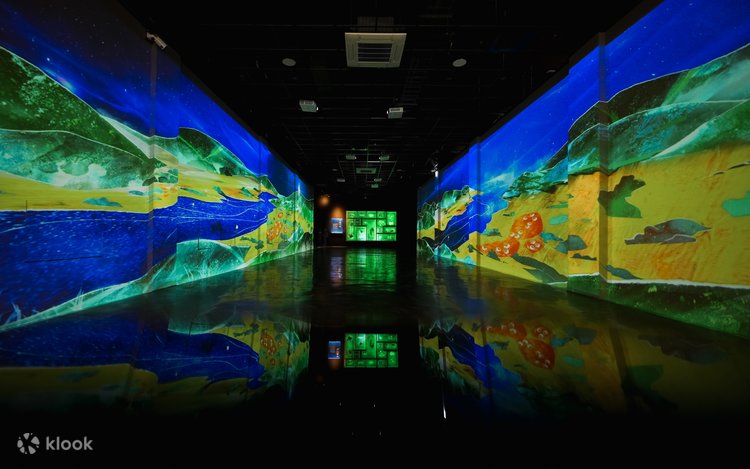
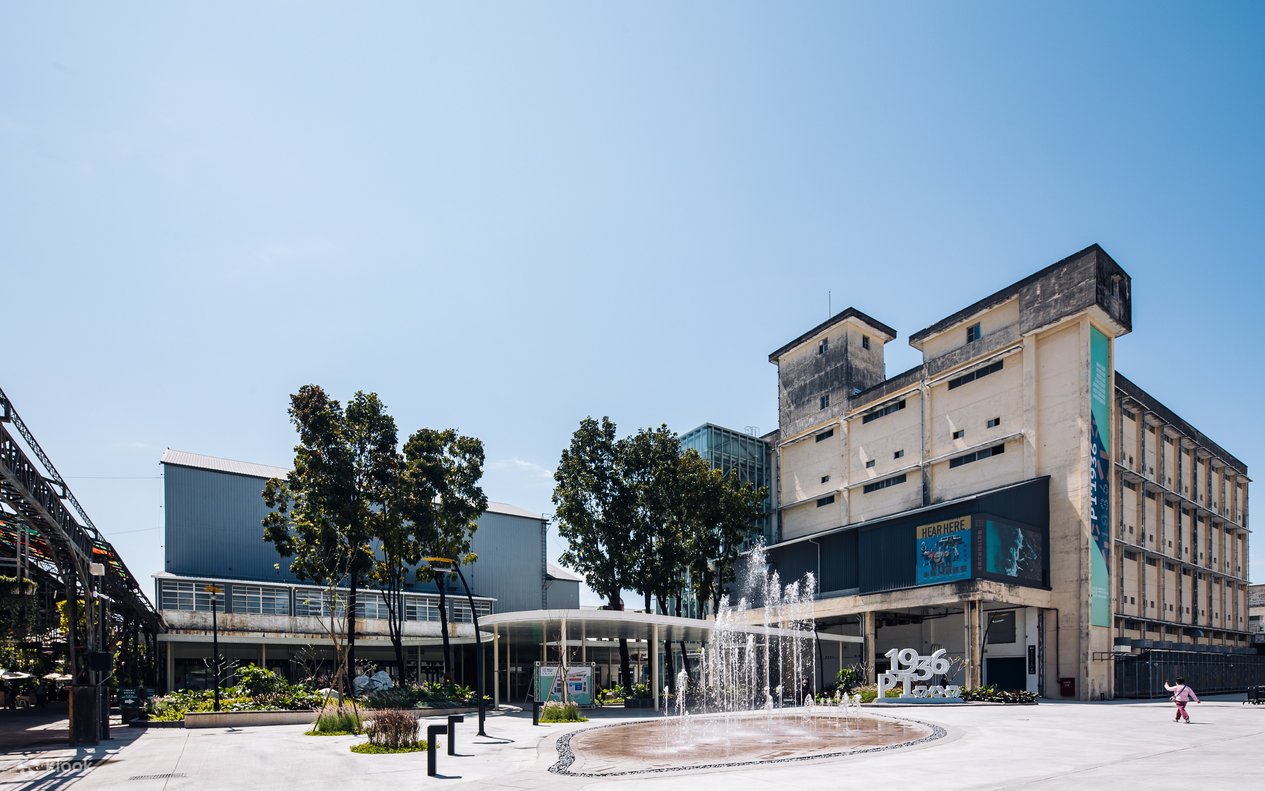
The renovation of the old factory at Pingtung 1936 Cultural Base is a huge success. It perfectly preserves historical traces while injecting modern digital art. The exhibition flow in the museum is well-designed, with both permanent and special exhibitions being incredibly captivating. The immersive light and shadow interaction is particularly stunning, allowing for many beautiful photos. You can easily spend an entire afternoon here. I highly recommend everyone come and experience the cultural charm of Pingtung!
It was great to see so many Japanese artists gathered in one place. There was also an online audio guide available (remember to bring headphones!). My only minor disappointment was that the venue felt a bit small, and some of the artists I wanted to see only had one piece on display. If you go on a weekend, remember to arrive early. I got there around 12 PM and after almost 3 hours of browsing, I was shocked by the crowd downstairs.
Currently, there's a special exhibition featuring contemporary Japanese artists, including famous works by Yayoi Kusama, Yoshitomo Nara, Takashi Murakami, Hajime Sorayama, and more. It's definitely worth seeing, and you don't even have to travel to Japan. Parking is very convenient if you drive, as there's a parking garage right next to the main entrance. The fee is 20 NTD per hour, with a daily maximum of 100 NTD, which is incredibly reasonable.
Come visit the opening of the Pingtung County Art Museum and the Pingtung Tobacco Culture Base 1936, featuring the international special exhibition "When Flowers Bloom" and the collection exhibition "Da Yong Kan An." The special exhibition brings together works by 16 Japanese artists, including Yayoi Kusama and Yoshitomo Nara. This museum, which blends industrial style with modern aesthetics, is definitely worth seeing again and again!
Buying tickets using klook is cheaper than buying tickets on site. It just so happens that there is a hand-made experience activity this time, which is really great! The Pingyan exhibition area is very thoughtful, has good circulation, and is not crowded. It is really suitable for walking around. By the way, there is also a new mini library!
This is a museum and art gallery renovated from an old tobacco factory. The price is reasonable, as it includes access to special exhibitions. Overall, the exhibits are well-designed and presented in an interesting way. The indigenous peoples' exhibition was particularly impressive. In the old tobacco factory section, it's interesting to see the large machinery that was used in the past. While public transportation isn't very convenient, it's easy to get here by YouBike (there's a station available).
This special exhibition features works by contemporary Japanese artists such as Yayoi Kusama, Yoshitomo Nara, Takashi Murakami, and Hajime Sorayama. If you visit on a weekday, it's not crowded, so you can take your time and enjoy the exhibits.
The newly revitalized Pingtung Art Museum, housed in a former industrial site, presents the delicate tension of "When Flowers Bloom." Observe the intricate textures of the artworks and experience life blossoming amidst historical ruins. Early bird tickets offer access to two exhibitions, making it an excellent value! 👍

Guide

  • A large museum complex bringing together the Pingtung County Museum of Art, Pingtung Tobacco Culture Hall, Pingtung Hakka Museum, and Pingtung Indigenous Peoples Museum.
  • Featuring multi-sensory and technological experiences, offering a variety of cultural themed special exhibitions.
  • A one-stop in-depth cultural journey, seeing the art, culture, and industry of the world from Pingtung.

- Pingtung County Museum of Art -

| Special Exhibition | When Flowers Bloom: Japanese Contemporary Art Exhibition

From Smoke to Bloom: The Regenerative Land of Art The inaugural special exhibition “When Flowers Bloom” uses the metaphor of flowers as its guide, featuring a selection of classic Japanese contemporary works. It brings together diverse creations from post-war Japanese art pioneers and contemporary rising stars, presenting the spirit and style of Japanese art from the post-war period to the present. It draws an analogy between the various states of flowers and the development of Japanese contemporary art – between destruction and rebirth, art, like wildflowers, stubbornly sprouts from the ashes, blossoming into the diverse forms of humanity. 16 Japanese artists span fields such as calligraphy, painting, photography, sculpture, installation, and popular visual arts. They utilize different media and creative techniques, breaking through traditional and national frameworks, and employing unique artistic languages to foster the germination and development of avant-garde art. Like flowers in different seasons, some are intensely passionate, some are quiet and introspective; some are beautiful and brilliant, some are deep and dreamlike. Through these creations, we can glimpse the flow of Japanese art from inner spirituality to sensory desires, from individual solitude to collective memory, resonating with the nature, emotions, and time of the south. “When Flowers Bloom” presents the spiritual landscape of Japanese art from the post-war period to the present. The infinite possibilities of life will blossom in this creative garden, inspiring viewers with new perspectives on art. When Flowers Bloom: Six Major Sub-themes 【Fire and Ink Shadow: Inner Explosion】Inoue Yuichi, Shiraga Kazuo 【Dreamscape and Phantom Flowers: Sensory Expansion】Kusama Yayoi, Shiota Chiharu 【Glamorous Shadows and Everyday Life: Gaze of Love and Desire】Araki Nobuyoshi, Ninagawa Mika 【Pop and Mythology: New Century Garden】Amano Yoshitaka, Nara Yoshitomo, Murakami Takashi 【Machine and Senses: Future Texture】Sorayama Hajime, Nawa Kohei 【Spirituality and Innocence: Fresh Bloom】Takano Aya, Rokkaku Ayako, Komatsu Miwa, Nakamura Moe, Egami Etsu

【Exhibition Information】 Exhibition Period | 2026.3.28 - 8.30 Hours | 09:00 – 18:00, closed on Mondays Location | Pingtung County Museum of Art (Pingtung Tobacco Culture Base 1936 ‧ No. 1, Yan厂 Road, Pingtung City) Ticket Price | 2026.3.6 - 3.27 Early bird ticket 150 NTD, full price 249 NTD during the exhibition period

| Collection Special Exhibition | Tuā-íng Khàm Huān (Great Surging Shore)

Tuā-íng Khàm Huān takes the surging waves brought by the Kuroshio Current as its starting point, using the magnificent visual and auditory imagery of covering the coastline. It carries a strong geographical and local declarative tone, and also has a grand intention of embracing an international perspective. “Tuā-íng Khàm Huān” refers to the trend created by large waves hitting and covering the coast. Pingtung’s artistic vision gains a more fluid and vibrant spirit within the spiritual imagery of the surging current. The exhibition delves into the geographical characteristics of waves, presenting five major sub-themes: “People from the Mountains and Seas,” “Confluence of Winds and Currents,” “Pioneers of the Southern Land,” “The Aura of a New Era,” and “Future Art Forms.” This exhibition includes over 100 pieces from the Pingtung County Government Cultural Affairs Department’s long-term collection. It also features borrowed works from the Fukuoka Asian Art Museum, National Taiwan Museum of Fine Arts, Taipei Fine Arts Museum, Kaohsiung Museum of Fine Arts, Art Bank, Hongye Art Foundation, Han Sheng Magazine, artists, and their families. Additionally, three artists, Liu Qiu-er, Wu Zheng-zhang, and An Sheng-hui, were invited to create new works for this exhibition, echoing Pingtung’s unique cultural atmosphere and further strengthening the connection between local customs and the exhibition’s spirit.

Curators | Huang Zhi-wei ‧ Xu Yuan-da Exhibition Period | 2026.3.28 – 2027.11.28 Hours | 09:00 – 18:00, closed on Mondays Location | Pingtung County Museum of Art (Pingtung Tobacco Culture Base 1936 ‧ No. 1, Yan厂 Road, Pingtung City)

- Warehouse No. 8 -

| Special Exhibition | Pingtung's Hidden Heart

Collecting is a way for humans to connect with the world. From personal collections of figurines, models, and toys to precious artworks or artifacts in museums, “collecting” is not just about the objects themselves, but also about how people imbue them with meaning. Therefore, collecting is not merely an accumulation of items; these “treasures” are also a record of time, emotion, and value. This exhibition, themed “Collecting,” invites 6 popular online IPs to participate, including H.H先生 (@hhonghh), Shaogao囂搞 (@shaogao), Mr. Shark (@mrsharkid), Square Studio (@squarestudiotw), Mosabear & Papa the Leopard Cat (@mosabear), and RURU (@ruru.official.tw). Through collections from different fields, the exhibition aims to explore the cultural implications behind collecting behavior using contemporary digital art and an original immersive exhibition experience. It showcases how different eras and groups construct self-identity through collecting and creates a dialogue with memory, value, and time.

- Warehouse No. 16 -

| Pingtung Tobacco Culture Hall | Tobacco. Leaf. Factory – The Golden Memory of Re-curing

The technical details within agro-industrial production can be said to be the fundamental driving force for cultural accumulation and the advancement of civilization. The Pingtung Tobacco Factory, in this context, is not just Pingtung’s unique industrial and cultural asset, but also an important page in human civilization. On Pingtung’s uniquely fertile soil, tobacco plants transform from lush green to golden yellow. From sowing and harvesting to processing, the production process embodies regional customs, the wisdom of elders, and the diligent efforts of countless laborers. Focusing on tobacco leaves, they are meticulously processed by various machines: moistening, tipping, de-stemming, re-curing, packaging, and all other complex procedures. The exhibition also witnesses the essence of this unique industry and culture in Taiwan. Visiting the tobacco factory, the massive factory buildings constructed sequentially since 1936 are the important place where all this was nurtured. Artisans with different specializations move between machines and tobacco leaves, their exquisite labor skills must be written into the memory of civilization. Today, the Pingtung Tobacco Factory is open to the public with the permanent exhibition “Tobacco. Leaf. Factory – The Golden Memory of Re-curing.” We invite everyone to explore the preserved machinery on-site, understand the processing flow of tobacco production, and see the professional dedication hidden behind tobacco cultivation. Whether it’s the local flavor or the participation of artisans, both have shaped the cultural value of tobacco and the tobacco factory. Immerse yourself in this unique time and space, and personally experience this industry and labor memory from green to golden.

| Pingtung Hakka Museum | Liudui Imprint

“Liudui,” a term that has never officially appeared on maps, is a description of a specific geographical area and an embodiment of a unique cultural spirit. It is both concrete and abstract; both classical and contemporary; both brave and united, yet gentle and refined. “Liudui” is not only a collective term for the Hakka ethnic group in the Kaohsiung-Pingtung area but also represents the moving life stories on this land over hundreds of years. During the pioneering period, Hakka immigrants came to the fertile Pingtung Plain, where water was abundant. They dug ponds and canals along the rivers, diligently reclaimed land, established villages, and composed a new chapter with the land. The sweat of their ancestors cultivated abundant crops and nourished every generation, forming prosperous and united communities. On this land, the Hakka people have passed down traditional ritual life rich in meanings of reverence for heaven, gratitude to earth, thankfulness, and cherishing blessings. The spirit of loyalty, filial piety, integrity, and diligence in farming and studying has also been continued for generations. “Liudui Imprint” recreates the development of the ethnic group through the life journeys of the Liudui people, showcasing the most unique material and spiritual elements of the culture through art. We invite you to come to Liudui and connect with its heart.

| Pingtung Indigenous Peoples Museum | People of the Slopes (Kacalisian)

Since ancient times, the Paiwan and Rukai people in southern Taiwan have called themselves “kacalisian,” meaning that from the time of their creation myths, their origins, dwellings, farming, and hunting grounds have genuinely existed for generations on the “land of the slopes.” They regard Dawu Mountain, Damumu Mountain, Wutou Mountain, and other mountains in southern Taiwan as sacred mountains, perpetually passing down the humanistic art and lifeline of their people on the sloping land. The exquisite craftsmanship and ancient melodies displayed by the indigenous people living in the sloping mountains of Pingtung are undoubtedly closely related to the philosophy and thinking of the ancient language “kacalisian.” In the mountain forests and lands of the slopes, the “hands” and “hearts” of the people intertwine to form a unique and refined aesthetic of life. To this day, because of this special humanistic and artistic background and way of thinking, many new generation Paiwan and Rukai artists, musicians, and cultural and creative workers have emerged. The humanistic art of the people of the slopes encompasses every aspect of life, representing “the natural beauty expressed by the soul.” Whether it is the colors of clothing, carving craftsmanship, decorative art, traditional music and dance, or contemporary artistic expression, the people of the slopes have always used aesthetic thinking to tell stories. Mountains, land, and people collectively intertwine to form a unique and refined humanistic art, embodied in daily life.
You might also like...

¥ 42