
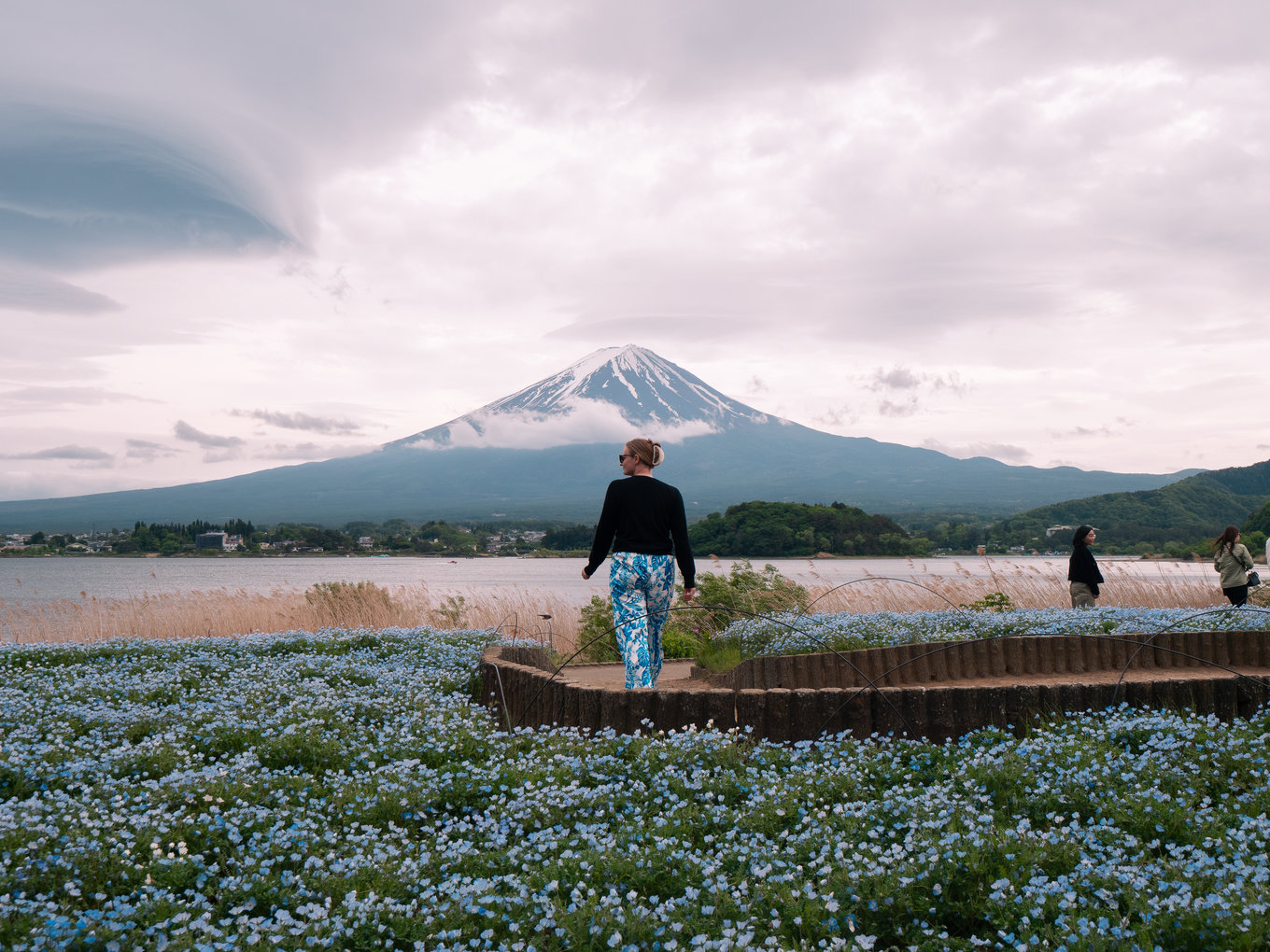
It's no secret that Mount Fuji is a famous and iconic symbol of Japan. It's a massive volcano that reaches 3,765 metres in height and has a nearly perfect shape. Around 300,000 people visit it every year, and even more explore the areas nearby. Mount Fuji is a must-see natural landmark in Japan.
Now, if you're contemplating your visit to Mount Fuji, you're probably curious about the best ways to experience this sacred mountain up close, whether you're planning to conquer its summit or simply want to admire it from a distance, capturing those inspiring moments through your lens.
In this Mount Fuji guide, we’ll cover everything you need to know: the best time to go, how to get there, where to take photos, tips for first-time climbers, and the spots that make visiting Mount Fuji truly worth the journey.
Japan has a cheat code; it's called Klook! 🧡
Japan can feel like a lot to figure out. But every game has a cheat code, and Japan's is Klook.
This June, we're teaming up with Family Fizz for a real family trip to Japan, and there are three ways to play:
- Pre-booked and locked in: Some parts of their itinerary are already sorted, so you can see exactly how easy it is to plan Japan with Klook
- Chosen on the day: The Family Fizz kids pick between activities in real time and book straight through Klook, just like you would on your own trip
- Voted by you: Follow along on Family Fizz's Instagram page, vote on where they head next (see Mount Fuji or go on a tea ceremony in Kyoto?), and watch your pick come to life!
Every experience on their trip is bookable straight through Klook, so you can follow along and plan your own Japan adventure at the same time. Their trip, your rules.
Going live on 25 June 2026. Press start! 🕹️
When is the best time to visit Mount Fuji?
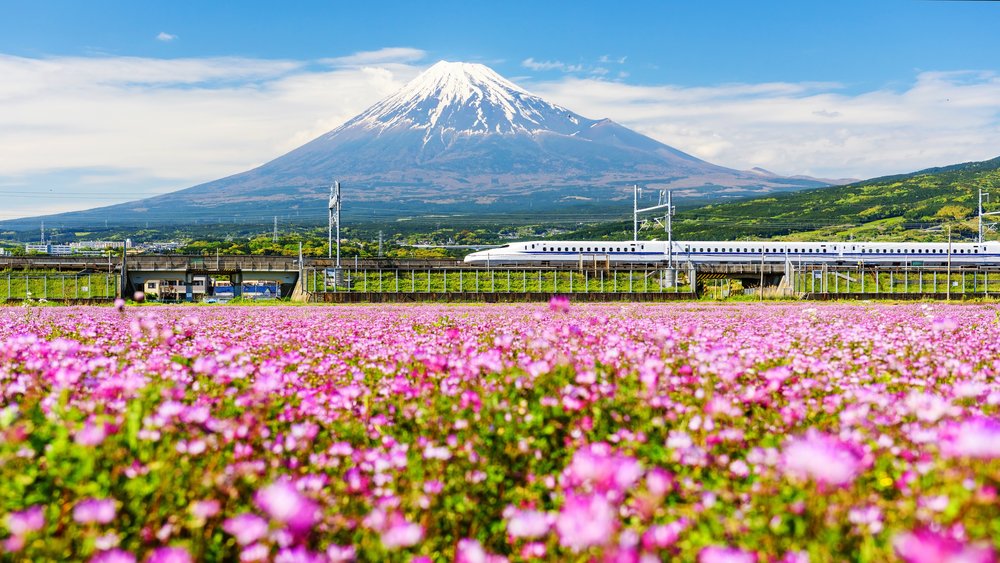
Mount Fuji on a clear day
Timing makes a big difference to what you'll actually see. The mountain is notoriously shy when it comes to clouds, so picking the right season improves your chances of catching it in all its glory.
🗓️ November to February offers the clearest skies and the best unobstructed views. The air is crisp, mornings are particularly sharp and bright, and there's often snow capping the peak, which makes it look spectacular in photos. If clear views are your main goal, winter is your best bet.
🗓️ April and May bring something a bit special: the base of the mountain gets carpeted in pink shibazakura (moss phlox) flowers. It's a popular time to visit and the views during this season are genuinely worth the crowds.
🗓️ June to August is when the official Mount Fuji climbing season opens, running roughly from early July to mid-September. If you want to reach the summit, this is your window. That said, summer cloud cover means views from below can be hit or miss.
Klook Tip: Go early in the morning for the clearest skies, both for viewing from the lakes and for climbing. Cloud cover tends to build throughout the day, so an early start is key.
Can a beginner climb Mount Fuji?
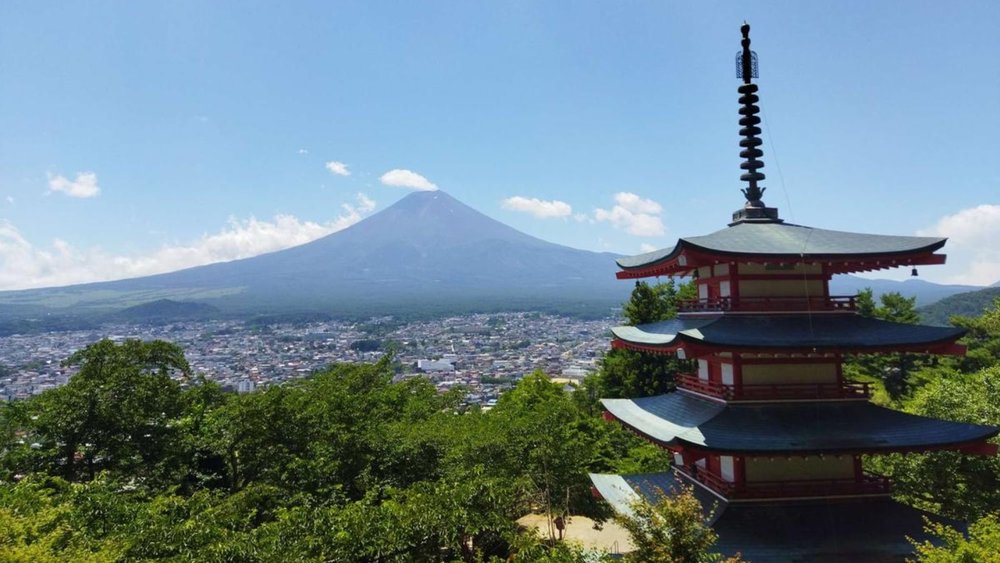
Pray for a clear day so you can see the mountain in all its glory. Image credits to Junda
Yes, climbing Mount Fuji is a famous activity among first-timers! While it's considered a very attainable climb for novice hikers, it's essential to be adequately prepared to ensure a safe and enjoyable experience. Here are some key points to keep in mind:
• Physical fitness: The Fuji Mountain ascent from the 5th station of the Fuji-Yoshida trailhead to the highest point takes about 6 hours. Therefore, having a reasonable level of fitness is advisable. Engaging in some physical preparation before your climb, such as cardio exercises and leg strength training, can be beneficial.
• Know your limits: Being aware of your physical limits is crucial. Don't rush the climb; take it at your own pace. Altitude sickness can affect anyone, regardless of experience, so pay attention to how your body is reacting to the changing altitude. Consider staying overnight at one of the mountain huts on Mount Fuji. This allows your body to acclimatize to the high-altitude environment, reducing the risk of altitude sickness.
• Trail conditions: Be prepared for different conditions depending on your chosen trail. For instance, the Yoshida Trail includes a zigzag path that can be dusty and slippery. Take precautions, especially on the descent, to avoid accidents.
Keep in mind that climbing Mount Fuji offers not only a rich cultural experience but also a physical challenge. From the beginning of time till the present, it has been a sacred location and a well-liked destination. Beginners can climb this famous peak with the appropriate gear and attitude.
What is Mount Fuji 5th Station?
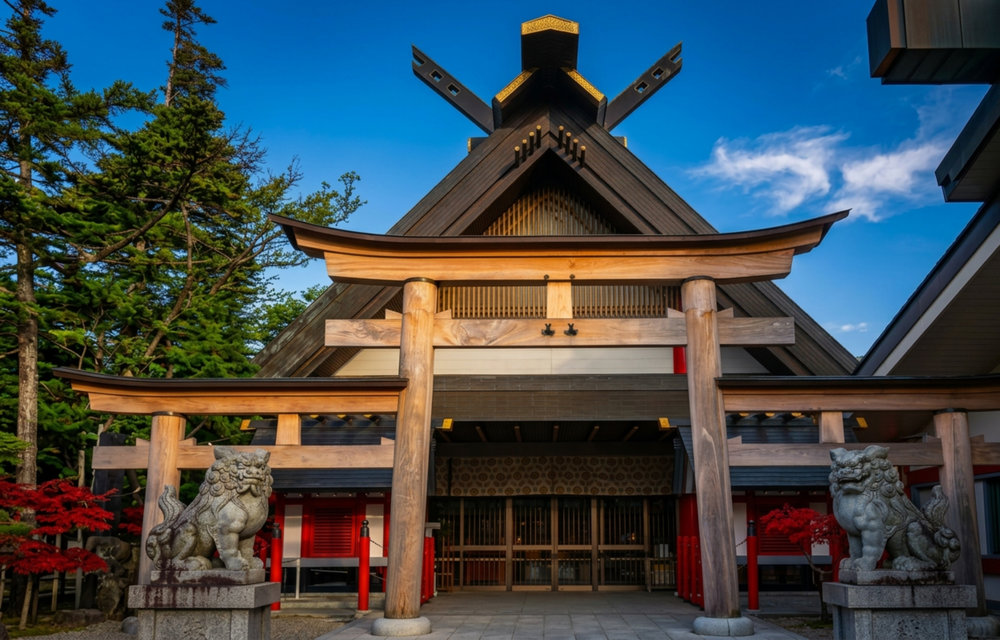
The Komitake Shrine, located at the 5th station of Mount Fuji
Not ready to commit to the full summit? Mount Fuji 5th Station is one of the most popular stopping points on the mountain. It’s around 2,300 metres above sea level, which means you still get stunning views without taking on the full climb.
The Fuji Subaru Line 5th Station (on the Yoshida Trail side) is the most accessible. There's a visitor centre, restaurants, souvenir shops, and the chance to see climbers setting off towards the summit. It's accessible by road, so you can arrive by bus or as part of a guided tour — no hiking required.
It's worth knowing that the road to the 5th Station is sometimes closed due to congestion and new access restrictions introduced to manage visitor numbers, so checking the latest rules before you go is a good idea.
Book a Mt Fuji 5th Station day trip from Tokyo to get there with ease, transport and guide included.
Where are the best spots to see Mount Fuji?
You don't need to be on the mountain to get a great view of it. Some of the most iconic shots of Mount Fuji are taken from the lakes, parks, and towns surrounding it.
Lake Kawaguchi
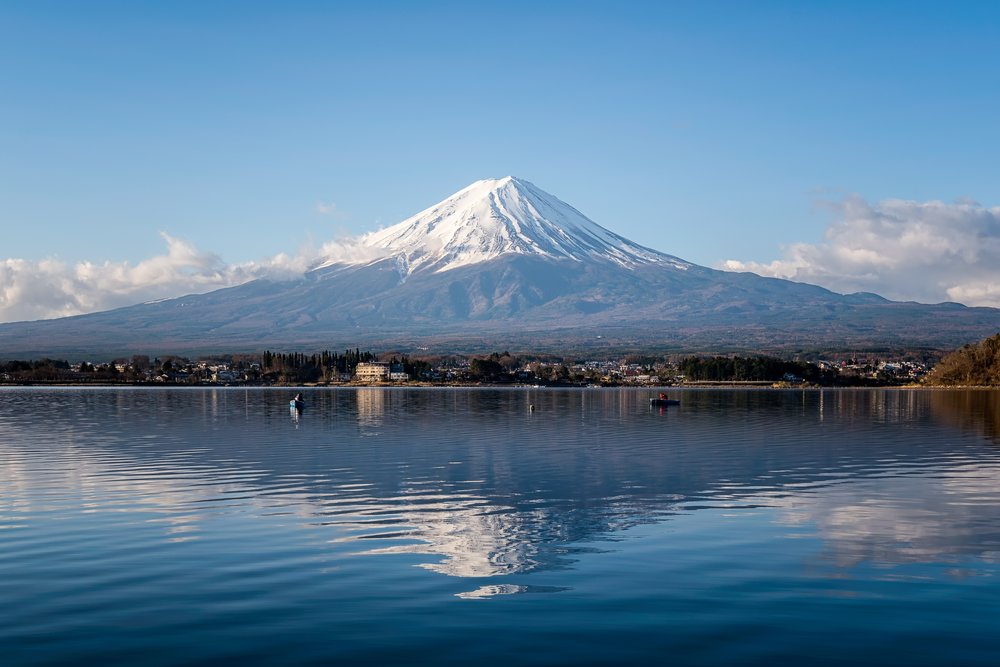
The famous Mount Fuji mirrored on Lake Kawaguchi
The most accessible of the Fuji Five Lakes, Lake Kawaguchi is where you'll find the classic reflection shot: Mount Fuji mirrored perfectly in the still water on a clear morning. There are walking paths around the lake, boat hire options, and plenty of cafes to stop at after. It's only about 30 minutes from the 5th Station and is usually part of a Mount Fuji day tour.
Chureito Pagoda
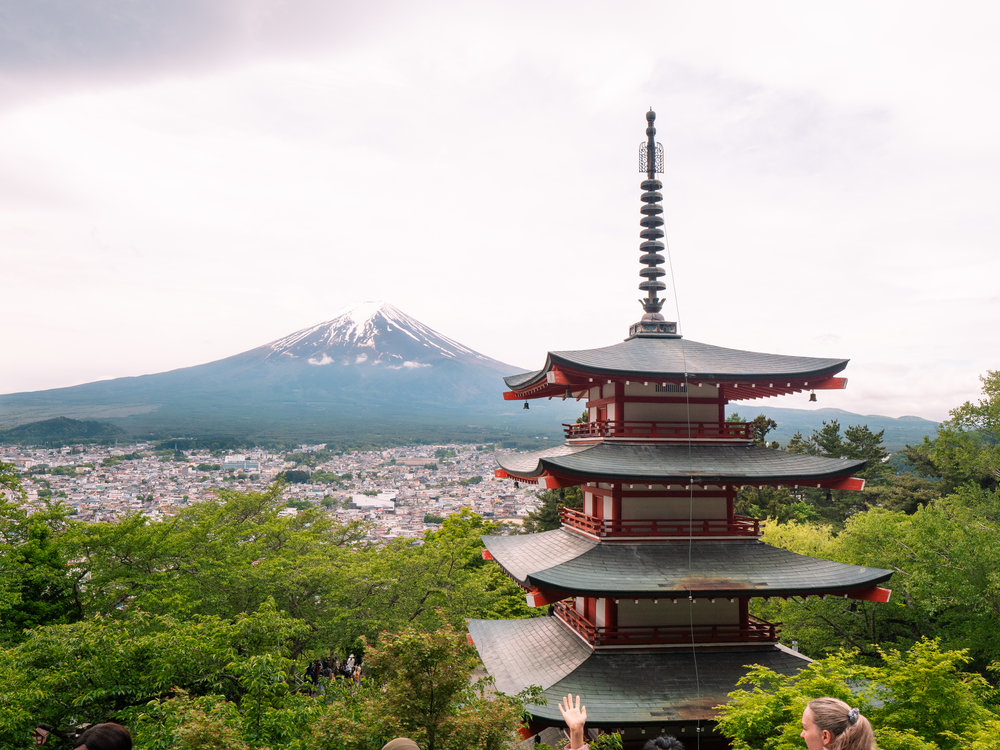
A view of Mount Fuji and the Chureito Pagoda
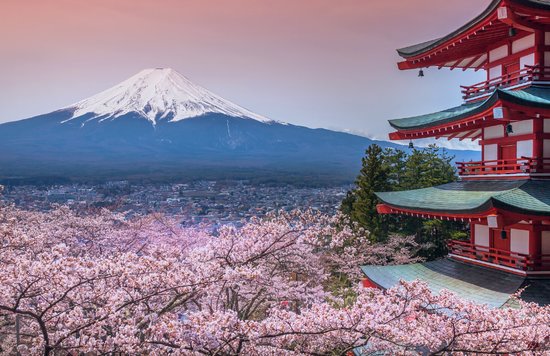
If you've ever seen the postcard image of Mount Fuji framed by a red five-storey pagoda and cherry blossoms, that's Chureito Pagoda. It's one of the most photographed spots in Japan, and it’s still unmatched in person. You'll need to climb around 400 steps to reach it, so give yourself 15-20 minutes.
Mount Fuji Panorama Ropeway (Kachi Kachi Yama Ropeway)
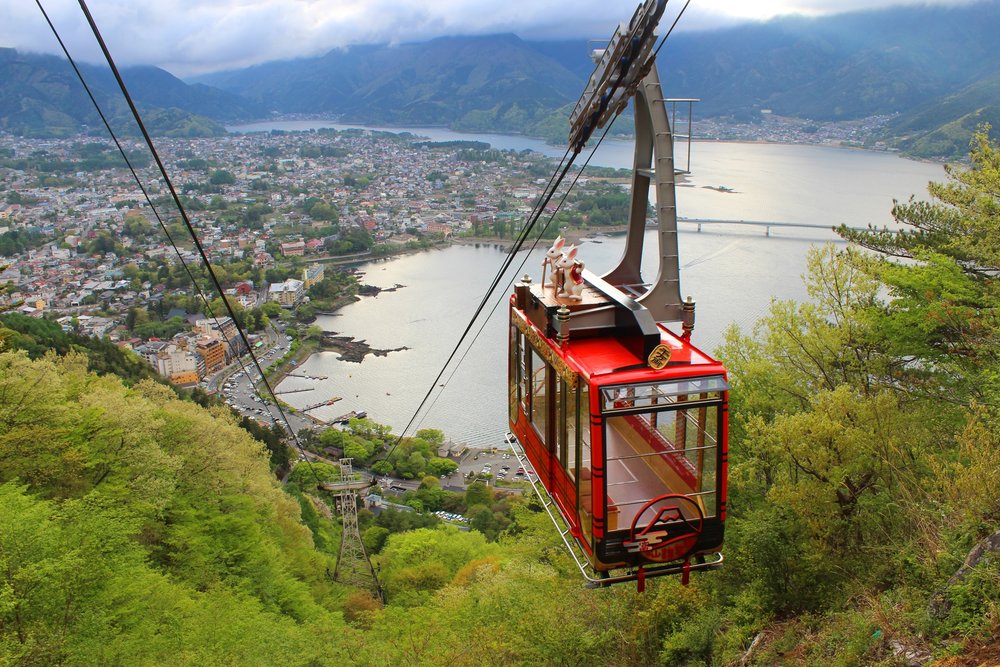
The Mount Fuji Panoramic Ropeway
This cable car departs from the eastern shore of Lake Kawaguchi and takes you up to a viewing platform with wide, elevated views of the mountain and the lake below. The ride itself is short (just a few minutes) but the views at the top are worth it. Entry to the ropeway is included if you hold Mt Fuji Pass, as well as a Fuji-Q Highland one-time ticket and many more!
Lake Yamanaka
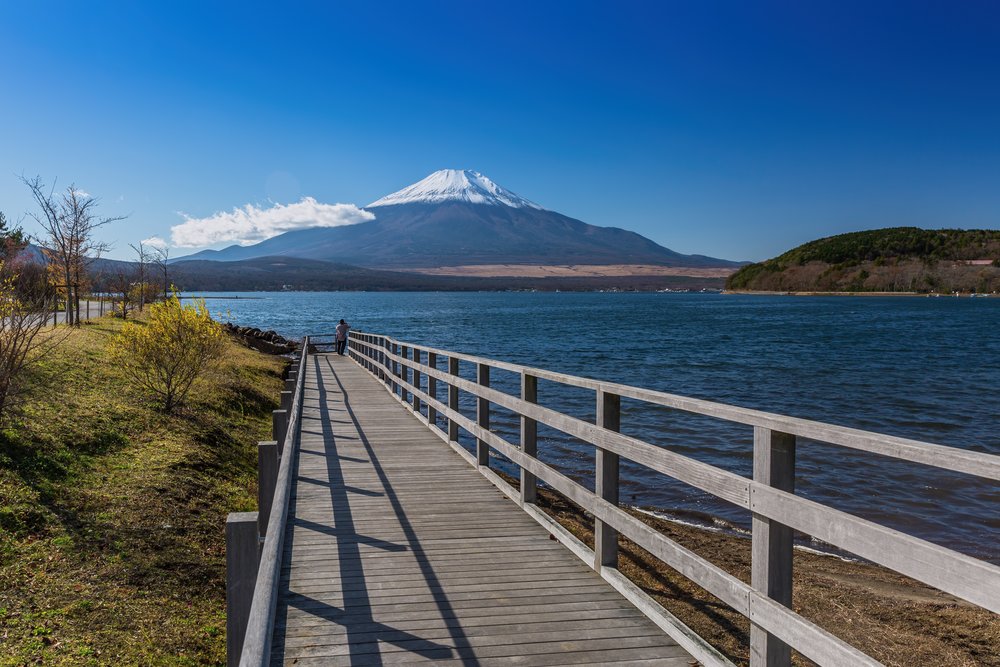
Mount Fuji views from Lake Yamanaka
The largest of the five lakes, Lake Yamanaka is just east of Mount Fuji and gives you wide, uninterrupted views across the water. It's a bit less crowded than Kawaguchi and is a good spot for cycling; you can hire bikes near the bus stop and take a lap around the lake!
Lake Motosu
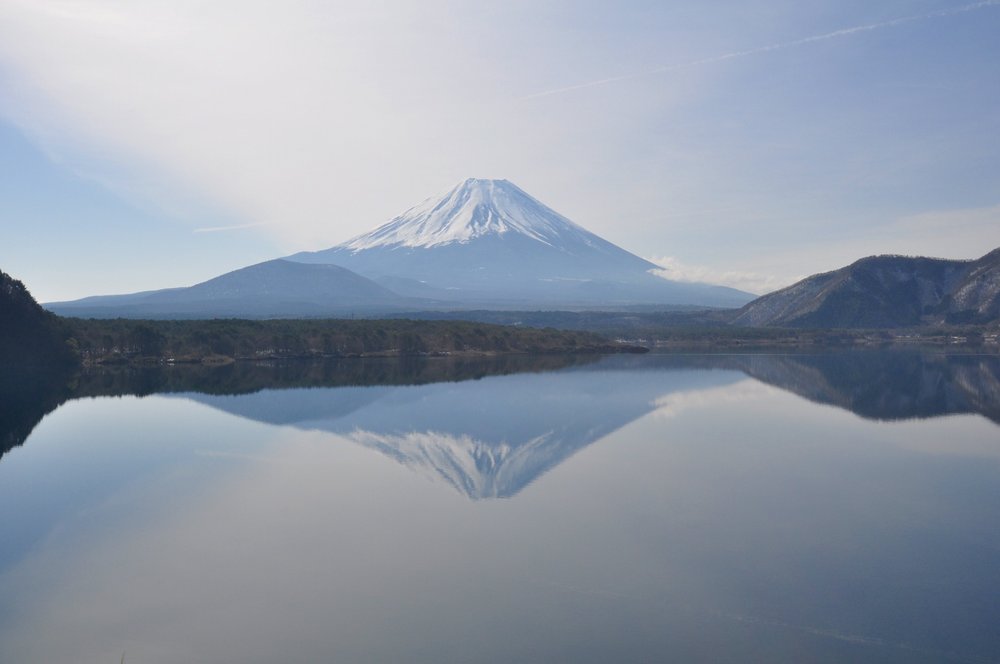
Mount Fuji seen from Lake Motosu | Photo from Captain76 on Wikimedia
A lesser-known spot, but one worth the extra effort to reach. This is the lake featured on the ¥1,000 note, and if you hold the note up against the view, you'll see exactly why. The view from here is considered one of the cleanest and most symmetrical of all the Five Lakes.
How to get to Mount Fuji?
Most visitors flying from the UK will land at Narita or Haneda airports, then head to Tokyo before making their way to the Mount Fuji area. From Tokyo, the most convenient options are:
By train: Take the JR Chuo Line from Shinjuku to Otsuki, then transfer to the Fujikyu Railway towards Kawaguchiko. The whole journey takes about 2 hours and 15 minutes. Alternatively, the Fuji Excursion train runs directly from Shinjuku to Kawaguchiko with no changes and is covered by the JR East Pass.
By bus: Highway buses depart regularly from Shinjuku Bus Terminal and go directly to Kawaguchiko. Journey time is around two hours, and it tends to be the cheapest option.
By guided tour: If you'd rather not worry about connections, a day trip from Tokyo takes the hassle out of getting there. You'll be picked up and dropped off in Tokyo, with stops at the key viewpoints sorted for you.
The Mount Fuji and Hakone Day Trip from Tokyo is a great choice, as it covers both areas and includes transport throughout.
Where to stay near Mount Fuji?
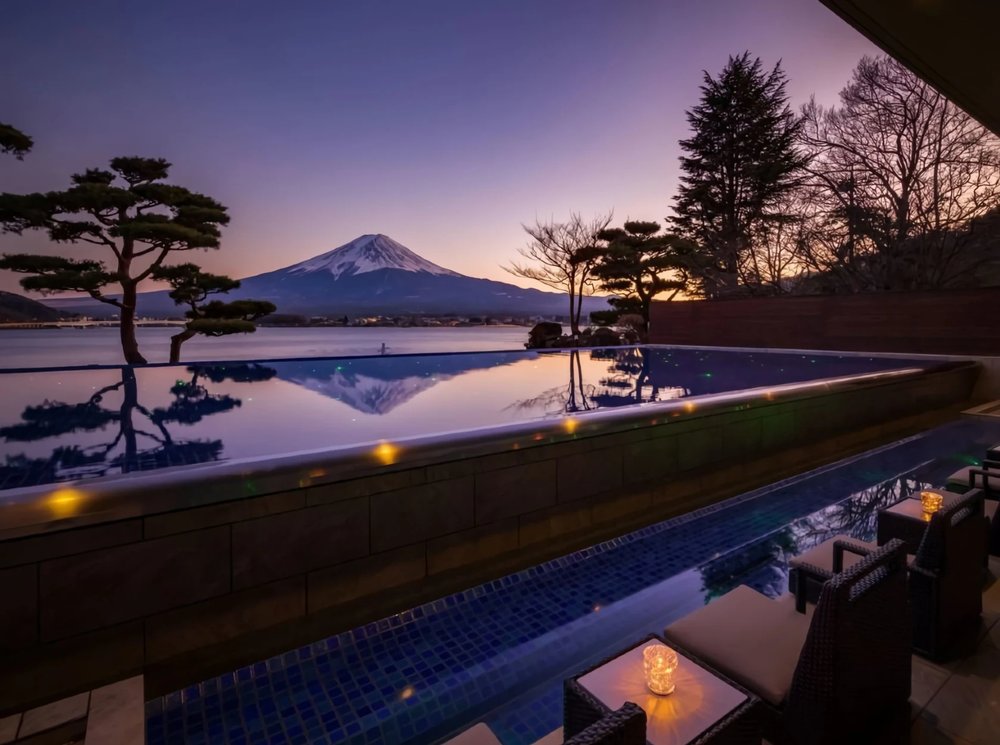
A clear view of Mount Fuji from Shuhokaku Kogetsu’s outdoor onsen
Staying overnight in the area gives you the best chance of catching clear morning views and makes the whole trip feel less rushed. Here are three hotels worth considering.
Shuhokaku Kogetsu is a traditional ryokan (Japanese inn with tatami rooms and communal baths) on the shore of Lake Kawaguchi. Many rooms have direct views of the mountain, and the outdoor onsen (hot spring bath) facing the lake is a proper highlight.
Hotel Mt. Fuji, on the other hand, is a larger lakeside resort hotel on the northern shore of Lake Kawaguchi, close to the ropeway and within easy reach of the 5th Station. It's a reliable mid-range option with comfortable rooms and mountain views.
We also recommend staying at Hoshinoya Fuji if you want something a bit more memorable. Japan's first glamping resort, it’s in a forest above the lake with private cabins, fire pits, and views of the mountain through the trees.
FAQs about Mount Fuji
Is Mount Fuji good for a family day out?
Yes, as long as you plan around the kids rather than the climb. We recommend going on a Mount Fuji guided tour from Tokyo if you don’t want the hassle of arranging everything for your family. Everything is sorted for you, from transportation to the actual itinerary, and you're not juggling train changes with little ones in tow.
Which part of Mount Fuji suits my travel style?
It really depends on what kind of trip you're after:
• Families: Head to Lake Kawaguchi or the 5th Station. Easy to reach, low effort, and scenic. We recommend going on a guided day trip from Tokyo to keep logistics simple.
• Solo adventurers: The Yoshida Trail is the one to take on. Go at your own pace, stay overnight in a mountain hut, and aim for the sunrise from the summit.
• Couples: A night at a lakeside ryokan (traditional Japanese inn) pairs nicely with an early morning walk along Lake Kawaguchi.
What is the best time to climb Mount Fuji?
The official mount fuji climbing season runs from early July to mid-September. This is when the trails are fully open, mountain huts are staffed, and the weather is safest for the ascent. Climbing outside this window is technically possible on some trails, but conditions can be dangerous as ice, snow, and closed facilities make it far more challenging.
How long does it take to climb Mount Fuji?
Plan for around 5 to 6 hours going up and 3 hours coming down from the Fuji Subaru Line 5th Station, about 8 to 9 hours total. Many climbers choose to break up the journey by sleeping at a mountain hut partway up, then finishing the climb before dawn to catch the sunrise at the summit.
Do you need a guide to climb Mount Fuji?
No, you don't need a professional guide to climb Mount Fuji. The trails are well-marked and the Mount Fuji Yoshida Trail is particularly well-supported with rest stops, huts, and staff along the route. That said, guided group tours are a good option if it's your first time, especially if you're travelling solo, they handle the logistics, keep you on pace, and can be reassuring at altitude.
Can you visit Mount Fuji without climbing it?
Absolutely. Visiting Mount Fuji without climbing is entirely worthwhile. The Five Lakes area, the Chureito Pagoda, Arakurayama Sengen Park, and the 5th Station itself are all popular destinations that don't involve reaching the summit. You can also take the Panorama Ropeway for elevated views, relax in a lakeside onsen, or join a sightseeing day trip from Tokyo that covers the best viewpoints.
What should I wear and pack for climbing Mount Fuji?
Layers are essential. Even in summer, temperatures near the summit can drop to around 5°C or below, and wind chill makes it feel colder. Pack a warm jacket, waterproof outer layer, and moisture-wicking base layers. Sturdy trainers can work for the Yoshida Trail, but proper hiking boots offer better grip on the rocky descent.
You'll also want a head torch (important if you're climbing at night), trekking poles, sun cream, plenty of water, snacks, and cash for the mountain huts (they don't always accept cards). A light balaclava or buff and gloves are worth including even in July.