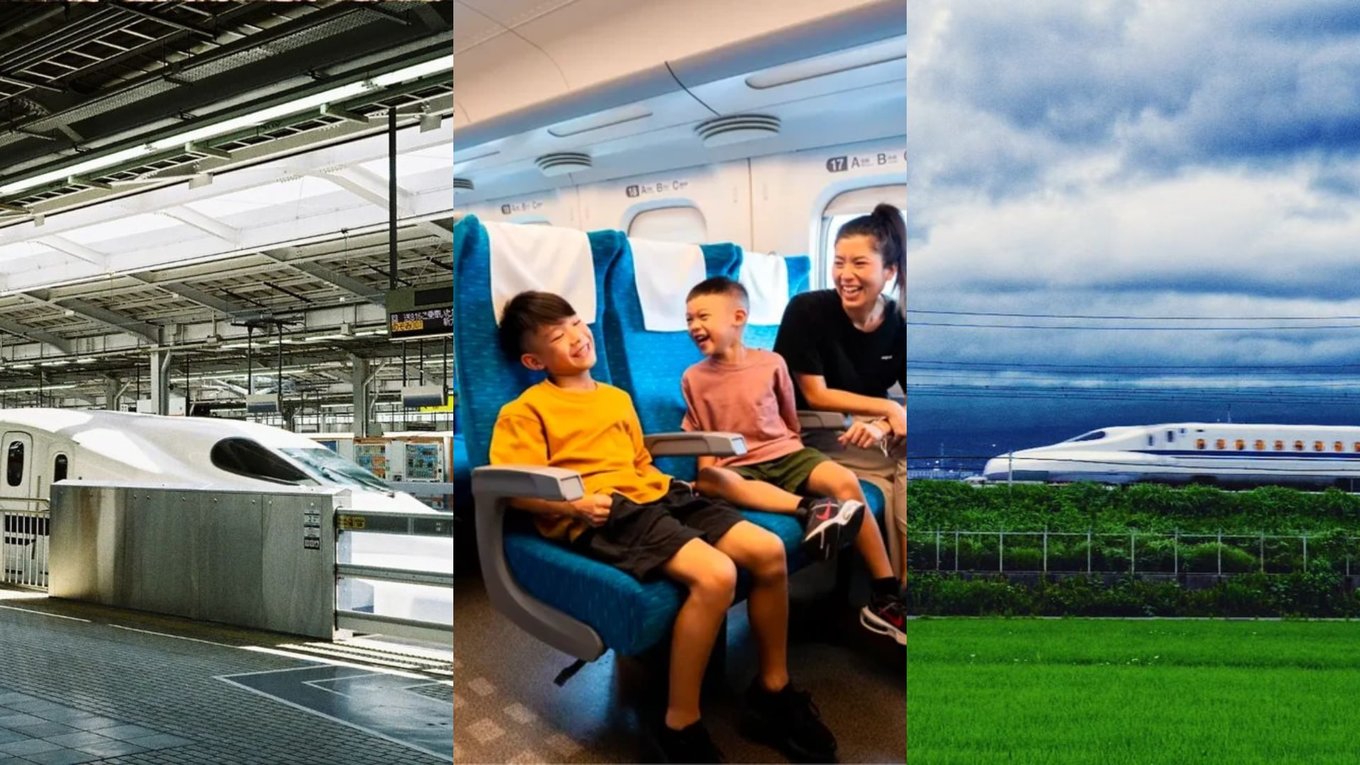
Japan is one of the few countries you can visit without having to worry about transportation while you’re there, thanks to its advanced and efficient train system. There are a few different types of trains that cater to different cities in Japan, which can seem intimidating to first-time visitors. Luckily, we have this guide to answer your question about how Japanese trains are!
Japan has a cheat code; it's called Klook! 🧡
Japan can feel like a lot to figure out. But every game has a cheat code, and Japan's is Klook.
This June, we're teaming up with Family Fizz for a real family trip to Japan, and there are three ways to play:
- Pre-booked and locked in: Some parts of their itinerary are already sorted, so you can see exactly how easy it is to plan Japan with Klook
- Chosen on the day: The Family Fizz kids pick between activities in real time and book straight through Klook, just like you would on your own trip
- Voted by you: Follow along on Family Fizz's Instagram page, vote on where they head next (see Mount Fuji or go on a tea ceremony in Kyoto?), and watch your pick come to life!
Every experience on their trip is bookable straight through Klook, so you can follow along and plan your own Japan adventure at the same time. Their trip, your rules.
Going live on 25 June 2026. Press start! 🕹️
How fast does the famous Japanese bullet train go?
When it comes to speed and efficiency, the Shinkansen, commonly known as the bullet train, is a marvel of modern transportation. Its sleek nose isn't just for looks, parts of the design were inspired by the kingfisher bird, helping reduce drag, noise, and energy use. The result is a train that not only looks futuristic but can also travel across Japan at incredible speeds with remarkable efficiency.
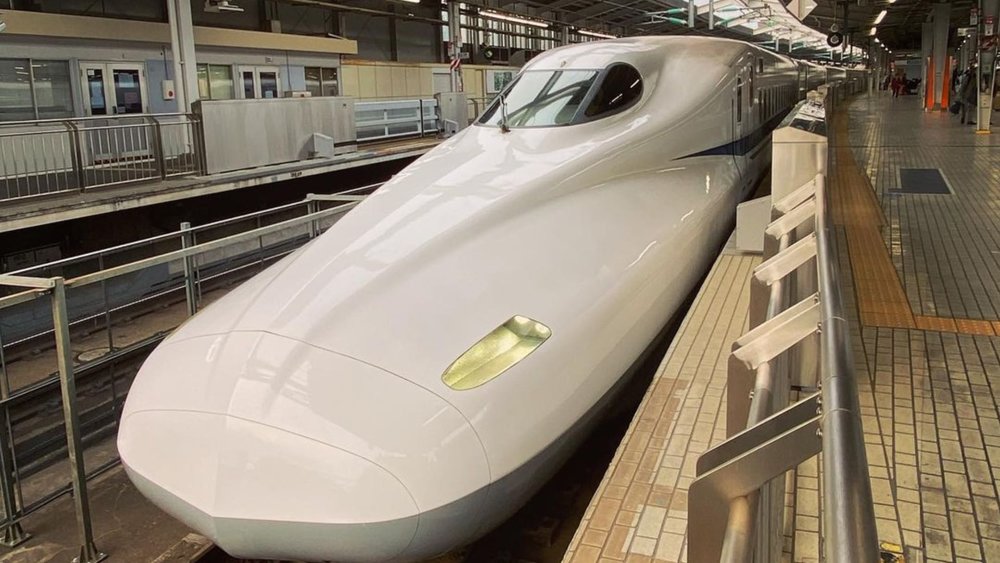
You’ll be at your destination in no time! Credits: @ryusons on Instagram
Depending on the specific line and model, Shinkansen trains achieve impressive speeds ranging from 240 to 340 km/h, offering passengers a thrilling and efficient mode of travel.
Among the various Shinkansen lines, the Tohoku Shinkansen is renowned for its consistent top speed of 320 km/h.. This line, connecting Tokyo with the northeastern region of Japan, showcases the remarkable engineering, operating speed, and precision that have become synonymous with the Shinkansen brand.
Passengers aboard these high-speed trains can enjoy rapid and seamless travel, covering vast distances in remarkably short periods.
What are the different types of bullet trains in Japan?
There are fast trains, semi-speed trains, and local trains on each of the Shinkansen lines:
- Fast trains (Nozomi) only stop at major train stations such as Tokyo, Shinagawa, Shin-Yokohama, Nagoya, Kyoto, and Shin-Osaka
- Semi-fast trains (Hikari) make a few additional stops, such as Odawara, Shizuoka, Hamamatsu, and Maibara.
- Local trains (Kodama) stop at every station along the route, including smaller stops such as Atami, Mishima, Kakegawa, and Toyohashi
How do I ride the Shinkansen trains in Japan?
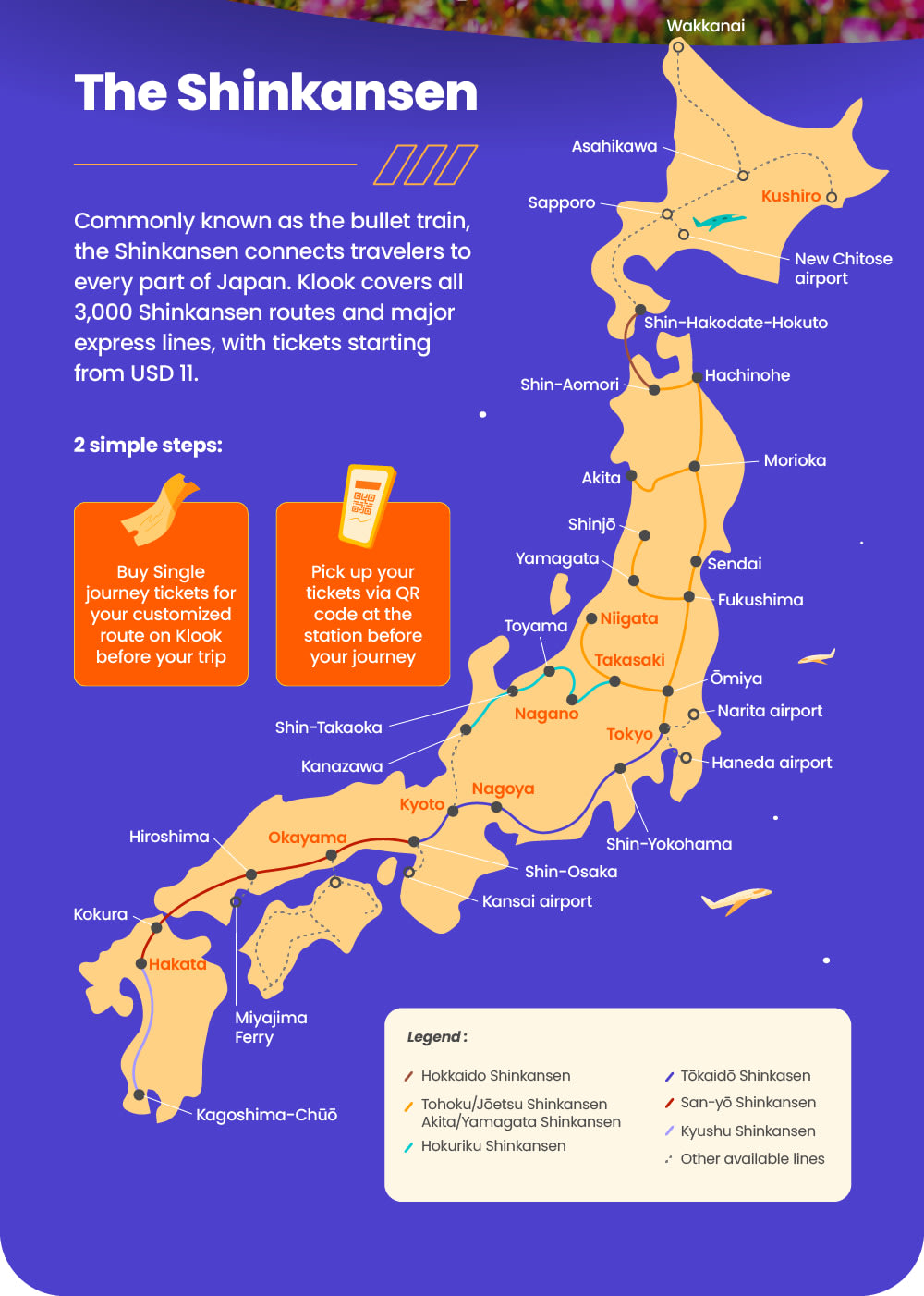
Bullet trains connect travellers to every part of Japan. Klook covers all 30,000 bullet train routes and major express lines, which means you can ride any bullet train with just 2 simple steps:
1. Buy single journey tickets for your route of choice on Kook before your trip
2. Pick up your tickets via QR code at the station before your journey
How do I book bullet train tickets on Klook?
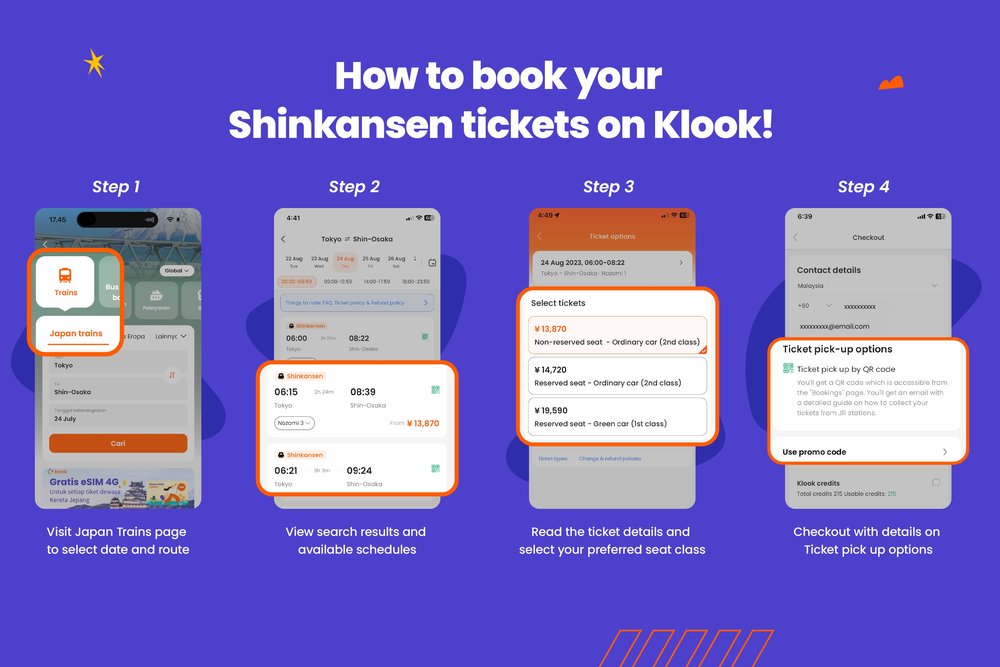
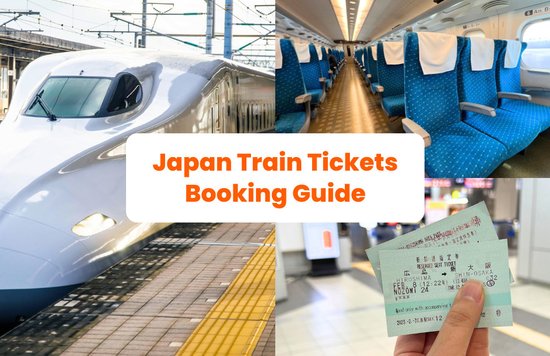
Not sure where to start with tickets? Our guide to buying Shinkansen tickets online walks you through the whole process.
Do I need a JR Pass to ride bullet trains in Japan?
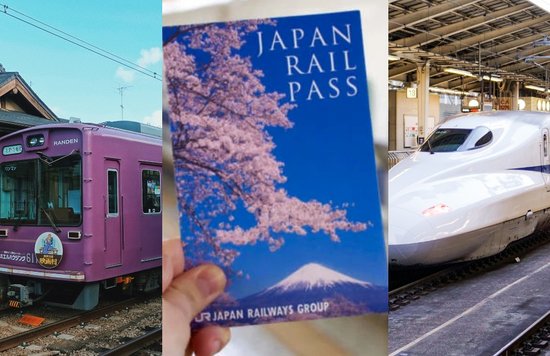
One of the most flexible ways to ride on the Shinkansen and other trains in Japan is with the Japan Rail (JR) pass.
The JR Pass covers all Shinkansen lines (except Nozomi and Mizuho), as well as local buses and the Miyajima ferry, all with one ticket. Experience unlimited train travel for 7, 14, or 21 days as you explore all of Japan.
Planning a multi-city trip? Read our JR Pass guide before deciding between a rail pass and individual tickets.
What's the difference between bullet train seat types?
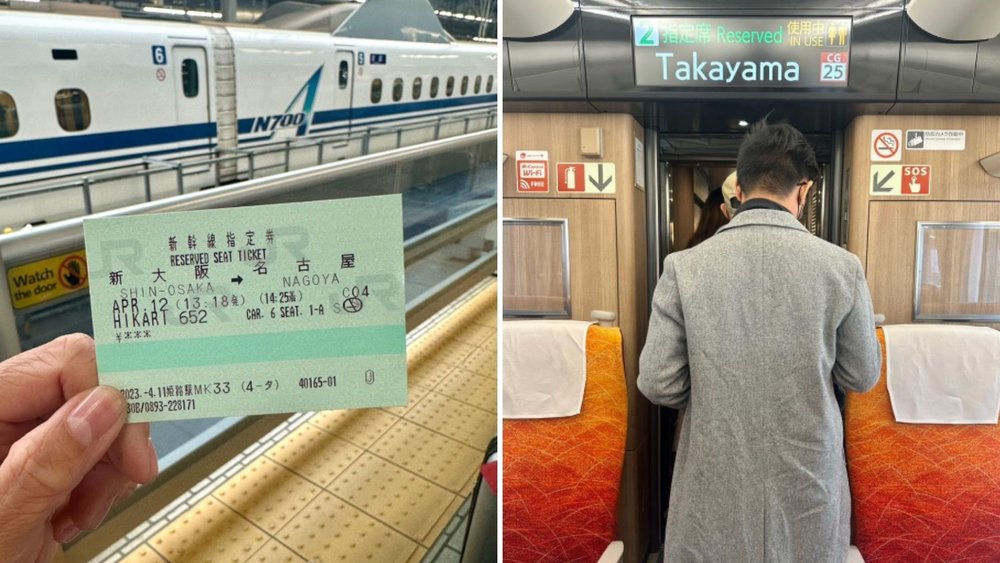
There are 2 types of seats offered on Shinkansen trains:
Reserved seat:
You will get a specified train and seat.
Non-reserved seat:
You will get better flexibility, as you can take any train for the specified date/route. However, you are not guaranteed a seat, and you might need to stand for the journey.
What's the age classification for bullet train tickets?
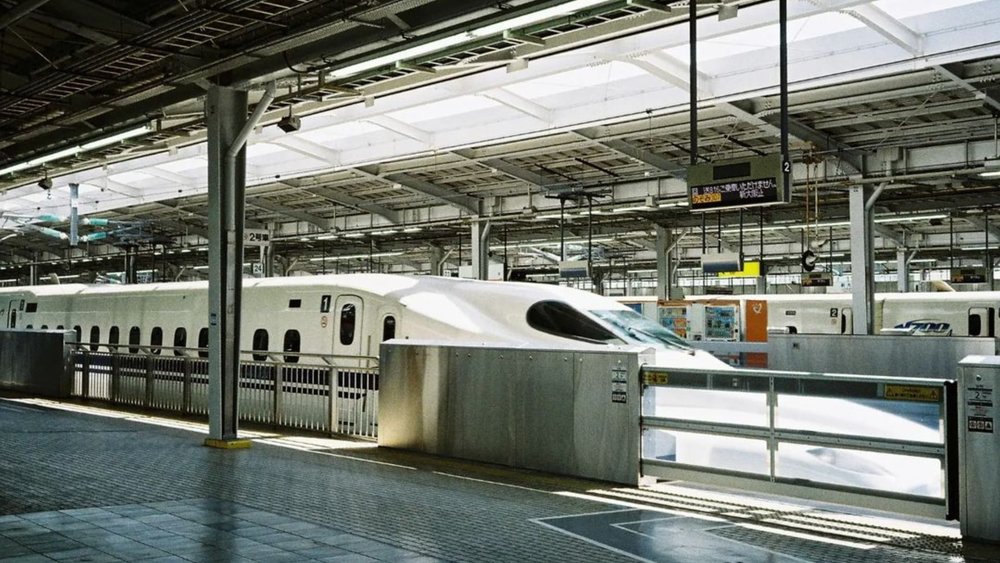
Experience the bullet train when you come to Japan! Image credit to @jeshi_jpg on Instagram
Adult ticket:
Aged 12 and above.
Child ticket:
6-11 years old. These tickets are half the price of adult tickets. Child tickets can't be booked for the Green Car, however, you can book adult tickets for children that need to ride in the Green Car.
Infants:
0-5 years old. No booking is required. You do not need to book tickets for children under 6, unless in the following circumstances:
- 1 adult is travelling with more than 2 children under 6 years old (in which case you'll need to book a child ticket)
- The child under 6 years old needs their own seat (in which case you'll need to book a child ticket)
How do I receive my bookings after buying Shinkansen tickets?
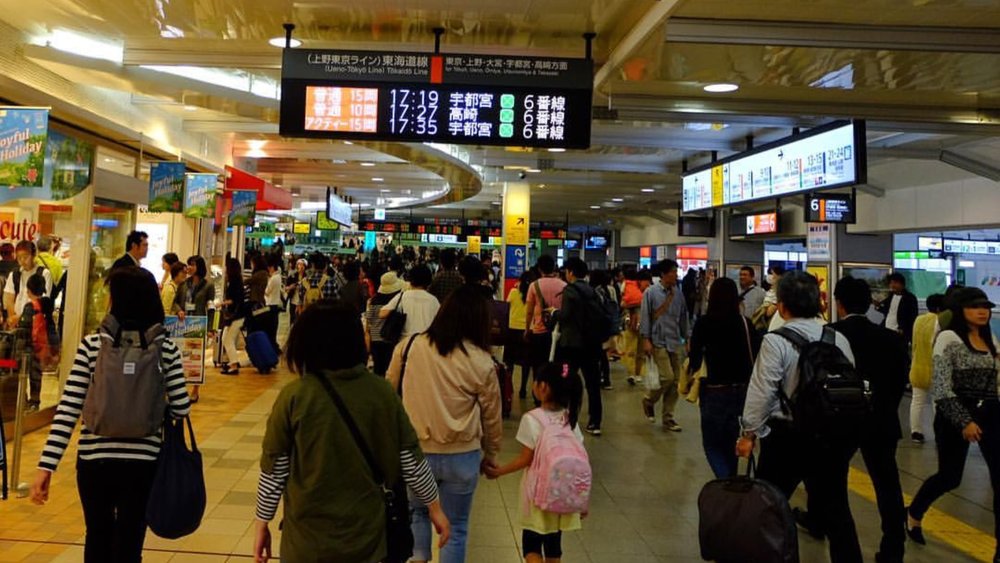
Shinkansen stations are among the crowded places in Japan. Image credit to @tortor072 on Instagram
QR code tickets
For routes (including but not limited to) Tokyo to Shin-Osaka, Kyoto, and Nagoya plus departures from stations east of Shin-Osaka (including Shin-Osaka):
Your booking confirmation email will include a QR code. Simply proceed to your departing train station, scan the QR code at a JR East/JR Tokai/JR Hokkaido reserved ticket machine, and pick up your physical tickets.
Paper tickets (Delivery)
You can have your tickets sent to an address in Japan (e.g. your hotel) on routes (including but not limited to) Hakata to Osaka/Kyoto/Nagoya and Hiroshima to Osaka/Kyoto/Nagoya plus departures from stations west of Shin Osaka (not including Shin Osaka). Simply input your delivery and contact information when ordering the tickets, and you should receive them before the train departs.
How do I book seats on a bullet train in Japan?

The 3-2 configuration in the Ordinary Car
Unlike local trains, the Shinkansen offers two classes of seats: the Ordinary Car and the Green Car.
Green Car:
This is essentially the equivalent of first class with spacious, reclining seats and footrests. You'll get a more comfortable ride with complimentary drinks, snacks, etc. All cars have free WiFi.
Ordinary Car:
It is pretty comfy; however, if you’re in the mood to splurge or will be on the train for a while, then definitely consider the Green Car. You'll still get a great travel experience at a more affordable price. All cars have free WiFi.
There are reserved and non-reserved cars on bullet trains, but we recommend making seat reservations just in case the non-reserved seats sell out.
If you’ve booked the Green Car, seat reservations are required. After purchasing your JR pass, reserve your seats before boarding the train. Simply visit the ticket office or a reserved seat ticket machine in JR line stations to book and receive your reserved seat tickets.
Klook Tip: If possible, book your Shinkansen tickets around 30 days in advance. Tickets are often available closer to departure, but securing them early gives first-time visitors a better chance of getting their preferred departure time and the best window seats for the views.
How do I read my bullet train ticket?
Now that you've got your hands on bullet train tickets, here's an easy guide on how to read them so you can figure out the details of your next train trip"
For reserved seat tickets
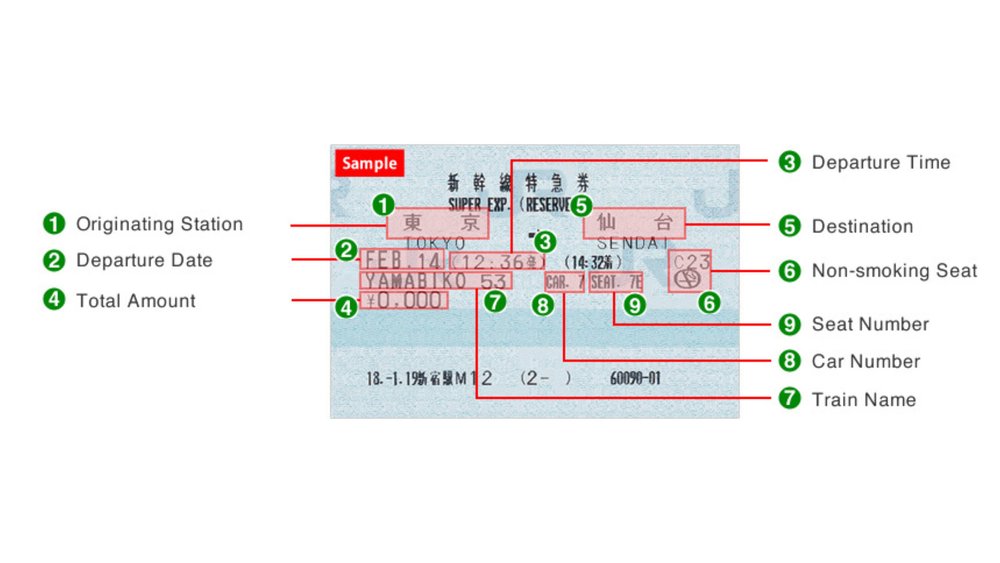
Reserved ticket for Shinkansen. Image credit to JR Pass
For non-reserved seat tickets
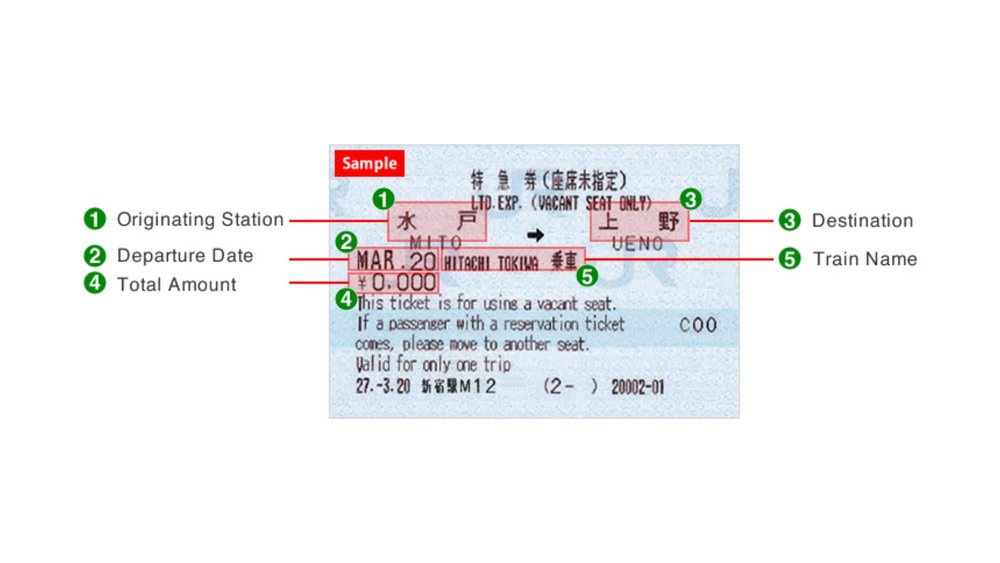
Non-reserved ticket for Shinkansen. Image credit to JR Pass
When do train tickets expire?
Tickets for reserved seats expire after the departure time of your specified train has passed.
For non-reserved seats, these tickets expire once the specified travel date has passed (this could be at 23:59 but may be earlier when the ticket counters close).
Can I store luggage on Japanese bullet trains?
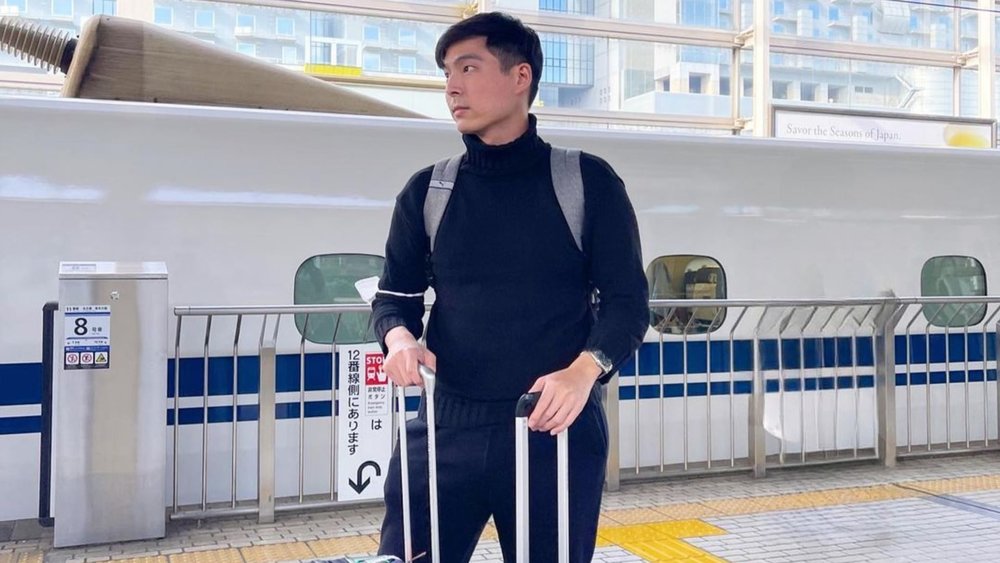
Make sure you’ve left space for souvenirs in your luggage! Credits: @yeast_chanat on Instagram
Luggage restrictions usually depend on specific Shinkansen lines. Some lines require passengers to reserve a special seat for luggage with sizes between 161 and 250 cm.
Luggage below 160cm doesn't need a special reservation.
In general, passengers are only allowed to bring on two pieces of luggage not heavier than 30kg, and these can be placed either in front of you or in the overhead rack!
Klook Tip: Traveling with kids or multiple suitcases? Consider using Japan's luggage delivery service to send your bags directly between hotels. It's a popular option for families, letting you travel on the Shinkansen with just a small carry-on instead of managing large suitcases.
Reserving oversized baggage space
We recommend that you go to your departure station earlier and speak to staff to arrange for your oversized baggage space. The fee should be around ¥1,000.
Is there food on Japanese bullet trains?
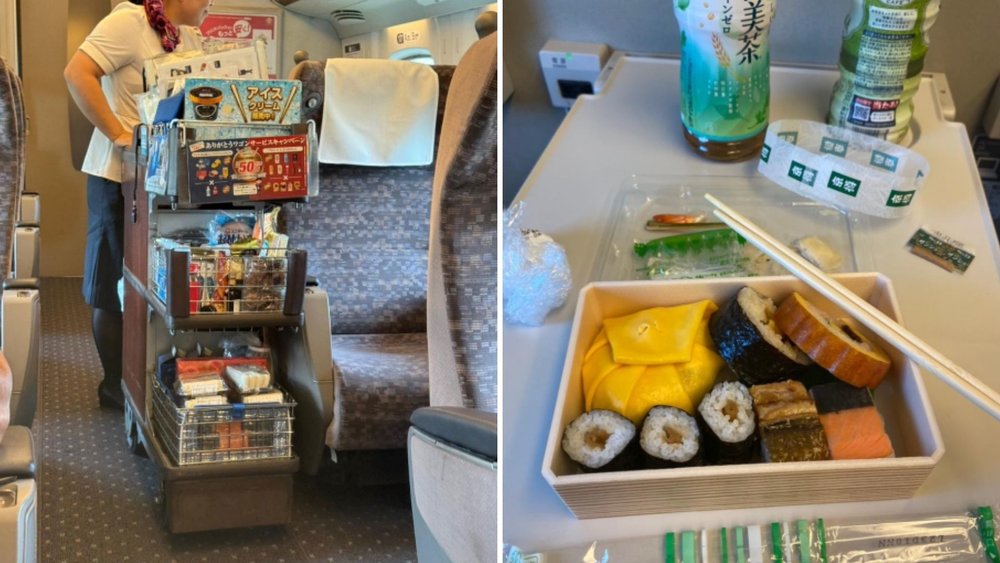
It’s a good time to try Japanese snacks—what else are you supposed to do on train rides, right? Credits: @brinagoesjapan on Instagram
Although most trains discourage eating and drinking, passengers are allowed to on Shinkansen bullet trains.
You can purchase drinks, snacks, and meals in advance at the train station or onboard from the food car,where you can try bento boxes, sushi, sake, beer, and more.
The number one rule for eating and drinking on the Shinkansen is to clean up after yourself and never leave your trash on the train, that’s how Japanese trains are able to stay so clean and orderly!
How many bullet train lines are there in Japan?
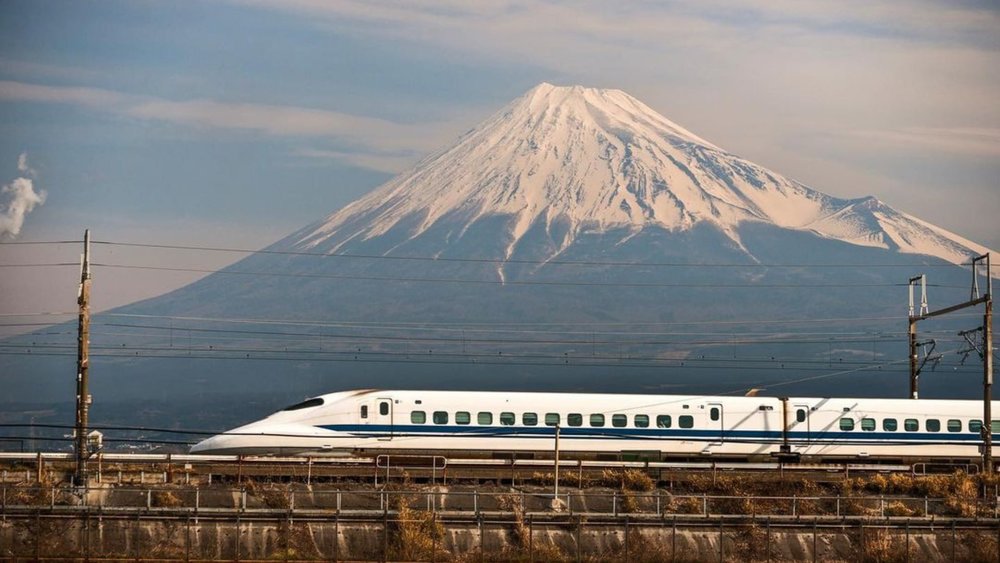
Riding the Shinkansen is a sight-seeing experience all on its own! Credits: @yamashitaphoto on Instagram
There are nine Shinkansen lines in Japan. This Shinkansen network goes throughout Japan in various directions.
The Tokaido Shinkansen line connects Tokyo and Osaka from the capital to the south.
The Sanyo Shinkansen line connects Osaka with Fukuoka, and from there, the Kyushu Shinkansen line travels from north to south throughout the island of Kyushu. These are among the popular Shinkansen lines.
The other six lines either go north or inland from Tokyo. These are Akita, Hokkaido, Hokuriku, Joetsu, Tokoku, and Yamagata. The Hokkaido line travels the most north, all the way to Hokkaido Island.
Where in Japan can these bullet train lines take me?
The Shinkansen routes can take you to most Japanese prefectures, including far inland.
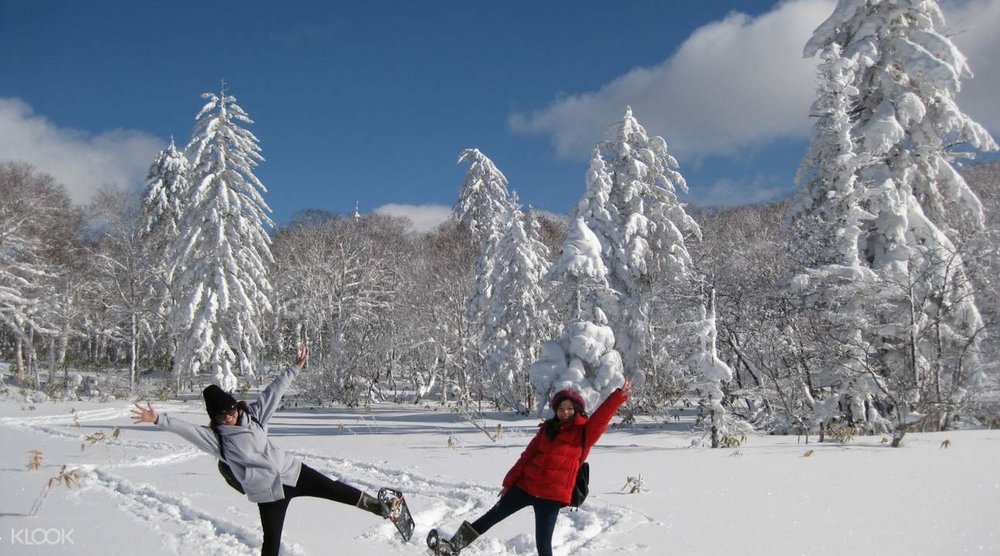
Have fun in Japan without even worrying about transport!
Tokaido Shinkansen lines
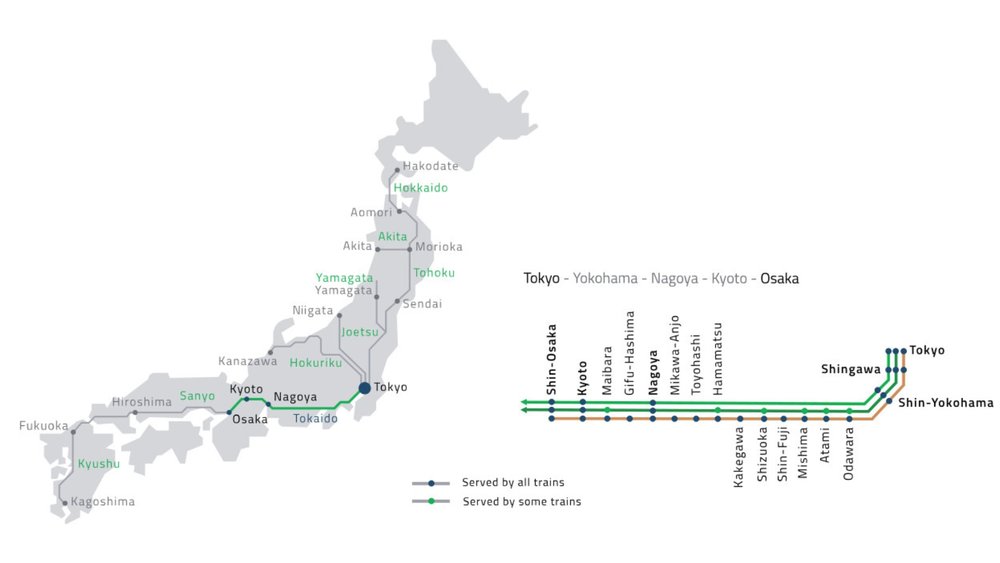
Tokaido Shinkansen Line. Image credit to JR Pass
The Tokaido Shinkansen line is Japan's most popular and busiest Shinkansen line. It connects the country's three largest urban areas: Tokyo to Yokohama, Osaka to Kyoto, and Nagoya. This route is served by three train services: Nozomi, Hikari, and Kodama.
If you're looking for the fastest way to travel from Tokyo to Osaka, the Hikari train goes from Tokyo Station to Shin-Osaka Station in exactly 173 minutes, running at a mega speed of 285 km/h, which makes it the second-fastest train on the Tokaido line.
It's also known as Japan's first high-speed train, having opened in 1964 for the Japan Olympic Games.
Sanyo Shinkansen lines
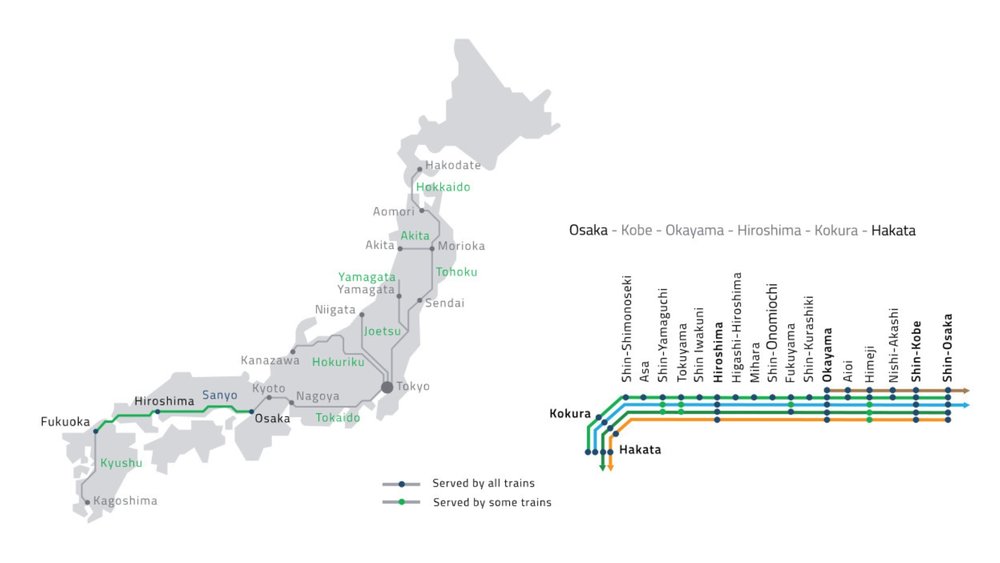
Sanyo Shinkansen Line. Image credit to JR Pass
Sanyo Shinkansen takes you from Osaka to Fukuoka with stops at Shin-Kobe, Himeji, Okayama, Hiroshima, and Kokura in between. This route is served by five train services: Nozomi, Hikari, Kodama, Mizuho, and Sakura. Nozomi is the fastest train, with a top speed of 300 km/h.
Travelling from Osaka to Fukuoka? Book your JR Sanyo Shinkansen ticket in advance to secure your seat on this busy route.
Tohoku Shinkansen lines
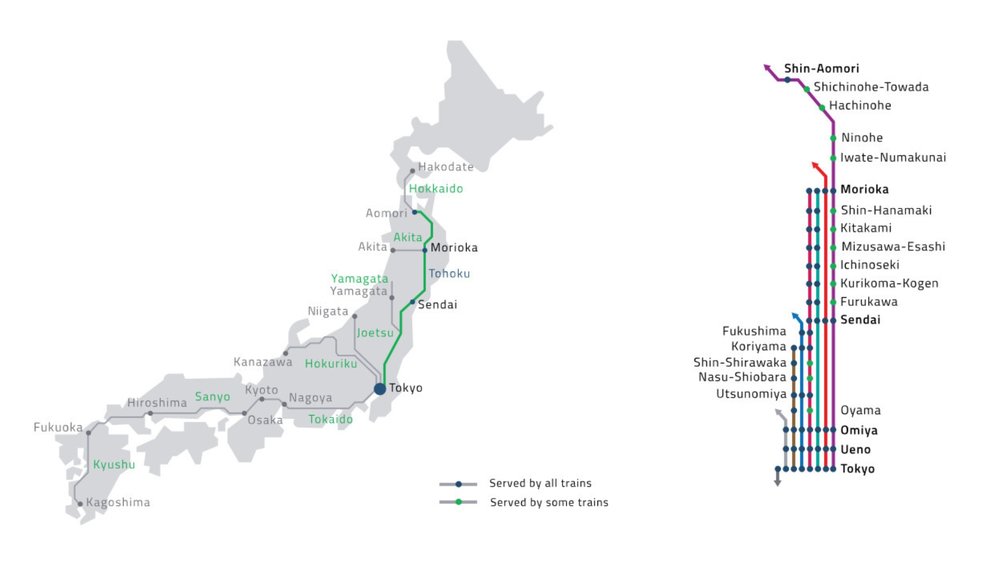
Tohoku Shinkansen Line. Image credit to JR Pass
Tokyo and Aomori are linked by the Tohoku Shinkansen line. The Akita and Yamagata lines serve the Akita and Yamagata prefectures, respectively. The Tohoku line has six different train services: Hayabusa, Komachi, Hayate, Yamabiko, Nasuno, and Tsubasa.
Heading up north? Grab a JR East Tohoku Area Pass to cover your travels across the Tohoku region without booking individual tickets."
Hokkaido Shinkansen lines

Hokkaido Shinkansen Line. Image credit to JR Pass
The Seikan Tunnel connects Aomori (on Honshu's main island) with Hakodate (on Hokkaido's island) through the Hokkaido Shinkansen line, passing through Okutsugaru Imabetsu and Kikonai. The line is served by two types of trains: Hayabusa and Hayate.
Did you know the Hayabusa Shinkansen trains run at a top speed of 320 km/h?
Akita Shinkansen lines
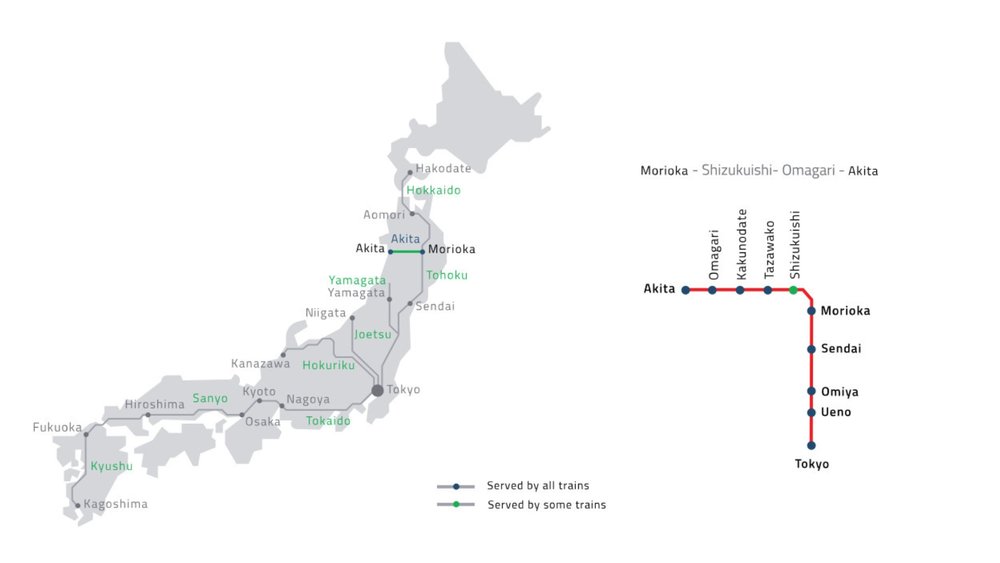
Akita Shinkansen Line. Image credit to JR Pass
The Akita Shinkansen is a branch line of the Tohoku Shinkansen that connects Tokyo and Akita and runs through Ueno, Omiya, Sendai, Morioka, Tazawako, Kakunodate, and Omagari. The Komachi Shinkansen is the only train that operates on the railway. It belongs to the E6 series, which is also known as the Super Komac.
Yamagata Shinkansen line
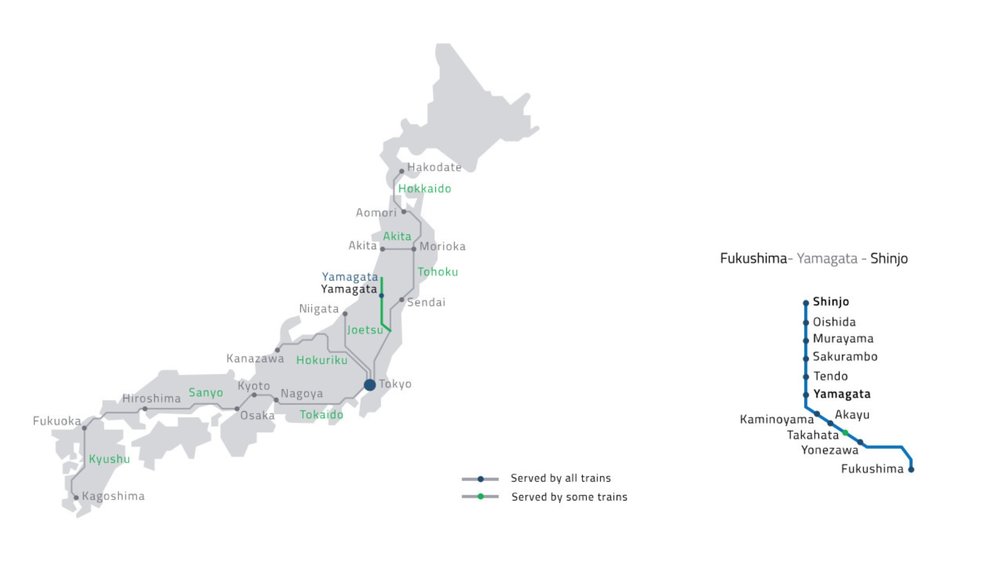
Yamagata Shinkansen Line. Image credit to JR Pass
The Yamagata Shinkansen is a branch line of the Tohoku Shinkansen. Tsubasa trains are the only ones that run on the Yamagata line between Tokyo and Shinjo and stop at Ueno, Omiya, Utsunomiya, Koriyama, Fukushima, Yonezawa, Akayu, Kaminoyama-Onsen, Yamagata, Tendo, Sakurambo-Higashine, Murayama and Oishida.
Joetsu Shinkansen lines
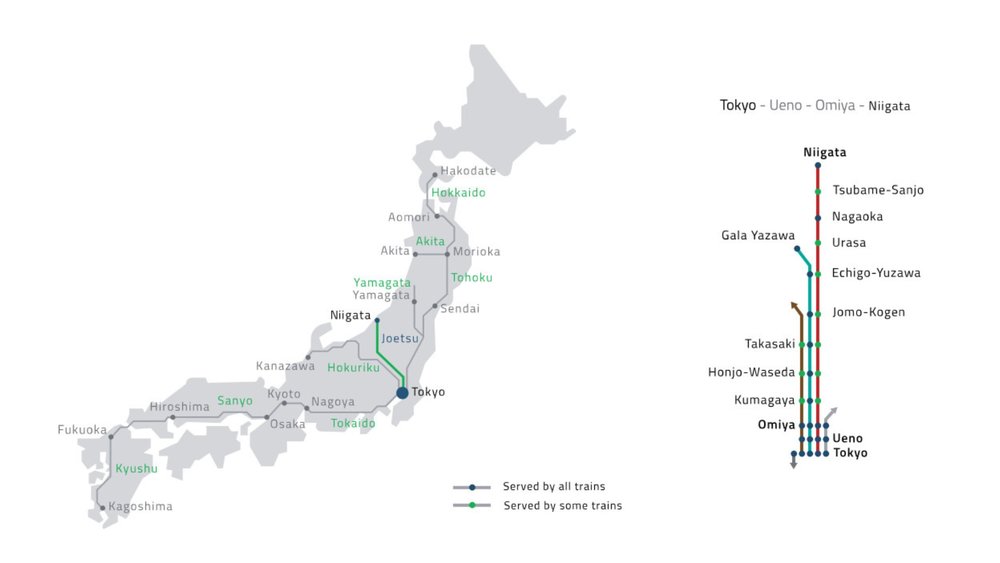
Joetsu Shinkansen Line. Image credit to JR Pass
The Joetsu Shinkansen is the line to catch if you're looking to travel from Tokyo to the ski fields in Niigata. The Shinkansen stops are Tokyo, Ueno, Omiya, Nagaoka and Niigata. The two main train services that run on this line are Toki and Tanigawa.
Kyushu Shinkansen lines

Kyushu Shinkansen Line. Image credit to JR Pass
The Kyushu Shinkansen train connects Fukuoka (Hakata Station) to Kagoshima-Chuo stopping at Shin-Tosu, Kurume, Kumamoto, and Sendai.
Hokuriku Shinkansen lines
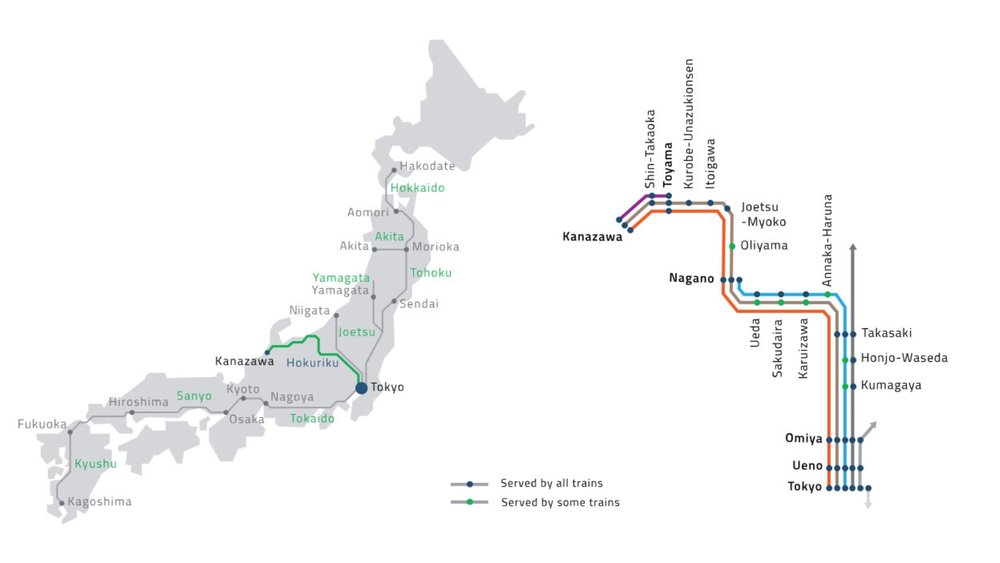
Hokuriku Shinkansen Line. Image credit to JR Pass
Previously known as the Nagano Shinkansen, the Hokuriku Shinkansen line connects Tokyo to Kanazawa through Ueno, Omiya, Nagano, and Toyama.
Do bullet trains in Japan run all night?
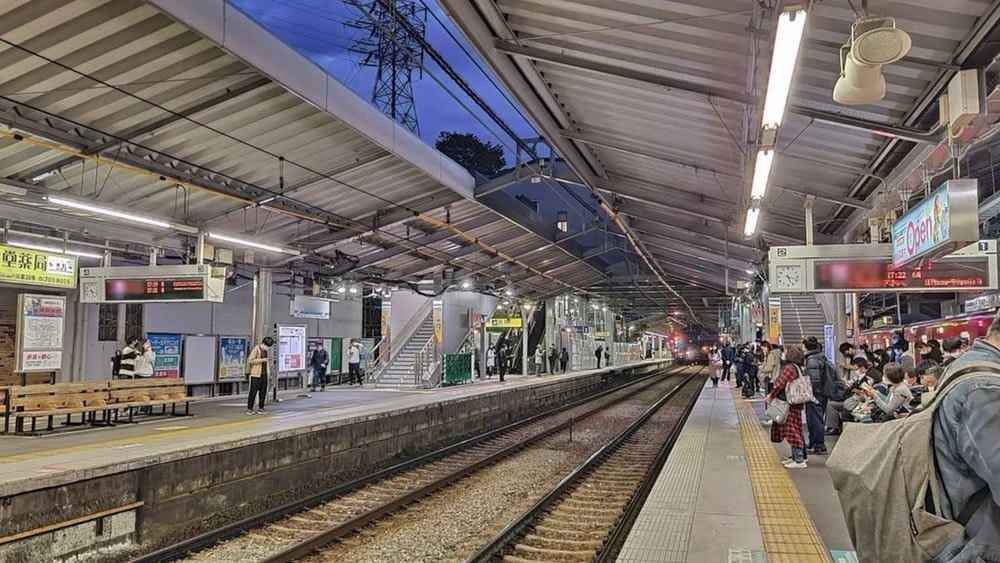
The train stations are busy even at night! Credits: @its.kat.___
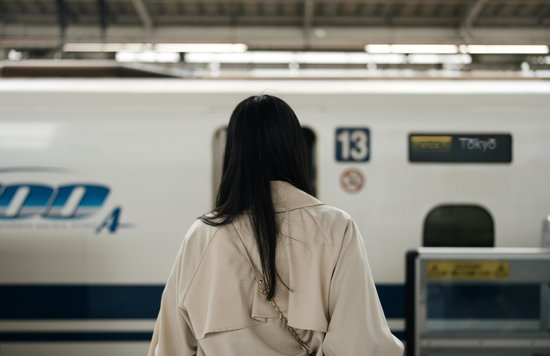
No, bullet trains are not a 24-hour service. They usually run from 6 am to midnight, but it’s good to check your train’s timetable in advance in case of any changes.
Now that you’ve got an idea of how Japanese trains are, you can confidently take advantage of the clean and efficient train system to explore Japan’s best sights and attractions, especially with a JR pass!
Is there WiFi on the trains?
Most Shinkansen trains now offer free onboard Wi-Fi, particularly on major routes such as the Tokaido, Sanyo, and Kyushu Shinkansen. Availability can vary by train type and operator, but staying connected during your journey is generally much easier than it used to be.
Another option is to order a pocket WiFi so that you have unlimited internet wherever you go.
Why are trains so popular in Japan?

Fun fact: Japan has the busiest rail network in the world! Credits: @asobouyuujito on Instagram
Japan's train system holds a special place in the hearts of both locals and travellers, and it's no surprise that trains are incredibly popular in the country.
Japan's rich train heritage dates back to 1872, when steam engine technology reached the country. Since then, Japan has continuously evolved its train system, resulting in the development of various types of trains and rail lines.
From metro to mountain railways and scenic trains, Japan offers diverse train options that cater to different travel needs and preferences.
Are bullet trains in Japan reliable?
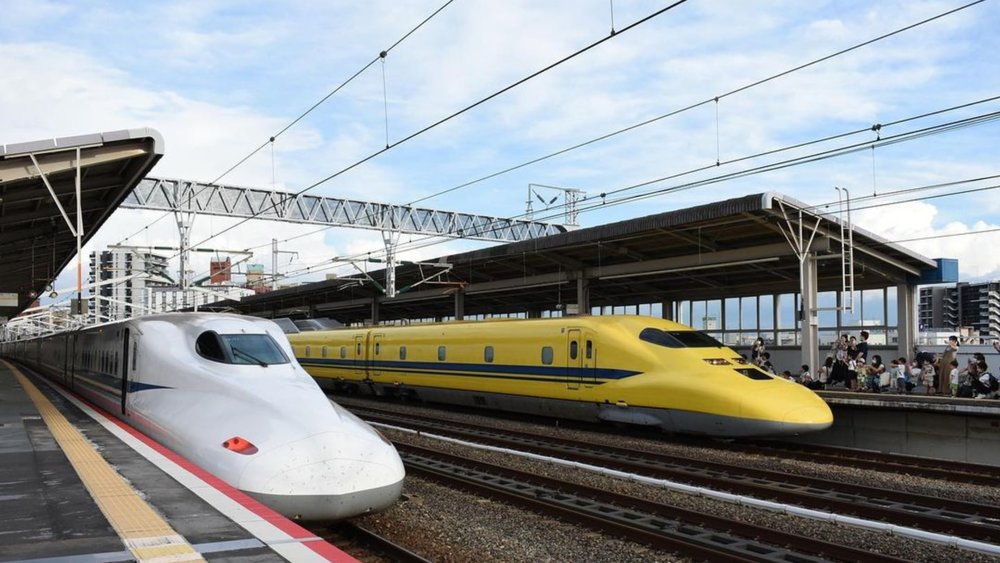
The Shinkansen network consists of 9 lines connecting Japan. Image credit to @shengya60 on Instagram
One of the key aspects that set Japanese trains apart is their efficiency and reliability. Japanese trains are known for their punctuality, with delays being a rarity rather than the norm. This timeliness is ingrained in the culture and is a testament to the meticulous planning and dedication of the railway operators.
The reliability of the train system allows commuters and travellers to confidently plan their journeys, making trains an extremely convenient and trustworthy mode of transportation.
In addition to punctuality, the Japanese train system also excels in convenience. The train network is extensive, connecting major cities, rural areas, and even remote regions, making it highly accessible for residents and tourists alike.
Are bullet trains the only type of train in Japan?
There are a variety of Japanese trains. The different train categories are based on speed and stops, with each system catering to the different and diverse needs of both local commuters and international travellers. These are:
- Local trains, while slower, stop at all stations, ensuring accessibility to even the most remote areas
- Rapid trains skip some stations to expedite the journey
- Express and limited express trains further reduce the number of stops, prioritising efficiency.
- Finally, the iconic Shinkansen, or bullet trains, operate on dedicated tracks, enabling them to reach remarkable speeds and connect major cities swiftly.
FAQs about the shinkansen bullet train
Is the Japan Rail Pass worth it for the shinkansen?
It depends on how much ground you're planning to cover. If your trip includes multiple cities, Tokyo, Kyoto, Osaka, and Hiroshima, the Japan Rail Pass will likely save you a fair amount compared to buying individual Shinkansen tickets. A standard Tokyo to Osaka bullet train journey alone costs around ¥13,000–¥14,000 each way, so a 7-day pass can pay for itself quickly.
Do you need to book Shinkansen seats in advance?
You don't always have to, but it's strongly recommended, especially during busy periods like Golden Week, cherry blossom season, or the summer holidays. Unreserved carriages fill up fast, and on popular routes like the Tokyo to Kyoto shinkansen, you could end up standing for the entire journey.
Reserved seats usually cost a small additional fee, but for JR Pass holders, reservations are free. Booking ahead also means you can relax knowing your seat is sorted before you even get to the station.
Can you use the Japan Rail Pass on the Nozomi shinkansen?
No, the Japan Rail Pass is not valid on Nozomi or Mizuho services. These are the fastest trains on the Tokaido and Sanyo Shinkansen lines, so it's worth factoring that in when planning your route. If you want to travel on those specific services, you'll need to purchase a separate ticket on top of your pass.
For most travellers, the Hikari is the next best option and is fully covered by the JR Pass. It only adds around 20–30 minutes to the Tokyo to Osaka bullet train journey, so it's rarely a dealbreaker.
How fast does the Shinkansen bullet train go?
The shinkansen bullet train reaches speeds of between 240 and 340 km/h, depending on the line and train type. The Hayabusa service on the Tohoku Shinkansen is one of the quickest, topping out at 320 km/h. On the Tokaido Shinkansen, the busiest route for tourists travelling between Tokyo and Osaka, the Hikari runs at up to 285 km/h.
What is the difference between reserved and unreserved seats on the Shinkansen?
With a reserved seat, you're assigned a specific carriage and seat number on a particular departure. Unreserved seats give you more flexibility to hop on any train running that route on your travel date, but there's no guarantee you'll actually get a seat, particularly on busy services like the Tokyo to Osaka bullet train.
If you're travelling at peak times, with children, or with a fair bit of luggage, reserved seats are absolutely the way to go. Green Car passengers are always required to book reserved seats regardless of when they travel.
More Japan travel guides for you!
What is Klook?
Klook is a leading pan-regional experiences platform in Asia Pacific, purpose built to digitalize experiences and make them accessible to every traveler.
Our mission is to build the digital infrastructure for the global experience economy — empowering merchants to share their passions and travelers to discover the heartbeat of each destination. We operate a mobile-first, curated platform featuring diverse experiences across global destinations.