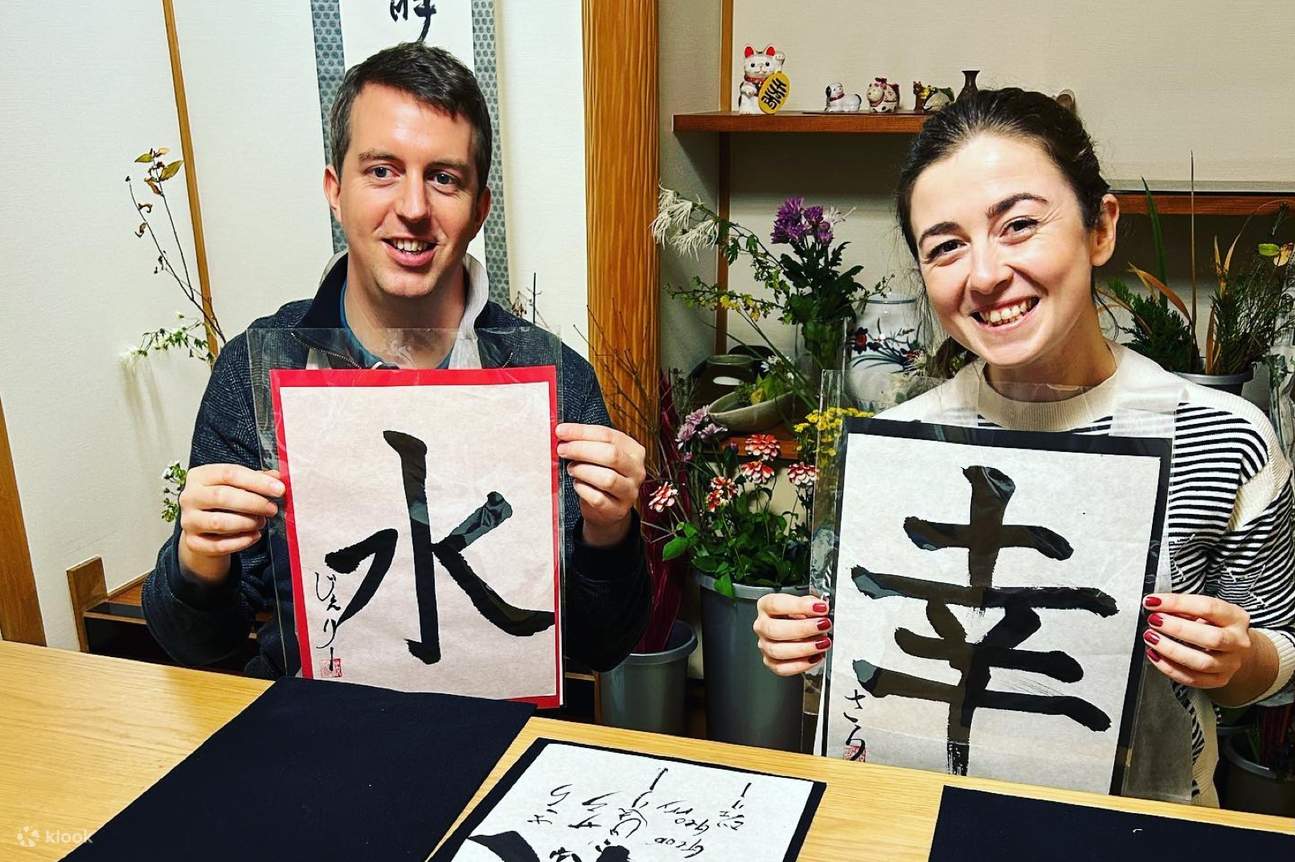
Private Japanese calligraphy class at local home


- Ballpoint pens and pencils are commonly used for letters and documents in Japan.
- Traditional calligraphy uses brushes and ink to express Chinese and kana characters artistically.
- It is valued for brushwork, ink gradation, and overall aesthetic balance.






What to expect
Calligraphy originated in China, but it began in Japan in the 6th to 7th centuries in earnest, along with the introduction of brushes, ink, and paper-making techniques from China. At that time, it was considered essential knowledge for Japanese leaders, including nobles and warriors. Calligraphy encompasses various styles of writing. By learning calligraphy, one can understand the significance of each stroke in writing a character with care, as well as the meaning behind the brushstrokes.



Good to know
-This private class is held at a local home, offering a quiet and authentic Japanese atmosphere you won’t find in tourist areas.
All tools and materials are provided, so you can join empty-handed.
Wear comfortable clothes, as you will be seated on the floor during the lesson.
Your instructor will carefully guide you step by step, making this class suitable for complete beginners.
You can take your finished calligraphy work home as a unique souvenir of your time in Japan.
Feel free to ask questions about Japanese culture and daily life during the class.
Reviews
Contact us
You might also like...
Kyoto Kimono & Gion Private Photography Tour
Kyoto: Japanese Calligraphy Experience in a Traditional Studio
Kyoto Yuzen Dyeing Art in a Traditional Tatami Room【OKADA】
Kyoto City, Western Kyoto & Arashiyama:In-Depth 1-Day Cultural Tour
Dominique Bouchet Kyoto Le Teppanyaki - Teppanyaki in Kyoto, Higashiyama
Kyoto & Nara Full-Day Small Group Tour
[Spanish-guided] Kyoto Kinkakuji, Arashiyama & Otagi Nenbutsuji Half-Day Tour
Kyoto: Traditional Japanese Instrument Live Show & Experience