
Tokyo is not really one city, it's a stack of neighborhoods, and the one you book changes your entire trip. Sleep in Shinjuku and you're five minutes from late-night ramen and the busiest rail hub on the planet. Sleep in Asakusa and you're waking up to temple bells instead. It's an 11-hour flight from the West Coast, so you'll probably stay 5 to 10 nights, which makes getting this right worth the twenty minutes it takes.
This guide sorts Tokyo hotels by area first, then by budget, so you can filter on both at once. Every pick sits close to a Yamanote Line station, the loop that connects most of what you came to see. If you're still mapping out the wider trip, the Tokyo destination page is a good starting point.
Tokyo hotels at a glance
Hotel | Area | Tier | Nightly (2026 est.) | Nearest station |
|---|---|---|---|---|
Kimpton Shinjuku Tokyo | Shinjuku | Luxury | $330–$480 | Shinjuku |
Hotel Sunroute Plaza Shinjuku | Shinjuku | Mid-range | $130–$200 | Shinjuku (New South) |
Hotel Indigo Tokyo Shibuya | Shibuya | Luxury | $300–$450 | Shibuya |
Shibuya Excel Hotel Tokyu | Shibuya | Mid-range | $160–$240 | Shibuya (in-station) |
The Tokyo Station Hotel | Tokyo Station | Luxury | $400–$600 | Tokyo |
Aloft Tokyo Ginza | Ginza | Mid-upscale | $200–$300 | Higashi-ginza |
Henn na Hotel Premier Asakusa | Asakusa | Mid-range | $110–$170 | Tawaramachi |
APA Hotel Asakusa Ekimae | Asakusa | Budget | $70–$110 | Asakusa |
⚠️ Important Note: Rates are ballpark ranges for 2026 and swing hard with season. Late March cherry blossom weeks and the November foliage stretch are the two most expensive windows.
Which area should you stay in?
Deciding where to stay in Tokyo comes down to four areas, and each one suits a different kind of trip.
Shinjuku is the default answer for first-timers who want everything within reach. The station connects to almost every line you'll need, the nightlife in Golden Gai and Kabukicho runs late, and there's a dense mix of price tiers in a ten-minute radius.
Klook Tip: If you land at Narita, the Narita Express runs direct to Shinjuku, Shibuya, and Tokyo Station. Book a hotel on one of those three stops to save you a luggage transfer on day one.
Shibuya skews younger: shopping, music venues, the scramble crossing, and a food scene that stays open past midnight. Tokyo Station and Ginza work best if your days are built around museums, the Imperial Palace, and day trips by Shinkansen (bullet train). Asakusa trades convenience for character, with Senso-ji temple, old-school shopping streets, and the cheapest Tokyo accommodation of the four.
Shinjuku hotels: the transit-first pick
Nothing else in the city matches Shinjuku Station for raw connectivity. Narita Express, Odakyu lines toward Hakone, the Yamanote loop, and half a dozen subway lines all converge here, which means fewer transfers on every single outing.
Kimpton Shinjuku Tokyo by IHG (luxury)
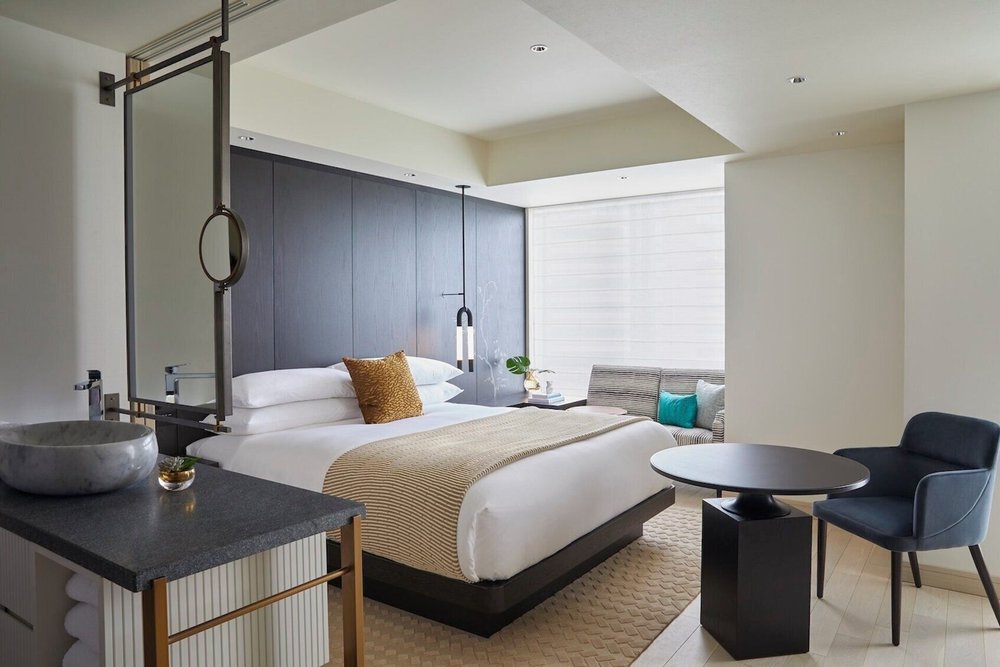
The Kimpton Shinjuku Tokyo sits just west of the station in a quieter pocket, which is rare around here. Rooms are design-forward rather than corporate, and the daily social hour is a nice touch when you've been on your feet since 8 AM.
You're roughly a seven-minute walk to Shinjuku Station and about 15 minutes to the Tokyo Metropolitan Government Building, whose free observation decks give you one of the best skyline views in the city without a ticket. Shinjuku Gyoen national garden is two subway stops away.
Address: 3-4-7 Nishi-Shinjuku, Shinjuku City, Tokyo 160-0023
Check-in: 3 PM | Check-out: 12 PM
Hotel Sunroute Plaza Shinjuku (mid-range)
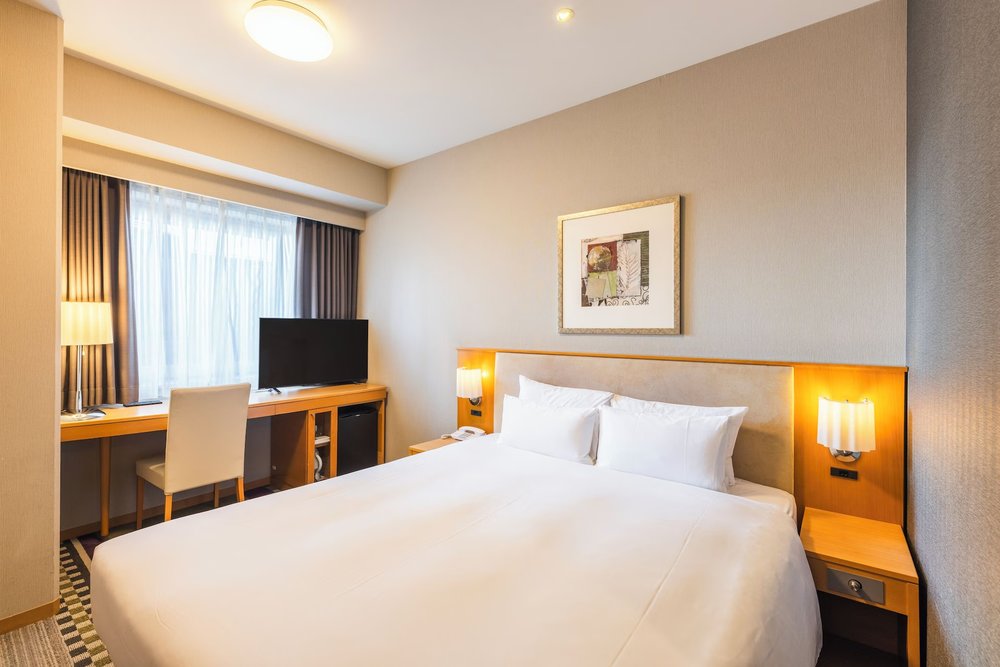
For value, Hotel Sunroute Plaza Shinjuku is one of the more reliable mid-range Shinjuku hotels. Rooms are compact in the usual Tokyo way, but the location does the heavy lifting: you're a two-minute walk from the New South exit, which drops you straight onto the Yamanote platforms.
That exit also puts Takashimaya Times Square and the Shinjuku Southern Terrace on your doorstep, and Yoyogi Park is one stop down the line. Breakfast here is a proper Japanese-Western buffet rather than a token pastry counter.
Address: 2-3-1 Yoyogi, Shibuya City, Tokyo 151-0053
Check-in: 2 PM | Check-out: 11 AM
Shibuya hotels: youth culture and late nights
Shibuya Station has been rebuilt into something far easier to use than it was a decade ago, and the area now has real hotel depth. Stay here if your list leans toward shopping, record stores, and eating at 11 PM.
Hotel Indigo Tokyo Shibuya by IHG (luxury)
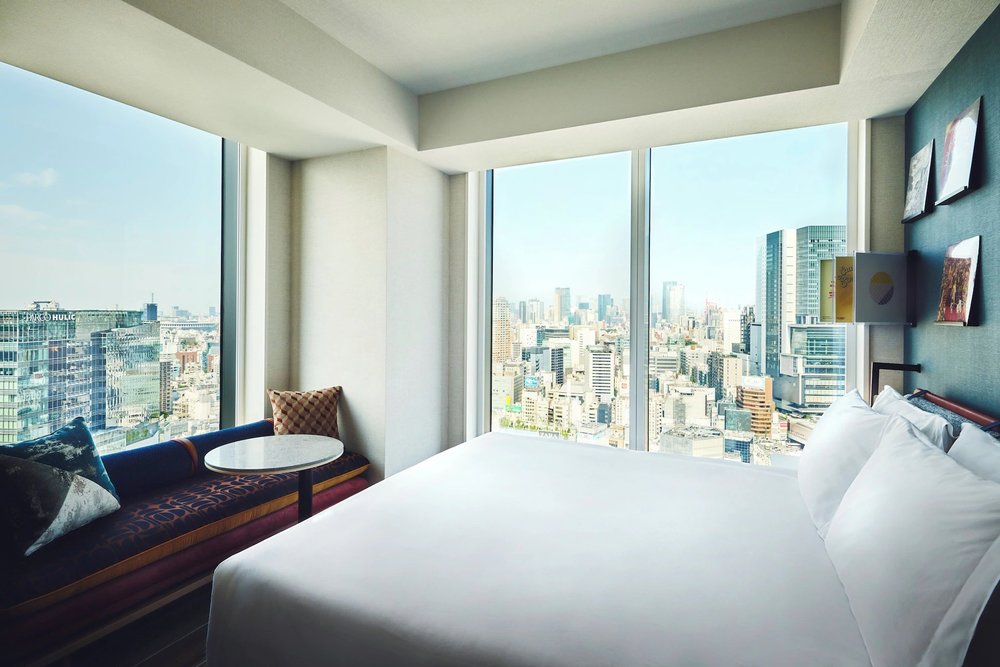
Hotel Indigo Tokyo Shibuya opened recently and leans into neighborhood detail, with artwork and design cues pulled from the surrounding streets. The rooftop bar is the draw, and the upper-floor rooms look out over the Shibuya skyline.
It's about a nine-minute walk to the scramble crossing and Shibuya Sky observation deck, with Meiji Jingu shrine and Harajuku's Takeshita Street a single stop north. It’s a good choice if you want an upscale base without the formality of a Ginza hotel.
Address: 3-4-9 Shibuya, Shibuya City, Tokyo 150-0002
Check-in: 3 PM | Check-out: 11 AM
Shibuya Excel Hotel Tokyu (mid-range)
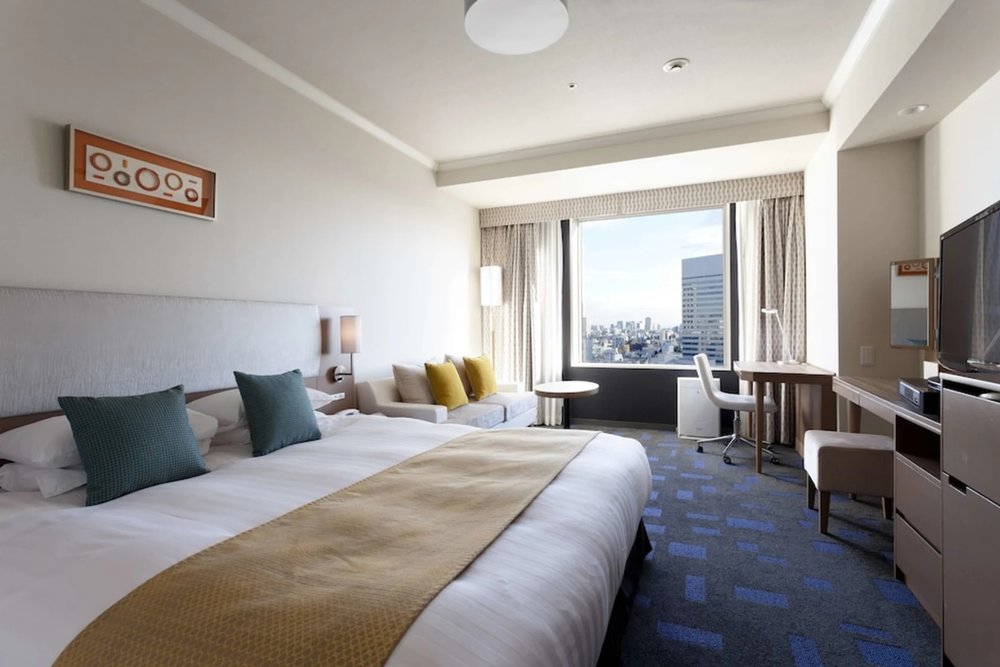
If you value never walking outside in the rain, Shibuya Excel Hotel Tokyu is built directly above the station inside the Mark City complex. You can roll a suitcase from the Yamanote platform to reception without stepping onto a sidewalk.
Rooms are straightforward and well kept, and the higher floors overlook the crossing itself. Shibuya Sky is a five-minute walk, Yoyogi Park about 12, and the Hachiko statue is more or less downstairs.
Address: 1-12-2 Dogenzaka, Shibuya City, Tokyo 150-0043
Check-in: 3 PM | Check-out: 11 AM
Tokyo Station hotels and Ginza: central and upscale
Tokyo Station hotels make the most sense if you're planning day trips to Kyoto, Nikko, or Hakone, since the Shinkansen platforms are right downstairs. Ginza next door gives you department stores, sushi counters, and an easy walk to the Imperial Palace grounds.
The Tokyo Station Hotel (luxury)
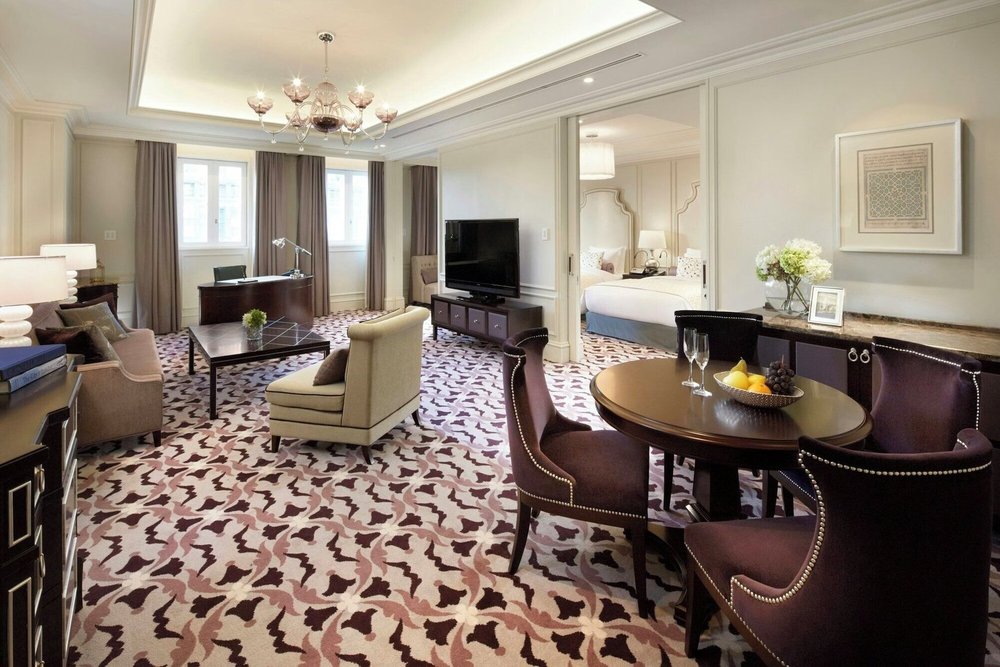
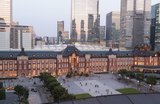
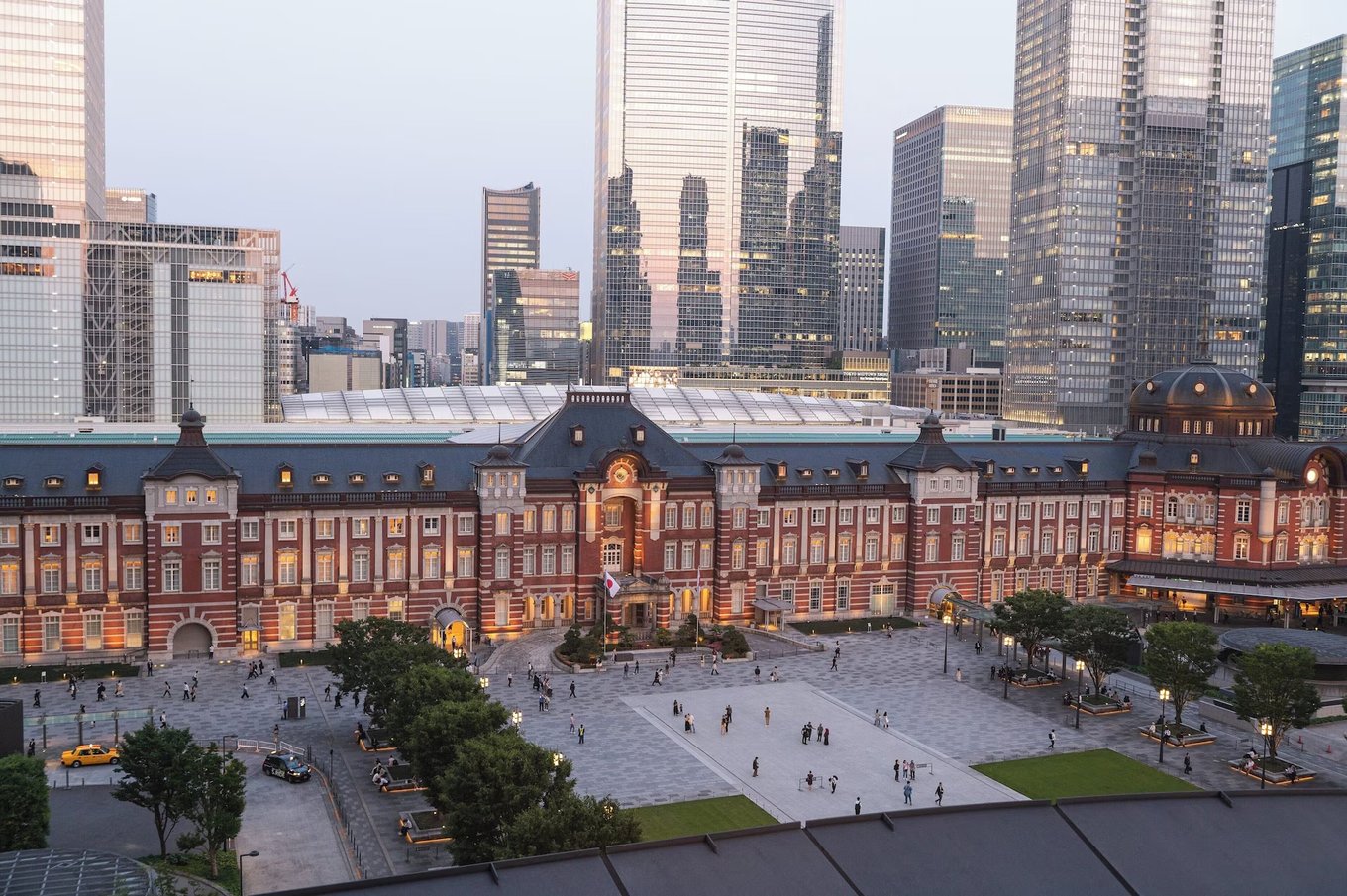
The Tokyo Station Hotel lives inside the restored 1914 red-brick Marunouchi building, and the European-style interiors are a real change of pace from modern Tokyo accommodation. Breakfast in the Atrium is one of the best hotel breakfasts you'll have in Japan.
You're a 10-minute walk from the Imperial Palace East Gardens and about 15 from Ginza's main shopping stretch. Nothing else puts you this close to long-distance rail while still feeling like somewhere you'd book for its own sake.
Address: 1-9-1 Marunouchi, Chiyoda City, Tokyo 100-0005
Check-in: 3 PM | Check-out: 11 AM
Aloft Tokyo Ginza (upscale)
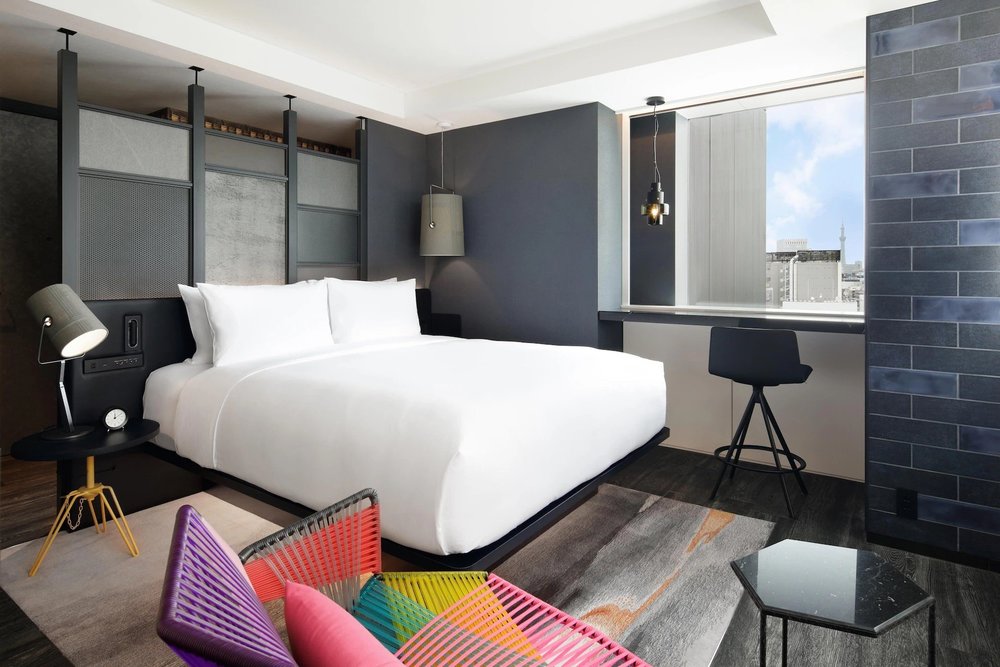
Aloft Tokyo Ginza is the more casual central option, with a rooftop bar and rooms that run a bit larger than the Tokyo average. You're paying well under the Marunouchi luxury tier and still sleeping in the middle of everything.
Higashi-ginza Station is a two-minute walk, which puts Tsukiji Outer Market five minutes away by train and the Kabukiza Theatre practically next door. Ginza Six and the main crossing are an easy 10-minute stroll.
Address: 6-14-3 Ginza, Chuo City, Tokyo 104-0061
Check-in: 3 PM | Check-out: 12 PM
Asakusa: the best value hotels in Tokyo
Asakusa is where your money goes furthest without pushing you out to the suburbs. The trade-off is a 25 to 35 minute ride over to Shinjuku or Shibuya.
Henn na Hotel Premier Tokyo Asakusa Tawaramachi (mid-range)
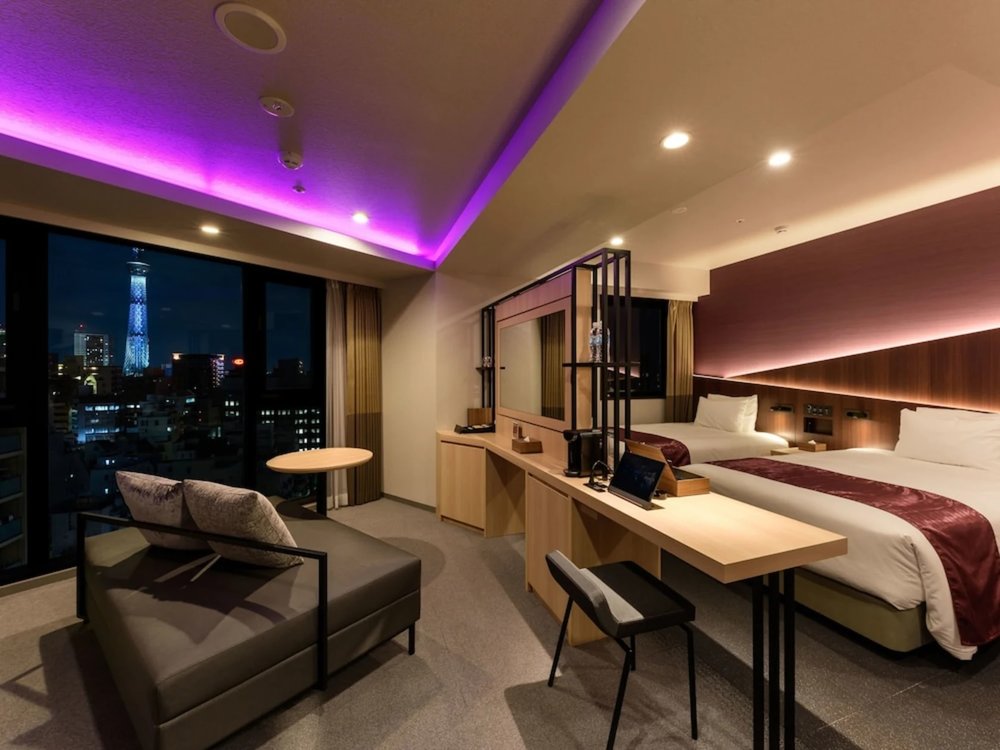
Henn na Hotel Premier Asakusa is the robot-staffed chain, and the novelty check-in is fun once. What actually matters is that rooms are newer and better soundproofed than most Tokyo hotels at this price.
Senso-ji temple and Nakamise shopping street are about eight minutes on foot, and Kappabashi "Kitchen Town" (where restaurants buy their knives and plastic food models) is even closer. Tokyo Skytree is one short train ride across the river.
Address: 2-2-4 Kaminarimon, Taito City, Tokyo 111-0034
Check-in: 3 PM | Check-out: 11 AM
APA Hotel Asakusa Ekimae (budget)
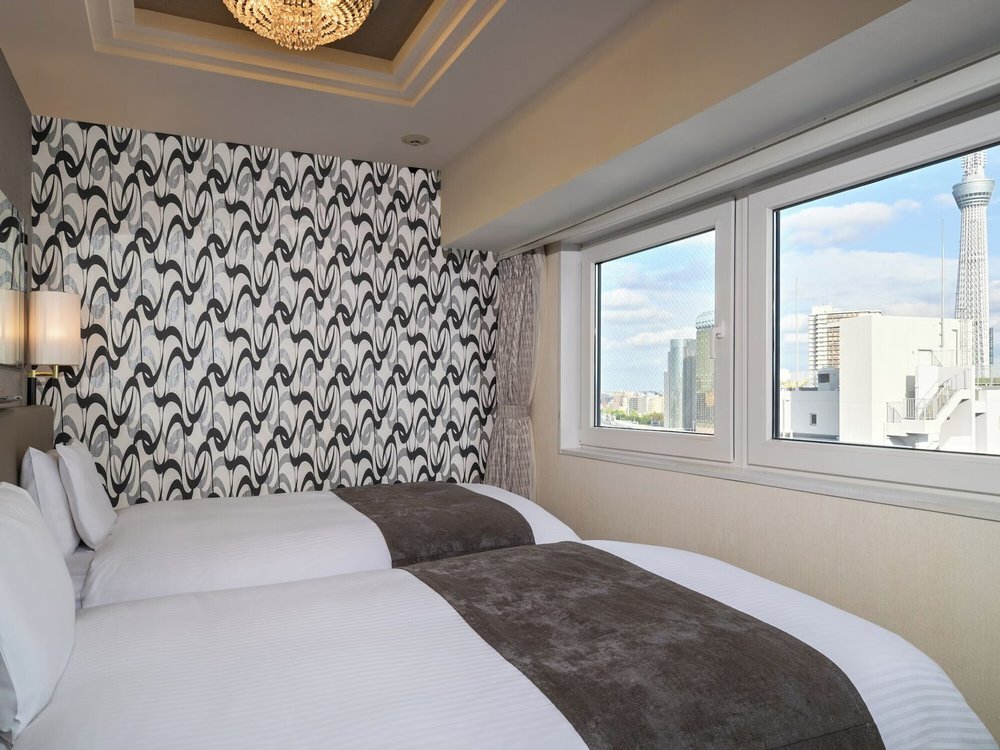
Of all the budget hotels Tokyo has on offer, APA Hotel Asakusa Ekimae is the one you'll keep coming back to. Rooms are tiny but spotless, and several APA locations have a communal bath, which beats a cramped shower after 20,000 steps.
You're directly outside Asakusa Station, so the Ginza Line gets you to Ueno in five minutes and Ginza in about 17. Senso-ji is a three-minute walk and the Sumida River path starts just behind the hotel.
Address: 2-1-13 Kaminarimon, Taito City, Tokyo 111-0034
Check-in: 3 PM | Check-out: 11 AM
Booking Tokyo hotels 2026: where to look
Booking direct with a hotel sometimes wins on loyalty points, and it's worth a quick price check if you're already in a chain program. For everything else, Klook tends to be the simpler call: rates show the all-in total up front rather than revealing taxes and service charges at the last screen, and free-cancellation options are labeled clearly on the room list.
The bigger advantage is bundling. Since you'll likely be booking a Skytree ticket, a Shinkansen pass, or an airport transfer anyway, keeping the hotel and the activities in one place makes changes far less painful when your plans shift mid-trip. If you're still weighing neighborhoods, the Tokyo where to stay guide goes deeper on each district.
Klook Tip: Book refundable rates for late March and early April. Cherry blossom forecasts move by a week or more, and flexible bookings let you shift dates without losing the room.
FAQs about Tokyo hotels
What is the best area to stay in Tokyo for first-time visitors?
Shinjuku, for the transit access alone. Every major line runs through it, so you spend less time transferring and more time actually out. Shibuya is the close second if nightlife and shopping rank higher than convenience.
Is Shinjuku or Shibuya better to stay in?
Shinjuku has better rail connections and a wider price range, including more genuine budget options. Shibuya is more walkable, younger in feel, and slightly easier to navigate. Pick Shinjuku for efficiency, Shibuya for atmosphere.
Where's the best place to book hotels in Tokyo?
Klook shows all-in pricing with cancellation terms on the room list and lets you bundle the stay with tours, rail passes, and transfers. Check the hotel's own site too if you hold elite status with that chain.
What are the best budget hotels in Tokyo?
Asakusa and Ueno hold the best value. APA Hotel Asakusa Ekimae is the most consistent pick under $110 a night, and Henn na Hotel Premier Asakusa is worth the small step up for newer rooms.
Is it better to stay near Tokyo Station or in a neighborhood like Shibuya?
Stay near Tokyo Station if you're taking day trips by bullet train or focusing on museums and the Imperial Palace. Choose Shibuya if your evenings matter more than your departures.
How much should I expect to pay for a hotel in Tokyo in 2026?
Budget rooms start around $70 to $110 a night, mid-range runs $130 to $240, and luxury begins near $300 and climbs past $600 in peak weeks. Booking two to three months out usually lands you the better end of each range.
Related blogs

What is Klook?
Klook is a leading pan-regional experiences platform in Asia Pacific, purpose built to digitalize experiences and make them accessible to every traveler.
Our mission is to build the digital infrastructure for the global experience economy — empowering merchants to share their passions and travelers to discover the heartbeat of each destination. We operate a mobile-first, curated platform featuring diverse experiences across global destinations.