
A lively city located in Japan’s Kansai region, Osaka is the place to be if you’re looking to let loose. But with so much to do in and around Osaka, you might find yourself spending too much on transportation if you’re not careful.
The best way to get around Osaka on a budget is the Osaka Metro combined with an IC card like ICOCA or Suica. For most travelers, paying per ride with an IC card offers the lowest cost for typical sightseeing, while an Osaka Metro Pass makes sense if you're packing in four or more subway trips per day.
This guide compares every major transport option by cost, explains which passes are actually worth it in 2026, and helps you navigate key stations without the confusion!
Osaka Transport Options: Cost Comparison
Choosing the cheapest transport in Osaka depends on how much you're moving around each day. Here's how the main options stack up:
Transport Option | Typical Cost | Best For |
|---|---|---|
Osaka Metro (per ride) | ¥180–¥380 | Short trips, flexible schedules |
IC Card (ICOCA/Suica) | Pay-as-you-go | Most travelers, multi-city trips |
Osaka Metro Pass (1-day) | ~¥820 | Heavy sightseeing days (4+ rides) |
Osaka Amazing Pass | ~¥2,800 (1-day) | Attraction-heavy itineraries |
JR Osaka Loop Line | ¥140–¥220 | Reaching JR-connected stations |
City Bus | ¥210 flat fare | Short hops, local neighborhoods |
Taxi | ¥500+ starting | Late nights, groups with luggage |
Osaka Metro and Subway: Your Budget-Friendly Option
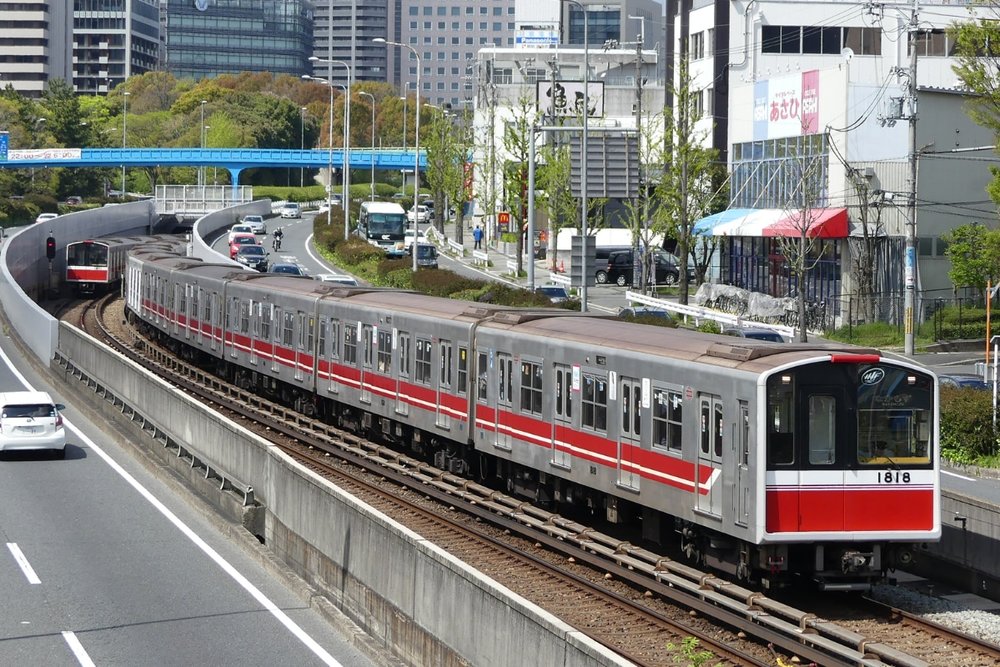
The Osaka Metro is the most affordable way to explore the city. With eight color-coded lines covering central Osaka, you can reach nearly every major tourist spot without switching to other networks.
The lines you'll use most as a tourist include the Midosuji Line (red), which runs north-south through Umeda, Shinsaibashi, Namba, and Tennoji. The Chuo Line (green) connects Osaka Station to Osaka Castle, while the Sakaisuji Line (brown) is handy for reaching Nipponbashi and connecting to trains heading to Nara.
Fares range from ¥180 to ¥380 depending on distance, and you can pay with an IC card or purchase single tickets at station machines. If you're planning a busy sightseeing day, the Osaka Metro Pass offers unlimited rides for around ¥820 per day, worth it if you're making four or more trips.
IC Cards vs. Travel Passes: Which Saves You More?
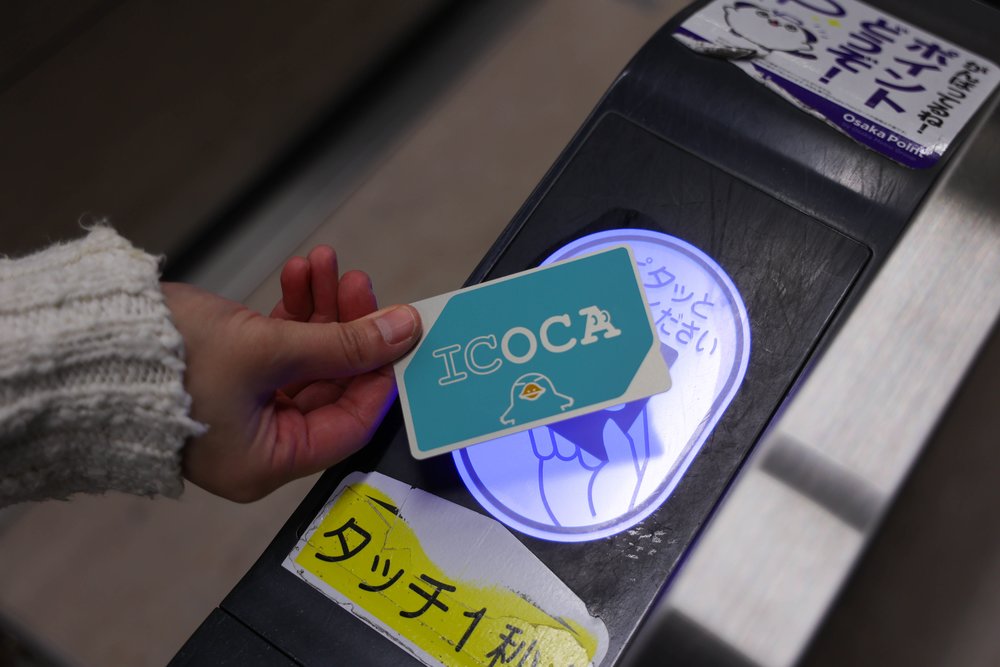
Just tap your ICOCA Card when you enter and exit any train station!
IC cards like ICOCA and Suica offer pay-as-you-go convenience, while travel passes provide unlimited rides for a fixed price. The right choice depends on your travel style and daily plans.
IC cards are rechargeable smart cards you tap at station gates. ICOCA is the Kansai region's card, but Suica cards from Tokyo work identically on Osaka Metro, JR lines, and most buses. You load money onto the card and fares are deducted automatically. For a detailed comparison of both cards, our ICOCA vs. Suica guide breaks down the differences.
Travel passes make sense when you're cramming in lots of transport. The Osaka Metro Pass pays off after four subway rides in a day. The Kansai Thru Pass covers non-JR trains and buses across Osaka, Kyoto, Nara, and Kobe—ideal if you're doing multiple day trips. You can explore all Kansai travel passes to find the best fit for your itinerary.
Here's a quick breakdown:
Option | Best For | Break-Even Point |
|---|---|---|
IC Card (ICOCA/Suica) | Light sightseeing, flexibility | No minimum—pay what you use |
Osaka Metro Pass | Metro-heavy days | ~4 rides per day |
Kansai Thru Pass | Multi-city day trips | 2–3 day trips |
If you're unsure, start with an IC card. You can always buy a day pass later if your plans change. For travelers exploring beyond Osaka, the Kansai Thru Pass destination guide shows exactly where the pass is valid.
Navigating Key Stations: Osaka, Shin-Osaka, and Namba
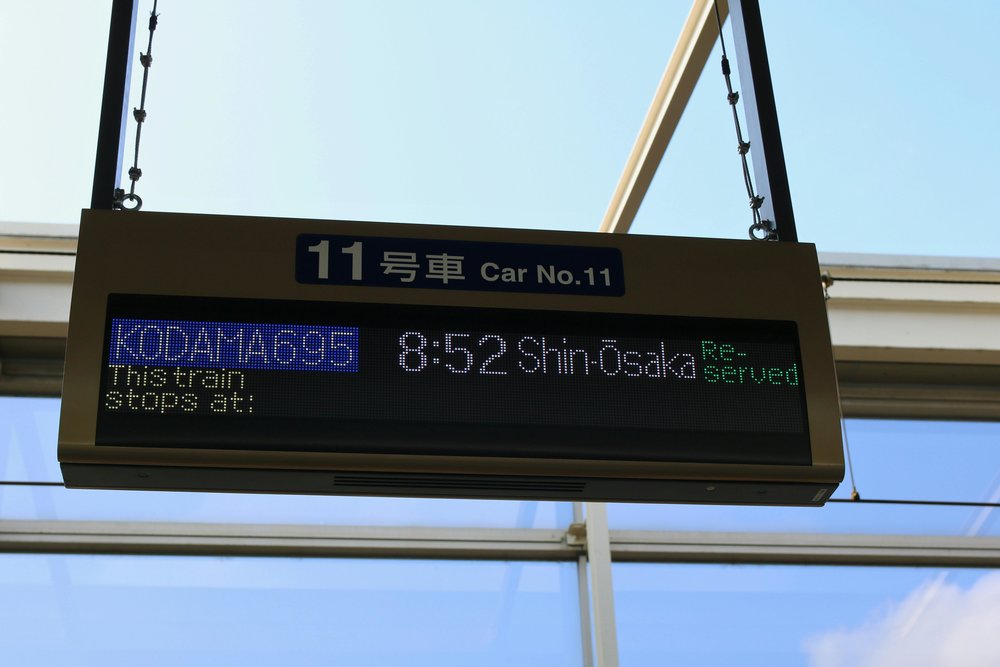
Shin-Osaka station | Photo Credits: Bruna Santos on Pexels
Osaka's major stations can feel overwhelming at first, but understanding what each one connects to makes navigation much simpler.
Osaka Station (also called Umeda) is the city's main JR hub in the north. It connects to the Osaka Loop Line, JR lines to Kyoto and Kobe, and multiple subway lines. The surrounding Umeda area is a massive shopping and entertainment district. If you're using JR trains, this is likely your main transfer point.
Shin-Osaka Station is where the Shinkansen (bullet train) arrives. It's located north of central Osaka and connects to the Midosuji subway line, making it easy to reach Namba or Umeda. If you're arriving from Tokyo by Shinkansen or heading to Kyoto, you'll pass through here.
Osaka Namba Station sits in the heart of the Minami district, surrounded by Dotonbori, Shinsaibashi, and endless food options. Multiple rail operators serve Namba—Osaka Metro, Nankai Railway (for Kansai Airport), and Kintetsu (for Nara). The station names vary slightly by operator (Namba, Osaka-Namba, Nankai Namba), but they're all connected underground.
Klook Tip: Download an Osaka train map before you arrive. Having the metro and JR lines visible on your phone saves time when you're standing in a busy station trying to figure out which platform you need.
Frequently Asked Questions
What is the best way to get around Osaka on a budget?
The Osaka Metro combined with an IC card like ICOCA or Suica is the cheapest way to get around Osaka for most travelers. You pay only for the rides you take, with fares typically ranging from ¥180 to ¥380 per trip. If you're planning four or more subway rides in a single day, an Osaka Metro Pass offers better value with unlimited rides for around ¥820.
Can I use a Suica card on the Osaka Metro?
Yes, Suica cards work on the Osaka Metro, JR lines, buses, and most other transit systems in Osaka. Japan's major IC cards are interoperable nationwide, so a Suica purchased in Tokyo functions identically to an ICOCA in Kansai. Just tap at the gates and fares are deducted automatically.
What is the Osaka Metro and which lines do tourists use most?
The Osaka Metro is the city's subway network, consisting of eight color-coded lines covering central Osaka. Tourists most frequently use the Midosuji Line (red) for Umeda, Namba, and Tennoji, the Chuo Line (green) for Osaka Castle, and the Sakaisuji Line (brown) for connections toward Nara. The system is clean, punctual, and easy to navigate with English signage.
Is the Osaka Metro Pass worth it for tourists in 2026?
The Osaka Metro Pass is worth it if you're making four or more subway trips in a day. At around ¥820 for unlimited daily rides, it pays for itself quickly on busy sightseeing days. For lighter travel days or flexible schedules, paying per ride with an IC card is usually cheaper.
How do you get from Kyoto to Osaka by train?
The cheapest option is the Hankyu Railway from Kyoto-Kawaramachi to Osaka-Umeda, costing around ¥400 and taking about 45 minutes. JR trains between Kyoto Station and Osaka Station take roughly 30 minutes for ¥570. Both routes run frequently throughout the day, making spontaneous travel easy.
What is the Osaka Loop Line and how is it different from the Metro?
The Osaka Loop Line is a JR railway that circles central Osaka, connecting major stations like Osaka, Tennoji, and Nishikujo (for Universal Studios). Unlike the Osaka Metro, which is a subway system operated by Osaka Metro Co., the Loop Line is above ground and operated by JR West. You can use IC cards on both, but JR passes only cover the Loop Line, not the Metro.
What is the cheapest way to travel from Osaka to Nara?
The Kintetsu Railway from Osaka Namba Station to Kintetsu Nara Station is the cheapest option, costing around ¥680 for a 40-minute express ride. JR trains from Osaka Station to JR Nara Station take about 50 minutes at a similar price. Kintetsu drops you closer to Nara's main attractions, making it the preferred choice for most visitors.
What is Klook?
Klook is a leading pan-regional experiences platform in Asia Pacific, purpose built to digitalize experiences and make them accessible to every traveler.
Our mission is to build the digital infrastructure for the global experience economy — empowering merchants to share their passions and travelers to discover the heartbeat of each destination. We operate a mobile-first, curated platform featuring diverse experiences across global destinations.