
You’ve probably got a tab open with about forty Kyoto spots and a trip that’s only a few days long. The top attractions in Kyoto are scattered across the whole city, so the order you tackle them in matters as much as the list itself.
Most flights from the US land in Tokyo or Osaka first, which means you’ll need a train to reach Kyoto and every day there should count. This guide ranks the things to see in Kyoto, starting with the two you’ve definitely seen in photos.
1. Fushimi Inari Shrine
Fushimi Inari Shrine
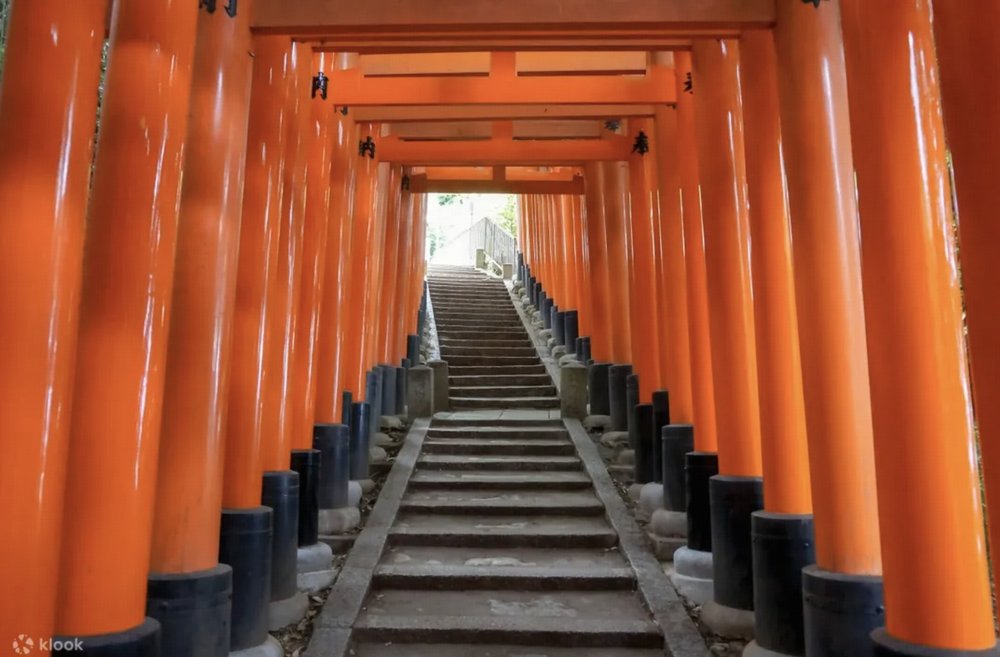
The first gates feel like a movie set, and then the crowds fall away and the trail goes quiet. Fushimi Inari Taisha is free, open 24 hours, and five minutes by train from Kyoto Station, so it’s the best value among the top attractions in Kyoto. The famous tunnel of vermilion torii (Shinto gates) starts right behind the main hall. Most people turn around after 15 or 20 minutes, which is your cue to keep walking.
About 30 to 45 minutes up, you’ll reach the Yotsutsuji viewpoint with the whole city laid out below. The full loop to the summit takes 2 to 3 hours round trip and gets steep, so wear real shoes. The upper trail is dark after sunset, so bring a flashlight if you go at night.
- Getting there: JR Nara Line to Inari Station, 5 minutes from Kyoto Station (about $1)
- Cost: Free, open 24 hours
Address: 68 Fukakusa Yabunouchicho, Fushimi Ward, Kyoto 612-0882, Japan
Klook Tip: Go early in the morning or after dinner for the thinnest crowds.
2. Kinkaku-ji Golden Pavilion
Kinkaku-ji Golden Pavilion | Image Credit: Putra Mahirudin via Unsplash
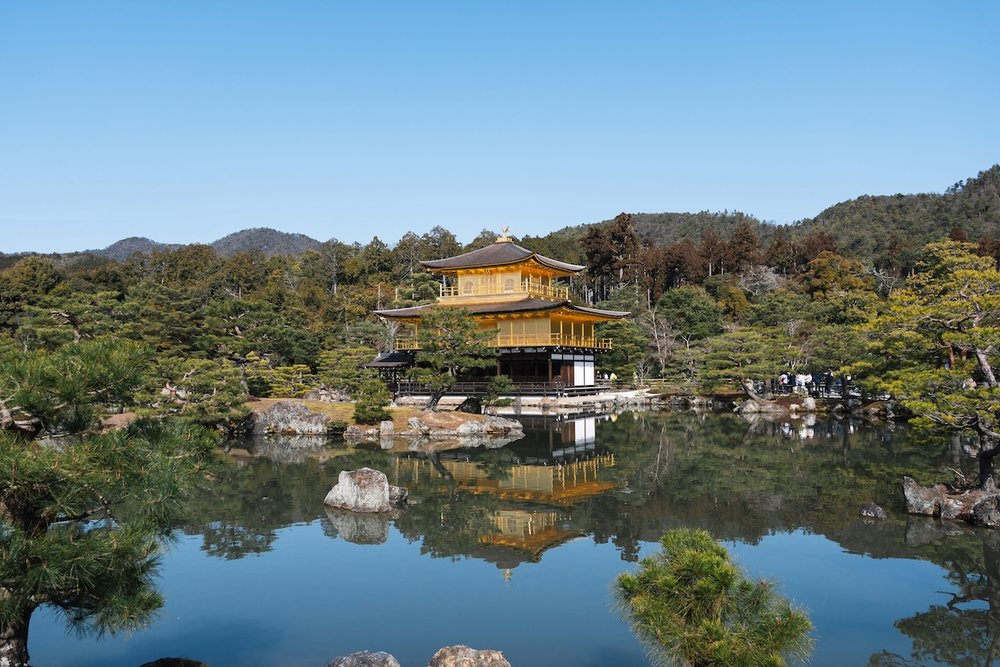
Nothing prepares you for how bright the Kinkaku-ji Golden Pavilion looks against its dark pond. Kinkaku-ji Golden Pavilion costs 500 yen (about $3) and opens at 9 a.m. daily. The top two floors are covered in gold leaf, but you can’t go inside, so this is a walk-the-path-and-photograph stop. Allow 45 to 60 minutes.
It’s one of the busiest Kyoto temples, and the crowds peak between 10 a.m. and 4 p.m. Arrive at opening and you’ll get a much calmer view. City bus 101 or 205 from Kyoto Station takes about 40 minutes and costs 230 yen (about $1.50). If you want a quieter follow-up, Ryoan-ji’s rock garden is a 15-minute walk away.
- Getting there: City bus 101 or 205 to Kinkakuji-michi stop, then a 5-minute walk
- Cost: 500 yen (about $3), open 9 a.m. to 5 p.m.
Address: 1 Kinkakujicho, Kita Ward, Kyoto 603-8361, Japan
3. Arashiyama Bamboo Grove
Arashiyama Bamboo Grove
Timing decides everything at the Arashiyama Bamboo Grove. The grove is free and open 24 hours, and the walk takes about 30 minutes. Go before 8 a.m. and you’ll mostly have the path to yourself; after 10, expect a slow shuffle. It’s short, so pair it with the Togetsukyo Bridge and a stroll along the river.
If you’d like a guide to find the quieter corners, the morning private bamboo grove tour is a good option.
- Getting there: JR San-in Line to Saga-Arashiyama Station, about 20 minutes from Kyoto Station
- Cost: Free, open 24 hours
Address: Sagatenryuji Susukinobabacho, Ukyo Ward, Kyoto 616-8394, Japan
4. Tenryu-ji Temple
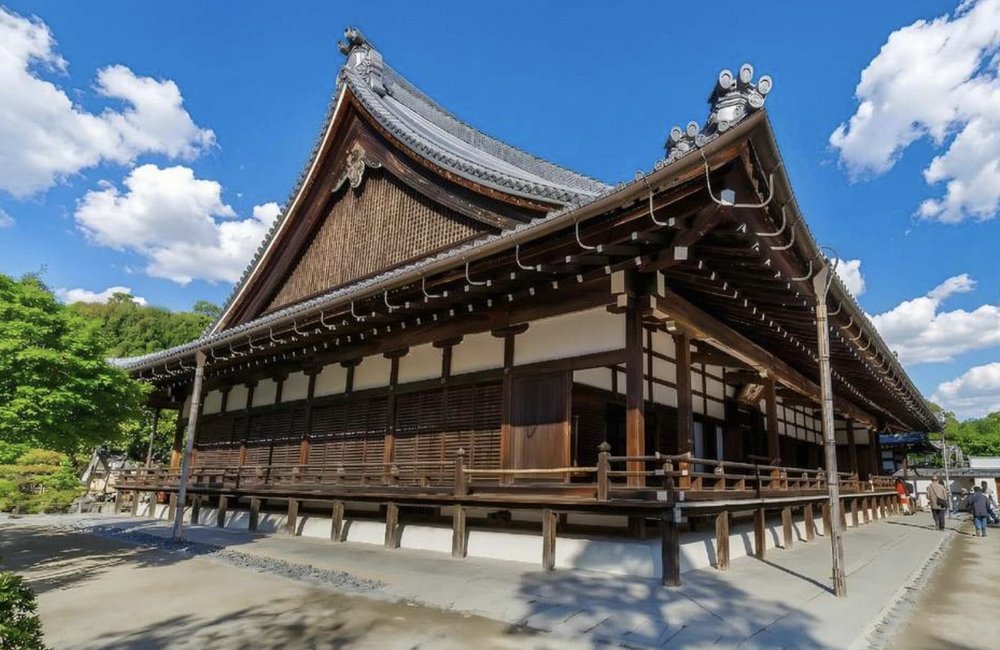
Tenryu-ji Temple
The grove gets the photos, but the best stop in Arashiyama sits right beside it. Tenryu-ji is a UNESCO-listed Zen temple with a 14th-century pond garden, and the garden ticket is about $3 (500 yen). Its back gate opens straight onto the bamboo path, so you can link the two in one walk.
Short on time? This one-day iconic sights tour covers Arashiyama, Kinkaku-ji, and Fushimi Inari in a single day. It suits anyone who’d rather not juggle trains and buses.
- Getting there: About 10 minutes on foot from Saga-Arashiyama Station
- Cost: Garden ticket about $3 (500 yen)
Address: 68 Sagatenryuji Susukinobabacho, Ukyo Ward, Kyoto 616-8385, Japan
5. Iwatayama Monkey Park
This stop earns its place with the view, not just the monkeys. Iwatayama Monkey Park is a climb of roughly 30 minutes, and entry runs a few dollars. Wild macaques roam free at the top, with Kyoto spread out below.
The park sells apple slices, and you feed the monkeys through the mesh of a small hut. It’s a real hill, so skip it if stairs are tough.
- Getting there: About 7 minutes on foot from Arashiyama Station, then the climb
- Cost: A few dollars
Address: 61 Arashiyama Nakaoshitacho, Nishikyo Ward, Kyoto 616-0004, Japan
6. Gion district
Gion works best at dusk, when the lanterns come on and you can hear wooden sandals on stone. The Gion district is Kyoto’s best-known geisha quarter, and Hanamikoji Street is the public lane to walk. Early evening is when geiko (Kyoto’s word for geisha) and maiko (apprentices) head to appointments, though sightings are never guaranteed. Pontocho, a narrow lantern-lit alley by the Kamo River, is a short walk west and a good spot for dinner.
Stay on Hanamikoji and the main streets, because photographing the private alleys can bring a 10,000 yen fine (about $63). If you want the backstory, the Gion night tour with kaiseki runs about $276 for three hours and includes a ten-course kaiseki (traditional multicourse dinner). It’s a splurge, and the host doesn’t guarantee you’ll see a geisha.
- Getting there: Keihan Line to Gion-Shijo Station, then about 5 minutes on foot
- Cost: Free to walk the public streets
Address: Hanamikoji Street, Gionmachi Minamigawa, Higashiyama Ward, Kyoto 605-0074, Japan
7. Kiyomizu-dera
Kiyomizu-dera hangs off a hillside, and the view from its wooden stage is the reason to climb. Admission is 500 yen (about $3), and the temple dates back to 778. The stone lanes of Sannenzaka and Ninenzaka lead down toward Gion, so it pairs well with an evening there.
Plenty of Kyoto attractions sit far apart, so the Kiyomizu-dera day tour can save you the bus maps. It suits first-timers who’d rather not decode routes.
- Getting there: City bus 100 or 206 to Gojozaka stop, about 15 minutes from Kyoto Station, then a 10-minute uphill walk
- Cost: 500 yen (about $3), open 6 a.m. to 6 p.m.
Address: 294 Kiyomizu 1-chome, Higashiyama Ward, Kyoto 605-0862, Japan
Kyoto day trips: Nara and Uji
Kyoto sits in the middle of Kansai, which makes it an easy base for the rest of Japan and for Kyoto day trips. Nara is about 45 minutes away on the JR Miyakoji Rapid (710 yen, roughly $4.50), with the giant Todai-ji Buddha and free-roaming deer. Uji, famous for matcha, is just 17 to 30 minutes on the JR Nara Line.
To cover both in one day, this Kyoto and Nara day tour starts around $376 and runs about 9 hours. It includes Todai-ji in Nara, Byodo-in in Uji, and a matcha-making session. That’s the pricier route, so take the train if you’re watching your budget.
FAQs about top attractions in Kyoto
What is Kyoto most famous for?
Kyoto is most famous for its temples, shrines, and the Gion geisha district. A UNESCO World Heritage listing covers 17 historic sites in and around the city, including Kinkaku-ji, Kiyomizu-dera, and Tenryu-ji.
How many days do you need in Kyoto?
Three days is the sweet spot for the top attractions in Kyoto. Use one day for the east side (Kiyomizu-dera and Gion), one for Fushimi Inari and Arashiyama, and one for Kinkaku-ji or a day trip.
What is the best time of year to visit Kyoto?
Late March to early April (cherry blossoms) and mid-November to early December (fall color) are the best-looking seasons, and the busiest. Winter is quieter, and Kinkaku-ji with snow on its roof is worth a cold morning.
Is Fushimi Inari Shrine free to visit?
Yes, Fushimi Inari Shrine is free and open 24 hours a day. Your only cost is the train, about $1 each way from Kyoto Station.
What is the best way to get around Kyoto?
Combine trains and city buses, since the subway has only two lines. Trains reach Fushimi Inari and Arashiyama, while buses cover Kinkaku-ji and Kiyomizu-dera, and a rechargeable IC card works on both.
Is Kyoto worth visiting if you’ve already been to Tokyo?
Yes, because Kyoto feels like a different trip entirely, with temples and old streets instead of skyscrapers. It’s about 2 hours 15 minutes from Tokyo on the Nozomi bullet train, around $85 each way.
Ready to plan your Kyoto trip?
Your first morning could be a 7 a.m. train to Inari Station, nearly empty gates, and breakfast by 9. From there, the rest of the top attractions in Kyoto fall into place one day at a time. Pick your must-sees, then browse Kyoto tours and tickets on Klook to lock in your first day.
Related guides
What is Klook?
Klook is a leading pan-regional experiences platform in Asia Pacific, purpose built to digitalize experiences and make them accessible to every traveler.
Our mission is to build the digital infrastructure for the global experience economy — empowering merchants to share their passions and travelers to discover the heartbeat of each destination. We operate a mobile-first, curated platform featuring diverse experiences across global destinations.