Kyoto's real hidden gems, at a glance
Kyoto's most-searched hidden gems aren't secret so much as inconvenient: a 20-minute walk past the bamboo grove everyone stops at, a bathhouse with no sign marking it as a tourist stop, a temple that only opens twice a year. Otagi Nenbutsuji, Funaoka Onsen, Honen-in, Ohara's Sanzen-in, and Ruriko-in each get skipped for a specific reason: distance, disguise, or a full itinerary.
Spot | Area | Why it's overlooked | Entry | Hours |
|---|
Otagi Nenbutsuji Temple | Arashiyama (north) | 20-min walk past the bamboo grove | ¥300–400 | ~8:00 AM–4:30 PM |
Funaoka Onsen | Kita Ward | Looks like a local bathhouse, not a sight | ¥430 adults | 3:00 PM–1:00 AM (8 AM Sun) |
Honen-in Temple | Philosopher's Path | Thatched gate looks like a private home | Free (grounds) | 6:00 AM–4:00 PM |
Sanzen-in, Ohara | North Kyoto | About an hour by bus from downtown | ¥700 adults | 9:00 AM–5:00 PM (season-dependent) |
Ruriko-in | Yase | Open ~3 months a year total | ¥2,000 (autumn) | Seasonal only |
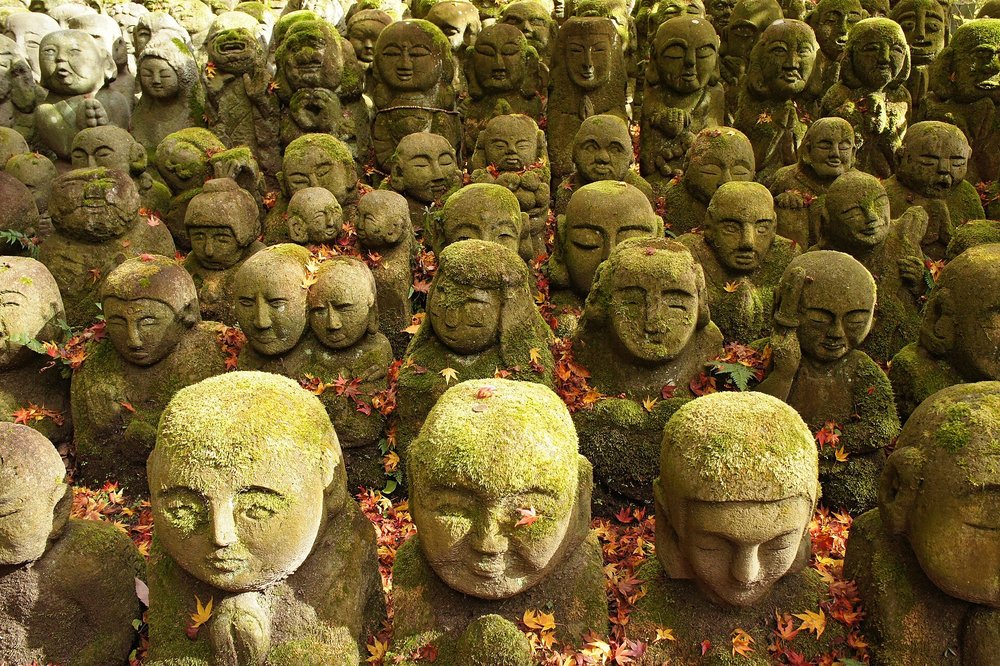
Otagi Nenbutsuji Temple: 1,200 stone statues nobody else walks to
Otagi Nenbutsuji sits about 20 minutes on foot past Arashiyama's bamboo grove and monkey park, close enough that most Arashiyama day-trippers could easily add it, far enough that very few do. That's the whole reason it stays quiet: everyone stops at the bamboo, takes their photos, and turns back toward the station.
What's waiting past that point is 1,200 rakan statues, hand-carved by ordinary visitors between 1981 and 1991 under the guidance of head priest and sculptor Kocho Nishimura. No two look alike: some are laughing, some are napping, a few are holding drinks. The effect feels more like a community art project than a formal temple visit.
You can walk here from JR Saga-Arashiyama Station in about 20–25 minutes, take a taxi (roughly 5 minutes, ~¥1,000), or catch Kyoto Bus 64, 74, 84, or 94 to the Otagi Dera Mae stop. Entry runs ¥300–400 depending on the booking platform (Klook lists it at ¥400, free for kids under 15). Weekdays, plus the spring and autumn foliage windows, are the best times to go if you want the statues mostly to yourself.
📍 Address: 2-5 Sagatoriimoto Fukatanicho, Ukyo Ward, Kyoto 616-8439, Japan
🕐 Hours: roughly 8:00 AM–4:30 PM daily
🎫 Entry: ¥300–400 (free for children under 15)
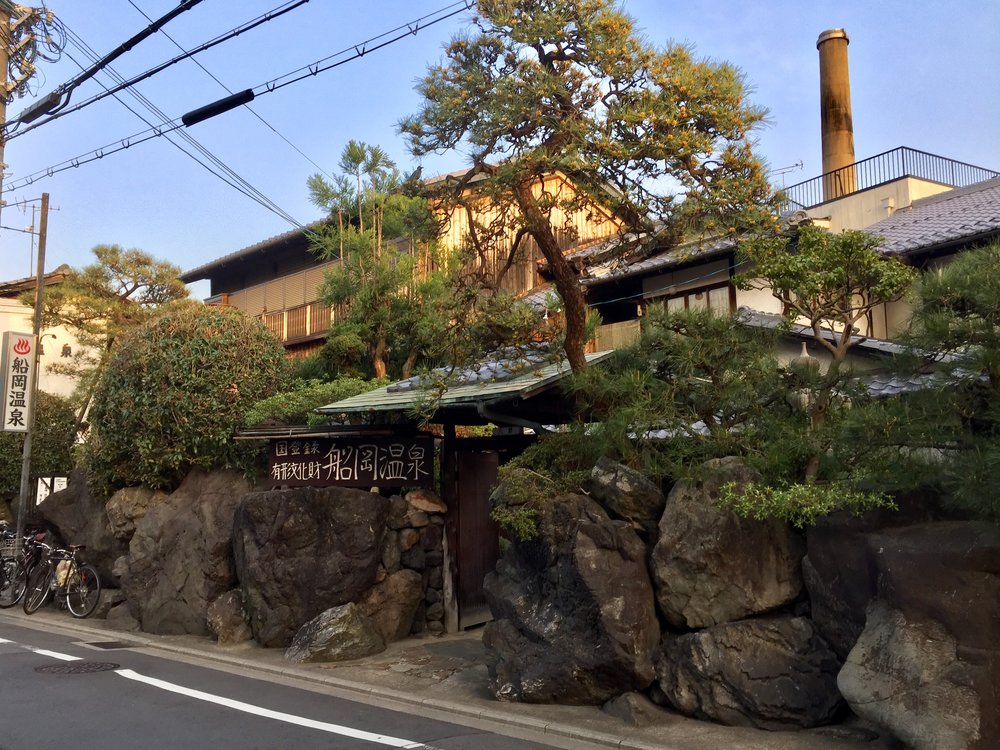
Funaoka Onsen: a 1923 neighborhood bathhouse most visitors never think to enter
Funaoka Onsen doesn't look like a tourist attraction, because it isn't trying to be one, it's a working neighborhood sento in Kita Ward, a few minutes from Kinkaku-ji, that's been drawing local bathers since 1923. It was designated a national tangible cultural property in 2003, making it one of the oldest operating bathhouses in Japan and the first of its kind in Kyoto.
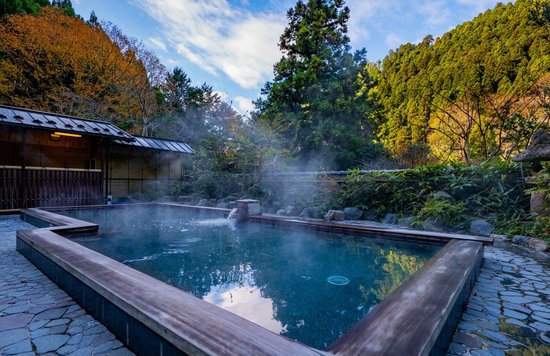
The changing rooms still have their original carved wooden ranma transom panels, and the baths include a wooden tub, an electric bath, an outdoor rotemburo, and a stone-lined cold plunge. It's also one of the more tattoo-friendly sento in the city, which isn't the norm in Japan.
It's open late, from 3:00 PM to 1:00 AM daily, from 8:00 AM on Sundays. Admission is ¥430 for adults and ¥150 for children, cash only. Bring your own towel and soap, or rent them on-site. From Kyoto Station, take bus 206 to Senbon-Kuramaguchi and walk five minutes, or ride the Karasuma subway line to Kuramaguchi Station for a 20-minute walk.
📍 Address: 82-1 Murasakino Minamifunaokacho, Kita Ward, Kyoto 603-8225, Japan
🕐 Hours: 3:00 PM–1:00 AM daily (from 8:00 AM Sundays)
🎫 Entry: ¥430 adults / ¥150 children, cash only
Honen-in Temple: the quiet detour steps off the Philosopher's Path
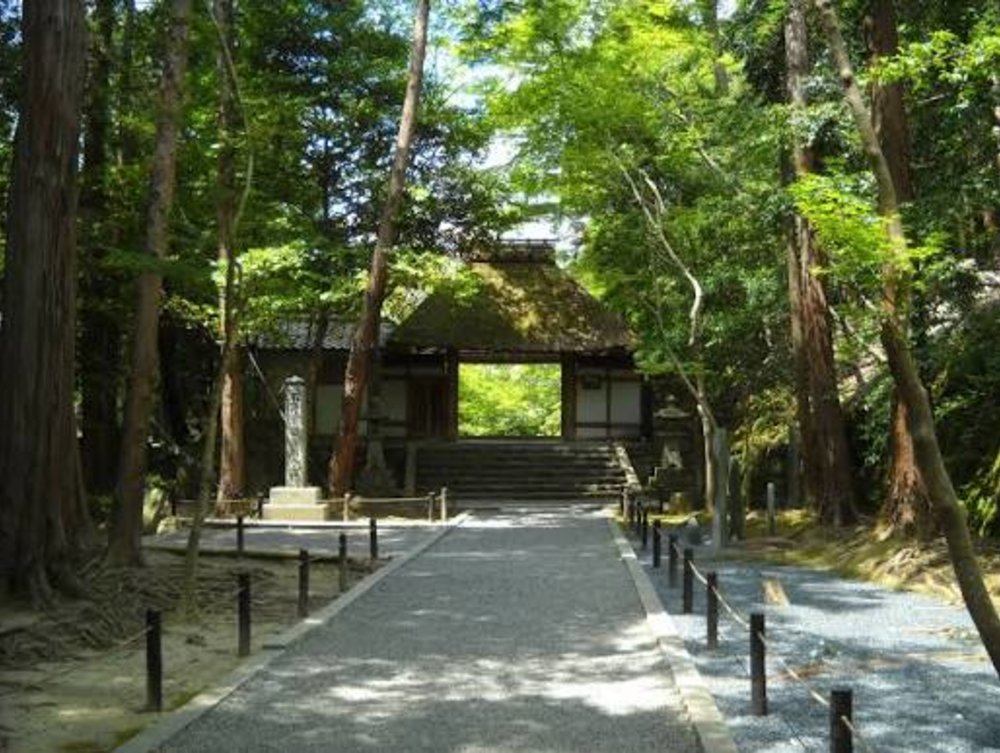
Honen-in is a five-minute walk from Ginkaku-ji, right off the Philosopher's Path. Most walkers never notice it, because its thatched Sanmon gate, framed by moss and maple trees, looks more like the entrance to a private home than a temple.
The grounds are free to enter and are normally open from 6:00 AM to 4:00 PM throughout the year. Inside, the two white-sand Byakusadan terraces are reshaped with seasonal patterns, while the temple's main buildings are normally closed to visitors except during special spring and autumn openings.
The spring special opening traditionally runs April 1–7, while the autumn opening takes place during a separate limited period. For 2026, the spring special opening runs April 1–7, from 9:30 AM to 4:00 PM, with ¥800 admission. Check the temple's current announcement for the autumn dates and admission before visiting, as these special-opening details can vary.
Get there from Kyoto Station by Kyoto City Bus 5 or 17 to Ginkaku-ji-michi, then walk about 10 minutes, or simply fold it into a Philosopher's Path walk to or from Ginkaku-ji.
📍 Address: 30 Shishigatani Goshonodancho, Sakyo Ward, Kyoto 606-8422, Japan
🕐 Regular grounds: 6:00 AM–4:00 PM daily
🎫 Entry: Free; special openings charge an admission fee
Ohara and Sanzen-in: worth the hour if you're not rushing
Ohara is where you go when you have a slower half-day rather than a list of stops to check off. It's roughly an hour from Kyoto Station by bus, which is why it stays uncrowded.
Sanzen-in is the reason to make the trip: a moss-carpeted valley garden dotted with Warabe Jizo statues, with a history stretching back over a thousand years. Hours shift seasonally, from 9:00 AM–5:00 PM March through October, 8:45 AM–4:45 PM in November, and 9:00 AM–4:30 PM December through February. The last entry is 30 minutes before closing time. Admission is ¥700 for adults, ¥400 for students, and ¥150 for children.
The fastest route from Kyoto Station is the Karasuma subway line to its terminus at Kokusaikaikan, then Kyoto Bus 19 to Ohara (about 40 minutes total). A direct bus, Kyoto Bus 17, also runs from Kyoto Station straight to Ohara in about an hour. From the Ohara bus stop, it's a 10-minute walk uphill to the temple.
📍 Area: Ohara, Sakyo Ward, north Kyoto
🕐 Hours: 9:00 AM–5:00 PM (Mar–Oct) · 8:45 AM–4:45 PM (Nov) · 9:00 AM–4:30 PM (Dec–Feb)
🎫 Entry: ¥700 adults / ¥400 students / ¥150 children
Ruriko-in: seasonal openings for Kyoto's famous garden reflection
Ruriko-in is not open year-round. The temple welcomes visitors only during special viewing periods in spring, summer, and autumn, making timing an essential part of planning a visit. In 2026, the scheduled opening periods are April 15–May 31, July 1–August 17, and October 1–December 13.
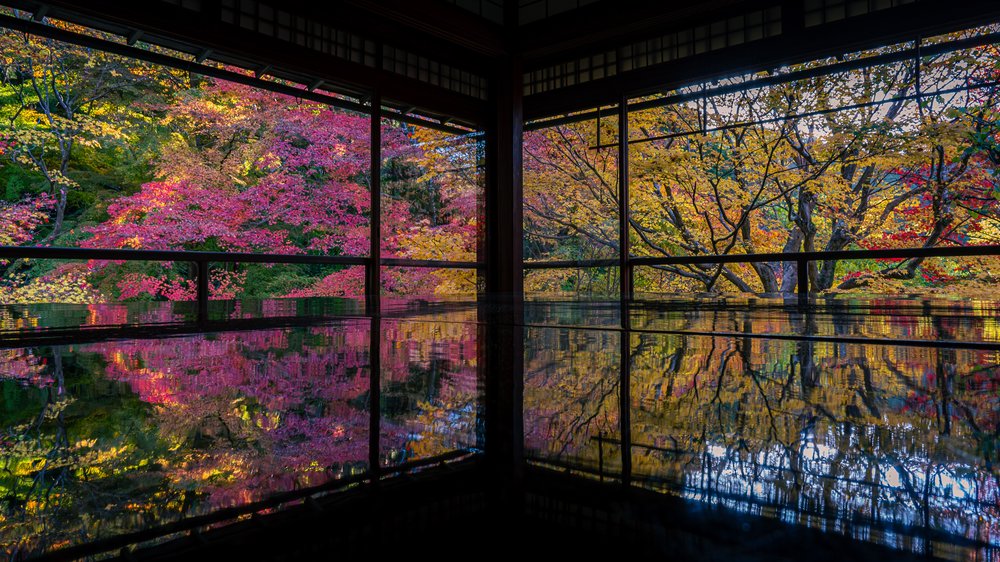
The draw is “Yuka Momiji,” the famous reflection of maple branches and the moss garden on the polished black floor and table inside the temple. The effect makes the garden appear to continue beneath the room, particularly striking during the autumn foliage season.
In 2026, admission is ¥2,000 for adults and ¥1,000 for middle- and high-school students. Spring and summer visits do not require reservations, while the temple says reservations are required for November 13–December 6 during the autumn viewing period. The regular viewing hours are 10:00 AM–5:00 PM, with last admission at 4:30 PM.
Located in Yase at the foot of Mount Hiei, Ruriko-in is reached via the Eizan Railway to Yase-Hieizanguchi Station, followed by a walk to the temple. Because it is closed outside its special viewing periods, check the temple's official schedule before building it into your itinerary.
📍 Area: Yase, north-east Kyoto (Eizan Railway)
🕐 2026 special viewing: Apr 15–May 31 · Jul 1–Aug 17 · Oct 1–Dec 13
🎫 Entry: ¥2,000 adults / ¥1,000 middle- and high-school students
📅 Reservations: Not required in spring or summer; required Nov 13–Dec 6 during the 2026 autumn period
Hidden versions of Kyoto's famous experiences
If you started your search from a famous Kyoto name like the Philosopher's Path, the Arashiyama mountain walk, an evening out near Gion, here's the quieter version of the same idea.
Instead of… | Try… | Why it works |
|---|
Fighting foot traffic on the Philosopher's Path | Honen-in, a 5-minute detour off the path | Same walk, same neighborhood, a nearly empty temple |
Arashiyama's bamboo grove and monkey park crowds | The Kurama-to-Kibune hike | A similar forested, shrine-dotted mountain walk with far fewer people, reachable by direct train from Demachiyanagi |
An evening out near Gion | Fushimi's sake district, by canal boat | The actual sake-brewing quarter, not a tourist-facing strip |
Kurama to Kibune: the mountain walk without the crowds
Kurama and Kibune sit on the Eizan Railway north of the city, connected by a 3.9 km hiking trail that takes 2–3 hours (the Kurama side starts steep, so budget extra time). Kurama-dera temple is open roughly 9:00 AM–4:30 PM; Kifune Shrine at the Kibune end is open 6:00 AM–8:00 PM (6:00 PM December–April) and is free to enter.
Klook Tip: If your legs are tired by the time you reach Kurama, there's an outdoor onsen at the trailhead to soak them.
Book ahead: Kyoto's quieter, small-group experiences
These three sit at the more bookable end of “hidden gem”: reservation-based, capped at small or private groups, and weighted toward what Kyoto is actually known for: sake and tea.
Fushimi sake tasting and canal boat ride
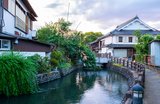
This half-day tour trades Gion's bars for Fushimi's actual sake-brewing district: a ride on a traditional Jikkoku-bune canal boat past willow-lined banks and old sake warehouses, a stop at the quiet Chokenji Temple, a walk through the Gekkeikan Sake Brewery Museum, and a guided tasting. It runs about 3.5 hours and starts from US$14.05, as a small-group or private tour.
💬 What travelers say: One recent guest called it “a lovely calm tour learning about the history of trade in the area as well as the history of sake brewing,” while another described the tasting as “a highlight of our time in Kyoto.” A third traveller did the tour with a five-month-old and noted that prams can be stored near the boat boarding point.
Hands-on sake brewing near Nishiki Market
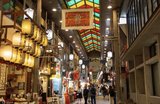
For something more involved than a tasting, this private, 3-hour experience lets you brew your own batch of sake, called “My SAKE”, with a sake master guiding the process, no prior knowledge required. It's paired with a walk through Nishiki Market (“Kyoto's Kitchen”) and a stop at Nishiki Tenmangu Shrine, where your guide walks you through proper etiquette for drawing an omikuji fortune slip. It's private-group only (2–15 people) and runs about US$137.29.
Candlelit tea ceremony in a 100-year-old townhouse
This one swaps the usual daytime, larger-group tea ceremony for something quieter: a candlelit tearoom inside a 100-year-old Kyoto townhouse once kept by a textile merchant, capped at seven guests. You'll handle tea bowls chosen for the season, some over 200 years old, drink Uji matcha prepared by a host trained in a historic tea school, and take home a candle made on-site. It runs about 45 minutes and costs US$55.60.
💬 What travelers say: Guests describe it as “a beautiful, calm experience in a stunning historic building,” with hosts who are “knowledgeable and kind” in explaining the tea culture as you go.
Saiho-ji: The hidden gem that takes real planning
If Ruriko-in's seasonal calendar sounds manageable, Saiho-ji (the Moss Temple) is the harder version. Visitors traditionally apply by mail, sending a self-addressed return postcard (ofuku hagaki) with preferred dates, weeks or months ahead of a trip, though the temple now also accepts reservations directly through its official English-language booking site. A fee applies on arrival. It's not part of most itineraries for exactly this reason, but if moss gardens are your thing, it's the original the others are compared to.
Which hidden gem fits your day?
You have… | Go to… | Because |
|---|
An extra 20 minutes in Arashiyama | Otagi Nenbutsuji | Same district, dramatically fewer people |
An evening free | Funaoka Onsen | Open till 1 AM, an easy add-on after dinner |
15 minutes near Ginkaku-ji | Honen-in | Free, no detour required |
A half-day and no fixed plan | Ohara and Sanzen-in | The payoff matches the hour-long trip |
A trip planned months out | Saiho-ji or Ruriko-in (seasonal) | Both require locking in dates early |
FAQs about Kyoto's hidden gems
Where are Kyoto's hidden gems?
Kyoto's least-crowded standout sights cluster in a few pockets outside the usual Higashiyama–Arashiyama circuit: Otagi Nenbutsuji and Funaoka Onsen sit north and northwest of the centre, Honen-in is a five-minute detour off the Philosopher's Path, and Ohara's Sanzen-in and Ruriko-in sit roughly an hour out by bus or train. None require a special permit to find, they're simply a bit further, a bit better disguised, or open on a shorter calendar than Kyoto's headline temples.
How do you avoid the crowds in Kyoto?
Three things move the needle most: go early (most temples open by 8–9 AM, an hour or two before tour groups arrive), pick a hidden version of a famous experience (Honen-in instead of fighting Philosopher's Path foot traffic, Kurama-to-Kibune instead of Arashiyama's mountain walk), and book small-group or private activities like the Fushimi sake tour above caps out well under bus-tour size.
Which Kyoto temples are quiet and less visited?
Otagi Nenbutsuji, Honen-in, and Sanzen-in in Ohara are the three that consistently stay quiet even in peak season, largely because each has a built-in deterrent, distance, an unmarked gate, or a bus ride, that keeps casual day-trippers away.
What is there to do in Kyoto beyond the main temples?
Soak in a century-old neighborhood bathhouse (Funaoka Onsen), hike a mountain trail between two shrines (Kurama to Kibune), tour a working sake district by canal boat (Fushimi), or sit through a candlelit tea ceremony in a 100-year-old townhouse, all lower-key than the temple circuit and mostly bookable in small groups.
Is Ohara worth the trip from central Kyoto?
Yes, if you have a half-day to spend: Sanzen-in's moss valley garden is one of the few Kyoto gardens that still feels uncrowded, but the payoff is proportional to the trip, it's roughly an hour each way by bus, so it suits travellers doing a slower day rather than a quick stop between other sights.
Where can you experience an old public bathhouse in Kyoto?
Funaoka Onsen in Kita Ward is Kyoto's best-known historic sento, built in 1923 and designated a national tangible cultural property, with carved wooden transom panels still in the changing rooms. It's tattoo-friendly, cash-only, and open late (3 PM–1 AM), which makes it an easy add-on after a day of sightseeing.
Which Kyoto temples require advance reservations?
Saiho-ji (the Moss Temple) is Kyoto's strictest, visitors traditionally apply weeks ahead by mail with a self-addressed return postcard, though the temple now also takes reservations directly through its official website. Ruriko-in doesn't require booking but does require timing: it only opens for a few weeks each spring and autumn, so check its official dates before building a visit around it.
Related Articles
What is Klook?
Klook is a leading pan-regional experiences platform in Asia Pacific, purpose built to digitalize experiences and make them accessible to every traveler.
Our mission is to build the digital infrastructure for the global experience economy — empowering merchants to share their passions and travelers to discover the heartbeat of each destination. We operate a mobile-first, curated platform featuring diverse experiences across global destinations.