
Kyoto is compact on a map and surprisingly spread out in real life. The big temples sit at opposite edges of the city, the subway only has two lines, and the bus network does a lot of heavy lifting in between. That mismatch is exactly why getting around Kyoto trips up so many first-timers on day one.
The good news: you only need to understand four things (buses, subway and trains, IC cards, and your own two feet) to move through the city like you've been here before. This guide breaks down what each one costs, when to use it, and where you're most likely to waste money. It's one of the most practical things you can sort out before your trip to Kyoto.
Which mode fits your trip?
Start with your itinerary, not the fare chart. If your days revolve around temple-hopping across the north and east of the city (Kinkaku-ji, Ginkaku-ji, Kiyomizu-dera), buses will be your default because they stop closest to the gates.
If you're covering longer distances across town, or heading out to Nara, Osaka, or Arashiyama, the subway and rail lines beat the bus every time. For tight, historic pockets like Gion, Pontocho, and Higashiyama, walking is genuinely faster than waiting for a ride. You'll probably use all three in a single day, which is exactly how getting around Kyoto is supposed to work. For a deeper breakdown of routes and rail passes, our Kyoto transport guide is a useful companion to this article.
Kyoto City Bus: the temple-hopping workhorse
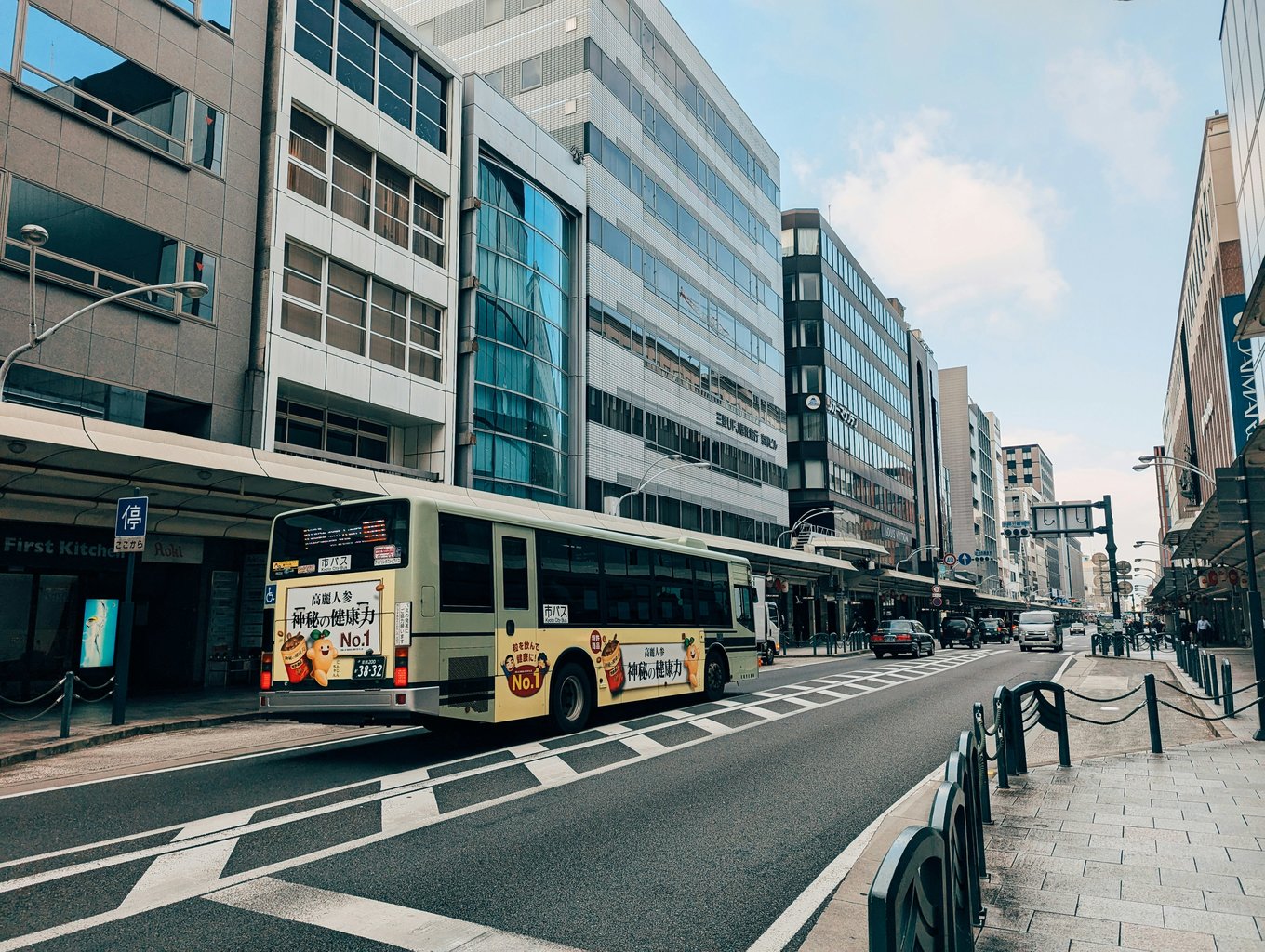
Kyoto City Bus | Image Credit: Mega Caesaria via Unsplash
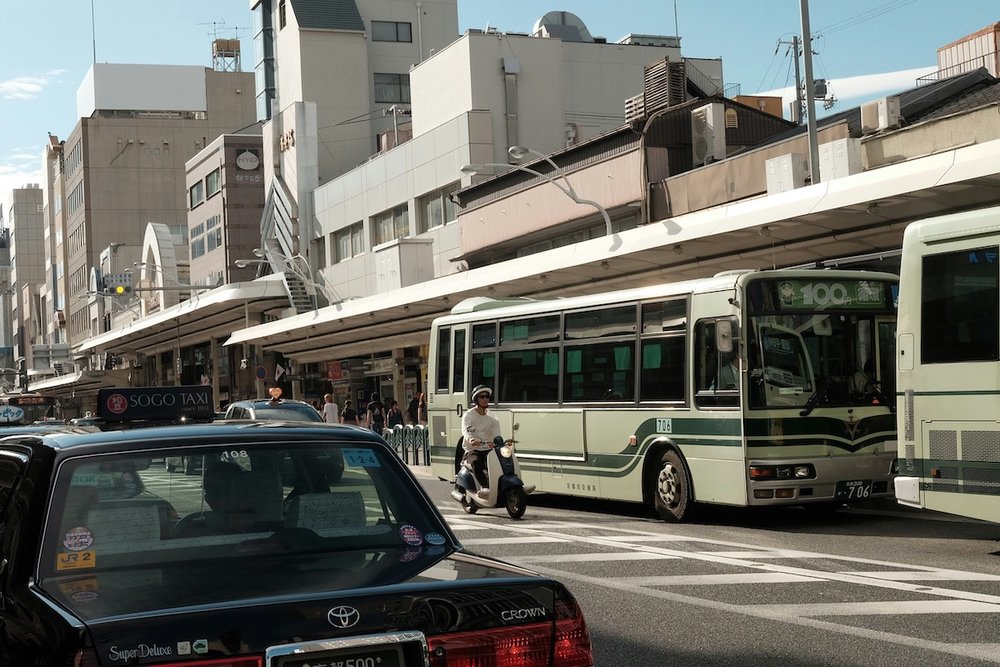
The Kyoto City Bus is the backbone of Kyoto public transport for sightseeing, and for most first-timers it's the main tool for getting around Kyoto. It reaches places the subway simply doesn't go, including Kinkaku-ji, Ginkaku-ji, and the approach to Kiyomizu-dera. Green-and-beige city buses run frequently, and stop announcements show up in English on screens near the front.
Boarding confuses people more than the routes do. You get on through the rear door, and you pay when you get off at the front door. Most rides inside the central flat-fare zone cost a flat ¥230 (around $1.55), no matter how far you go. Tap your IC card on the reader next to the driver, or drop exact coins into the fare box (there's a change machine on board if you only have a ¥1,000 note).
Important Note: Buses get very crowded between roughly 9am and 5pm in peak season, especially routes 100, 101, and 205, and traffic near Gion and Kiyomizu-dera can turn a 20-minute ride into 40. If you're carrying luggage or traveling in a group of three or more, skip the bus and split a cab instead.
Klook Tip: Have your ¥230 ready before your stop is called. Kyoto buses pay by the door, and fumbling for coins while 40 people wait behind you is the fastest way to feel like a tourist.
Kyoto subway and trains: your fastest cross-city option
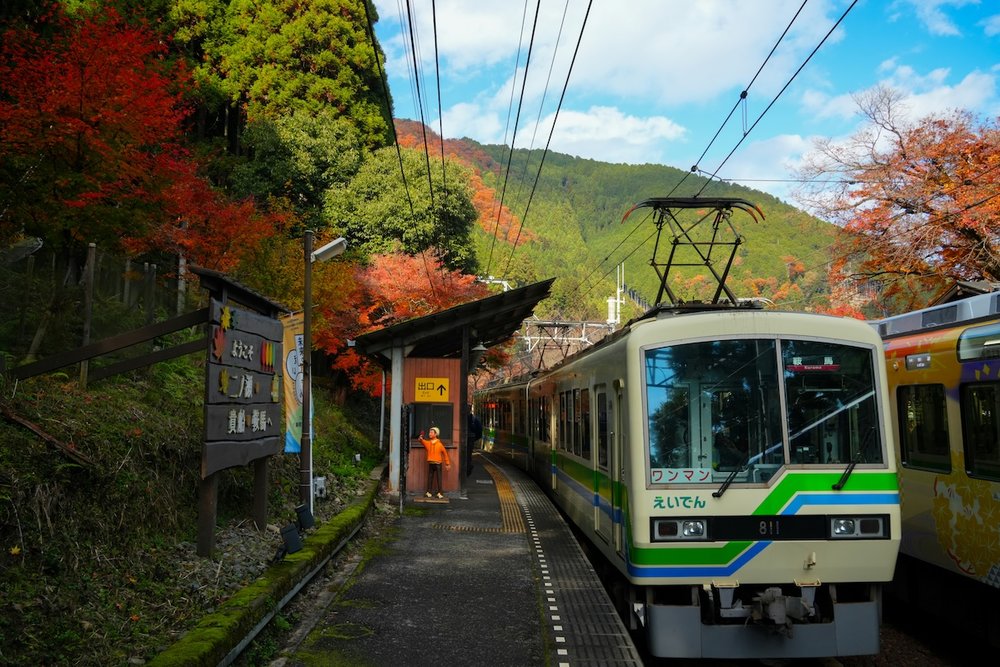
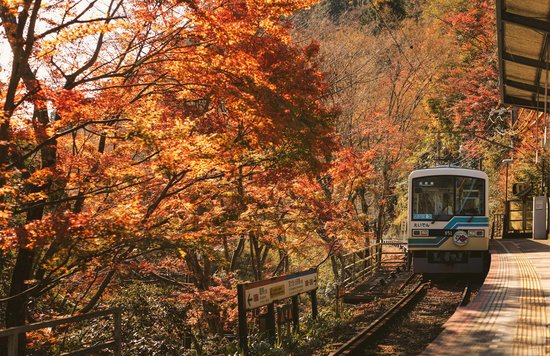
A train in Kyoto | Image Credit: Hat Trick via Instagram
Kyoto's municipal subway has just two lines, and honestly that's easy to memorize. The Karasuma Line (green) runs north to south through Kyoto Station, and the Tozai Line (red) runs east to west past Nijo Castle and Higashiyama. They cross at Karasuma Oike, the only transfer point you need to remember. Fares run about ¥220 to ¥360 depending on distance.
The subway wins whenever your destination sits near a station. Kyoto Station to Higashiyama takes around 10 minutes underground versus 20 to 40 minutes by bus in traffic. Beyond the subway, JR, Keihan, Hankyu, and the Randen tram fill in the rest of the map, and any decent Kyoto train guide will tell you the same thing: use rail for distance, buses for the last mile.
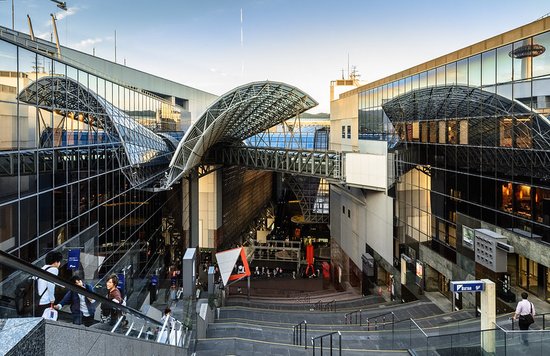
Kyoto Station itself is a destination, with food floors, a rooftop terrace, and the main bus terminal out front. Our guide to what's inside the station walks through the layout, which saves real time on arrival day. Rather than printing a Kyoto subway map, pull up the official Kyoto City Transportation Bureau route map on your phone, since it marks the flat-fare bus zone too.
IC cards vs. day passes: what to actually buy
A Kyoto IC card is the simplest choice for most travelers, and it's the single best purchase for getting around Kyoto without thinking about it. ICOCA is the local card, and Suica works identically here, along with PASMO and the rest of Japan's IC family. You tap on buses, subways, JR lines, taxis, convenience stores, and most vending machines. You can add ICOCA or Suica to Apple Wallet or Google Pay before you fly, which removes a whole errand from day one.
The Kyoto bus pass question comes up constantly, so here's the current math. The old ¥700 bus-only day pass was discontinued back in 2023 and is no longer accepted. The replacement is the Subway & Bus 1-Day Pass at ¥1,100 (about $7.30) for adults and ¥550 for kids, covering city buses, both subway lines, and most Kyoto Bus and Keihan Bus routes.
Quick cost comparison for one day:
- Pay as you go with an IC card: ¥230 per bus ride, ¥220 to ¥360 per subway ride. Best for 2 to 4 rides a day.
- Subway & Bus 1-Day Pass (¥1,100): breaks even at roughly five rides. Best for heavy temple days covering Kinkaku-ji, Ginkaku-ji, and Higashiyama.
- Both: buy the pass only on your big sightseeing day and tap your IC card the rest of the trip.
Taxis, bikes, and how far you can walk
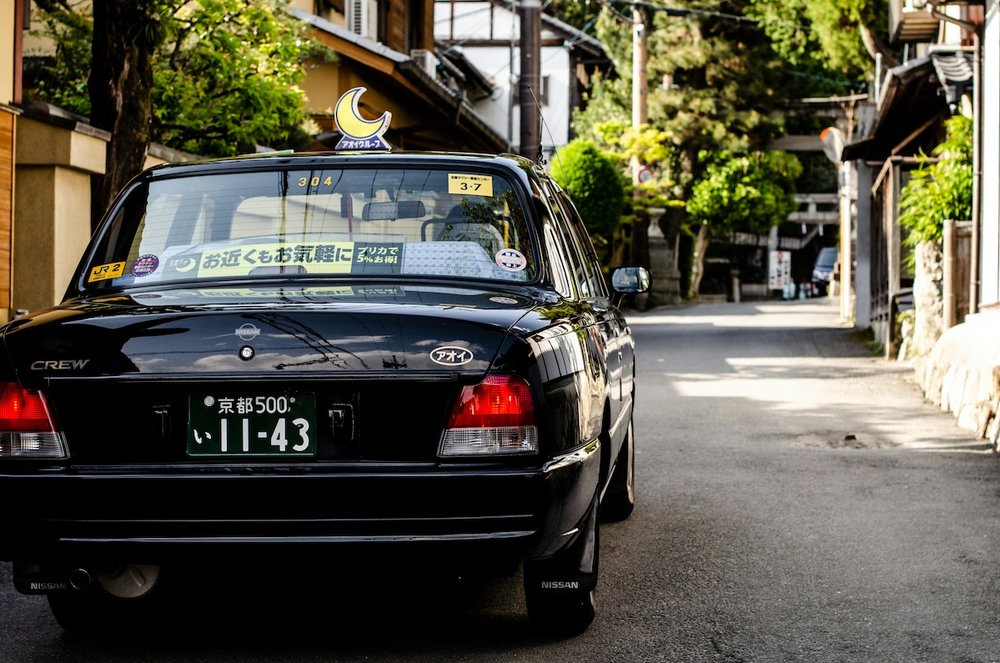
Kyoto Taxi | Image Credit: Launde Morel via Unsplash
A Kyoto taxi is cheaper than you'd expect and genuinely useful late at night, in the rain, or when you're hauling bags. Meters start around ¥500 to ¥620 and most cabs accept IC cards and credit cards. Split three ways to a hillside temple, a cab often costs about the same as the bus and saves you 30 minutes.
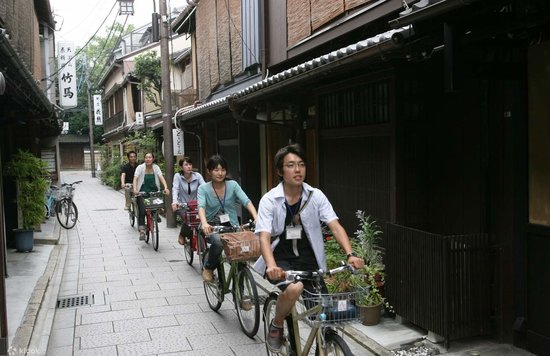
Kyoto bike rental is arguably the best-value way to see the city. It's flat, easy to navigate, and threaded with river paths, and daily rates usually land between ¥800 and ¥2,000 (roughly $5 to $13) depending on the shop and the bike. Our Kyoto bike rental guide covers shops, rules, and where to park legally, since street parking is enforced here.
A guided Kyoto bike tour covers more backstreets in half a day than you'd find on your own, and you get a local explaining what you're riding past.
Walking distances are shorter than you'd think. Gion to Kiyomizu-dera runs about 20 to 25 minutes uphill through Ninenzaka and Sannenzaka, which is one of the prettiest walks in Japan. Gion to the Nishiki Market area takes around 15 minutes, and Higashiyama Station puts you within walking range of Nanzen-ji and the Philosopher's Path. In this part of the city, transit is often your slower option.
Klook Tip: Kyoto's flat-fare bus zone doesn't extend to Arashiyama or Kurama. Rides outside it use a numbered-ticket system, so grab a ticket when you board and check the fare board above the driver.
FAQs about getting around Kyoto
How do I get around Kyoto as a tourist?
Use a mix. City buses reach most major temples, the two subway lines handle fast cross-city trips, and walking covers historic districts like Gion and Higashiyama. Load an ICOCA or Suica card and you can tap onto nearly everything without buying individual tickets.
Should I use buses or trains to get around Kyoto?
Trains and the subway are faster and never stuck in traffic, so use them whenever your destination sits near a station. Buses reach the temples rail doesn't serve, including Kinkaku-ji and Ginkaku-ji. Most itineraries use both in the same day.
Is it worth getting a Kyoto bus pass?
The ¥1,100 Subway & Bus 1-Day Pass pays for itself at around five rides. Heavy temple-hopping days clear that easily. On lighter days with two or three trips, tapping an IC card costs you less.
Can I use my Suica or ICOCA card on Kyoto buses?
Yes. ICOCA, Suica, PASMO, and other major Japanese IC cards all work on Kyoto City Buses, the subway, JR lines, and most taxis. Tap the reader by the driver as you exit through the front door.
Is Kyoto walkable, or do I need transportation for most attractions?
Individual neighborhoods are very walkable, but the city as a whole isn't. Gion, Higashiyama, and the downtown Kawaramachi area are best on foot, while getting between those areas and sights like Kinkaku-ji or Arashiyama needs a bus or train.
Is renting a bike a good way to see Kyoto?
For most travelers, yes. Kyoto is flat and easy to navigate by bike, and you skip bus queues entirely. Just use paid parking lots rather than leaving your bike on the street, and plan around the hillier eastern temples.
Related blogs
What is Klook?
Klook is a leading pan-regional experiences platform in Asia Pacific, purpose built to digitalize experiences and make them accessible to every traveler.
Our mission is to build the digital infrastructure for the global experience economy — empowering merchants to share their passions and travelers to discover the heartbeat of each destination. We operate a mobile-first, curated platform featuring diverse experiences across global destinations.