


China’s visa rules have become more flexible in recent years, but US citizens still don’t qualify for the country’s unilateral 30-day visa-free entry policy. While the list includes most European countries, as well as Japan, Australia, and Canada, the United States is not currently included. That means Americans can’t simply arrive in China with a US passport and enter visa-free for up to 30 days. In most cases, you’ll still need to get a visa before your trip.
That said, “not on the list” doesn't mean you need a full visa no matter what. China's visa policy 2026 update actually gives US travelers several real, workable paths into the country without a standard visa application: a 10-day transit allowance, a 30-day Hainan-only program, and a 15-day cruise entry. Routing through mainland China on the way to Tokyo or Bangkok, planning a beach week in Hainan, or applying for the standard L visa: this guide covers exactly what applies to a US passport in 2026.
China visa-free for US citizens at a glance
Option | Stay length | Key requirement | Best for |
|---|---|---|---|
240-hour visa-free transit | Up to 10 days | Confirmed onward ticket to a third country or region; enter/exit via one of 65 ports | Layovers and multi-city stopovers |
Hainan 30-day visa-free | Up to 30 days | Direct international flight into Haikou or Sanya (no mainland stop first) | A standalone Hainan beach trip |
15-day cruise entry | Up to 15 days | Arrive by international cruise and go ashore with the group | Cruise passengers |
Standard L visa | Up to 90 days per trip, 10-year multi-entry | Apply through COVA plus an in-person appointment; flat $140 fee | Full mainland trips and repeat visits |
Do US citizens need a visa to visit China in 2026?
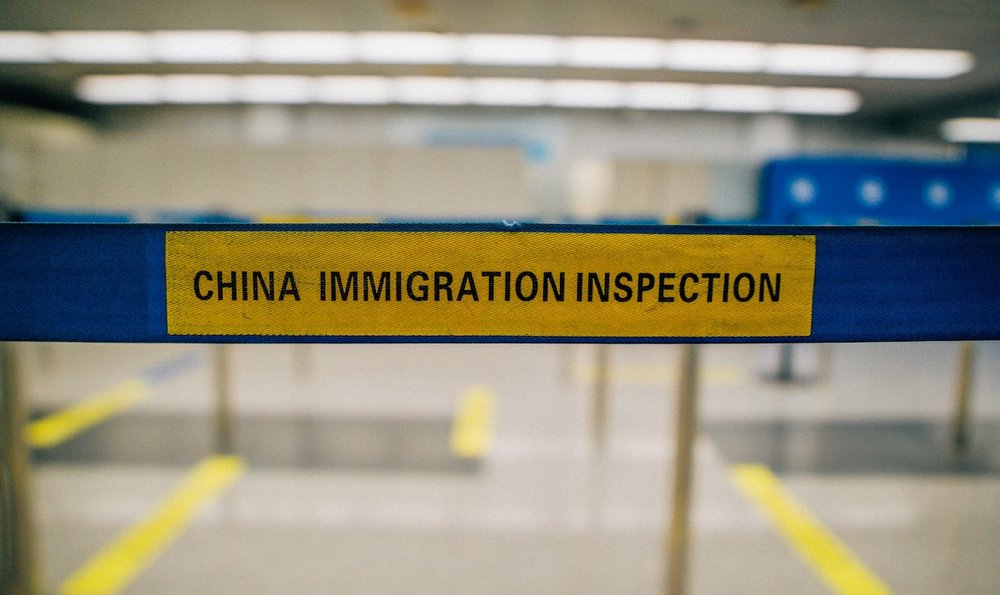
China Immigration Inspection | Image Credit: Christian Lue via Unsplash
Yes, for a standard trip. US passport holders are one of the few holdouts on China's visa exemption countries list. Travelers from the United Kingdom, most of the EU, Australia, and New Zealand can currently stay up to 30 days with zero paperwork. Americans can't, at least not for a standalone tourist visit to the mainland.
That's the core of what China visa-free US citizens 2026 policy actually means in practice: three separate visa-free doors that Americans can walk through, even though the 30-day door stays closed. Below is which one fits your trip.
The 240-hour visa-free transit: your best workaround
This is the one that matters most for most US travelers, and it's the main reason “China 240-hour transit visa” gets searched so often. If you're passing through China on the way to a third country (say, flying LA to Bangkok with a stop in Beijing), you can enter without a visa and stay for up to 240 hours, that's 10 full days, as long as you're continuing on to somewhere else afterward. For US passport China entry without a full visa application, this transit rule is the most useful tool you have.
A few rules to know before you plan around it:
- Eligible ports: All 65 China visa-free transit ports fall into three categories, air, rail, and sea, spread across 24 provinces. Your entry and exit ports don't have to match, so you could fly into Beijing and fly out of Shanghai on the same 240-hour clock.
- The onward ticket: You need a confirmed ticket to a third country or region before you're allowed to enter. A round-trip flight back to the US doesn't count. Hong Kong and Macau do count as third regions, so a flight or ferry there works too.
- The 2025 update: Before late 2025, you were mostly stuck exploring just one region around your entry port. Now you can move across provincial borders within your 10-day window, so a Beijing to Xi'an to Shanghai loop is completely doable on a single transit stay.
If Beijing is your entry point, 10 days is enough time to see the highlights properly instead of rushing through on a layover. The classic first-timer route pairs the Forbidden City with Tiananmen Square right next door, then a half-day out to Mutianyu Great Wall for the section most day-trippers recommend over the more crowded stretches.
Shorter layover? A guided private Beijing layover tour hits the major sights on a timeline built around your flight, not the other way around.
Landing in Shanghai instead? A Shanghai layover city tour works the same way for a shorter stop between flights.
Klook Tip: Grab a China eSIM before you land so you're online the moment you clear immigration. It matters more here than in most countries, since a lot of the apps and maps you'd normally reach for don't work the same way in China.
Get set up with a China eSIM voucher ahead of time and you'll skip the hunt for Wi-Fi on arrival.
Hainan's 30-day visa-free program (and a 15-day cruise option)

Hainan, China | Image credit: Pavel Roev via Unsplash
Here's a route a lot of travelers miss entirely. Hainan, the tropical island province in southern China, runs its own visa-free entry program that's separate from the mainland's 30-day list, and Hainan visa-free US citizens access is real: the US is actually on it. Fly directly into Haikou or Sanya from outside mainland China (not connecting through Beijing or Shanghai first), and you can stay in Hainan visa-free for up to 30 days.
But remember, this stay is Hainan-only. You can't hop over to Beijing or Shanghai on the same visa-free entry. If you want to see the mainland too, you'd need a proper L visa or plan a separate 240-hour transit. But for a standalone beach trip, this is an easy, paperwork-free way into China.
There's also a 15-day cruise option worth knowing about: on an international cruise calling at ports like Shanghai or Xiamen, you can go ashore visa-free for up to 15 days as part of a group tour, no visa application needed, as long as you reboard the ship at departure.
Applying for a standard L visa
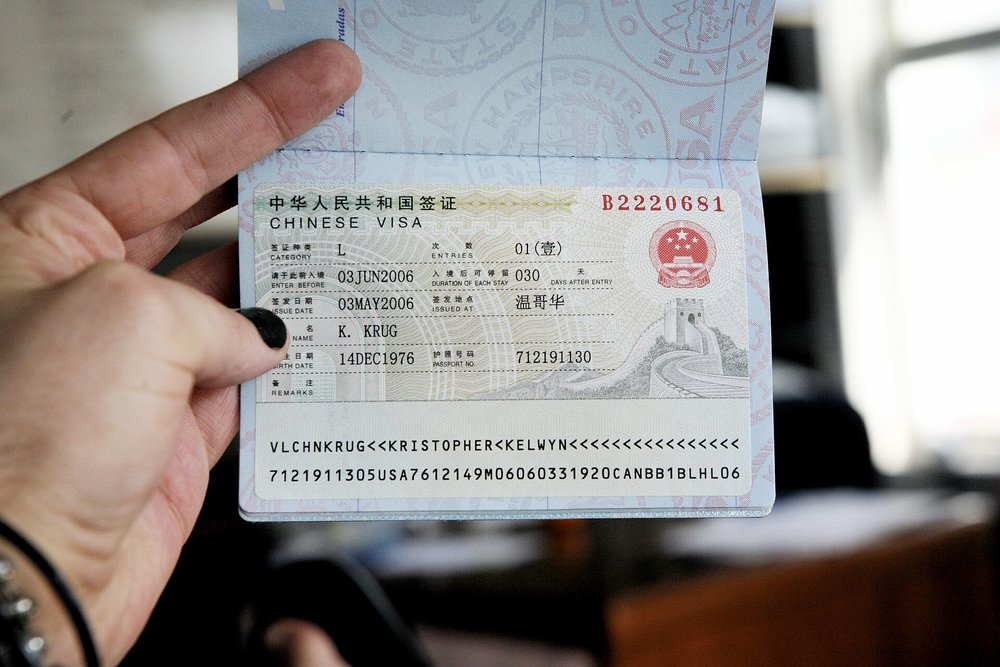
China L visa | Image credit: kris krüg, CC BY-SA 2.0 via Wikimedia Commons
If your plans don't fit any of the visa-free routes above, an L visa (the standard tourist visa) is straightforward these days, and China L visa requirements are lighter than they used to be: flight bookings, hotel reservations, and invitation letters are no longer required for most tourist applications. China visa cost for US citizens sits at a flat $140 regardless of whether you apply for single-entry, double-entry, or the 10-year multiple-entry option, so most Americans get offered the 10-year version by default.
It's genuinely one of the better values in international travel: one application, one fee, a decade of access. The process runs through China's online COVA system followed by an in-person visit to submit biometrics, and processing typically takes about four business days once everything's in order.
Arriving on a standard L visa? An airport fast track service at Beijing Capital or Daxing can save real time at immigration after a long flight.
FAQs about China visa-free US citizens 2026
Do US citizens need a visa to visit China in 2026?
For a standard standalone trip, yes. The US isn't on China's unilateral 30-day visa-free list. However, US passport holders can still enter without a full visa through the 240-hour transit policy, the Hainan 30-day program, or a 15-day cruise entry, depending on the itinerary.
What is the 240-hour visa-free transit policy for the US?
It lets US travelers stay in China for up to 10 days without a visa, as long as they're continuing on to a third country or region afterward. Entry and exit must be through one of 65 designated ports, and since the 2025 update, travelers can move across provinces during their stay instead of staying in one region.
Can Americans visit Hainan without a visa?
Yes. US citizens can fly directly into Haikou or Sanya from outside mainland China and stay in Hainan visa-free for up to 30 days. The stay is limited to Hainan Province, so it doesn't cover trips to the mainland.
How much does a China visa cost for US citizens?
A standard L visa costs a flat $140 for US citizens, whether applying for single-entry, double-entry, or the 10-year multiple-entry option. Most first-time American applicants get offered the 10-year version at that same price.
Which airports qualify for China's visa-free transit?
There are 65 designated ports nationwide covering major international airports, along with select train stations and sea ports. Beijing, Shanghai, and other major hub cities are all included, and entry and exit ports don't need to match.
How long can US citizens stay in China without a visa?
It depends on the route. The 240-hour transit policy allows up to 10 days for travelers continuing to a third country. The Hainan program allows up to 30 days, but only within Hainan Province. Cruise passengers can go ashore for up to 15 days as part of a group tour.
Ready to plan your trip?
China's visa rules for Americans are more workable than they look at first glance. Between the 240-hour transit, the Hainan program, and an affordable 10-year L visa, there's a path for pretty much every kind of trip, from a quick layover to a full mainland tour. Start mapping out your route, book a layover tour or two, and get your eSIM sorted before you land so day one isn't spent hunting for Wi-Fi.
Related guides

What is Klook?
Klook is a leading pan-regional experiences platform in Asia Pacific, purpose built to digitalize experiences and make them accessible to every traveler.
Our mission is to build the digital infrastructure for the global experience economy — empowering merchants to share their passions and travelers to discover the heartbeat of each destination. We operate a mobile-first, curated platform featuring diverse experiences across global destinations.