Kyoto Markets At a Glance
Most famous market | Nishiki Market (“Kyoto’s Kitchen”), a covered food street in Nakagyo Ward, roughly 400 years old and about 390 meters long |
Nishiki Market hours | Most shops open around 9–10am and close by 6pm; hours vary by shop |
Time to allow at Nishiki | 1–1.5 hours to browse; longer if you stop to eat at several stalls |
Biggest flea markets | Toji Temple’s Kobo-ichi (21st of every month) and Kitano Tenmangu’s Tenjin-san (25th of every month) |
Flea market hours | Roughly 5–6am to 4pm; exact times vary by month and weather |
Daily antiques option | Teramachi Dori’s covered arcade (open every day) and the Hyakumanben Handicraft Market on the 15th |
Best depachika | Daimaru and Takashimaya at Shijo-Kawaramachi, plus Isetan at Kyoto Station |
Payment | Cash is safest at flea markets and many small Nishiki stalls; cards and IC cards are more widely accepted at depachika counters |
Kyoto's best-known market is
Nishiki Market, a 400-year-old covered food street nicknamed “Kyoto's Kitchen” that sits at the top of almost every visitor's list. But
Kyoto's market scene goes well beyond Nishiki: the city also runs some of Japan's largest temple flea markets on fixed monthly dates, a daily antiques district on Teramachi Dori, and department store food halls (depachika) that rival Nishiki for local flavor without the crowds. This guide covers what to eat and how long to spend at Nishiki, exactly which market falls on which date each month, and the practical details like cash, etiquette and timing that make the difference between a rushed walk-through and a market day that actually works.
Nishiki Market: Kyoto's 400-Year-Old Food Street
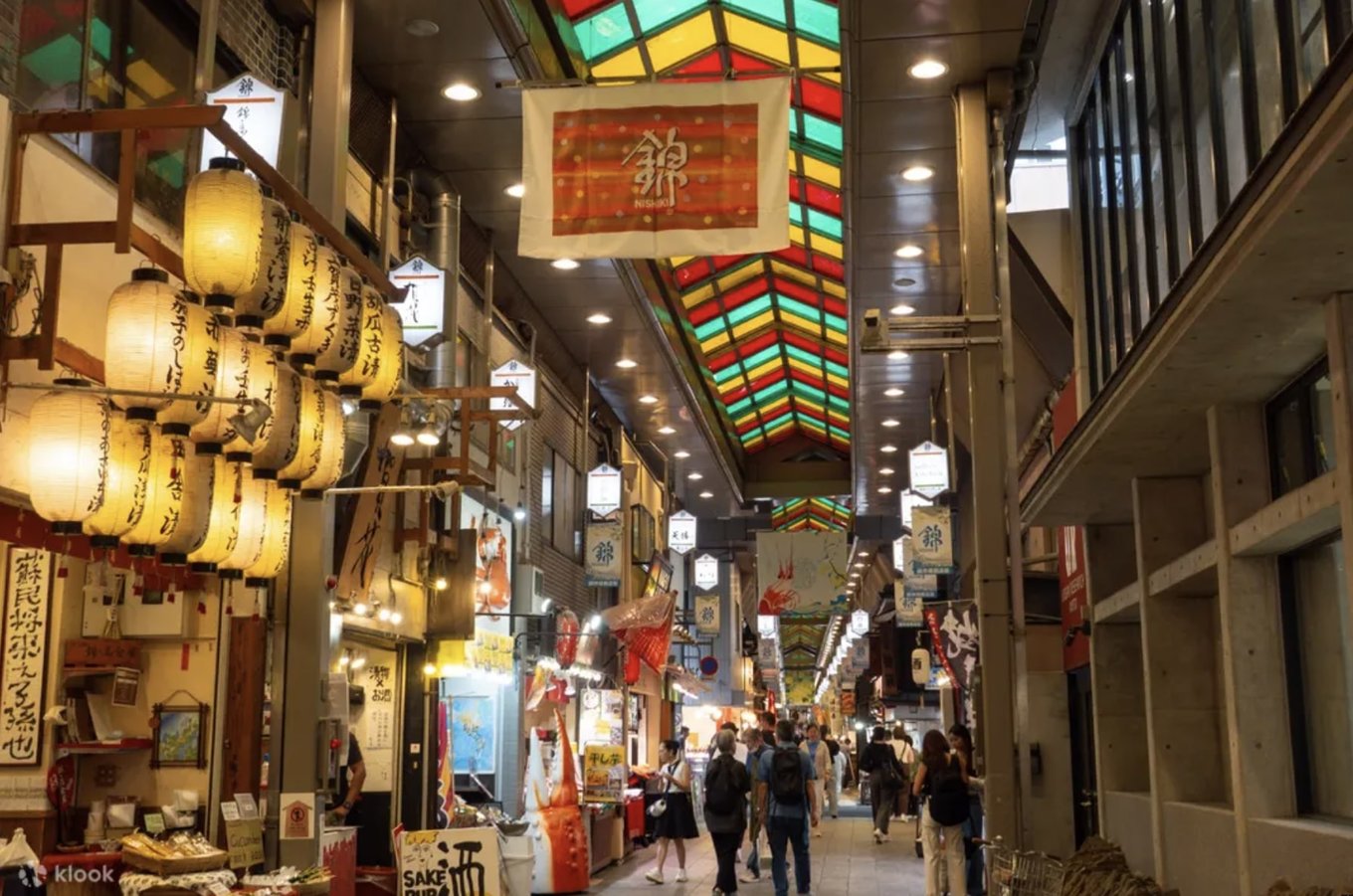
Nishiki Market is a narrow, covered shopping street in central Kyoto lined with more than 100 food stalls and restaurants, and it's the single market worth building real time into your itinerary for.
Running roughly 390 meters between Teramachi and Takakura streets, one block north of Shijo-dori,
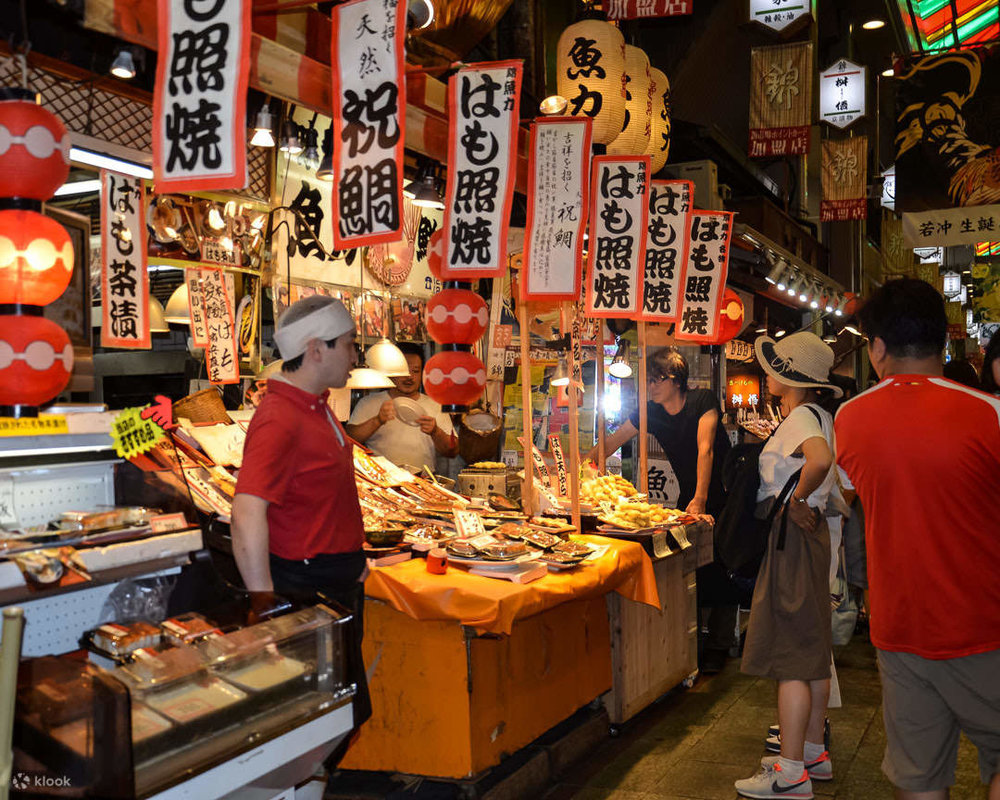
Nishiki Market has operated on this site for around 400 years. Today it's split between working food shops: fishmongers, pickle stores, tofu makers, knife and cookware specialists, and stalls selling ready-to-eat snacks, which is what makes it worth visiting even if you're not cooking a single meal in Kyoto.
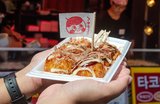
Come hungry and graze rather than aiming for one big meal, the market rewards trying a little from several stalls. Look out for skewered tamagoyaki (Japanese rolled omelet), fresh yuba (tofu skin), Kyoto-style pickles (tsukemono), grilled or skewered seafood, matcha sweets and soft-serve, and small tastings of local sake. Stalls and menus shift over time, so it's worth walking the full stretch before committing to your first stop.
Most shops open between 9 and 10am and close by 6pm, though a handful of produce and seafood stalls start earlier and some restaurants stay open later into the evening. Budget 1 to 1.5 hours for a walk-through with some grazing, or longer if you're stopping to eat at multiple points. Nishiki gets busy fast, so early morning is your best window if you want to move at your own pace.
Location: Nishiki-koji, between Teramachi and Takakura streets, Nakagyo Ward, Kyoto
Typical hours: ~9–10am–6pm (varies by shop)
Time to allow: 1–1.5 hours
Which Kyoto Market Is On When: A Monthly Calendar
Outside of Nishiki Market and the depachika food halls, which are open daily, Kyoto's other major markets run on fixed dates once a month, so the day you're in town determines which ones you can actually visit.
Market | Date | Where | Known for |
Nishiki Market | Daily | Nishiki-koji, Nakagyo Ward | Food stalls, Kyoto specialties, cookware |
Depachika food halls | Daily (store hours) | Daimaru & Takashimaya (Shijo-Kawaramachi); Isetan (Kyoto Station) | Bento, wagashi, tea, prepared foods |
Hyakumanben Handicraft Market | 15th of every month, ~8am–4pm | Chion-ji Temple | Contemporary crafts sold directly by makers |
Toji Temple’s Kobo-ichi | 21st of every month | Toji Temple | Kyoto’s biggest flea market — antiques, vintage kimono, street food |
Kitano Tenmangu’s Tenjin-san | 25th of every month | Kitano Tenmangu Shrine | Antiques, vintage kimono, pottery, street food |
Toji’s Garakuta-ichi | 1st Sunday of every month | Toji Temple | Smaller, more casual flea market |
Because Kobo-ichi and Tenjin-san fall four days apart, it's realistic to catch both in the same trip if you're in Kyoto for at least a week. If you're only around for a few days, check the calendar against your dates before building a market day around either one, since neither runs outside its fixed date.
Toji's Kobo-ichi and Kitano Tenmangu's Tenjin-san: Kyoto's Biggest Temple Flea Markets
Kobo-ichi at Toji Temple and Tenjin-san at Kitano Tenmangu are Kyoto's two largest flea markets, and both are worth a half-day if your visit lines up with the 21st or 25th.
Named for Kobo Daishi, the monk credited with founding Toji Temple, Kobo-ichi fills the temple grounds with an estimated 1,000 to 1,300 stalls on the 21st of every month. Alongside antiques, vintage kimono, ceramics, scrolls, and calligraphy, there's a large seasonal plant section and enough street food stalls that you can easily make a meal out of walking the grounds. It runs roughly 5 or 6am to around 4pm, and arriving in that first hour or two makes the biggest difference for the best antique finds, before resale buyers and other collectors clear out the good pieces.
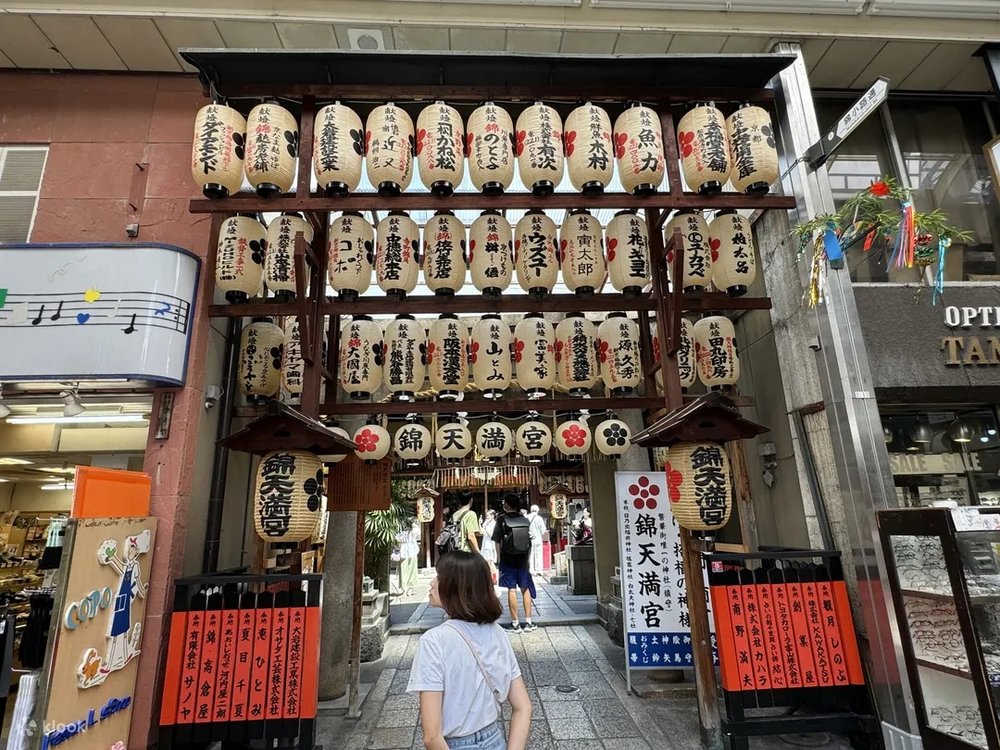
Held on the 25th at
Kitano Tenmangu, a shrine dedicated to the scholar Sugawara no Michizane, and in the streets around it, Tenjin-san has a similar mix of antiques, vintage kimono, pottery, and calligraphy tools, plus food vendors selling takoyaki and sweet mochi. Both markets hold an extra-large edition at the end of the year, Toji's December 21 Shimai Kobo-ichi and Kitano Tenmangu's December 25 Shimai Tenjin.
If you can only fit one in, Kobo-ichi is generally the larger of the two by stall count, while Tenjin-san has the edge for browsing pace since it spreads across both the shrine grounds and the surrounding streets.
Antique and Craft Markets: Teramachi Dori and Hyakumanben Handicraft Market
If your trip doesn't line up with the 21st or 25th, Teramachi Dori's covered arcade runs daily, and the Hyakumanben Handicraft Market adds a dedicated maker's market on the 15th.
Teramachi Dori branches north from Nishiki Market and is lined with antique dealers, secondhand kimono and textile shops, bookstores, and craft stores that keep regular daily hours rather than a once-a-month schedule. It's the reliable fallback for antiques and vintage kimono shopping if your dates don't match Kobo-ichi or Tenjin-san, and it pairs naturally with a Nishiki Market visit since the two are a few steps apart.
The Hyakumanben Handicraft Market at Chion-ji Temple runs on the 15th of every month from around 8am to 4pm, with roughly 400 stalls. Unlike the antiques-heavy Kobo-ichi and Tenjin-san, this one showcases contemporary work like ceramics, textiles, jewelry, woodwork, natural soaps, and organic foods sold directly by the makers.
Depachika: Kyoto's Department Store Food Halls
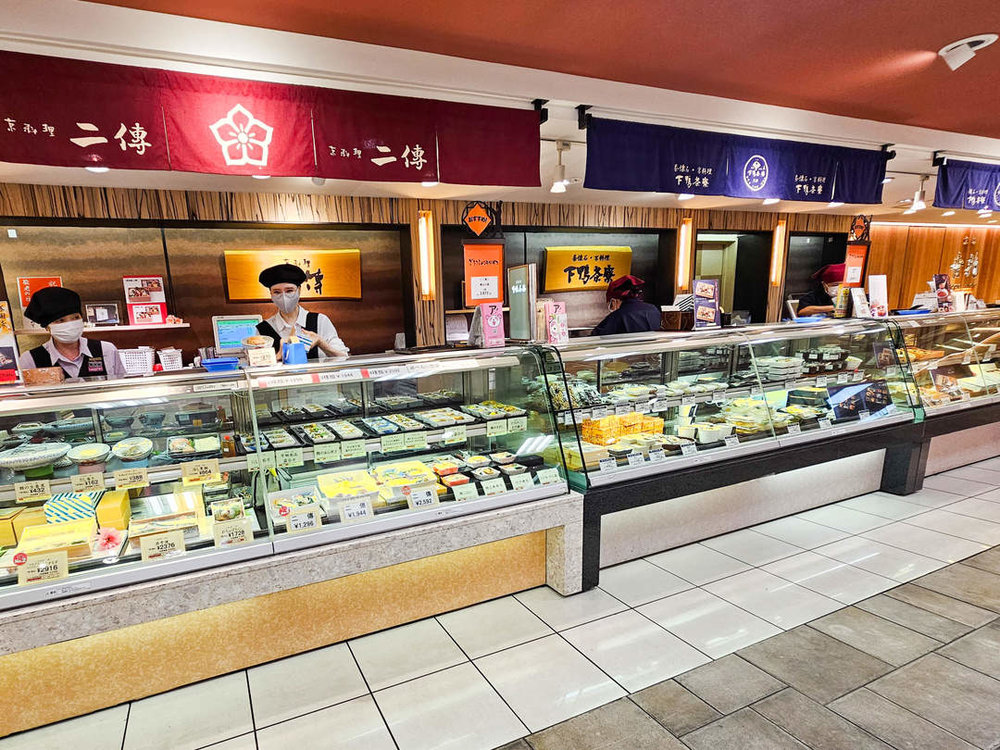
Depachika are department store basement food floors. In Kyoto, the two worth checking out are Daimaru Kyoto at Shijo-Takakura and Takashimaya Kyoto at Shijo-Kawaramachi, both a short walk from Nishiki Market.
Daimaru's basement floor is widely considered one of the best food halls in the city, with fresh produce, meat, fish, tea, wine, Western pastries, wagashi, and prepared foods laid out counter by counter. Takashimaya Kyoto, right across the street, leans slightly more toward gift-ready sweets and a mix of local and international gourmet brands. If you're based near the station rather than downtown, Isetan inside Kyoto Station covers similar ground and works well for picking up a bento before a train.
Depachika are a genuinely useful alternative to Nishiki on a rainy day, or when you want the same range of Kyoto specialties without the narrow-arcade crowds. Unlike many of the smaller Nishiki stalls, card and IC card payment is common at depachika counters. A
Kyoto Nishiki Market & Depachika Small-Group Guided Food Tour pairs a Nishiki walk with a depachika stop if you'd rather see both with a guide.
Practical Tips: Cash vs. Card, Market Etiquette, and Best Times to Visit
Bring cash for the flea markets and many small Nishiki stalls, don't eat while walking through Nishiki's arcade, and aim for the first hour after opening if you want to avoid the crowds.
Flea market stalls at Toji and Kitano Tenmangu are overwhelmingly cash-only, since most vendors are small, temporary setups without card readers. Many individual stalls inside Nishiki Market are cash-preferred too, even though the market's larger shops and nearby depachika counters increasingly accept cards and IC cards like Suica or ICOCA. Carrying yen in small bills and coins makes both the flea markets and Nishiki noticeably smoother.
Nishiki Market's own shopping street association asks visitors not to walk through the arcade while eating since it's narrow and gets crowded. It’s better to eat in front of or inside the shop where you bought the food. It's a small courtesy that keeps the market walkable for everyone, and it's worth knowing before you arrive with a skewer in hand.
Nishiki gets busiest from late morning through early evening, especially on weekends, so arriving right around opening (9 to 10am) gives you the clearest run at the market. For the flea markets, the first hour or so after opening has the best selection before other buyers pick through the antiques, and arriving early also means beating the day's heat if you're visiting in summer.
Frequently Asked Questions
What is the most famous market in Kyoto?
Nishiki Market is Kyoto's most famous market by a wide margin. Nicknamed “Kyoto's Kitchen,” this 400-year-old covered food street in Nakagyo Ward draws far more visitors and searches than any of the city's flea or antique markets, making it the natural starting point if you're only fitting in one.
What food should you try at Nishiki Market?
Graze rather than aim for one big meal: look for skewered Tamagoyaki (Japanese rolled omelet), fresh yuba (tofu skin), Kyoto-style pickles, grilled or skewered seafood, matcha sweets, and small tastings of local sake. Stalls and menus shift over time, so it's worth walking the full stretch before committing to your first stop.
When are the Kyoto flea markets held each month?
Toji Temple's Kobo-ichi runs on the 21st of every month, Kitano Tenmangu's Tenjin-san runs on the 25th, the Hyakumanben Handicraft Market runs on the 15th, and Toji's smaller Garakuta-ichi runs on the first Sunday. All four are fixed monthly dates rather than daily markets, so check them against your travel dates before planning a day around one.
Is Nishiki Market worth visiting?
Yes, especially if you're interested in food, it's one of the easiest ways to try a wide range of Kyoto specialties in a single walk. The trade-off is crowding: the arcade is narrow and gets busy from late morning onward, so if you're crowd-averse, go right at opening or treat a depachika food hall as a calmer alternative.
Where can you buy antiques and vintage kimono in Kyoto?
Teramachi Dori's covered arcade, just off Nishiki Market, sells antiques and vintage kimonos every day of the week. For a bigger selection, Toji Temple's Kobo-ichi (21st) and Kitano Tenmangu's Tenjin-san (25th) are Kyoto's largest antique and kimono markets, just limited to those two dates each month.
What time do Kyoto markets open and close?
Nishiki Market's shops mostly run from around 9 or 10am to 6pm, depachika food halls tend to stay open later into the evening, and the temple flea markets start early, generally around 5 or 6am, and wind down by mid-afternoon. Exact hours vary by shop and by market, so it's worth confirming close to your visit date.
Related Articles
What is Klook?
Klook is a leading pan-regional experiences platform in Asia Pacific, purpose built to digitalize experiences and make them accessible to every traveler.
Our mission is to build the digital infrastructure for the global experience economy — empowering merchants to share their passions and travelers to discover the heartbeat of each destination. We operate a mobile-first, curated platform featuring diverse experiences across global destinations.