
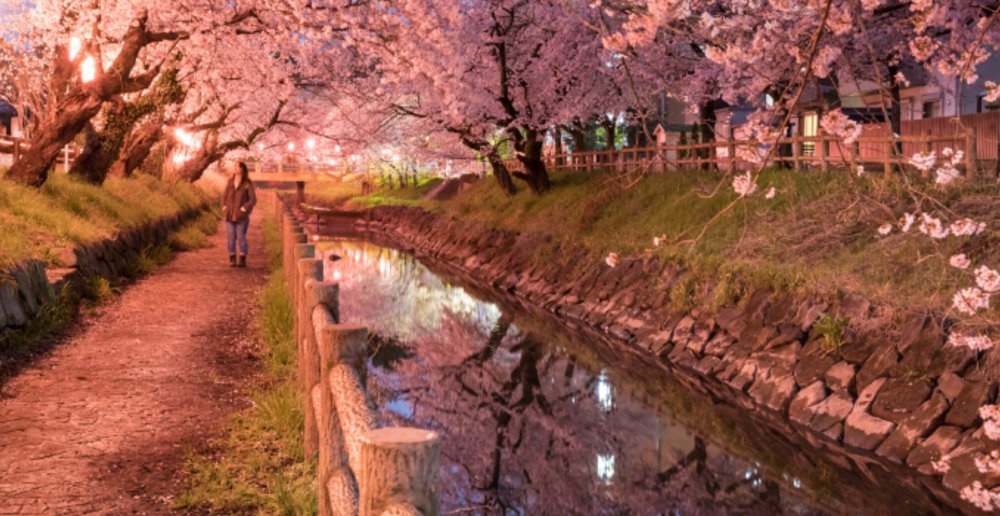
The streets of Japan will be linked with gorgeous pink petals during cherry blossom season.
Ah, the famous cherry blossom season in Japan, the epitome of springtime beauty. Aside from creating stunning landscapes, sakura or cherry blossoms also symbolize a time of renewal and the fleeting nature of beauty. They only bloom for a couple of weeks in a year, so there’s no wonder that locals and tourists alike hurry to snap photos of the ethereal season!
Want to experience it for yourself? Read on to see the best time to visit Japan for cherry blossoms and how you can make the most of the experience. Oh, and you might even find out how to see the iconic pink petals off-season!
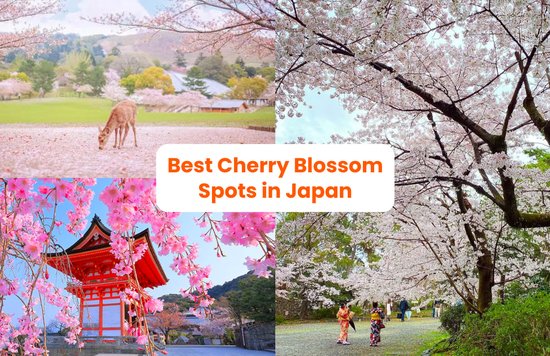
When is the best time to visit Japan for cherry blossoms?
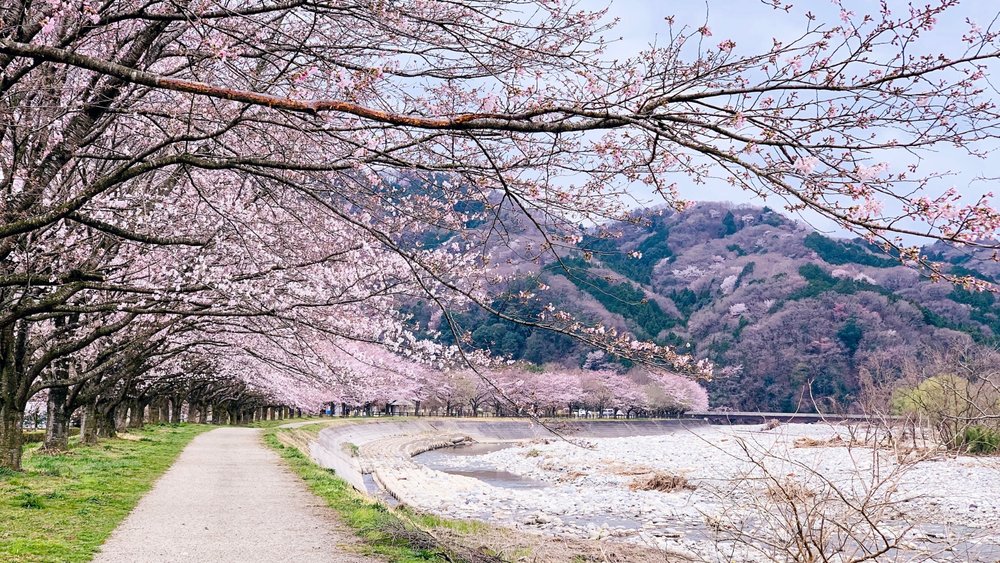
Cherry blossom season starts at different times across various regions of Japan. Credits: Akira Deng on Unsplash
Cherry blossom season generally takes place from late March to early May. However, each region will have its own shorter season, which is typically a couple of weeks. As Japan is a long, skinny country, it can experience a vast array of weather conditions simultaneously, affecting the timing of the blooms.
If you’re lucky enough to be visiting Japan at the tail-end of the skiing season, you may be fortunate enough to tag on to the cherry blossom season as well. As the weather warms up, the flowers will show their sweet little pink faces, starting with the warmest areas and finishing up in Hokkaido late in the season, at the very end of April and beginning of May.
Confused? Or didn’t realize there were so many places to see cities turn pink with sakura fever? Well, let’s start at the beginning of the season and work our way to the end, based on the earliest flowering date and the peak blooming date for each location. Of course, we’d love to fill you in on the best time to visit Japan for cherry blossoms. We’ll also throw in a few handy hints on what else you can get up to once you’ve had your fill of cherry blossoms. You can thank us later!
What are the best months to see cherry blossoms in Japan?
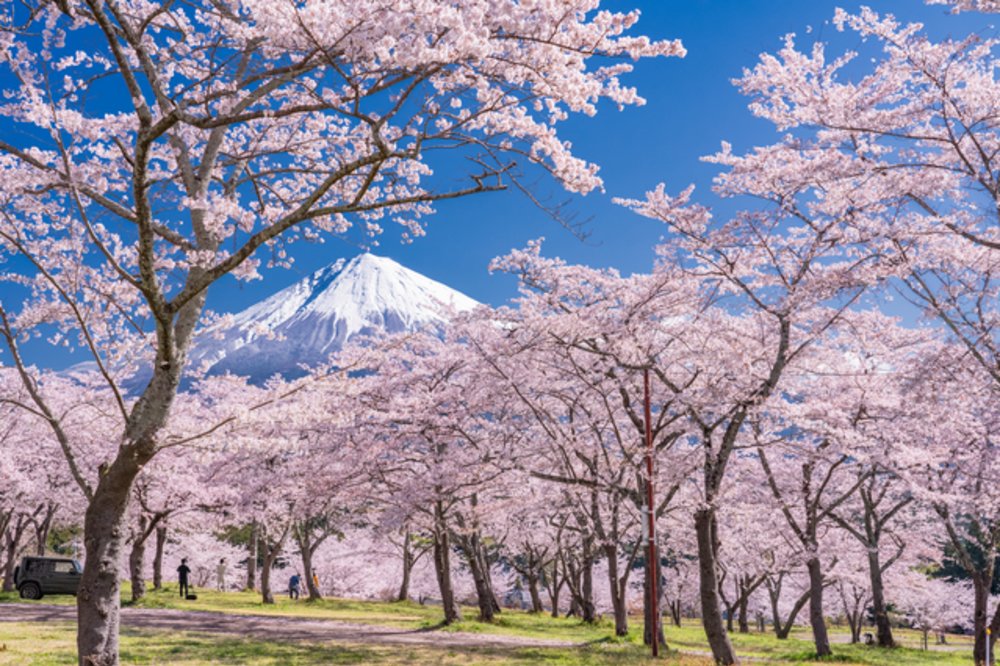
Explore the beauty of Japan during cherry blossom season!
Cherry blossoms bloom as spring in Japan starts. However, the country’s northernmost region, Hokkaido, will be the last to experience this. If you’re going to this region, then you should go around late April to May. For most of Japan, the peak pink season is from late March to late April.
Fun fact: the Shibazakura Festival also happens around this time in Yamanashi. Check out the insanely pink fields of shibazakura (a type of cherry blossom that grows on lawns rather than trees) at the Mt. Fuji Flower Festival Tour!
And while you’re in Mount Fuji’s area, complete your visit by dropping by the Fuji Five Lakes: Kawaguchiko, Yamanakako, Saiko, Shōjiko, and Motosuko.
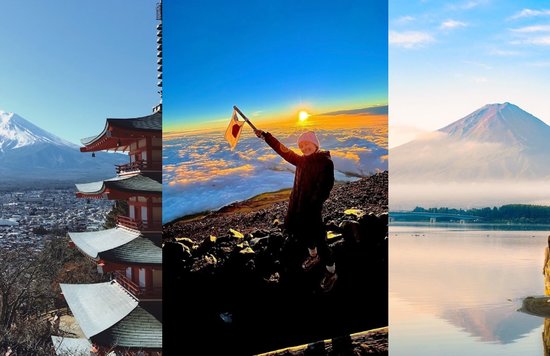
You can also explore the legendary Mount Fuji further with a hike. Here’s all you need to know about climbing Mount Fuji:
What is the cherry blossom forecast for Japan in 2026?
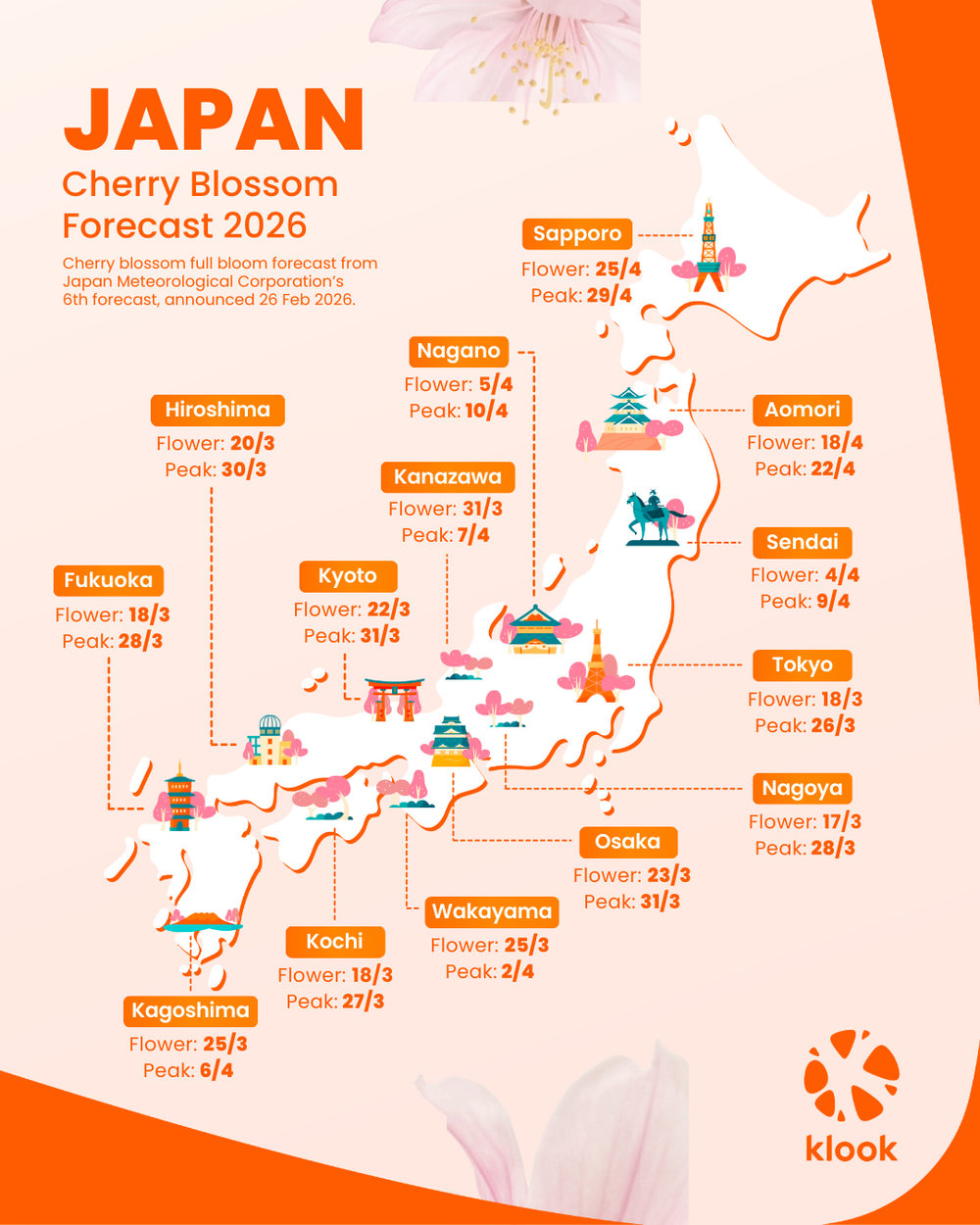
Cherry blossom full bloom forecast from Japan Meteorological Corporation’s 6th forecast, announced 26 Feb 2026.
Tokyo will be among the first cities to experience cherry blossoms, with the flowers expected to bloom around March 22 and peak on March 29. Meanwhile, the cherry blossoms in Kyoto and Osaka are expected to bloom on March 25, with both cities reaching their peak blooming time on April 2 and April 1, respectively.
How long do the cherry blossoms last in Japan?
The relatively short period in which cherry blossoms bloom makes the season special. A week after kaika or the first blossom, mankai or full bloom is finally reached. Another week after that, the blossoms will start falling from the trees, creating that snow-like shower of petals. This means you have at most three weeks to enjoy the cherry blossoms each year! So again, make sure to take note of the best time to visit Japan for cherry blossoms.
Where are the best places to see cherry blossoms in Japan?
1. Tokyo and surrounding areas
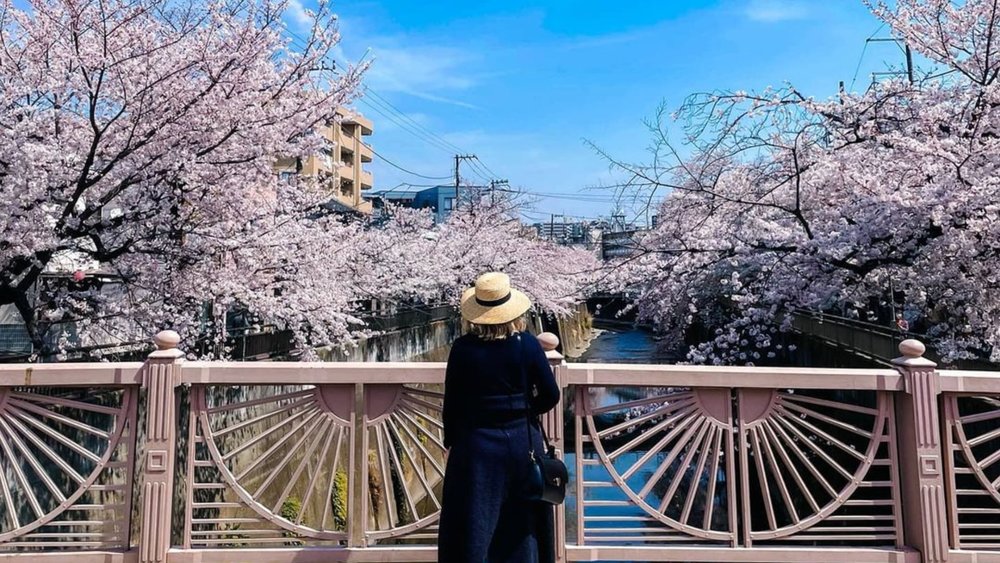
Tokyo gets a taste of the cherry blossoms first! Credits: @globetrottingpeanuts on Instagram
City | Date when it Begins | Date when it Peaks |
|---|---|---|
Tokyo | March 18 | March 26 |
Fukuoka | March 18 | March 28 |
Kumamoto | March 21 | April 2 |
Nagoya | March 17 | March 28 |
Hiroshima | March 20 | March 30 |
Matsuyama | March 22 | April 1 |
Kofu | March 21 | March 30 |
Kyoto | March 22 | March 31 |
Yokohama | March 20 | March 28 |
Osaka | March 23 | March 31 |
Kobe | March 27 | April 5 |
Cherry blossoms are set to spring out into the open in the week of 20 to 27 March this year. As we approach peak cherry blossom viewing season, areas in Japan's eastern, central-western, central, and south-western regions will begin to see pastel pink petals forming.
The sheer number of viewing locations is good news for those attending during this time, as crowds can easily spread throughout these diverse locations.
A few of our fave things to do include a walking tour of Tokyo, taking in some of the best places that are populated with cherry blossoms, such as Ueno Park, a visit to Osaka Castle, where the jagged hodgepodge of the castle wall juxtaposes fantastically with the perfect pink petals skimming along it; and Itsukushima Shrine at Hiroshima, best viewed from afar and framed by the cherry blossoms for a quintessentially Japanese moment.
You can also go on a Kyoto cherry blossom walking tour, where you’ll get to visit shrines and castles with pretty cherry blossoms as your backdrop.
2. Nara and Kanzawa
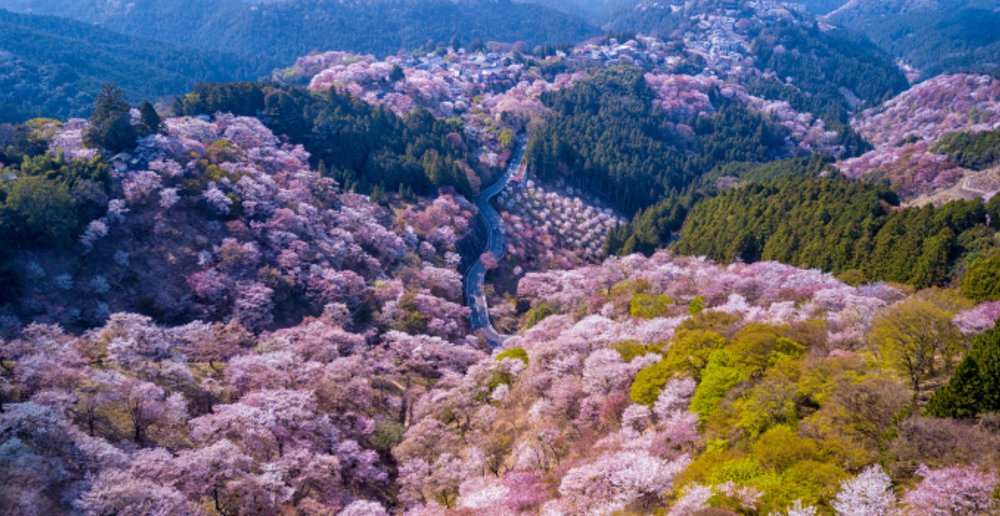
Nara and Kanzawa are blessed with nature spots ideal for cherry blossom season.
City | Date when it Begins | Date when it Peaks |
|---|---|---|
Nara | March 25 | April 5 |
Kanazawa | April 2 | April 8 |
Two of the most popular places to view the cherry blossoms are Nara and Kanazawa and it’s no coincidence that both of these places feature some of the most picturesque attractions.
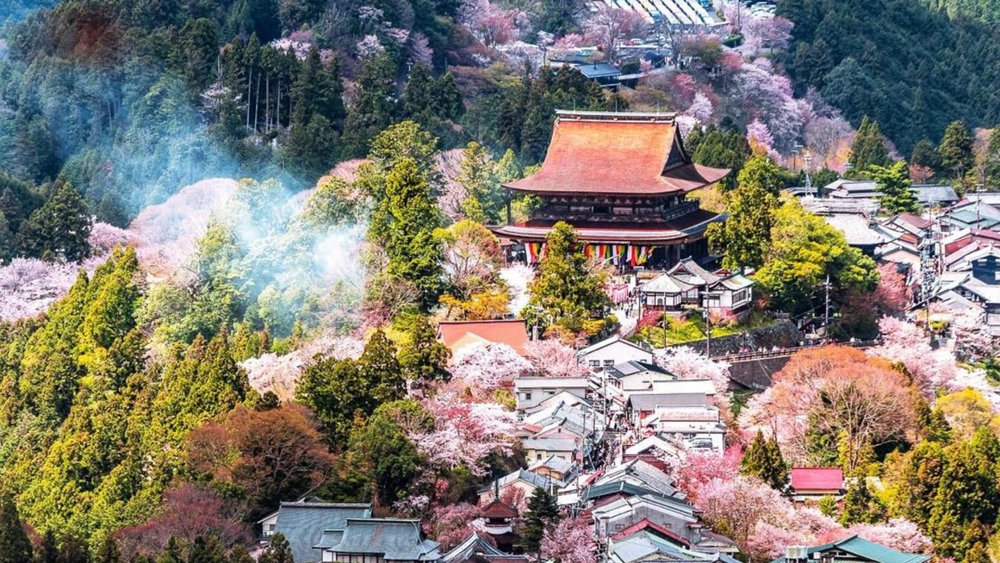
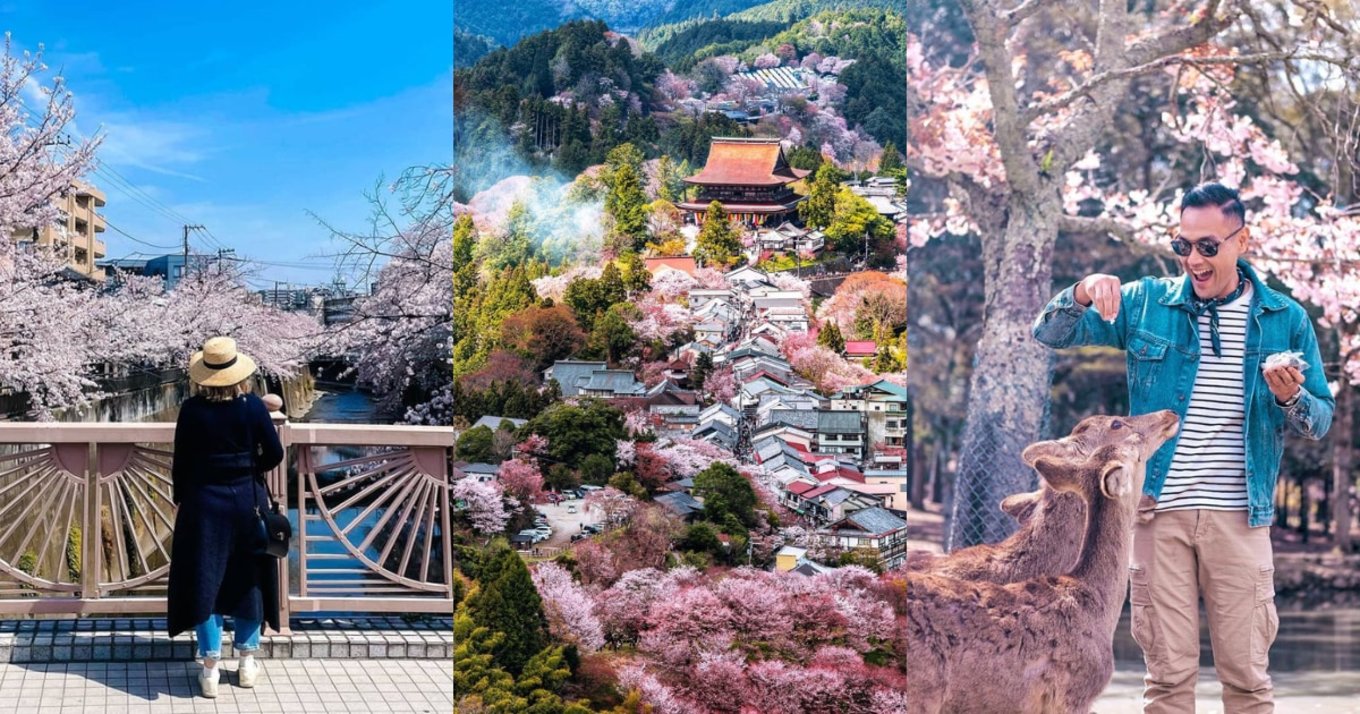
The architecture of Mount Yoshino dotted with cherry blossoms makes a postcard-perfect image. Credits: @korrokej on Instagram
Nara’s Mount Yoshino has an outstanding view of cherry blossoms flowing down the mountain like an unbridled horse on the run. The way they scatter throughout the other vegetation and the traditional architecture is like something from a picture book.
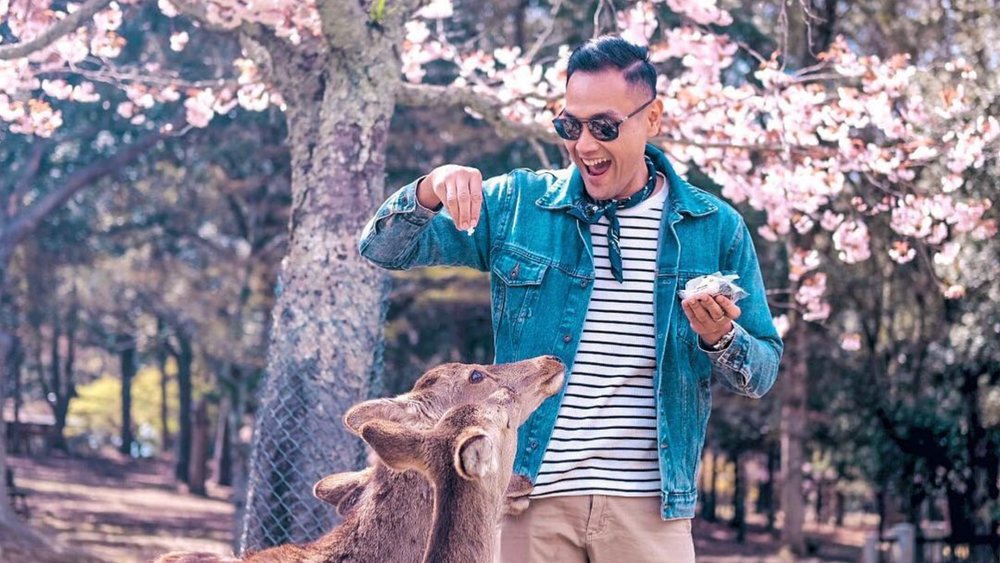
Meet the free-roaming deer of Nara Park as the cherry blossoms bloom. Credits: @mhartoto on Instagram
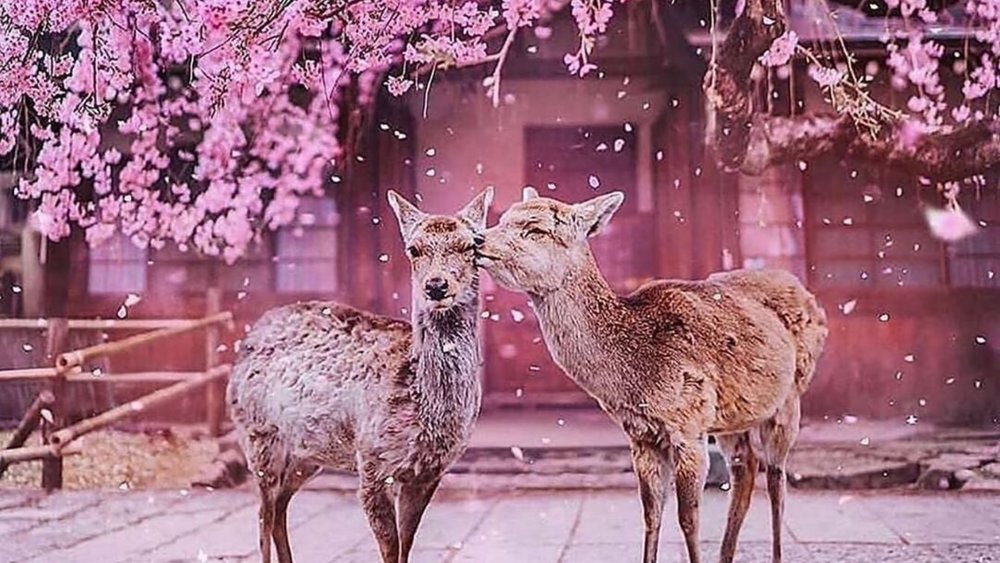
Nara Park is the perfect picture of nature with its flora and fauna. Credits: @tankensurujapan on Instagram
Nara is also home to Nara Park, a large public park that features tea houses, temples and, oh, just in excess of 1000 free-roaming deer that love humans. Just think, you could potentially break the internet with that shot of you, a deer and a sea of pink trees behind you so if you want to get as many likes as a Kardashian, now is your time.
Kanazawa looks like a city that was built for its cherry blossoms, and not the other way around. The way the trees complement the white-washed walls of Kanazawa Castle is a photographer’s dream and a very serene way to take in the sites.
3. Fukushima and Nagano
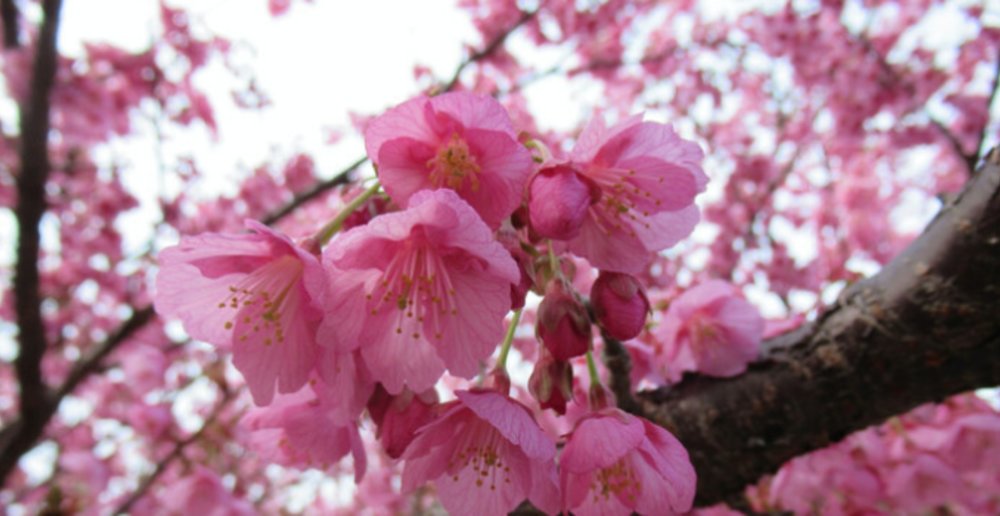
The Sakura or cherry blossoms are intricately beautiful up close.
City | Date when it Begins | Date when it Peaks |
|---|---|---|
Fukushima | April 7 | April 11 |
Nagano | April 7 | April 16 |
Let’s get our Jon Snow on and venture north for a mid-season look at the cherry blossoms of Fukushima and Nagano.
These places are not that close to each other but somehow share almost the same peak bloom dates. The best way to navigate this conundrum would be to work out what else there is on offer at each location and whether it’s up your alley. Or, you know, flip a coin?
Fukushima is a beautiful city with a dense and traumatic history. So, if you have an interest in global affairs or just want to see the inspirational beauty of nature, this is your place. Here, the trees are strewn up and down the mountainside in a rare and rugged display of this fascinating flora that usually lines streets, paths, and canals.
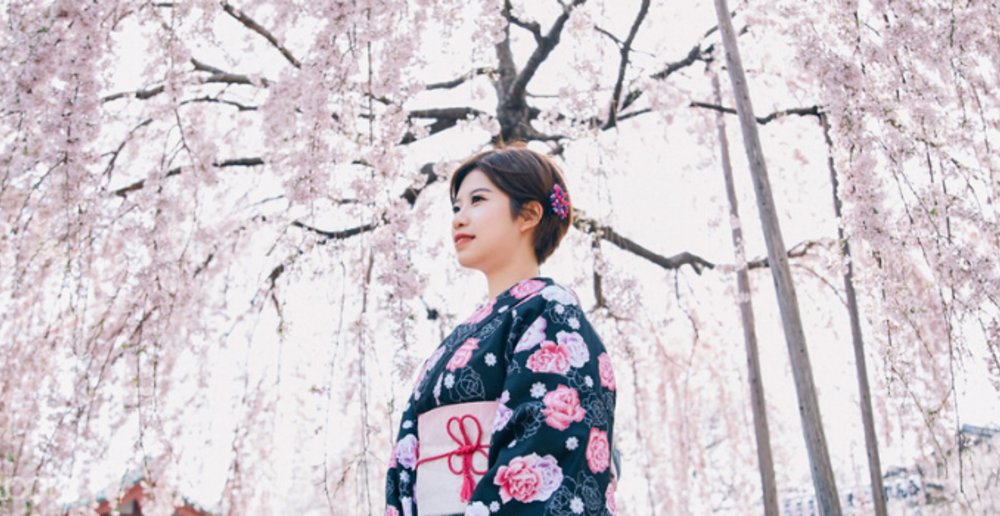
Winter is longer in Nagano, so expect stunning wintery backdrops!
Nagano sits at a high elevation, which is why its season starts later. The cold of the winter takes longer to dissipate, and the flowers want to stay tucked in as long as possible. We never thought we would find a flower to be so relatable.
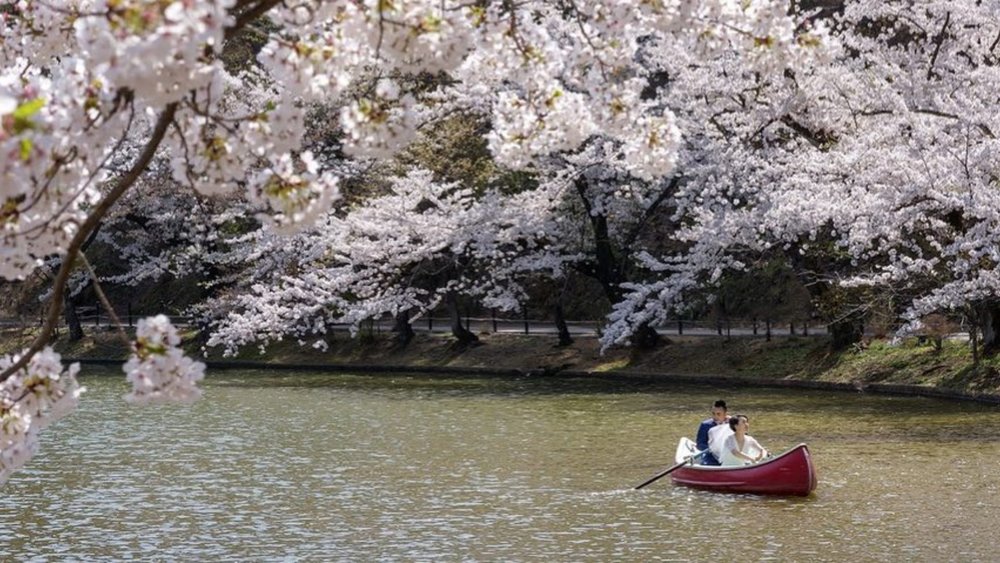
You can extend cherry blossom season in Japan by going from Tokyo to Nagano! Credits: @37frames on Instagram
Based in Tokyo but missed its cherry blossoms or just want a second hit? Take a day trip to Nagano, it’s only a train ride away! From Tokyo Station, just take the Hokuriku Shinkansen to Nagano Station, which should take about an hour and a half.
Klook Tip: Get access to this railway by getting your JR Passes.
4. Hokkaido
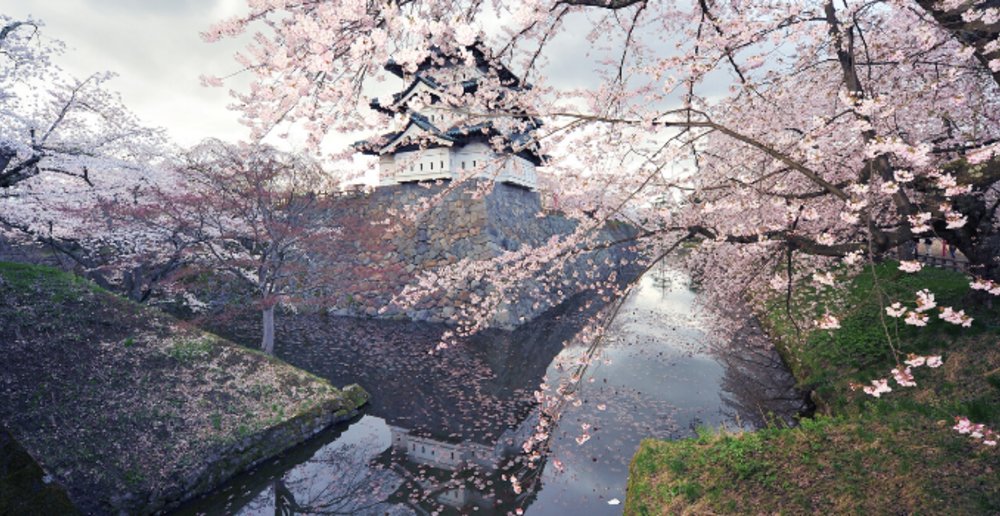
Hokkaido is the last region to receive cherry blossoms.
City | Date when it Begins | Date when it Peaks |
|---|---|---|
Sapporo | April 26 | May 5 |
Hakodate | April 26 | May 3 |
Finishing way up north, cherry blossom season in Japan enters its third month with a late display in Hokkaido. Peaking almost six weeks after the blooms are expected to arrive in Tokyo, the trees located on this island in the areas of Sapporo and Hakodate will be at their very best by 5 May.
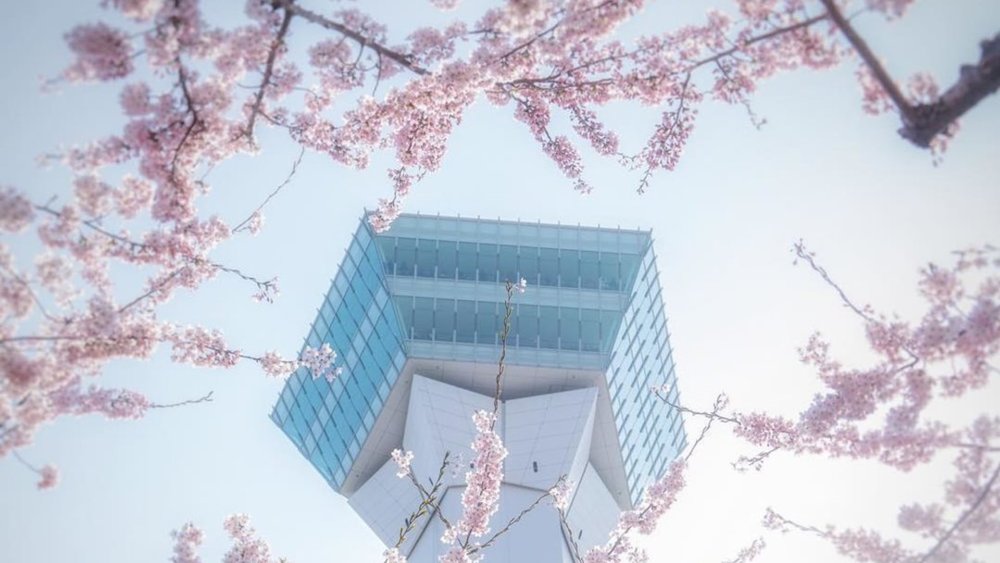
Hokkaido is perfect for nature lovers and adrenaline junkies! Credits: korrokej on Instagram
Hokkaido is an exciting place for nature lovers and adventure seekers alike. It’s a little bit like Queenstown and attracts thrill-seekers, skiers, and those who just want to marvel at its beauty. If you are basing yourself in Tokyo, you can also make a day trip out to Hokkaido for this special viewing experience. Goryokaku Fort is a must-visit for some of the best cherry blossoms in this area!
Chasing cherry blossoms around the country can certainly make you hungry, so why not spoil yourself with a visit to Michelin-starred restaurant, Ryotei Fumoto. The pristine setting will match the impeccable food you can enjoy for lunch or dinner as you celebrate successfully ticking ‘see the cherry blossoms in Japan’ off your bucket list.
What happens if you miss peak cherry blossom season?
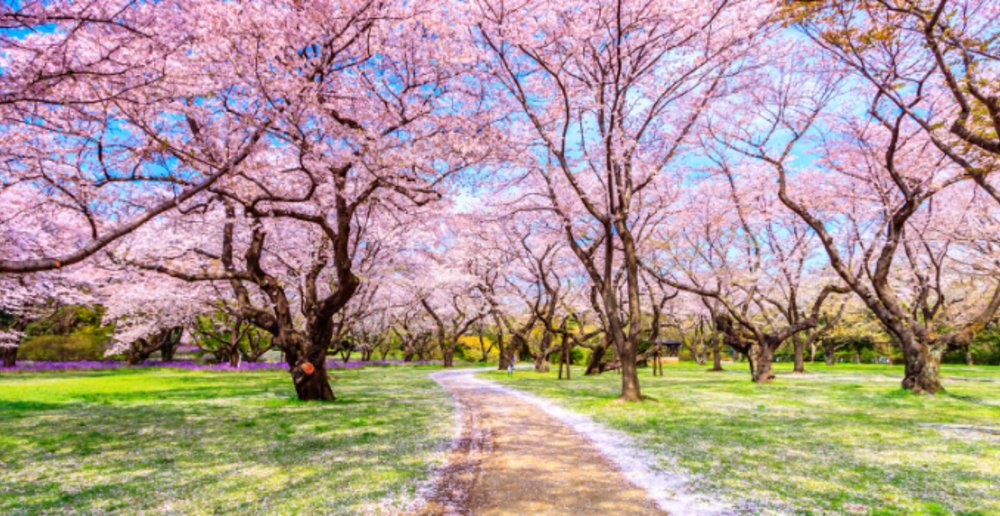
The flowers have a two-week life cycle
If you can’t see the cherry blossoms in the week after they are in full bloom (i.e. the week where they will have an abundance of flowers and each flower will be chock full of petals), don’t worry too much. While this period is often considered the best time to visit Japan for cherry blossoms, the flowers will not disappear completely but will merely be replaced by vibrant green leaves. This is called hazakura and signifies a farewell to spring and an oh heeeeey to the summer months.
Although there’s not a complete sea of pink, the trees still look spectacular with their budding green branches dotted with the strongest little flowers, who are squeezing as much life out as possible. A very worthy consolation prize if you simply cannot be around at prime time.
Not going to be in Japan any time close to spring?
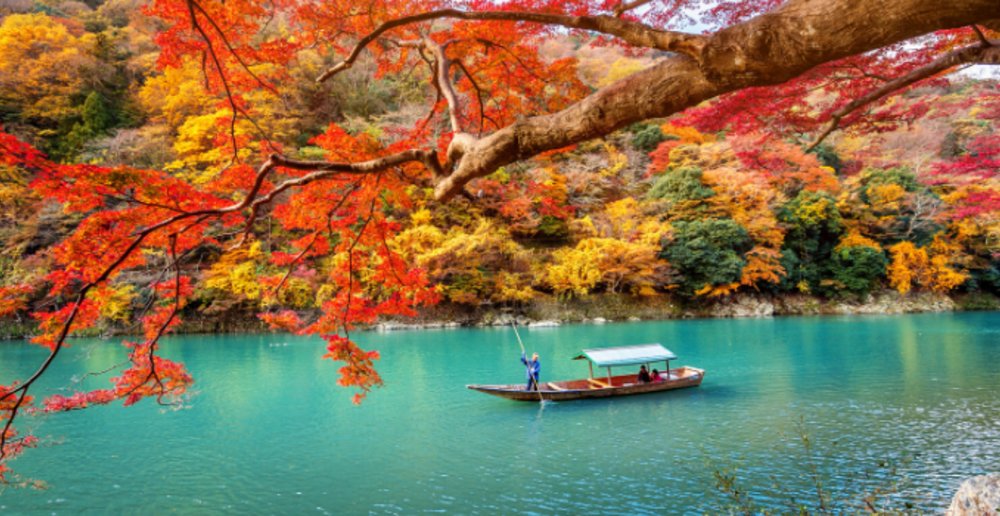
The cherry trees’ leaves turns orange to red in autumn
If your travel plans ‘fall’ during September, October, or November, you will be in Japan during autumn, which is the complete opposite of cherry blossom season. Instead of baby pink blooms, you will be treated with fiery red and orange trees, as the leaves turn in anticipation of winter.
So, whether it’s the first day in Tokyo that you’re keen on or a leisurely and less-crowded sojourn in Hokkaido that’s more your style, the short-lived cherry blossom season can actually work around your timeline and help you see some of the roads less traveled if you plan carefully. Cherry blossom season in Japan or not, you’re guaranteed picture-perfect nature views!
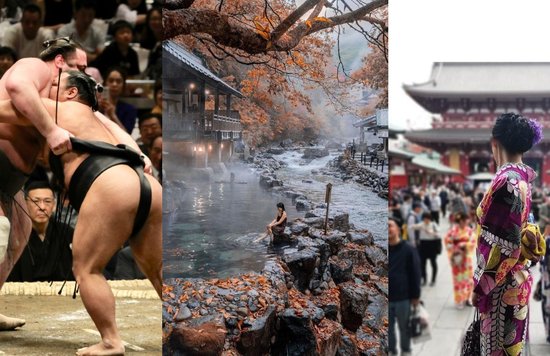
If you’re also interested in culture aside from nature, check out these ten interesting cultural experiences that you can’t miss in Japan:
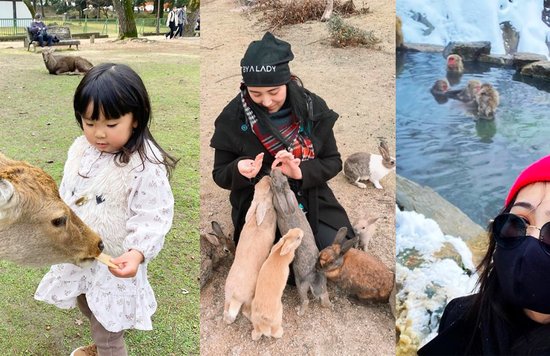
Of course, we can’t leave furry friends out of the picture! Try these six ethical wildlife encounters exclusive to Japan:
Now that you know the best time to go to Japan for cherry blossoms, all that’s left is to plan your trip and enjoy the magic of sakura season.
Updated by: Rohana Monzon
FAQs
1. What month is the best to see cherry blossoms in Japan?
The best time to see cherry blossoms in Japan is from late March to early April for major and popular cities like Tokyo, Kyoto, and Osaka.
2. What is the cheapest month to go to Japan?
The cheapest months to go to Japan are January (after New Year's) and February, as well as June (during the rainy season).
3. Is Kyoto or Tokyo better for cherry blossoms?
Kyoto is better for a traditional and picturesque cherry blossom experience, while Tokyo is ideal for lively and modern hanami (picnic) experiences.
4. Is Japan expensive during cherry blossoms?
Yes, Japan is at its most expensive and crowded during the peak cherry blossom season (late March to mid-April).
What is Klook?
Klook is a leading pan-regional experiences platform in Asia Pacific, purpose built to digitalize experiences and make them accessible to every traveler.
Our mission is to build the digital infrastructure for the global experience economy — empowering merchants to share their passions and travelers to discover the heartbeat of each destination. We operate a mobile-first, curated platform featuring diverse experiences across global destinations.
✨ Follow us for more deals and inspiration for your upcoming travels