
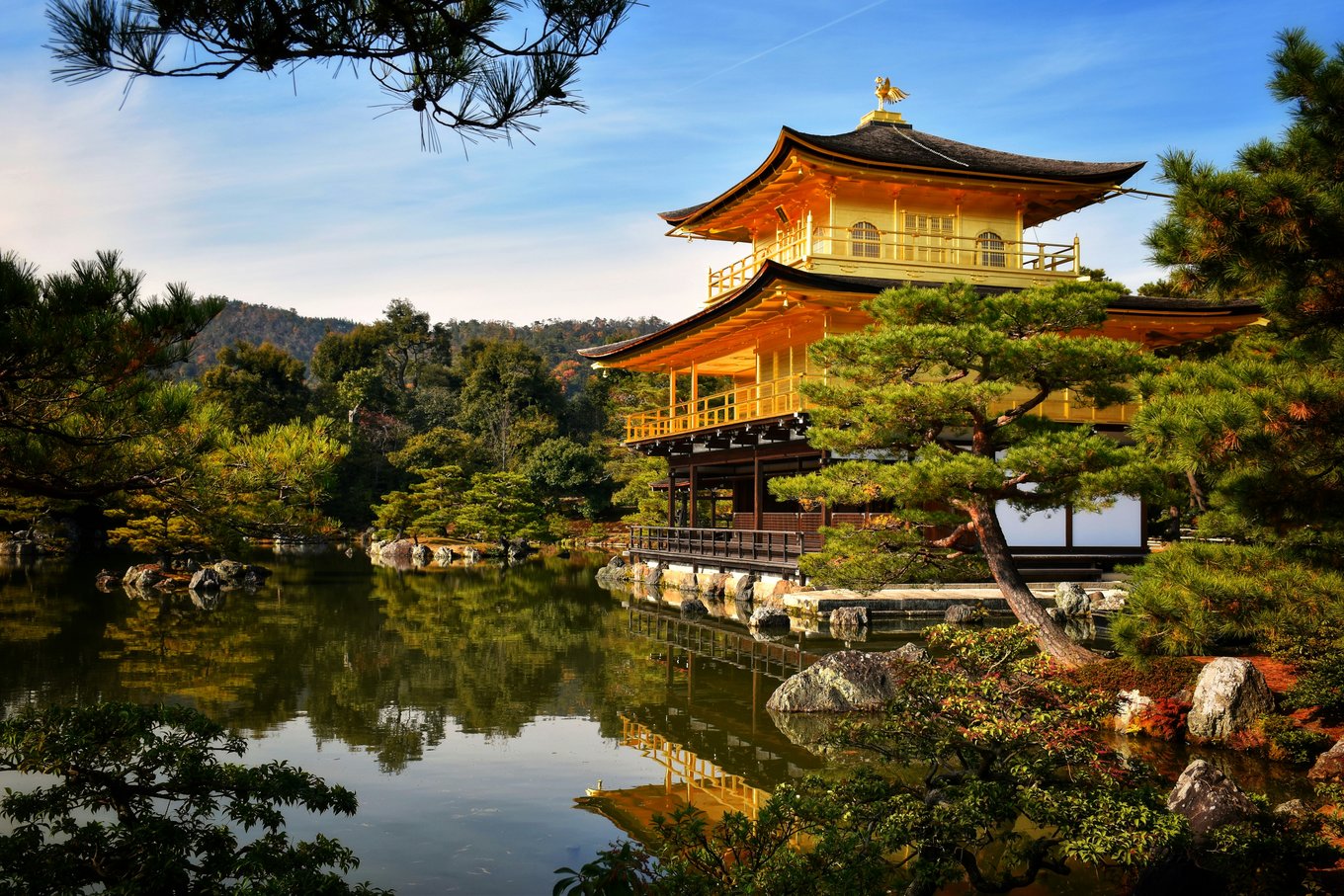
Have you ever seen a temple covered in real gold? Kinkaku-ji, or the Temple of the Golden Pavilion, is one of Kyoto’s most famous Zen temples. Its two upper floors are completely covered in gold leaf! This majestic pagoda is surrounded by a clear pond that reflects its beauty.
If you’re visiting Kyoto, you can’t miss the Golden Pavilion, a UNESCO World Heritage Site! Beyond the temple itself, the walking grounds are surrounded by nature that gives an unexplainable sense of calm. 🍃 Need more convincing? Here’s everything you need to know before you visit.
Fun Facts About Kinkaku Kyoto
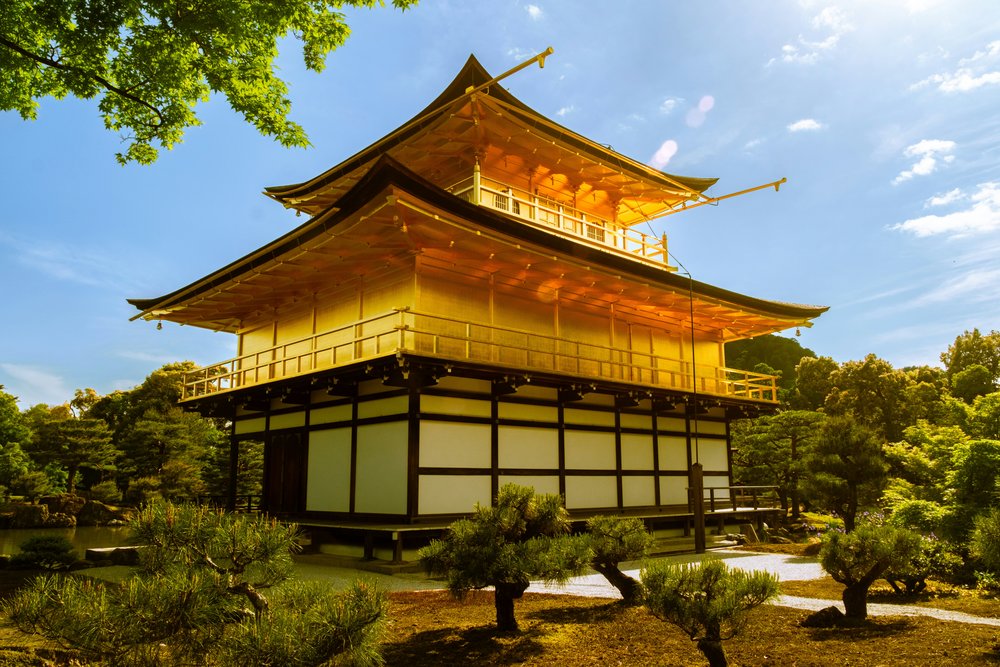
A full view of the Golden Temple | Photo by Uli Valdez on Unsplash
You might be wondering why the temple is covered in gold. ✨
Before becoming the beloved tourist spot it is today, Kinkaku-ji, built in 1397, was originally a retirement villa for shogun Ashikaga Yoshimitsu. The Golden Pavilion was designed to be the center of the complex, with gardens sprawling around it. It became so popular in history, even emperors would visit the place!
Klook tip: Around the gardens, you’ll notice small shrines with hollow, basin-like centers filled with coins. Visitors often make wishes and toss a coin. If it lands on the center, the wish is believed to come true.
After Ashikaga Yoshimitsu’s death, the villa was turned into a temple as per his wishes. Sadly, the temple and other buildings on the grounds have burned down several times throughout history, leaving the current structure as the last remnant of Yoshimitsu’s retirement complex.
In 1950, an angry monk set the temple on fire again. It was rebuilt in 1955, giving us the stunning Golden Temple Kyoto that lots of people flock to today.
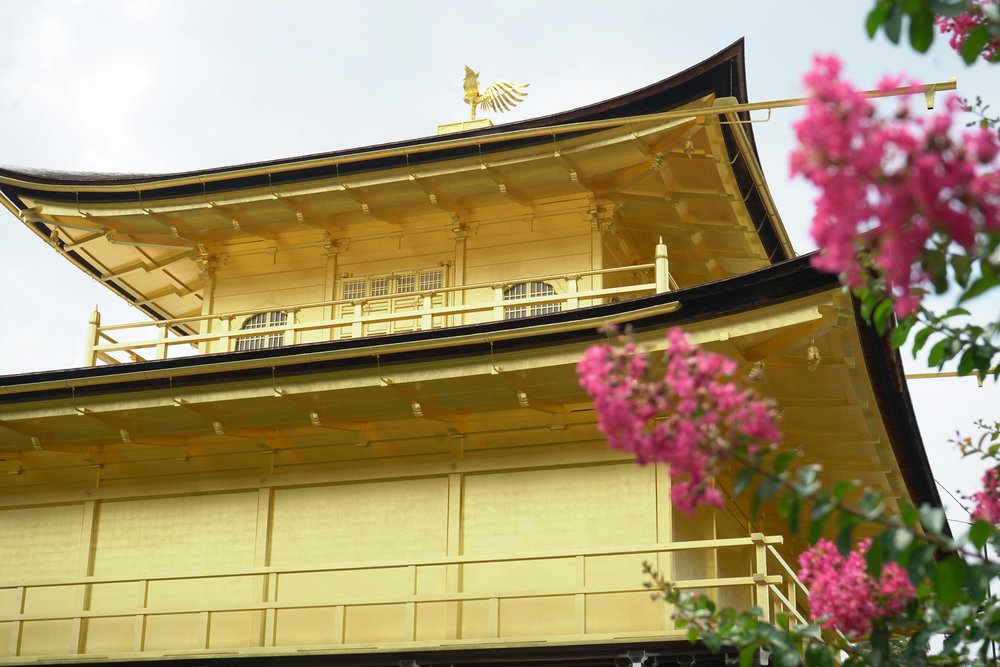
The upper 2 floors of the temple are covered in real gold | Photo by Yosuke Ota on Unsplash
The Golden Temple Kyoto was covered in gold to symbolize wealth, purity, and enlightenment. Aside from this, the glow of the temple was meant to reflect the sun which represents life and power. 💪🏻
The inside of the temple is off-limits, but it’s also coated in gold leaf. It contains a golden statue of Ashikaga Yoshimitsu as well as sacred relics of the Buddha.
Klook tip: Some shops in the entrance of the temple complex offer soft serve ice cream decorated with gold leaf shavings. You could literally taste the gold yourself for the complete experience! 🍦
Getting to the Kinkaku Ji Temple Kyoto
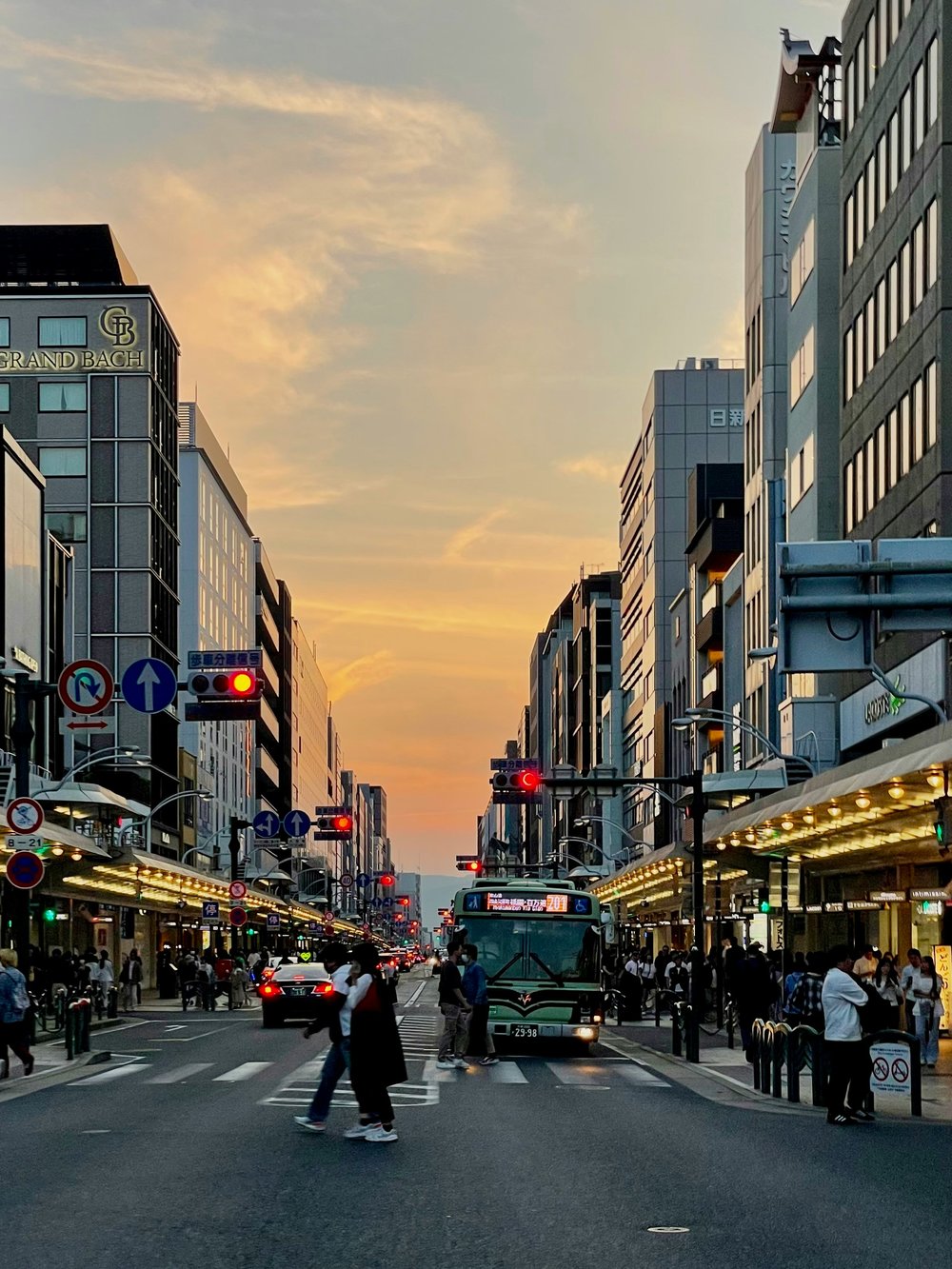
Various modes of transportation outside of Kyoto Station | Photo by Yash Banka on Unsplash
The way to the Golden Temple Kyoto might be a bit tricky since it’s located in the far northwest of Kyoto, where major train lines aren’t available. So, here are your options:
1. Kyoto City Bus 🚌
From Kyoto Station, you can choose to ride a city bus.
First, head to the main bus terminal. Then, take Kyoto City Bus #205 from Stand B3. Make sure it’s the regular #205, not the Rapid #205 that departs from the same stop, as the rapid service skips the Golden Temple Kyoto. Look for the word ‘Rapid’ written above the bus number to avoid confusion.
Alternatively, you can take Kyoto City Bus #101 from Stand B2. This route is especially convenient, as it offers announcements in multiple languages, including English.
It takes around 40 minutes and costs 230 YEN (~1.56 USD) per person.
2. Taxis 🚖
There are also taxis available outside Kyoto Station. The drivers usually speak English as well! Prepare atleast 3,200 YEN (~21.7 USD) to 3,900 YEN (~26.45) for the fare.
3. Car rental 🚙
If you’re staying in Osaka and planning just a day trip to Kyoto, renting a car can be the most convenient option. You won’t need to worry about catching trains between the two cities, and once in Kyoto, you’ll have the flexibility to explore at your own pace. Plus, with an English-speaking driver, navigating around and finding your destinations will be hassle-free.
You can rent a car per day for 10 hours. The price depends on the number of people in your group as well as the kilometers you would be travelling.
Best Time to Visit
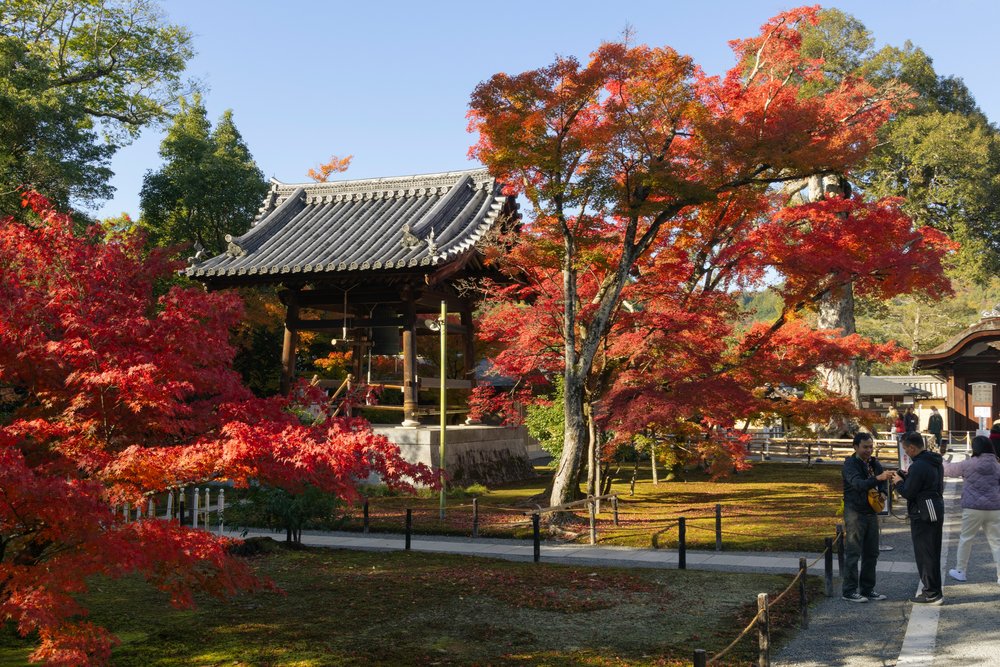
The temple grounds during autumn season | Photo by Charlie Charoenwattana on Unsplash
The Golden Temple Kyoto welcomes visitors all year-round from 9:00 AM to 5:00 PM, and each season paints it in a different light. While it’s breathtaking no matter when you go, spring brings a magical backdrop of cherry blossoms, while autumn transforms the gardens into a sea of vibrant red leaves. This makes the grand Golden Pavilion Temple in Kyoto even grander than it already is!
Tickets cost 500 YEN (~3.40 USD) per head for adults, including high school students, and 300 YEN (~2.04 USD) for children.
Klook Tip: Before leaving the temple grounds, you’ll come across four red posts said to reveal your fortune. Unlike many temples, this one offers fortunes in multiple languages, including English, so take advantage of the experience! If you receive a good fortune, you can take the slip home as a keepsake. If it’s a bad one, simply tie it to the designated rack beside it to leave the misfortune behind.
Other Things to do in Kyoto
Arashiyama Bamboo Forest
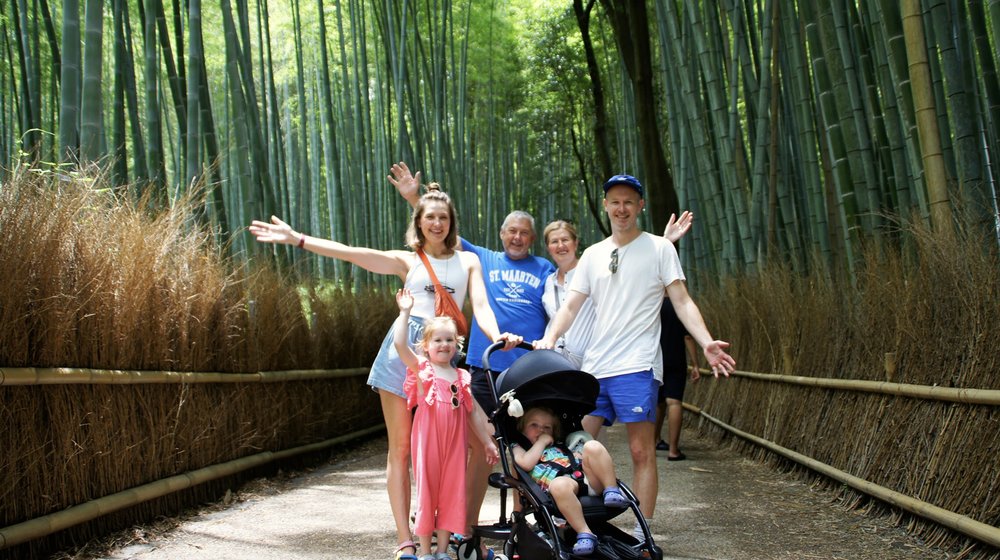
A lovely walk at the Arashiyama Bamboo Forest | Photo by: https://www.klook.com/en-US/activity/161152-kyoto-arashiyama-walking-tour-with-monkey-park-visit/
The Arashiyama Bamboo Forest is a scenic walkway in Kyoto surrounded by tall bamboo stalks. The vibe is almost otherworldly! It’s a popular spot for visitors looking to enjoy a peaceful stroll and take in the fresh bamboo-scented air.
Hozugawa River Boat Ride
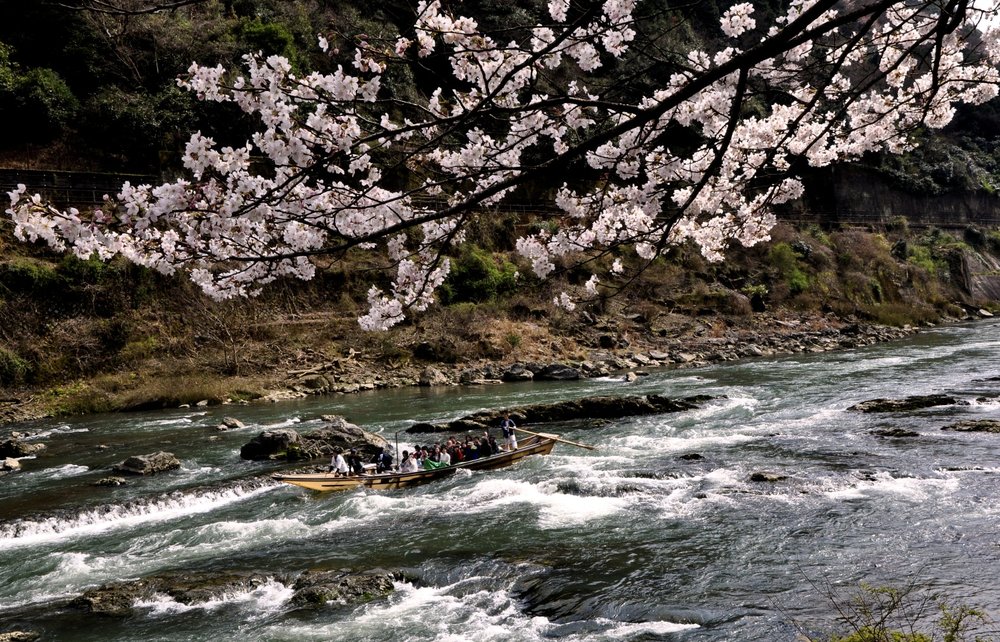
The Hozugawa River Boat during cherry blossom season | Photo from: https://www.klook.com/en-US/activity/74947-kyoto-arashiyama-hozugawa-river-boat-ride/
Take a scenic boat ride on the Hozugawa River. It’s a scenic 16-kilometer journey through Kyoto’s mountains and valleys. With friendly boatmen to guide you through rapids, it’s a thrilling yet beautiful way to experience the natural scenery.
Fushimi Inari Taisha Shrine
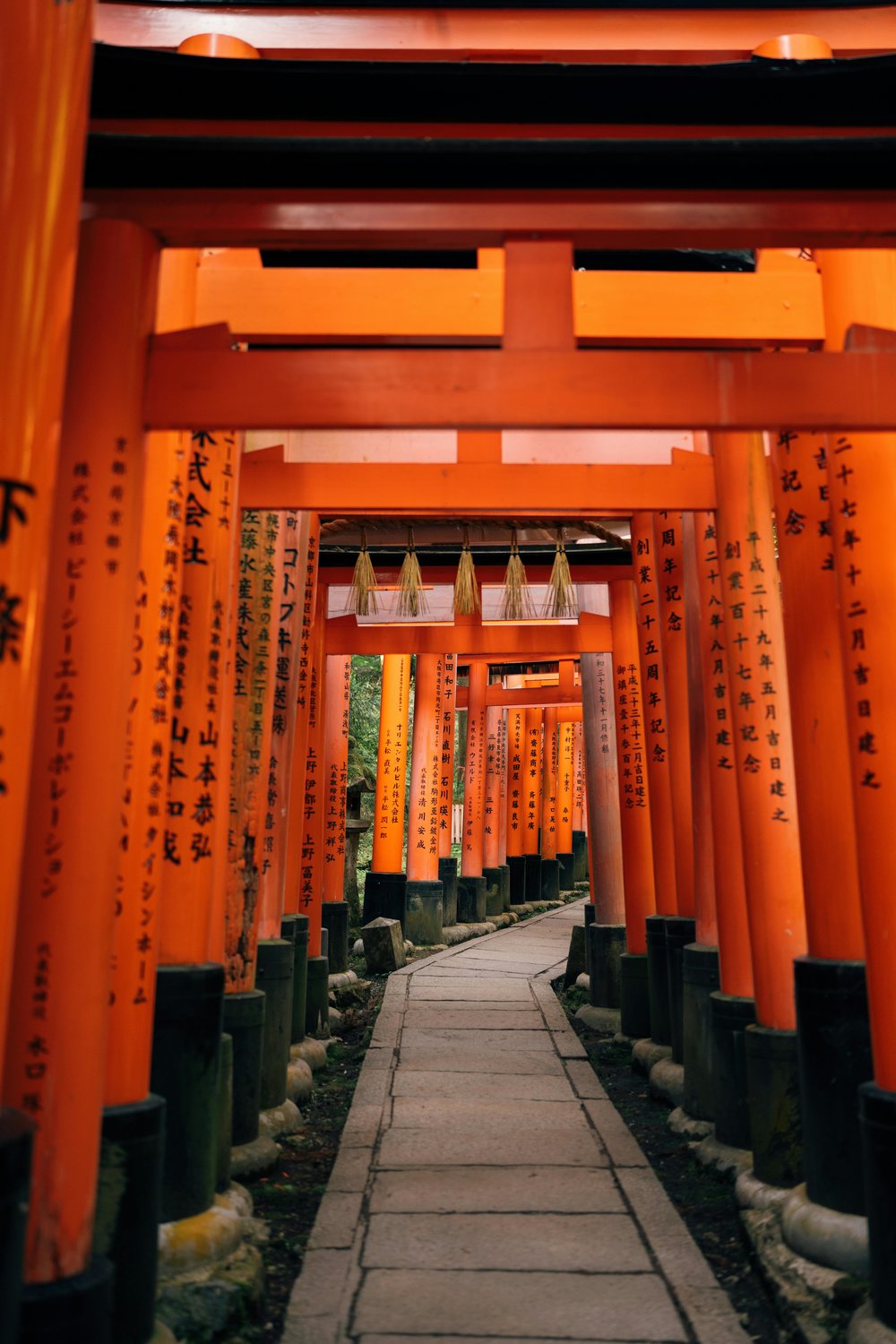
Thousands of red torii gates that you can walk through | Photo by Gül Işık on Unsplash
One of Kyoto’s famous icons, the Fushimi Inari Taisha Shrine is a must-visit. Expect thousands of vibrant red torii gates that form trails up Mount Inari. Hike through the pathways as you enjoy one of Kyoto’s most photographed sights.
With all this info and tips, you’re all set to enjoy Kinkaku-ji to the fullest. May your visit be as magical as the Golden Pavilion itself!
FAQs
Is the Golden Temple in Kyoto worth visiting?
The Golden Temple is definitely worth a visit! Golden temples are a rare sight to see around the world. Aside from this, the paths and gardens allow you to experience Japan’s serene nature. If you love culture and spirituality, you can participate in Japanese temple traditions around the complex.
What is the significance of the Golden Temple in Kyoto?
The gold leaf that covers the temple symbolizes wealth, purity, and enlightenment. Since it was designed to reflect the sun, it also signifies life and power.
Can you go inside the Golden Temple in Kyoto?
Unfortunately, the inside of the temple is off-limits. There are important shrines and relics placed inside, so it’s best to keep the sanctity of the temple.
Is the Golden Temple in Kyoto made of real gold?
Yes, the top two floors are covered in real gold leaf! Even the inside is said to be covered in gold.
What is Klook?
Klook is a leading pan-regional experiences platform in Asia Pacific, purpose built to digitalize experiences and make them accessible to every traveler.
Our mission is to build the digital infrastructure for the global experience economy — empowering merchants to share their passions and travelers to discover the heartbeat of each destination. We operate a mobile-first, curated platform featuring diverse experiences across global destinations.
✨ Follow us for more deals and inspiration for your upcoming travels