
Traveling around Switzerland can be pricey, and no one wants to spend extra on passes they won’t end up using.
The Swiss Travel Pass is a Switzerland train pass that covers buses, boats and city transit in 90+ towns, so one QR code handles most of your Switzerland rail travel. It pays off when you stack long rides and loses when you park in one city. We’ll run the numbers, break down the Swiss Travel Pass cost by duration, and walk through buying and activating it.
Quick answer: is the Swiss Travel Pass worth it?
Most first-timers want the verdict before the details, so here it is.
- Worth it? Yes, if you’re covering three or more regions with at least three long train days, or a couple of free mountain trips. No, if you’re staying in one city.
- Covers: Unlimited trains, buses and boats on the national network, city transit in 90+ towns, and free entry to 500+ museums.
- Doesn’t cover: Seat reservation fees on panoramic trains, most mountain excursions at full price, and Rhine Falls boat rides.
- Price (adult, 2nd class): 3 days CHF 254 (about $315), 4 days CHF 309 (about $385), 6 days CHF 399 (about $495), 8 days CHF 439 (about $545), 15 days CHF 499 (about $620).
The Swiss Travel Pass cost is set in Swiss francs, and the official word is that prices hold steady through 2027. That means the dollar figures only move with the exchange rate, so check the exact USD price at checkout. First class runs about 60% more, and travelers under 25 get 30% off.
What the Swiss Travel Pass covers
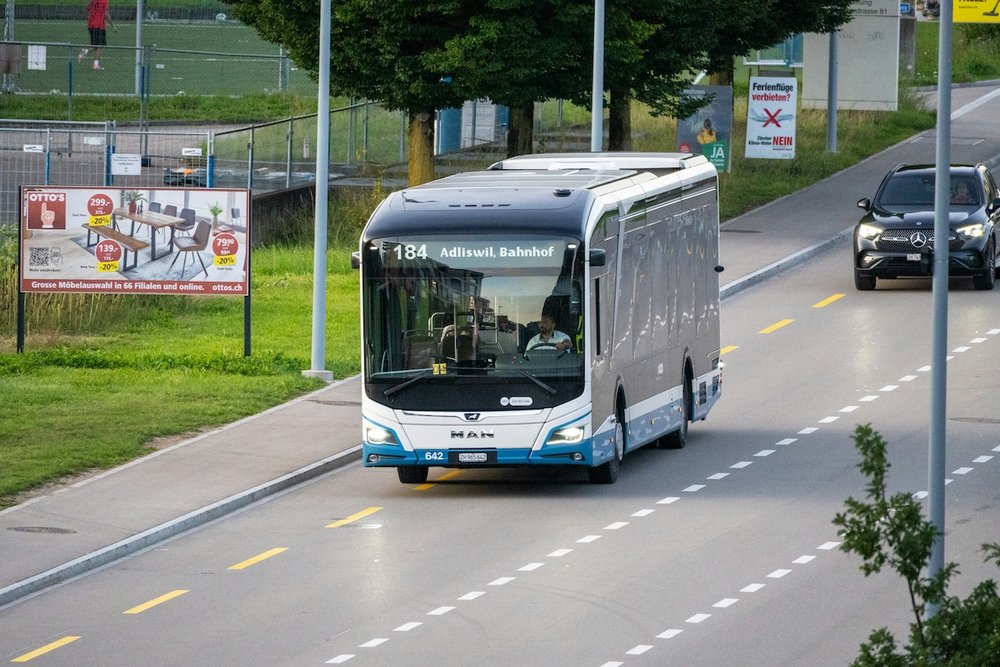
A bus in Switzerland | Image credit: Valentin Zickner via Unsplash
Think of the pass as a tap-and-go key to the whole public network, with a few mountain-sized exceptions. It works nationwide on SBB trains, buses and most lake boats, plus trams and buses in cities like Zurich, Geneva, Bern, Lucerne and Basel. A few routes cross into Italy and Liechtenstein, and the map that comes with your pass shows which ones.
Included:
- Regional, high-speed and sleeper trains (no seat reservation needed)
- City buses, trams and covered lake boats
- Base fare on panoramic trains like the Glacier Express, Bernina Express and GoldenPass
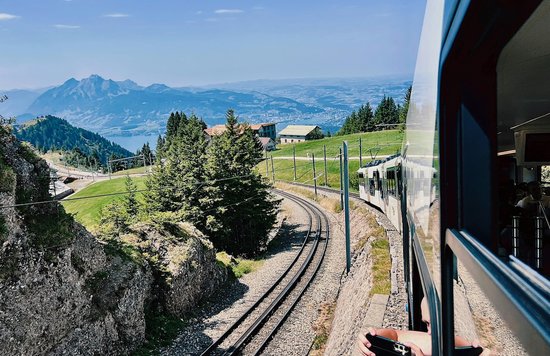
- Free rides up Rigi, Stoos and Stanserhorn
- Free entry to 500+ museums
Extra cost:
- Seat reservations on panoramic trains
- Jungfraujoch, Titlis, Pilatus and Gornergrat (discounted by 25% to 50%, not free)
- Rhine Falls boat rides
- Any leg outside the covered network
Panoramic trains are where the extras sneak in. The pass covers the base fare, but you’ll pay a reservation fee, and the Gotthard Panorama Express only works with a first class pass. The Glacier Express takes about eight hours between Zermatt and St. Moritz, crossing 291 bridges, and seats go fast. Reserve once your dates are set, or hand off the planning with a Glacier Express private day tour.
Klook Tip: Check if a train needs a reservation before you reach the station. Regional and high-speed trains don’t, but scenic routes do.
Swiss Travel Pass vs individual tickets
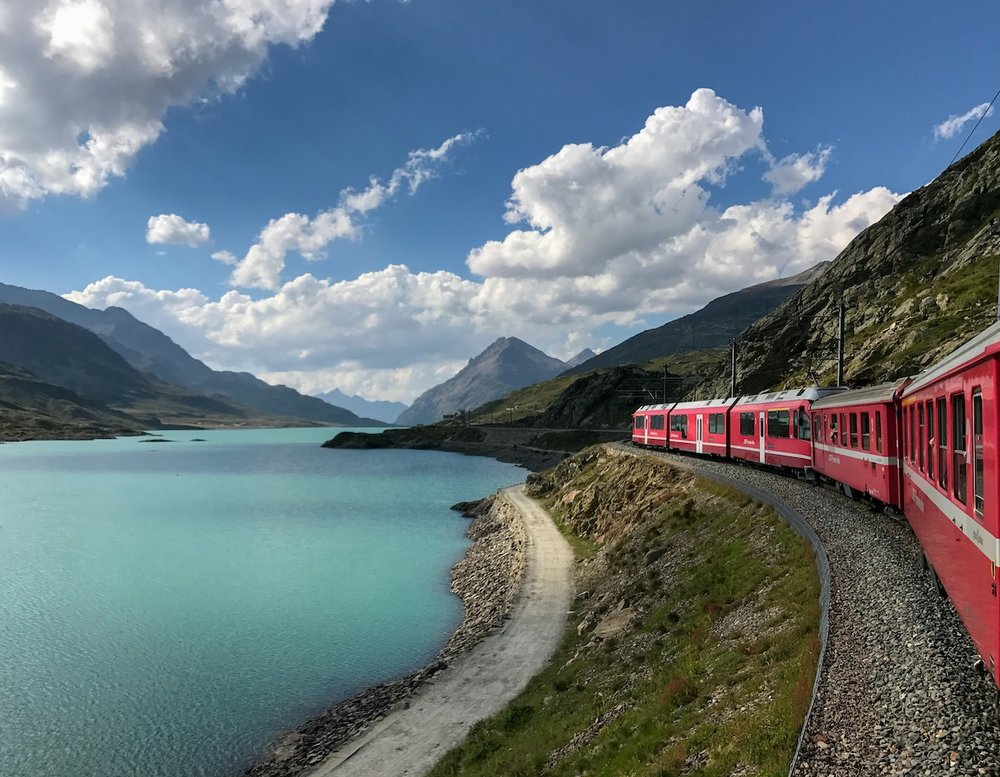
A train in Switzerland | Image credit: Alessandro Prato via Unsplash
The real test is simple: would the tickets you’d buy add up to more than the pass? Let’s try a classic first-timer loop at full-fare 2nd class prices, which shift a little by date.
- Zurich to Lucerne: CHF 27
- Lucerne to Interlaken Ost: CHF 34
- Interlaken Ost to Zermatt: about CHF 85
- Zermatt to Zurich: about CHF 130
- Rigi return from Lucerne: CHF 122.60 (free with the pass)
The four train legs total about CHF 276, or roughly $340. A 3-day pass at CHF 254 only squeaks ahead. Add the Rigi day and you’re near CHF 399, so a 4-day pass at CHF 309 saves you about CHF 90 (around $110), before counting local trams and buses.
The pass loses on simple trips. With two big rides and a lot of sitting still, single tickets or early-booked Supersaver fares usually cost less. If you’ll stay put for days at a time, the Swiss Half Fare Card (CHF 150 for half-price tickets over a month) can beat a pass.
Duration | 2nd class | Per day | 1st class | Best for |
|---|---|---|---|---|
3 days | CHF 254 (~$315) | ~CHF 85 | CHF 405 | Two bases and one big mountain day |
4 days | CHF 309 (~$385) | ~CHF 77 | CHF 492 | Zurich, Lucerne and Interlaken loop |
6 days | CHF 399 (~$495) | ~CHF 67 | CHF 634 | Several stops with day trips |
8 days | CHF 439 (~$545) | ~CHF 55 | CHF 697 | One week across multiple regions |
15 days | CHF 499 (~$620) | ~CHF 33 | CHF 787 | Slow, two-week trips |
The 15-day pass has the lowest daily cost, but 8 days is the sweet spot for most people. The jump between the 6-day and 8-day pass is just CHF 40, and the jump between 8 and 15 days is CHF 60 for seven extra days. The 3-day pass is the priciest per day, so buy it only for a tight, ride-heavy trip.
Flex passes let you pick travel days within a month for a small premium (CHF 289 for 3 days, 2nd class). They suit trips with a few nights in each place.
Jungfraujoch: discounted, not included
Everyone asks about the Top of Europe, so let’s be straight about it. The pass doesn’t cover Jungfraujoch in full. You ride free up to Wengen or Grindelwald, then get 25% off the climb to the top. Full fare tops CHF 260 (about $325) in summer 2026, so treat it as a real expense.
If you want a ticket locked in before you land, there’s a Top of Europe train ticket from Interlaken. Check how it works alongside your pass before you book. Go early on a clear day, since clouds can hide the view.
Mount Pilatus: half price, mostly
Pilatus is the mountain day that fits almost any Lucerne stay. Mount Pilatus is about half price with the pass. A trip costs around CHF 120 at full fare (about $150), so you save roughly $75.
The cogwheel railway runs from about May through mid-November. Check the summit webcam before you commit, because clouds can sit right on top.
Rhine Falls: the easy win
Not every pass day has to be a big mountain. The Rhine Falls are a half-day trip from Zurich HB, about 45 to 60 minutes by train to Neuhausen Rheinfall or Schloss Laufen am Rheinfall. The train ride is free with your pass.
Watching the falls costs nothing, since the viewpoints are open around the clock. Boat rides to the rock and entry to Laufen castle cost extra, so pay only if you want them.
How to buy, activate and use the Swiss Travel Pass
Buying is the easy part, and nearly any visitor can do it. Anyone can buy a pass except permanent residents of Switzerland and Liechtenstein. You’ll need your passport details at checkout, and inspectors can ask to see your physical passport or ID card on board, so a phone photo won’t do. If your name gets cut off on the pass, it still works.
You can buy the Swiss Travel Rail Pass online as an e-ticket PDF with a QR code that conductors scan. Book up to six months ahead and choose your start date at checkout. Short on time? Staffed rail counters in Switzerland sell passes at the standard price, including at the airport train station if you land in Zurich, but expect a line. Same-day starts are possible, so check the date picker before you count on one.
Swiss Travel Pass activation depends on the version you bought. A consecutive pass starts by itself on the date you picked, so there’s nothing to do. A Flex pass needs each travel day registered at activateyourpass.com before you board your first train that day.
Swiss Travel Pass validity runs on calendar days, not 24-hour clocks. Your first day starts at 00:00 even if you board at 7 p.m., and the pass stays valid until 5 a.m. the morning after your last day, so overnight trains still work. Our validity guide has worked examples.
Traveling with kids? Children ages 6 to 15 ride free with a Swiss Family Card when a parent holds a pass (select it at checkout), and kids 5 and under ride free too. If plans change, unused passes can be refunded, fully up to a day before the start date and up to 85% after that, so check your booking terms. Want screenshots? Our step-by-step buying guide walks through it.
Klook Tip: Download the SBB Mobile app for live timetables, and screenshot your QR code in case you lose signal on a mountain train.
FAQs about Swiss Travel Pass
Is the Swiss Travel Pass worth it for a short trip?
Yes, if you’ll take at least three long train rides in three days. A 3-day pass costs CHF 254, so you need roughly that much in tickets and excursions to break even. Our sample loop hits about CHF 276 for four legs, so it clears the bar by a hair. With only one or two rides planned, buy single tickets.
How many days does the Swiss Travel Pass cover?
It covers 3, 4, 6, 8 or 15 days. Consecutive passes run those days back to back, and Flex passes spread the same number across one month. Either way, your last day stays valid until 5 a.m. the next morning.
Does the Swiss Travel Pass include mountain excursions like Jungfraujoch?
Only some. Jungfraujoch is discounted by 25% rather than free, and Pilatus, Titlis and Gornergrat are about half price. Rigi, Stoos and Stanserhorn are free, which makes them the best pass-day picks.
Can tourists buy the Swiss Travel Pass online before arriving?
Yes, and it’s the easiest route. You can buy up to six months ahead, pick your start date, and get an e-ticket PDF by email. Just carry your passport, because residents of Switzerland and Liechtenstein can’t use the pass.
Do I need to validate the Swiss Travel Pass before my first trip?
Only if you bought a Flex pass. A consecutive pass starts on the date you chose, with no action needed. For Flex, register each travel day at activateyourpass.com before you board.
Is the Swiss Travel Pass cheaper than individual train tickets?
Only when you stack long rides, excursions and city transit. In our sample loop, a 4-day pass saved about CHF 90 once the Rigi day was added. On simple routes, early-booked Supersaver tickets can come out cheaper.
Time to pick your pass
By day three, you could be rolling into Interlaken with your QR code in your pocket and no ticket machine in sight. To get there, count your long train days tonight, match them to a pass in the table above, and lock in your start date. If the Glacier Express is on your list, reserve that seat first.
More Switzerland travel guides for you

What is Klook?