
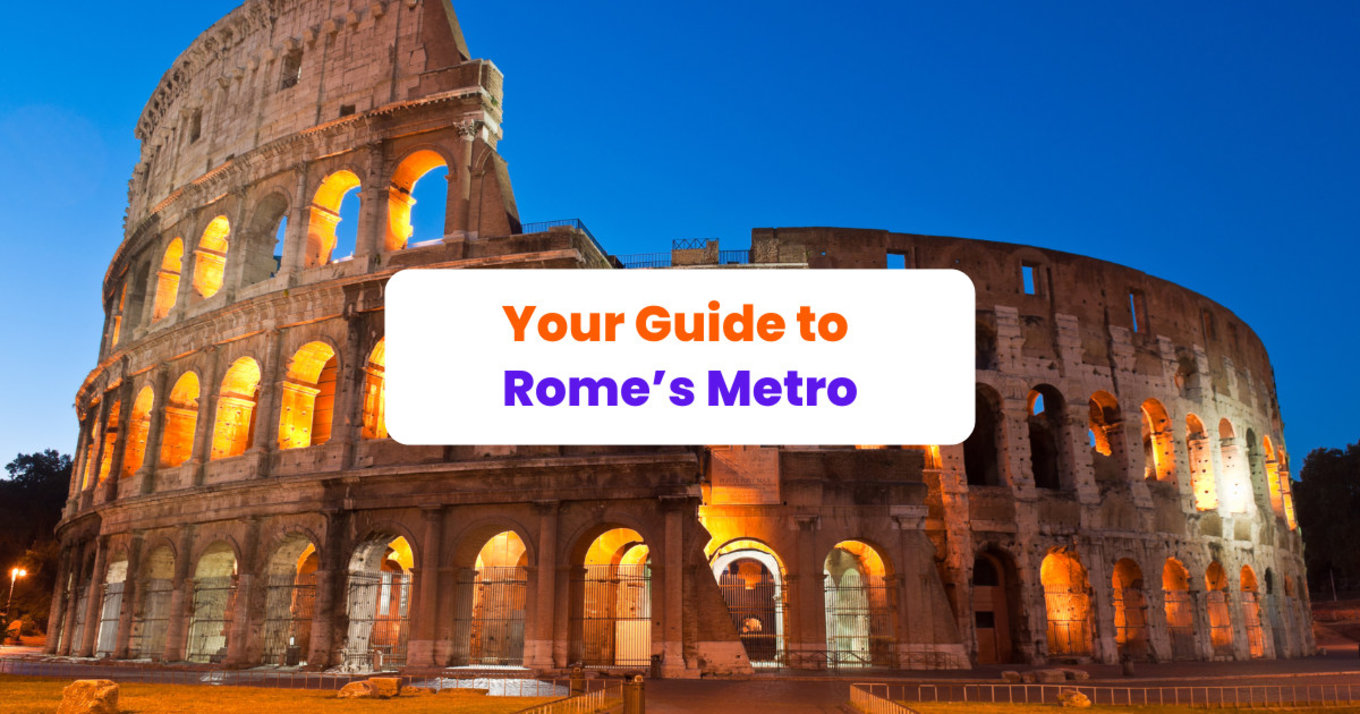
One of the reasons Rome is a must-visit destination for every traveler is its timeless charm. Wandering through the city’s streets can make you feel like you’ve stepped back in time, as if history is still alive all around you. That ancient atmosphere is no coincidence. Much of Rome’s architecture has been preserved for thousands of years, giving the city its uniquely historic character.
This means narrow alleys and winding roads, which can make finding your way around a bit overwhelming. Thankfully, Rome’s public transportation system makes getting from place to place much easier. It includes the Metro (subway/train), trams, and buses, with the Metro being one of the most convenient options for avoiding street-level traffic. So, whether you’re heading to the Colosseum or the Vatican, this guide will help you navigate Rome’s Metro system like a local!
The Metro Lines
At a glance, Rome’s public transportation system has three Metro lines. It’s currently the smallest Metro system in Europe, but each line serves a different area that can take you to the city’s most popular attractions and landmarks. We recommend getting an e-Sim so you have access to online tools such as Google Maps that can help make navigation much easier.
Klook Tip: Take note of Termini as it’s the main train station that will connect you to all three Metro Lines!
Fun Fact: Rome’s Metro system is still relatively small because every time construction crews dig up tunnels to add a new subway route, they often uncover archaeological remains! It’s a reminder of just how rich and layered the city’s history truly is.
Line A (Orange Line)
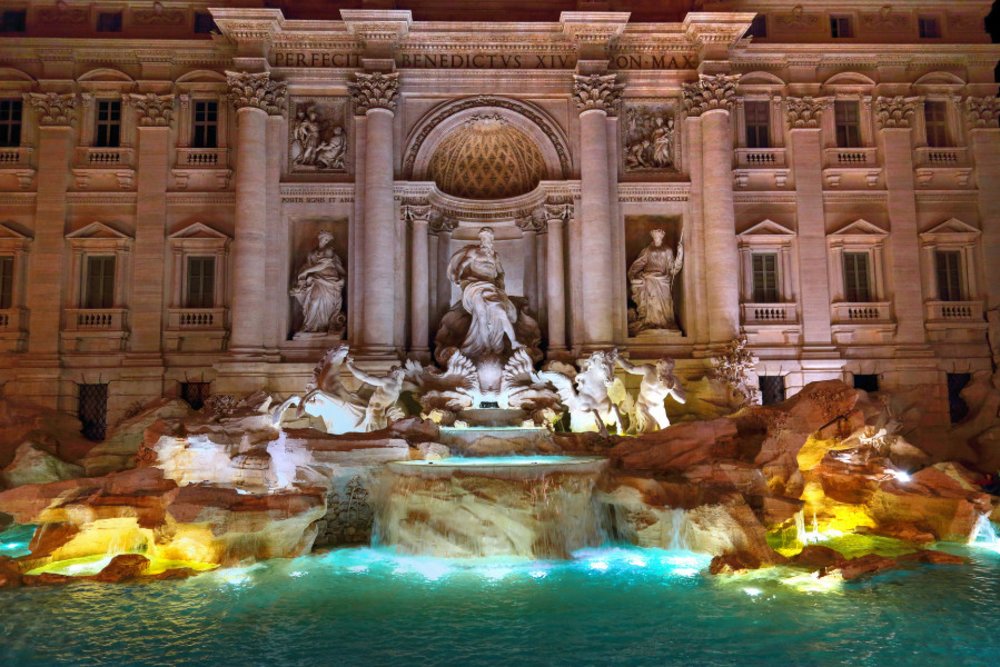
Trevi Fountain in Rome with lights at dusk
For first-time visitors to Rome, Metro Line A is one of the most convenient and tourist-friendly parts of Rome’s public transportation system. It offers easy access to many of the city’s most iconic landmarks, with frequent trains and signage that make navigating the network much easier for newcomers.
Top attractions along the route:
- Ottaviano - Vatican Museums and St. Peter’s Basilica
- Spagna - Spanish Steps
- Barberini - Trevi Fountain
Line B (Blue Line)
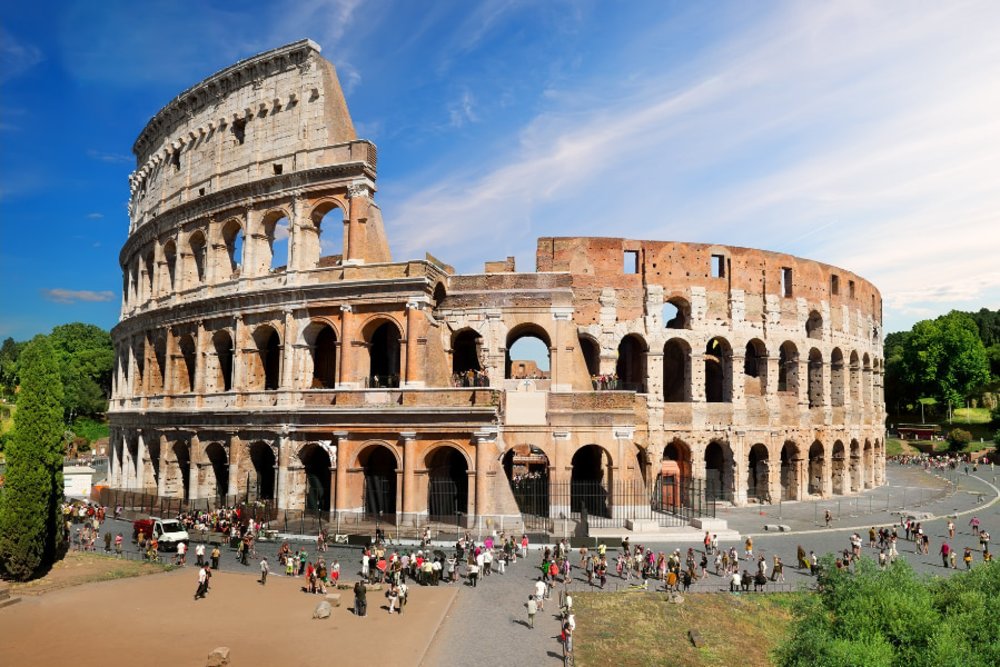
View of the Colosseum in Rome, Italy with tourists
The Blue Line, or Metro Line B, is another key part of Rome’s public transportation system, linking major historic landmarks with the city’s modern business districts. If you’re planning to explore much of Ancient Rome, Line B will be especially useful for your travel itinerary.
Top attractions along the route:
- Colosseo - The Colosseum and Ancient Roman ruins (Roman Forum and Palatine Hill)
- Circo Massimo - Circus Maximus - Ancient Roman chariot racing stadium
- Piramide - Pyramid of Cestius
Line C (Green Line)

Front view of the Basilica di San Giovanni in Laterano in Rome, Italy
As the newest and most modern of the three Metro Lines, Line C is the latest addition to Rome’s public transportation network. Although it doesn’t serve the city center as directly as Lines A and B yet - it’s still currently under development - it’s ideal for travelers looking to explore neighborhoods, hidden gems, and less touristy areas of Rome.
Top attractions along the route:
- San Giovanni - Basilica di San Giovanni in Laterano, or Rome’s cathedral
- Pigneto - Bohemian neighbourhood with trendy bars and street art
- Mirti - Mercato di Centocelle, a true local Roman market
Types of Tickets
Visitors can choose from different types of transport tickets based on the length of their stay in the city and how frequently they plan to use Rome’s public transportation system!
Travel Cards and Passes
There are also travel cards and passes that offer unlimited access to Rome’s public transportation system, along with entry to select major attractions throughout the city.
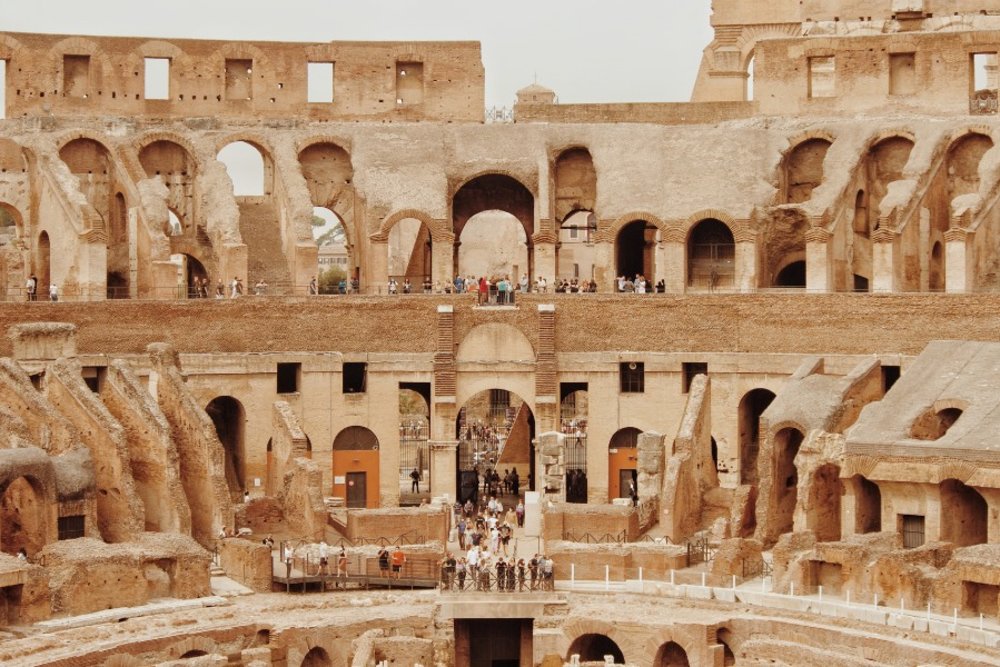
Tourists inside the Colosseum in Rome, Italy
OMNIA Vatican and Rome Card
This OMNIA Vatican and Rome Card has two options of a 24- or 72-hour pass, that includes free access to Rome’s public transportation, a hop-on hop-off bus ticket, as well as priority access and discounts to over 30 of Rome’s most popular attractions such as the Colosseum, the Vatican Museums, and Sistine Chapel.
Roma City Pass
Another sightseeing and travel pass to consider is the Roma City Pass, which provides 72 hours of unlimited access to Rome’s public transportation network, along with admission to two of the city’s top attractions, including the Colosseum, Palatine Hill and Roman Forum, and Borgese Gallery, to name a few.
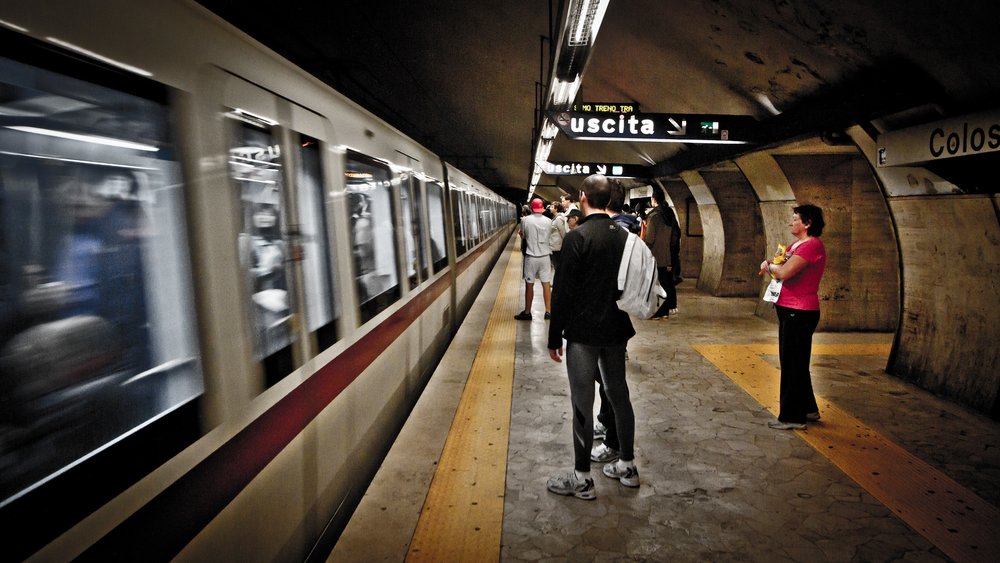
Colosseo Metro station in Rome, Italy | Photo credits: Nicola on Flickr
One-way ticket (BIT)
The BIT ticket only lasts 100 minutes from first validation* and will give you unlimited transfers between the Metro and the rest of Rome’s public transportation network, such as buses and trams.
Cost*: € 1.50 ($1.70 USD)
MetroBus
The MetroBus ticket is available in 24-, 48-, and 72-hour options, offering unlimited access to Rome’s public transportation system from the time of validation*. Keep in mind that the MetroBus 24-hour ticket is valid only until midnight on the day it’s first validated, while the 48- and 72-hour tickets remain valid for 48 or 72 hours from the moment of first use.
MetroBus 24-hour cost: € 7 ($8 USD)
MetroBus 48-hour cost: € 12.50 ($14 USD)
MetroBus 72-hour cost: € 8 ($9 USD)
Weekly Pass (CIS)
If you’re spending a week in the city and plan to use the Metro often, then you can opt for the weekly pass, as this will give you unlimited access to Rome’s public transportation for 7 days.
Cost: € 24 ($27 USD)
*Costs in USD are approximate as of writing
Important note: Before boarding the Metro, be sure to validate your ticket at the yellow machines near the station entrances. This applies to the one-way tickets, MetroBus tickets, and the CIS Weekly Pass. Skipping this step can result in fines during inspections, so don’t forget!
Where To Buy Tickets
Travel cards and passes can be easily purchased online, like on Klook, which gives you more freedom in terms of payment methods, and you can secure your tickets instantly. You can also purchase Metro tickets through apps like MyCicero or TicketAppy. In case you don’t have access to the internet, you can also buy tickets for Rome’s public transportation system at any Metro station using self-service vending machines. Tickets are also available at convenience stores, “Tabacchi” or tobacco shops, and newsstands around the city.
Things To Keep In Mind

Tourist sitting by the Trevi Fountain in Rome, Italy
Operating Hours
The last thing you want is to arrive at the station only to find it closed! There is an official operating schedule, but it might vary per Line as well, so be sure to check Rome’s public transportation hours in advance so you’re never left without a ride.
Mondays to Thursdays: 5:30 AM to 11:30 PM
Fridays to Sundays: 5:30 AM to 1:30 AM (next day)
No eating or drinking
It’s not against the rules or illegal, but eating or drinking on the Metro is usually considered bad manners, especially if the food smells strong or the drink might spill.
Try to avoid peak hours
As tourists, we often like to take our time to take some photos or to explore our surroundings, so if possible, try to avoid using the Metro during peak hours between 8:00 AM and 9:30 AM, and again from 5:00PM to 7:00PM, for a more comfortable ride and to avoid getting in the way of locals commuting to and from work.
Watch out for pickpockets
Pickpocketing is a common issue in Rome, so it’s important to stay aware of your surroundings. Pickpockets are often well dressed and may work in pairs, with one creating a distraction while the other steals. Stay especially alert on tourist-heavy routes such as the Metro Line A!
Exploring the Eternal City
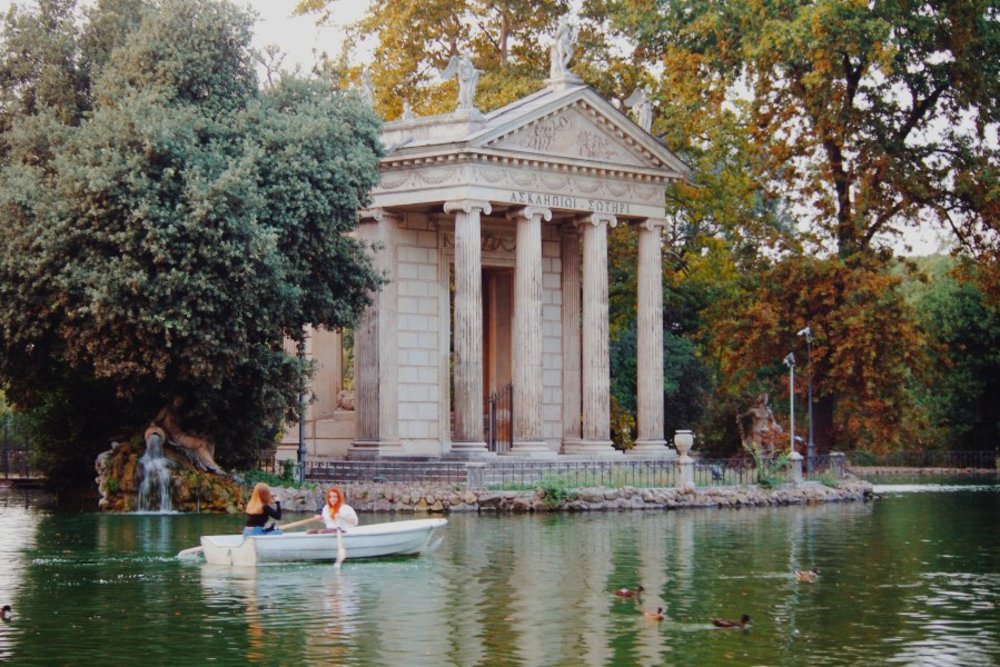
Landscape of Villa Borghese in Rome, Italy
From bohemian neighbourhoods to legendary landmarks, Rome is truly one of the most captivating cities in the world. To make the most of your visit to the Eternal City, be sure that you’re well prepared! Here are some helpful guides worth bookmarking before your trip.
![[usxanz] rome on a budget](https://res.klook.com/image/upload/fl_lossy.progressive,q_85/c_fill,w_550,h_356/v1749024984/u6xk6dm0eea7bhxgac18.jpg)

FAQs
How do I pay for public transportation in Rome?
For train tickets, you can pay via card or cash at vending machines at train stations, “Tabacchi” or tobacco shops, or newsstands. You can also purchase online through websites and apps like MyCicero or TicketAppy.
If you’re planning to buy travel passes like the OMNIA Vatican & Rome Card or the Roma City Pass, we recommend booking in advance online through apps like Klook for flexible payment options and a smooth, hassle-free booking experience!
What is the best way to get around Rome?
The best way to get around Rome is by using Rome’s public transportation, which includes the Metro, trams, and buses! This way, you can save more and get a better feel of the city!
Does Rome have free public transportation?
Rome currently doesn’t offer free public transportation, but children under 10 years old can travel for free when accompanied by a paying adult.
What is Klook?
Klook is a leading pan-regional experiences platform in Asia Pacific, purpose built to digitalize experiences and make them accessible to every traveler.
Our mission is to build the digital infrastructure for the global experience economy — empowering merchants to share their passions and travelers to discover the heartbeat of each destination. We operate a mobile-first, curated platform featuring diverse experiences across global destinations.
✨ Follow us for more deals and inspiration for your upcoming travels