


Wandering around a new city is half the fun of travel, but sometimes your feet just need a break. That’s especially true for a city like Rome, which has miles of cobblestone alleys and ancient ruins for you to explore. We’ve been there, done that, and we get it. 👐
We’ve gathered all the essential info on Rome’s public transportation system — specifically the city bus, which has hundreds of routes around the city. Rome’s buses might seem chaotic at first (and they kind of are), but once you understand how they work, they’re a budget-friendly, practical way to explore.
Keep reading for more on how the Rome Italy bus system works, and where and how you can get tickets.
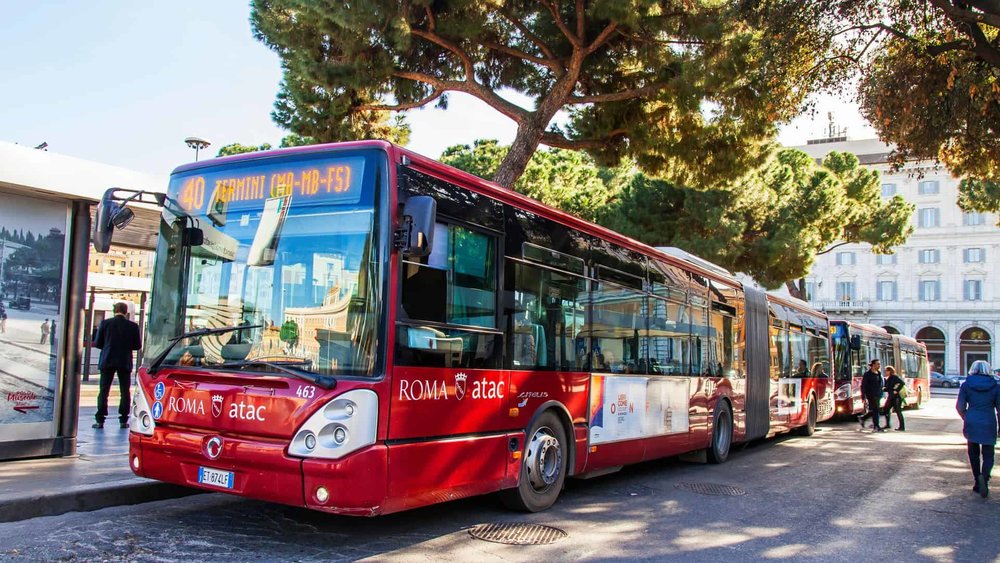
Photo from rome.info
To make getting around even smoother, consider installing an eSIM before you arrive. You’ll stay connected the moment you land—perfect for checking real-time bus schedules or navigating ATAC apps (more on this later!) without scrambling for Wi-Fi.
How to take a bus in Rome
Rome’s public transport is managed by ATAC (Azienda per la mobilità del Comune di Roma), and it includes:
- Buses (urban, express, and night lines)
- Metro (Lines A, B, and C)
- Trams
- Urban trains (like the FL lines and Roma-Lido)

Photo by Toni G on Unsplash
Most visitors to Rome will primarily use buses and the Metro. While the Metro is efficient and avoids traffic, its coverage of the historic center’s iconic sights and the surrounding neighborhoods can be limited. That’s where the Rome Italy bus network comes in. There are over 338 lines that service the city, with letter and number markings.
The most common ones are U (Urban), X (Express), and N (Night). You’ll probably be taking the U bus the most since these are what serve the city center.
Klook Tip: ATAC has its bus timetables on its official website. You may also download the official mobile app if you want to check it on your smartphone.
If you’re running under a tighter schedule (say, you’re only in Rome for 24 hours – really trying to conquer Rome in a day), a hop-off hop-on bus may be the best option for you since this brings you to most of Rome’s major attractions in a loop.
What bus stops are near major attractions

If you’re doing a DIY itinerary, though, knowing the names of bus stops can help you navigate better, especially since Google Maps and ATAC’s apps list them. Here are a few Rome Italy bus stops worth remembering:
- Piazza Venezia – Walking distance to the Roman Forum, Capitoline Hill, and Via del Corso. Major hub for several routes.
- Largo di Torre Argentina – A major transfer point near the Pantheon and Piazza Navona.
- Piazza San Pietro (St. Peter’s Square) – Main stop for Vatican visits.
- Colosseo – The Metro stop is nearby, but Bus 75 and 118 also stop here.
- Termini (Stazione Termini) – Rome’s main transit hub, ideal for getting just about anywhere! Buses, metro, trains, everything.
- Via del Tritone – Near the Trevi Fountain.
- Trastevere/Mastai – Central spot to explore Trastevere.
Google Maps is excellent for checking bus routes in Rome, so it’s best to always have mobile data through your eSIM. You can easily double-check routes, arrival and departure times, and detours without relying on spotty public Wi-Fi.
If it’ll be your first time using one, you can check out our guide on how to get Italy eSims, how to use them, and how they compare against traditional SIM cards (the physical ones!)

Where to get bus passes
There are a variety of passes available to make getting around Rome easier. Here are a few popular ones:
- BIT (Biglietto Integrato a Tempo) – €1.50 (approximately 1.72 USD), valid for 100 minutes after validation. You can switch between buses, trams, and the Metro once.
- Roma 24H/48H/72H – Unlimited travel for 1, 2, or 3 days. Great for visitors doing lots of sightseeing.
- CIS (Carta Integrata Settimanale) – €24 for unlimited use over 7 days.
- Roma Pass – Includes museum entries and transport. Worth it if you're visiting major attractions and want to skip lines.
If you’re planning multiple bus trips a day, getting one of these passes is the easiest way to manage Rome bus tickets without having to stop at a kiosk every time.
Using the Tap & Go system

Photo by Levi Ari Pronk on Unsplash
In recent years, Rome now offers contactless payment directly on board most buses and Metro stations. You can just tap your credit/debit card (Visa or Mastercard) on the card reader at the front of the bus. It charges €1.50 (approximately 1.70 USD) per ride, and if you take multiple rides, the system automatically caps your daily fare, just like a day pass.
Klook Tip: Don’t forget to make sure that your credit/debit card supports contactless payments! Look for the little icon that looks like the Wi-Fi symbol on your card.
Do take note, though, that not all buses support this yet, especially older ones. With this, it might be useful for you to have a paper ticket on hand at all times. They can be bought all around the city in tobacco shops, convenience stores, and major bus terminals like Termini.
Klook Tip: If you use a paper ticket, don’t forget to validate it on the small yellow machine on board the bus. You’ll hear a beep and see a timestamp. Skipping this step will result in a fine if checked.
While you can expect delays, the Rome Italy bus network covers more ground than the Metro and is incredibly useful once you get the hang of it. All set? Before you go, check out the blog below for more itinerary inspiration. Ciao! 🧡
![[US] rome-in-a-day - Collage of Rome landmarks for 9 best things to do in Rome in a day blog](https://res.klook.com/image/upload/fl_lossy.progressive,q_85/c_fill,w_550,h_356/v1749106013/kxcie2dllhiddlgogfn4.jpg)
FAQ
How do I pay for the bus in Rome?
You can buy tickets in advance at Tabacchi shops, Metro stations, or through ATAC apps. Many buses also accept contactless credit/debit cards—just tap your card when you board. Paper tickets must be validated in the yellow machine on board. Don’t forget this step!
Is it worth getting the hop-on hop-off bus in Rome?
Yes, especially if you’re in the city for only a short while and want a guided overview. Otherwise, the regular Rome Italy bus routes like 64, 81, and 492 take you to all the major sights.
How do tourists get around in Rome, Italy?
Tourists typically combine walking with buses and the Metro. Since Metro lines are limited, buses are better for reaching most landmarks. Some also rent bikes or e-scooters. For navigation, using an eSIM with live access to Google Maps or the ATAC app is a game-changer.
What is the cheapest way to get around Rome?
The cheapest option is public transport, especially if you buy a multi-day pass. A single ride is €1.50 (or approximately 1.72 USD), and you can use it on buses, Metro, and trams. Walking also goes a long way in Rome's compact city center!
What is Klook?
Klook is a leading pan-regional experiences platform in Asia Pacific, purpose built to digitalize experiences and make them accessible to every traveler.
Our mission is to build the digital infrastructure for the global experience economy — empowering merchants to share their passions and travelers to discover the heartbeat of each destination. We operate a mobile-first, curated platform featuring diverse experiences across global destinations.
✨ Follow us for more deals and inspiration for your upcoming travels