
Fukuoka At a Glance
- Best for: first-time Japan visitors, food lovers, and Kyushu stopovers
- Ideal trip length: 2 to 3 days on its own, a week or more paired with the rest of Kyushu
- From the airport: about 5 minutes to Hakata Station by subway
- Where to stay: Hakata for transit ease, Tenjin for food and shopping
- Signature experience: the Nakasu yatai food stalls
- Must-eat: Hakata tonkotsu ramen
- Best day trip: Dazaifu Tenmangu, about 30 minutes away
Fukuoka is one of Japan's most underrated cities, with fewer crowds than Tokyo, Kyoto, or Osaka, some of the best food in the country, and an airport that drops you in the city centre in about five minutes. If Fukuoka is one stop on a bigger Japan trip, plan on 2 to 3 days; if you're combining it with the rest of Kyushu, a week gives you room to range further out.
Is Fukuoka Worth Visiting, and How Many Days Do You Need?
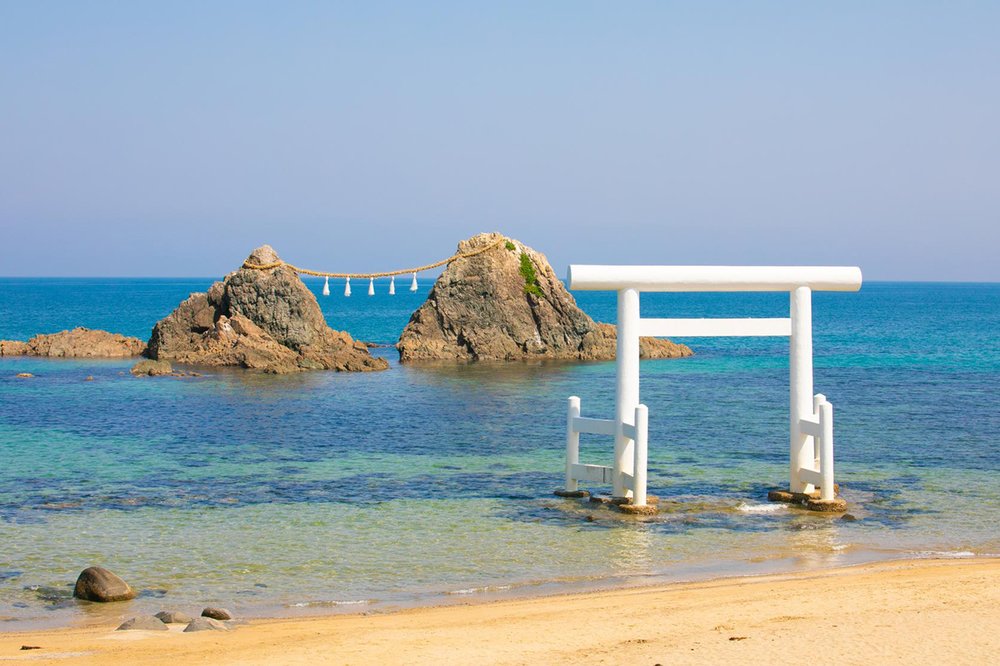
Fukuoka, Japan
Fukuoka earns its reputation as a relaxed, food-first alternative to Japan's bigger, busier cities. It has the highest number of restaurants per capita in the country, a walkable downtown split across two easy-to-navigate neighbourhoods, and none of the queues you'll find at Tokyo or Kyoto's biggest sights. For a lot of first-timers, it works best as a lower-stress landing point before a busier leg of the trip, or as a breather between two bigger cities.
It also doesn't demand a packed schedule to feel worthwhile. Fukuoka isn't a city of must-see landmarks the way Kyoto or Tokyo can be, so you're not constantly weighing what to cut. That makes it a good fit if you'd rather spend an evening slowly working through a row of Yatai stalls than rushing between attractions.
How long you need depends on what else is on your itinerary:
- 1 to 2 days: enough to cover the city highlights, a night at the yatai stalls, and a bowl of Hakata ramen
- 2 to 3 days: the sweet spot for most first-timers, with room for a day trip to Dazaifu or Yufuin
- A week or more: worth considering if you're pairing Fukuoka with the rest of Kyushu, including Nagasaki, Kumamoto, and Beppu
How Do You Get From Fukuoka Airport to the City Centre?
Fukuoka Airport is one of the most convenient in Japan: the Fukuoka City Subway Airport Line gets you to Hakata Station in about 5 minutes for ¥260, making it one of the fastest airport-to-city-centre trains anywhere in the country. Trains run roughly every 4 to 8 minutes between around 5:30am and just after midnight.
One thing to know before you land: the subway station connects directly to the domestic terminal. If you're arriving at the international terminal, take the free shuttle bus over to the domestic terminal first, then follow signs down to the subway platform.
If you'd rather sort your fare before you land, you can book an Airport Bus Ticket from Fukuoka Airport to Hakata Station in advance as a subway alternative. And if you're staying more than a day, the Fukuoka Subway Unlimited Pass covers unlimited rides across all subway lines for one day, which is worth it once you factor in getting to and from dinner each night.
Should You Stay in Hakata or Tenjin?
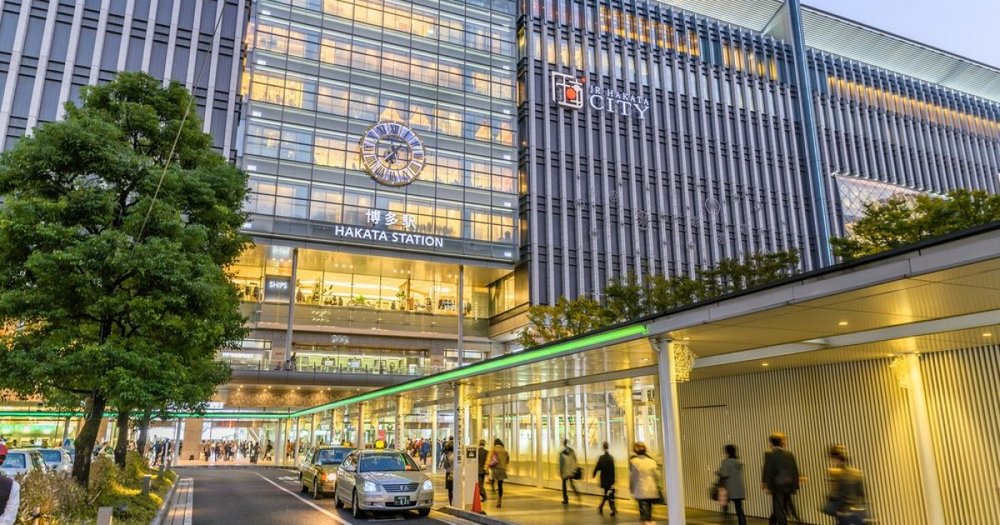
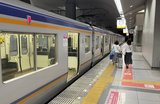
Hakata Station | Image credit: fun-japan.jp
Both work well for first-timers. Hakata suits travellers who want to be close to the trains and the Shinkansen; Tenjin suits travellers who'd rather be close to the food, shopping, and nightlife. They're only about 6 minutes apart by subway, so picking one doesn't cut you off from the other.
Category | Choose Hakata if… | Choose Tenjin if… |
|---|---|---|
Priority | You want easy access to trains and the Shinkansen | You want to walk to shops and yatai after dinner |
Trip type | An early flight, or a Fukuoka stop within a wider Kyushu itinerary | A slower city break centred on food and shopping |
Feel | Business hotels, station convenience | Denser restaurants, department stores, and Tenjin Ward energy |
How Do the Yatai Food Stalls Work?
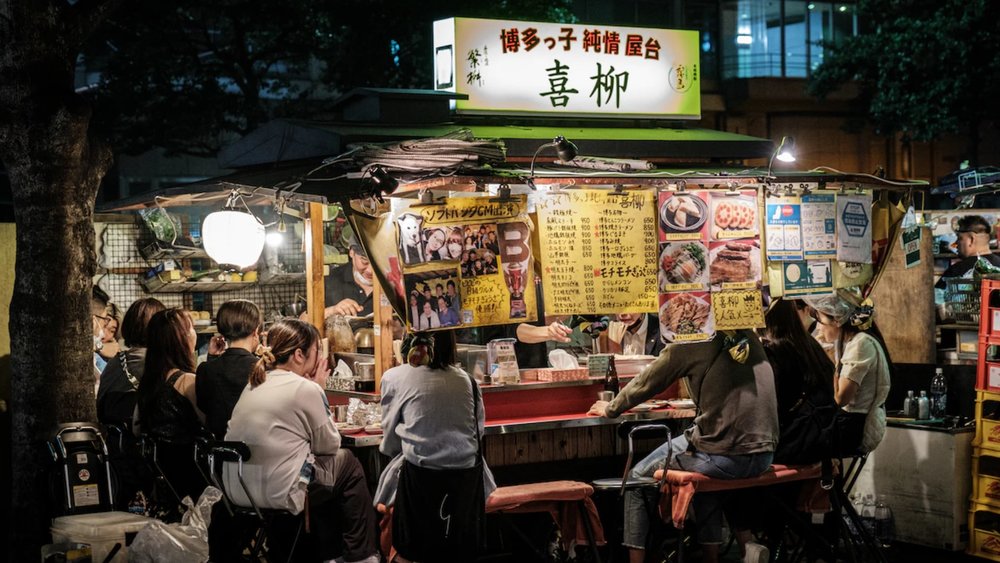
Photo Credit: Nichika Yoshida on Unsplash
Yatai are open-air food stalls that set up along the street each evening and pack away by early morning: Fukuoka's defining food experience, and easier to navigate than it looks once you know the basics.
- When: stalls generally open around 6pm and run until about 2am, though many close one day a week, usually Sunday
- Where: Nakasu Yatai Yokocho is the best-known strip, with roughly 20 stalls lit up along the river
- Cash: about 90% of stalls are cash-only, so bring ¥3,000 to ¥5,000 in smaller notes rather than a single ¥10,000 bill
- Price: a bowl of ramen typically runs ¥700 to ¥1,000, skewers and small dishes ¥300 to ¥600 each. Budget ¥2,000 to ¥3,000 or more per person with drinks
- Joining a stall: each one seats about 7 to 8 people at a shared counter. If it looks full, ask if there's room or wait nearby; seats turn over quickly
- Ordering: point at the menu or ask the chef what's good, and order at least one dish and one drink if you take a seat
- Leaving: say “okaikei onegaishimasu” (“check, please”) when you're done. The bill is settled at the counter, not brought to your seat
If you'd rather have a local show you the ropes on your first night, the Fukuoka Night Tour with Yatai Dinner pairs a guide with your first bowl and a Nakagawa river cruise.
What to Eat and See in Fukuoka
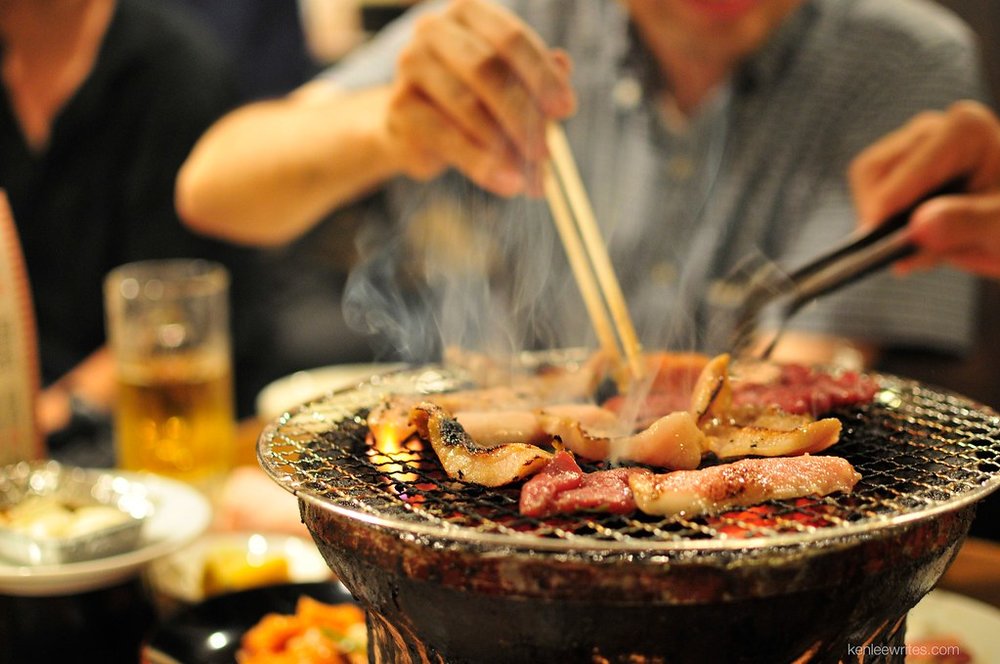
Grilling yakiniku in a restaurant | Photo Credit: Flickr
Hakata ramen is Fukuoka's signature dish: thin, straight noodles in a rich tonkotsu (pork bone) broth, and you'll find it everywhere from yatai counters to sit-down shops. Beyond ramen, look out for mentaiko (marinated cod roe, often served on rice or in pasta), yakitori skewers, and motsunabe hot pot.
For sightseeing, start with Fukuoka Tower, a seaside observation deck that climbs to 123 metres and gives you a clear layout of the city, the bay, and where Hakata and Tenjin sit relative to each other. Admission runs around ¥1,000 for adults, with a discounted rate for visitors who show a passport.
From there, Ohori Park, the Fukuoka Castle ruins, and Canal City Hakata's shops and restaurants are all easy, low-effort additions if you have a spare afternoon. None of these need a half-day commitment on their own, which is part of what makes Fukuoka an easy city to fit around a Yatai dinner or a day trip rather than the other way around.
What Day Trips Can You Take From Fukuoka?
The two easiest day trips from Fukuoka are Dazaifu, a shrine town about 30 minutes away, and Yufuin, a hot spring town about 2 to 2.5 hours away.
Dazaifu Tenmangu is one of Japan's most important shrines, built around the resting place of a Heian-era scholar and now a popular stop for students praying over exams. From Tenjin, take the Nishitetsu train (changing at Nishitetsu-Futsukaichi) for about 30 minutes, then walk 5 minutes from Dazaifu Station to the shrine; from Hakata, a direct bus takes about 45 minutes.
Yufuin is a quieter option built around hot springs, the Yunotsubo shopping street, and Kinrin Lake. It's roughly 2 to 2.5 hours from Hakata by direct limited express train or highway bus, so it works best as a full-day trip rather than a quick add-on.
If you'd rather cover both without juggling train transfers yourself, the Fukuoka Dazaifu Tenmangu & Yufuin Full-Day Experience combines them into a single guided day. And if you have more time to explore the region, Klook's 1-Week Kyushu Itinerary maps out further day trips and multi-day stops across Kyushu.
Planning Your First Trip to Fukuoka
US passport holders don't need a visa for a Fukuoka trip: tourism stays of up to 90 days are visa-free, so all you need is a valid passport and a return ticket.
Spring (March to May) and autumn (September to November) are the most comfortable times to visit, with mild temperatures and, in spring, cherry blossoms around Maizuru and Ohori Parks. Summer (June to August) is hot, humid, and carries some typhoon risk, while winter is mild by Japanese standards and noticeably quieter on the tourist front.
A few more practicalities worth sorting before you land: carry cash for yatai and smaller shops, since card and mobile payments aren't universal outside major stores; a rechargeable IC card (Suica or the local Nimoca) works on the subway and buses and saves you buying single tickets each ride; and English signage is decent around the station and airport but thinner once you're at a yatai counter, so a translation app is handy.
Once your dates are set, Klook's Fukuoka destination page has activities and passes in one place, the Fukuoka Japan Travel blog has more first-timer activity ideas, and the Japan destination page is a good next stop if you're still building out the rest of your itinerary.
Frequently Asked Questions
Is Fukuoka worth visiting?
Yes. Fukuoka offers a relaxed, food-focused alternative to Japan's busier cities, with fewer crowds, some of the country's best ramen, and an airport that puts you in the city centre within minutes of landing.
How many days do you need in Fukuoka?
Two to three days is the sweet spot for most first-timers, covering the city highlights, a yatai dinner, and a one day trip. One to two days works if Fukuoka is just a quick stop, while a week or more suits travellers combining it with the rest of Kyushu.
Should you stay in Hakata or Tenjin?
Hakata suits travellers who prioritise train access and the Shinkansen; Tenjin suits travellers who want to be closer to food, shopping, and nightlife. They're about 6 minutes apart by subway, so either choice keeps you close to the other.
How do you get from Fukuoka Airport to the city centre?
The Fukuoka City Subway Airport Line runs directly from the airport's domestic terminal to Hakata Station in about 5 minutes for ¥260. If you land at the international terminal, take the free shuttle bus to the domestic terminal first.
What are the yatai food stalls and how do they work?
Yatai are open-air food stalls that set up along Fukuoka's streets each evening, generally from around 6pm to 2am. Most are cash-only, seat 7 to 8 people at a shared counter, and expect at least one dish and one drink per person who sits down.
What is Fukuoka famous for?
Fukuoka is best known for Hakata tonkotsu ramen, its nightly yatai food stalls, and being one of Japan's most food-forward cities. It's also a practical gateway to the rest of Kyushu, including Dazaifu, Yufuin, Nagasaki, and Kumamoto.
What day trips can you take from Fukuoka?
Dazaifu Tenmangu, about 30 minutes away, and Yufuin, a hot spring town about 2 to 2.5 hours away, are the two most popular day trips. Both are reachable by train, or together on a single guided full-day tour.
More Fukuoka Travel Guides for You


What is Klook?
Klook is a leading pan-regional experiences platform in Asia Pacific, purpose built to digitalize experiences and make them accessible to every traveler.
Our mission is to build the digital infrastructure for the global experience economy — empowering merchants to share their passions and travelers to discover the heartbeat of each destination. We operate a mobile-first, curated platform featuring diverse experiences across global destinations.