
Dates
Filters
See 19 things to do in Bangkok
Sort by
Recommended

Silom Thai Cooking School in Bangkok
Book now for today
Up to 3 hrs
Free cancellation
Instant confirmation
From
$ 50.49
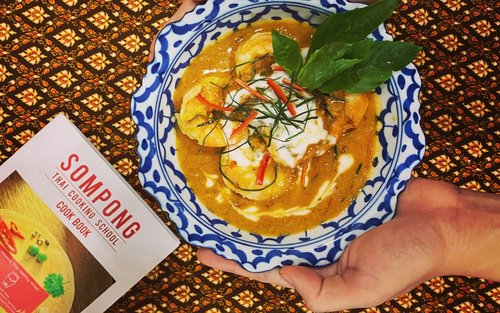
Sompong Thai Cooking Class in Bangkok
Book now for today
Morning departure
3-5 hrs
Free cancellation
Instant confirmation
From
$ 50.49
Klook's choice
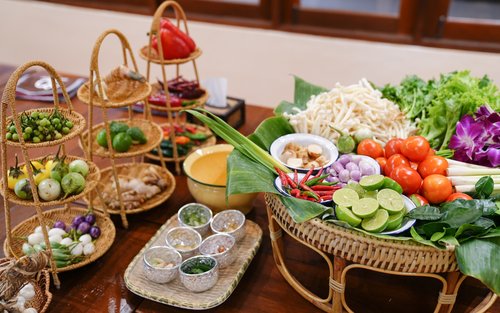
White Lotus Thai Cooking Class in Bangkok
Book now for today
English guided
3-5 hrs
Private group
Free cancellation
Instant confirmation
From
$ 38.65
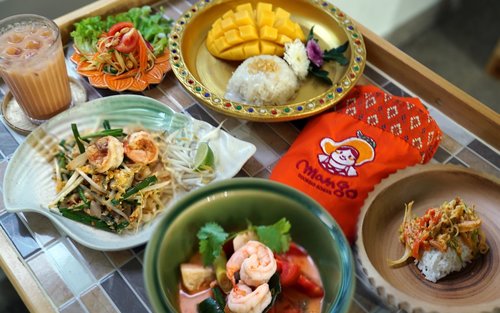
Thai Cooking Class by Mango Cooking School in Bangkok
Book now for tomorrow
Morning departure
Free cancellation
$ 35.65

Klook's choice
Tingly Thai Cooking School Experience in Bangkok
Book now for tomorrow
Up to 3 hrs
Free cancellation
Instant confirmation
From
$ 48.29
Klook's choice
Bangkok Udomsuk Thai Cooking Class with local market tour
Morning departure
Up to 3 hrs
Free cancellation
Instant confirmation
From
$ 39.95
Klook's choice
Siamese Cookery House Thai Cooking Class in Bangkok
Book now for today
3-5 hrs
Free cancellation
Instant confirmation
From
$ 54.85
Bangkok Thai Cooking Academy
Afternoon departure
Free cancellation
Instant confirmation
From
$ 54.85
House of Taste | Hands-on Thai Cooking Class & Market Tour
Book now for today
Morning departure
3-5 hrs
Free cancellation
$ 61.45
[ENG/中文] Bangkok Cooking Class with Market Tour & Tuk Tuk Ride
Free cancellation
Instant confirmation
$ 59.69
Pink Chili Thai Cooking Class
Book now for today
3-5 hrs
Free cancellation
Instant confirmation
$ 50.49
Roschas Culinary School in Bangkok
Book now for tomorrow
Morning departure
Free cancellation
$ 65.85
Hands-On Thai Cooking Class with Market Tour – Sathon, Bangkok
Book now for today
Free cancellation
$ 61.45
Sabieng Thai Cooking Class with Market Tour Bangkok
3-5 hrs
Free cancellation
$ 65.85
Go Thai Cooking Class
Book now for tomorrow
Free cancellation
Instant confirmation
From
$ 51.35
Homies Thai cooking class
Morning departure
Free cancellation
Instant confirmation
$ 96.55
Chiang Mai Thai Cooking Class, Organic Farm Visit, and Scenic Train
Book now for tomorrow
Morning departure
5-7 hrs
Free cancellation
Instant confirmation
$ 86.89
Traditional Thai Fruit and Vegetable Carving Class
Book now for tomorrow
Morning departure
Free cancellation
Instant confirmation
From
$ 159.65
Northern Thai Cuisine Cooking Class and Market Tour in Chiang Mai
Book now for tomorrow
Morning departure
Free cancellation
Instant confirmation
$ 109.75
Top things to do in Bangkok
Ancient City Bangkok and Erawan Museum Ticket
Book now for today
Free cancellation
Instant confirmation
From
$ 11.45
Mahanakhon SkyWalk Ticket in Bangkok
Free cancellation
Instant confirmation
From
$ 15.39
Sea Life Bangkok Ocean World Ticket
Instant confirmation
From
$ 5.25
$ 6.59
Chao Phraya White Orchid Cruise in Bangkok
Book now for today
English guided
Afternoon departure
Up to 3 hrs
Free cancellation
Instant confirmation
From
$ 30.69
Damnoen Saduak Floating Market & Maeklong Railway Market Day Tour
Book now for tomorrow
Free cancellation
Instant confirmation
From
$ 36.89
Jurassic World: The Experience Bangkok Ticket in Asiatique The Riverfront
Book now for today
Instant confirmation
From
$ 33.75
Safari World Bangkok Ticket
Book now for tomorrow
Free cancellation
Instant confirmation
From
$ 4.39
Meridian Dinner Cruise in Bangkok
Book now for today
Afternoon departure
Up to 3 hrs
Free cancellation
Instant confirmation
From
$ 26.29
Chao Phraya Princess Cruise in Bangkok
Book now for today
Afternoon departure
5-7 hrs
Free cancellation
Instant confirmation
From
$ 37.30
Space & Time Cube+ Ticket in Bangkok
Book now for today
Free cancellation
Instant confirmation
From
$ 8.75
$ 13.15
[Official] Muay Thai (Boxing) Match at Rajadamnern Stadium
Book now for tomorrow
Instant confirmation
From
$ 43.99
Klook's choice
Hop-On Hop-Off Chao Phraya River Boat, Bangkok
Book now for today
Free cancellation
Instant confirmation
$ 6.39
Reviews of Bangkok Cooking classes
Morgan *******
2026-02-18 02:07:16
My friend and I had the best time cooking. The food was delicious, our instructor "Mee" was such a delight, charming and funny. She really made the experience just wonderful. I would take their cooking class again. 100% recommend it.
Christine *********
2026-01-28 06:07:30
A truly positive experience to learn Thai cooking class and after have a hearty meal—full of flavor, warmth, and love! Comforting, satisfying, and guaranteed to put a big smile on your face after you cooked your own meal. 🌟🍽️ Thanks to Teacher June, for teaching us. She speaks fluently in English, with sense of humor, and energy.
Klook客路用户
2026-02-01 03:53:04
Cooking and exploring the market with Jeab and the other “classmates” made for such a wonderful memory. Jeab has extensive knowledge of vegetables, fruits, and all kinds of cooking ingredients. She’s always patient, happy to answer every question, and has a great sense of humor too. If you’re interested in Thai food, I would absolutely recommend this cooking class.
Aramae *******
2026-02-04 16:50:54
I highly recommend Mango Cooking School to anyone who wants an authentic and fun Thai cooking experience. The class was very well organized, and the instructor was friendly, patient, and excellent at explaining each step clearly. Even if you’re a beginner, you’ll feel confident cooking Thai food here.
We cooked several classic Thai dishes using fresh ingredients, and everything tasted amazing. What I loved most was how hands-on the class was, you really get to cook, not just watch. The atmosphere was relaxed, welcoming, and enjoyable from start to finish.
If you’re deciding which cooking school to choose in Thailand, pick Mango Cooking School. It’s educational, fun, and absolutely worth it. I’m excited to recreate these Thai dishes at home!
moon *******
2026-02-15 00:19:26
This is the place for Bangkok cooking classes. From the first meeting, the owner welcomed us so warmly. And Chef Phone! The cooking class was informative and fun, and the food was so delicious when I followed the recipe. The facilities were clean and tidy, and thanks to the owner who emphasized cleanliness, it was pleasant every moment. The Korean owner and his wife have very kind impressions, and I hope they are successful. It's a shame there are only 5 stars... You must experience it.
표 **
2026-02-19 11:07:07
Siam Cookery House cooking class, the only activity we signed up for during our first overseas trip with my son, was the best time ever. The local market tour and tuk-tuk experience...it was interesting to experience Thailand more deeply, as if clearing game stages while directly experiencing Thailand's representative dishes. And the kind and funny teacher, NAM's, unique explanation was with us throughout the trip. lol. Lizzie? The couple who took the class with us were kind, beautiful, and handsome, and they were considerate of us, making it an even more enjoyable time! The best class that made us want to visit Bangkok again!! Thank you♡
Bernadette ******
2026-01-02 08:35:12
I enjoyed this experience the best. our instructor was very engaging and very informative. She made sure to make the cooking experience fun. She also encouraged everyone to participate not only in the preparation of the meal, but also in the whole activity - from going to the market to buy the ingredients upto enjoying the meals prepared by us. I would definitely recommend this activity to friends who will travel to Bangkok.
Ellia *********************
2025-09-07 02:27:57
The whole experience with the cooking school was smooth-sailing. The staff & chef met us on time at the meeting point and led us to the nearby market. After we got our ingredients, we took the tuktuk to the school not far away. Once there, we wasted no time and started with our first dish. There were 4 dishes in all. before each dish, we were introduced to the ingredients & helped with the preparation. After cooking each dish, we had a chance to taste our masterpiece! There was never a full moment with the group. My daughter and I have gathered a lot of knowledge from the whole experience. Thank you, J for being a great instructor and taking good care of us. Don't miss this wonderful opportunity with House of Taste when in Bangkok. :)
Klook-Nutzer
2026-02-04 02:05:56
It was a very nice cooking class with professional guidance and a very well-equipped kitchen. I had a lot of fun cooking and we laughed a lot together. The staff is very helpful, giving many helpful tips, both at the market and while cooking or preparing the ingredients. The food was very tasty and was original, just as you would want it. I will visit the course again before my departure and then I will try 5 more dishes. Definitely a 5-star recommendation from me in all areas. Thank you for the wonderful result.
FAQs about Bangkok Cooking classes
What is included in a Bangkok cooking class?
What is included in a Bangkok cooking class?
Do I need prior cooking experience to join?
Do I need prior cooking experience to join?
Are Bangkok cooking classes conducted in English?
Are Bangkok cooking classes conducted in English?
Can dietary requirements be accommodated?
Can dietary requirements be accommodated?
How long does a typical Bangkok cooking class last?
How long does a typical Bangkok cooking class last?
Are Thai cooking schools suitable for families?
Are Thai cooking schools suitable for families?
When is the best time to attend a cooking class in Bangkok?
When is the best time to attend a cooking class in Bangkok?
Should I book a Bangkok cooking class in advance?
Should I book a Bangkok cooking class in advance?
Explore more on Klook
Top attractions in Bangkok
- 1 Icon Siam
- 2 The Grand Palace
- 3 Safari World Bangkok
- 4 Centralworld
- 5 Wat Arun
- 6 Siam Paragon
- 7 Wat Pho
- 8 Asiatique The Riverfront
- 9 Chatuchak Weekend Market
- 10 King Power MahaNakhon
- 11 Khaosan Road
- 12 Jodd Fairs
- 13 MBK Center
- 14 Wat Paknam Phasi Charoen
- 15 Banthat Thong
- 16 Phrom Phong
- 17 Lumphini Park
- 18 Platinum Fashion Mall
- 19 Koh Lanta
- 20 Yaowarat Road
Everything you need for your Bangkok visit
- 1 Bangkok Hotels
- 2 Bangkok Car rentals
- 3 Bangkok Private airport transfers
- 4 Bangkok Spas
- 5 Bangkok Tours
- 6 Bangkok Day trips
- 7 Bangkok Cultural experiences
- 8 Bangkok Cruises
- 9 Bangkok Food tours
- 10 Bangkok Outdoor & sports activities
- 11 Bangkok Workshops
- 12 Bangkok Cooking classes
- 13 Bangkok Boat tours
- 14 Bangkok Water activities
- 15 Bangkok Fitness