
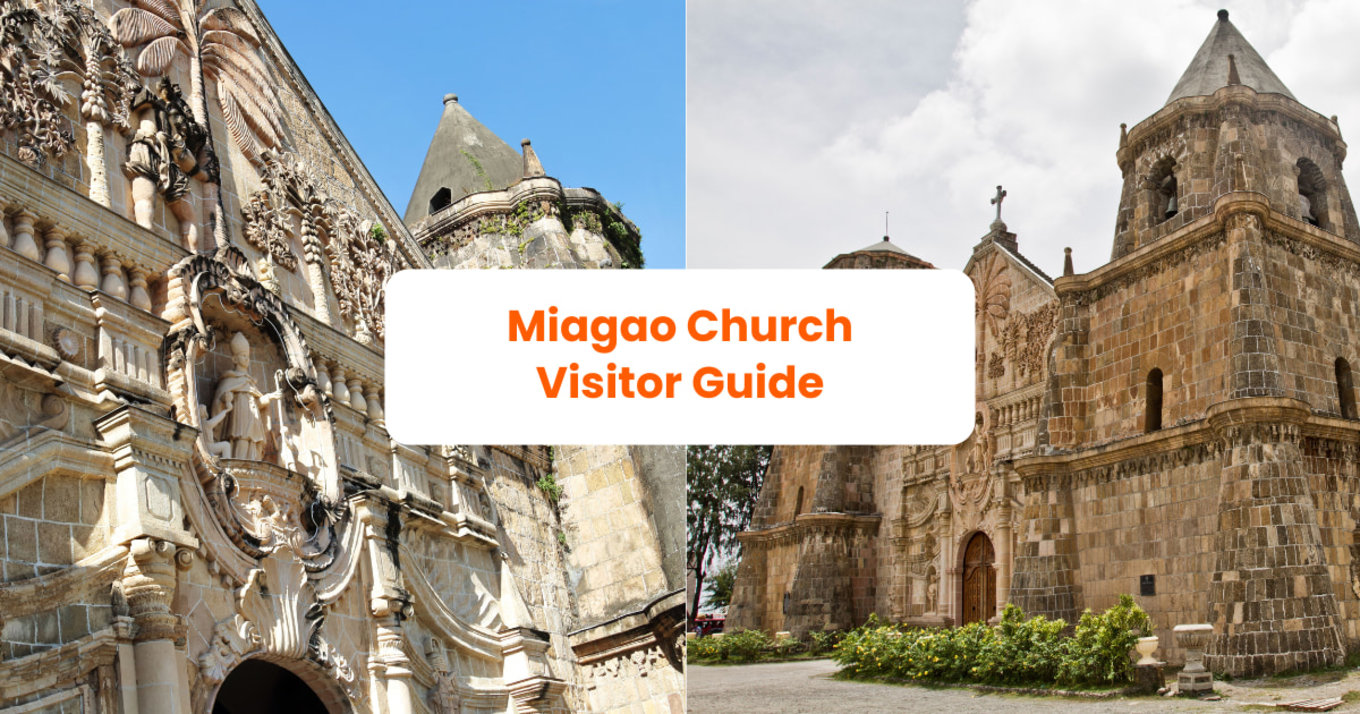
Miagao Church rises from the highest point of a quiet coastal town in Iloilo, a golden-stoned fortress-church that has been standing watch over the surrounding views for more than two centuries. If you are planning a trip through the Visayas, this is the kind of place that stops you in your tracks.
Where Miagao Church Stands Among the Philippines’ UNESCO Baroque Churches
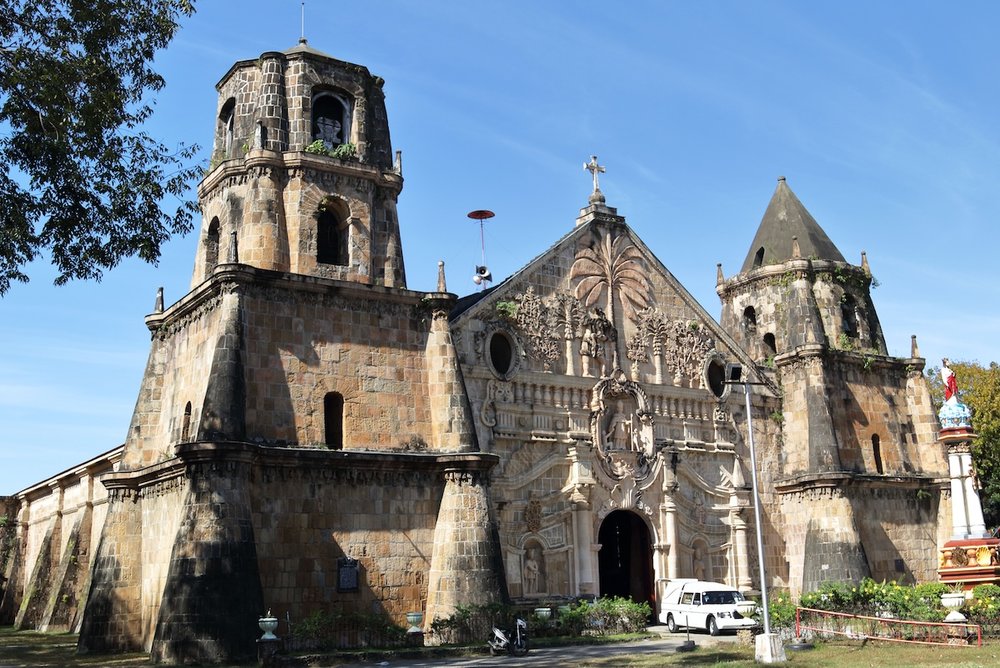
Miagao Church was inscribed as a UNESCO World Heritage Site in 1993, as part of the collective designation Baroque Churches of the Philippines — a group of four Spanish colonial-era churches recognized for their outstanding fusion of European Baroque design with local Filipino craftsmanship.
- Santo Tomás de Villanueva Parish Church (Miagao)
- San Agustín Church in Manila's Intramuros
- Nuestra Señora de la Asunción in Santa María, Ilocos Sur
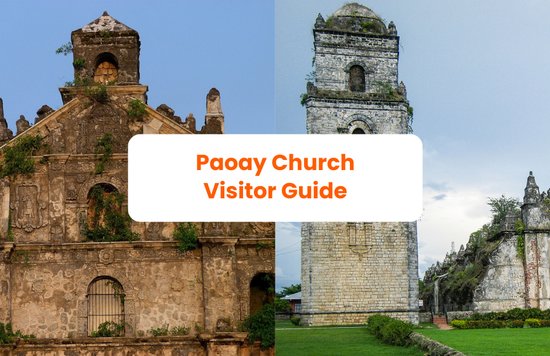
- Paoay Church in Ilocos Norte.
Of these four, Miagao is the only one in the Visayas, giving it a particular significance for travelers exploring this part of the Philippines.
Thanks to the UNESCO listing, the entire Miagao municipality has also been inscribed as a UNESCO World Heritage City, and a member of the Organization of World Heritage Cities.
The town is also known as the "Onion Capital of the Visayas" — a delightfully unexpected title for a place of such historic weight!
Miagao Church: Key Facts
Official name: Santo Tomás de Villanueva Parish Church, though almost universally known as Miagao Church
Patron saint: Saint Thomas of Villanova — a 16th-century Spanish Augustinian friar and noted preacher and theologian, whose carved image stands at the center of the main doorway
Built: 1787–1797, making it well over 200 years old
Why here: Constructed on the highest point in town as a deliberate defense against Moro pirate raids that had burned down two earlier churches built nearer to the sea
Why dubbed a fortress: Walls over 1.5 meters thick, massive twin belfries, and the elevated position. These were not just architectural choices; they were a survival strategy
Nearby attractions to combine with your visit
If you’re making a day of it, the coastal towns between Iloilo City and Miagao are worth exploring. San Joaquín Church, just south of Miagao, is a striking heritage church in its own right. Tigbauan and Guimbal also have their own centuries-old churches along the same road, making this stretch ideal for an Iloilo countryside tour.
Iloilo guides generally highlight how the province pairs nicely with a day trip to Guimaras Island — famous for the sweetest mangoes in the Philippines — just a short ferry ride from Iloilo City. More adventurous travelers often extend their trip further south to the Gigantes and Sicogon islands, a less-visited island cluster with dramatic rock formations and pristine beaches.
What to Expect at Miagao Church
The first thing most visitors notice is the façade, and with good reason. It’s dominated by an elaborate bas-relief carved from yellow-ochre coral stone and limestone, responsible for the signature golden glow.
The relief features a classic image of Saint Christopher carrying the Christ child on his back, but dressed in traditional Filipino clothing. He’s also surrounded by local flora and scenes of everyday Miagaonon life. This blending of Spanish, Chinese, Muslim, and indigenous decorative traditions is precisely what UNESCO identified as making these churches exceptional.
The two flanking bell towers stand out for being unequal in height and design; this is because they were ordered by two different priests at two different times. That asymmetry gives the church a slightly idiosyncratic, very human quality that photographs don't always capture.
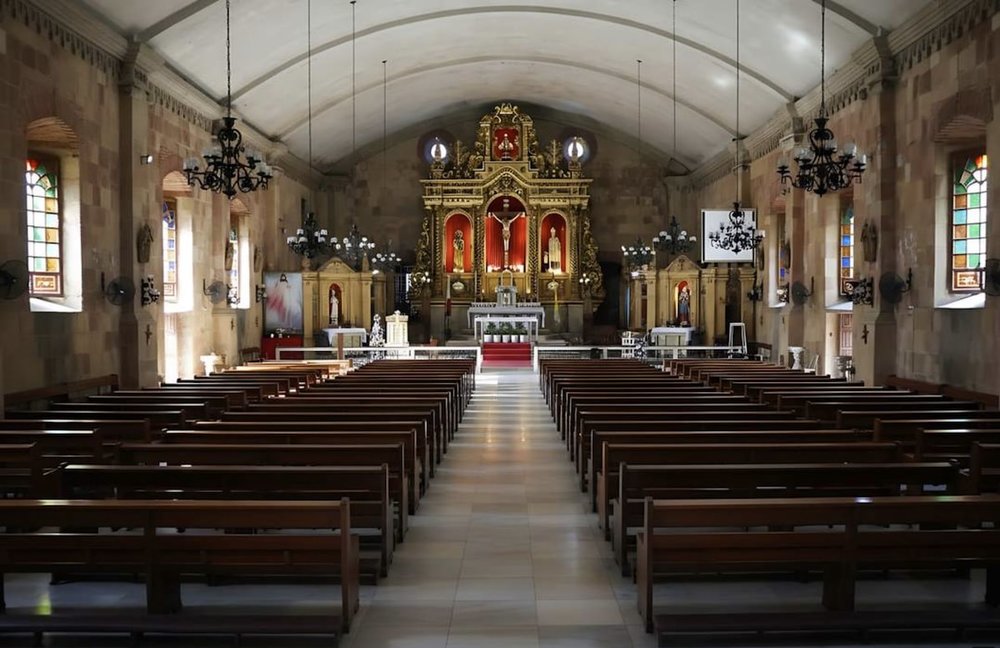
The church remains an active parish, so the interior has a living, working feel rather than the hush of a museum. Adjacent to the church, a small Miagao Church Museum houses religious artifacts and historical relics related to the parish's long history.
How to Get to Miagao Church, and Trip Costs
Miagao is approximately 40 kilometers southwest of Iloilo City, and getting there is straightforward.
By public transport: From Iloilo City, take a jeepney or bus headed for Miagao or San Joaquín from either the Mohon Terminal in Molo District or the Iloilo Southpoint Terminal near Robinsons Place.
- Ceres Liner buses pass through Miagao roughly every 30 minutes
- Jeepneys run every 10–20 minutes
- Fare for both: A few pesos
- Journey time: 45 minutes to an hour.
Tell the driver to drop you at Miagao Church, which everyone knows as a local landmark.
By private vehicle: If you prefer flexibility — especially if you plan to stop at other heritage churches or viewpoints along the way — consider booking an Iloilo car rental with driver. A private vehicle makes it easy to set your own pace and return when you're ready, rather than coordinating public transport schedules.
- Half-day charter covering Miagao and the surrounding towns – ₱1,500–₱2,500 depending on the operator.
Church entrance fee: None.
Entry to the church and grounds is free, though donations for maintenance are always welcome and appreciated.
What to Wear at the Church
This is an active Catholic parish, and the dress code is one of modest respect rather than strict regulation.
- Cover your shoulders and knees. Light, breathable fabrics like linen or cotton are ideal given the heat. A loose button-down shirt or a maxi dress works perfectly.
- Avoid very short shorts, sleeveless tops, or anything revealing when entering the church interior. The grounds outside are more relaxed, but once you step through the main doors, modest dress is the norm.
- Comfortable walking shoes are worth wearing — the churchyard has uneven stone paving, and if you explore the surrounding streets or combine with other churches, you will be on your feet for a while.
- A light scarf or wrap tucked in your bag solves almost any situation. It can cover bare shoulders in seconds and doubles as sun protection for the walk around the exterior.
- Sun protection matters more than many people expect. The exterior of the church and the plaza in front of it are exposed, and Iloilo can get very warm by mid-morning.
When to Visit Miagao Church
Dry season (November through May): This is the most comfortable time to visit. Skies are clearer, and the heat is manageable in the mornings.
Wet season (June to October): Occasional heavy rain and humidity, though the church itself is open year-round and unaffected by weather.
If your trip can be timed around a local festival, the annual Patronal Fiesta in September is an extraordinary experience. Processions, cultural performances, and local food stalls fill the town, and the church is dressed up for the occasion.
Day of the week and time of day
Visiting hours are generally 8:00 AM to 5:00 PM daily, though the church may be closed or partially restricted during mass services.
Weekdays are quieter than weekends, when local churchgoers and family groups arrive for Sunday mass.
For photography, early morning offers the best light — the golden stone catches the low sun beautifully, and the plaza is at its most peaceful before the mid-morning heat sets in.
Miagao Church FAQs
Is there an entrance fee to visit Miagao Church?
No — entry to Miagao Church and its grounds is completely free. Donations for the upkeep and restoration of the site are welcomed and go directly toward maintaining one of the Philippines' most significant heritage landmarks.
Can I visit Miagao Church as part of a day trip from Iloilo City?
Absolutely. The church is roughly 40 kilometers from Iloilo City, with a travel time of around 45 minutes by public jeepney or bus. A half-day trip from the city is very manageable and pairs naturally with visits to other heritage churches in the nearby towns of Tigbauan, Guimbal, and San Joaquín along the same road.
What makes Miagao Church different from other heritage churches in the Philippines?
Miagao Church is the only UNESCO-inscribed Baroque church in the Visayas — the other three are all in Luzon — which makes it exceptional for anyone traveling through the central Philippines. What sets it apart architecturally is its façade: fusing European Baroque imagery with distinctly Filipino elements. No other church in the country has quite the same image, and the combination of fortress-church design and folk-art storytelling in stone is genuinely singular.
Related Articles



What is Klook?
Klook is a leading pan-regional experiences platform in Asia Pacific, purpose built to digitalize experiences and make them accessible to every traveler.
Our mission is to build the digital infrastructure for the global experience economy — empowering merchants to share their passions and travelers to discover the heartbeat of each destination. We operate a mobile-first, curated platform featuring diverse experiences across global destinations.