
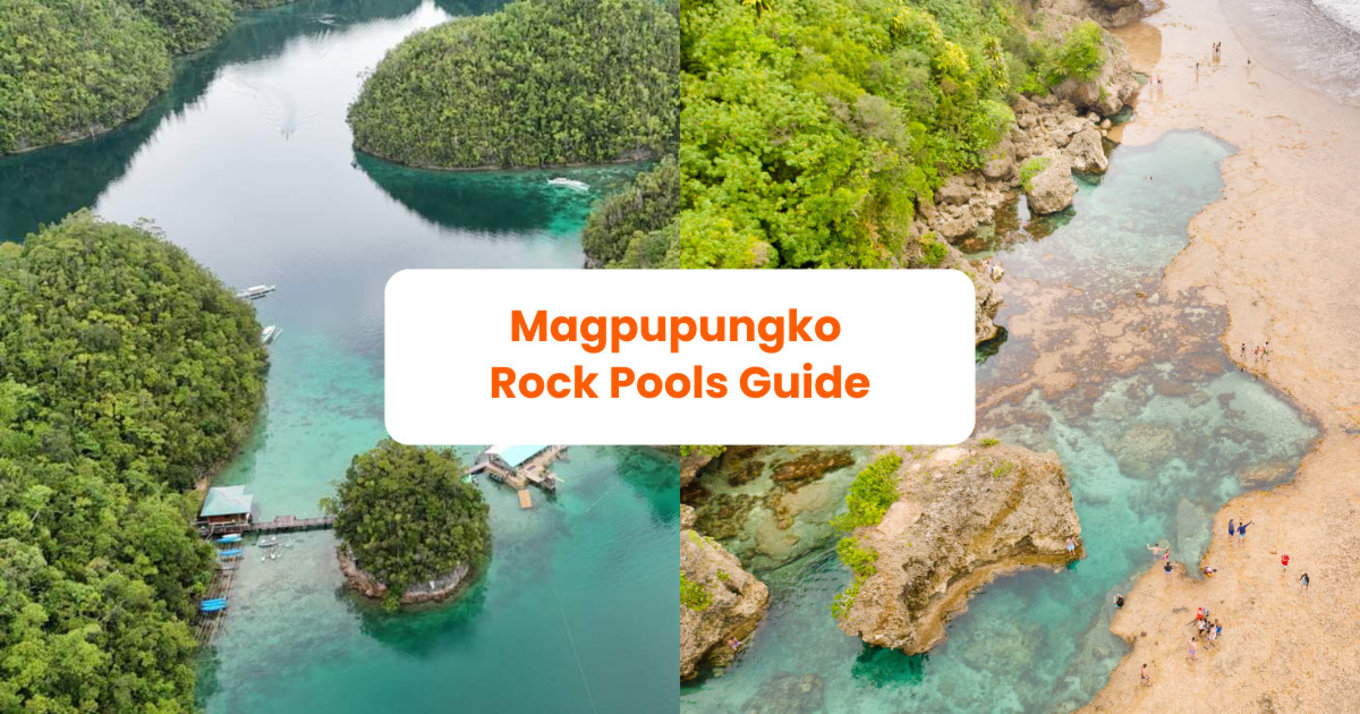
Magpupungko Rock Pools make you feel like you’re in on a secret: for part of the day, the Pacific hides them completely, but then as the tide recedes you see the bright blue natural pools carved into the coastal rock. It’s the kind of day-trip that rewards a little planning with a wildly memorable swimming experience.
Why do people visit Magpupungko rock pools?
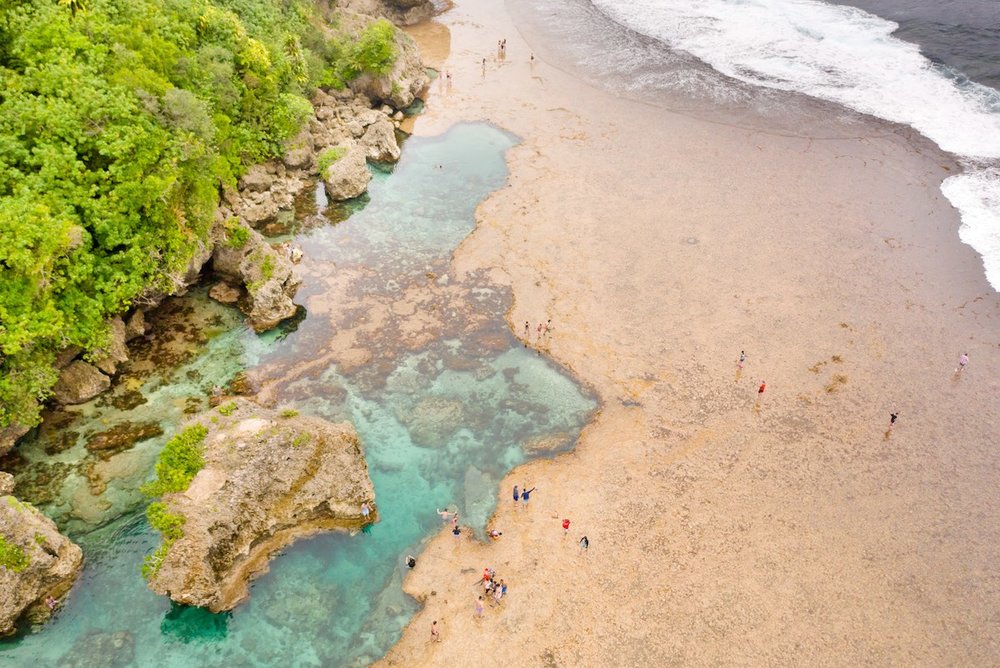
Travelers visit Magpupungko for its natural tidal pools: clear, calm basins of seawater surrounded by rugged rock formations, with the open ocean crashing just beyond the reef. At the right time of day, the contrast is spectacular — still turquoise water morphing into rolling Pacific waves beyond.
The most important thing to know is that Magpupungko is a low-tide attraction. At high tide, the pools are covered by the sea and the area can be unsafe. Before you go, check the local Siargao tide schedule and aim to arrive around low tide, ideally with enough time to enjoy the pools before the waves start coming back in.
Magpupungko rock pools: Quick facts
- Location: Pilar, on the eastern side of Siargao Island, Surigao del Norte.
- What the name means: “Magpupungko” comes from the local/Visayan word pungko, often translated as “to sit” or “to squat,” referring to the famous rock that appears to balance on another rock near the pools.
- Alternate spelling: You may also see it written as “Magpopongko” on some maps, signs, or travel guides. Both spellings generally refer to the same rock pools in Pilar.
- Best-known activities: Swimming, taking photos, exploring the rock formations, snorkeling in calm conditions, and optional cliff-jumping where safe.
- Typical visit length: Around 1–2 hours at the pools, longer if you relax at the beach or eat nearby.
- Good to combine with: Coconut Road, Sea of Palms viewpoint, Maasin River, Tayangban Cave Pool, Pacifico Beach, Alegria Beach, or Sugba Lagoon, depending on your route and how much time you have. You could also combine it with Siargao surfing lessons.
What to expect at Magpupungko rock pools
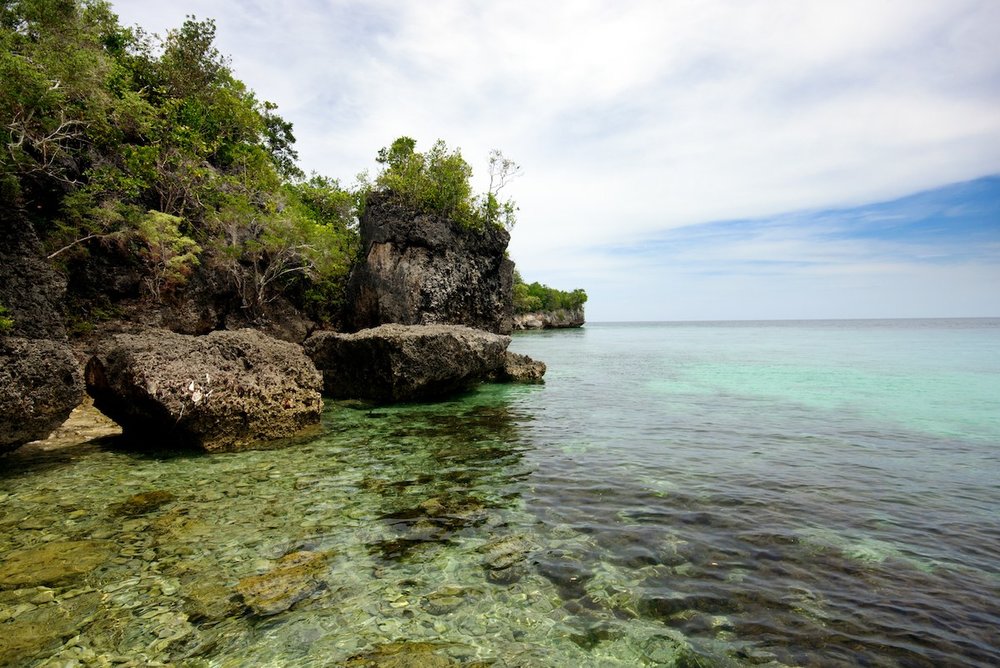
After entering the beach area, you’ll make your way across the shore and rocky flats toward the pools. The walk is short, but the surface can be uneven and slippery, so this is not the place to rush. Once you reach the main pools, the scenery opens up into a natural swimming area framed by shallow ledges, deeper blue sections, and the dramatic edge of the ocean beyond.
In good conditions, the pool-water is clear enough to see the shapes below, and once you’re immersed the pools can feel like a natural infinity pool carved into the coastline. Some areas are better for wading, while others are deep enough for swimming. You may also see small fish in the pools, especially if you bring a mask.
Magpupungko is popular, so expect other visitors, especially during peak season, weekends, and school holidays. That said, the setting still feels adventurous: you’re not arriving at a polished resort pool, but at a raw coastal landscape shaped by tides, reef, and rock.
How to get to Magpupungko rock pools, and costs
Most travelers visit Magpupungko from General Luna, Siargao’s main tourist base. The drive usually takes about 45 minutes to 1 hour, depending on your starting point, road conditions, and stops along the way.
The easiest DIY option is to rent a motorbike or scooter, which gives you flexibility to match your visit to the tide schedule and stop at viewpoints along the way. If you’re not comfortable driving, you can hire a tricycle, private driver, or join a Siargao land tour that includes Magpupungko as one stop.
Cost item | Typical price range | Notes |
Entrance fee | ₱50–100 per person | Bring cash; rates can vary by season or local updates. |
Motorbike parking | ₱20–30 | Commonly charged at the beach/parking area. |
Cottage or shade rental | ₱300–500 | Optional, useful for groups or longer beach time. |
Snorkel or life jacket rental | Around ₱200 each | Availability and pricing can vary on-site. |
Scooter rental in General Luna | Often around ₱300–400 per day | Prices vary by rental shop, season, and bike condition. |
Bring small bills, as card payment is not always available at smaller local attractions.
What to wear and bring
Swimwear - worn under light clothes so you can get in the water easily once conditions are right
Water shoes or sturdy sandals - a smart choice because the rocks can be sharp, wet, and uneven. Flip-flops are fine for the beach area, but they are less secure if you plan to climb around the rocks.
Accessories - towel, dry bag, reef-safe sunscreen, sunglasses, drinking water, and a waterproof phone pouch or action camera.
Anti-UV beachwear/rash guard - helpful because shade can be limited once you are out on the rock flats.
Snorkeling mask - bringing your own mask is a good idea, as rental gear may not always fit well.
Avoid bringing too much. You’ll want your hands free for balance as you cross the rocks, and anything you leave on the shore should be kept simple and easy to watch.
When is the best time of year to visit Magpupungko?
For a Siargao sightseeing trip, the most reliable months are generally March to May, when weather is usually better for beaches, coastal drives, and outdoor day trips. Siargao’s wetter months can still be beautiful, but outdoor coastal attractions like Magpupungko are easier to enjoy when conditions are calmer and drier.
If you want fewer crowds, consider the shoulder periods around early March, late May, or September to October, but keep your plans flexible in case of rain or rougher coastal conditions. Weekdays are usually better than weekends, especially during Philippine holidays and school breaks.
Magpupungko is more weather-dependent than a café-hopping or inland sightseeing day. Heavy rain, rough seas, or poor visibility can change the experience quickly, so it helps to keep this day trip flexible rather than locking it into your only available day.
Attractions and activities near Magpupungko
Magpupungko works especially well as part of a wider Siargao land trip or tri-island tour. Many travelers combine it with the Coconut Road and Sea of Palms viewpoint on the way from General Luna, then continue to places like Maasin River or Tayangban Cave Pool. If you want a longer adventure, you can push farther north toward Pacifico or Alegria Beach for a quieter coastal feel.
You can also pair Magpupungko with Sugba Lagoon if you are planning a fuller day and have transport arranged, though that itinerary requires more coordination. For a slower pace, stay near the pools after your swim, grab a simple local meal, and enjoy the beach before heading back across the island.
FAQs on Magpupungko rock pools
1. Can you visit Magpupungko Rock Pools at any time of day?
No. Magpupungko Rock Pools are best visited at low tide, when the ocean recedes and reveals the natural pools. At high tide, the pools may be covered by seawater, making them difficult to see and less safe to explore. Check the Siargao tide schedule before you go, and plan to arrive with enough time to enjoy the pools before the water starts coming back in.
2. How do you get to Magpupungko Rock Pools from General Luna?
Magpupungko Rock Pools are located in Pilar, about 45 minutes to 1 hour from General Luna by road. Many visitors rent a scooter or motorbike for the day, which gives them the flexibility to match their visit with the tide schedule. If you prefer not to drive, you can hire a tricycle, book a private driver, or join a Siargao land tour that includes Magpupungko.
3. What should you wear to Magpupungko Rock Pools?
Wear swimwear under light, quick-dry clothes so you’re ready to get in the water. Water shoes or sturdy sandals with grip are strongly recommended because the rocks can be sharp, uneven, and slippery. It’s also worth bringing a towel, reef-safe sunscreen, drinking water, a dry bag, and a waterproof pouch for your phone.
Related Articles


What is Klook?
Klook is a leading pan-regional experiences platform in Asia Pacific, purpose built to digitalize experiences and make them accessible to every traveler.
Our mission is to build the digital infrastructure for the global experience economy — empowering merchants to share their passions and travelers to discover the heartbeat of each destination. We operate a mobile-first, curated platform featuring diverse experiences across global destinations.