

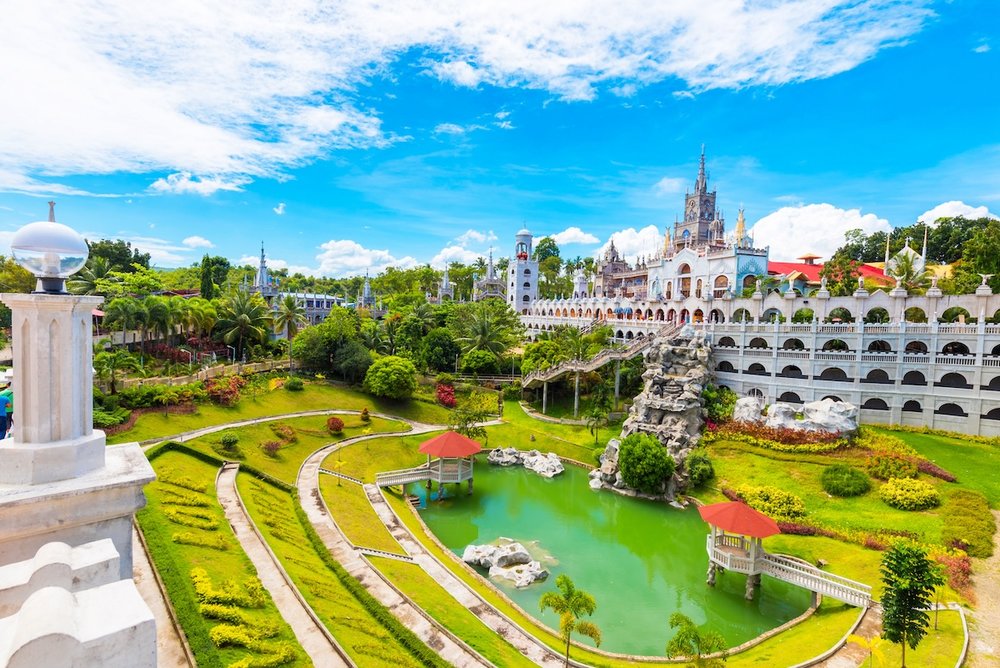
Simala Shrine is one of the Philippines’ most famous pilgrimage sites, attracting devoted worshippers and curious travelers who compare it to a fairy-tale castle.
Why Tourists Visit Simala Shrine
Simala Shrine Visitor Guide
Officially known as the Monastery of the Holy Eucharist, Simala Shrine stands out among Southern Cebu’s religious landmarks because it blends striking architecture with a deeply spiritual atmosphere.
The shrine is managed by the Marian Monks of Eucharistic Adoration, and over the years it has gained a reputation for miraculous healings and answered prayers. Visitors leave behind handwritten letters, crutches, graduation photos, wedding pictures, and other personal items as testimonies of blessings they believe they received after praying here.
Even travelers who are not religious often stop by because the place itself is extraordinary to look at, making it one of the most Instagrammed spots in Cebu.
What makes Simala Shrine memorable is the contrast between spectacle and serenity. One moment you are admiring the ornate exterior, and the next you are standing quietly beside people lighting candles and praying in silence.
What to Expect at Simala Shrine
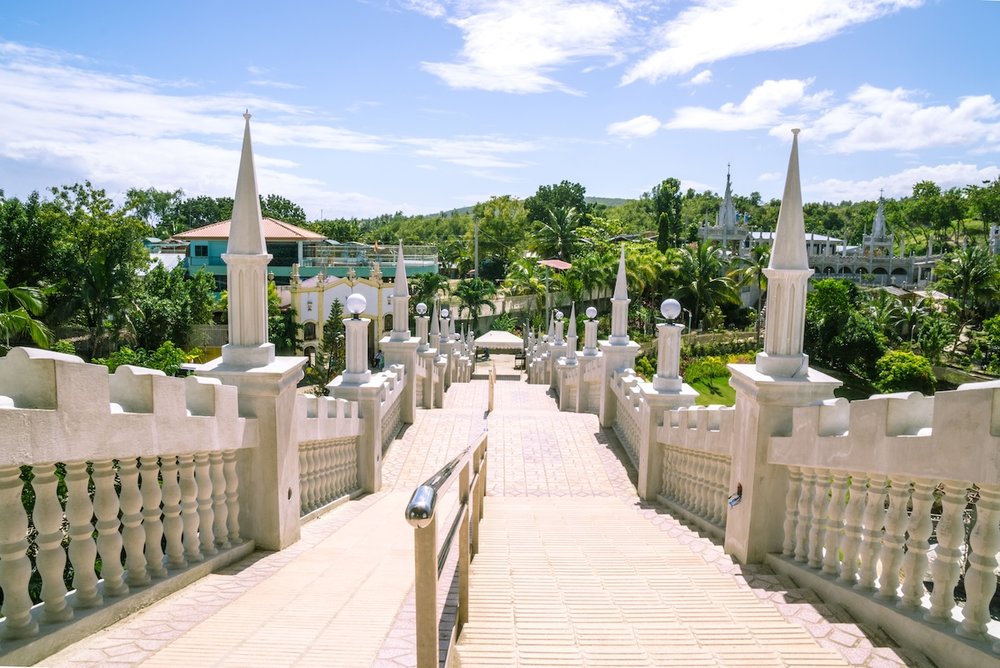
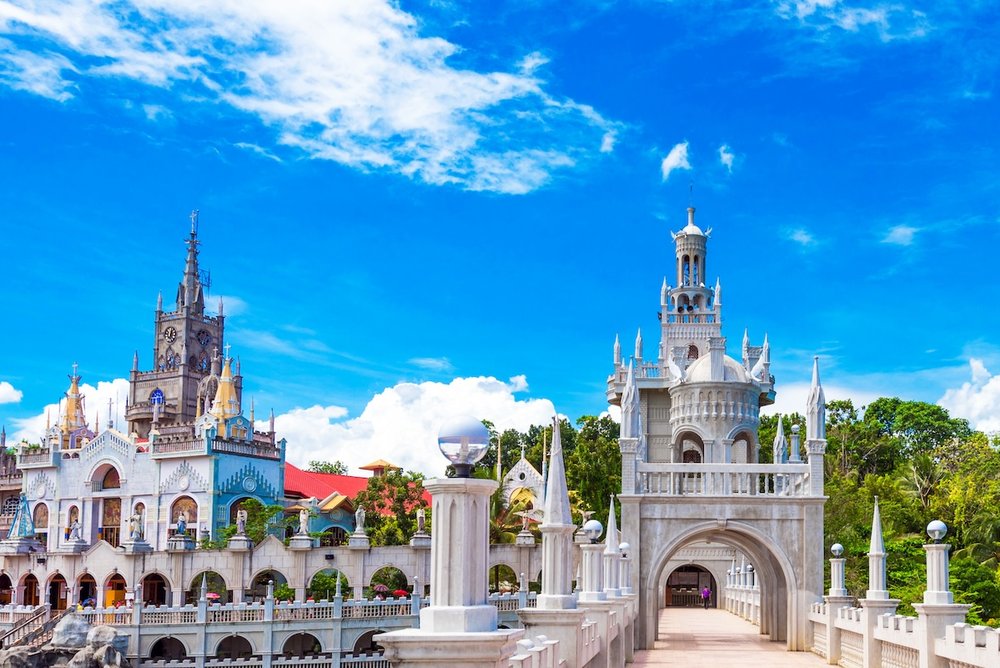
Even the approach to Simala Shrine is something to write home about. As your vehicle winds through the countryside of Sibonga, the church suddenly appears above the hills, looking more like a grand European-style castle than a typical parish church.
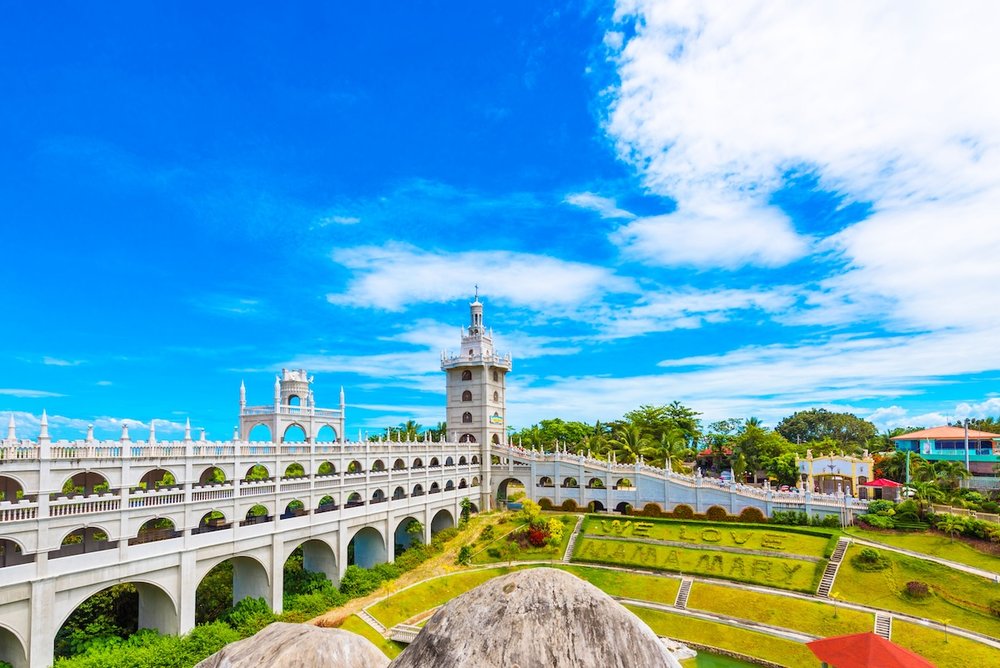
- The exterior stands out for its towering spires and sweeping staircases.
- Inside the grounds, you will find large courtyards, devotional halls, prayer areas, and long corridors filled with testimonials from devotees.
The main church interior is richly decorated, with painted ceilings, stained-glass details, chandeliers, and religious statues throughout. Among the details are many informal notes attached to the walls, describing miraculous experiences such as medical recoveries or personal milestones attributed to the shrine’s intercession.
During weekends and holy days, expect a lively atmosphere with families, tour groups, and pilgrims arriving from across the Philippines.
Despite its popularity, there are still quiet corners where you can pause and take in the surroundings. The elevated location also gives you wide views over the Cebu countryside, especially beautiful in the late afternoon light.
Note: Photography is allowed in many outdoor areas, though visitors are expected to remain respectful inside prayer spaces.
How to Get to Simala Shrine and Typical Costs
Simala Shrine falls under the jurisdiction of Sibonga municipality, about 60 kilometers south of Cebu City.
From Cebu City
The most common way to visit is by bus or private transport.
Bus
From the South Bus Terminal in Cebu City, take a bus bound for Oslob, Liloan, or Bato. Tell the driver you are getting off at Simala.
- Travel time: around 2.5–3 hours, depending on traffic
- Bus fare: approximately ₱120–180 one way
- From the highway drop-off point, you can take a habal-habal (motorbike taxi) or tricycle up to the shrine for around ₱30–100
Private Car or Tour
Many travelers prefer hiring a driver or joining a Cebu day tour that includes Simala Shrine alongside spots like the Temple of Leah and Sirao Garden.
- Travel time: around 2 hours from Cebu City
- Private day tours: usually ₱2,500–5,000 depending on inclusions and group size
Many travelers also visit Simala Shrine as part of a longer southern Cebu itinerary, pairing it with stops like Osmeña Peak for mountain views or whale shark watching at Oslob. If you want to combine multiple stops in one day, hiring a private driver or taking a guided tour is the best option.
Entrance Fee
Entry to Simala Shrine itself is free, though donations are welcome. Candle offerings and souvenir purchases are optional extra costs.
What to Wear to Simala Shrine
Because Simala Shrine is an active religious site, modest clothing is expected.
Visitors are generally asked to avoid:
- Very short shorts or skirts
- Sleeveless tops
- Crop tops
- Clothing with offensive prints
Lightweight clothing works best because Cebu can get very hot during the day, but it’s a good idea to bring a shawl, scarf, or light cover-up if your outfit is more casual.
Comfortable footwear is also important. The shrine grounds include staircases, sloped walkways, and large open areas that require quite a bit of walking.
When to Visit Simala Shrine
The best time to visit Simala Shrine is during Cebu’s dry season, from December to May, when skies are clearer and the hilltop views are at their best.
Best Days of the Week
Weekdays are noticeably calmer than weekends. If you want a quieter experience and better photo opportunities, aim for a Tuesday, Wednesday, or Thursday morning.
Weekends can become extremely crowded, particularly:
- Sundays
- Holy Week
- Catholic feast days
- The months leading up to Christmas
Best Time of Day
Arriving early in the morning gives you cooler temperatures and softer lighting for photos. Late afternoon is also beautiful, especially when the sun begins to light the towers in warm gold tones.
Midday tends to be the hottest and busiest period.
Simala Shrine FAQs
1. Why is Simala Shrine considered miraculous?
Simala Shrine became famous after stories spread about answered prayers and reported healings connected to the image of the Virgin Mary housed there. Many devotees leave letters, photographs, and personal items as testimonies of blessings they believe they received after visiting the shrine.
2. Is there an entrance fee for Simala Shrine?
No, entrance to Simala Shrine is free. Visitors can make voluntary donations, buy candles for prayer offerings, or purchase souvenirs from vendors near the church grounds.
3. Can tourists visit Simala Shrine even if they are not Catholic?
Yes. While Simala Shrine is an important Catholic pilgrimage site, travelers of all backgrounds visit because of its architecture, peaceful atmosphere, and cultural significance. Visitors are simply expected to dress respectfully and behave appropriately inside prayer areas.
Related Articles
What is Klook?
Klook is a leading pan-regional experiences platform in Asia Pacific, purpose built to digitalize experiences and make them accessible to every traveler.
Our mission is to build the digital infrastructure for the global experience economy — empowering merchants to share their passions and travelers to discover the heartbeat of each destination. We operate a mobile-first, curated platform featuring diverse experiences across global destinations.