

You’ve booked your flights, confirmed your hotel, and nearly finished packing. Then you spot your phone charger and hesitate: will it actually work in Vietnam’s wall outlets? It’s a minor detail, but one worth checking.
The Vietnam plug type you'll meet most is Type A (two flat pins) or Type C (two round pins), and plenty of sockets take both. Vietnam voltage is 220V at 50Hz. Coming from the US or Canada, you can usually plug straight in, while UK and Australian plugs need an adapter, and only single-voltage gadgets, like some hair tools, need a converter.
The rest of this guide covers a quick-reference table, the adapter versus converter question, what sockets are really like in hotels and airports, and a short packing list for your trip to Vietnam.
Quick reference: which plug do you need?
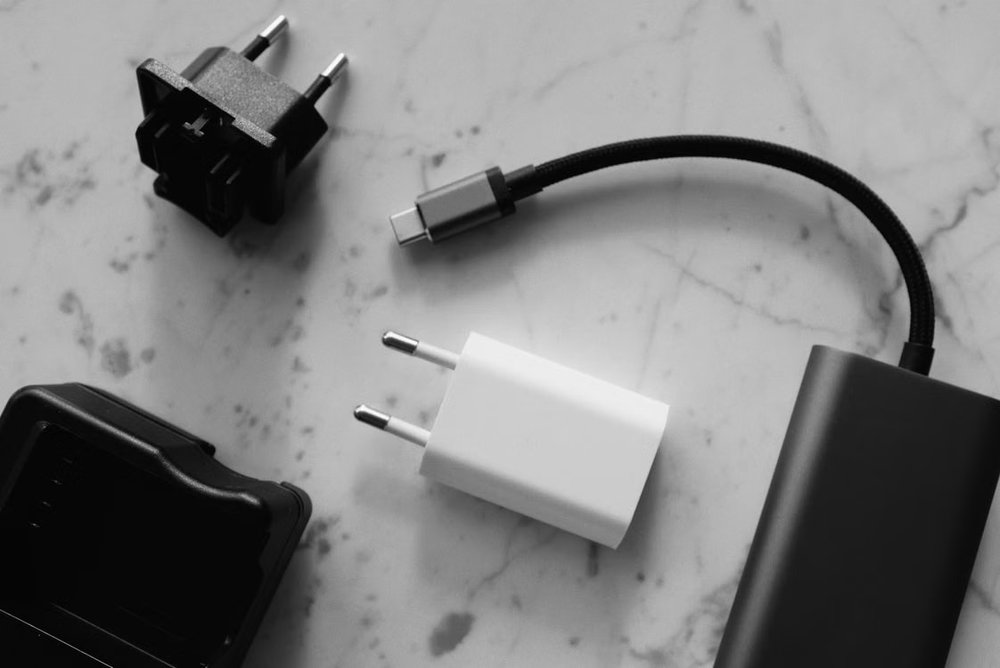
Electronic plug and chargers | Image credit: ready made via Pexels
Finding out your plug doesn't fit while standing in a hotel room is no fun, so check your home country here first.
Traveling from | Your plug type | Fits Vietnam sockets? | Adapter? | Converter? |
|---|---|---|---|---|
US, Canada | A (B has a third pin) | Type A yes; grounded Type B may not | Only for Type B | Only for 120V-only devices |
Japan | A | Yes | No | Check label; Japan runs 100V |
UK, Ireland | G | No | Yes | No, 230V is close enough |
EU (Germany, France, Spain) | C or F | Type C yes; Type F fits but isn't earthed | Bring one to be safe | No |
Australia, New Zealand | I | No | Yes | No, 230V is close enough |
Which Vietnam plug type will you actually see?
Look at the wall in most Vietnamese hotel rooms and you'll find two small holes, round or flat, sometimes both shapes in one socket. Those hybrid sockets are the norm across Vietnam power outlets, so a Type A and Type C plug in Vietnam will both usually work. Some grounded versions take Type B too.
Universal sockets that accept almost any plug exist, but they aren't installed often. Type E and Type F plugs only partly fit the hybrid sockets, and they won't be earthed. That's fine for a phone charger, but not ideal for heavier appliances.
Socket type | What it looks like | Where you'll see it |
|---|---|---|
Type A | Two flat parallel pins | Hybrid sockets, most hotels |
Type C | Two round pins | Almost everywhere |
Hybrid A/C socket | Slots that fit flat or round pins | The most common Vietnam socket |
Universal socket | Wide face that takes many plugs | Some newer hotels and airports |
Vietnam voltage and frequency
Vietnam electricity runs at 220V and 50Hz. That's close to what the UK, EU and Australia use (230V), so devices from those places run fine. You'll see 230V listed on some sites, and for modern chargers the gap makes no difference.
The US, Canada and Japan run lower, between 100V and 127V. Devices from there need to handle the higher voltage, which is easy to check on the label.
Adapter or converter: what's the difference?
Whatever Vietnam plug type your device has, a plug adapter only changes the shape of your plug so it fits the socket. A voltage converter changes the electricity itself, and it's bulkier and pricier.
Flip your charger over and look for small print like "INPUT: 100-240V, 50/60Hz". That range means it's dual-voltage, so an adapter is all you need. Phones, laptops and cameras almost always carry it. Hair dryers, straighteners and kettles often don't, and a 120V-only label means you need a converter or a different gadget.
What to expect in hotels, hostels, airports and trains
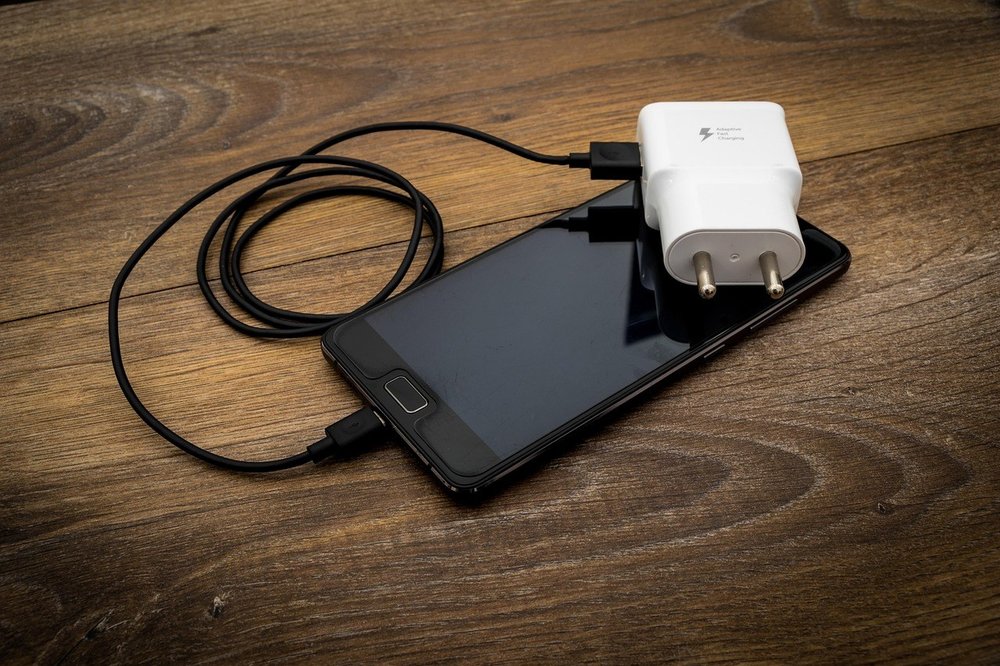
Two pin plug | Image credit: ReadyElements via Pixabay
Sockets in Vietnam depend a lot on where you sleep. Newer buildings in big cities, like the high-rises around Landmark 81 in Ho Chi Minh City, often have multi-type sockets. Guesthouses and hostels in older or rural areas may only have Type A or Type C, so pack an adapter anyway.
A few quirks are worth knowing. Some sockets grip loosely, so a heavy charger can slip out; rest it on a table instead of letting it dangle. Rooms often have only one or two free outlets, and some switch power on only when your key card sits in a slot by the door.
Airports have limited outlets near gates, so charge up before you leave the hotel. Outlets on trains and buses vary by route and class, so treat them as a bonus.
Klook Tip: Ask the front desk to lend you an adapter. Some hotels keep spares, which saves you buying one on arrival.
What to pack: your Vietnam electricity checklist
Your electronics bag doesn't need to be big, it just needs to be right.
- A compact Vietnam travel adapter: One that fits flat and round pins works best. A universal model with USB ports lets you charge several devices from one socket.
- A power bank: Keep it in your carry-on, never checked luggage. Under the Vietnam power bank rules for flights from July 1, 2026, you can carry two of up to 100Wh each, and you can't use or recharge them in the air. Larger ones (100 to 160Wh) need airline approval.
- Charging cables: Bring one spare, and a short cable for tight spots.
- A zip bag: Rainy months can soak a pocket, and the Vietnam season guide helps you time your trip.
Vietnam eSIM and pocket WiFi: staying connected while you charge
Power and data are the two things everyone worries about the minute they land. A Vietnam eSIM solves the data half. You scan a QR code, and you're online without hunting for a SIM shop at the airport.
Heading to more than one country? A Southeast Asia eSIM or an Asia eSIM covers the rest of your route. Compare it with international roaming before you decide.
An eSIM does need an unlocked, eSIM-compatible phone. A Vietnam pocket WiFi hotspot works on any device, but it's one more thing to charge and carry.
Klook Tip: Install your eSIM on hotel or home WiFi before you fly, then switch it on when you land.
Power bank tips for long sightseeing days in Vietnam
Maps, photos, translation and ride apps drain a phone fast. Charge to 100% before any big day out, and carry your power bank in your daypack. The Vietnam famous sites guide shows how much ground there is to cover.
In Ho Chi Minh City, the colonial-era Saigon Central Post Office is an easy first stop. The Cu Chi Tunnel is a half-day trip with little time near a socket. A double-decker bus ticket gives your feet a break, but don't count on a charging port.
Beyond the city, cable car queues and photo stops eat battery. Plan your power for Ba Na Hills near Da Nang, VinWonders Phu Quoc, or the Fansipan Legend cable car in Sapa.
FAQs about Vietnam plug type
What plug type does Vietnam use?
The Vietnam plug type is a mix of Type A (two flat pins) and Type C (two round pins), and many sockets accept both. Some grounded sockets also take Type B. If your plug is Type G (UK) or Type I (Australia), you'll need an adapter.
What is the voltage in Vietnam?
Vietnam runs on 220V at 50Hz. Some sources list 230V, and the difference won't affect modern chargers. Check your device label for "100-240V" to be sure.
Do I need a power adapter for Vietnam?
It depends on your plug. If you're coming from the US, Canada or Japan, you can usually plug in directly. From the UK or Australia, you'll need an adapter. Type C plugs from the EU fit too, though a small adapter is a safe backup.
Do I need a voltage converter in Vietnam?
Only for single-voltage devices made for 100V to 127V, like some hair dryers and straighteners. Phones, laptops and cameras are almost always dual-voltage, so an adapter is enough. For a hair dryer, buying a cheap one locally is often easier than carrying a converter.
Can I use a US plug in Vietnam?
Yes, usually, because Type A plugs fit most Vietnam power outlets. The catch is voltage, since US devices are built for 120V. Check the label for 100-240V before plugging in, and use an adapter for grounded three-pin plugs.
Do Vietnamese hotels have universal sockets?
Often in newer city hotels, but not everywhere. Guesthouses and older properties may only have Type A or Type C sockets. Ask the front desk if they lend adapters.
Can I buy a plug adapter in Vietnam?
Yes, easily. Convenience stores like Circle K, FamilyMart and 7-Eleven, and electronics shops like The Gioi Di Dong and FPT Shop, sell them in major cities. Airport shops at Noi Bai and Tan Son Nhat carry them too, usually at higher prices.
Pack light, plug in, go
With your Vietnam plug type sorted, your bag should hold an adapter, a power bank under 100Wh and one spare cable. Book your eSIM and any sightseeing tickets with Klook before you fly, charge everything the night before, and you'll be reading a pho menu with a full battery on your first morning in Ho Chi Minh City. Before you zip up, check the label on your hair dryer, because that's the one gadget most likely to need a converter.
More travel guides for you
Heading on to another country after Vietnam? These plug guides cover your next stop.


What is Klook?
Klook is a leading pan-regional experiences platform in Asia Pacific, purpose built to digitalize experiences and make them accessible to every traveler.
Our mission is to build the digital infrastructure for the global experience economy — empowering merchants to share their passions and travelers to discover the heartbeat of each destination. We operate a mobile-first, curated platform featuring diverse experiences across global destinations.