

You’ve got your flight booked and hotel locked in, but then someone in the group chat mentions an arrival form no one's heard of. Don't worry, it's a super common question! The Vietnam arrival card (officially called the Vietnam pre-arrival declaration) is a quick, free online form. If you're flying into Ho Chi Minh City on a foreign passport, you'll need to fill this out before heading to immigration. It only takes about 5 to 10 minutes, and you can complete it anytime within 72 hours of landing.
The system first launched at Tan Son Nhat Airport in April 2026, and it has been rolling out to other major airports across Vietnam ever since. Just keep in mind, this is an extra check-in step rather than a replacement for your visa. Below, we’ve broken down everything you need to know: who needs to fill it out, simple step-by-step instructions, what to do if you’re short on time before departure, and how to navigate the airport smoothly once you arrive!
Who needs the Vietnam arrival card, and when
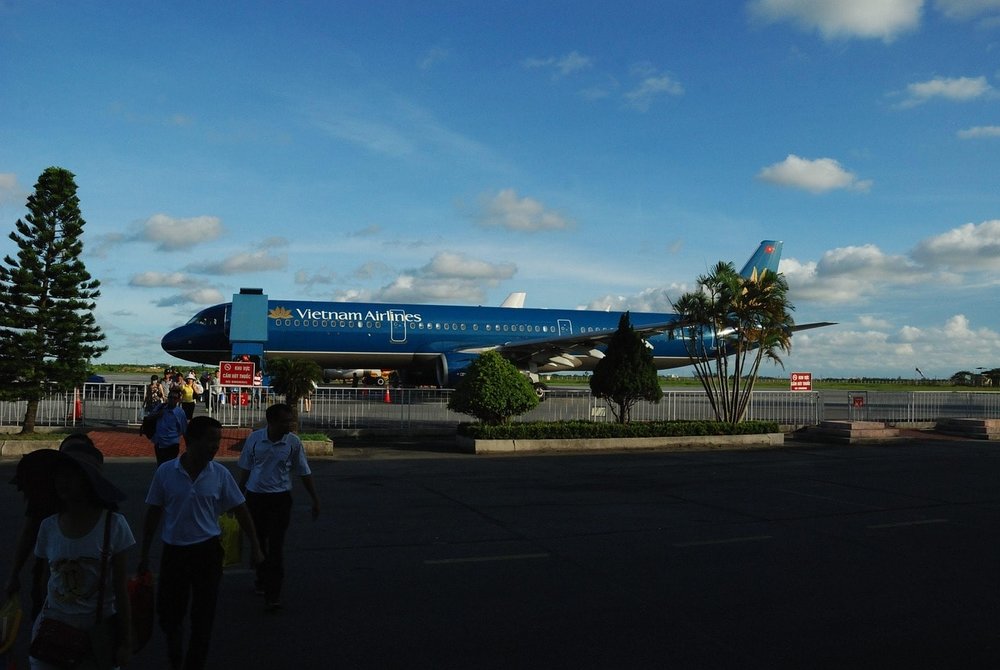
Cat Bi Airport in Hai Phong | Image credit: nguyentuanhung via Pixabay
It's easy to assume a form like this only matters if you need a visa, but that’s not true. If you're traveling on a foreign passport and landing at a covered airport, you need one, even if you're entering on a visa exemption, an e-visa or a residence card.
Citizens traveling on a Vietnamese passport are exempt. If you think you qualify for another exemption, confirm it with the Vietnam Immigration Department or your airline before you skip the form. Everyone else gets their own declaration, kids and infants included.
Best of all, the form is free. Since submission opens 72 hours prior to arrival, doing it the day before you fly is best. If you're traveling as a family or group, you can conveniently add everyone under a single submission, it only takes about 5 to 10 minutes total.
This is an extra step, not a swap. It doesn't replace a visa, a Vietnam e-visa, a Vietnam visa exemption or a residence card, so you still need to meet the usual Vietnam entry requirements for your passport.
Which airports require it

Da Nang, Vietnam | Image credit: Leino194 via Pixabay
This is the part that keeps changing, so it's worth a second look before you travel. Tan Son Nhat in Ho Chi Minh City went first on April 15, 2026, and Phu Quoc followed on June 1. Embassy notices published in June 2026 list five airports:
- Tan Son Nhat (SGN), Ho Chi Minh City
- Noi Bai (HAN), Hanoi
- Da Nang (DAD)
- Cam Ranh (CXR), for Nha Trang
- Phu Quoc (PQC)
Travel sites disagree on the exact start dates for Hanoi, Da Nang and Cam Ranh, and land borders and seaports aren't confirmed. Authorities have said the system will roll out to more entry points over time. Check the portal and the Vietnam Immigration Department's notices close to your travel date, especially if you're crossing by land.
How to complete the Vietnam arrival card online
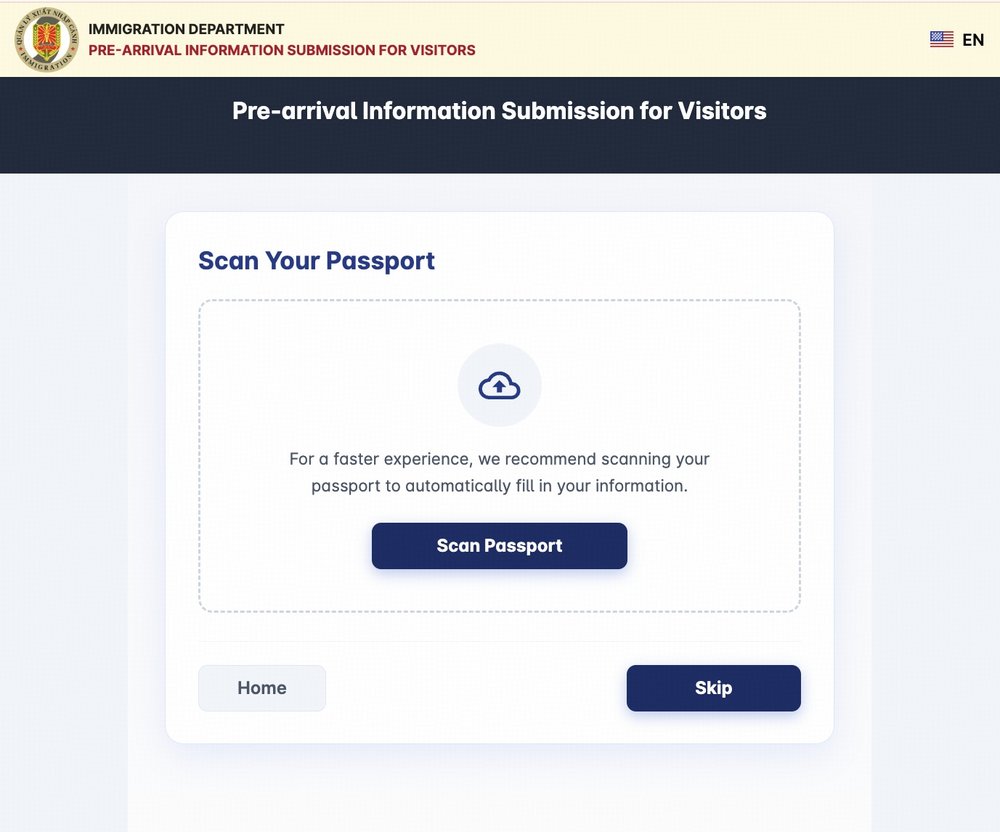
Pre Arrival Form | Image credit: prearrival.immigration.gov.vn
Grab your passport, your flight details and your hotel address, and set aside about 10 minutes. Here's the order the form follows:
- Open the official portal. Go to prearrival.immigration.gov.vn.
- Pick your language and start a new declaration.
- Add each traveler in your group, one entry per person.
- Enter your passport, visa or exemption details, and your flight. You'll need your arrival date, flight number and arrival airport.
- Add where you're staying. Use the address of your first night's hotel.
- Submit, then download your QR code.
Stable data makes this far less stressful, especially when you need your QR code to load again on arrival. A Vietnam eSIM starts from USD 3.20, with plans running 500MB to unlimited and valid for 1 to 30 days. Your home SIM stays in the phone, so you keep your number.
Unlimited plans slow to 1 Mbps after 15 GB a day. The eSIM also only starts counting once it connects to a local network, so you'll still do the form at home on Wi-Fi. Think of it as your backup for landing, not a must for the form itself.
Klook Tip: Install your eSIM before you fly and switch on data roaming when you land. Check that your phone is eSIM compatible first.
Save your QR code, and what to do if you can't submit in time
Airport Wi-Fi can drop out right when you need it. Take a screenshot of your QR code the moment you download it, save the confirmation to your phone, and keep a printed copy as a backup if you've got a printer handy. Immigration officers scan the code, so it needs to open without a signal.
If you couldn't submit before flying, you can still complete it on arrival, according to official notices. At Tan Son Nhat, a QR code in the arrival area links to the portal. It just means filling in a form on your phone while the queue builds, so you'll want working data.
Use only the official portal. The form is free, so if a site asks you to pay a "processing fee", you're not on the government page. Type the address in yourself instead of clicking an ad or a search result.
Landing somewhere other than Ho Chi Minh City?
The form works the same way at every covered airport. You pick your entry point, submit, and show the same kind of QR code. What changes is how you get out of the airport.
A Phu Quoc airport arrival can be a slower start. The Phu Quoc airport transfer from USD 35.55 is a private 3-hour ride with stops at a cafe, a supermarket, a pearl center and a fish sauce factory. It suits first-timers who want an easy island introduction on the way to the hotel. It's not the fastest route to your bed, though, and one reviewer found the pearl stop dull.
Landing in Hanoi is more budget-friendly. The Noi Bai express bus from USD 1.95 runs Bus 86 to the Old Quarter and Hanoi Railway Station in about 60 minutes, roughly every 30 to 35 minutes. It works if you're traveling solo with light bags, since you're limited to two suitcases and one carry-on. If you'd rather go door to door, book Noi Bai airport transfers instead.
Da Nang arrivals often head straight on to Hoi An. The Da Nang airport shuttle costs USD 5.39 per adult and picks up at Gate A4 at the Domestic Terminal, so international arrivals walk over. Expect a 10 to 15 minute wait while the driver collects other passengers. For a private car, try Da Nang airport transfers.
Klook Tip: Book a shuttle slot at least an hour after you land, so immigration doesn't make you miss it.
After you clear immigration at Tan Son Nhat
You've scanned your QR code, collected your bag, and the only question left is how to get into town. A smooth Tan Son Nhat Airport arrival comes down to having that code ready, and the rest is a short ride. Tan Son Nhat Airport to city center is roughly 7 km (about 4 miles), and traffic decides if it takes 20 minutes or closer to 40.
Tan Son Nhat airport transfers start at USD 7 to District 1 and Ben Thanh Market, and rise to USD 11 for Landmark 81 and Binh Thanh. Your driver meets you at arrivals with a name sign and tracks your flight. For terminal details, see our Ho Chi Minh airport guide.
Klook Tip: Give your flight number when you book, so your driver can track delays.
Once your bags are down, three stops sit close to the center. Ben Thanh Market is the easy first stop for snacks and souvenirs, Independence Palace covers the city's history, and Nguyen Hue Walking Street is made for an evening stroll. Our Ho Chi Minh City guide has more for the days after.
Got a full day free? The Cu Chi and Mekong tour from USD 30.70 combines both in about 11 hours, with hotel pickup around 7:30 to 8:00 AM. Pick a private limousine, a small group or a standard van. The catch is roughly six hours of driving in total, and some stops include shopping.
FAQs about Vietnam arrival card
What is the Vietnam arrival card?
It's a free online declaration, officially the Vietnam pre-arrival declaration, that you submit before entering Vietnam on a foreign passport. You enter your passport, visa, flight and accommodation details and get a QR code in return. Officers scan that code at immigration instead of typing your details in by hand.
How do I complete the Vietnam arrival card online?
Open the official portal at prearrival.immigration.gov.vn, choose your language, add each traveler, enter your passport, visa and flight details, add your accommodation, then submit and download the QR code. It takes about 5 to 10 minutes. Save the QR code to your phone before you leave for the airport.
How early can I submit the Vietnam arrival card?
You can submit it up to 72 hours (three days) before you arrive. Doing it the day before your flight leaves time to double-check your passport details. If you haven't submitted by the time you land, you can still complete it on arrival, as official notices describe.
Is the Vietnam arrival card free?
Yes, the official form costs nothing. Any site that charges a fee is a third-party service, not the government portal. Stick to prearrival.immigration.gov.vn and you won't pay anything.
Is the Vietnam arrival card a visa?
No, it's a declaration, not permission to enter. You still need a visa, an e-visa, a visa exemption or a residence card, depending on your passport. Check your nationality's rules before you book anything.
Which airports in Vietnam require the arrival card?
Five airports are listed in June 2026 embassy notices: Tan Son Nhat, Noi Bai, Da Nang, Cam Ranh and Phu Quoc. Tan Son Nhat started on April 15, 2026, and Phu Quoc on June 1. Authorities have said more entry points will follow, so check the portal before you fly.
Do I need to print the Vietnam arrival card QR code?
No, a screenshot on your phone works. A printed copy is a smart backup, because phone batteries drain on long flights. Save the code in your photos so it opens without a signal.
Your first night in Vietnam, covered
By the time you land, the QR code is in your photos, the eSIM is running, and a driver is waiting at arrivals with your name on a sign. That's about 10 minutes of form-filling tonight for a calmer landing tomorrow. Submit your declaration, screenshot the code, then lock in Klook's Tan Son Nhat transfer and eSIM before you go.
More Vietnam travel guides for you



What is Klook?
Klook is a leading pan-regional experiences platform in Asia Pacific, purpose built to digitalize experiences and make them accessible to every traveler.
Our mission is to build the digital infrastructure for the global experience economy — empowering merchants to share their passions and travelers to discover the heartbeat of each destination. We operate a mobile-first, curated platform featuring diverse experiences across global destinations.