


Paris is known for its iconic landmarks, like the Eiffel Tower, and its rich cultural heritage (yes, the Mona Lisa calls it home!). Fortunately, the extensive and well-connected public transportation in Paris makes it easy for first-time visitors and tourists to explore the many neighbourhoods that have drawn millions to the City of Light.
With 16 metro lines, regional trains, buses, and trams, Paris’s public transportation makes it easy to get around the city and see its famous sights and hidden local gems without a car! So, whether you’re only visiting for a few days or a longer stay, understanding how the system works can help you navigate the city more easily and make the most of your time in the French capital. For extra convenience, we recommend getting an eSIM so you can use transit apps, maps, and see live schedules of Paris’ public transportation on the go!
How to get around Paris by Metro
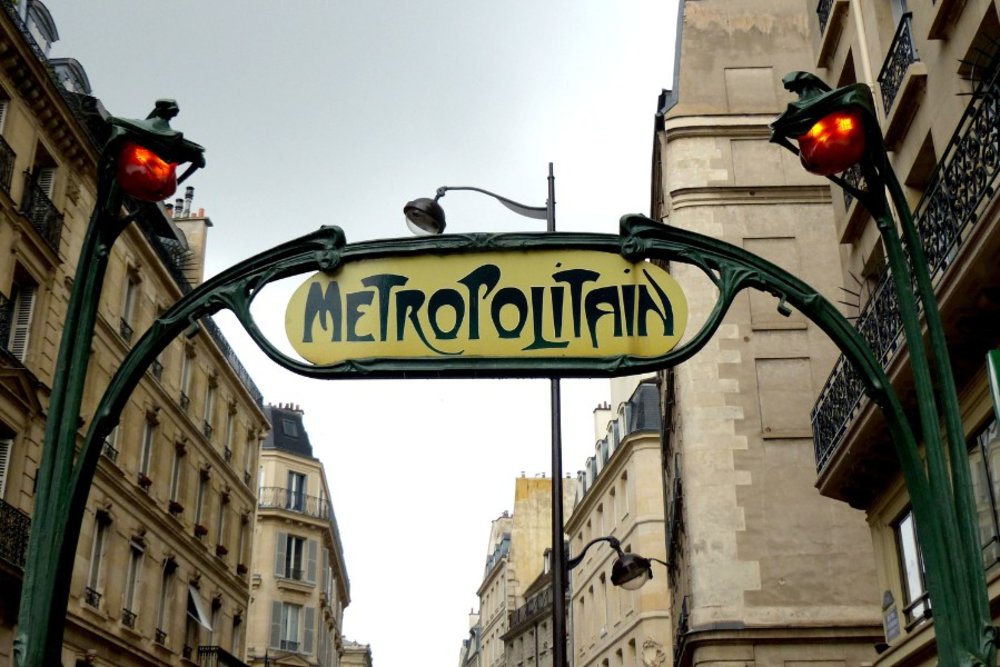
Entrance to the Metropolitan Metro Station in Paris
The Paris Metro is one of the most extensive rapid transit systems in the world, with 16 lines and over 320 stations offering a dense coverage throughout central Paris. Entry points are marked by a distinctive yellow “M,” and each line is identified by a number and color, making navigation relatively straightforward as connections between lines are easy, too. Among the various public transportation options in the city, the Metro is considered as the fastest and most convenient way to get around Paris.
Trains run from around 5:30 AM until well beyond after midnight, with extended hours on weekends, and depart every 2 to 4 minutes, which is ideal for tourists looking to reach major attractions as well as the city’s lesser-known neighborhoods.
Sundays to Thursdays: 5:30 AM to 1:15 AM
Fridays and Saturdays: 5:30 AM to 2:15 AM
Line 14: 5:30AM to 12:30AM from Sundays to Thursdays; 5:30AM to 1:30AM on Fridays and Saturdays
Paris Metro Tips
- Use Metro Apps and Metro Maps to help you navigate your way around the Paris Metro. You can download apps like Citymapper or RATP for real-time updates!
- Keep in mind that the Metro gets crowded during rush hours, typically from 8 AM to 10 AM and 5 PM to 7PM. So if you can, try to schedule your travel accordingly for a smoother ride!
- The Metro platforms may have multiple exits, so be sure to check which exit you should take at the stations to head towards your destination!
Paris Metro Key Stations

The Louvre Museum in Paris
Here are some key stations to keep in mind that will bring you to the top attractions around Paris!
- Chatelet (Metro Lines 1, 4. 7, 11, 14)
- This is one considered the central hub for getting around Paris and is only a short walk to the famous Notre-Dame Cathedral
- Nearby attractions: Notre-Dame Cathedral, Centre Pompidou, Sainte-Chapelle
- Louvre - Rivoli (Line 1)
- This station is, of course, perfect for accessing the Louvre and its surrounding areas
- Nearby attractions: The Louvre Museum, Tuileries Gardens
- Trocadero (Metro Lines 6, 9)
- This station is your direct access to Trocadero Gardens, which provides an amazing and beautiful view of the Eiffel Tower in Paris.
- Nearby attractions: Eiffel Tower, Trocadero Gardens
- Opera (Metro Lines 3, 7, 8)
- This station provides access to the shopping and cultural hub in Paris, with access to some of the city’s grandest department stores
- Nearby attractions: Palais Garnier or the Opera House, Galeries Lafayette, Printemps
- Champs-Elysées - Clémenceau (Metro Lines 1, 13)
- This station is your entryway to Paris’s (or might even be one of the world’s) most famous shopping avenues!
- Nearby attractions: Champs-Elysées, Arc de Triomphe, Grand Palais
Klook Tip: Watch out for hidden gems in the metro like the beautiful Passage de Panoramas near the Grands Boulevards station! There’s even a steampunk-looking subway station, the Arts et Metiers!
How to get around Paris by Buses
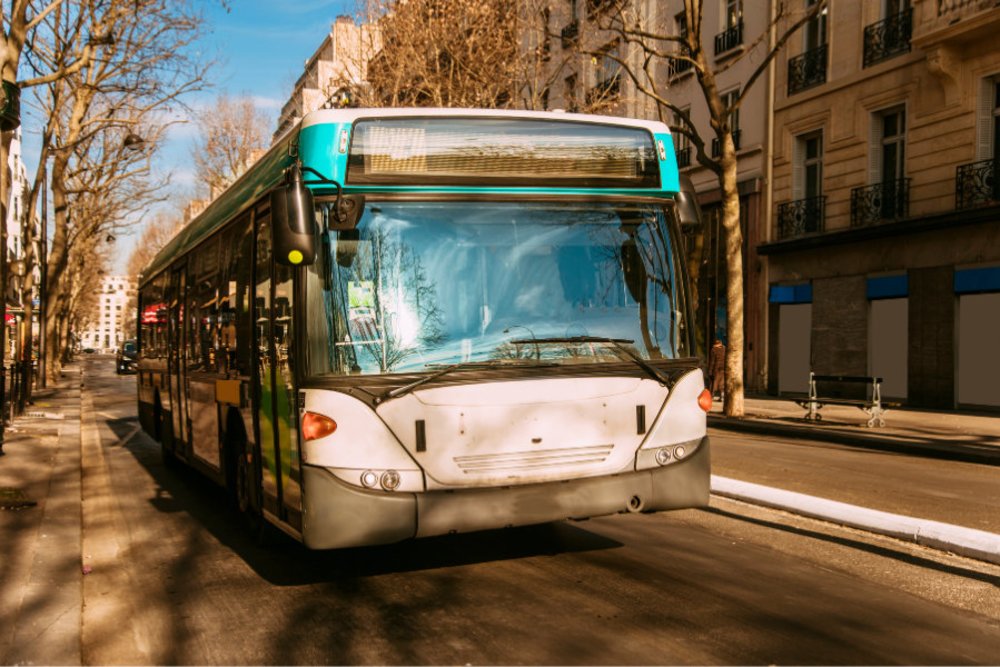
Public bus on the streets of Paris
Buses are a great part of the public transportation in Paris, especially if you prefer to stay above ground and enjoy a more scenic ride through the city. They’re often less crowded and slightly cheaper than the Metro, making them a great alternative if you’re not in a rush and want a more relaxed way to get around. Some routes also pass right through the heart of Paris, offering views of iconic landmarks and charming neighborhoods that you might miss when traveling underground!
Paris Bus Tips
- Be sure to board the bus at the front and exit through the middle or rear doors, as this is the proper etiquette when riding the bus in Paris.
- There are “Stop” buttons around the bus. Just press one when you want to get off as the bus only stops if someone signals! So keep an eye on the screens and listen to the announcements to make sure you don’t miss your stop.
- While buses are less crowded than the Metro, they can also be slow or crowded during the peak hours from around 8 AM to 9:30 AM and 5 PM to 7 PM so it’s always smart to plan extra time if you’re traveling during those hours!
Paris Bus Key Routes

Fontaine Place De La Concorde in Paris
Here are popular and scenic bus routes in Paris that are useful for getting around and sightseeing:
- Bus 42 from Gare Saint-Lazare to the Eiffel Tower
- This route is perfect for exploring iconic sights, as it passes the Champs-Elysees, Palace de la Concorde, and the Seine.
- Bus 69 from Champ de Mars to Père Lachaise Cemetery
- This is one of the best sightseeing routes, passing by some of Paris’s most famous landmarks, including the Musee d’Orsay, the Louvre Museum, and Hotel de Ville.
- Bus 38 from Gare du Nord to Porte d’Orleans
- This route is especially useful for tourists, as it runs through the heart of central Paris along Boulevard Saint-Michel, offering easy access to the historic Latin Quarter and other major landmarks along the way.
Types of Paris Metro and Bus Tickets
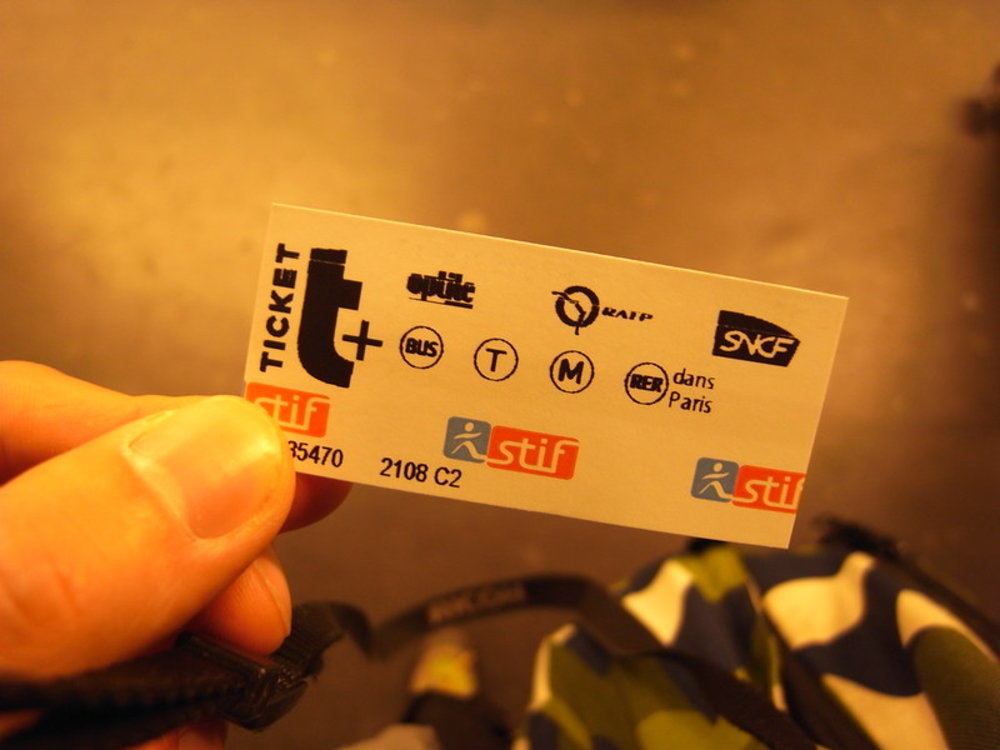
Photo Credits: Josh on flickr | T+ ticket in Paris
Single Metro Tickets (t+ Ticket)
These basic single-ride tickets give you access to the Metro, buses, trams, and regional trains within central Paris. You have to validate the tickets before using them on the public transportation, and they can be used for 90 minutes from the first validation
Cost: 2.15 euros (approx. 2.50 USD)
Navigo Easy Card
The Navigo Easy Card is a reusable smart card that you can load with t+ tickets, making it ideal for tourists. These cards can be bought and topped up at Metro stations or through the RATP app.
Cost: One-time cost of 2 euros (approx. 2.30 USD)
Paris Visite Pass
For tourists, the Paris Visite Pass is recommended as it offers unlimited travel across Paris’s public transportation, including the Metro, regional trains, buses, trams, and some suburban trains. You have an option to choose between a 1-, 2-, 3-, or 5-day pass, and includes discounts as well at some museums and attractions in Paris.
Cost: Approximately 29.90 euros for a 1-day pass (approx. 34.40 USD); 44.45 euros (51.20 USD) for a 2-day pass; 62.30 euros (71.75 USD ) for a 3-day pass; and 76.25 euros (87.80 USD) for a 5-day pass.
Hop-On Hop-Off Bus in Paris

Hop-On Hop-Off Bus in Paris
If you’re looking for another easy and scenic way to get around Paris, you can consider taking a Big Bus hop-on hop-off tour around Paris. These double-decker buses follow routes designed to highlight the iconic sights, with pre-recorded audio commentary sharing fun facts and stories about the landmarks along the way. All you need to do is grab a seat on the open top deck for panoramic views of the city and enjoy your ride through the City of Light!
How to get around Paris by Biking

Couple biking in Paris
Biking is an increasingly popular and scenic way to get around Paris, so if you want to avoid traffic and crowded buses or Metro stations, then biking is the way to go! The city is bike-friendly, offering hundreds of kilometers of dedicated bike lanes, including protected paths along major roads and the Seine River. Paris actually also has an official bike-sharing program called the Vèlib’, making it easier for tourists who would like to try cycling around the streets of the French Capital as an adventure of its own.
Vèlib’ Mètropole
The Vèlib’ has over 1,400 docking stations around Paris, making it accessible for tourists to rent a bike. The green bikes are the classic pedal bikes, while the blue bikes are electric-assist bikes for easier rides, especially on hills. You can download the Vèlib’ App to find available bikes around the city, and book your bike through your phone, or you can also simply use a debit or credit card at a bike docking station and follow the on-screen instructions!
Types of Vèlib’ Passes
- Single-ride Pass
- This pass gives you access to the bike for up to 45 minutes
- Cost: Approximately 3 euros (approx. 3.45 USD)
- 1-day Pass
- This pass gives you unlimited trips of up to 30 minutes and starts charging a small extra fee beyond the initial time allotted
- Cost: Approximately 5 euros (approx. 5.75 USD)
- 3-day Pass
- This pass is similar to the 1-day options, offering unlimited 30-minute trips, but it’s valid for three days, making it ideal for short stays in Paris
- Cost: Approximately 15 euros (approx. 17.27 USD)
- Electric bikes charge an extra fee of around 1 euro per 30 minutes on top of the classic pedal bikes*
*Take note that prices may vary from the time of writing.
Klook tip: You can return your bike before your initial 30 minutes are up and just exchange for a new one to avoid paying the extra fees!
Tips for Biking around Paris
- Stick to bike lanes as much as possible, as they’re widely available throughout Paris and often separated from traffic, making your ride much safer and more comfortable.
- Always use a helmet when you’re riding! While it’s not required by law, it’s highly recommended for added protection for yourself.
- Bikes are subject to traffic laws in Paris so make sure to follow traffic lights and signs to avoid being fined!
- If you’re riding at night, your bike is required to have front and rear lights as well as a bell.
Using Taxi and Ride-Sharing Apps in Paris

Taxi sign in Paris
While generally more of an expensive way to get around Paris compared to public transportation, taxis are convenient, especially when you’re traveling late at night, during bad weather, or when you’ve got luggage.
Taxi rides in Paris are metered with a base fare of around 2.50 euros (approx. 2.80 USD) and might charge extra for luggage and late-night rides. If you’d prefer clear pricing before riding, ride-sharing apps like Uber are also widely available in the city, so you can book your private ride conveniently through your mobile phone.
A Dream Destination for Lovers and Artists

View of Eiffel tower on Seine in Paris at night
Now that you’ve figured out the best ways to get around Paris, all that’s left is to make the most of your time in the City of Light! Here are some handy guides to help you map out your trip, find the best spots, and enjoy your trip of a lifetime.




FAQs
What is the best way to get around Paris?
The best way to get around Paris really depends on your travel style, but in most cases, Paris’s public transportation will be your go-to. If you’re looking for efficiency, the Metro is your best bet for getting around the city quickly. Buses, on the other hand, offer a more scenic way to explore Paris, and they’re also more budget-friendly than taking a ride or a ride-share.
What is the cheapest transportation in Paris?
The cheapest transportation in Paris is the Metro, especially if you use the multi-day transit passes such as the Paris Visite Pass.
How much is a 5-day metro pass in Paris?
The 5-day Paris Visite Pass costs around 76.25 euros (approx. 87.80 USD) and provides unlimited access to Paris’s public transportation for 5 consecutive days.
Is Paris a walkable city?
Yes, Paris is a very walkable city, and walking is actually one of the best ways to explore it!
How do I get from Paris airport to the city?
You can go on the RER B Train, which will take around 30 minutes to get you from Charles de Gaulle Airport to Paris, which costs approximately 11.50 euros (13.20 USD), making it an affordable option to reach the city from the airport. You can also consider booking private airport transfers for an even more convenient and efficient way that will bring you straight to your destination!
What is Klook?
Klook is a leading pan-regional experiences platform in Asia Pacific, purpose built to digitalize experiences and make them accessible to every traveler.
Our mission is to build the digital infrastructure for the global experience economy — empowering merchants to share their passions and travelers to discover the heartbeat of each destination. We operate a mobile-first, curated platform featuring diverse experiences across global destinations.
✨ Follow us for more deals and inspiration for your upcoming travels