


Paris Christmas markets are something out of a storybook: twinkling lights, steaming cups of vin chaud, wooden stalls filled with handmade ornaments and treats. But if you're wondering how to actually get to these magical markets without getting lost, don’t worry. The Paris Metro is your best friend.
In this guide, we’ll walk you through how the Paris Metro works, which lines take you to the most popular Christmas markets, plus a few helpful tips to make your festive adventures smooth and stress-free.
Before we get into it, we’ll already tell you this: navigating the metro (and the city in general) is so much easier when you have a navigation app ready. Google Maps is an ever-reliable choice, but Bonjour RATP and Citymapper (more on these two later) are great for navigating Paris specifically.
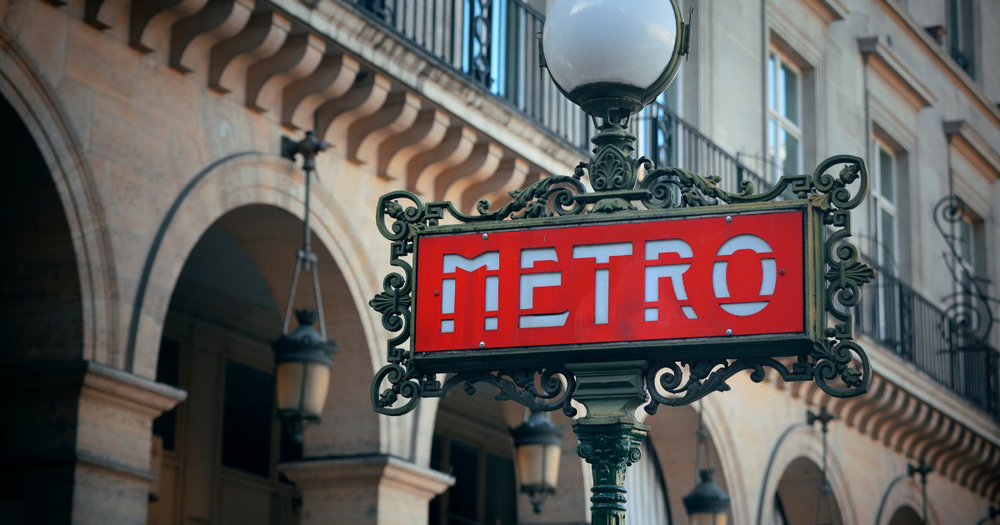
Iconic red signposts of the Paris Metro
You can get a physical SIM card or portable WiFi at the Paris Charles de Gaulle Airport (CDG). Now, if you’re planning to explore other countries in Europe after Paris, a Europe eSIM is well worth considering. Its validity can extend up to 30 days, and it works across the entire EU region.
How the Paris Metro works
The Paris Metro includes 16 numbered lines (1–14, plus 3bis and 7bis), each with its own color on maps and signage. Stations are well-marked, and most of the system runs underground, except for a few scenic sections that glide above ground and offer views of the Eiffel Tower and the Seine.
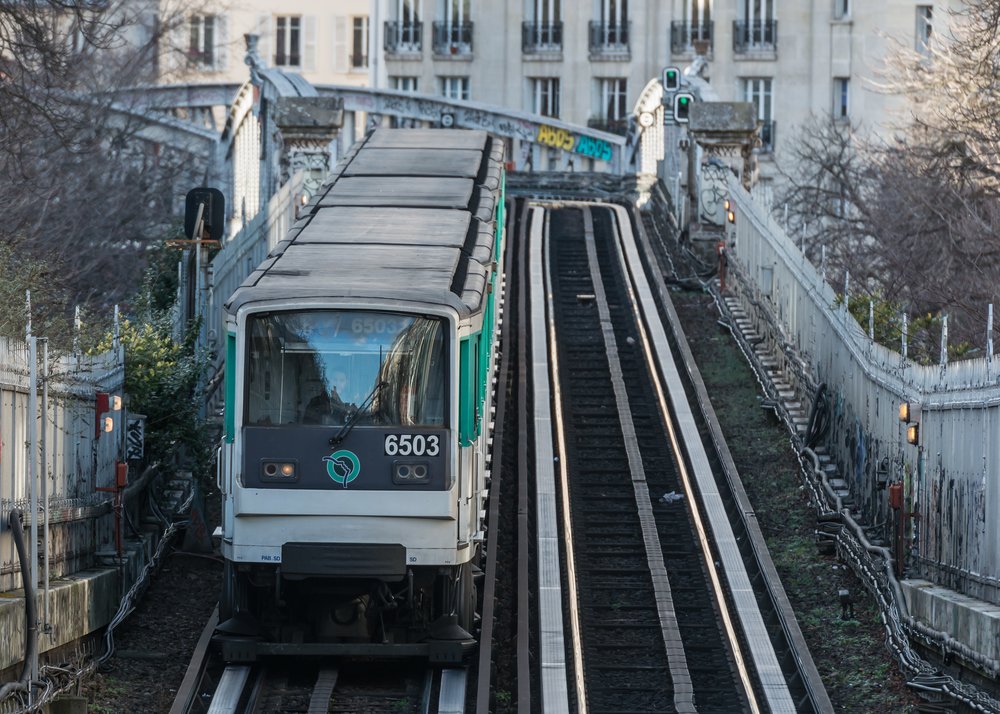
A Line 6 train on the Paris Metro, Photo Credit: Wikipedia Commons
Metro lines run approximately from 5:30 AM to 1:15 AM, extended to 2:15 AM on Fridays, Saturdays, and the eve of public holidays.
If you’re visiting during Christmas, expect crowds, especially around popular markets like those at Tuileries, La Défense, and Hôtel de Ville. Trains stay frequent even in winter, though, so you’ll rarely wait long.
What to know about Paris Metro tickets
There are a few ways to pay for metro rides, but the Navigo Easy Pass is by far the most straightforward option for visitors.
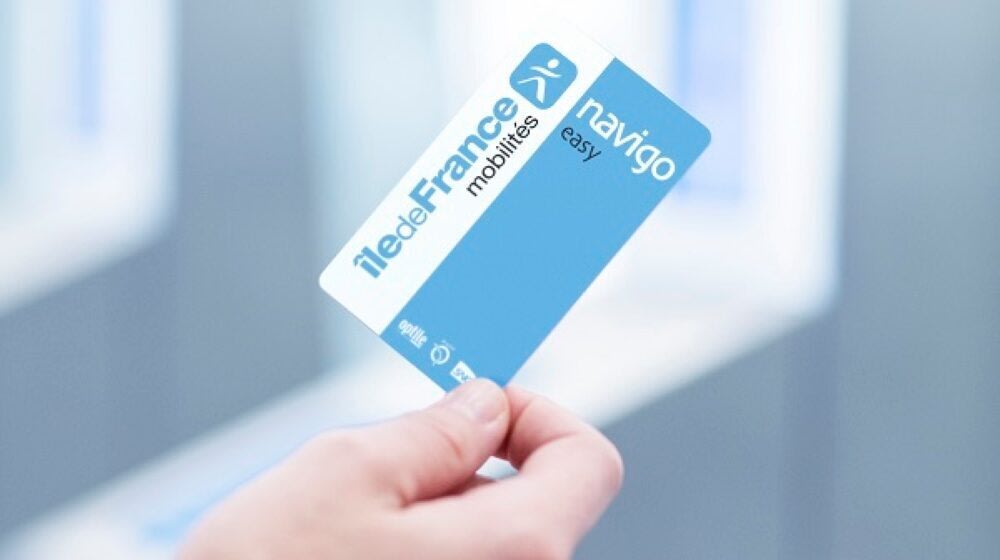
Photo Credit: Official Paris Tourism Office
You can pick it up for €2 (approx. 2.33 USD) at any station and load it with single tickets (€2.15 or approx. 2.51 USD each) or a set of ten (10) tickets.
It works across metro lines, buses, the RER, and the Montmartre funicular within central Paris. Tickets may be loaded at metro stations and counters, or through the Île-de-France Mobilités (IDF Mobilités) app.
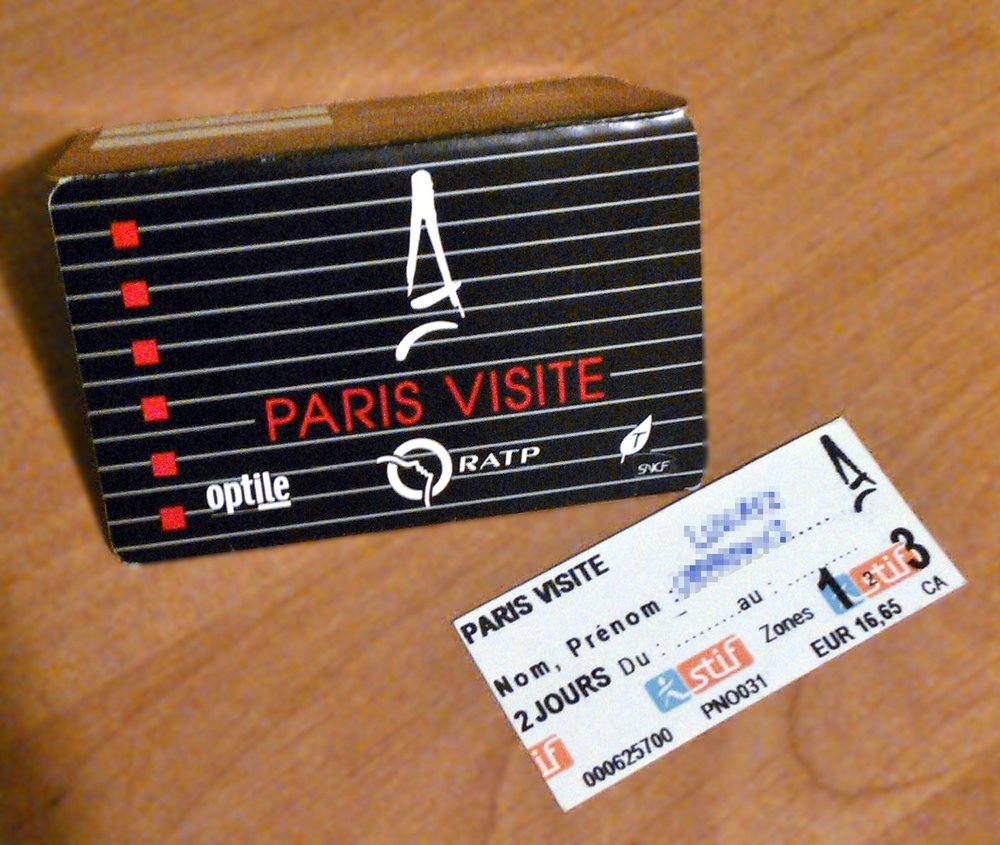
Photo Credit: Wikipedia Commons
Another option is the Paris Visite Pass, which gives you unlimited rides for 1 to 5 days within central Paris and the wider Île-de-France region. Compared to the Navigo Easy pass, the Paris Visite Pass covers a larger area outside of the Paris city center. This one is especially useful if you plan to visit lots of sights in a short time or hop between Christmas markets all day.
Just one thing to keep in mind: traditional paper tickets are slowly being phased out across the entire Parisian public transport system in favor of digital passes. This is why having an internet connection, like through a high-speed eSIM, is all the more important!
Recommended navigation apps
To make getting to the Paris Christmas markets more convenient, we’ve listed a few of our favorite apps below:
- IDF Mobilités (IDFM) is the official app operated by the public transportation authority of Paris. It allows you to check train schedules and top up your Navigo Pass.
- Bonjour RATP is another official transit app, except this is specifically owned by the operator of the Paris Metro. It’s almost the same as the IDFM app since you can also check train timetables and top up your Navigo Pass here. The difference is in the additional details it shows (routes for scooters, for example).
- Citymapper gives step-by-step directions, travel times, and platform details and has a user-friendly interface.
- Google Maps works well for basic navigation, but doesn’t always show service disruptions.
The best app for you will ultimately depend on your travel needs, but all four apps listed here are already great places for you to start!
Which Paris Metro lines are the most helpful?
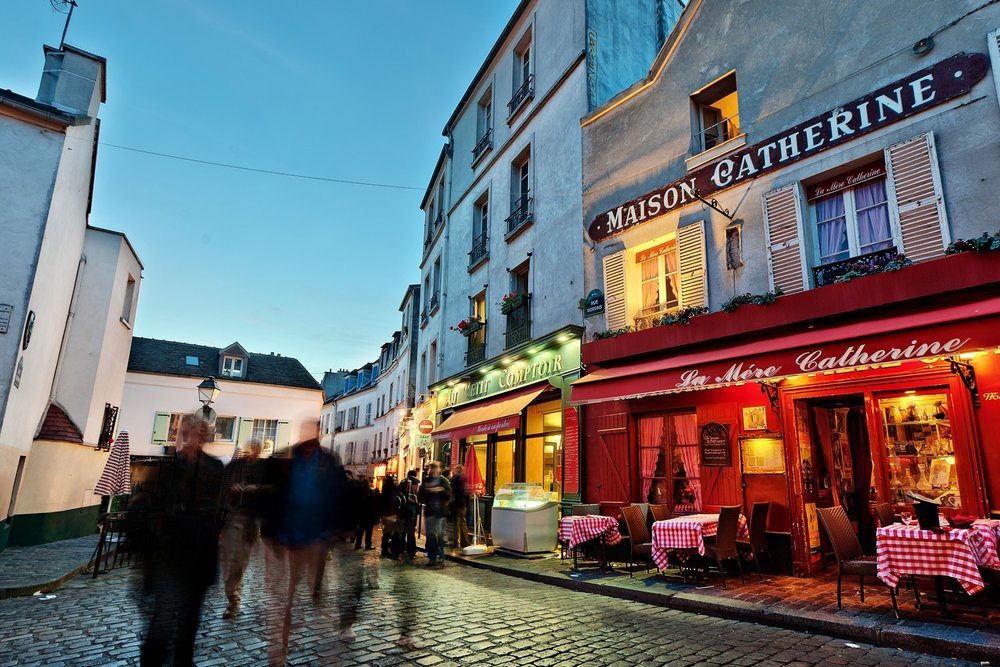
A snapshot from the Montmartre neighborhood
While all metro lines are useful, a few are especially visitor-friendly:
- Line 1: Fast, automated, and stops at top attractions like the Louvre and major Christmas markets, including the Tuileries Garden, Hôtel de Ville, and La Défense markets.
- Line 4: Useful for reaching the Latin Quarter, Montmartre, and central markets, including the Saint-Germain-des-Prés and Notre-Dame/Saint-Michel markets.
- Line 6: Though not serving any specific Christmas market, this is still a must-ride for the holiday scenic views of the Eiffel Tower when riding above ground near Bir-Hakeim.
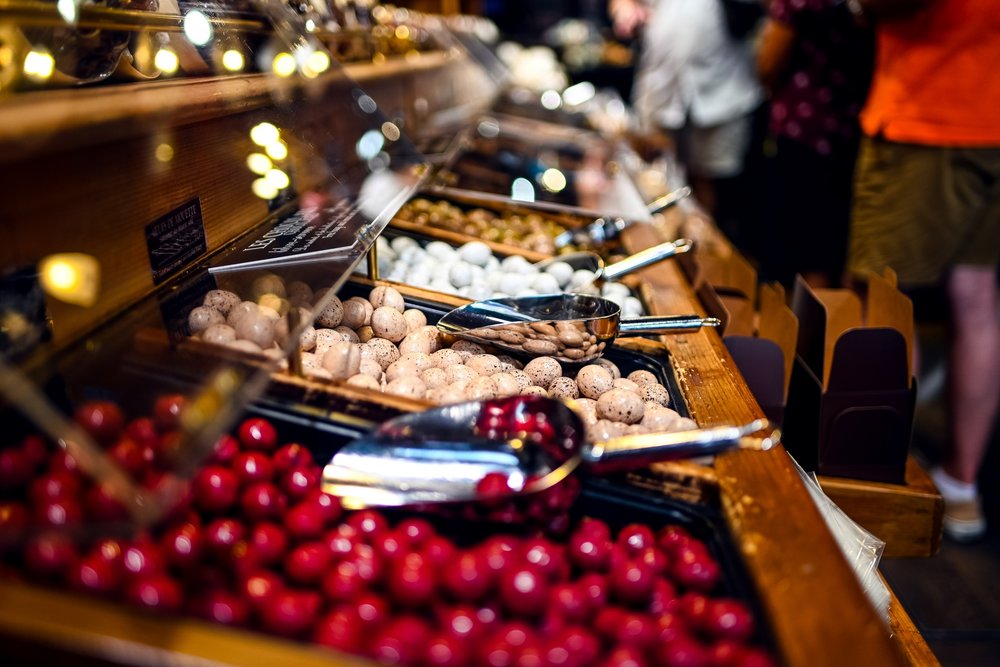
Local treats you can try in Montmartre
Other notable lines (though you may not always take them) are Lines 2 and 12, serving the Montmartre neighborhood. It’s famous not only for the Sacré-Cœur Basilica, but also for its artistic vibe and food scene.
If you’re in the area, consider combining your metro trip with a local Montmartre food tour. It’s a fun way to taste holiday specialties while wandering the charming streets.
Getting to Paris city center, and going beyond
Can you take the Paris metro from Charles de Gaulle Airport (CDG)? The answer is yes! Just take the RER B line to reach the city center. The ride takes about 30-40 minutes, and connects directly with several metro lines, including Gare du Nord, Châtelet, and Saint-Michel.
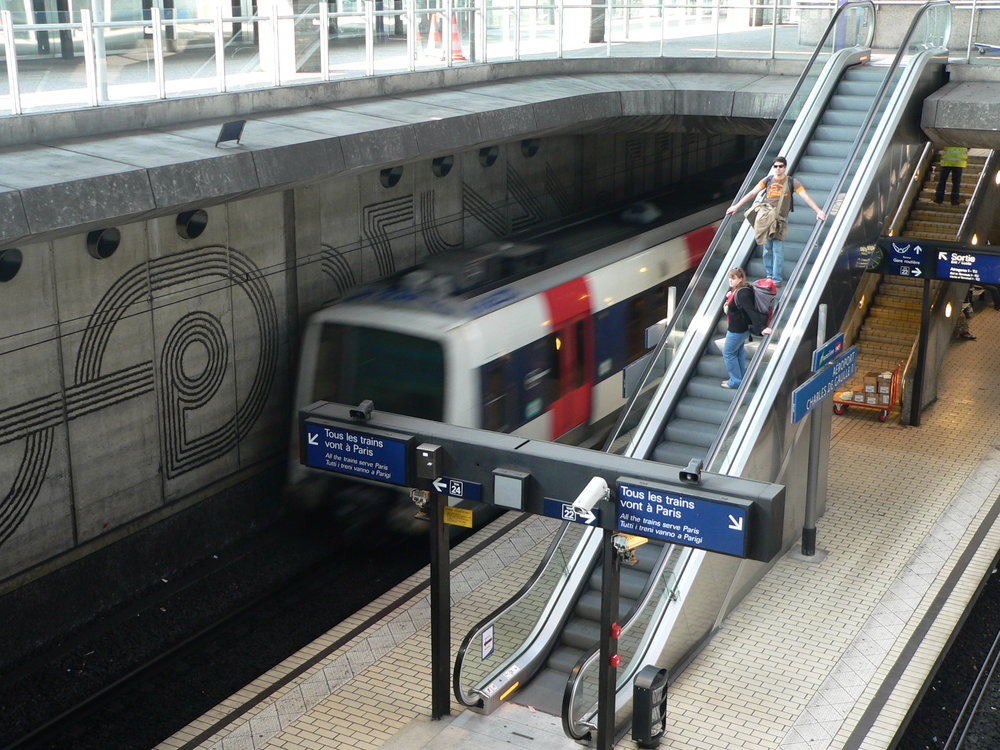
RER B train pulling in at CDG Terminal 1, Photo Credit: Wikipedia Commons
If you’re looking to take a private car at least just for your arrival (those long flights are no joke!), you can also book a private CDG airport transfer straight to your hotel. Either way, you’ll likely end up using the metro for the rest of your stay. It’s simply too convenient not to.

Mont Saint-Michel from a distance
While the metro is ideal for getting around Paris, you might also want to squeeze in a side trip to make the most out of your Christmas getaway.
A classic destination is Mont Saint-Michel in Normandy, a UNESCO World Heritage site with the most gorgeous Gothic architecture. Trains or tours usually depart from stations like Gare Montparnasse or Gare Saint-Lazare, both reachable via metro.
Now, if you’re traveling beyond Paris, the France Eurail Pass gives you flexibility to explore cities like Strasbourg, Lyon, or Lille — all known for beautiful Christmas markets of their own. And yes, the metro connects easily to departure hubs.
The Paris Metro is a staple for visitors and locals alike, and it’s especially useful during the holiday rush. With the right pass, a good app, and your itinerary in hand, you’ll have more time for mulled wine, roasted chestnuts, and twinkling lights. Joyeux Noël! 🎄✨
FAQs about Paris Metro
How do you pay for the metro in Paris?
The easiest option is the Navigo Easy card, which you load with single tickets or 10-ticket packs. You can also use the Bonjour RATP app or the IDF Mobilités app to buy and validate tickets on your phone.
What is the difference between the RER and the metro in Paris?
The Metro serves Paris city limits with frequent stops. The RER travels longer distances (like to CDG Airport or Versailles) and connects with the metro in central stations. You’ll likely use both during your stay.
Is it worth getting a metro card in Paris?
Yes. If you're riding more than a couple of times a day, a Navigo Easy card or Paris Visite Pass will save you time and money, plus it's easier than dealing with paper tickets.
Which metro line is best for tourists in Paris?
Line 1 is your best bet. It’s fast, reliable, and connects many top markets, museums, and landmarks. You’ll probably ride it several times a day.
What is Klook?
Klook is a leading pan-regional experiences platform in Asia Pacific, purpose built to digitalize experiences and make them accessible to every traveler.
Our mission is to build the digital infrastructure for the global experience economy — empowering merchants to share their passions and travelers to discover the heartbeat of each destination. We operate a mobile-first, curated platform featuring diverse experiences across global destinations.
✨ Follow us for more deals and inspiration for your upcoming travels