
The capital city of France, Paris’ global reputation as a tourist hotspot precedes itself. Here, you can visit famous attractions such as the Eiffel Tower to take that iconic selfie, Champs-Élysées for shopping and dining at local cafes, or take cruises along the River Seine for a different kind of sightseeing. You can also learn more about the city’s rich history with a stop at the Louvre Museum, home to the Mona Lisa, or by exploring some of the city’s famous churches and cathedrals.
And while you’ve likely heard of and maybe even already visited the Notre Dame Cathedral, which recently reopened last year after it burned down in 2019, did you know that there are more than 200 other religious institutions and churches in Paris? You could spend several days or even weeks going on a church crawl—admiring stained glass windows, paintings, and sculptures the entire time—and you probably still won’t have enough time to visit them all! These churches all vary in size, age, and contents, with each also having their own sets of rules about opening hours, dress codes, and photography policies. This can make it a bit tough to plan around.
To make it easier for you, we’ve listed our 7 favorite churches in Paris (aside from the Notre Dame Cathedral) that you should visit during your next trip. Read on below!
1. The Basilica of the Sacred Heart of Paris
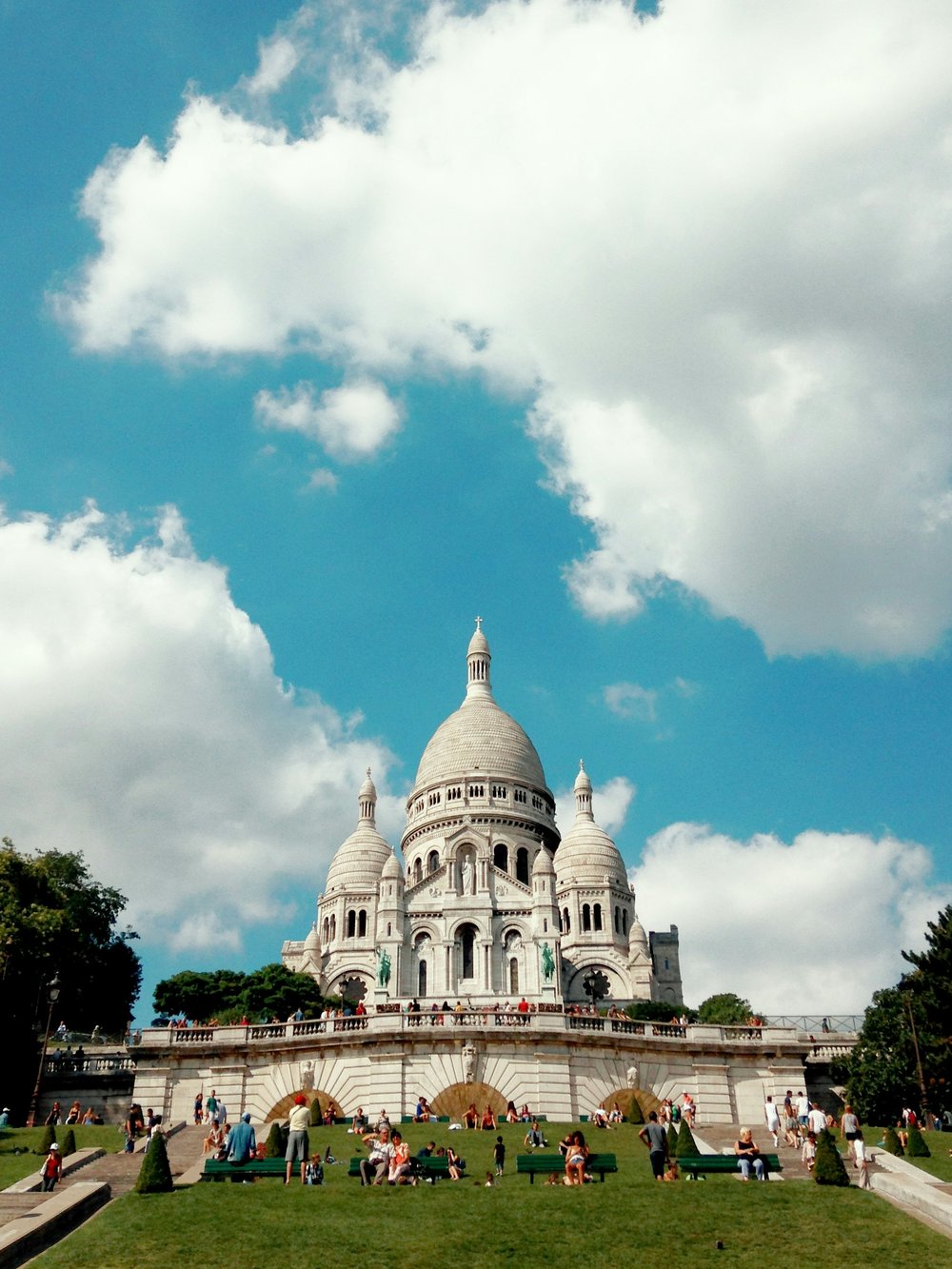
Make sure to take a photo in front of the Sacré Cœur Basilica’s iconic domes!
Also known as the Sacré Cœur Basilica, you’ve probably already seen many photos of the Basilica of the Sacred Heart of Paris: a long set of stairs with domes in the background, which are always white due to the self-cleaning properties of limestone every time it rains.
And while its exterior is distinctive in itself, the interior is even better: here you can witness the Triumph of the Sacred Heart of Jesus mosaic, one of the largest in the world. Created by artist Lucien Bégule, visitors love its vibrant colors, made even more special with the gold leaf detailing.
The Basilica of the Sacred Heart of Paris is also famous for its sweeping views of the city. For an extra special shot, we recommend climbing up the dome.
Opening hours: Daily from 6:30am to 10:30pm.
Admission: Free, with paid tickets available on-site for access to the dome (EUR 5 for children aged 0-15, EUR 8 for adults aged 16+).
How to get there: Take the Metro to Anvers station on line 2.
Photography: Photos are not allowed inside the basilica, especially in the nave, to maintain the prayer atmosphere. Professional photos and films need prior review and authorization.
2. The Church of St. Sulpice
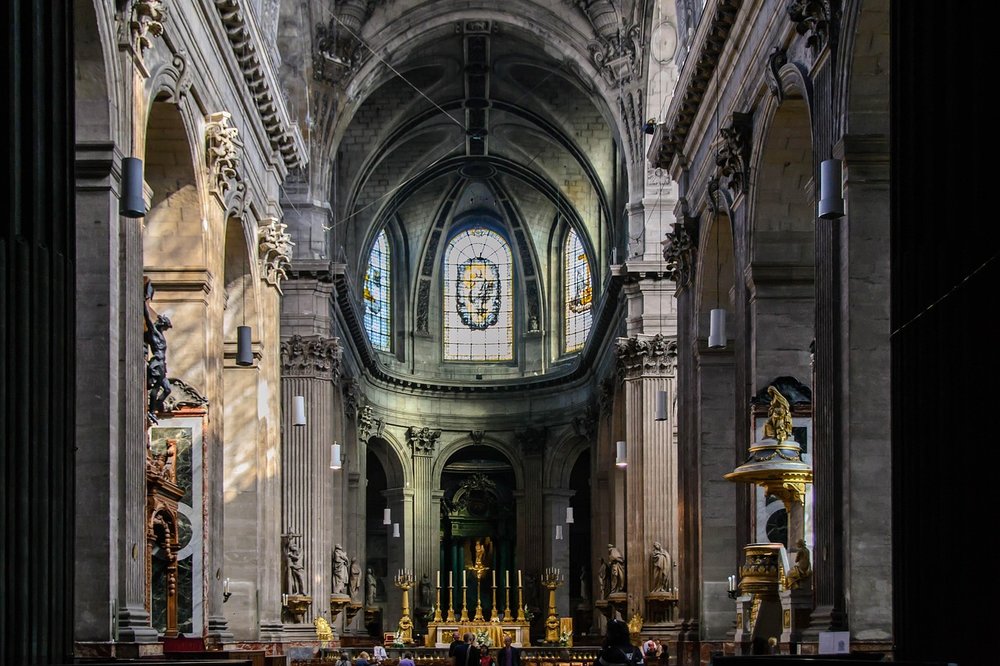
The gray interior of the Church of St. Sulpice is made more colorful by the stained glass windows and works of art inside.
The third largest church in the city (only slightly smaller than Notre-Dame and Saint-Eustache), the Church of St. Sulpice is renowned as a French Baroque masterpiece. When you arrive, you’ll be greeted by the beautiful Saint-Sulpice Fountain, with the church’s impressive façade and mismatched towers. Remember to take a souvenir photo here, as this will be the best spot for one.
Once you enter, spend some time exploring the church’s contents. Some of the most notable ones are:
- Jacob Wrestling with the Angel: the largest fresco ever painted by Eugène Delacroix, located in a side chapel.
- A giant sundial (or gnomon), which casts light on the tiled floor.
- The Great Organ: a 6,600-pipe organ designed by François-Henri Clicquot in 1758 and rebuilt 100 years later using the original materials.
Opening hours: Daily from 8:00am to 7:45pm.
Admission: Free.
How to get there: Take the Metro to St. Sulpice on line 4.
Photography: Photography is allowed inside (except during services), but you cannot use tripods, flashes, or other large equipment.
3. Saint-Denis Basilica Cathedral
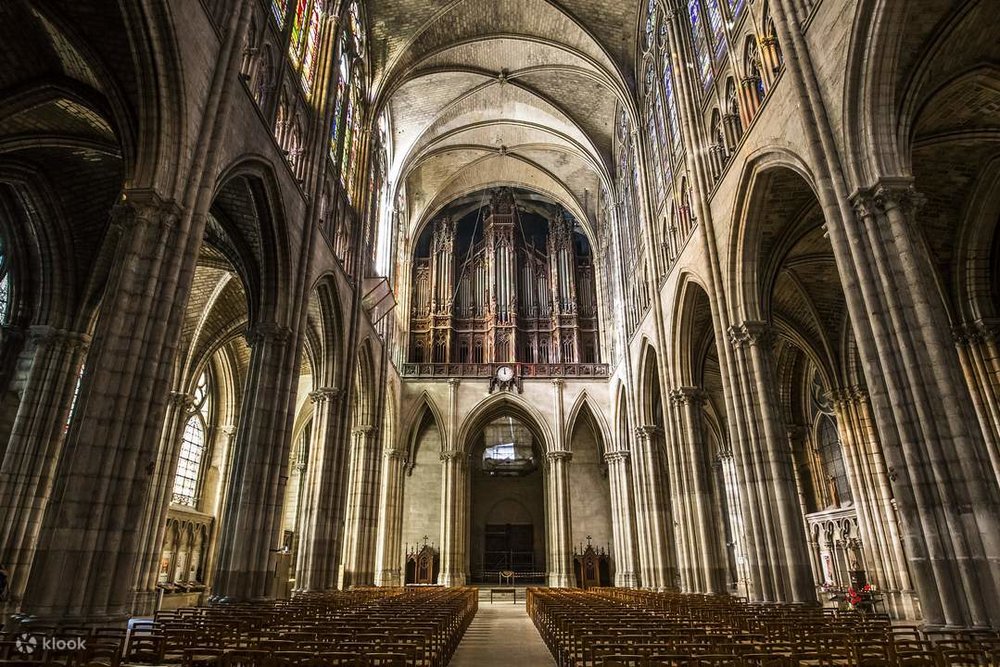
Visit Saint-Denis Basilica Cathedral during the day to see how much light passes through the stained glass windows
Initially constructed in the 7th century, Saint-Denis Basilica Cathedral did not become the Gothic architectural marvel that it is today until renovations finished in 1144. It is most popular for its stained glass windows, particularly the north rose window, which brought plenty of light into what was once a very dark cathedral.
During your visit, don’t miss the crypt, which serves as the resting place for many of France’s monarchs between the 5th century and 1825.
Opening hours:
April to September (last access at 5:45pm)
Monday to Saturday: 10:00am - 6:15pm
Sunday: 12:00pm - 6:15pm
October to March (last access at 4:45pm)
Monday to Saturday: 10:00am - 5:15pm
Sunday: 12:00pm - 5:15pm
Admission: EUR 11 per ticket, with separate fees for access to the crypt.
How to get there: Take the Metro to Basilique de Saint-Denis station on line 13.
Photography: Authorisation required for professional photography
4. La Sainte Chapelle
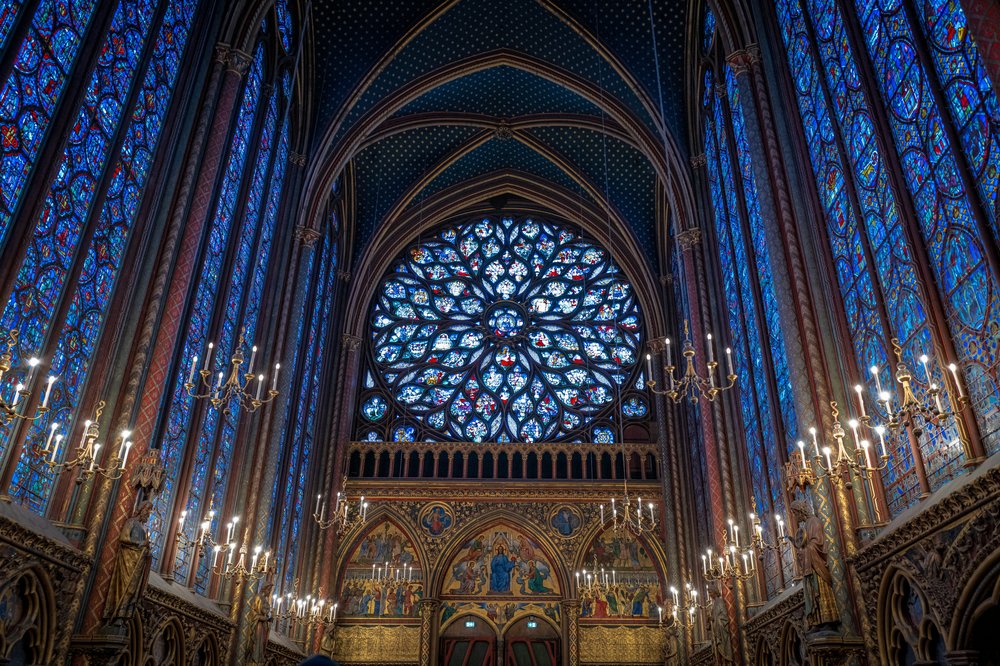
The Rose of the Apocalypse, the most famous stained glass window inside La Sainte Chapelle
Smaller than most churches in Paris, La Sainte Chapelle stuns with its stained glass windows that depict over 1,100 scenes from the Bible and French history. Framed by Gothic stonework, most of the stained glass dates all the way back to the 13th century, with a third of it being replaced in the 19th century.
The lower chapel, where the ticketing and gift shop are, was originally built for court members and nobility, while the upper chapel was for the royal family only.
Opening hours:
April to September: 9:00am - 7:00pm
October to March: 9:00am - 5:00pm
Admission: EUR13-19 per ticket (depending on season), with separate fees for access to the Conciergerie.
How to get there: Take the Metro to Châtelet or Cité station.
Photography: Photography is allowed inside (except during services), but you cannot use tripods, flashes, or other large equipment.
5. Church of Saint-Germain-des-Prés
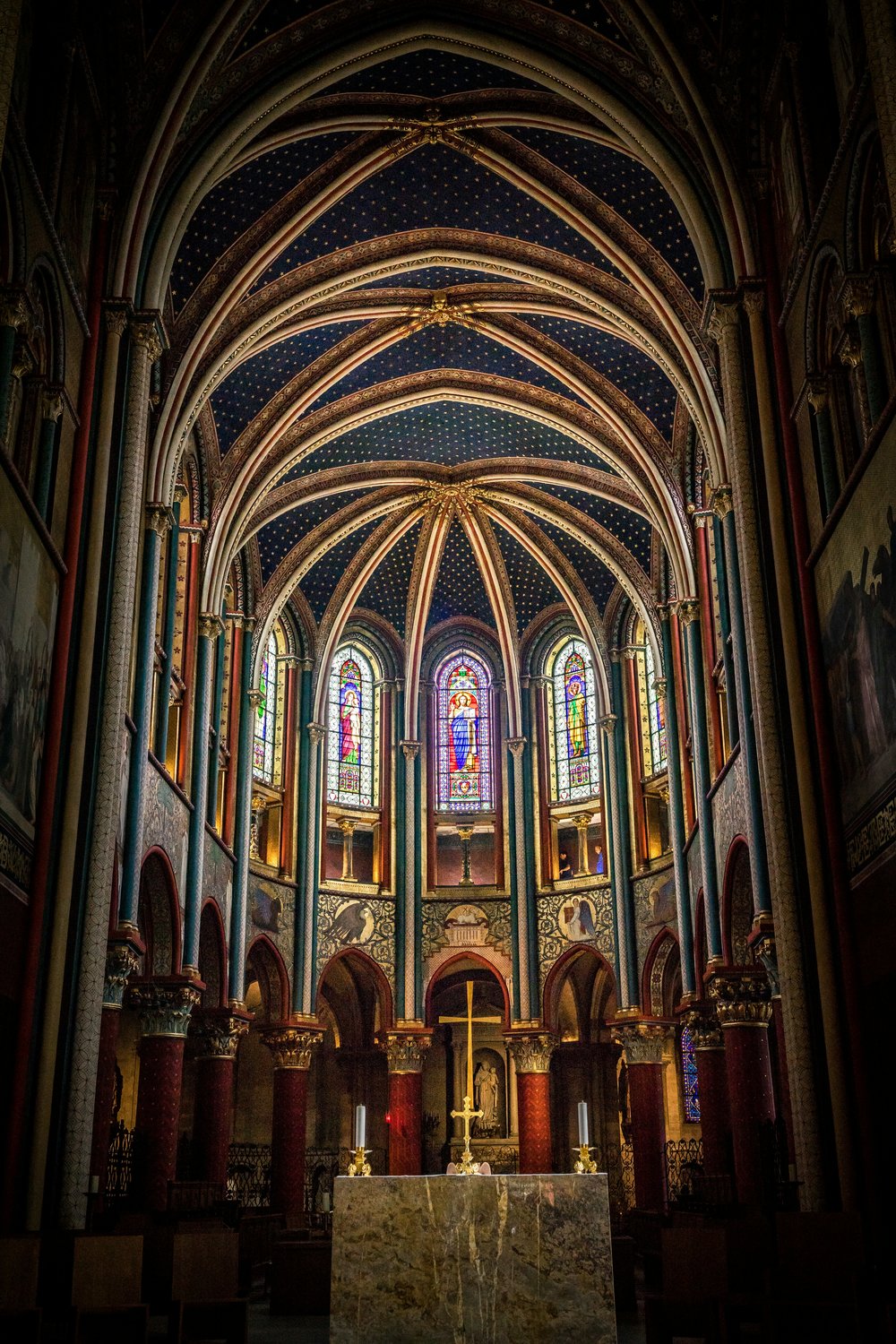
While it may look plain on the outside, the Church of Saint-Germain-des-Prés features colorful stained glass windows and murals indoors
While it’s technically the oldest church in France, the actual building of the Saint-Germain-des-Prés was built only in the 12th century, with a number of renovations and restorations since then. Due to its age, the church bears various architectural styles, from Romanesque arches to Gothic elements, with new murals created from 1842 to 1864. It is also home to the oldest bell tower in Paris.
Klook Tip: Though much of the original artwork was destroyed during the French Revolution, you can still see some of it at the Cluny Museum.
Opening hours:
Monday and Sunday: 9:30am - 8:00pm
Tuesday - Saturday: 8:30am - 8:00pm
Admission: Free.
How to get there: Take the Metro to Saint-Germain-des-Prés station on Line 4
Photography: Photography is allowed inside (except during services), but you cannot use tripods, flashes, or other large equipment.
6. Église Saint Eustache
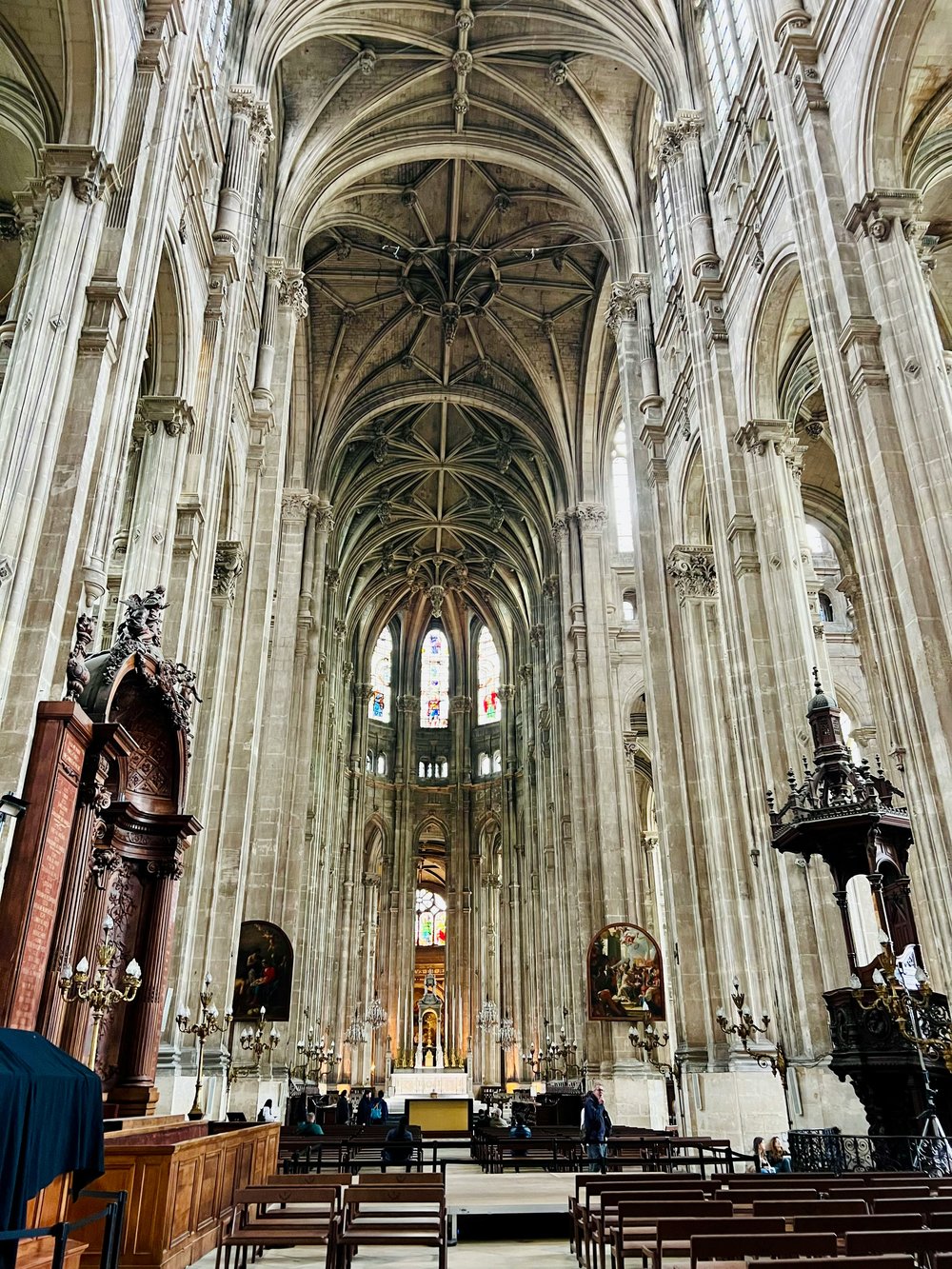
Marvel at the vaulted ceilings of Église Saint Eustache, decorated with ornate details of ornamental ribs and hanging keystones
Originally built in the 13th century, Saint Eustache was rebuilt and renovated in the 16th century. As such, it features various architectural styles—though primarily Gothic, it also has a Renaissance façade. Saint Eustache is also famous for being taller than most: 33.5 meters high, which makes for perfect acoustics during concerts.
Opening hours:
Monday - Friday : 7:15am - 7:30pm (9:00am - 7:30pm in summer)
Saturday and Sunday: 10:00am - 08:15pm
Admission: Free.
How to get there: Take the Metro to Les Halles station on Line 4.
Photography: Photography is allowed inside (except during services), but you cannot use tripods, flashes, or other large equipment.
7. Église Saint Étienne du Mont
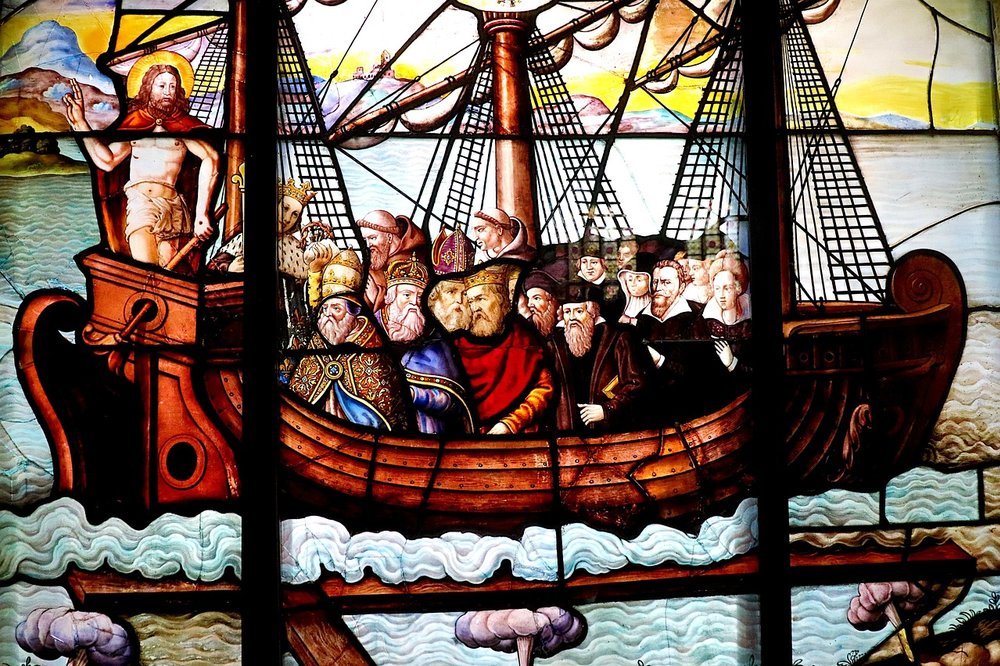
Many of the stained glass windows at Église Saint Étienne du Mont date all the way back to the 16th and 17th centuries
Built in the sixteenth century during the transition between the Gothic and the Renaissance periods, Saint Étienne displays a unique combination of the two, unseen anywhere else in Paris. The façade utilizes Renaissance décor combined and set against a high, three-level structure typical of the Middle Ages. The interior also follows this trend: pointed arches and round arches can be seen together with ornamentation from the Renaissance.
Klook Tip: While it’s barely visible, the church slants to the left due to the ground’s shape—this can make for a pretty interesting shot at the front if you can capture it well.
Opening hours:
Monday: 2:30pm - 7:30pm
Tuesday: Closed
Wednesday: 8:30am - 10:00pm
Thursday - Friday: 8:30am to 7:30pm
Saturday - Sunday: 8:30am - 1:00pm, 2:00pm - 8:00pm
Note: Hours vary during school holidays.
Admission: Free.
How to get there: Take the Metro to Cardinal Lemoine station on Line 10.
Photography: Photography is allowed inside (except during services), but you cannot use tripods, flashes, or other large equipment.
Now that you’re finished planning your Paris church crawl, it’s time to start packing your bags and booking travel essentials like a Europe eSIM, your hotel in Paris, or maybe even a guided tour if you’re looking for more hidden gems. Bon voyage!
FAQs about churches in Paris
1. What are the famous churches in Paris?
Some of the most famous churches in Paris include:
- The Notre Dame Cathedral
- The Basilica of the Sacred Heart of Paris
- Sainte Chapelle
- Saint Denis Basilica
- Saint Sulpice
- Church of Saint Germain des Prés
2. Can you just walk into Notre Dame in Paris?
Yes, walk-ins are allowed into the Notre Dame Cathedral. However, expect to wait at least 2-3 hours during peak times if you join the queue without reservations. To avoid long lines and waiting times, it’s recommended to book a timed entry slot on the official website in advance.
For a relaxed visiting experience, we recommend visiting early in the morning or right before the church closes, when the crowds are thinner. If you’re planning to take photos of the church and the surrounding areas, then the best time to visit would be around sunset for that golden lighting.
3. What is the famous church in Paris with stairs?
The famous church in Paris with stairs is the Basilica of the Sacred Heart of Paris, located on the hill of Montmartre, the highest place in the city. There are about 237 steps in front of the church that you must climb to reach the main terrace, with an additional 300 steps to climb to the top of the dome for a 360° view of the city.
4. Is there a dress code for churches in Paris?
Yes, most churches in Paris enforce a modest dress code—this means you should cover your shoulders and knees, at the very minimum. Some churches may also make you remove your hat. Note that you may be turned away from the entrance if you wear shorts, tank tops, and other revealing clothing during your visit.
As the enforcement of dress codes varies among churches, we recommend checking the official websites before you visit.
What is Klook?
Klook is a leading pan-regional experiences platform in Asia Pacific, purpose built to digitalize experiences and make them accessible to every traveler.
Our mission is to build the digital infrastructure for the global experience economy — empowering merchants to share their passions and travelers to discover the heartbeat of each destination. We operate a mobile-first, curated platform featuring diverse experiences across global destinations.
✨ Follow us for more deals and inspiration for your upcoming travels