
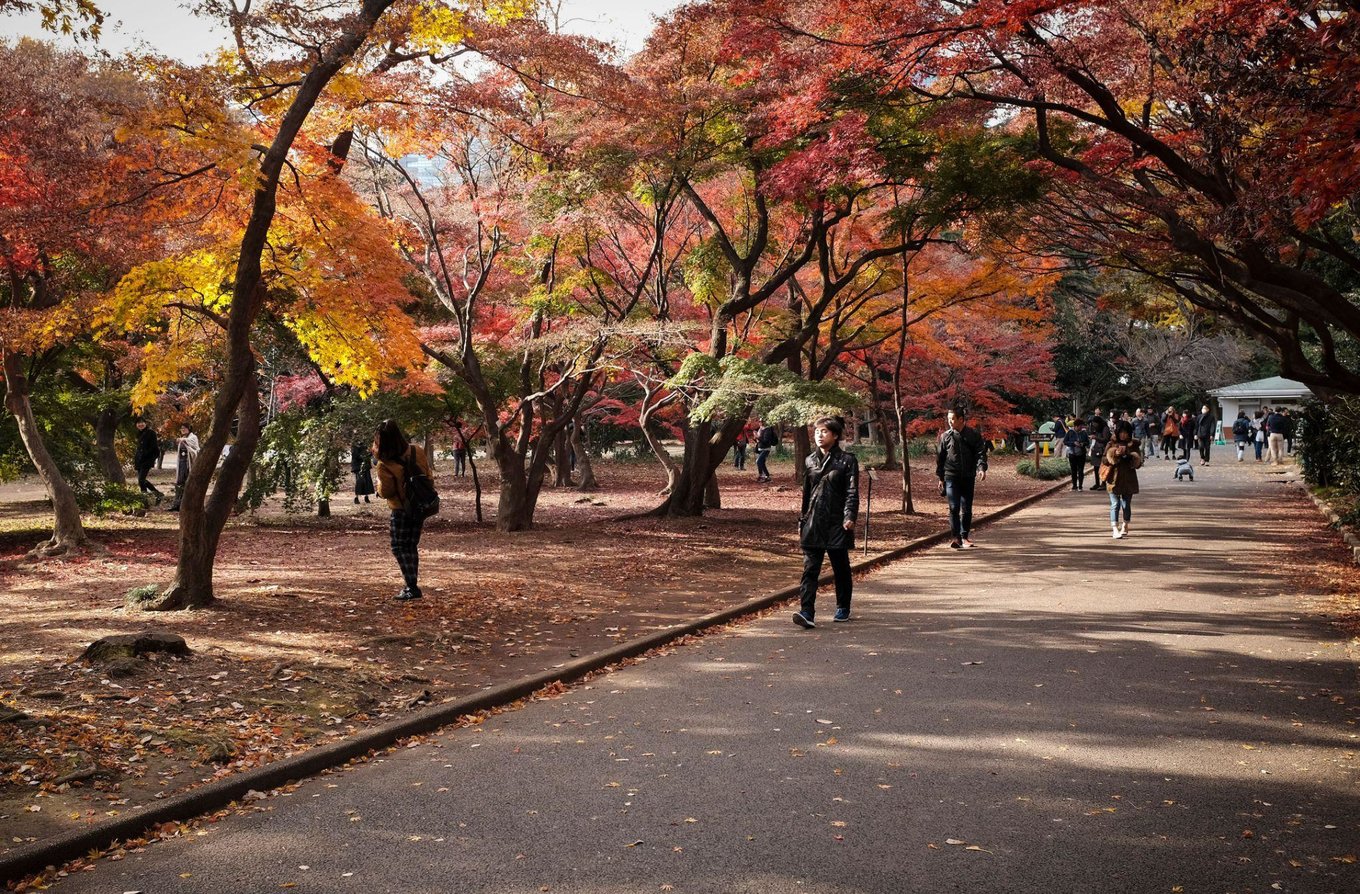
Tokyo in November | Image credit: Hakan Nural via Pexels
Tokyo in November feels a lot like a Delhi winter, except the trees are turning gold and red. The real question is which week to go. Fly in during the first week and the city is still mostly green, with the colour sitting up in the mountains. Land in the last week and the ginkgo trees are dropping gold on the pavement, evenings are properly cold, and the first Christmas lights are switched on.
The good news is that almost every week has something to plan around. Direct flights from Delhi and Mumbai take roughly 8 to 9.5 hours, while Bengaluru usually needs a connection, and Japan is 3.5 hours ahead of IST. Below, you'll find the best spots for Tokyo autumn leaves, two old-school festivals, and a few tickets to book early. If you're building a longer trip, our autumn spots in Japan guide covers the rest of the country.
Tokyo in November at a glance
- Weather: Tokyo weather in November is crisp and mostly dry, with highs near 18°C and lows near 10°C. That's cooler than most of India, and sunset comes around 4.30pm, so plan outdoor stops for the daytime.
- What to wear: A light jacket works by day. Add a scarf and a warmer layer for evenings, since 10°C feels cold if you're coming from a warm Indian city.
- Foliage timing: Colour starts in the mountains in early November. Mt. Takao follows in mid-November, and the city parks peak from mid-November to early December.
- Holidays: Culture Day (3 November) and Labor Thanksgiving Day (23 November) are national holidays in Japan. Expect fuller trains and busier parks, especially at Mt. Takao and the big gardens.
Meiji Jingu Gaien ginkgo avenue
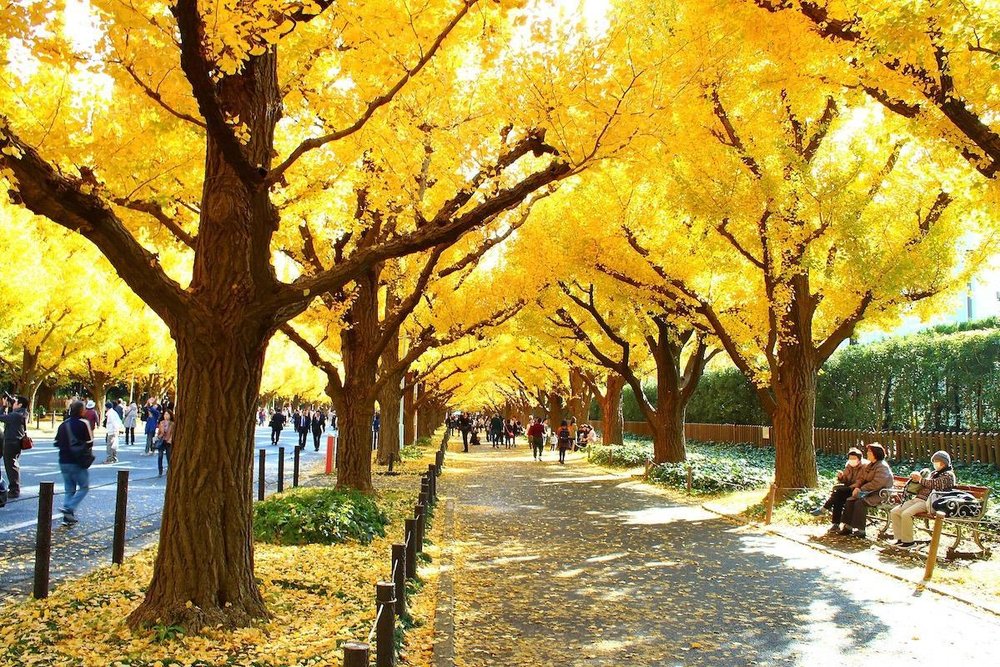
Meiji Jingu Gaien ginkgo avenue | Image credit: Kakidai, CC BY-SA 4.0, via Wikimedia Commons
This is the Tokyo autumn photo you've probably already saved: a 300-metre tunnel of 146 ginkgo trees, all gold. The Meiji Jingu Gaien ginkgo avenue is free to walk, and the best shot is from the entrance end, with the Meiji Memorial Picture Gallery framed at the far end. Colour starts around mid-November and peaks from mid-November to early December.
Weekends get packed, so go on a weekday morning if you can. A ginkgo festival with food stalls has run here in late November, and in 2025 it ran 22 to 30 November with lights on from 4.30 to 7.30pm. It's fun if you like a crowd, but skip it if you want a quiet photo. Many festival snacks use fish stock, so vegetarians should ask the stall staff about ingredients before buying.
- Address: Meiji Jingu Gaien, 1-1 Kasumigaokacho, Shinjuku City, Tokyo
- Getting there: Gaienmae Station, Tokyo Metro Ginza Line
Klook Tip: Arrive before 9am on a weekday to catch the gold without the crowds.
Rikugien autumn illumination
Rikugien feels like a painting you're allowed to walk through, with a pond, winding paths and maples that turn deep red in late November. By day it's open from 9am to 5pm, but the night light-up is the real draw. The Rikugien Gardens date back to the Edo period, and the lit-up reflections on the pond reward a slow loop.
In 2026, the Rikugien autumn illumination ran 25 November to 6 December, from 6 to 8.30pm, with last entry at 7.30pm. Advance tickets cost 1,000 JPY (about 600 INR) online and 1,200 JPY (about 720 INR, cash only) at the gate, and you need the special night ticket, not regular admission. Tickets are limited, so buying online beats queuing. The 2026 dates were announced in early September, so check the official site for the 2027 schedule.
- Address: 6-16-3 Honkomagome, Bunkyo City, Tokyo
- Getting there: Komagome Station (JR Yamanote Line or Tokyo Metro Namboku Line), about 7 minutes on foot
Klook Tip: Weeknights are calmer, and it gets cold fast once the sun is down, so bring a warm layer.
Shinjuku Gyoen autumn colours
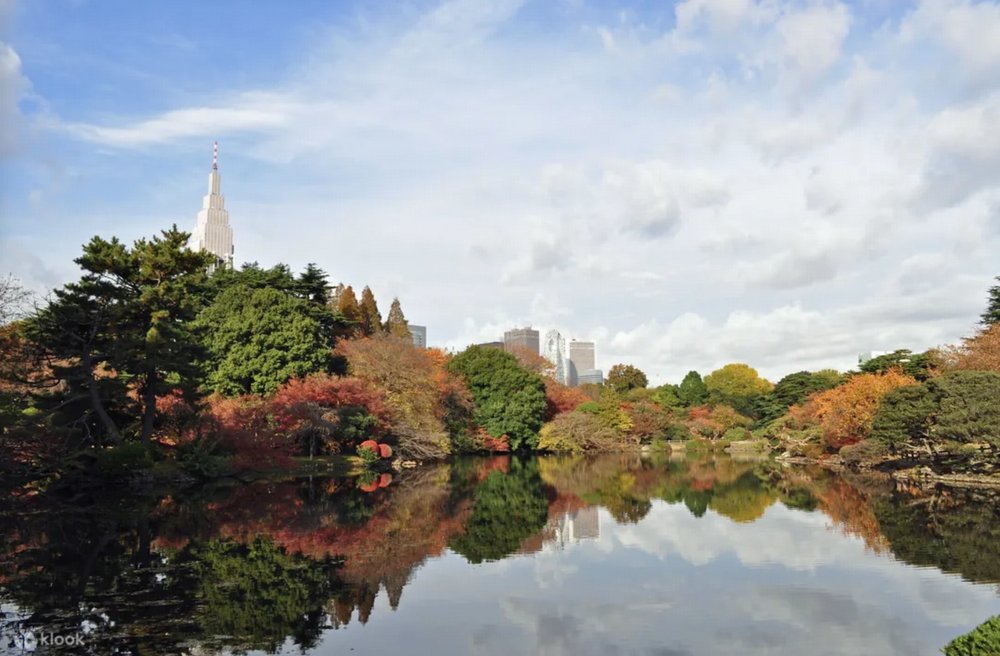
Shinjuku Gyoen
Shinjuku Gyoen is where you go when Shinjuku's crowds start to wear on you. An advance Shinjuku Gyoen ticket starts from 302 INR and stays valid for 180 days, about the same as the 500 JPY gate price. The best Shinjuku Gyoen autumn colour usually shows from late November to mid-December, along the lawns and tree-lined paths.
The garden closes at 4.30pm from October to mid-March, with last entry at 4pm, so it's a daytime stop only. It's also closed on Mondays, except 1 to 15 November, when it opens daily for a chrysanthemum exhibition.
- Address: 11 Naito-machi, Shinjuku City, Tokyo
- Getting there: Shinjuku-gyoemmae Station, about 5 minutes on foot
Klook Tip: With a 4.30pm closing time, arrive by 2pm for the afternoon light and enough time to wander.
Mt. Takao autumn leaves
A forested mountain sits about an hour from Shinjuku, and it's Tokyo's easiest nature escape. The Keio Line runs direct to Takaosanguchi Station in about 50 to 55 minutes. For more seasonal day trips, see our guide to autumn attractions around Tokyo.
Mt. Takao autumn leaves usually peak from mid-November to early December, and the cable car route is where the orange and red are strongest. Crowds are the catch. Reach the trailhead before 8am and be back down by noon, or pick a weekday, because weekends and holidays mean long cable car queues.
Wear proper shoes since some slopes are steep. The chair lift can close for maintenance, so be ready to walk Trail 1 instead.
- Address: Takaomachi, Hachioji City, Tokyo
- Getting there: Keio Line from Shinjuku to Takaosanguchi Station, then a few minutes on foot to the base
Klook Tip: Catch an early train from Shinjuku so you're on the trail by 8am.
Tori no Ichi at Otori Shrine
If you've got one cold evening to spare in November, spend it here. Tori no Ichi is a rooster-day fair where people buy decorated bamboo rakes, called kumade, to rake in good luck and business. The biggest runs at Otori Shrine and Chokokuji Temple in Taito City's Senzoku district, often called the Asakusa fair.
It's open 24 hours on fair days with free entry. Shrine-issued rake charms started at 1,200 JPY (about 720 INR) in 2026, with larger ones at 3,000 JPY (about 1,800 INR).
Rooster days come every 12 days, so there are two or three fairs each November: 7 and 19 November in 2026, and 2, 14 and 26 November in 2027. Evenings run 7 to 12°C, so bring a coat and expect packed lanes after dark. If you're staying in Shinjuku, Hanazono Shrine runs a lantern-lit version too. For more festival ideas, see our autumn festivals in Japan guide.
- Address: Senzoku, Taito City, Tokyo
- Getting there: Iriya Station (Hibiya Line), about 9 minutes on foot, or Minowa Station, about 10. Asakusa Station is a 15 to 20 minute walk.
Klook Tip: The lanes get crowded after dark, so check your last train home before you join the queue.
Shichi-Go-San shrine visits
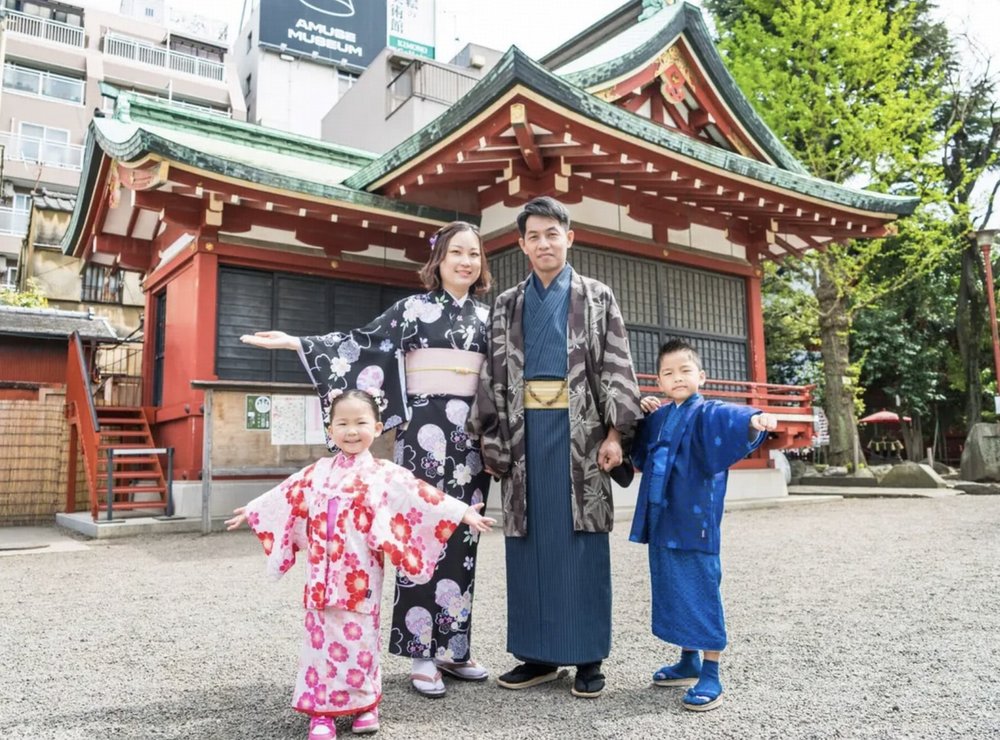
Kimono rental in Asakusa
Walk into a big Tokyo shrine in mid-November and you might spot a three-year-old in a tiny kimono clutching a very long candy. Shichi-Go-San (seven-five-three) marks children turning three, five and seven, and the candy is chitose-ame, bought after the shrine blessing. The traditional date is 15 November, but most families go on a nearby weekend.
Meiji Jingu, Hie Jinja and Kanda Myojin are the popular Tokyo shrines. In 2027, 15 November is a Monday, so the weekends either side should be busiest. You're a guest at these family moments, so watch from a distance near the main hall and ask before photographing anyone's kids.
If you'd like to dress up for your own shrine visit, a kimono rental in Asakusa starts from 1,452 INR, with over 600 kimono plus staff dressing and hair setting. The children's selection can be thinner than the adult range, so check the options first. Asakusa is across town from Meiji Jingu, so allow travel time.
- Getting there: Asakusa Station (Tokyo Metro), Exit 5, then about 3 minutes on foot
Tokyo winter illuminations
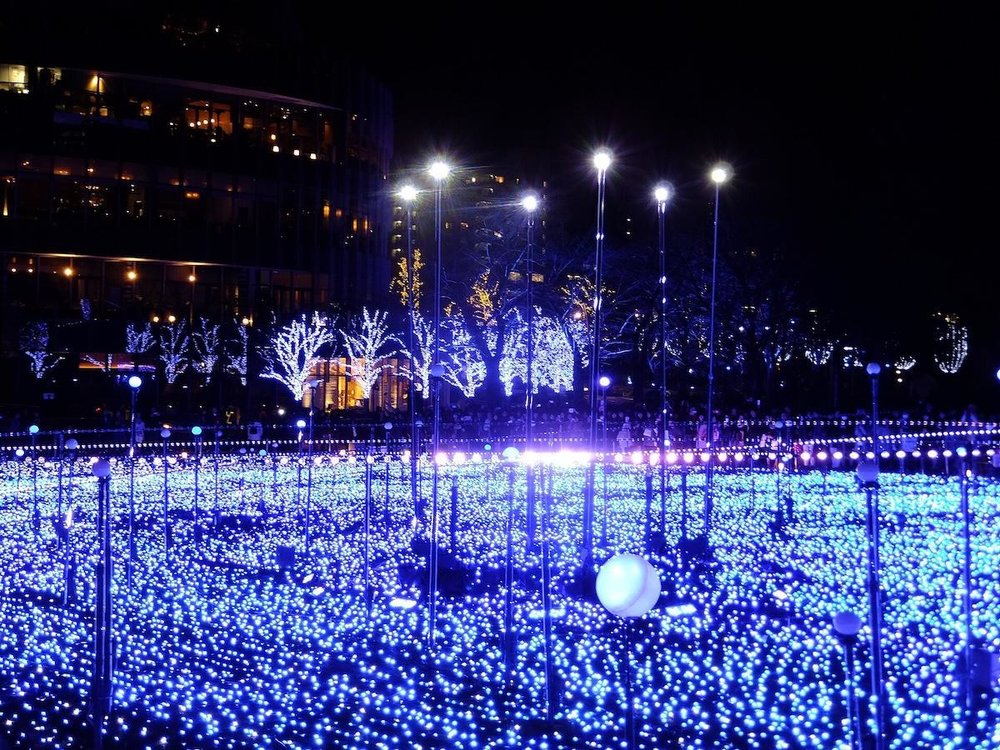
Tokyo winter illuminations | Image credit: 掬茶, CC BY-SA 4.0, via Wikimedia Commons
Tokyo's lights start going up before the leaves are done. Some displays switch on in early to mid-November, and more join as the month goes on. In 2025, Marunouchi, Tokyo Midtown and Shinjuku Southern Terrace all lit up on 12 or 13 November, and many ran into February.
Dates change every year, so check each venue's official page before you plan around them. Most displays are free to walk through, but Shibuya's Blue Cave only started on 4 December in 2025. Most November displays switch on around 5pm, just after sunset.
Tokyo City View at Roppongi Hills
Every November trip needs a backup plan for rainy days, and a good view makes a decent one. The Tokyo City View ticket starts from 919 INR and covers the indoor deck, open daily from 10am to 10pm with last entry at 9.30pm. Go after sunset and the city lights up below you, and Roppongi Hills runs its own winter illumination from early November.
The Sky Deck rooftop costs extra, and you can't re-enter once you leave. Evening slots can sell out, so book your date ahead. Plan on one to two hours here.
- Address: Roppongi Hills Mori Tower, 6-10-1 Roppongi, Minato City, Tokyo
- Getting there: Roppongi Station
FAQs about Tokyo in November
Is November a good time to visit Tokyo?
Yes, November is one of the best months to visit Tokyo, especially if you enjoy cool, crisp weather and autumn colours. The weather is cool and mostly dry, the autumn leaves reach the city parks, and the first illuminations switch on. It's also busy, with Klook booking data showing demand about 18% above a typical month, so book popular tickets ahead.
When is the peak of autumn leaves in Tokyo?
Tokyo's autumn leaves usually peak from mid-November to early December. Ginkgo trees turn first, with maples a few days later. In 2026, forecasters pointed to 26 November for ginkgo and 28 November for red maples, and the Japan Meteorological Corporation posted its first forecast on 2 September and updated it on 1 October, so check the latest before you lock in dates.
Where are the best places to see autumn leaves in Tokyo?
The Meiji Jingu Gaien ginkgo avenue, Rikugien and Shinjuku Gyoen are the top three in the city, and Mt. Takao is the best nearby escape. Gaien is best for golden photos, Rikugien for evening maples, and Shinjuku Gyoen for wide lawns. If you only have time for one, pick Rikugien during its night light-up.
What is the weather like in Tokyo in November?
Tokyo in November is cool, clear and mostly dry, with highs near 18°C and lows near 10°C. Expect a few showery days. It gets cold fast after the sun sets around 4.30pm, so pack a proper jacket.
What events are held in Tokyo in November?
The big ones are the Tori no Ichi rake fairs, Shichi-Go-San shrine visits around 15 November, Rikugien's night illumination and the chrysanthemum exhibition at Shinjuku Gyoen, which usually runs 1 to 15 November. Culture Day on 3 November and Labor Thanksgiving Day on 23 November also bring local crowds. Tori no Ichi follows the rooster-day calendar, so check the shrine's dates before you go.
When do winter illuminations start in Tokyo?
Winter illuminations in Tokyo usually start in mid-November, and some begin earlier. In 2025, Tokyo Midtown and Marunouchi opened on 13 November, Shinjuku Southern Terrace on 12 November, and Roppongi Hills on 4 November. Many run until Christmas or mid-February.
What should you wear in Tokyo in November?
Wear layers: a light jacket and long sleeves by day, then a warmer coat or sweater and a scarf for evenings. Pack comfortable shoes for park paths, and add a layer for Mt. Takao, where it feels colder up the mountain. A compact umbrella handles the odd shower, and if you're coming from India, pack one warmer layer than you think you need.
Pick your dates, then your evenings
Here's a simple plan for Tokyo in November: Mt. Takao early in your visit, the ginkgo avenue and Rikugien after that, and one cold evening at a rake fair or under the lights. Check your dates against the foliage forecast first.
Then lock in your Rikugien night ticket and Tokyo City View slot, since peak weekends and evenings fill up fastest. If you're using annual leave, aim for the second half of November for the best colour. The rest of Japan is a short flight away if you want more.
More Tokyo travel guides for you


What is Klook?
Klook is a leading pan-regional experiences platform in Asia Pacific, purpose built to digitalize experiences and make them accessible to every traveler.
Our mission is to build the digital infrastructure for the global experience economy — empowering merchants to share their passions and travelers to discover the heartbeat of each destination. We operate a mobile-first, curated platform featuring diverse experiences across global destinations.