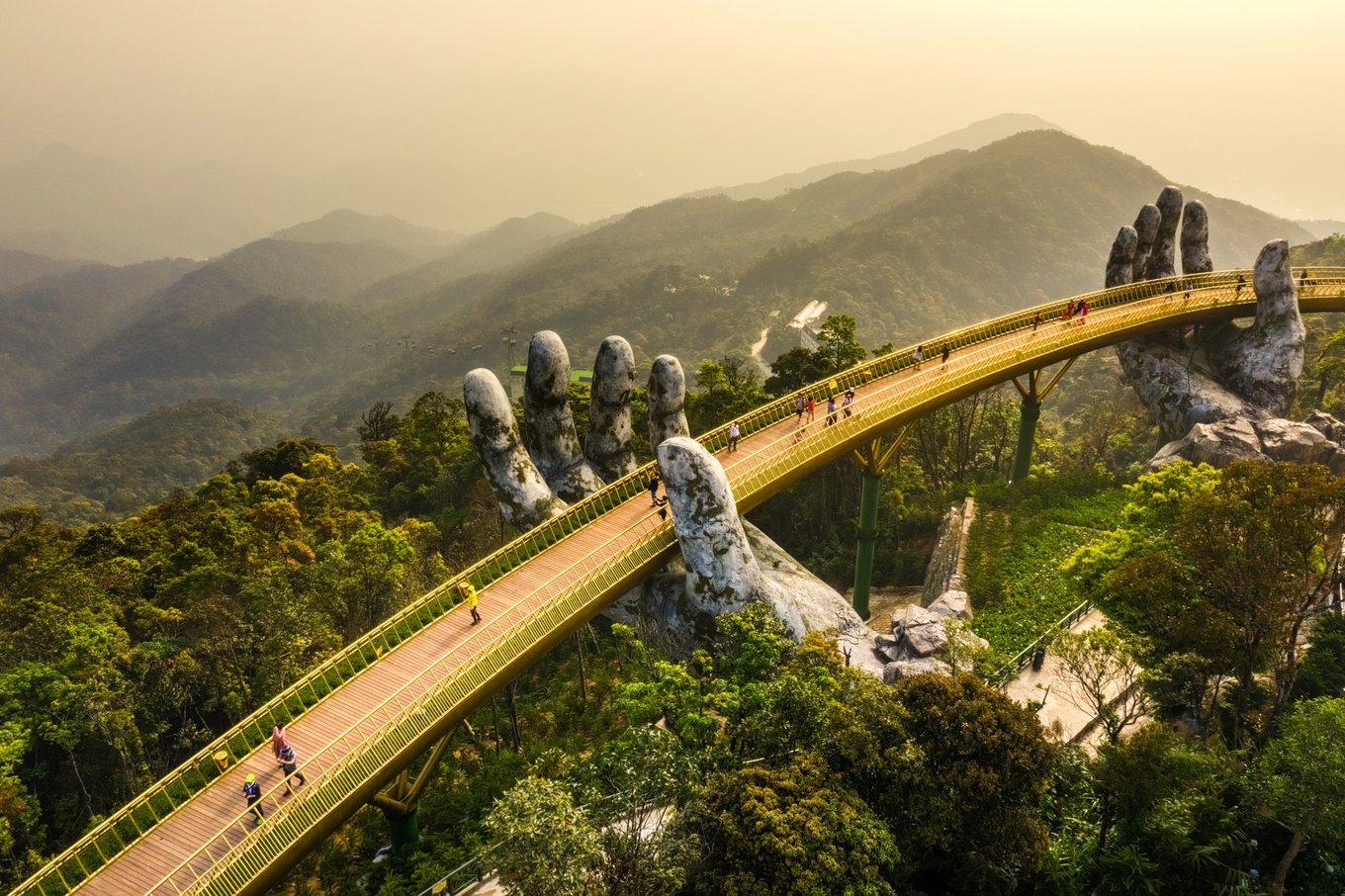
Vietnam is one of Southeast Asia's most rewarding destinations. You've got karst bays in the north, ancient trading towns in the center, and a lively, fast-paced city in the south, all connected by great food, rich history, and incredibly welcoming people. Even if you've got 10 days or three weeks, there's always more to see.
This Vietnam travel guide covers everything you need to plan your trip: visa requirements, getting around, the best time to visit, and the must-see destinations to add to your Vietnam itinerary. Bookmark this page for your Vietnam trip! 🇻🇳
Before you go: Vietnam visa requirements
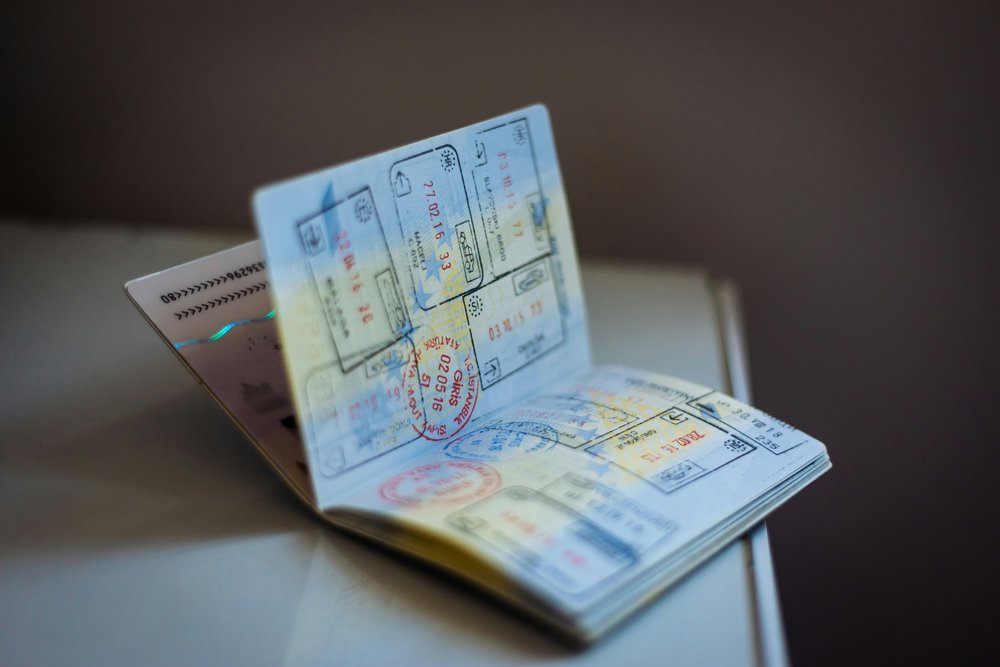
Passport full of travel stamps | Photo Credit: Global Residence Index on Unsplash
One of the first things to sort out before your trip is your visa. If your country isn't on Vietnam's exemption list, including the US, Canada, Australia, India, and China, you'll need to apply for a Vietnam e-visa before you travel.
The e-visa is valid for up to 90 days, covers single and multiple entries, and works for arrivals by land, sea, or air. You can sort your Vietnam e-visa for international tourists for a smooth, guided application experience.
Klook Tip: Apply for your Vietnam e-visa at least 5–7 business days before your trip. Keep a printed copy with you at border crossings, as some checkpoints may ask for it even if you have a digital version.
Best time to visit Vietnam
Understanding when to go is one of the trickier parts of planning a Vietnam itinerary. Because the country stretches over 1,600 km from north to south, weather varies a lot depending on which region you’re visiting. Check out our full Vietnam season guide for a detailed breakdown. Here's a quick overview to get you started.
🌸 February to April — best for Central and Northern Vietnam
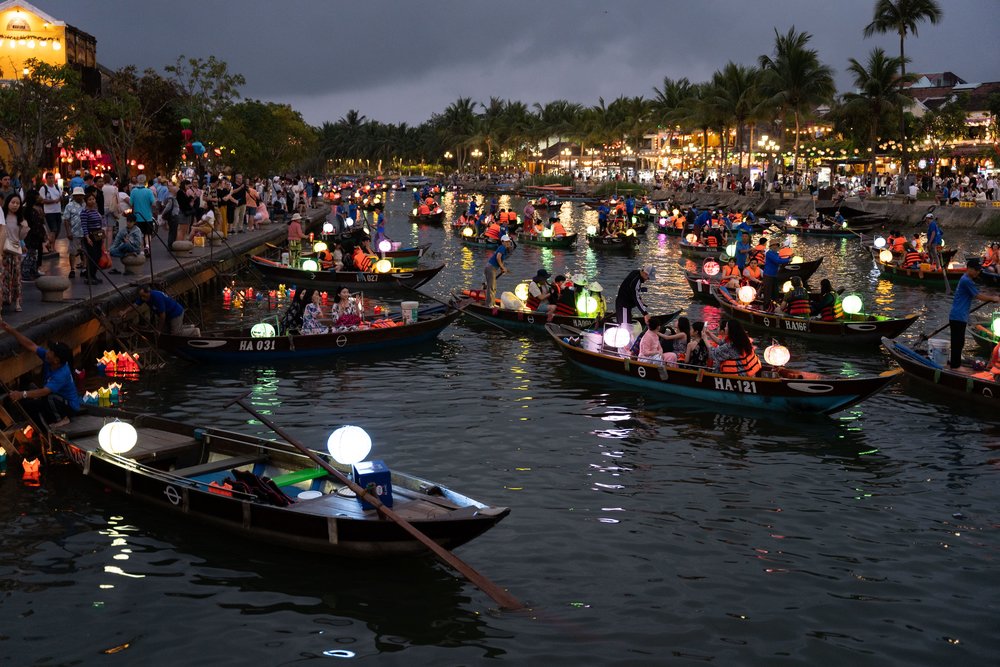
Hoi An lantern festival at night | Photo Credit: Pragyan Bezbaruah on Pexels
This is the sweet spot for much of the country. Temperatures are warm but manageable, humidity is lower, and rain is rare across central Vietnam. It's a great time to explore Hoi An, Hue, and Ha Long Bay without battling downpours.
This period is ideal if you:
• Want comfortable sightseeing without the summer heat
• Are visiting Ha Long Bay and want calm seas
• Plan to spend time in Hoi An or Hue
Keep in mind that Tet (Vietnamese Lunar New Year) usually falls in late January or early February. It's festive and fun to witness, but some services may be closed, and transport gets busy.
☀️ November to January — best for Southern Vietnam
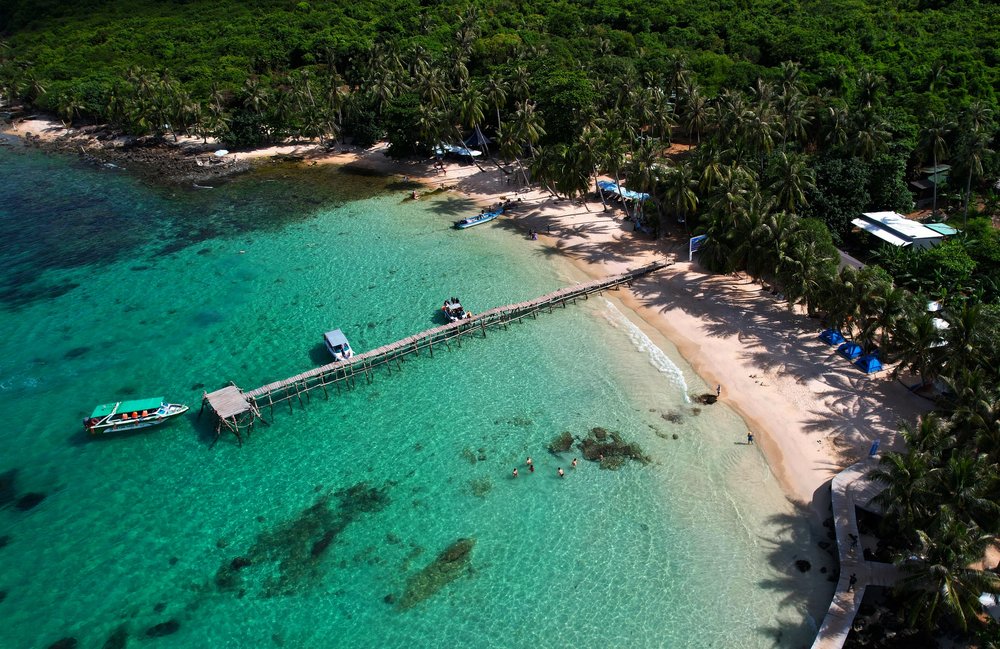
Speedboat tour across Phu Quoc islands
If you're heading south to Ho Chi Minh City, the Mekong Delta, or Phu Quoc, November through January is the dry season and the most comfortable time to visit. Expect clear skies, cooler evenings, and ideal beach weather.
This time is ideal if you:
• Are focused on southern destinations
• Want beach days without rain interruptions
• Prefer lighter crowds than the peak February–April season
How to get around Vietnam
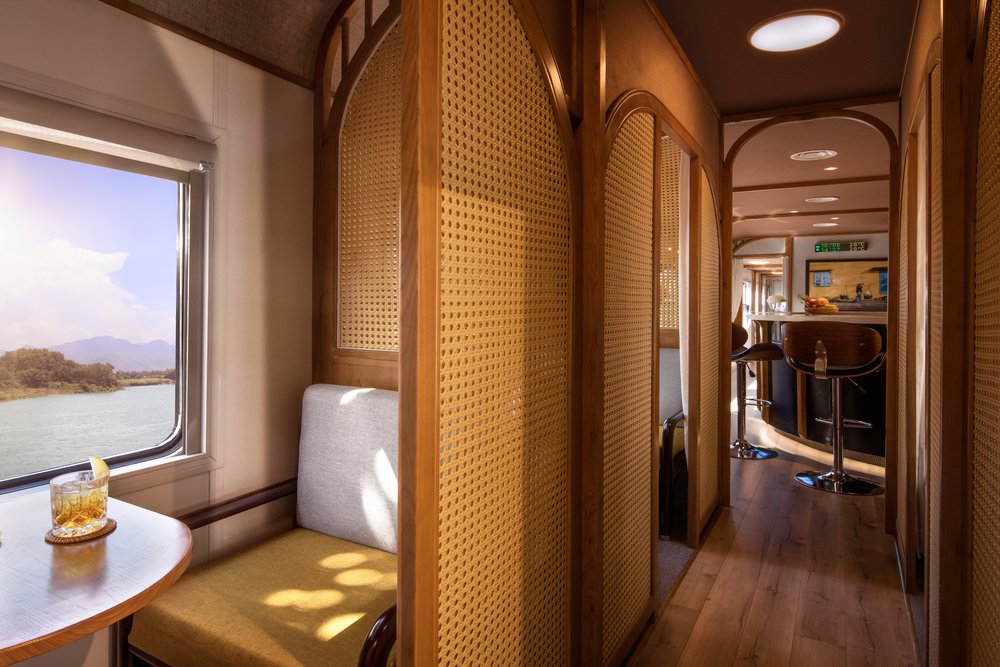
Inside a luxury Vietnam sleeper train
Getting around Vietnam is a big part of the adventure. With cities spread hundreds of kilometers apart, your transport choices will shape how much you see and how smoothly things flow. Our guide to getting around Vietnam covers this in full; here's what you need to know upfront.
1. Fly between major cities
For long distances — like Hanoi to Ho Chi Minh City — flying is by far the fastest option. Budget carriers like VietJet Air and Bamboo Airways offer affordable fares, and flights between major cities run frequently. If your Vietnam itinerary covers both north and south, build in at least one domestic flight.
2. Take the overnight train
Vietnam's north-to-south railway is one of the most scenic train routes in Southeast Asia. The Reunification Express runs from Hanoi to Ho Chi Minh City with stops in Da Nang, Hue, and other cities along the way.
Klook Tip: Book overnight train tickets at least a few days in advance, especially during school holidays and the Tet period. Soft sleeper berths are worth the small price upgrade for longer journeys.
3. Use sleeper buses for shorter routes
For routes like Hoi An to Hue or Da Lat to Ho Chi Minh City, sleeper buses are a popular and budget-friendly option. They run regularly and are comfortable enough for overnight travel. They're easy to find and book at most tourist hubs. For a more comfortable ride up to Sapa, check out the Vietnam Rail Deluxe Train from Hanoi.
4. Rent a motorbike for local exploration
Within cities or for shorter scenic routes, renting a motorbike gives you total flexibility to stop at roadside banh mi stalls and explore back lanes. Da Nang is one of the best cities for this, the roads are wide, the coast is close, and you can reach the Hai Van Pass with ease. Grab a motorbike rental in Da Nang and head out at your own pace.
Up in the mountains, riding through Sapa's terraced valleys and hillside villages is an experience of its own. A motorbike rental in Sapa is one of the best ways to explore beyond the main town. If you're not confident riding, hiring a xe om (motorbike taxi) or using Grab works just as well.
Our favorite destinations in Vietnam
Vietnam's geography makes it one of the most diverse destinations in Southeast Asia. From misty northern highlands to ancient imperial cities and tropical southern coastlines, every region offers something different. Here are the top spots no Vietnam travel guide would be complete without.
1. Ha Long Bay
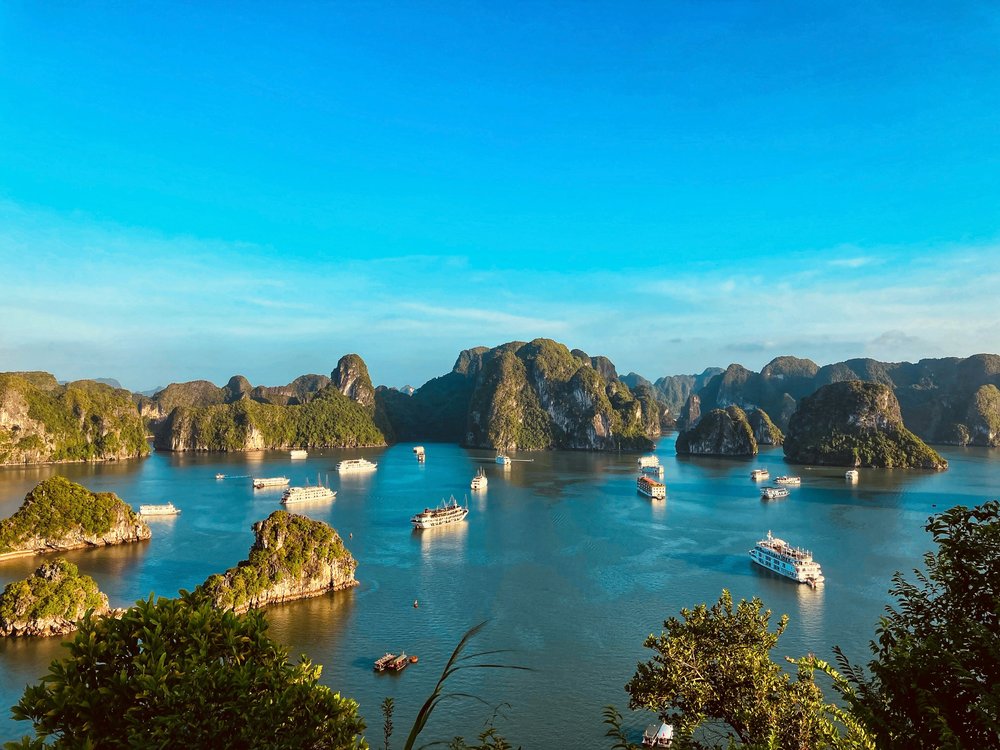
Ha Long Bay in Vietnam | Photo Credit: Anmol Bindra on Unsplash
If there's one image that defines Vietnam for most travelers, it's Ha Long Bay. This UNESCO World Heritage Site is home to roughly 1,600 limestone karsts rising out of the emerald-green Gulf of Tonkin. Kayaking through sea caves, watching the mist roll over the islands at dawn, and falling asleep on a junk boat with nothing but still water around you.
Day trips are available from Hanoi, but an overnight or two-day cruise is absolutely worth it if your schedule allows. The Ha Long Bay day tour from Hanoi is a great way to experience the highlights without spending too many nights away.
2. Hanoi
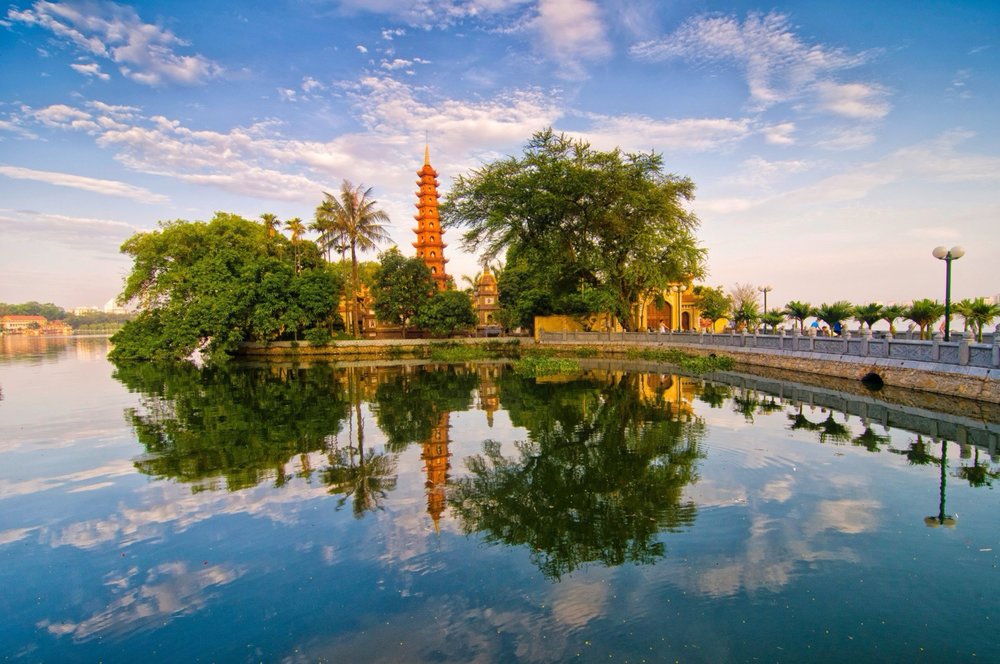
Tran Quoc Pagoda in Hanoi
Vietnam's capital is chaotic, charming, and full of life. The Old Quarter's 36 streets are a maze of tiny shophouses, steaming bowls of bun cha (grilled pork noodle soup), and centuries of history layered on top of each other. At the heart of it all is Hoan Kiem Lake, where locals do morning exercises by the water's edge and lantern-lit trees reflect off the surface at night.
Spend at least two full days here. Walk the Old Quarter in the morning, visit the Ho Chi Minh Mausoleum and Temple of Literature in the afternoon, and find a bia hoi (draft beer) corner in the evening. Join a Hanoi full-day city tour if you want your day in Hanoi planned from morning until the sun sets!
Klook Tip: The weekend walking street around Hoan Kiem Lake is traffic-free on Friday, Saturday, and Sunday evenings, one of the best spots in Hanoi to eat street food and watch the city unwind.
Where to stay in Hanoi: If you’re staying in Hanoi before heading out to the bay, Pan Pacific Hanoi is a top-tier choice. It's in the Ba Dinh district near major landmarks, with well-appointed rooms and a rooftop pool that's hard to beat after a long day of travel.
3. Hoi An Ancient Town
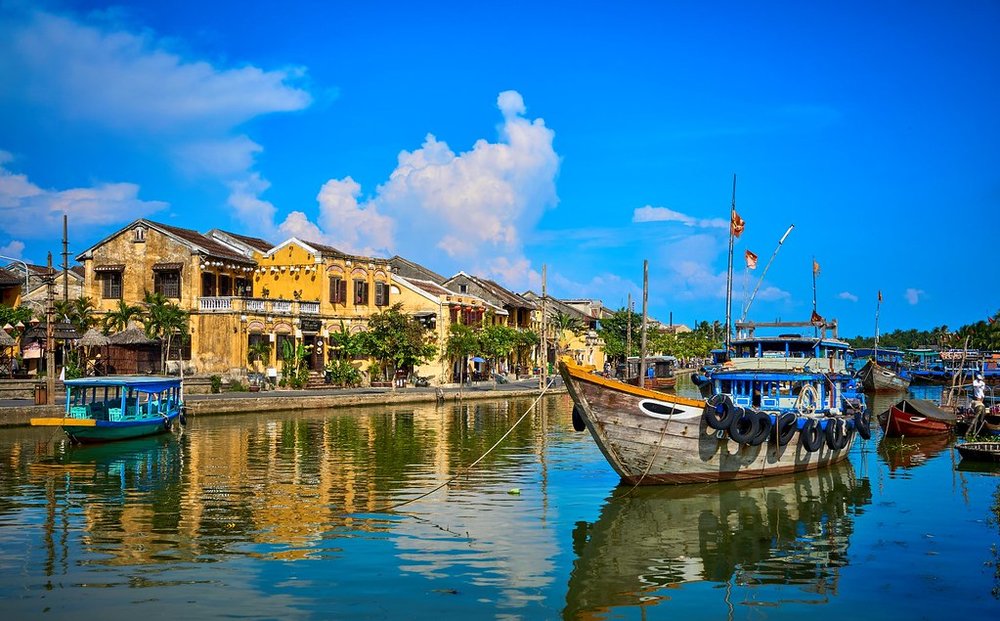
Hoi An Ancient Town | Photo Credit: Flickr
Few places in Vietnam are as immediately lovable as Hoi An Ancient Town. The preserved 15th-century trading port has yellow-ochre walls, wooden shop fronts, and hundreds of hand-painted lanterns lining the lanes day and night. It genuinely feels like a living museum.
Hoi An is also one of the best places in Vietnam to eat. Cao lau (thick noodles with pork and greens), white rose dumplings, and crispy banh xeo (sizzling pancake) are local specialties you shouldn't leave without trying. You can book a Vietnam UNESCO heritage sites day tour to hit Hoi An alongside other iconic central Vietnam sites in one well-planned day.
Where to stay in Hoi An: The Anantara Hoi An Resort sits right along the Thu Bon River in a collection of French Colonial-style buildings. It's within easy walking distance of the Ancient Town and offers a calm, boutique stay after busy days of sightseeing.
4. Hue
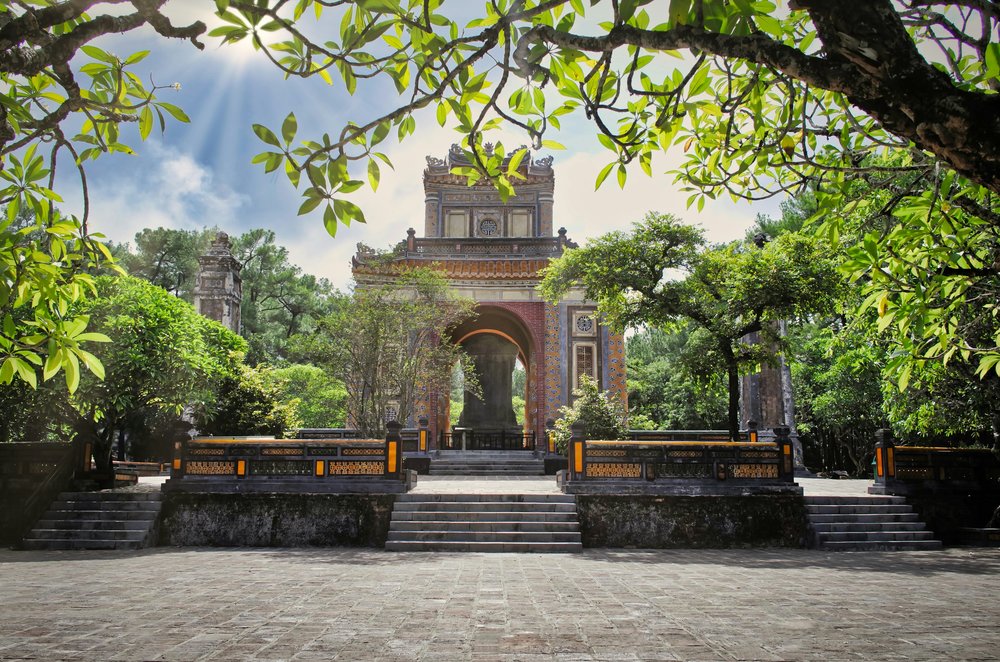
Tu Duc Tomb in Hue | Photo Credit: Gian-Reto Tarnutzer on Unsplash
If you love history, Hue will be one of the highlights of your trip. This was the seat of Vietnam's last royal dynasty, and the city still carries the weight of that history on every stone. The Imperial Citadel, a walled fortress complex modeled on Beijing's Forbidden City, is the centerpiece and can easily fill a full day.
Hue is also considered the culinary capital of Vietnam. Dishes like bun bo Hue (spicy beef noodle soup) and banh khoai (crispy stuffed pancake) are local specialties that don't quite taste the same anywhere else. Join a Hue street food walking tour to see how the locals make it and try the famous dishes yourself!
Where to stay in Hue: The Meliá Vinpearl Hue is the tallest building in the city and one of the best-located hotels for exploring Hue. The 34-floor tower sits close to the Perfume River and a short walk from the Imperial Citadel, with an indoor pool, rooftop skybar, and city views from most rooms.
5. Sapa
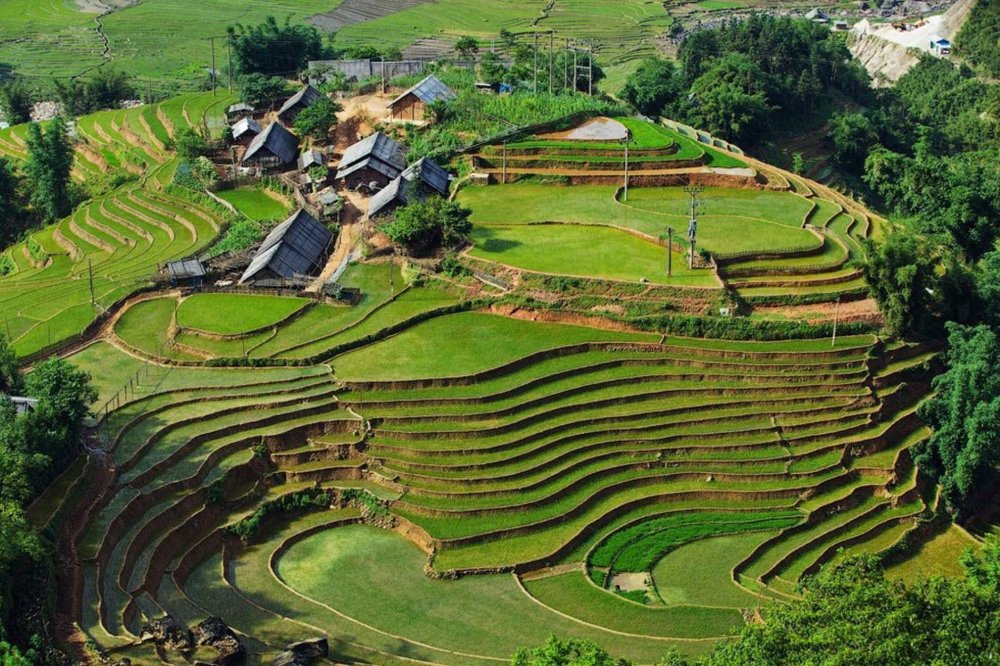
Lao Chai village in Sapa
For a complete change of scene, head to the far northwest. Sapa is located over 1,500 meters above sea level, surrounded by terraced rice fields that turn deep gold during harvest season (September to October). The scenery alone is worth the trip.
Sapa is also home to Vietnam's ethnic minority communities, Hmong, Dao, and Tay people, many of whom sell handcrafted textiles in the local markets. Trekking into surrounding villages is one of the most culturally rich things to do in Vietnam. The Y Linh Ho, Lao Chai & Ta Van village trekking day tour is a great way to explore the valleys and meet local communities with a guide.
Where to stay in Sapa: The Hotel de la Coupole MGallery is Sapa's most iconic five-star property, sitting right in the center of town with panoramic mountain views. The design blends French Indochine elegance with local hill tribe influences, and the 10th-floor restaurant and heated indoor pool are genuine highlights of the stay.
6. Ho Chi Minh City
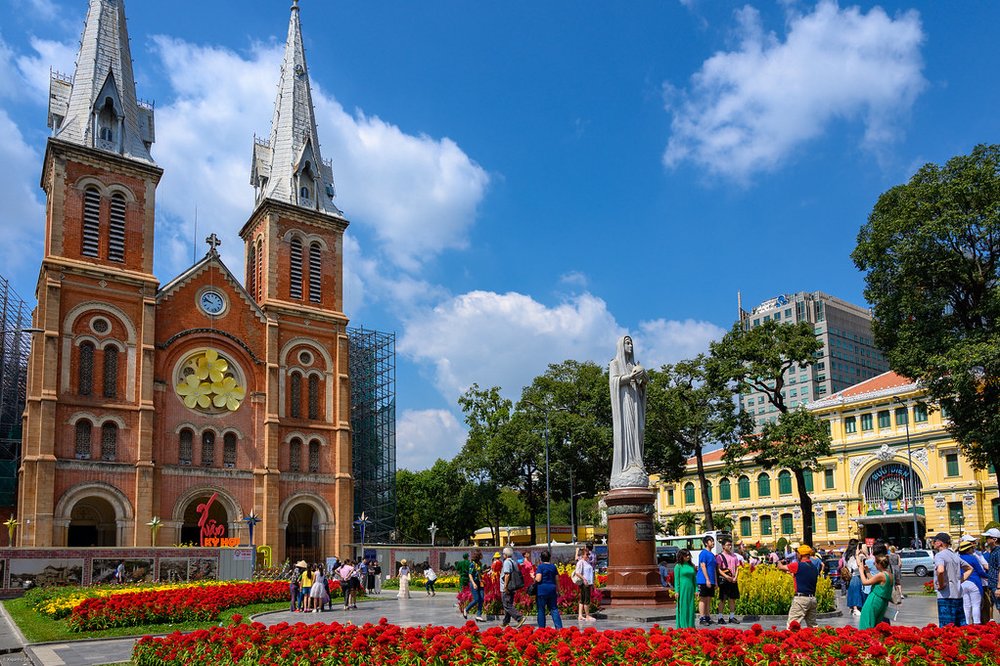
Notre-Dame Cathedral Basilica of Saigon in Ho Chi Minh City | Photo Credit: Flickr
Vietnam's largest city moves faster, louder, and always switched on. Ho Chi Minh City (still called Saigon by locals) is a city of contrasts: gleaming skyscrapers next to colonial-era cathedrals, rooftop bars above traditional wet markets, and coffee shops tucked into French-villa courtyards.
A few days is enough to get a feel for the city's energy. Visit the War Remnants Museum, eat your way through the Ben Thanh Market area, and head to the Bui Vien walking street in the evening for the full experience.
Where to stay in Ho Chi Minh: Caravelle Saigon is one of the city's most iconic hotels, with a history going back to 1959 and a rooftop bar with panoramic views over District 1.
Tips for traveling in Vietnam
Get a Vietnam eSIM before you fly
The easiest way to stay connected in Vietnam is to sort your data before you even board. A Vietnam eSIM can be set up on your phone in minutes and activates automatically when you land, with no queuing at airport counters or swapping physical SIM cards. It gives you fast, reliable data coverage across cities and most tourist areas from the moment you arrive.
Use Grab for getting around
Grab is the go-to ride-hailing app in Vietnam and works across all major cities. It's reliable, affordable, and takes the guesswork out of negotiating fares with tuk-tuks or taxis. Download it before you arrive and connect it to your card or use cash; both options work fine.
Know the tipping culture
Tipping isn't mandatory in Vietnam, but it's warmly appreciated. At restaurants, rounding up the bill or leaving small change is a kind gesture. For tour guides, spa therapists, and hotel staff who go out of their way, a tip of 50,000 to 100,000 VND (roughly $2–$4 USD) is a thoughtful gesture. High-end restaurants may add a service charge, so check the bill before tipping extra.
Bargaining etiquette at markets
Bargaining is expected at markets and street stalls, but keep it friendly and lighthearted. A good rule of thumb is to counter at around 50–60% of the asking price and meet somewhere in the middle. That said, don't haggle over small amounts—if the price is already fair, it's fine to just pay it.
What to pack for Vietnam's varied climates
Vietnam's climate shifts dramatically from north to south, so packing smart matters. Lightweight clothing works for the south, but Sapa can get cold year-round; pack a warm layer regardless of season. A compact rain jacket and comfortable walking shoes are essential no matter where you're headed.
FAQs about Vietnam travel guide
How many days do you need to travel in Vietnam?
For a Vietnam trip covering Hanoi, Ha Long Bay, Hoi An, and Ho Chi Minh City, plan for a minimum of 10 to 12 days. If you want to add Hue, Sapa, or the Mekong Delta, 14 to 16 days is more comfortable. Vietnam rewards travelers who slow down.
What is the best time of year to visit Vietnam?
It depends on which region you're visiting. February to April is ideal for Hanoi and central Vietnam, while November to January is best for the south.
Do I need a visa to visit Vietnam?
It depends on your nationality. Citizens of 38 countries, including the UK, France, Germany, Japan, South Korea, and most ASEAN nations, can enter visa-free for 14 to 45 days. Travelers from the US, Canada, Australia, India, and China need to apply for an e-visa before arrival.
What is the cheapest way to travel between cities in Vietnam?
Overnight sleeper buses are the most budget-friendly option, while budget airlines can be surprisingly cheap if booked in advance. The overnight train is a great middle ground—comfortable and scenic.
What are the must-see destinations in Vietnam?
Ha Long Bay, Hanoi, Hoi An, and Ho Chi Minh City form the backbone of most Vietnam itineraries. Add Hue for history, Sapa for mountain scenery, and Phu Quoc for beaches. Our places to visit in Vietnam guide breaks it all down by region.
More Vietnam travel guides for you!
What is Klook?
Klook is a leading pan-regional experiences platform in Asia Pacific, purpose built to digitalize experiences and make them accessible to every traveler.
Our mission is to build the digital infrastructure for the global experience economy — empowering merchants to share their passions and travelers to discover the heartbeat of each destination. We operate a mobile-first, curated platform featuring diverse experiences across global destinations.