
In Paris, every arrondissement has its own set of boulangeries and bistros where you can sample the most authentic French food. The best croissant you’ve tried in your country would most probably be no match for Paris’ own original version.
From buttery breakfast pastries to slow-cooked bistro classics, here's how to eat your way through Paris like a local!
Baked goods and pastries
Croissant
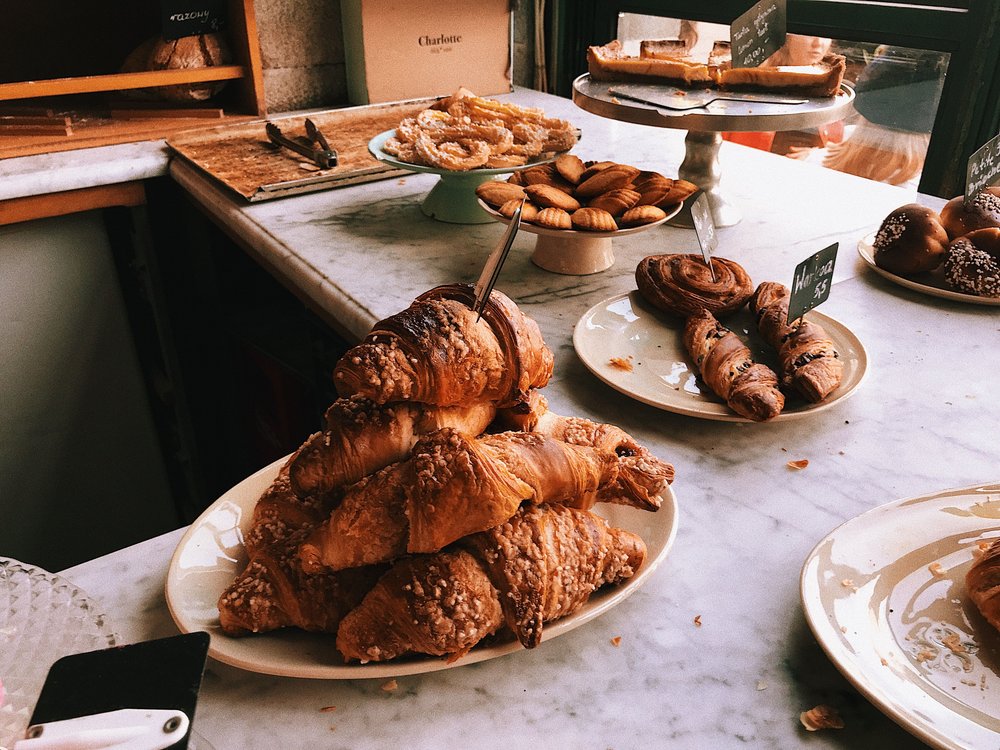
A plateful of croissants in a Paris bakery | Photo by Dmitry Zvolskiy on Pexels
Where to go:
- Boulangerie Sébastien Gaudard (3 Pl. des Pyramides, 75001 Paris, France)
- Stohrer (51 Rue Montorgueil, 75002 Paris, France)
There are croissants, and then there are Paris croissants. The real thing is laminated with butter, yielding a crisp exterior and a soft, chewy interior that you won’t be able to eat without making a mess of your shirt. You want it au beurre (made with pure butter), not the doughy crescent-shaped impersonators you may have encountered elsewhere.
The best croissants in Paris come from artisan boulangeries rather than chain cafés. Look for ones that are visibly golden and slightly uneven in shape; that's usually a sign they were hand-rolled. Rue Montorgueil is a great place to start, with several long-standing bakeries along the strip that take their viennoiserie seriously.
Klook tip: Want to learn the craft yourself? A croissant making class in Paris is a brilliant way to understand what goes into a proper laminated dough, plus you get to eat everything you make.
Pain au chocolat and other viennoiserie
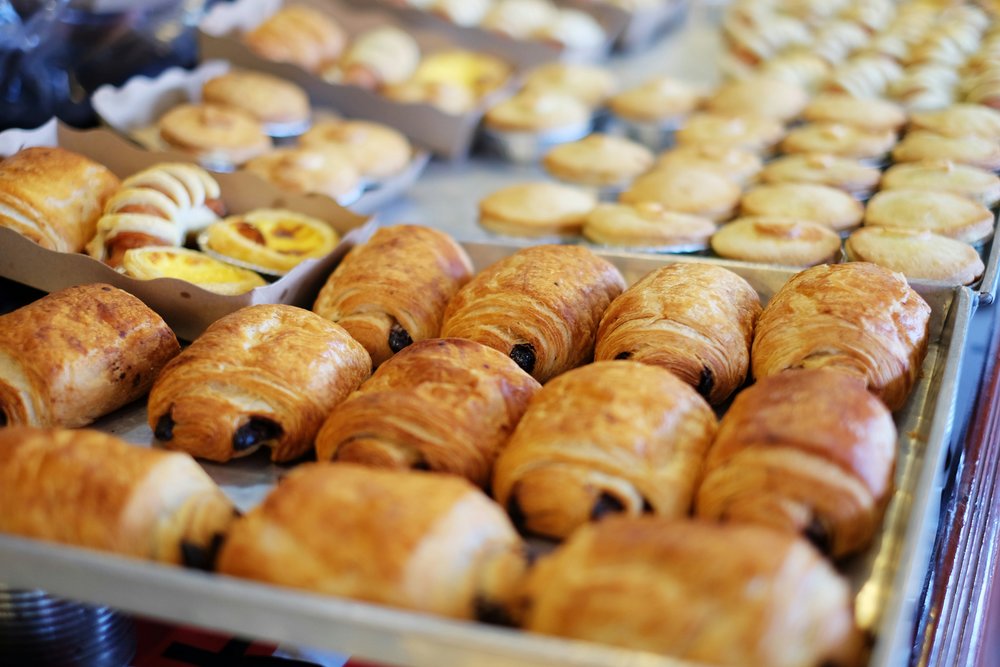
Pain au chocolate and other viennoiserie | Photo by Mink Mingle on Unsplash
Where to go:
- Du Pain et des Idées (34 Rue Yves Toudic, 75010 Paris, France)
- Blé Sucré (7 Rue Antoine Vollon, 75012 Paris, France)
Once you've had your croissant, branch out into the wider world of viennoiserie, the umbrella term for French pastries made with enriched, laminated dough. Pain au chocolat is the obvious next step: two sticks of dark chocolate folded into a buttery rectangle of dough, baked until puffed and golden. A good one should have visible, distinct chocolate rather than a faint smear.
Beyond the classics, look for kouign-amann (a caramelized Breton cake), pain aux raisins (a spiral pastry with custard and rum-soaked raisins), and chausson aux pommes (an apple turnover). Rue Mouffetard, one of Paris' oldest market streets, has excellent boulangeries between the produce stalls, perfect for a morning pastry crawl.
Klook Tip: The best boulangeries in Paris often sell out of top pastries by mid-morning. Aim to arrive before 9am to get the freshest and full selection of pastries, especially on weekends.
Tarte tatin
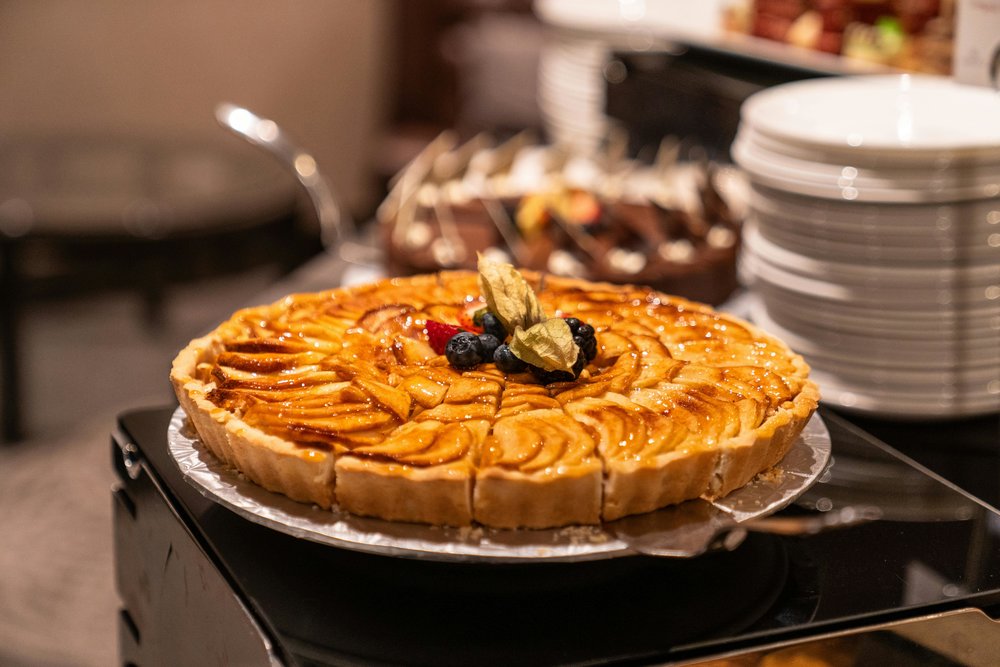
Golden apple French tart with glossy caramelized topping | Photo by Justin Agyarko on Pexels
Where to go:
- Aux Charpentiers (10 Rue Mabillon, 6th arr., Paris, France)
- Le Comptoir du Relais (9 Carrefour de l'Odéon, 6th arr., Paris, France)
Tarte tatin is a French dessert that flips convention (literally). It's an upside-down caramelized apple tart, baked so the fruit is directly on a buttery caramel base and the pastry goes on top, then inverted before serving. The result is intensely caramelized apples on a crisp, golden pastry shell, and it's usually served warm with a dollop of crème fraîche.
You'll find it in most traditional Parisian bistros, but the quality varies. Look for versions where the apples are soft but still hold their shape, and the caramel is deep amber rather than pale gold. Try it in Saint-Germain-des-Prés, where classic bistros tend to do it well.
Klook tip: For a full introduction to Parisian pastry, the Saint-Germain-des-Prés pastry and chocolate tasting tour takes you to some of the neighbourhood's best spots with expert guidance on what you're actually tasting.
Classic bistro dishes
French onion soup
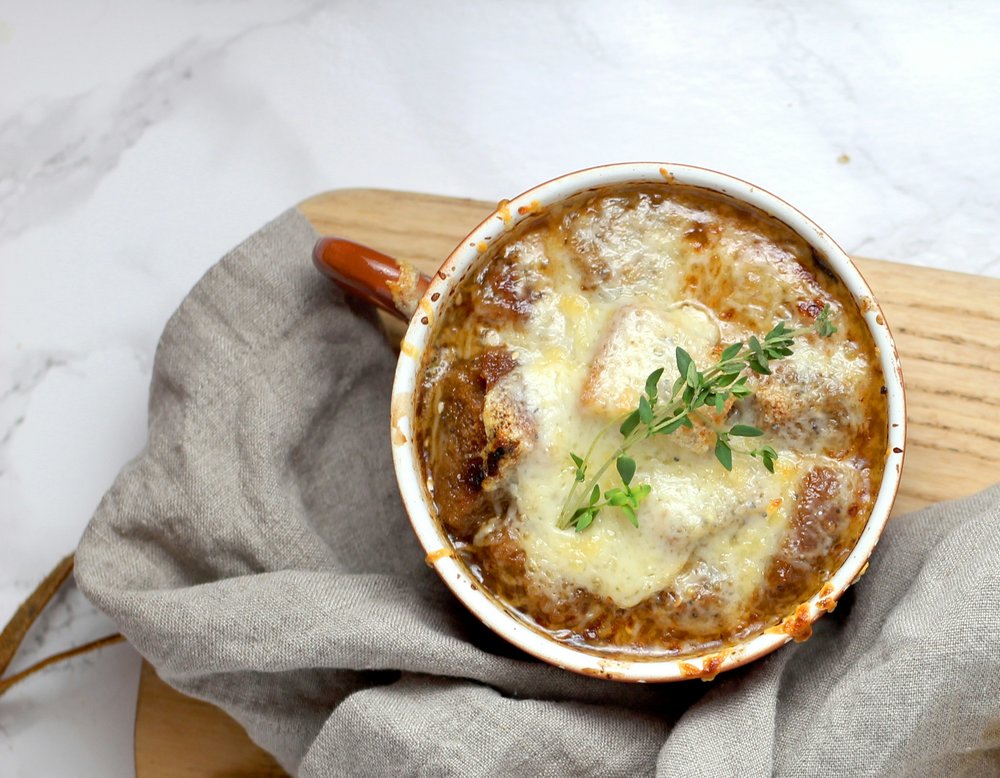
A bowl of French onion soup | Photo by sheri silver on Unsplash
Where to go:
- Au Pied de Cochon (6 Rue Coquillière, 75001 Paris, France)
- Brasserie Lipp (151 Bd Saint-Germain, 75006 Paris, France)
Soupe à l'oignon might look humble, but it's one of the most satisfying French dishes. It starts with onions that are slowly caramelized until they're sweet, deeply brown, and almost jammy, then simmered in beef broth until rich and glossy. It's then topped with a thick slice of bread and a blanket of melted Gruyère, then finished under the grill until the cheese bubbles and browns.
French onion soup in Paris restaurants is best ordered at a traditional brasserie rather than a touristy restaurant near the main sights. The Marais and Saint-Germain-des-Prés have great options, but for the most authentic experience, look for brasseries that have been operating for decades; the patina and the menu usually tell you everything you need to know.
Klook tip: Pair your soup with a glass of dry white wine, ideally something from Burgundy. It cuts through the richness of the cheese perfectly.
Steak frites
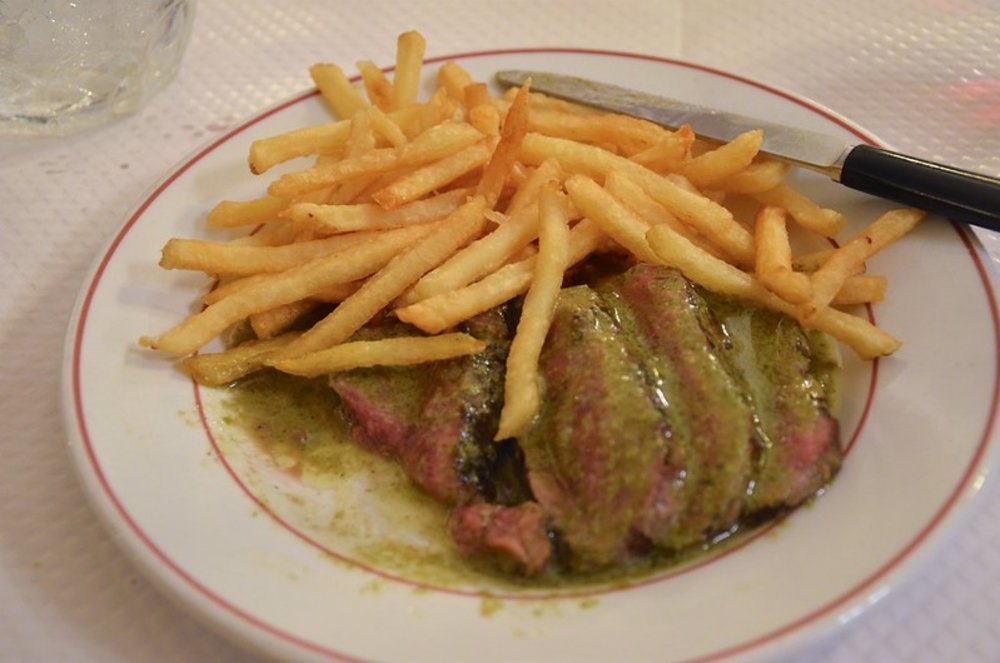
Steak frites at Le Relais de l'Entrecôte | Photo by Joe Shlabotnik on Flickr
Where to go:
- Le Relais de l'Entrecôte (20 Rue Saint-Benoît, 75006 Paris, France)
- Bistrot Paul Bert (18 Rue Paul Bert, 75011 Paris, France)
Steak frites is the bistro dish that every Parisian seems to order at least once a week, and after you've had a proper one, you'll understand why. The steak, usually entrecôte (ribeye) or bavette (flank), is cooked fast over high heat and served pink inside, with crispy, thin-cut fries and a classic sauce like béarnaise or au poivre.
The key with steak frites in Paris is knowing how to order your steak: saignant (rare), à point (medium), or bien cuit (well done, though most bistro chefs will judge you gently for this). Most traditional bistros in Paris will have steak frites on the menu, but the cut and quality of the beef varies.
Klook tip: Take a Latin Quarter gourmet tour in Paris to navigate the neighbourhood's best food spots with a local guide who knows which bistros are actually worth your time.
Escargot
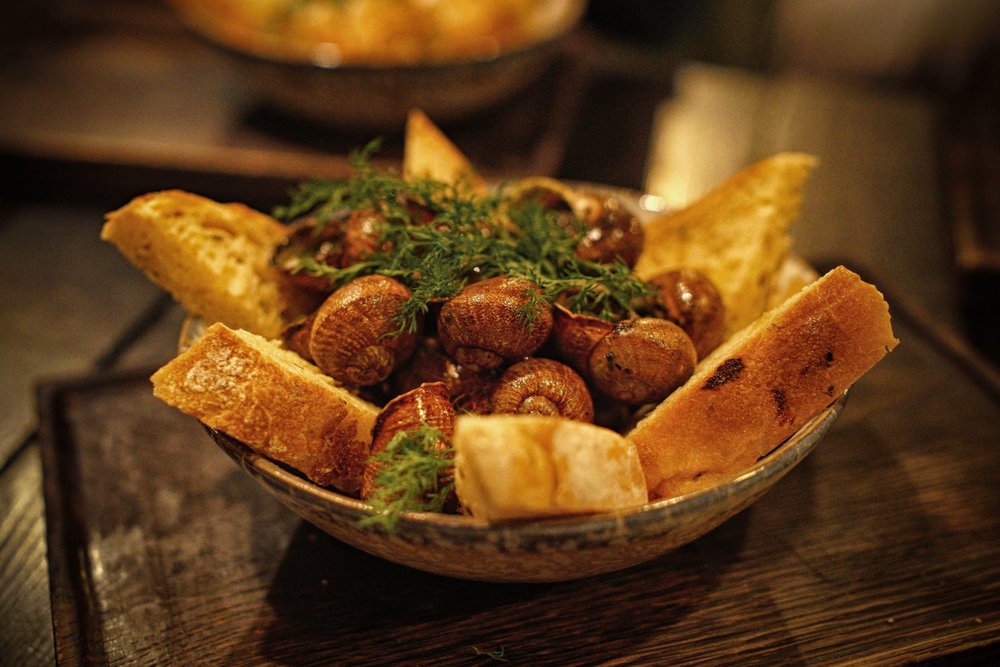
Escargot with bread | Photo by Kostiantyn Klymovets on Pexels
Where to go:
- L'Escargot Montorgueil (38 Rue Montorgueil, 75001 Paris, France)
This is one of those traditional French dishes that visitors often hesitate over and then immediately regret not ordering sooner. Escargots de Bourgogne are snails baked in garlic and parsley butter until the butter is bubbling and fragrant, then served in their shells in a special ceramic dish with small forks for extraction.
For the best escargot in Paris, head to a traditional brasserie or a restaurant with a strong regional French menu. They're usually served as a starter, six or twelve at a time, and they come with bread specifically designed for mopping up the leftover butter, which is the best part.
Street food and market finds
Crêpes
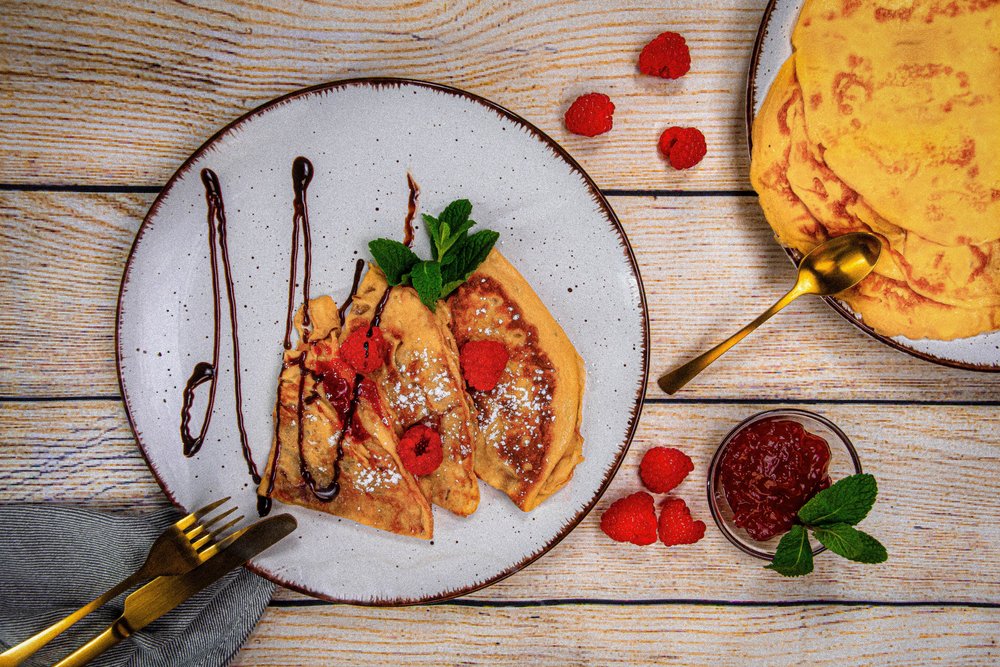
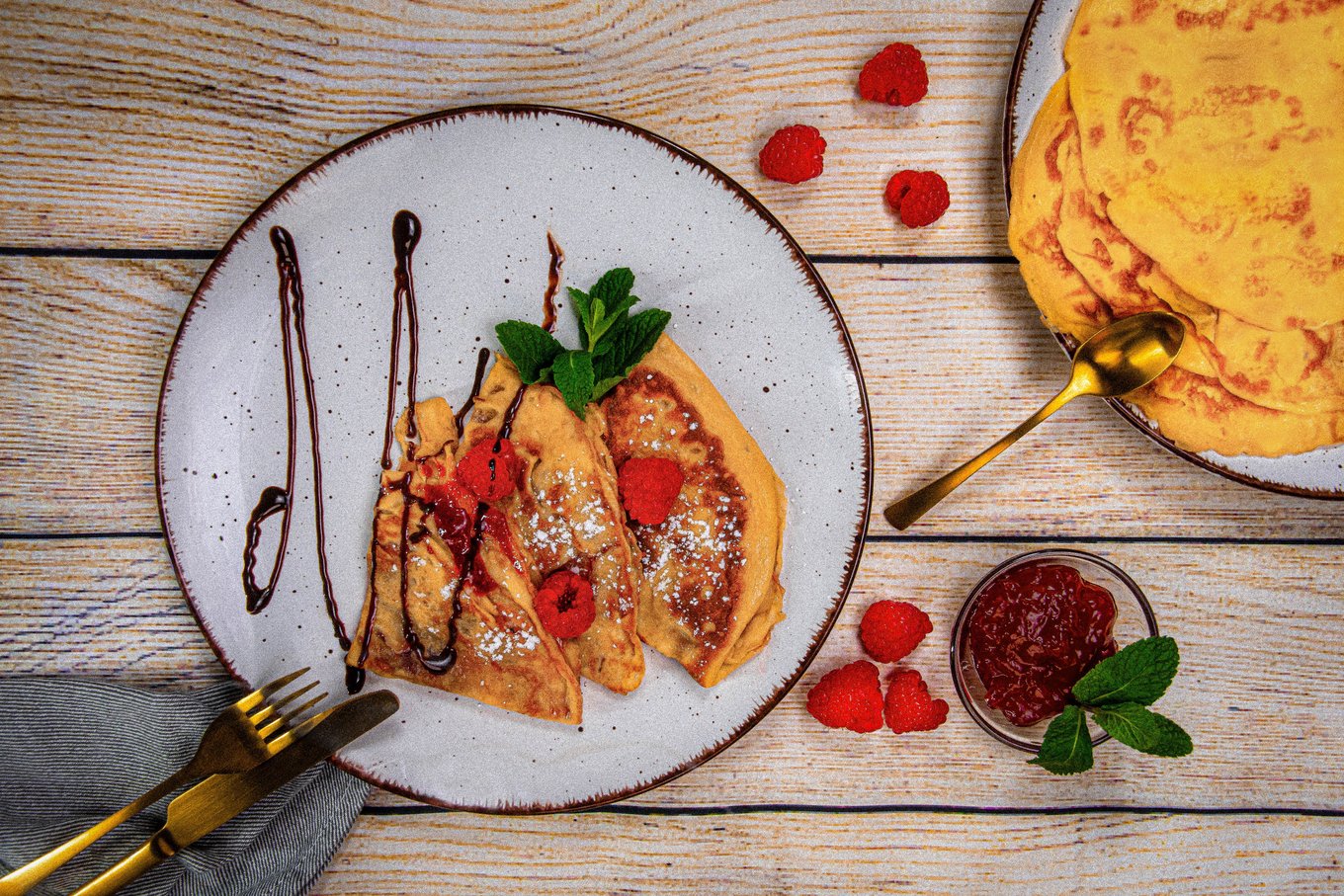
A plate of sweet crêpes | Photo by Karlheinz Strohmaier on Pexels
Where to go:
- Crêperie Josselin (67 Rue du Montparnasse, 75014 Paris, France)
- Breizh Café (109 Rue Vieille du Temple, 75003 Paris, France)
Crêpes from a street cart are one of the great simple pleasures of Paris. The classic combination is butter and sugar (beurre sucré), where the thin, lacy crepe is folded around a smear of salted butter and a shower of white sugar that caramelizes slightly from the heat of the pan.
For the best crêpes in Paris, head to a crêperie or a market stall rather than a tourist kiosk near the Eiffel Tower. Rue Mouffetard has street-food vendors who do tasty versions of this dessert, and Rue Cler, the classically Parisian market street in the 7th arrondissement, is a great spot for a morning crêpe alongside the market stalls.
For savory versions of crêpes, look for galettes, or buckwheat crepes filled with ham, cheese, and egg, which are technically a Breton specialty but widely loved across Paris.
Klook tip: If you’re curious about how the best crêpes in Paris are made, you can join a crêpe & galette workshop in Paris where you’ll learn hands-on how to make both sweet crêpes and savory galettes in one session!
Soupe de poisson
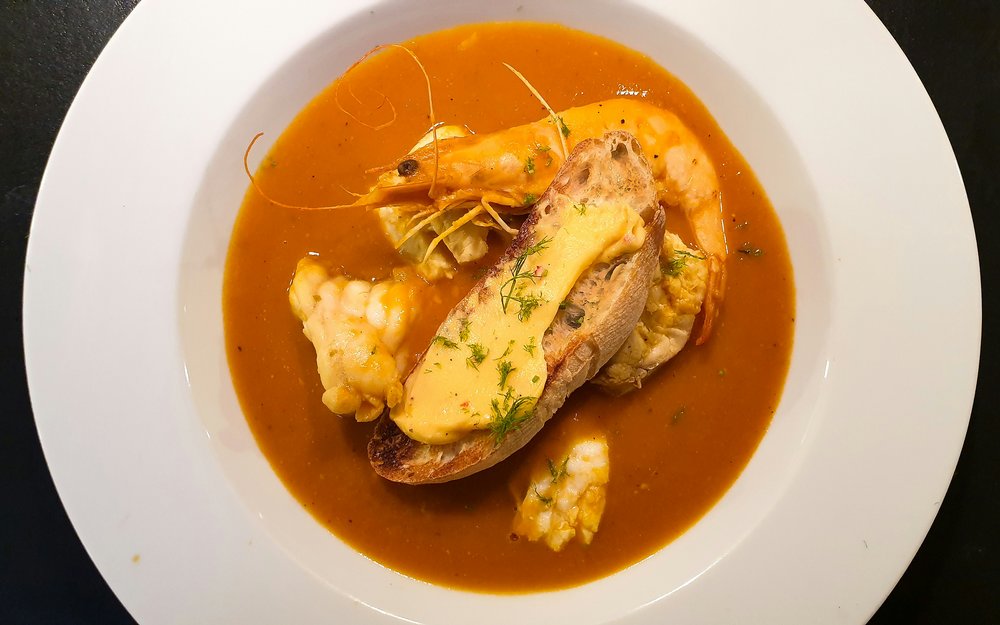
A bowl of Soupe de poisson | Photo by henry perks on Unsplash
Where to go:
- La Coupole (102 Bd du Montparnasse, 75014 Paris, France)
- Brasserie Balzar (49 Rue des Écoles, 75005 Paris, France)
Soupe de poisson is a lesser-known dish that we think deserves far more attention. It's a smooth, intensely flavored fish soup, rich with the essence of rockfish, tomato, and saffron, and served with rouille (a saffron and garlic mayonnaise), croutons, and grated Gruyère to add at the table.
For a Paris food experience that goes beyond the standard tourist checklist, ordering soupe de poisson marks you out as someone who's actually done their homework. Look for it at fish-focused brasseries or restaurants with strong southern French menus, particularly around Les Halles or Montparnasse.
Klook tip: The correct technique is to spread rouille on the crouton, float it on top of the soup, and sprinkle with cheese. Then, let it all dissolve slightly before eating.
Paris dining etiquette
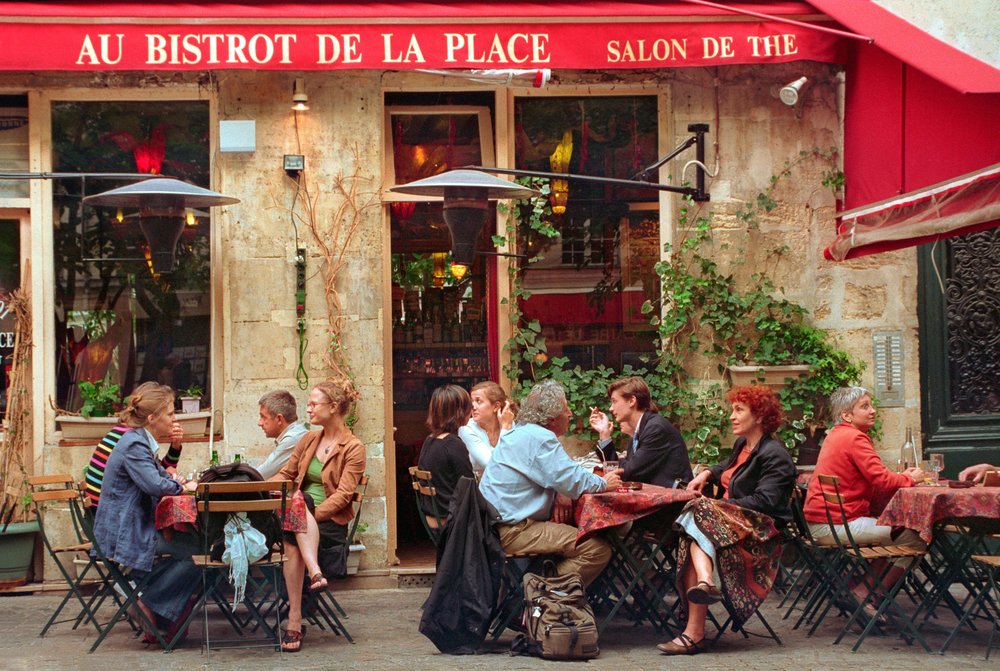
A Parisian bistro | Photo by David Henry on Pexels
Eating in Paris is a pleasure, but it helps to know a few unwritten rules before you sit down.
- Café timing matters. A café (espresso) is ordered at the end of a meal in France, not alongside food the way filter coffee is consumed elsewhere. If you want something to drink with your meal, ask for une carafe d'eau (tap water, always free) or choose from wine, beer, or a kir (white wine with blackcurrant liqueur) as an aperitif.
- How a prix-fixe menu works. Most bistros offer a formule or menu at lunch and dinner, a set price for two or three courses. This is excellent value and the smartest way to eat well at a lower price point. The plat du jour (dish of the day) is usually the freshest and best-value option on the menu.
- Tipping customs. Service is included by law in French restaurant prices (service compris), so tipping is not expected. Leaving a few euros for good service is appreciated but entirely optional.
- Asking for the bill. Servers in Paris won't bring the bill until you ask; lingering over a meal is considered entirely normal and meals are not rushed. When you're ready, catch your server's eye and say l'addition, s'il vous plaît.
- Bread on the table. Bread is almost always brought to the table automatically, usually without charge, and it's completely acceptable to use it to mop up sauces. This is called faire la sauce and is considered good form, not bad manners.
FAQs about authentic French food
What is the most traditional French food to try in Paris?
Coq au vin, steak frites, French onion soup, and escargot are considered the most traditionally Parisian bistro dishes and are served at classic restaurants throughout the city. Beyond the famous dishes, look for daily specials (plat du jour) at neighborhood bistros—this is where you're most likely to find properly executed, seasonal French cooking at a reasonable price.
What food is Paris most famous for?
Paris is most famous for its boulangerie culture, particularly its croissants, baguettes, and pain au chocolat, as well as its bistro classics like steak frites, French onion soup, and coq au vin. The city is also known for its patisseries, its cheese, and its wine culture.
What should I eat for breakfast in Paris?
A classic Parisian breakfast is light: a croissant or pain au chocolat from a boulangerie, sometimes a tartine (a sliced baguette with butter and jam), and a café au lait or espresso. This is typically eaten standing at a boulangerie counter or sitting at a café table, not at a hotel buffet.
Where can I find the best croissants in Paris?
The best croissants in Paris are found at independent artisan boulangeries rather than chains. Rue Montorgueil is one of the city's most famous food streets and has several excellent bakeries known for their viennoiserie. Look for croissants that are visibly golden with clearly laminated layers, and always ask for one au beurre (made with butter).
What are some lesser-known French dishes worth trying in Paris?
Beyond the classics, look out for soupe de poisson (a rich Provençal fish soup served with rouille and croutons), andouillette (a strongly flavored tripe sausage), tarte tatin (an upside-down caramelized apple tart), and kouign-amann (a caramelized Breton pastry).
More Paris foodie guides for you
What is Klook?
Klook is a leading pan-regional experiences platform in Asia Pacific, purpose built to digitalize experiences and make them accessible to every traveler.
Our mission is to build the digital infrastructure for the global experience economy — empowering merchants to share their passions and travelers to discover the heartbeat of each destination. We operate a mobile-first, curated platform featuring diverse experiences across global destinations.