JR All Shikoku Rail Pass




- E-ticket exclusivo Klook: Viaje com seu e-ticket, sem necessidade de passe físico (apenas ticket QR)
- Viagens ilimitadas em Shikoku: Inclui trens, ônibus e balsas
- Data de início flexível: Reserve agora, ative a qualquer momento dentro de 90 dias
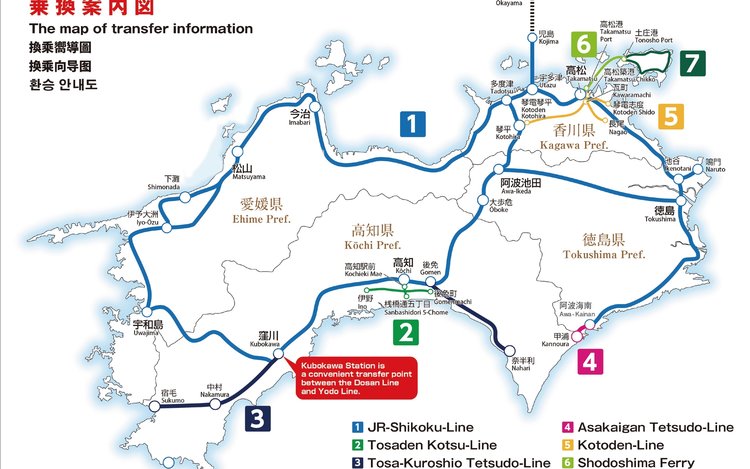
- O ALL SHIKOKU Rail Pass não pode ser usado nas linhas Iyotetsu (Iyo Railway).
Opções de pacote
3 dias · Ingresso físico (necessário resgate)
4 dia(s) · Ingresso físico (é necessário resgate)
5 dia(s) · Ingresso físico (necessário resgate)
7 dias · Ingresso físico (é necessário resgatar)
O que esperar
Explore Shikoku com facilidade usando o JR All Shikoku Rail Pass. Este passe oferece viagens ilimitadas em trens JR, ônibus selecionados e balsas por toda a ilha. Com um e-ticket exclusivo da Klook, não há necessidade de retirar um passe físico - basta ativar e começar. Perfeito para descobrir os principais pontos turísticos como o Jardim Ritsurin, Shodoshima, os redemoinhos de Naruto, o Castelo de Kochi e Dogo Onsen.



Que bom saber
Confirmação
- Você receberá a confirmação em poucos minutos. Caso não a receba, entre em contato com nosso suporte ao cliente.
Elegibilidade de passe
- Grátis para crianças com idade entre 0 e 5
- Válido apenas para portadores de passaportes não japoneses com um selo de visto de "Visitante Temporário" no passaporte. Portadores de passaportes não japoneses com residência permanente no Japão não podem usar este produto
Informações adicionais
- A equipe está disponível para hóspedes que necessitem de assistência devido a alguma deficiência.
Localização
Fale conosco
Avaliações

The physical version needs to be printed out, and the bottom half of the paper will be torn off when redeemed. If you are buying for a friend, the voucher might not have a name printed on it, but don't worry, you can still redeem the JR pass as usual. Please note that JR train services are very infrequent, with trains running approximately once an hour. Although the JR pass allows free travel on limited express/express/rapid trains, it is only for non-reserved seats. It is recommended to arrive at the station early to inquire about train times and non-reserved seat availability. All seats on the JR Anpanman train are reserved seats; using a JR pass requires an additional purchase of a reserved seat ticket. In Takamatsu, it can be used to ride the Kotohira Electric Railway, and you can ride the Pokémon Slowpoke-themed train for free. In Kochi Prefecture, it can also be used to ride the Tosa Electric Railway, with a chance to ride the Anpanman train for free.
Super convenient! Worth buying! This was my first time visiting Shikoku, and I bought a 5-day pass. I traveled from Takamatsu to Matsuyama Dogo Onsen, where I ate Uwajima sea bream rice. In Kochi Hirome Market, I had seared bonito. I saw the Naruto whirlpools in Tokushima, visited Angel Road on Shodoshima, Ritsurin Garden, and Kotohira-gu Shrine (besides JR, you can also take the Kotoden train to Kotohira, which is super convenient and passes by Ritsurin Garden). This pass covered almost all my transportation costs for this trip (except for the bus from Naruto Station to Uzunomichi, which required an extra payment). I could freely use JR local and limited express trains, as well as the Matsuyama-Kochi tram. The 5-day pass covered approximately 31,000 yen worth of travel, so it definitely paid for itself and was a great deal!
JR e-tickets are convenient because you don't need to exchange them for physical tickets. There are many options for the number of days, allowing you to combine them according to your itinerary to create a perfect travel plan. Since the fastest trains in Shikoku are Limited Express, you can bring luggage larger than 20 inches without any additional procedures. Even during peak travel season, I didn't need to book tickets; there was always enough space. The e-ticket also included the Kotoden train and the ferry ticket to Shodoshima, which you should definitely make good use of. I bought a seven-day and a three-day pass, totaling 12 days, which was enough for a rough tour around Shikoku. I went from Takamatsu to Tokushima, Tokushima to Kochi, Kochi to Matsuyama, and from Matsuyama, I also visited Dogo Onsen and Ozu. Then I returned to Takamatsu to visit Naoshima, Shodoshima, and the Kotoden area. I also had to find time to go to Aeon for souvenirs. Aeon was harder to find than Ritsurin Garden, and the tax refund counter closed at 7 PM. Their pace is slow-living, so remember to set aside time for souvenir shopping. Tax refund stores are not common in Shikoku; I didn't encounter any in drugstores. Shops in Takamatsu and Tokushima close a bit early, with many shutting down at 8 PM, except for one or two ramen shops or izakayas. It's worth mentioning that trains in Shikoku feature different cartoon characters; if you encounter them, remember to take photos and compare them, as each has its own unique charm. Overall, 12 days was still too short. I haven't been able to take a boat trip in Naruto to see the whirlpools (which requires a spring tide to be spectacular), and I haven't set foot in Oboke and Koboke. Many outlying islands are yet to be visited, and I couldn't spare time to go to Imabari. Most importantly, the Awa Odori Festival is not to be missed. I will definitely visit Shikoku again; its peaceful, slow-paced lifestyle is very appealing.
It's very convenient to enter and exit stations; you just need to show your proof. This time, I used it for my visits to Dogo Onsen, Kannonji Unpenji Temple, Shodoshima, and Kotohira-gu Shrine. If I go to Shikoku again, it's definitely worth repurchasing~
I used a really good and affordable pass. It was excellent value for money. I'd love to visit Shikoku again in the second half of the year. Although some people might not know, you can use it on all buses except for certain ones, and you can use unreserved seats everywhere except for completely rural areas.
I bought this Shikoku 3-day JR Pass through Klook, and it was truly excellent. Over these three days, I visited attractions such as Kotohira-gu Shrine, Ritsurin Garden, and Shodoshima in Takamatsu, as well as Matsuyama Castle and Dogo Onsen in Matsuyama. The coverage was very extensive. The only minor drawback was that it only reached as far north as Kojima; it would have been perfect if it could have extended to Okayama.
The 7-day pass for all four regions of Shikoku was well worth it, as the transportation costs would have originally exceeded 20,000. Great value!
Anyway, it's convenient to use in Shikoku; scanning the QR code or showing it to the station staff is very quick.
Pass Coverage: In addition to being usable on Shikoku JR railways, it was also used on the Matsuyama tram. To the north, you can cross the Seto Inland Sea Bridge to Kojima, and with an additional section, you can comfortably reach Okayama. Redemption Guide: QR code machines are not widely available; simply show it to the staff manually, and there were no issues. You only need to activate the pass on the day you wish to start using it.
The exchange waiting time is about 15-20 minutes. When exchanging at the green window at 5 PM, there weren't many tourists waiting. The JR staff could communicate in English. You can upgrade to reserved seats for 4 journeys for an additional 1200 JPY per person. It's not recommended to exchange tickets in the morning, as there are many people queuing every morning. The ticket is highly recommended, as it can save a lot on travel expenses.
FAQs
Você também pode gostar de...
Passe Mini Ferroviário e Ferry JR Kagawa
Passeio de um dia com carro alugado em Takamatsu: Santuário Kotohira-gū/Santuário Takaya/Redemoinhos de Naruto/Aquário de Shikoku (combinação livre de itinerários)
Transfer Privado Aeroporto de Takamatsu
Passeio Personalizado Privado em Takamatsu/Kagawa com Guia Local
JR Setouchi Area Pass
[Partida/Chegada em Kagawa/Kotohira] Excursão de meio dia de ônibus pela região secreta de Oboke e pela ponte Kazurabashi
Takamatsu: Exploração do Desfiladeiro Iya, do Desfiladeiro Oboke e dos Redemoinhos de Naruto