
For years, the global travel industry has been looking at overtourism wrong.
The standard response has been to treat it as a demand problem. Too many tourists, too few spaces, and social media accelerating the demand. But that diagnosis misses the point.
Travel demand is resilient, structural, and growing. It cannot simply be turned off, and trying to suppress it is not a practical solution.
A more honest question is: why does demand concentrate in the first place, rather than flowing freely across the destinations that could absorb it?
When demand outpaces a destination's carrying capacity, overtourism happens. But overconcentrated areas don’t manifest overnight.
It’s a clear sign that physical infrastructure and digital booking choices have not kept pace with the scale of modern travel discovery. The supply network needed to spread travel flows evenly has simply not been built.
Social media did not create these structural gaps, it simply brings them into sharp focus. To bridge the gap, we must build a supply layer that makes lesser-known destinations just as accessible and easy to book as the world’s most famous cities.
Why Concentration Happens, And Why Social Isn't the Villain
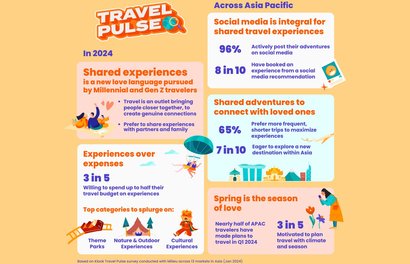
Our annual Klook Travel Pulse 2026 study found that 8 in 10 global travelers find destination inspiration and book experiences directly through social media. This is an incredibly powerful discovery engine, and its mechanics explain where tourism ends up.
Think of the old travel guidebook. Destinations with bigger marketing budgets got bigger features, more editorial space, more reader attention. The result was predictable: more visitors.
Social media runs on the same logic, just faster, and at a scale no guidebook ever reached. Algorithms optimize for virality, and surface what's already popular, funneling high-intent travelers toward the same handful of places, over and over.
The technology does not cause overtourism on purpose; it simply amplifies what already has momentum.
It might seem that too many people are flocking to the same spot, but it's because the infrastructure hasn't caught up with the discovery engine driving them there.
That's what creates the bottleneck.
The Demand Signal Is Already Shifting
Our data shows travelers are already looking for something different.
Klook Travel Pulse 2026 found that two-thirds of global travelers now plan multi-destination trips, a clear shift away from single-stop itineraries. When asked what draws them to lesser-known destinations, the answers were consistent: authentic local experiences (42%), discovering hidden gems (39%), and affordability (37%).
These preferences describe the majority of travelers: people who are ready to explore somewhere less-trodden, if they can find it, book it, and actually get there.
We can look at destinations across three readiness tiers:
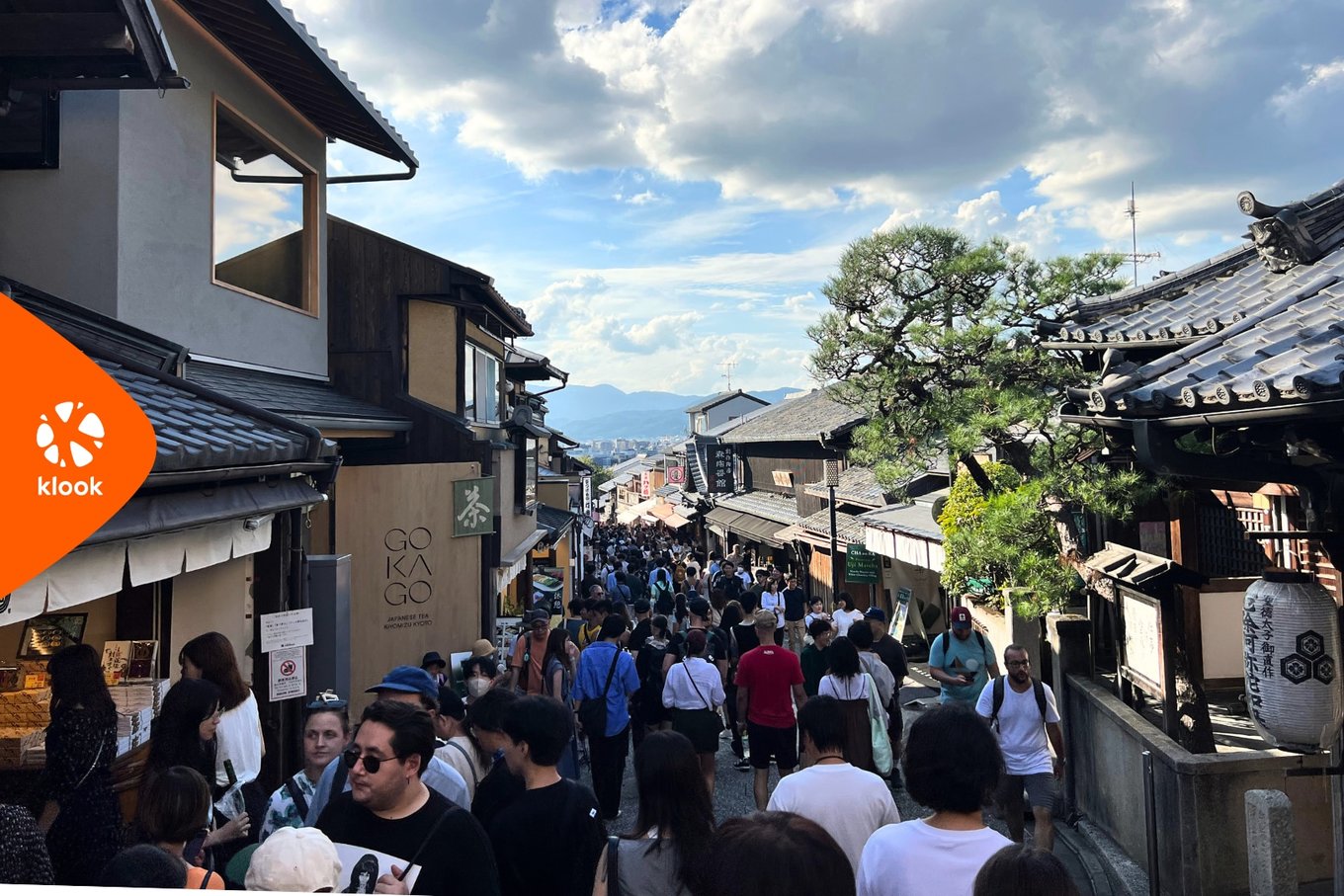
- Tier 1 destinations are globally recognised and high-demand. Tokyo, Kyoto, Osaka, (Japan's Golden Route) consistently goes viral but has excellent infrastructure. Travelers gravitate here because they know what to expect and it’s easily accessible.
- Tier 2 destinations are under-explored but ready. They have local operators, transport connections, attractions, and accommodation, but lack visibility. No one has invested in making them discoverable or bookable at scale. This is where Klook focuses most of its active work.
- Tier 3 destinations are unique but not yet structurally prepared. Going viral prematurely here would be counterproductive. A sudden demand spike before the infrastructure can absorb it risks damaging the destination before it's had any real chance to develop. We work with partners including tourism boards, transport operators, onground merchants on gap analysis at this tier, identifying what needs to be in place before attention is directed there.
The real opportunity in global tourism sits squarely in Tier 2 destinations. These cities are fully capable of absorbing higher visitor volumes, they’re just not as easily found.
Hiroshima: What the Model Looks Like in Practice
Take Hiroshima.
It's a globally recognised city, yet its proximity to Osaka meant it was routinely treated as a half-day detour rather than a destination in its own right. Visitors came to the historical Peace Memorial Park, then got back on the Shinkansen. What the city actually offers —its range of experiences, its neighbouring towns, its cultural depth— rarely entered the conversation.
Our challenge was to change that. And we learned quickly that inspiring people to visit is only half the battle; you also have to make it easy for them to actually experience the destination. One without the other doesn't move the needle.
Building Infrastructure: Making the Visit Work
As part of a long-term partnership with Hiroshima Tourism Association (HIT), we introduced operational changes that mattered on the ground. We digitised timed entry slots for the Peace Memorial Museum, reducing average wait times from 100 minutes to 23 minutes during peak season.
We also launched the Klook Pass Hiroshima, bundling regional transport and local activities into a single package, which drove a 12x increase in regional product growth.
Boosting Discovery: KREATORVERSE Japan 2025
To expand Hiroshima's international presence, we hosted our second global KREATORVERSE summit there in 2025, bringing over 120 content creators around the world to Japan.
Beyond hotspots like Tokyo and Osaka, we guided them to spotlight Hiroshima — the Peace Memorial Museum, Hiroshima Orizuru Tower, and the surrounding region including Miyajima and Fukuyama — to show the city's real depth, resulting in 35 million impressions across social platforms.
As a result, Hiroshima became a more discoverable destination on the map. It grew 30% year-on-year on Klook’s platform in 2026 to date, outpacing Japan's overall growth.
Dispersal, in this framing, goes beyond redistributing crowds. It’s about ensuring long-term sustainable growth, where the spending that follows those crowds stays in the destination and contributes to its economy.
Hiroshima is a playbook for spotlighting lesser-known destinations. The combination of creator-led discovery, operational investment, and transport infrastructure can be replicated.
Now, the question is: which destinations are ready to build that future with us?
The Infrastructure Gap
The Hiroshima case study points to something the industry tends to understate: the destinations people dream of visiting and where they actually go are rarely the same. And the gap between them is almost always infrastructure.
Transport isn't an afterthought to a dispersal strategy, but the foundation. Access determines what's actually possible.
Klook's integrated digital rail layer now covers 99% of stations across Asia Pacific, spanning Japan's Shinkansen, and high-speed rail networks in Taiwan, Hong Kong, Thailand, Vietnam, and Malaysia. The most recent addition is KORAIL in South Korea: a real-time rail booking service for foreign visitors, launched in early 2026 with Korean government support, connecting travelers to regional destinations beyond Seoul. This service complements an intercity bus layer to open up a wider pool of regional destinations in Korea.
In Japan, our Hoshino Resorts partnership works on the same principle at the accommodation level. We bundle transport with ryokan stays in regional locations well outside the major hubs. Combining transport accessibility plus a place to stay is what turns a secondary destination from an aspiration into an actual option for travelers.
Taiwan shows the model in a different context. Our work with Kaohsiung's city government has supported the city's push to become a destination for major events and concerts, contributing to a sustained tourism uplift. We've also extended this by hosting local Kreatorverse events in both Kaohsiung (2025) and Taichung (2026) for Taiwanese content creators, applying the same creator-led discoverability approach outside of Taipei.
It all boils down to this: you can't change where people go without first changing what they can actually reach.
Social, AI, and What Comes Next
How travelers discover destinations is changing faster than most of the industry has prepared for.
While social media remains a powerful source of inspiration, artificial intelligence has quickly become a primary entry point for travel planning. These two tools work together as parts of a connected, mutually reinforcing loop.
AI increasingly consumes social, video, and image content to generate personalized recommendations and itineraries. The broader that content base, the better the output.
This is why the depth of our Kreator network matters as much as its size. We've grown to 30,000 Kreators across 88 global markets, and we're continuing to expand. Because travelers aren't looking for generic travel guides. They're looking for personalized recommendations, real experiences, and individuals whose values match theirs. That specificity is what makes travel discovery feel personal, and drives inspiration to action.
And in this ever-shifting landscape, the OTAs that remain relevant are those that are investing in supply depth, accessibility, to onground service quality.
AI can only suggest what is readily bookable on the market. A shallow catalogue doesn't get recommended. The platforms that built supply infrastructure before the moment arrived will hold the advantage in the next decade of travel discovery.
Building the Supply Chain Before the Crowds Arrive
Overtourism is a complex problem. But it's solvable if the industry addresses the right half of it.
Travelers are already showing a strong interest in exploring new areas. What's consistently missing is the supply chain that makes acting on that appetite easy: the booking infrastructure, transport connections, content that drive inspiration to action, the experiences, and partnerships that reduce friction on arrival.
No single platform can build this alone. It takes tourism boards, partners, transport operators, accommodation providers, and booking platforms working toward the same collective outcome.
The destinations best positioned ten years from now are the ones building that supply chain today, before demand finds them unprepared. What Klook can do, and what Hiroshima shows, is demonstrate that when those pieces come together, the results follow, for the destination and for the travelers who find it.

Wilfred Fan (Chief Commercial Officer, Klook) at Web in Travel Japan 2026 conference in Tokyo on 2 June 2026