


When you think of Paris, the Eiffel Tower, the Mona Lisa, charming cafes, and chic fashion probably come to mind. But just beneath the city’s cobbled streets lies one of the most efficient public transportation systems in the world: the Paris Metro.
Designed like a cobweb with central Paris at its heart, the Metro has an extensive yet surprisingly easy-to-navigate network of lines. It’s the go-to option for both locals and visitors looking to get around the city quickly and affordably. At first, figuring out how to use the Paris Metro might feel a little overwhelming with more than 300 stations covering almost every corner of the city, but once you get the hang of it, you’ll be riding like a local.
To make things easier, consider getting a local eSIM! Having mobile data helps with navigation, and before long, you’ll see why the Metro is an essential part of daily life in Paris and a great way to explore everything the city has to offer!
Navigating the Paris Metro
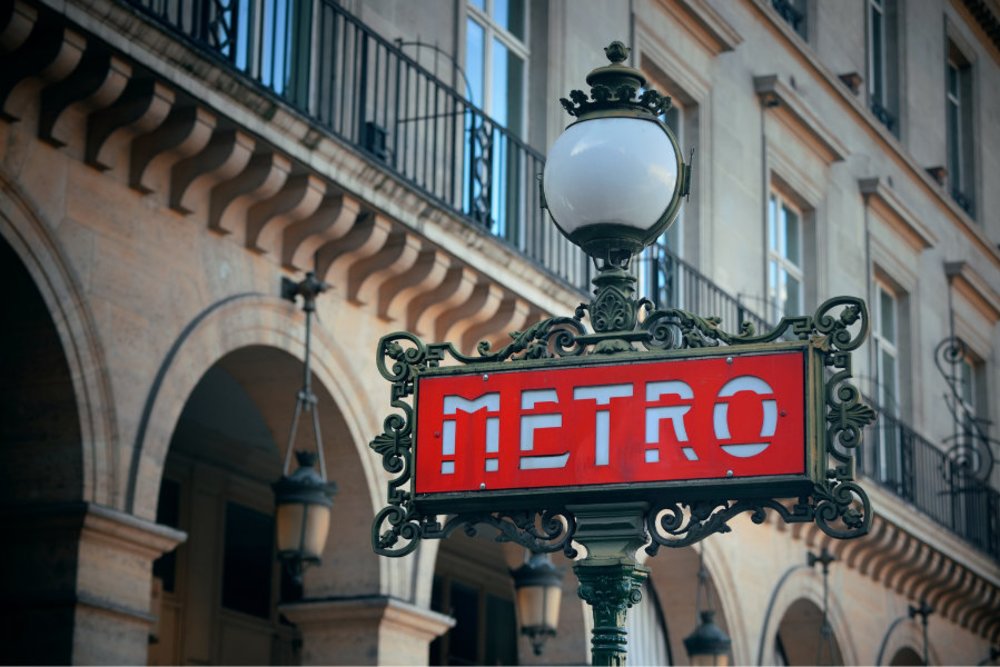
Paris Metro signage outside the station
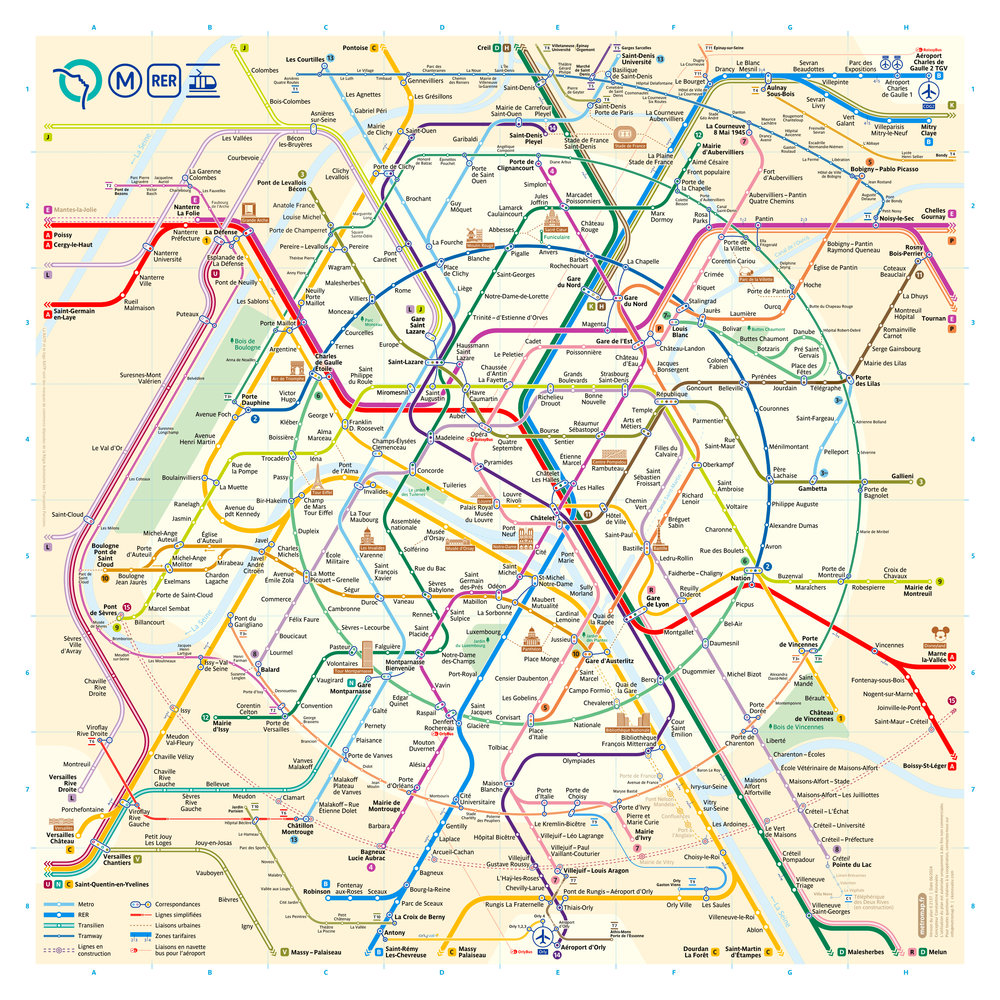
The Metro runs throughout the city and connects nearly every neighbourhood of Paris. If you’re wondering how to use the Paris Metro efficiently, it’s best to familiarize yourself with how the whole system is laid out by checking out the Metro map. You can easily grab one at any of the Metro stations (marked by a big yellow “M” scattered around the city) or tourist information centers in the airport or nearby major landmarks. We have an image of the map here, but you can also download the official app for Paris’s public transportation, the Bonjour RATP app, for a more interactive version.
The New Paris Metro Map
To start off, the Paris Metro has 5 zones: zones 1 to 3 covers most of Central Paris where most of the major attractions are like the Eiffel Tower, Louvre Museum, and Notre-Dame are located while zones 4 and 5 cover other areas a little further away from the center like Versailles, Disneyland Paris, and the airport.

There are 16 lines in total, each assigned a number (Lines 1 to 14, 3bis, and 7bis) and color. Trains move in two directions, and you can tell which way the train is going by looking at the name of the last station on the line. You can also switch lines at certain stations that are marked differently from regular stops: bigger white dots (often seen on intersecting lines) or white marks connecting multiple lines on the map show stations where you can transfer to another line, while the absence of these marks mean it’s a regular stop with no transfers. Once you’ve ridden a couple of times, learning how to use the Paris metro will all start to feel intuitive!
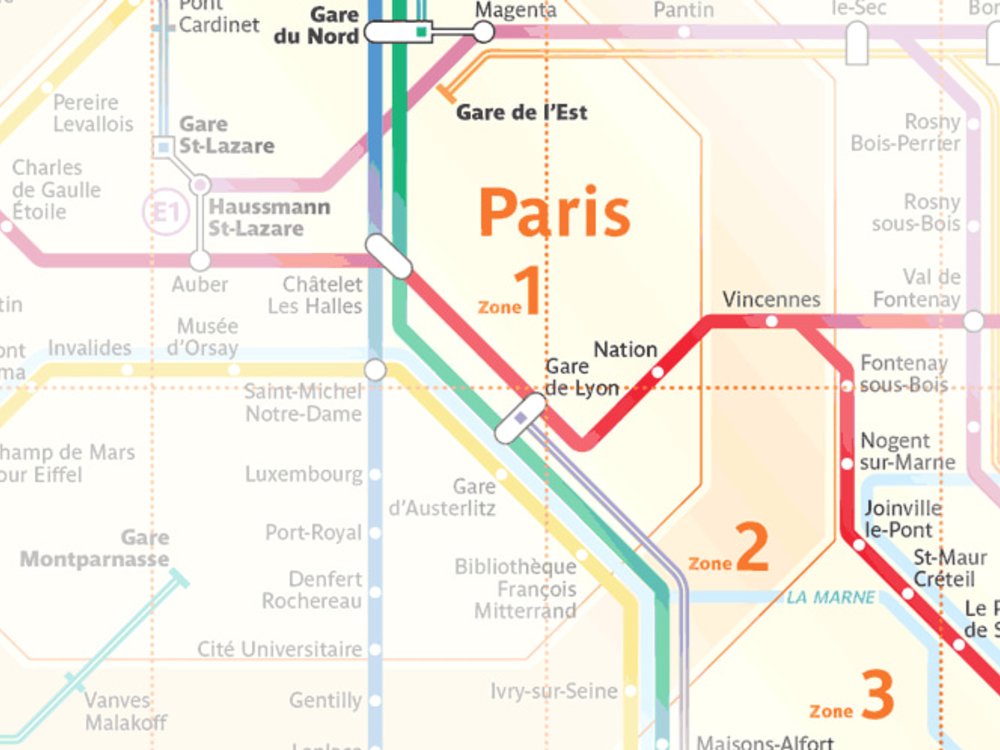
Photo credits: Paris by Train
Types of Tickets
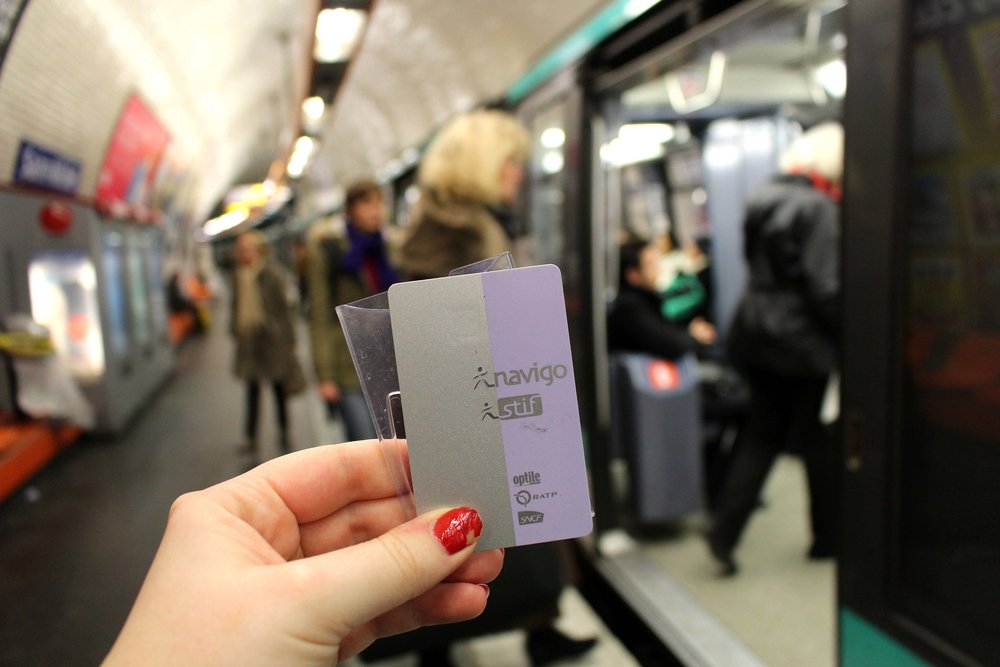
Photo Credits: Emily Jackson on flickr | Holding a Navigo Travel Pass in the Paris Metro
There are a few different ticket options to choose from, depending on how long you’re staying in the city and how often you plan to use Paris’s public transportation while you’re here. Understanding how to use Paris Metro can help you decide which ticket type is best for your travel needs!
Single tickets (t+ tickets)
These basic single-ride tickets, called t+ tickets, are valid for one journey and must be validated before use. The tickets are validated when you insert them into the slot at the turnstile to enter the train platforms. It will get stamped and returned to you as the gate opens. Once validated, your ticket remains active for 90 minutes, allowing transfers between Metro lines as long as you don’t exit and re-enter the system!
Price: 2.50 euros (approx. 2.80 USD)
Navigo Easy Card
If you don’t want to travel around Paris hanging onto single physical tickets, you can get a Navigo Easy Pass, which is a smart reusable card that you can load with t+ tickets. You can top up your card at Metro stations or through the RATP app. It’s a contactless ticket, which means you simply have to tap the card on the reader at the turnstiles and you’re good to go!
Price: 2 euros (approx 2.30 USD) one-time payment for the physical card
Travel Passes
If you’re planning to take the Metro often, it’s worth looking into a travel pass that gives you unlimited rides for a select number of days.
Paris Visite Pass
The Paris Visite Pass is a great option for tourists as it provides unlimited access to public transportation in Paris, including the Metro, buses, trams, regional trains, and even some suburban lines. You can choose a pass that accesses all 5 zones, or if you’re only planning to travel around central Paris, then the pass for Zones 1 to 3 should be enough and at a cheaper cost, too! The pass lasts for 1, 2, 3, or 5 days, and it also comes with a few discounts at select museums and attractions around the city.
Prices:
- 29.90 euros (approx. 34.40 USD) for a 1-day pass
- 44.45 euros (approx. 51.20 USD) for a 2-day pass
- 62.30 euros (approx. 71.75 USD ) for a 3-day pass
- 76.25 euros (approx. 87.80 USD) for a 5-day pass
Klook Tip: Your Paris Visite Pass can be loaded on a Navigo Easy Pass or on your smartphone or watch, for a hassle-free Metro experience!
Navigo Decouverte Pass
If you’re planning to use the Metro or Paris’s public transport for a week or more, then the Navigo Découverte Pass is another great option. While it doesn’t provide discounts to attractions like the Paris Visite Pass, it’s more affordable and great for longer stays in the city. You can also choose a pass depending on which zones you’ll need access to, making this an even cheaper option than the Paris Visite Pass.
Prices:
- 5 euros (approx. 5.75 USD) one-time payment for the physical Navigo Card
- 31.60 euros (approx. 36.40 USD) for access to all Zones 1 to 5
- 29.60 euros (approx. 34 USD) for access to Zones 2 and 3
- 28.60 euros (approx. 33 USD) for access to Zones 3 and 4
- 28.20 euros (approx. 32.50 USD) for access to Zones 4 and 5
Where to Buy Tickets
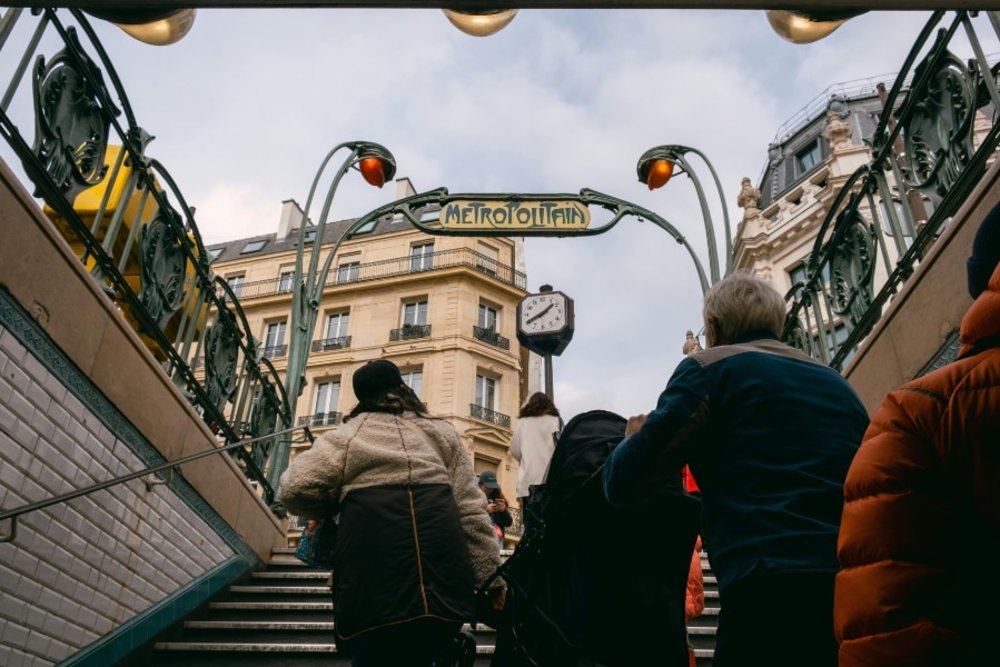
People exiting the Paris Metro
You can easily buy travel passes and tickets at any Metro ticket window, airport station, tourist information center, or at authorized retailers like tobacco shops (known as “Tabacs”). There are also automated vending machines in every Metro station where you can conveniently purchase t+ tickets. For even more flexibility, you can use the Bonjour RATP app to buy tickets online and load them directly onto a Navigo Easy Card.
Key Metro Stations for Tourists
Chatelet (Lines 1, 4, 7, 11, 14)

Notre-Dame Cathedral in Paris at night
Chatelet is one of Paris’s busiest Metro stations, connecting 5 major lines, making it easy for tourists to access major attractions and to transfer across the city. It’s centrally located and just a short walk from iconic landmarks like the Notre-Dame Cathedral.
- Nearby attractions: Notre-Dame Cathedral, Centre Pompidou, Sainte-Chapelle
Louvre - Rivoli (Line 1)

Louvre Museum in Paris
This Metro station is located right next to the Louvre Museum, so if your travel plans include seeing the famous Mona Lisa, then this is a key station you should mark on your map. It’s also perfect for starting your day, not just to visit the Louvre, but also because it’s close to beautiful areas in the city, such as the Tuileries Garden and the Seine River banks.
- Nearby attractions: The Louvre Museum, Tuileries Gardens, Palais Royal
Trocadero (Lines 6, 9)

Eiffel Tower in Paris
If you’re looking for the perfect view of the Eiffel Tower, Trocadero is the Metro station you’ll definitely have to go to. As soon as you step out, you’re greeted by the Trocadero Gardens which provide one of the best vantage points of the tower. It’s especially stunning at sunset or when the tower lights up and sparkles at night.
- Nearby attractions: Eiffel Tower, Trocadero Gardens, Musée de l’Homme
Opera (Lines 3, 7, 8)

Galeries Lafayette in Paris
Located in one of the more elegant parts of Paris, the Opera station gives you access to both culture and shopping. It's home to the Palais Garnier, Paris’s grand opera house, and is surrounded by some of the city’s most iconic department stores like Galeries Lafayette. So if you’ve come to the French capital to do some serious shopping, this station is a must-stop on your itinerary!
- Nearby attractions: Palais Garnier, Galeries Lafayette, Printemps Haussmann
Champs-Elysées - Clemenceau (Lines 1, 13)

Champs-Elysées Avenue with the Arc de Triomphe in Paris at night
The station drops you off at one of the most famous shopping avenues in the world: the Champs-Elysées. If you’re not planning to spend the whole day shopping, you can also enjoy a stroll from the station toward the Arc de Triomphe or visit Paris museums like the Grand Palais.
- Nearby attractions: Champs-Elysées, Arc de Triomphe, Grand Palais, Petit Palais

Operating Hours
Metro schedules are consistent year-round, but it's still best to check prior to your travels to make sure you’re not left without a ride! You can check your Bonjour RATP app for real-time schedule updates, but trains usually start running from 5:30 AM and operate well beyond midnight.
Sundays to Thursdays: 5:30 AM to 1:15 AM
Fridays and Saturdays: 5:30AM to 2:15 AM
Line 14: 5:30AM to 12:30AM from Sundays to Thursdays; 5:30AM to 1:30AM on Fridays and Saturdays
Know the End-of-Line Station Names
The Metro lines are labeled by the name of their final destination and only have two directions. So when figuring out which train to take, look for the last station on the line in the direction you’re heading. For example, if you’re on Line 1 heading to the Louvre from La Defense, the train will be named “Chateau de Vincennes” because that’s the end of the line in that direction.
Try to avoid peak hours
Parisians heavily rely on the Metro to get to and from work, so it can get extremely crowded during peak hours: from 8 AM to 10AM and 5 PM to 7PM. If you can, it’s best to travel just before or after those hours for a more relaxed ride, especially if you’re traveling with small kids or carrying luggage around!
Avoid eating or drinking
While it’s not illegal to eat or drink in the Metro, it’s quite frowned upon and might attract unwanted attention. So keep your snacks tucked away until you’re above ground, and can properly enjoy your food!
Watch out for pickpockets
As with any major tourist destination around the world, it’s best to stay vigilant in crowded places and keep your belongings in a secure bag in front of you. Pickpocketing is unfortunately common in Paris, especially in the Metro at stations like Chatelet or Line 1, which passes major landmarks. So, travel wise!
From Paris, with Love

Place du Tertre and the Sacre-Coeur in Montmartre in Paris
Now that you know how to use Paris Metro, it’s time to take note of the key stations you’ll likely pass through, depending on your itinerary. Still planning your Paris trip? We’ve got you covered with helpful guides to make sure you enjoy the very best of the French capital.



FAQs
How do tourists use the Paris metro?
Tourists use the Paris Metro just as locals do, although tourists can opt for the Paris Visite Pass, which is designed for use more by visitors than locals!
How do I pay for the metro in Paris?
You can buy t+ tickets at Metro stations and major tourist centers as well as travel passes such as the Paris Visite Pass to pay for the Paris Metro.
Can you tap your card on the metro in Paris?
Yes, you can tap your card on the Paris Metro if you prefer to use single-ride tickets only. You just have to be careful and take note of any international fees that your bank might charge after your trip! If you’re planning to get a multi-day pass, it’s more recommended to get a smart reusable card like the Navigo Easy Card.
Can I use Apple Pay on the Paris Metro?
Yes, you can use your Apple Pay directly to tap on the turnstiles to enter the train platform. Similar to when using your card, there may be additional bank charges if you decide to use Apple Pay, so you might want to consider getting a travel pass or card instead.
What is Klook?
Klook is a leading pan-regional experiences platform in Asia Pacific, purpose built to digitalize experiences and make them accessible to every traveler.
Our mission is to build the digital infrastructure for the global experience economy — empowering merchants to share their passions and travelers to discover the heartbeat of each destination. We operate a mobile-first, curated platform featuring diverse experiences across global destinations.
✨ Follow us for more deals and inspiration for your upcoming travels