- The above information is based on local time and is for reference only. Please refer to the official announcement on the day for specific details.
- During holidays, celebrations, and other special dates, the operating arrangements for attractions may differ from regular dates.
1
Archaeological Ruins of Liangzhu City
Save to wishlist

Open today: 09:00-17:00Last entry at 16:00

Suggested duration3-5 hour(s)

瓶窑镇凤都路与104国道辅路交叉口西北200米
Packages
Tomorrow
2 Oct
3 Oct
All
Tickets
1 Liangzhu Ancient City Ruins Park Ticket
 Valid on the selected date
 Conditional cancellation
 24-hour confirmation
 Package details
Retail: CZK 216.45
CZK 205.65
Tickets
Refresh to make things right again

Book now for tomorrow
See less

24-hour confirmation
See less

Valid on the selected date
The voucher is valid only on the specified date (and time if applicable)
See less

Conditional cancellation
If it's more than 24 hours before the play date and the ticket has not been exchanged or used, a full refund can be requested.
If it is within 24 hours of the play date, or if tickets have been exchanged, or if admission has occurred, or if it has expired and not been used, no refunds or rescheduling will be provided.
Force majeure (scenic area closed): Full refunds are available with official proof. Refund review takes 1-3 business days to process.
If any item has been used, partial refunds are not supported.
To reschedule, please apply for a refund and rebook.
See less
About this package
What's included

See less
Not included


See less
Things to note
Eligibility
- Preferential groups need to collect tickets and enter the park after staff verify valid identification documents at the manual ticket counter. The above information is for reference only; please refer to the park's official disclosure for specific details.
Booking limitations
- Recommended booking period: 5-10 days in advance during peak season, 1-3 days in advance during off-peak season.
- Order effective rules: Booking takes effect immediately upon success
How to use
Usage validity
- The voucher is valid only on the specified date (and time if applicable)
How to redeem
- Use "electronic voucher" to pick up tickets
- Admission documents: Original documents used for reservation registration (ID card / passport / Hong Kong, Macao, and Taiwan travel permit)
- Park address: 200 meters northwest of the intersection of Fengdu Road and National Highway 104, Pingyao Town, Yuhang District, Hangzhou City, Zhejiang Province
- Ticket collection time: 09:00–17:00 (Entry stops at 16:00 from 1/1 to 12/31, Monday-Sunday)
Address
- 200 meters northwest of the intersection of Fengdu Road and National Highway 104, Pinyao Town, Yuhang District, Hangzhou City, Zhejiang Province
Reviews
Guide
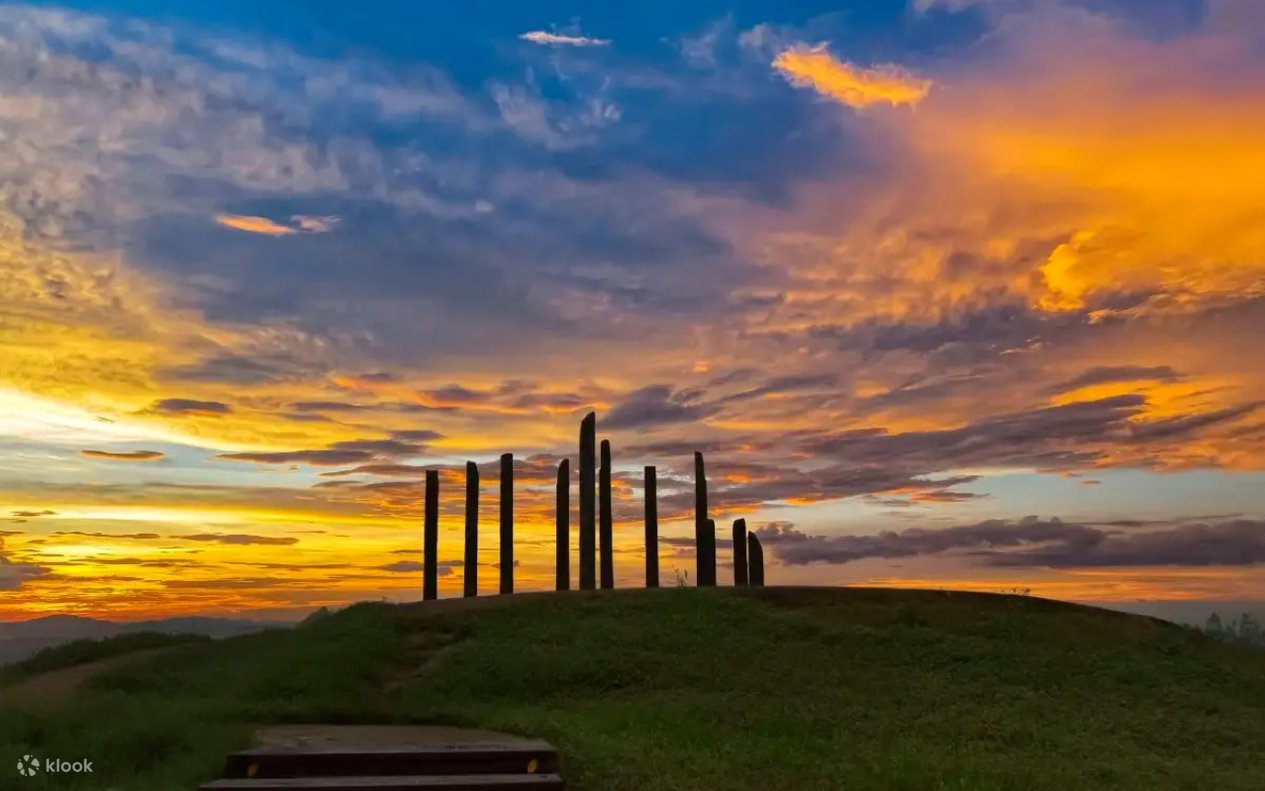
The Liangzhu Ancient City Ruins Park, dating back approximately 5300 to 4300 years ago, is located in Yuhang District, Hangzhou City, Zhejiang Province, China. It is situated in the river network plain at the eastern end of Tianmu Mountain in the lower Yangtze River basin around Lake Taihu, and is an important representative of early regional civilizations in China. As the center of power and belief for the Liangzhu culture, the park reveals the existence of a regional early state in the late Chinese Neolithic period in the lower Yangtze River basin around Lake Taihu. This state was supported by rice cultivation, showed clear social stratification, and had a unified belief system. This is evidenced by a series of related ruins, including a large-scale city site built between approximately 3300-2300 BC, a complex peripheral water conservancy system, and stratified cemeteries (including altars), as well as unearthed artifacts primarily consisting of jade objects with symbolic religious and institutional significance. Its early date, high achievements, and rich content demonstrate the outstanding contribution of the Yangtze River basin to the “diverse yet integrated” characteristic of the origin stage of Chinese civilization. It fills a gap in the “World Heritage List” for Neolithic urban archaeological sites in East Asia, providing unique testimony to China’s 5000 years of civilization, and is thus hailed as “the sacred place that proves China’s 5000 years of civilization.” On July 6, 2019, it was officially designated a “World Cultural Heritage Site.” The scenic area is located in Pingyao Town, Yuhang District, Hangzhou, covering an area of approximately 14.33 square kilometers. It includes the city site area, Yaoshan site, and peripheral water conservancy system ruins within the World Cultural Heritage Liangzhu Ancient City Ruins. The city site area is the core part of the park, composed of a palace area, inner city, and outer city, forming a concentric triple layout structure, with ancient rivers running through it. The total area of the city site is 631 hectares, with a total earthwork volume of approximately 7.17 million cubic meters. The palace area is located in the center of the city site, with a relatively high terrain, covering an area of approximately 39 hectares, and was the main living and activity area for the highest rulers during the Liangzhu period. The inner city is enclosed by walls, with a slightly rounded rectangular plan, approximately 1910 meters long from north to south and 1770 meters wide from east to west, covering an area of 280 hectares (including the palace area). Centered on the palace area, the inner city contains ruins such as cemeteries, residential areas (including handicraft workshops), platforms, and ancient rivers. The outer city is located outside the inner city, consisting of 17 intermittently distributed platforms forming a semi-closed outer wall outline, including residential workshops and burial remains, covering an area of approximately 351 hectares. The outer city platforms and the river network running through them form a waterside landscape where people lived by the water. The Yaoshan site is located on a hilltop approximately 5 kilometers northeast of the city site. It is a complex site of an altar and high-grade tombs, belonging to the early Liangzhu culture. The tombs in the Yaoshan cemetery are all vertical pit tombs, buried in two rows, south and north. A total of 754 pieces (sets) of burial objects were unearthed, including 678 pieces (sets) of jade. The peripheral water conservancy system was an urban water resource management project uniformly planned at the beginning of the construction of Liangzhu Ancient City. It consists of 11 artificial dams, natural mountains, and spillways, including valley high dams, plain low dams, and mountain front long dikes, with a total earthwork volume of 2.88 million cubic meters. It is one of the earliest large-scale water conservancy project sites discovered in China to date, and also one of the earliest low-dam systems discovered in the world.
You might also like...
Explore more on Klook
Everything you need for your Hangzhou visit
Retail: CZK 216.45
CZK 205.65
All you need to know
Attraction info

Opening hours
See more
All year
Mon ~ Sun
09:00 - 17:00Last entry at 16:00

Location
Liangzhu Ancient City Ruins Park

Guidebook
The Liangzhu Ancient City Ruins Park, dating back approximately 5300 to 4300 years ago, is located in Yuhang District, Hangzhou City, Zhejiang Province, China. It is situated in the river network plain at the eastern end of Tianmu Mountain in the lower Yangtze River basin around Lake Taihu, and is an important representative of early regional civilizations in China. As the center of power and belief for the Liangzhu culture, the park reveals the existence of a regional early state in the late Chinese Neolithic period in the lower Yangtze River basin around Lake Taihu. This state was supported by rice cultivation, showed clear social stratification, and had a unified belief system. This is evidenced by a series of related ruins, including a large-scale city site built between approximately 3300-2300 BC, a complex peripheral water conservancy system, and stratified cemeteries (including altars), as well as unearthed artifacts primarily consisting of jade objects with symbolic religious and institutional significance. Its early date, high achievements, and rich content demonstrate the outstanding contribution of the Yangtze River basin to the “diverse yet integrated” characteristic of the origin stage of Chinese civilization. It fills a gap in the “World Heritage List” for Neolithic urban archaeological sites in East Asia, providing unique testimony to China’s 5000 years of civilization, and is thus hailed as “the sacred place that proves China’s 5000 years of civilization.” On July 6, 2019, it was officially designated a “World Cultural Heritage Site.” The scenic area is located in Pingyao Town, Yuhang District, Hangzhou, covering an area of approximately 14.33 square kilometers. It includes the city site area, Yaoshan site, and peripheral water conservancy system ruins within the World Cultural Heritage Liangzhu Ancient City Ruins. The city site area is the core part of the park, composed of a palace area, inner city, and outer city, forming a concentric triple layout structure, with ancient rivers running through it. The total area of the city site is 631 hectares, with a total earthwork volume of approximately 7.17 million cubic meters. The palace area is located in the center of the city site, with a relatively high terrain, covering an area of approximately 39 hectares, and was the main living and activity area for the highest rulers during the Liangzhu period. The inner city is enclosed by walls, with a slightly rounded rectangular plan, approximately 1910 meters long from north to south and 1770 meters wide from east to west, covering an area of 280 hectares (including the palace area). Centered on the palace area, the inner city contains ruins such as cemeteries, residential areas (including handicraft workshops), platforms, and ancient rivers. The outer city is located outside the inner city, consisting of 17 intermittently distributed platforms forming a semi-closed outer wall outline, including residential workshops and burial remains, covering an area of approximately 351 hectares. The outer city platforms and the river network running through them form a waterside landscape where people lived by the water. The Yaoshan site is located on a hilltop approximately 5 kilometers northeast of the city site. It is a complex site of an altar and high-grade tombs, belonging to the early Liangzhu culture. The tombs in the Yaoshan cemetery are all vertical pit tombs, buried in two rows, south and north. A total of 754 pieces (sets) of burial objects were unearthed, including 678 pieces (sets) of jade. The peripheral water conservancy system was an urban water resource management project uniformly planned at the beginning of the construction of Liangzhu Ancient City. It consists of 11 artificial dams, natural mountains, and spillways, including valley high dams, plain low dams, and mountain front long dikes, with a total earthwork volume of 2.88 million cubic meters. It is one of the earliest large-scale water conservancy project sites discovered in China to date, and also one of the earliest low-dam systems discovered in the world.