11 results found
Sort by
Recommended
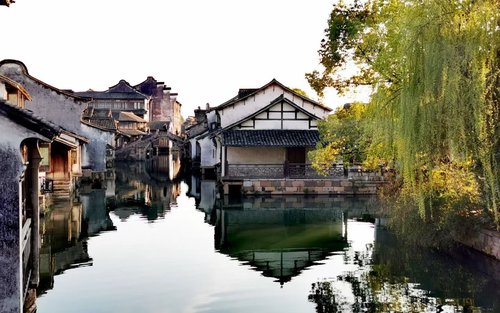
A Cultural Heritage Trip to the East and West Gate Scenic Areas of Wuzhen
Book now for tomorrow
Free cancellation
Instant confirmation
US$ 18.39
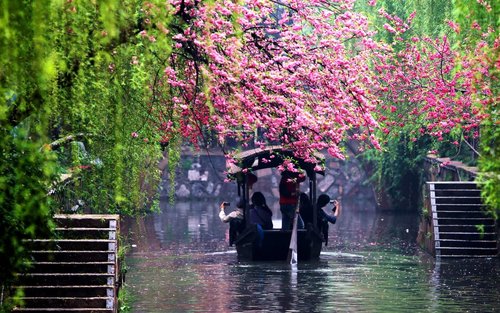
Jiaxing Wuzhen Water Town Ancient Town + Xitang/Nanxun 1-Day Tour
Book now for tomorrow
English guided
Free cancellation
From
US$ 29.99
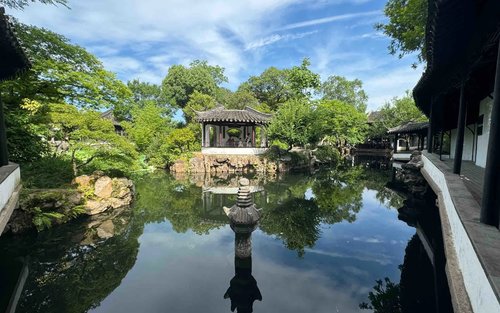
5-Day 4-Night Group Tour of Shanghai, Hangzhou, Suzhou, and Wuzhen
Book now for tomorrow
Free cancellation
From
US$ 206.20

3-day 2-night tour in and out of Hangzhou (Hangzhou + Wuzhen + Xitang)
Book now for tomorrow
Afternoon departure
Free cancellation
US$ 142.15

Multi-day tour of 4 Watertown ancient towns in Hangzhou
Book now for tomorrow
Afternoon departure
Free cancellation
US$ 190.75
Multi-day Shanghai City God Temple and Bund Tour
Free cancellation
US$ 243.00
Nanjing, Suzhou & Shanghai Multi-Day China Tour
Book now for tomorrow
US$ 206.30
Round Trip from Hangzhou to Moganshan: Sword Pond + Mao Zedong's Residence + Chiang Kai-shek's Official Residence + Luhua Dang Park One-Day Tour
Free cancellation
Instant confirmation
From
US$ 130.19
Hangzhou + Wuzhen + Xitang 3-Day 2-Night Group Tour
Afternoon departure
Free cancellation
From
US$ 126.70
Reviews of Huzhou activities
HUANG ********
2025-11-29 22:21:05
This day trip to Wuzhen, although short, allowed me to experience the unique atmosphere of Jiangnan's water towns from morning till night as I walked through Dongzha and Xizha. During the day, it's a misty, rainy town, and at night, it's a world of lights. The same river and the same rooftops present completely different scenery at different times.
I started with Dongzha in the morning. Dongzha retains a more original sense of life. In the old streets and narrow alleys, you'll find residents' homes with clothes drying and couplets hanging. Underneath your feet are stone slabs polished by time. Strolling along the river, you see houses with white walls and dark tiles on one side, and the slowly flowing river on the other. Lanterns occasionally hanging under the eaves bring the scene to life like old photos. Entering various small museums, such as the Blue Calico Fabric Museum and the Distillery Workshop, you can see the tools and processes of traditional handicrafts, and you can better understand that "ancient towns" are not just backdrops for taking pictures, but a way of life that actually existed.
In the afternoon, I moved on to Xizha, where the atmosphere was noticeably different. The streets of Xizha are wider, and the planning is more complete. B&Bs, coffee shops, and cultural and creative shops line the streets one after another. Compared to the sense of life in Dongzha, Xizha has more of a resort town feel. I took a special trip on a gondola, slowly moving towards the end of Xizha along the waterway. Sitting on the boat and looking at both sides, you can see the riverside inns, wooden windows, and stone bridges slowly passing by, as if you have become part of this ink painting. Compared to walking, taking a boat allows you to truly feel the meaning of the words "water town." On the way back along the water, you can see many riverside inns with wooden windows that open to river views.
I made a special effort to wait in line to buy the locally famous shredded radish cake. A long queue formed in front of the small shop, and the aroma of fried dough and radish filled the air. When it was my turn, I took the freshly baked radish cake, still warm to the touch, and took a bite. The outer skin was crispy, and the inside was savory, fragrant, and juicy. Standing on the stone slab road of the ancient town, enjoying the evening breeze while eating the hot snack, that moment was more satisfying than any formal meal, and it became one of my most "human" memories of Wuzhen.
After dusk, the night view of Xizha was the highlight of the trip. The sky slowly darkened, and the lanterns by the river and the outline lights of the buildings lit up one by one, reflecting on the water and illuminating the entire river. There were more tourists, but in some of the quieter corners, you could still find an alley with only yourself and the sound of water.
This day trip to Dongzha and Xizha, although the itinerary was a bit tight and I could only get a superficial view of many places, was still rewarding. Dongzha allowed me to see more "authentic" traces of life, allowing me to imagine the daily life of residents washing, drying, and chatting here in the past. Xizha, on the other hand, is like a stage prepared for modern travelers, making the ancient town more comfortable, more photogenic, and more suitable for a slow stay. The combination of the two styles gave me a more three-dimensional impression of "ancient water towns."
On the way back, as I recalled the stone slab road during the day and the lights reflected on the river at night, I felt that the value of travel may not lie in "how many attractions you visited," but in whether you really slowed down for a moment and focused on looking at the scenery around you. Wuzhen gave me such an opportunity to temporarily pause the fast-forward button of life.
Soumyadeep ************
2025-10-15 11:42:21
It was a wonderful bus tour and our guide was very accommodating, even though I don't speak Chinese she was paying attention to me so that I don't get lost in the crowd as it was national day holiday. I had good experience with the guide and group. The itinerary was perfect covering all the mentioned places. Definitely recommended!
Klook User
2026-01-03 12:46:19
Tour is mainly by bus with a pack and tight itinerary and expecting plenty of walk to cover the venue. Chinese Speaking guide is good and very accommodating. Kudos to the guide 忆芬芳. Each venue will have different people joining so expect varied tour group.
YuJin ***
2025-10-01 03:07:39
Min was a great guide. She is patient and provided us with so much info. Our family had so fun under her care.
HO *******
2026-01-28 05:43:19
Delicious food, fun activities, Director Huang's enthusiastic service and attentive care. Every scenic spot is worth experiencing in detail. "A river of misty water reflects the clear sky; houses on both banks are connected by painted eaves." Love Jiangnan to death! The hotel rooms are comfortable and clean, the breakfast is rich and varied in taste, the scenic spots are lively and interesting, and there is an in-depth cultural experience of Jiangnan's celebrity anecdotes. I would definitely recommend friends to participate in this travel agency's itinerary.