Cu Chi Tunnel Reviews
Popular places near Cu Chi Tunnel
FAQs about Cu Chi Tunnel
What happened in the Cu Chi Tunnels?
What happened in the Cu Chi Tunnels?
Are Cu Chi tunnels worth visiting?
Are Cu Chi tunnels worth visiting?
How much does it cost to visit Cu Chi Tunnels?
How much does it cost to visit Cu Chi Tunnels?
When is the best time to visit the Cu Chi Tunnels in Ho Chi Minh City?
When is the best time to visit the Cu Chi Tunnels in Ho Chi Minh City?
How can I get to the Cu Chi Tunnels from Ho Chi Minh City?
How can I get to the Cu Chi Tunnels from Ho Chi Minh City?
Is it necessary to have a tour guide?
Is it necessary to have a tour guide?
Should I choose a private tour or a group tour of the tunnels?
Should I choose a private tour or a group tour of the tunnels?
Can I visit the tunnels on a half day tour?
Can I visit the tunnels on a half day tour?
What to know about Cu Chi Tunnel
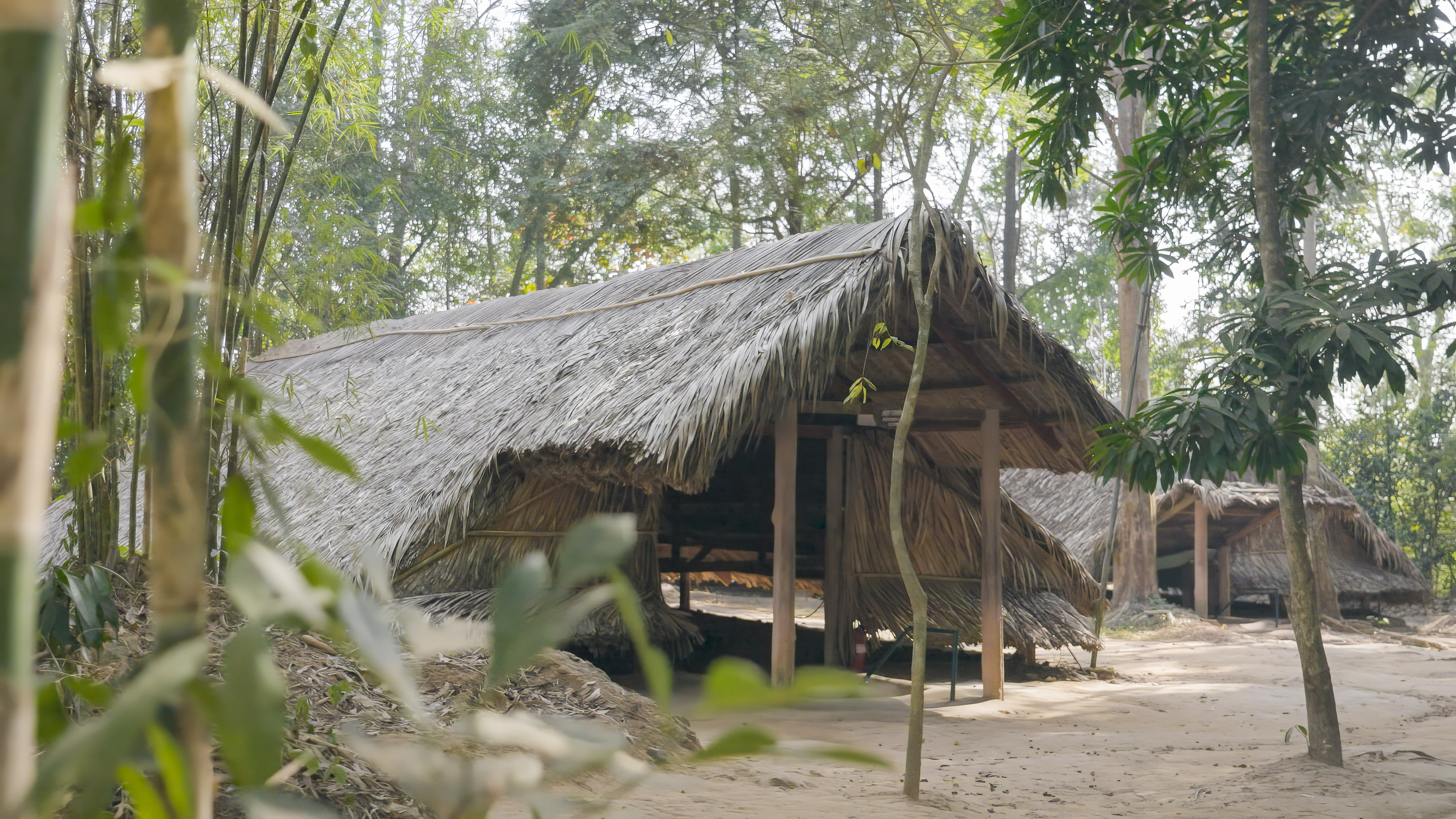
What Are the Củ Chi Tunnels?
Located about a 1.5-hour drive from Ho Chi Minh City, the Củ Chi Tunnels are a vast and complex network of underground tunnels that were used by Việt Cộng soldiers as a base of operations. This subterranean world served as a hiding spot, communication and supply route, and living quarters, complete with kitchens, hospitals, and weapon factories. A visit here is not just a tour; it's an immersive history lesson.
History of the Cu Chi Tunnels
The Cu Chi Tunnels, located about 60 kilometers northwest of Ho Chi Minh City, are one of Vietnam's most remarkable historical landmarks. This vast underground network, stretching over 250 kilometers, was originally constructed in the late 1940s during the First Indochina War against the French colonial forces. At that time, the tunnels served as simple hiding spots and supply routes for local guerrillas resisting French control.
During the Vietnam War (1955-1975), the tunnel system was greatly expanded and became a crucial stronghold for the Viet Cong. The tunnels served multiple purposes: they were living quarters, supply depots, field hospitals, kitchens, and command centers. Soldiers could move undetected, launch surprise attacks, and then vanish underground, making it nearly impossible for opposing forces to gain an advantage. Some tunnels were only 80-100 cm wide, forcing movement on hands and knees, while deeper layers included trapdoors, secret chambers, and even air filtration systems to withstand bombings and chemical warfare.
The Cu Chi area became one of the most heavily bombed regions in Vietnam as American and South Vietnamese forces attempted to destroy the tunnels. Despite relentless efforts—including the use of napalm, defoliants, and specialized "tunnel rat" units---the network proved almost indestructible. The resilience of the tunnels symbolized the determination and resourcefulness of the Vietnamese fighters.
After the war ended in 1975, the Cu Chi Tunnels were preserved as a war memorial and tourist attraction, offering visitors a chance to understand the harsh conditions of underground life. Today, parts of the tunnels have been widened for visitors to crawl through, while exhibits showcase booby traps, weapons, and daily life underground. They stand as a living testament to Vietnam's history of resistance, sacrifice, and survival.
Ben Dinh vs. Ben Duoc - What's the Difference?
The Cu Chi Tunnels are open to visitors at two main sites, each offering a distinct experience. Which one you choose depends on your travel style!
Ben Dinh Tunnels: Convenient and comprehensive, Ben Dinh is the most popular site because it's closer to Ho Chi Minh City. Parts of the tunnels have been widened, making it easier and safer for tourists to crawl through and get a feel of underground life. It's the perfect option for those with limited time who still want to see all the main highlights in one visit.
Ben Duoc Tunnels: Authentic and challenging, Ben Duoc is located farther out but provides a more raw and realistic experience. This was the main base during the war, and the tunnel network here is larger and mostly preserved in its original narrow and dark condition. It's best suited for history enthusiasts and adventurous travelers who want a deeper, more immersive encounter.
Klook's Tip: For first-time visitors, Ben Dinh is the recommended choice as it offers a fun, complete experience within a convenient timeframe.
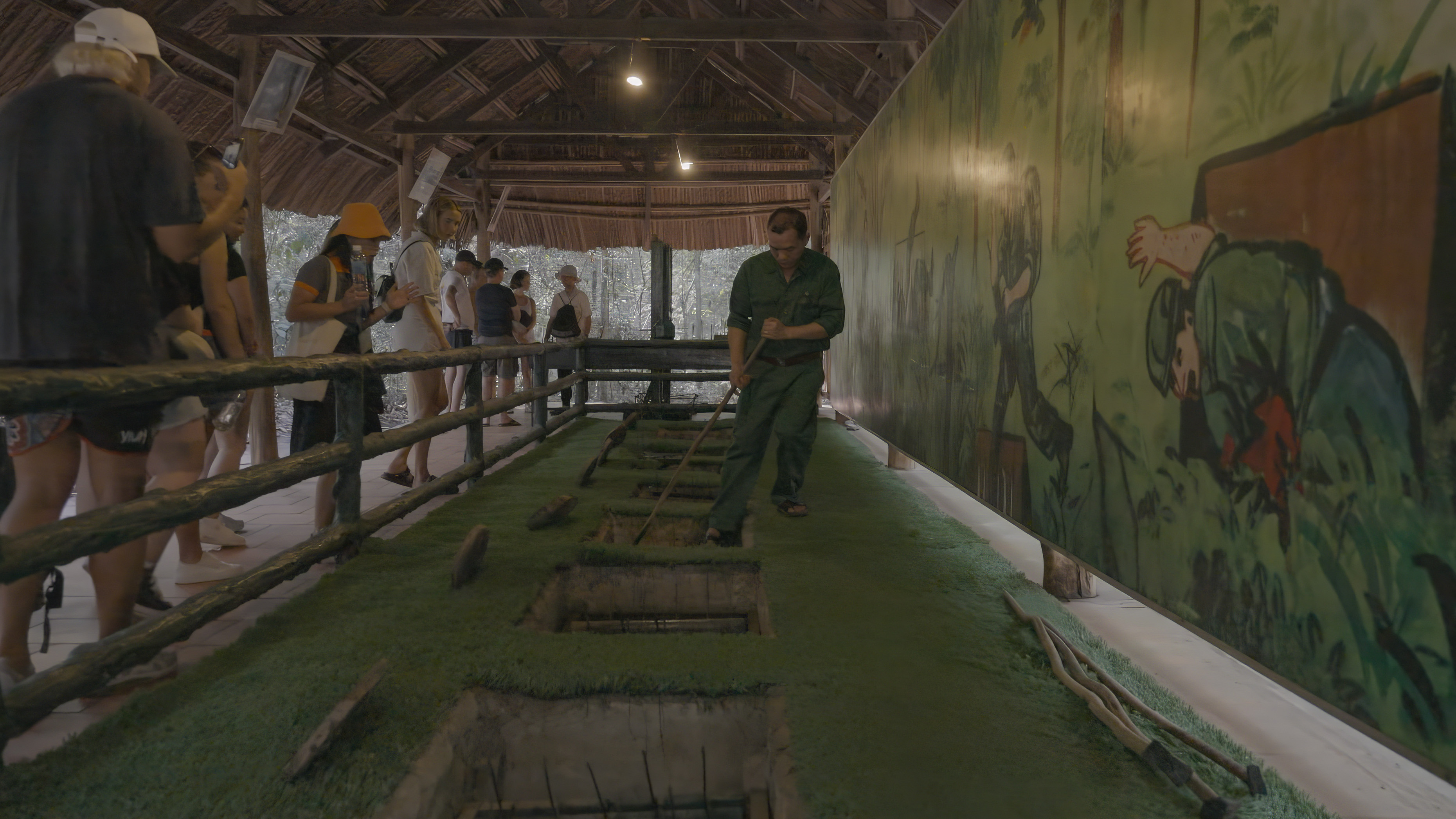
Top Highlights To Discover At Cu Chi Tunnel
The Cu Chi Tunnels in Cu Chi District offer a glimpse into Vietnam's wartime history. There are maps of the Cu Chi Tunnels available to help guide you through the complex maze. You will discover entire underground villages that housed not only soldiers but also families who lived and worked underground to evade detection by American soldiers.
You can participate in the Tunnel Crawl Experience, where you navigate through sections of the tunnels to understand the cramped conditions that soldiers faced during the war. The tunnels are preserved as a war memorial park, featuring two display sites: Ben Dinh and Ben Duoc. Here, you can explore underground conference rooms, learn about the various types of booby traps employed during the conflict, and appreciate the resilience and tactics of the Viet Cong.
Hidden Tunnel Entrances and Booby Traps
The Cu Chi Tunnels include cleverly disguised tunnel entrances that allowed Viet Cong soldiers to move discreetly and evade American soldiers.
As you go deeper into the tunnels, you'll see demonstrations of various booby traps set by the Viet Cong to protect their territory. You will also find "breathing mounds", which were small mounds of dirt that allowed air circulation while keeping the tunnel entrances concealed.
Documentary Display Rooms
If you want to delve deeper into the history of Cu Chi Tunnels, visit the documentary rooms located on site. These documentaries highlight the historical significance of the Cu Chi Tunnels, give insights into the daily lives of the Viet Cong soldiers and the strategies employed in the Iron Triangle, a vital area encompassing the tunnel system.
The documentary presentations also feature stories from tunnel rats, the soldiers tasked with navigating the tunnel system to gather intelligence and eliminate threats.
Live Firing Range
Cu Chi Tunnels offers a live firing range where you can try your hand at shooting authentic weapons used during the Vietnam War. As you fire rounds from firearms, you will be reminded of the intensity and chaos faced by Vietnamese soldiers and American troops on the battlefield.
150-meter dash through the tunnels
At Cu Chi Tunnels, you will have the chance to participate in a 150-meter dash through the tunnels. This interactive experience allows you to crawl through a section of the tunnel system, providing a firsthand understanding of the cramped and dark conditions that Viet Cong soldiers endured.
B-52 Bomb Craters
The B-52 bomb craters near the Cu Chi Tunnels serve as a stark reminder of the intense bombing campaigns that targeted this region during the Vietnam War. These massive craters were created by American bombers and illustrate the devastation wrought upon the landscape and its people.
Ben Duoc Memorial Temple
The Ben Duoc Memorial Temple honors the bravery of the Viet Cong soldiers who fought during the Vietnam War. This temple serves as a place of remembrance and reflection, allowing visitors to pay their respects to those who sacrificed their lives for their country.
There are beautiful gardens and memorials surrounding the temple that are dedicated to various units and individuals who played crucial roles in the struggle for independence. The architecture and design of the temple reflect traditional Vietnamese styles, creating a serene atmosphere.
Handicapped Handicrafts
Visit the Handicapped Handicrafts workshop nearby that supports war victims, many of whom are affected by the lingering effects of Agent Orange (a chemical herbicide used by US military in the Vietnam war). The workshop provides employment opportunities for individuals with disabilities, allowing them to create beautiful traditional Vietnamese lacquerware and handicrafts.
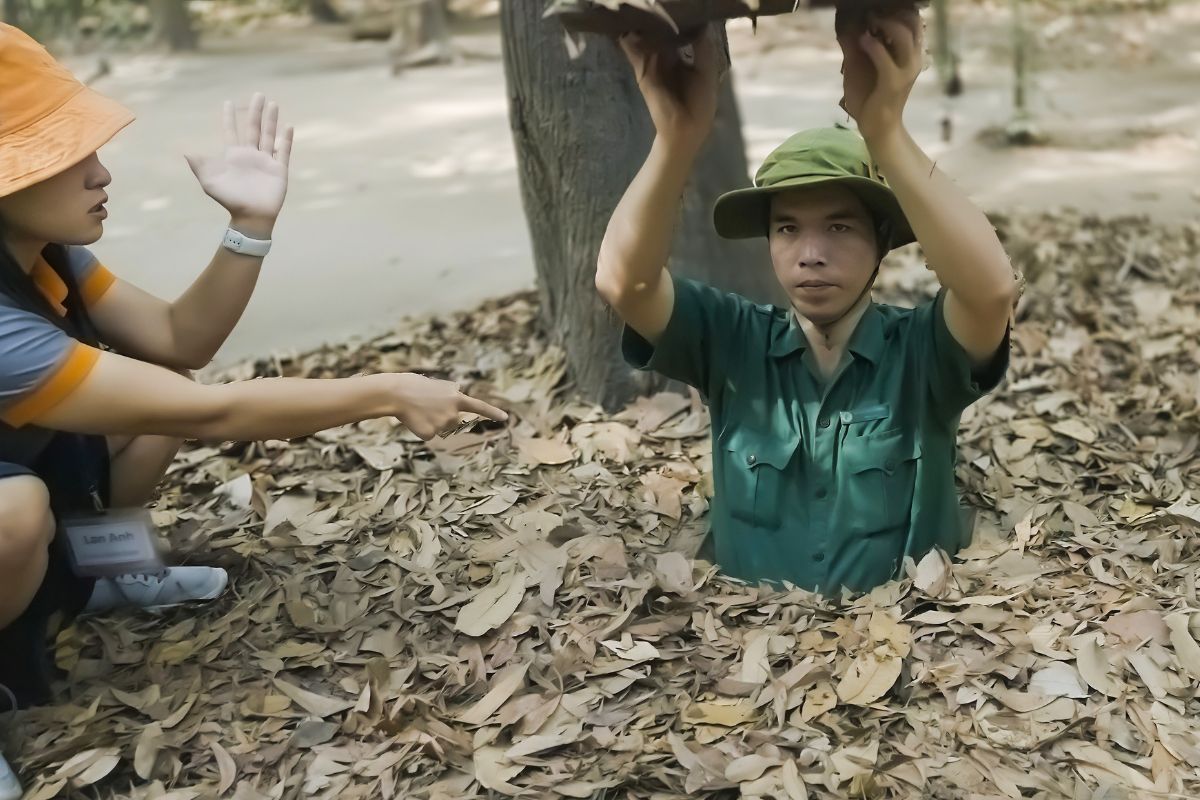
Top Things to Do at the Cu Chi Tunnels in Ho Chi Minh City
Explore the Tunnel Network
The highlight of any visit is experiencing the tunnels themselves. Visitors can crawl through specially widened sections to get a sense of how Viet Cong soldiers lived and moved underground. The passageways are narrow and dark, offering a glimpse of the harsh realities of wartime life.
See Trapdoors and Booby Traps
The site displays original trapdoors, camouflaged entrances, and replicas of deadly booby traps used during the war. These demonstrations show the resourcefulness of the Viet Cong in defending their stronghold.
Visit the Underground Facilities
Within the tunnels, you can see reconstructions of underground kitchens, meeting rooms, hospitals, and living quarters. These exhibits illustrate how soldiers managed to survive and operate in complete secrecy.
Watch Historical Documentaries
Short films are shown on-site to explain the history of the tunnels, their role in the Vietnam War, and the struggles of those who lived within them. This background helps you appreciate the site more deeply.
Try Local Dishes in the Jungle Kitchen
Visitors can taste simple meals once eaten by the Viet Cong, such as boiled cassava dipped in peanuts and sugar. It's a unique way to connect with the daily life of the fighters.
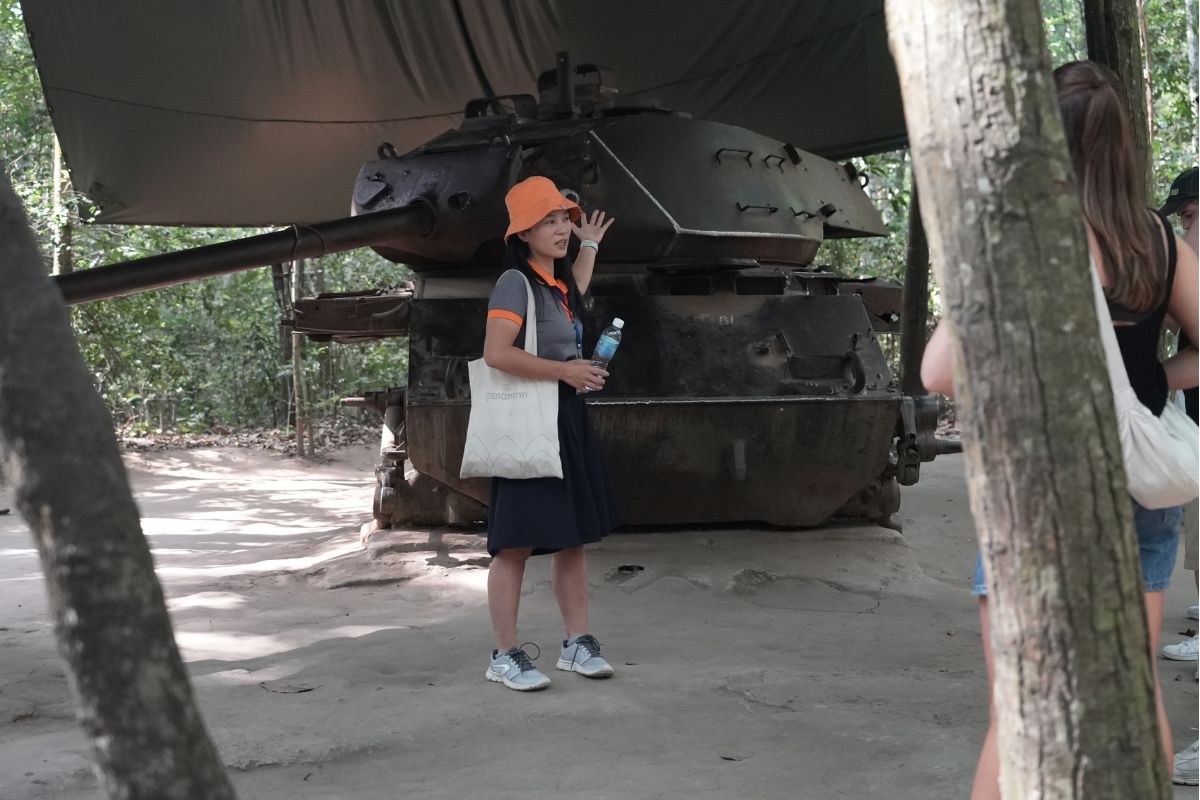
Visit the Shooting Range
For an additional fee, you can fire historical weapons such as the AK-47, M16, or M60 under supervision. It's a popular activity for those who want a hands-on wartime experience.
Explore Exhibits and Displays
Above ground, there are displays of old weapons, tools, and equipment, along with mannequins in wartime settings. These give a broader picture of the history beyond the tunnels themselves.
Visit the Cu Chi Tunnels and 11 Nearby Must-See Attractions
Cu Chi Tunnels - Ben Dinh
This section is the more popular choice as it's closer to Ho Chi Minh City. The tunnels have been widened for easier access, allowing visitors to walk or crawl through with less difficulty. It's ideal for beginners who want to see underground bases, ambush points, and trap samples. Exhibitions explain wartime strategies, and there are outdoor activities where you can try crawling through the tunnels yourself.
Cu Chi Tunnels - Ben Duoc
With a more authentic atmosphere and fewer crowds, the Ben Duoc site features a more complex tunnel system than Ben Dinh, offering a truer picture of the rural Cu Chi area. It's favored by travelers seeking an original, less "tourist-oriented" experience. Both sites have been open to visitors for years and each has its own unique appeal—choose based on your style and interest.
Ben Duoc Memorial Temple
Located at the end of the tunnel network on the Ben Duoc side, this complex of buildings was constructed to honor those who sacrificed their lives in the Saigon--Gia Dinh region. Highlights include a striking nine-story tower, a memorial garden, and incense-burning courtyards. The solemn and peaceful atmosphere offers a deeper perspective on the area's history.
Cu Chi Wildlife Rescue Station
Situated between Ben Dinh and Ben Duoc, this rescue and rehabilitation center cares for a variety of animals including gibbons, bears, porcupines, and pangolins. It adds an eco-conservation dimension to your history-focused trip. (Be sure to check visiting availability before going.)
Cao Dai Holy See in Tay Ninh
This colorful religious landmark is the spiritual center of the Cao Dai faith. The noontime prayer service (around 12:00) is a highlight and is open for visitors to observe respectfully. The architecture blends multiple cultural influences, and modest attire is recommended.
Ba Den Mountain in Tay Ninh
The highest peak in southern Vietnam, Ba Den Mountain is accessible by modern cable car, which quickly takes visitors up to panoramic viewpoints. At the summit, you'll find temples, pagodas, and scenic platforms. It's a great day-trip extension from Cu Chi if you start early.
War Remnants Museum in Ho Chi Minh City
Back in the city, War Remnants Museum deepens your understanding of history through exhibitions of photographs, documents, and artifacts from the Indochina and Vietnam Wars. Open daily (check current hours before visiting), it's a meaningful stop to connect your Cu Chi visit with a broader perspective on the war.
Independence Palace
Independence Palace is a symbol of the end of the Vietnam War. This is the site where tanks broke through the gates on April 30, 1975. Today it serves as a museum and event space, where you can explore the bunkers, command rooms, and classic modernist architecture of the era. It's highly recommended to pair this visit with the War Remnants Museum in the same day.
Saigon Notre-Dame Cathedral & Central Post Office
These twin French colonial landmarks sit right across from each other in the city center. You can admire the red-brick façade and twin bell towers of the cathedral, then cross over to see the still-functioning Central Post Office with its beautiful interior. Entry is free, and it makes for an easy "old town" walking package after returning from Cu Chi.
Binh Quoi Tourist Village
This riverside green oasis recreates the feel of southern Vietnam's countryside, complete with local restaurants, rustic stilt houses, and traditional bamboo "monkey bridges." It's a relaxing way to wind down your day after a history-heavy trip to Cu Chi.
Saigon Opera House & A O Show
Cap off your evening with a performance of the "A O Show" at the Saigon Opera House. The show blends acrobatics, theatrical art, and Vietnamese folk music, all set inside a stunning French colonial opera house in the heart of the city. It's an aesthetic and cultural highlight after a day at Cu Chi.
Tips For Visiting Cu Chi Tunnels
Wear comfortable clothing
Dress in light, breathable clothing and sturdy shoes because you will be crawling through narrow tunnels and walking on uneven terrain.
Bring a mosquito spray
Mosquitoes are prevalent in the area, so remember to apply insect repellent to keep mosquitoes at bay.
Stay Hydrated
Carry plenty of water to stay hydrated, especially during the warmer months.
Avoid visiting during the rainy season
If possible, plan your visit during the dry season from December to April to avoid heavy rains that can make the terrain muddy and slippery.
Respect the site
Remember that the Cu Chi Tunnels are a significant historical site, so it's essential to be respectful of the area and its artifacts. Following the guidelines provided by the staff helps preserve this important landmark for future visitors.
Explore more on Klook
Top attractions in Ho Chi Minh
- 1 Saigon River
- 2 War Remnants Museum
- 3 Ben Thanh Market
- 4 Opera House
- 5 Bui Vien Walking Street
- 6 Landmark TVGB 81
- 7 Nguyen Hue Walking Street
- 8 District 1
- 9 Independence Palace
- 10 Ho Thi Ky Flower Market
- 11 Bitexco
- 12 Jade Emperor Pagoda
- 13 Golden Dragon Water Puppet Theatre
- 14 Saigon Central Post Office
- 15 Tan Dinh Church
- 16 Thien Hau Pagoda
- 17 Bach Dang Wharf
- 18 Nha Rong Wharf
- 19 Turtle Lake