Nara Park Reviews
Popular places near Nara Park
FAQs about Nara Park
Why is Nara Park famous?
Why is Nara Park famous?
Is Nara Park closer to Osaka or Kyoto?
Is Nara Park closer to Osaka or Kyoto?
Do you need tickets for Nara Park?
Do you need tickets for Nara Park?
Where is Nara Park in Japan?
Where is Nara Park in Japan?
How to get to Nara Park?
How to get to Nara Park?
How much time to spend in Nara Deer Park?
How much time to spend in Nara Deer Park?
Can you pet the deer in Nara Park?
Can you pet the deer in Nara Park?
What to know about Nara Park
Nara Park and Its Sacred Deer
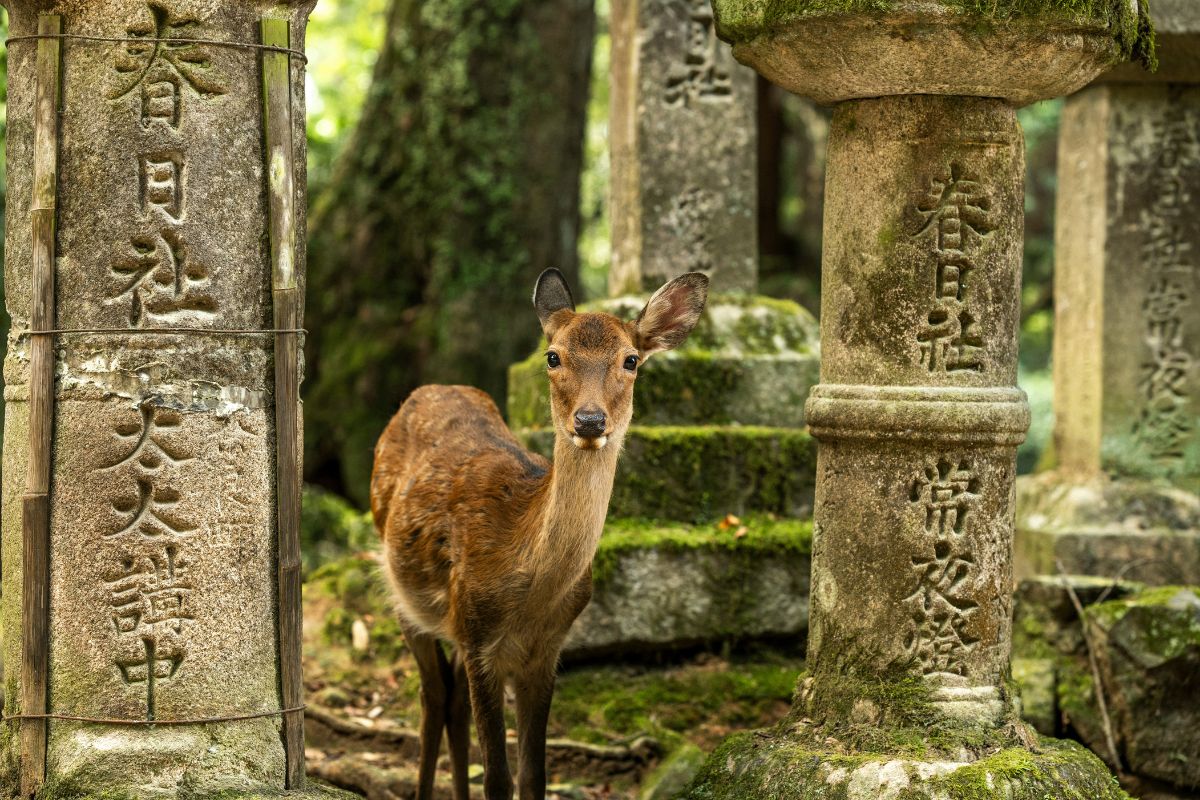
Nara Park is closely tied to Kasuga Grand Shrine, where legend says a god once arrived in Nara riding a white deer. Since then, deer have been regarded as sacred messengers of the gods and are now protected as national treasures. This is why Nara Park is home to hundreds of freely roaming deer, making it one of the most unique parks in Japan.
All the deer are wild but have grown accustomed to people. They are especially famous for their charming habit of bowing to visitors in exchange for food—particularly the special shika senbei (deer crackers) sold in the park for around 200 yen. When you hold out a cracker and bow gently, the deer often bow back before taking the treat, creating a delightful and memorable interaction.
Get To Know Nara Park Deer
Why Are Nara's Deer Considered Sacred?
The sacred status of Nara's deer stretches back more than 1,300 years and is deeply rooted in Shinto beliefs.
The Legend of the White Deer
When Kasuga Taisha Shrine was established in the 8th century, legend says the deity Takemikazuchi — protector of Nara — traveled from Kashima Shrine in Ibaraki riding on a white deer. From that moment, deer were revered as divine messengers. For centuries, harming them was strictly forbidden, and until the Edo period, killing a deer was a crime punishable by death.
The Deer During World War II
During World War II, Japan faced severe food shortages. Despite their sacred reputation, Nara's deer population declined drastically due to lack of food and, in some cases, illegal poaching.
Nara's Deer Today
After the Meiji Restoration, the deer lost their religious status, but their cultural and historical importance remained. In 1957, they were officially designated as a National Treasure of Japan. Today, thanks to the protection of the Nara Deer Preservation Foundation, these gentle creatures continue to roam freely in Nara Park, symbolizing the city's spiritual heritage.
Things to do in Nara Park, Japan
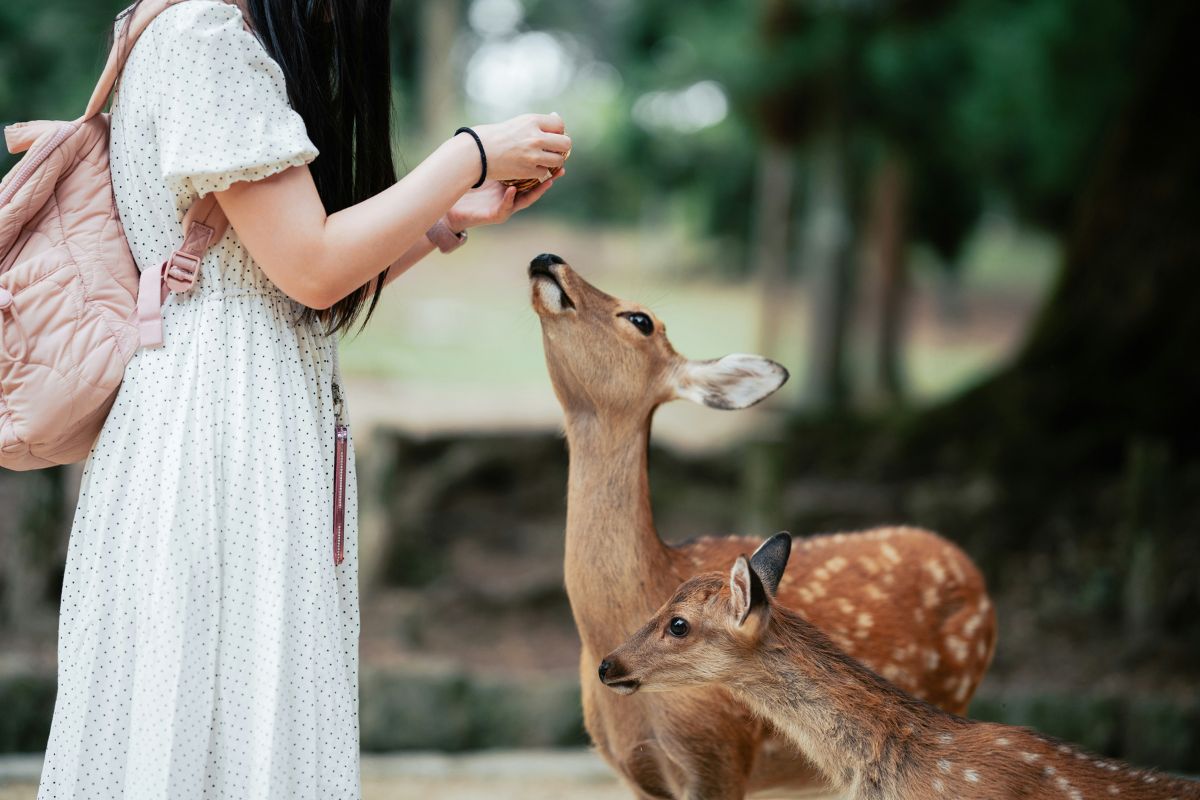
Nara Deer Park
Nara Park is famous for its over 1,000 friendly deer, considered messengers of the gods in Japanese legends! Deer feeding is a popular activity, and some have even learned to bow to ask for treats. These special deer biscuits made from rice bran and wheat flour can be bought all over the park. While the deer are friendly, approach them calmly and follow park rules to keep everyone safe.
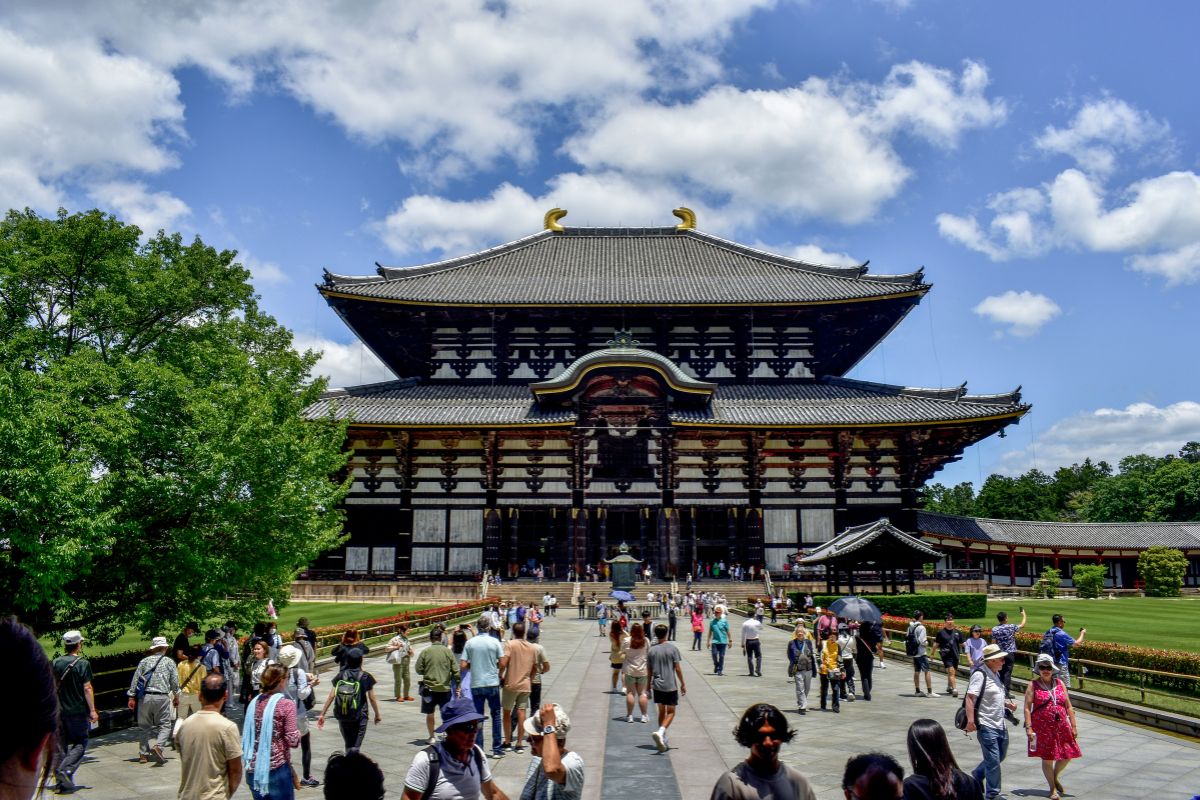
Todaiji Temple
Todaiji Temple is one of the most famous spots in Nara Park and is a UNESCO World Heritage Site. It features the Great Buddha Hall, which used to be the largest wooden building in the world. Inside, you'll find a giant bronze Buddha statue standing over 50 feet tall. There are also gardens and smaller shrines around the area for you to explore.
Isuien Garden
Isuien Garden is a beautiful Japanese garden near Nara Park. It has tea houses, ponds, a small museum, and lots of trees and flowers. The quiet, calm atmosphere makes it a great place to take a break from the busy areas of the park.
Horyuji Temple
Not far from Nara Park, you'll find the Horyuji Temple grounds, one of the world's oldest wooden buildings. Inside, you'll find incredible Buddhist art and artifacts. The temple's architecture and history can help you learn more about Japan's religious and cultural history.
Nara National Museum
Explore the amazing culture of Nara Park by stopping at the Nara National Museum. This museum has lots of cool Buddhist art and historical treasures. There are two main buildings to check out: the older Nara Buddhist Sculpture Hall and the newer East Wing, which has changing exhibits.
A Guided Day Trip to Nara Park from Osaka or Kyoto
A guided day Nara Park tour from Osaka or Kyoto, streamlines your visit to Nara Park into an efficient and unforgettable cultural experience. As a key stop on a multi-destination itinerary, the tour dedicates approximately one and a half hours to Nara, ensuring you experience the heart of its unique charm without the stress of navigating public transport. Upon arrival, you are immediately welcomed into the park's main attraction: the hundreds of free-roaming, sacred deer.
The tour provides ample time for the highlight activity of interacting with these gentle creatures, which are considered National Natural Monuments. You can purchase special deer crackers (senbei) to feed them, delighting in their famous and polite pre-snack bow. This portion of the tour is perfect for capturing adorable photos and creating unique memories. While immersed in this incredible wildlife encounter, you are surrounded by monumental history. The tour's schedule and location within the park place you right at the doorstep of the awe-inspiring Todai-ji Temple, home to Japan's largest bronze Buddha statue, allowing for a visit to this must-see landmark. This structured visit ensures you experience the quintessential magic of Nara Park—the surreal and wonderful harmony of interacting with its famous deer in the shadow of one of Japan's most significant historical treasures.
Tips for Visiting Nara Park
Respect Nara's Deer
The bowing deer in Nara Park are famous because they are super friendly and will come to you for a treat! But remember that they are still wild animals. During mating season, some male deer can become aggressive, so it's important to stay calm and move slowly around them. Always show respect to the deer to make sure everyone has a great and safe time.
Dress Comfortably
Nara Park is a big place, and you'll want to explore as much as you can. Wear comfy shoes and clothes you can move around in easily because you'll want to explore the park's many walking paths. These trails lead to interesting spots like shrines and temples. On hot days, a hat and some water will help you stay cool and keep you energized as you explore. You don't want anything to slow you down!
Plan Your Visit
Before heading to Nara Park, check out any special events that might be happening. A unique event to catch is the 'deer calling' or "shikayose," where you can see the deer gather when a horn is blown. This happens on winter mornings at 10 AM from February to mid-March and on Sundays during the summer.
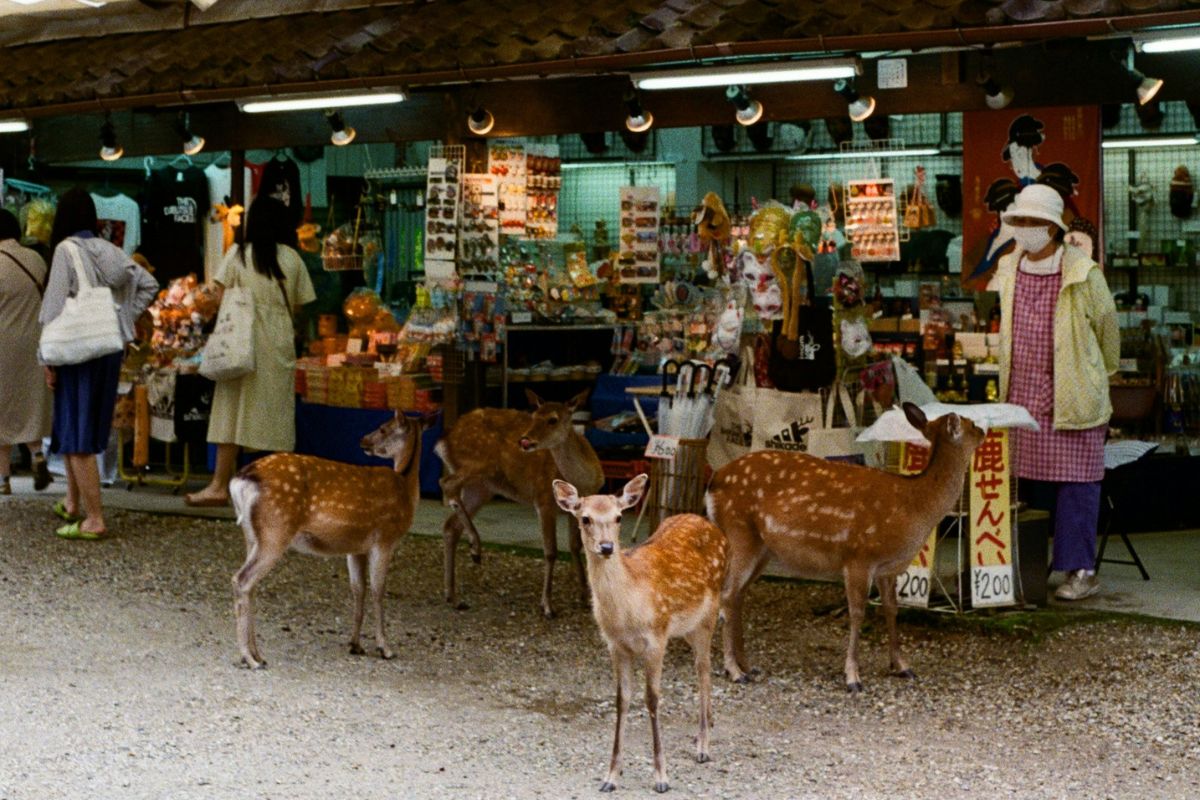
Food & Shopping at Nara Park
Nara offers a delightful culinary and shopping experience, deeply connected to its history and its famous deer.
Local Nara Specialties
Kakinoha-zushi: This is a traditional type of pressed sushi and a must-try Nara specialty. It consists of a piece of salt-cured fish (commonly mackerel or salmon) placed on a small block of vinegared rice. The entire piece is then wrapped in a persimmon leaf (kaki-no-ha). The leaf is not eaten but imparts a subtle, fresh aroma to the sushi while also having natural antibacterial properties, a preservation technique from ancient times. It's a perfect, portable meal for a day of exploring.
Miwa Somen Noodles: Originating from the Miwa region of Nara, these are extremely thin wheat flour noodles. Given that your visit is in the heat of August, you will most likely enjoy them served cold (hiyashi somen). The noodles are boiled, chilled, and served with a light, savoury dipping sauce called tsuyu, often garnished with spring onions, ginger, or wasabi. It's a wonderfully light and refreshing meal.
Other Specialties: Keep an eye out for Narazuke, which are vegetables pickled in sake lees (a byproduct of sake production), giving them a potent, complex flavour. Another traditional dish is Chagayu, a simple and comforting rice porridge cooked with tea, typically served for breakfast.
Nakatanidou Mochi
This is not just a snack; it's a world-famous performance. Located on the edge of the Higashimuki shopping street, Nakatanidou is renowned for its high-speed mochi pounding ceremony (mochitsuki). Two skilled artisans work in perfect, lightning-fast sync, with one swinging a large wooden mallet (kine) to pound the steamed rice in a large mortar while the other rhythmically folds the dough with his bare hands. The theatrical and energetic display draws huge crowds. The resulting mochi is a delicious yomogi mochi (flavored with Japanese mugwort), giving it a natural green hue and an earthy flavour. It's filled with sweet red bean paste (anko) and dusted with roasted soybean flour (kinako), and is best eaten while still warm and wonderfully soft.
Higashimuki Shopping Street
This is the main covered shopping arcade (shotengai) in Nara, conveniently located right next to the Kintetsu-Nara Station. It's the perfect place to start or end your day trip. The bustling but friendly street is lined with a wide variety of shops, including:
Restaurants and cafes serving local specialties.
Souvenir shops selling everything from deer-themed merchandise to traditional crafts.
Traditional sweet shops and mochi vendors.
Pharmacies, convenience stores, and clothing shops.
Deer-Themed Souvenirs
You will find no shortage of adorable deer-themed items. They make for perfect, quirky souvenirs:
Shika-maro-kun Goods: This is Nara's official mascot, a cute and simple cartoon deer. You can find plush toys, keychains, and stationery featuring him.
Deer-Shaped Cookies: Many shops sell delicious butter cookies shaped like the Nara deer.
"Deer Droppings": A very popular and humorous souvenir, these are chocolate-covered peanuts or candies packaged to look like deer droppings.
Stationery and Crafts: Look for beautifully designed pens, notebooks, hand towels (tenugui), and small trinkets featuring artistic deer motifs.
Top Places to Visit Near Nara Park
Todaiji Temple
One of Japan's most iconic temples, Todaiji is home to the Great Buddha (Daibutsu), a colossal bronze statue standing 15 meters tall inside the world's largest wooden hall, the Daibutsuden (Great Buddha Hall). The temple is not only a UNESCO World Heritage Site but also a symbol of Nara's historic role as Japan's first capital. Walking around, you'll also encounter smaller halls, pagodas, and friendly deer that roam freely nearby.
Kasuga Taisha Shrine
This is Nara's most celebrated Shinto shrine, famous for its hundreds of stone and bronze lanterns that line the paths leading up to the main shrine. During the Lantern Festivals in February and August, all the lanterns are lit, creating a magical atmosphere. Surrounded by the sacred Kasugayama Primeval Forest, Kasuga Taisha Shrine is deeply connected with Nara's spiritual heritage.
Kofukuji Temple
Located near Nara Park, Kofukuji was once one of the powerful Seven Great Temples of Nara. The highlight here is the five-story pagoda, Japan's second tallest, which has become a symbol of the city. Visitors can explore the Eastern Golden Hall and the National Treasure Museum, which houses Buddhist art and cultural treasures from Japan's ancient past.
Nara National Museum
For history and art lovers, this museum offers an impressive collection of Buddhist statues, paintings, and ceremonial objects. It's especially known for the annual exhibition of Shōsōin treasures, showcasing priceless artifacts from the Nara period. The museum provides deep insight into the cultural and religious life of ancient Japan.
Isuien Garden
A peaceful Japanese garden just a short walk from Todaiji, Isuien is divided into two sections---the front garden from the Edo period and the rear garden from the Meiji period. Visitors can enjoy scenic ponds, tea houses, and meticulously landscaped greenery with Mount Wakakusa as a backdrop. It's an ideal place to relax after exploring temples and shrines.
Mount Wakakusa
A low mountain located on the eastern side of Nara Park, Mount Wakakusa is famous for its panoramic views of Nara City from the summit. The hike is relatively easy, taking about 30-45 minutes. Every January, the Wakakusa Yamayaki Festival is held, where the entire mountainside is set ablaze in a spectacular fire event, followed by fireworks.
Yoshikien Garden
Right next to Isuien Garden, Yoshikien Garden offers three distinct gardens: a pond garden, a moss garden, and a tea ceremony garden. Unlike many Japanese gardens, admission here is free for foreign visitors, making it a hidden gem for those who want to experience traditional landscape design without the crowds.