A historic garden founded in the Edo period.
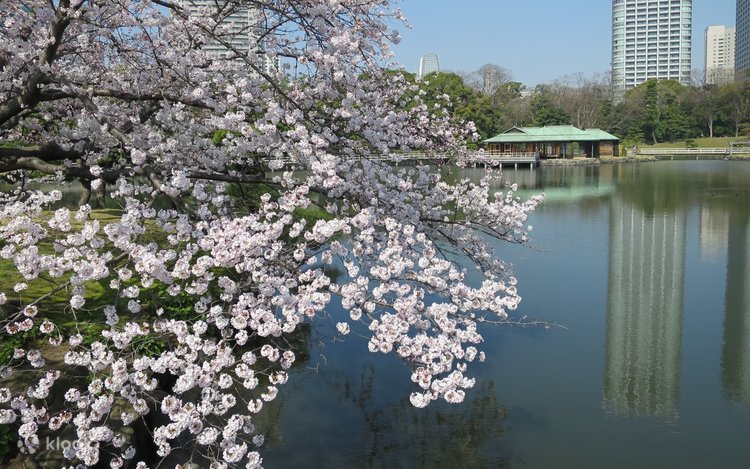
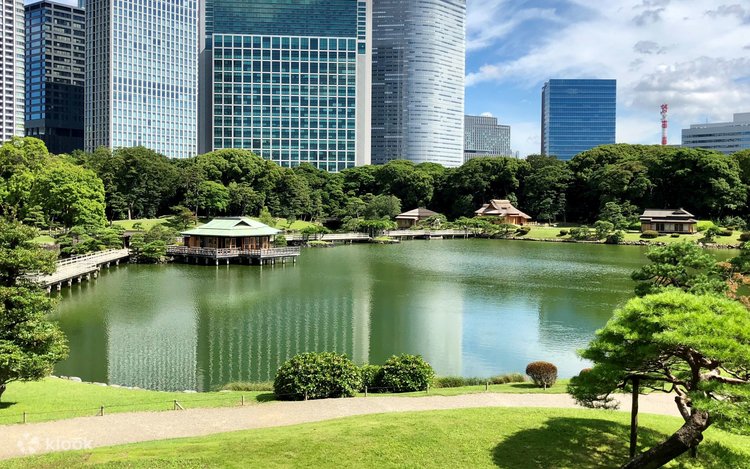
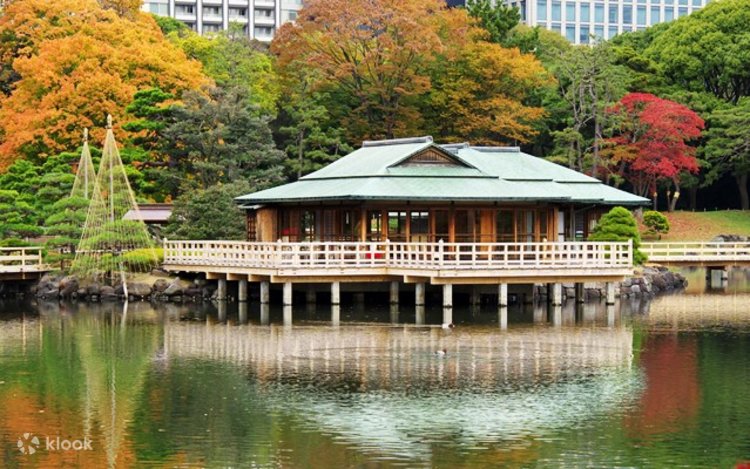
Highlights include a seawater pond, the only existing seawater pond in an Edo garden in Tokyo, and a teahouse built as if floating on the water.
The contrast with the skyscrapers is also spectacular!
Visitors can enjoy matcha (powdered green tea) and wagashi (Japanese confection) at the Nakajima-no-ochaya at a nominal fee!
After the Meiji Restoration, it became the Rikyu of the Imperial Palace and was renamed "Hama Rikyu". Afterwards, due to the Great Kanto Earthquake and local wars, many buildings, including the Tea House, were destroyed, and their graceful style was lost. It was given to the Tokyo Government on November 3, which is the 20nd year of Showa period (1945), and it was officially opened to the public in April of 1946 after facility renovation. In addition, according to Japan's cultural property protection law, it was designated as a National Scenic Area and heritage in the December of the 23rd year of Showa period (1948). Next, the surrounding water was designated as a National Scenic Area and heritage in the November of the 23rd year of Showa period (1952).